


What is Angular? Google’s Framework for Dynamic Web Development
The landscape of front-end development has evolved significantly, moving from static pages to complex, single-page applications that require robust tools. Among the leading solutions engineered for this modern web is Google’s open-source framework, designed to structure scalable and high-performance projects. What is Angular, and how does it empower developers to build dynamic, enterprise-grade applications? Let us explore its architecture, core features, and practical use cases in this detailed guide.
What Is Angular?
Angular is a front-end framework built by Google that helps developers create single-page applications (SPAs) and enterprise-grade web platforms. It provides reusable components, strong architecture, and modern tools that make it easier for businesses to build scalable, responsive, and interactive web applications.
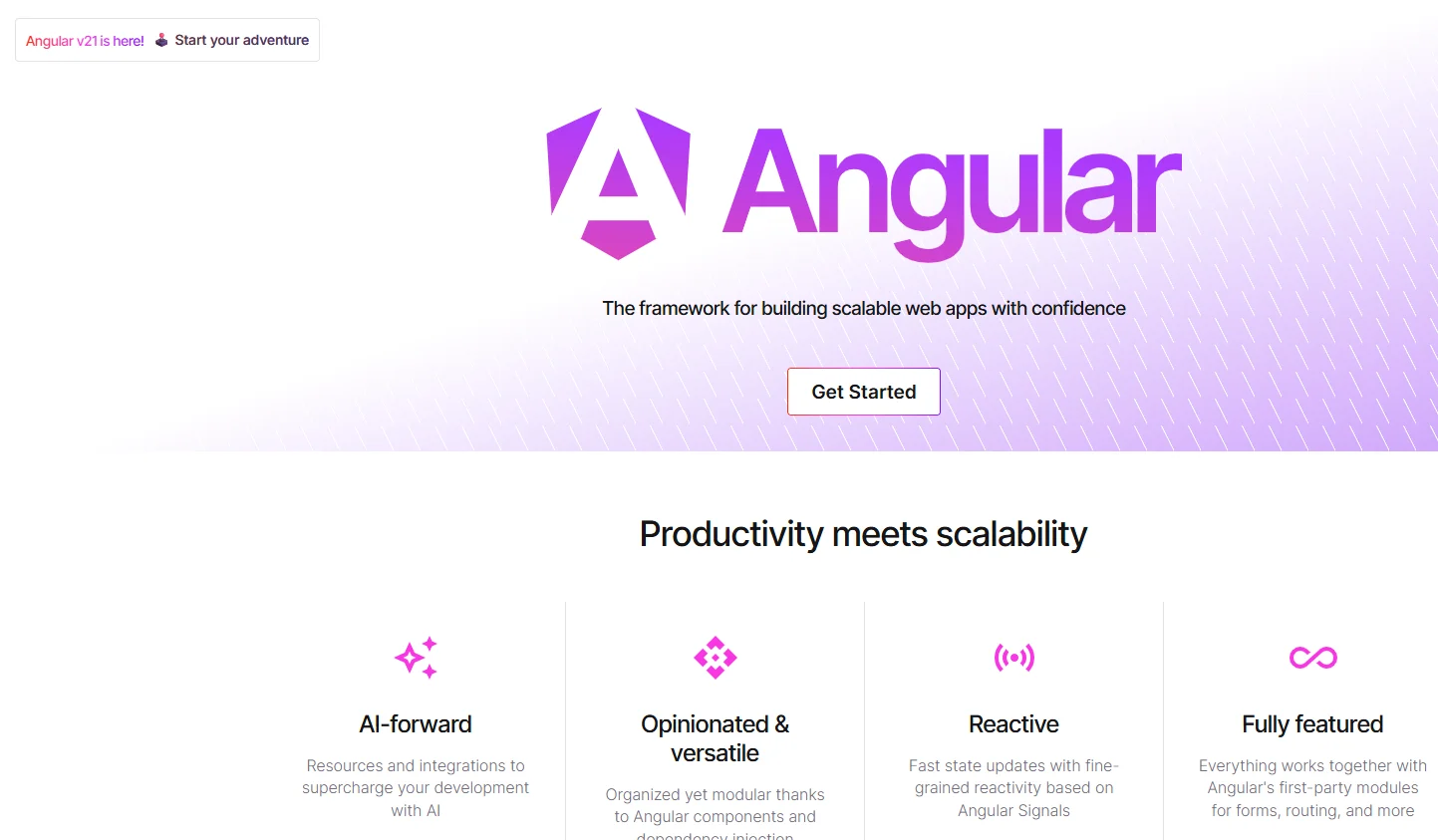
Example: PayPal uses Angular in parts of its checkout system to deliver a faster, smoother, and more reliable user experience. This adoption improved transaction efficiency and customer satisfaction, supporting millions of secure daily transactions.
How Does Angular Work?
Angular works by using a component-based architecture, where applications are built from reusable building blocks, and data flows between them seamlessly. It uses dependency injection, two-way data binding, and reactive programming to keep the interface dynamic and responsive, which makes it especially useful for real-time applications.
- What is Angular software development?: It is the process of using Angular’s tools, libraries, and structure to build dynamic, large-scale applications that are easier to maintain and expand.
- What is Angular web development?: It refers to using Angular specifically for creating responsive, cross-platform web applications that provide smooth user experiences across devices.
Angular vs AngularJS
AngularJS is the original version released in 2010, built with JavaScript, while Angular is the modern re-engineered version developed in TypeScript. AngularJS is suitable for small-scale apps with basic functionality, but Angular is recommended for enterprise-grade solutions, SPAs, and projects requiring better performance, scalability, and long-term support.
7 Main Features of Angular
Angular can be applied to multiple purposes, such as single-page applications (SPAs), enterprise dashboards, e-commerce frontends, cross-platform solutions, and progressive web apps. Let’s explore the core features of this framework to better understand what it can deliver for businesses.
- Two-way data binding for real-time update: Angular automatically synchronizes data between the user interface and the application model. This ensures that any change made by users is instantly reflected across the system without additional coding effort.
- Modular architecture with reusable components: Applications are built from modules and components that can be reused across different projects. This structure makes it easier to manage large-scale enterprise applications and reduces duplication of work.
- Dependency injection for cleaner and testable code: Angular’s built-in dependency injection allows services and components to be managed efficiently. This leads to cleaner, maintainable code that is easier to test and scale.
- RxJS and reactive programming for handling async data streams: Angular leverages RxJS to manage asynchronous events like user interactions or API calls. This makes applications more responsive and capable of handling complex, real-time data flows.
- Angular CLI for faster setup and scaffolding: The Angular Command Line Interface (CLI) automates repetitive tasks like creating components, running tests, and deploying apps. This improves developer productivity and ensures consistency across teams.
- Cross-platform development (web, mobile, desktop with Ionic/Nativescript): Angular integrates seamlessly with frameworks like Ionic or NativeScript. This enables businesses to build applications that work smoothly across web, mobile, and desktop environments.
- Enterprise-level security and performance optimization tools: Angular includes advanced tools for protecting against vulnerabilities and optimizing load times. These features help enterprises deliver secure, high-performance applications to global audiences.
Pros & Cons of Angular
Besides the comprehension of what is Angular and its core features, we need to identify the key benefits of Angular, as well as some drawbacks, to evaluate whether Angular aligns with your business development goals, technical demands, and long-term targets. Let’s dig into the detailed pros & cons below:
| Pros |
Cons |
| Google support: Angular is backed by Google, ensuring continuous updates, long-term stability, and credibility for enterprise adoption. | Steep learning curve: The framework requires significant time and expertise to master, which can slow down onboarding for new developers. |
| Scalability: Angular’s modular structure and dependency injection make it capable of handling large-scale enterprise applications efficiently. | Heavier than lightweight frameworks: Compared to React or Vue, Angular includes more built-in features, which may impact performance for smaller apps. |
| Reusable components: Developers can build and reuse components across multiple projects, saving time and maintaining consistency. | Complexity in small projects: For startups or basic websites, Angular’s complexity may feel excessive compared to lighter alternatives. |
| Active ecosystem: Angular has a strong developer community and extensive documentation, offering reliable resources for problem-solving and innovation. |
5 Common Use Cases of Angular
Angular can be applied in multiple sectors and use cases to serve different business purposes. Below are some of the most common industries where Angular has proven its value.
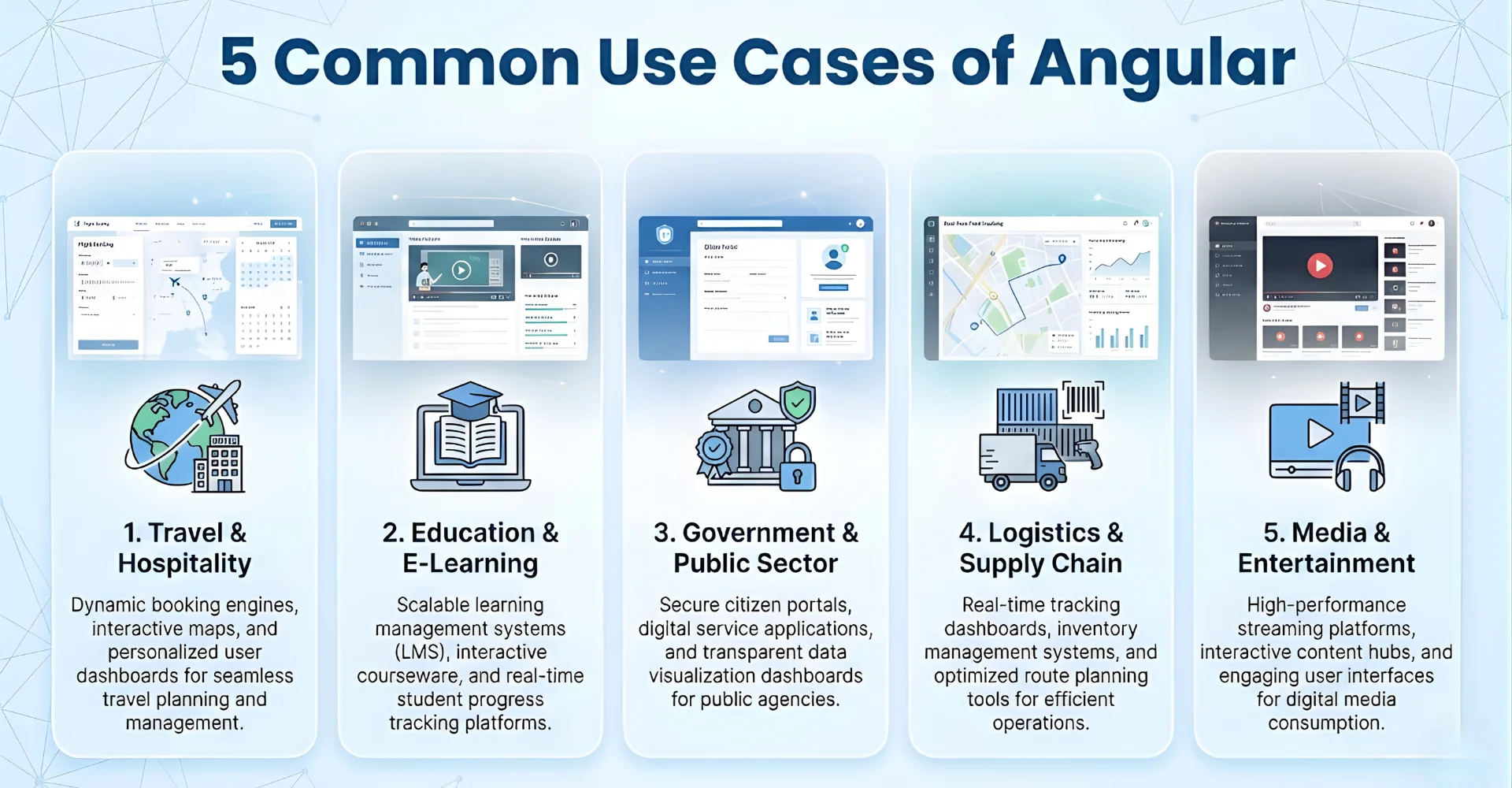
1. Travel & Hospitality
In the travel industry, Angular helps create booking engines, customer dashboards, and real-time data platforms for reservations and flight management. Its ability to handle dynamic data and interactive interfaces makes it an excellent choice for travel apps that require speed and reliability.
Example: Delta Airlines has used Angular in parts of its web application to provide seamless booking and check-in experiences. This integration improved user experience and reduced downtime across their global digital platforms.
2. Education & E-Learning
Educational institutions and e-learning platforms leverage Angular to build scalable learning management systems (LMS), interactive course dashboards, and real-time student-teacher engagement tools. The framework’s modularity allows for continuous updates without disrupting ongoing services.
Example: Udacity implemented Angular to create interactive and user-friendly educational software development solutions and dashboards for learners. This allowed the platform to deliver responsive, dynamic content that supports millions of students worldwide.
3. Government & Public Sector
Governments use Angular to develop citizen portals, tax systems, and e-governance platforms that require strong security and scalability. Angular’s built-in features ensure data security while handling high-traffic demands from the public.
Example: The U.S. General Services Administration (GSA) has applied Angular in its modern web projects to improve service delivery. This helped enhance transparency and efficiency in public-facing digital platforms.
4. Logistics & Supply Chain
In logistics, Angular supports real-time tracking dashboards, inventory management, and fleet monitoring solutions. The framework’s reactive programming capabilities allow businesses to process continuous data streams efficiently.
Example: DHL used Angular in its logistics management system to improve real-time shipment tracking and optimize supply chain operations. This upgrade led to better customer satisfaction and improved operational visibility.
5. Media & Entertainment
The media industry uses Angular to power streaming services, content management platforms, and personalized recommendation engines. Its performance and scalability are essential for handling high volumes of traffic and content delivery.
Example: YouTube TV, powered by Google, uses Angular to deliver a responsive and interactive streaming experience. This ensures smooth video playback and real-time updates for millions of global users.
How to set up & use Angular
Setting up a new framework can often be overwhelming, especially when teams are unfamiliar with its tools and commands. Through years of experience with Google frameworks like Angular, we have outlined a simple step-by-step guide so you can start smoothly without unnecessary roadblocks.
Step 1: Install Node.js and Angular CLI
Download and install Node.js from its official website, as Angular requires it to run. Then install the Angular Command Line Interface (CLI) with the command npm install -g @angular/cli to manage projects and dependencies easily.
Step 2: Create a New Angular Project
Open your terminal and run ng new project-name to generate a new project with all necessary configurations. The CLI will create the project structure, install dependencies, and prepare your workspace.
Step 3: Configure Components and Routing
Use Angular CLI to generate components with ng generate component component-name. Set up routing in the app-routing routing.module.ts file so users can navigate between pages or modules in your application.
Step 4: Run the Development Server
Start the server with ng serve and access your app in the browser at http://localhost:4200. This allows you to test functionality instantly and make live changes as you develop.
Step 5: Build and Deploy Your App
Once your application is ready, run ng build –prod to create an optimized production build. You can then deploy it on cloud platforms like AWS, Azure, or Google Cloud.
Angular vs Other Frameworks
Angular is not the only option developers can use to create web platforms or single-page applications. React and Vue are two of its strongest competitors, and the table below highlights how they compare so you can determine the optimal choice for your business.
| Criteria | Angular | React |
Vue |
Verdict |
| Performance | Strong performance with Ahead-of-Time (AOT) compilation and RxJS. | Very fast rendering with Virtual DOM. | Lightweight and fast, ideal for small apps. | React leads in rendering speed; Vue excels in lightweight apps. |
| Scalability | Highly scalable for enterprise apps with a modular design. | Scales well with community libraries and ecosystem support. | Best suited for small-to-medium projects; scaling is possible but less robust. | Angular is best for large-scale enterprise systems. |
| Ease of Use | Complex setup and structure, longer learning curve. | Flexible library, easier for developers with JavaScript/JSX knowledge. | Very simple to learn, beginner-friendly. | Vue wins for simplicity; React for flexibility. |
| Ecosystem | Strong but more rigid ecosystem, maintained by Google. | Huge ecosystem with countless third-party libraries and tools. | Growing ecosystem, not as large as React but vibrant. | React dominates in ecosystem variety. |
| Enterprise Adoption | Widely adopted in enterprises needing complex apps. | Popular in both startups and enterprises with global adoption. | Gaining popularity, mostly in smaller companies and startups. | Angular and React are better for enterprise-grade apps. |
| Learning Curve | Steep, especially for beginners new to TypeScript. | Moderate, requires learning JSX and tooling. | Easiest to pick up for beginners. | Vue is the easiest to learn; Angular requires the most investment. |
Summary:
- Angular is the best fit for enterprises building large, complex, and long-term applications that demand scalability and structured architecture.
- React is optimal for businesses seeking flexibility, a vast ecosystem, and high performance in dynamic applications.
- Vue is ideal for smaller projects, startups, or teams that need quick adoption with a gentle learning curve.
Hire an Angular Developer with Newwave Solutions
For many businesses, the challenge with Angular lies not in the framework itself but in the lack of in-house expertise to apply it effectively. Without experienced developers, projects can face delays, inefficiencies, and higher costs. In such cases, outsourcing or hiring professional Angular developers becomes the most reliable solution.
At Newwave Solutions, with over 14 years in software development and experience delivering 200+ Angular projects, we provide trusted front-end talent for startups, SMEs, and enterprises worldwide. Our hire developer services follow agile best practices and integrate seamlessly with your team—whether you need remote, dedicated, or offshore professionals.
Our Angular Developer’s Expertise:
Angular is a powerful front-end framework, but to unlock its full potential, you need skilled professionals who can design, optimize, and scale applications. We help businesses across industries hire dedicated Angular developers with deep expertise in modern Angular versions, capable of delivering solutions such as:
- Angular Web App Development: Build high-performing, responsive web applications tailored to business needs.
- Single Page Application (SPA): Develop dynamic SPAs with real-time responsiveness and seamless user experience.
- Platform Migration: Migrate legacy systems or apps to Angular for better performance, scalability, and maintainability.
- Plugin Development: Extend functionalities with custom plugins that fit enterprise-specific workflows.
- Widget Development: Create reusable UI widgets to ensure design consistency and faster deployment.
- Angular Support & Maintenance: Provide continuous monitoring, updates, and optimization for long-term application stability.
We follow a structured and transparent hiring process to ensure your business gets the right expertise quickly and efficiently.
Besides providing Angular professionals, we also deliver other IT talent services like hiring front-end developers to satisfy a variety of demand for different businesses and sectors.
FAQs
1. What is Angular in software development?
Angular in software development is a front-end framework created by Google that helps developers build dynamic, scalable, and interactive applications. It provides structure and tools to simplify coding and speed up development.
2. What is Angular in web development?
In web development, Angular is used to create single-page applications (SPAs) and responsive websites. It allows businesses to deliver fast, smooth user experiences across devices.
3. Is Angular a frontend or backend?
Angular is a frontend framework. It focuses on building the user interface and client-side logic, while backend frameworks handle server-side operations.
4. Is Angular free?
Yes, Angular is completely free and open-source. Companies can use it without licensing fees, making it cost-effective for startups and enterprises.
5. Can Angular handle enterprise-level projects?
Yes, Angular is designed for enterprise-level projects. Its modular structure, strong security, and scalability make it suitable for large, complex applications.
6. How to check Angular version?
You can check your Angular version by running the command ng version in your project’s terminal. This will display the Angular version and other dependencies.
7. How does Angular compare with React?
Angular is a structured framework with built-in tools for building enterprise-grade applications, while React is a lightweight library focused mainly on the view layer. Businesses choose Angular for complex, large-scale apps and React for flexible, fast development with a huge ecosystem.
Conclusion
After investigating what is Angular, we can see that it plays a key role in modern web development by providing developers and businesses with a powerful framework for building scalable, secure, and interactive applications. It helps organizations accelerate development, reduce maintenance challenges, and improve overall user experience.
If you are considering leveraging this framework, you can refer to the “hire Angular developer services” from Newwave Solutions to build responsive, scalable web applications with clean architecture and efficient performance. With over 14 years of expertise and 200+ Angular projects delivered, we offer reliable front-end talent for startups, SMEs, and global enterprises.
Approach Newwave Solutions, and we can discuss this long-term collaboration together!
To Quang Duy is the CEO of Newwave Solutions, a leading Vietnamese software company. He is recognized as a standout technology consultant. Connect with him on LinkedIn and Twitter.



Read More Guides


Get stories in your inbox twice a month.
Let’s Build Something Extraordinary
Sign up for a 30 min no-obligation strategic session with us. Transform your Ideas into scalable reality.
Leave a Reply