


ASP.NET MVC Framework: Everything Developers and Businesses Need to Know
ASP.NET MVC framework stands as one of Microsoft’s most important contributions to modern web development. But what is ASP.NET MVC, and why do developers and enterprises continue to rely on this proven technology for building robust, scalable, and maintainable applications? Understanding ASP.NET MVC is crucial for organizations seeking robust, scalable, and maintainable web solutions that can evolve with their business needs. Whether you’re building enterprise portals, e-commerce platforms, or sophisticated API development solutions, this comprehensive guide will explore how ASP.NET MVC can transform your web development strategy.
What is ASP.NET MVC Framework?
ASP.NET MVC is a web application framework developed by Microsoft that implements the Model-View-Controller (MVC) architectural pattern, providing a clean separation of concerns for building scalable and maintainable web applications. Unlike traditional Web Forms, ASP.NET MVC gives developers complete control over HTML, facilitates test-driven development, and supports modern web standards.
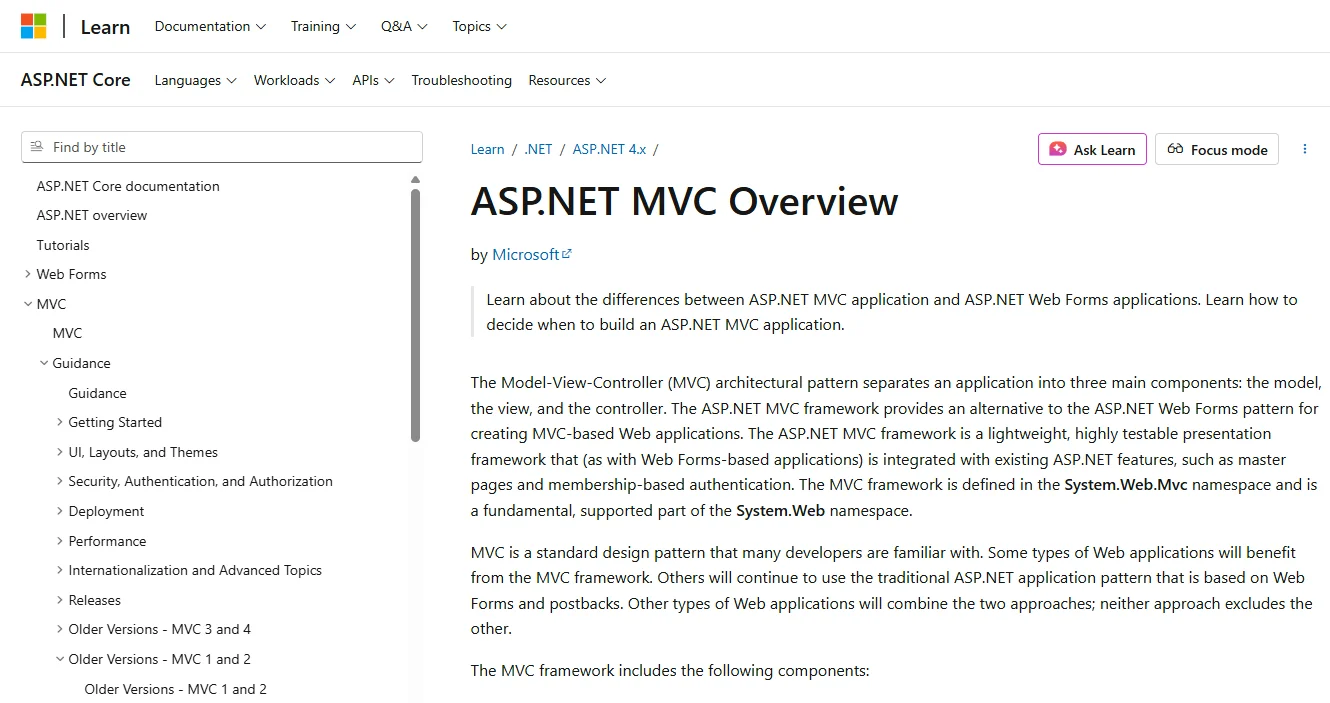
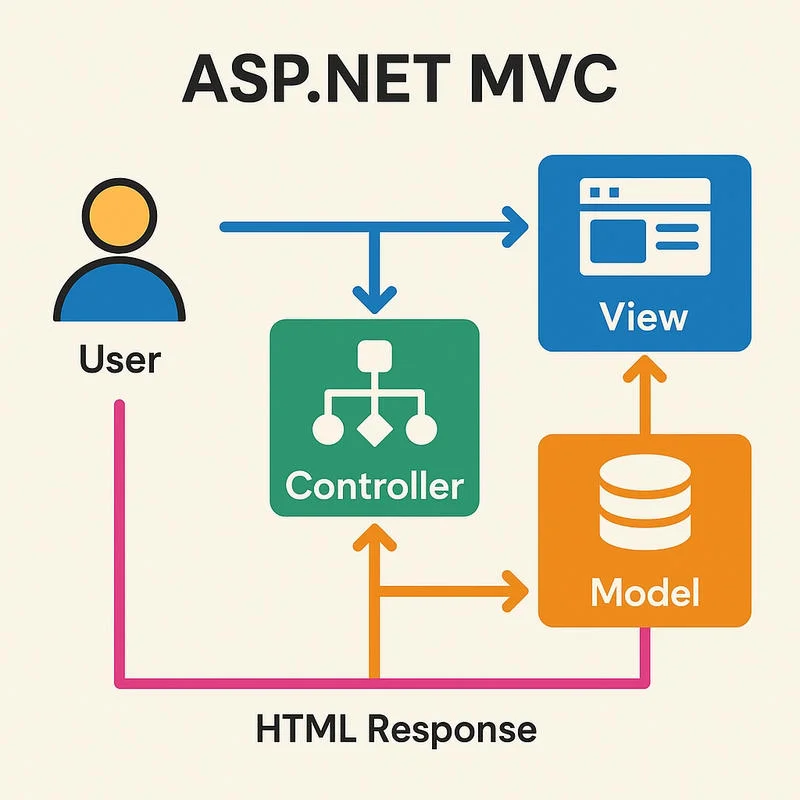
So, what ASP NET MVC mean in practical terms? It’s a framework that divides application logic into three interconnected components, making it easier to manage complexity in large-scale projects. This separation is particularly valuable for software development services that need to maintain and extend applications over time while ensuring code quality and team collaboration efficiency.
Core Components of ASP.NET MVC:
- Model: Represents the application’s data and business logic, handling data validation, database interactions, and business rules
- View: Responsible for presenting the user interface and displaying data from the Model to users
- Controller: Processes incoming requests, handles user input, and coordinates between Models and Views
This architectural pattern ensures that each component has a specific responsibility, making applications easier to develop, test, and maintain throughout their lifecycle.
Why Many Businesses Choose ASP.NET MVC?
Businesses choose ASP.NET MVC for its robust architecture, scalability, and maintainability, making it ideal for enterprise-level applications that require long-term stability and performance.
1. Clean Architecture and Maintainability
The MVC pattern’s clear separation of concerns makes ASP.NET MVC applications significantly easier to maintain and extend over time. This architectural clarity is crucial for custom web app development services where requirements evolve, and teams need to make changes without breaking existing functionality. The organized structure allows multiple developers to work on different components simultaneously.
2. Enhanced Testability and Quality
ASP.NET MVC’s loosely coupled architecture enables comprehensive testing, supporting Test-Driven Development (TDD) practices. Controllers can be easily unit-tested without requiring a web server, which leads to higher code quality and fewer production issues. This testing capability is particularly valuable for financial applications and API development solutions where reliability is critical.
3. Full Control over Application Behavior
Unlike some other frameworks, ASP.NET MVC doesn’t use view state or server-based forms, giving developers complete control over the rendered HTML and application behavior. This control enables the creation of clean, SEO-friendly URLs and responsive, standards-compliant web applications that perform well across different devices and browsers.
4. Integration with Microsoft Ecosystem
As part of the .NET framework, ASP.NET MVC integrates seamlessly with other Microsoft technologies and enterprise systems. This integration simplifies development for organizations already invested in the Microsoft ecosystem and provides access to a wide range of tools, libraries, and community resources.
What Are Action Methods in ASP.NET MVC?
Action methods are the core processing units in ASP.NET MVC controllers that handle incoming HTTP requests, execute business logic, and determine the appropriate response to send back to clients. Each action method corresponds to a specific user interaction and returns an ActionResult that tells the framework how to respond.
1. ViewResult Methods
ViewResult action methods are the primary mechanism for rendering HTML pages and user interfaces in ASP.NET MVC applications. They serve as the bridge between your business logic and the visual presentation layer that users interact with.
When a user requests a page, ViewResult methods spring into action by first gathering the necessary data from various sources – this could be database queries, API calls, or internal business logic processing. The method then carefully packages this information into a structured format that the view template can understand and work with. Finally, it selects the appropriate view template and combines it with the prepared data to generate the complete HTML page that gets sent back to the user’s browser.
When to use ViewResult methods:
- Rendering complete web pages with dynamic content
- Displaying forms for user input
- Presenting data from databases or services
- Creating dashboard interfaces and administrative panels
These methods are essential for custom web app development services that require rich, interactive user interfaces. ViewResult methods typically retrieve data from models, prepare it for display, and pass it to views for rendering. They support layout pages, partial views, and strongly-typed view models for robust data presentation.
2. RedirectToAction Methods
RedirectToAction methods are the navigation coordinators of your ASP.NET MVC application, responsible for managing user flow and maintaining proper application state after processing user interactions.
These methods operate like a skilled traffic director who guides users to their next destination after they’ve completed an action. When a user submits a form or completes a task, the RedirectToAction method processes the request and then immediately sends the user to a new URL. This approach ensures that if the user refreshes their browser, they don’t accidentally resubmit the same data or repeat the same action, which is crucial for maintaining data integrity.
When to use the RedirectToAction methods:
- After successful form submissions to prevent duplicate submissions
- Implementing workflow navigation between different application steps
- Handling authentication and authorization redirects
- Maintaining clean URL structures after processing user actions
These methods are crucial for maintaining proper application flow and user experience. After processing a form post, RedirectToAction sends users to a confirmation page or the next step in a workflow, ensuring that refreshing the page doesn’t resubmit data.
3. JsonResult Methods
JsonResult methods are the data powerhouses that enable modern, dynamic web experiences by providing structured data to client-side applications, mobile apps, and AJAX requests.
These methods specialize in converting your server-side data into clean, standardized JSON format that JavaScript applications can easily consume. When a client makes a request, JsonResult methods process the business logic, extract the relevant data, and transform it into a JSON structure before sending it back. This approach allows for lightweight data exchange without the overhead of full HTML page rendering.
When to use JsonResult methods:
- Building RESTful APIs development solutions for mobile apps
- Supporting client-side frameworks like Angular, React, or Vue.js
- Implementing autocomplete features and dynamic content loading
- Creating dashboard components that update without page refreshes
These methods enable modern, responsive web applications by facilitating communication between server-side logic and client-side JavaScript. They’re particularly valuable for applications requiring real-time updates and interactive user experiences.
4. ContentResult and FileResult Methods
ContentResult and FileResult methods are the specialized handlers for non-HTML responses, serving everything from plain text content to downloadable files and documents.
ContentResult methods focus on delivering raw text content in various formats without the wrapping HTML structure. They’re like dedicated messengers that deliver specific information in its purest form – whether it’s plain text, XML, CSV data, or custom formats. These methods give you complete control over the content type and encoding, ensuring the client receives exactly what it expects.
FileResult methods transform your application into a file delivery service, handling everything from generating documents on the fly to serving existing files from your server. They can create PDF reports from database data, export Excel spreadsheets from business metrics, serve images and documents from secure storage, or generate custom file formats tailored to specific business needs.
When to use ContentResult methods:
- Returning simple text responses or plain data
- Serving XML, CSV, or other text-based formats
- Providing health check endpoints for monitoring
- Implementing simple API endpoints
When to use FileResult methods:
- Generating and serving PDF reports
- Allowing users to download documents or media files
- Exporting data in various formats (Excel, CSV, PDF)
- Serving dynamically generated images or documents
These methods extend application functionality beyond HTML rendering, supporting various business requirements for file handling and data export in enterprise applications.
What is ASP.NET MVC Used For?
ASP.NET MVC is a versatile framework employed across numerous industries and project types, from large-scale enterprise systems to specialized web applications requiring clean architecture, high performance, and seamless integration capabilities.
1. Enterprise Web Applications – From CRMs to ERPs
ASP.NET MVC fundamentally transforms enterprise application development by providing a structured architecture that enables large teams to work simultaneously on different components of complex business systems like CRMs and ERPs while maintaining code quality and system stability. The framework’s clean separation of concerns allows database specialists to focus on model development, business logic experts to concentrate on controller implementation, and UI/UX teams to work on view templates without interfering with each other’s work.
This parallel development capability significantly accelerates project timelines for software development services while ensuring that mission-critical applications remain maintainable and scalable as business requirements evolve. The built-in testing support ensures that enterprise applications maintain reliability even as new features are added, making ASP.NET MVC the foundation upon which businesses build their most essential operational systems.
2. Custom Web App Development Services
ASP.NET MVC revolutionizes custom web application development by providing complete control over every aspect of the application, from the HTML markup and JavaScript behavior to the URL structure and server-side processing, enabling the creation of truly tailored solutions that perfectly match unique business requirements. Unlike template-based frameworks that impose limitations on design and functionality, ASP.NET MVC empowers custom web app development services to implement precise client specifications without compromise, whether that involves complex workflow automation, specialized data processing, or unique user interaction patterns.
The framework’s extensibility allows developers to create custom components, override default behaviors, and integrate specialized libraries, ensuring that the final product aligns exactly with the client’s vision and operational needs while maintaining high performance standards and future-proof architecture.
3. APIs Development Solutions
ASP.NET MVC fundamentally enhances API development by providing a natural, controller-based architecture that simplifies the creation of robust, scalable RESTful services while ensuring consistent performance, comprehensive security, and seamless cross-platform compatibility. The framework streamlines API development solutions through built-in support for content negotiation, model binding, and error handling, allowing developers to focus on business logic rather than plumbing code. This results in APIs that reliably serve diverse clients, from web applications and mobile apps to third-party integrations and IoT devices, while maintaining data integrity and security across all communication channels. The testing-friendly architecture ensures that APIs remain reliable as they evolve, making ASP.NET MVC an ideal choice for businesses building the web services that power their digital ecosystems and enable integration across multiple platforms and devices.
4. E-Commerce Platforms
ASP.NET MVC dramatically improves e-commerce platform development through its SEO-friendly URL routing system, flexible architecture for handling complex product catalogs, and superior performance characteristics that ensure fast page loads even during high-traffic events like sales and promotions. The framework enables the creation of online stores that not only look and function exactly according to business requirements but also rank better in search engines due to clean, meaningful URLs and optimized page structures.
For custom web app development services focused on e-commerce, ASP.NET MVC provides the foundation for implementing advanced features like personalized product recommendations, complex pricing rules, multi-vendor marketplace functionality, and seamless payment gateway integrations while maintaining the responsiveness and reliability that modern online shoppers expect, ultimately driving higher conversion rates and customer satisfaction.
>> Explore more of our custom E-commerce Web development Services
5. Dashboards and Portals
ASP.NET MVC significantly enhances dashboard and portal development through its efficient data handling capabilities, real-time update support, and flexible view rendering that together enable the creation of interactive, data-rich interfaces that provide users with immediate insights and streamlined access to complex information systems. The framework’s ability to efficiently process and present large datasets makes it ideal for building analytical dashboards that help businesses monitor key performance indicators, track operational metrics, and make data-driven decisions.
For portal development, ASP.NET MVC facilitates the creation of personalized user experiences through dynamic content rendering and role-based access control, ensuring that each user sees relevant information and tools based on their permissions and preferences. This capability is particularly valuable in sectors like finance, healthcare, and education, where timely access to accurate information is critical for operational success and user satisfaction.
>> View more of our Web Portal Development Services
Benefits of ASP.NET MVC
The ASP.NET MVC framework brings powerful advantages for businesses and developers looking to build modern, scalable, and high-performance web applications. Unlike traditional Web Forms, it offers greater flexibility, cleaner architecture, and improved performance — making it a preferred choice for many custom web app development services and enterprise-level projects.
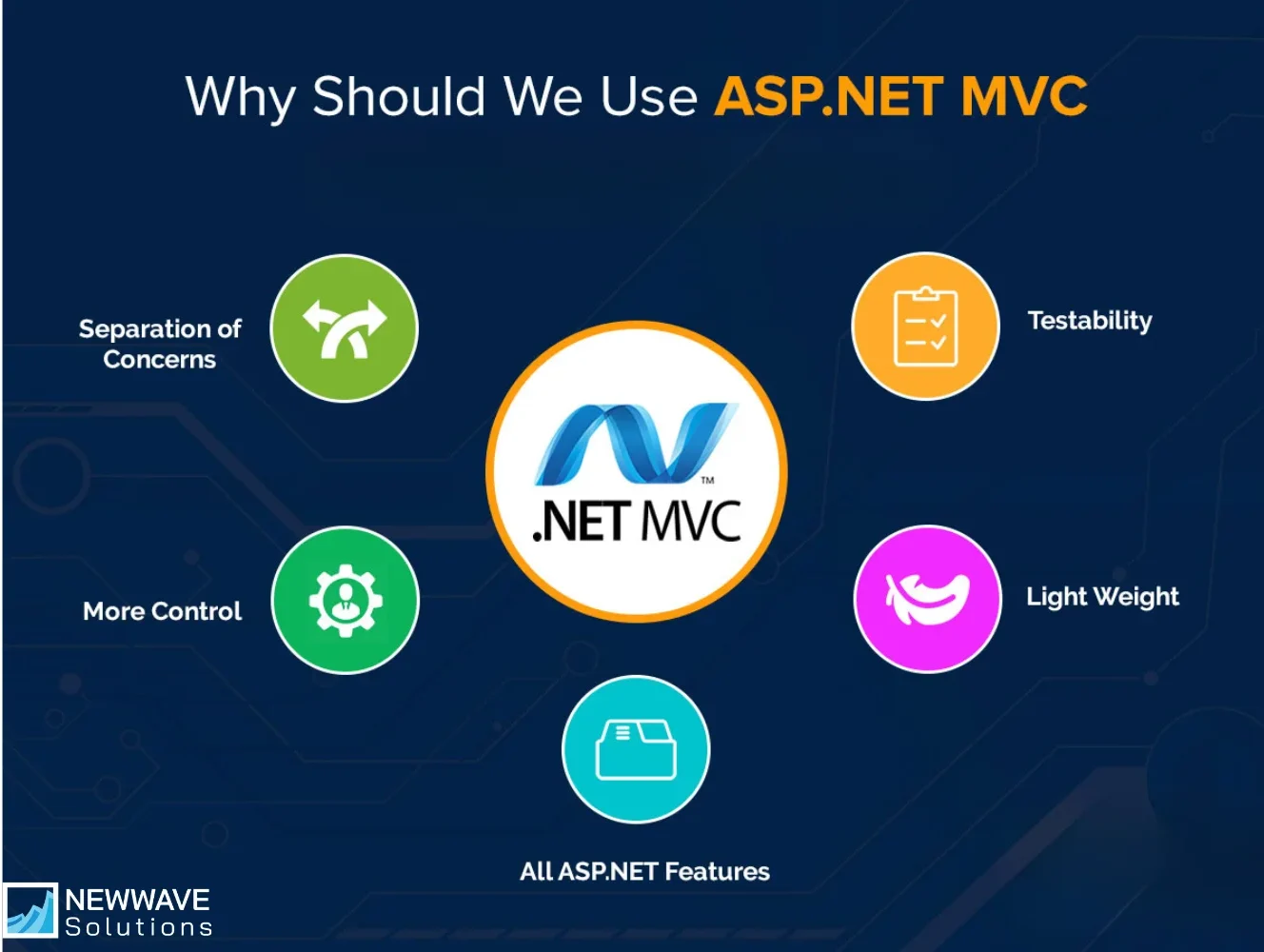
Here are the key benefits explained in detail:
- Clean Separation of Concerns: ASP.NET MVC follows the Model-View-Controller (MVC) design pattern, which keeps the application logic, user interface, and data management separate. This clean separation makes the code easier to understand, maintain, and scale — especially helpful for long-term projects and larger teams.
- Superior Testability: Testing is simpler with ASP.NET MVC. Developers can run unit tests and integration tests without relying on a web server. The framework also supports dependency injection, making it easier to isolate components and use mock objects, which is perfect for test-driven development (TDD).
- Full Control over HTML and URLs: Unlike Web Forms, developers have complete control over the rendered HTML, CSS, and JavaScript. This means you can build SEO-friendly, accessible, and standards-compliant websites. Its routing system also generates clean, user-friendly URLs that improve both search rankings and user experience.
- Extensibility and Flexibility: ASP.NET MVC is designed to be highly extensible. You can customize or replace almost any part of the framework, from view engines and action filters to model binders and routing systems. This adaptability makes it suitable for projects with very specific business or technical requirements.
- Performance and Scalability: Since ASP.NET MVC doesn’t rely on view state or server controls, applications run faster, and pages are lighter. The result? Better performance, faster load times, and the ability to handle higher traffic with fewer server resources — essential for enterprise-grade applications.
In short, ASP.NET MVC combines clean architecture, flexibility, and top-notch performance, making it an excellent framework for building secure, scalable, and SEO-friendly applications.
FAQs
Is ASP.NET MVC still good?
Yes, ASP.NET MVC remains an excellent choice for web development, particularly for enterprise applications that value clean architecture, testability, and long-term maintainability. While ASP.NET Core has gained popularity for new projects, ASP.NET MVC continues to be supported and is widely used in production applications. Many organizations choose MVC for its maturity, stability, and extensive ecosystem of libraries and tools.
Is ASP.NET still used in 2026?
Absolutely. ASP.NET technologies, including both MVC and the newer ASP.NET Core, continue to be widely used. Thousands of enterprises rely on ASP.NET for their critical web applications, and Microsoft continues to support and enhance the framework. The .NET ecosystem remains strong, with active community support and regular updates ensuring its relevance for modern web development.
What is the difference between ASP.NET and MVC?
ASP.NET is Microsoft’s web development platform that includes multiple frameworks, while MVC is a specific architectural pattern within that platform. ASP.NET Web Forms uses an event-driven model with server controls, while ASP.NET MVC follows the Model-View-Controller pattern with clear separation of concerns. MVC provides more control over HTML and better testability, while Web Forms offers rapid development with component-based architecture.
What types of projects are best suited for ASP.NET MVC?
ASP.NET MVC is ideal for projects that require clean architecture, comprehensive testing, and long-term maintainability. It excels in enterprise applications, large-scale web platforms, content management systems, and applications requiring full control over HTML and URLs. It’s also well-suited for projects following test-driven development practices and teams that value separation of concerns.
How does ASP.NET MVC compare to modern JavaScript frameworks?
ASP.NET MVC serves as a robust server-side framework that can work alongside modern JavaScript frameworks. While single-page applications built with React, Angular, or Vue.js handle rich client-side interactions, ASP.NET MVC provides a solid backend with server-side rendering capabilities. Many applications use both approaches, with ASP.NET MVC handling initial page loads and API requests, while JavaScript frameworks manage dynamic client-side behavior.
Conclusion
Throughout this comprehensive guide, we’ve explored what is ASP.NET MVC framework and why it remains a powerful choice for modern web development. From its clean architectural pattern and superior testability to its flexibility and performance advantages, ASP.NET MVC provides a solid foundation for building web applications that stand the test of time.
Whether you’re building enterprise systems, e-commerce platforms, or sophisticated API development solutions, ASP.NET MVC delivers the robustness and scalability that businesses require. While newer technologies have emerged, ASP.NET MVC’s maturity, stability, and extensive ecosystem continue to make it relevant for organizations that value long-term project success over chasing the latest trends.
Ready to build robust, scalable web applications with ASP.NET MVC? Contact Newwave Solutions today for a free consultation and let our experienced team help you leverage the full power of ASP.NET MVC for your next project. Our ASP.NET developers ensure your application will be built with best practices, clean architecture, and long-term maintainability in mind.
To Quang Duy is the CEO of Newwave Solutions, a leading Vietnamese software company. He is recognized as a standout technology consultant. Connect with him on LinkedIn and Twitter.



Read More Guides

Get stories in your inbox twice a month.
Let’s Build Something Extraordinary
Sign up for a 30 min no-obligation strategic session with us. Transform your Ideas into scalable reality.
Leave a Reply