


Managing Offshore Teams: Best Practices for High Performance
Managing offshore teams can unlock significant cost savings and access to global talent, but it also introduces challenges such as communication gaps, time zone differences, and limited visibility into day-to-day progress. Without the right management approach, these issues can lead to delays, quality concerns, and misaligned expectations.
At Newwave Solutions, we build and run distributed squads every day, so this guide distills the playbook: a clear definition, the real benefits, the tough challenges (with fixes), the day-to-day best practices, and the tools that make it all hum.
What Does Managing Offshore Teams Mean?
Managing offshore teams is the process of coordinating and overseeing employees or teams located in another country. It involves keeping team members aligned with organizational goals, expectations, and performance standards despite differences in location, time zones, and culture.
Effective offshore team management focuses on clear communication, collaboration, accountability, and performance tracking to ensure productivity and successful outcomes across distributed team.

Why Is Managing Offshore Teams Challenging?
Managing offshore teams can unlock significant advantages, but it also comes with unique obstacles that require careful planning and communication. Understanding these challenges is the first step toward building a productive and successful remote workforce.
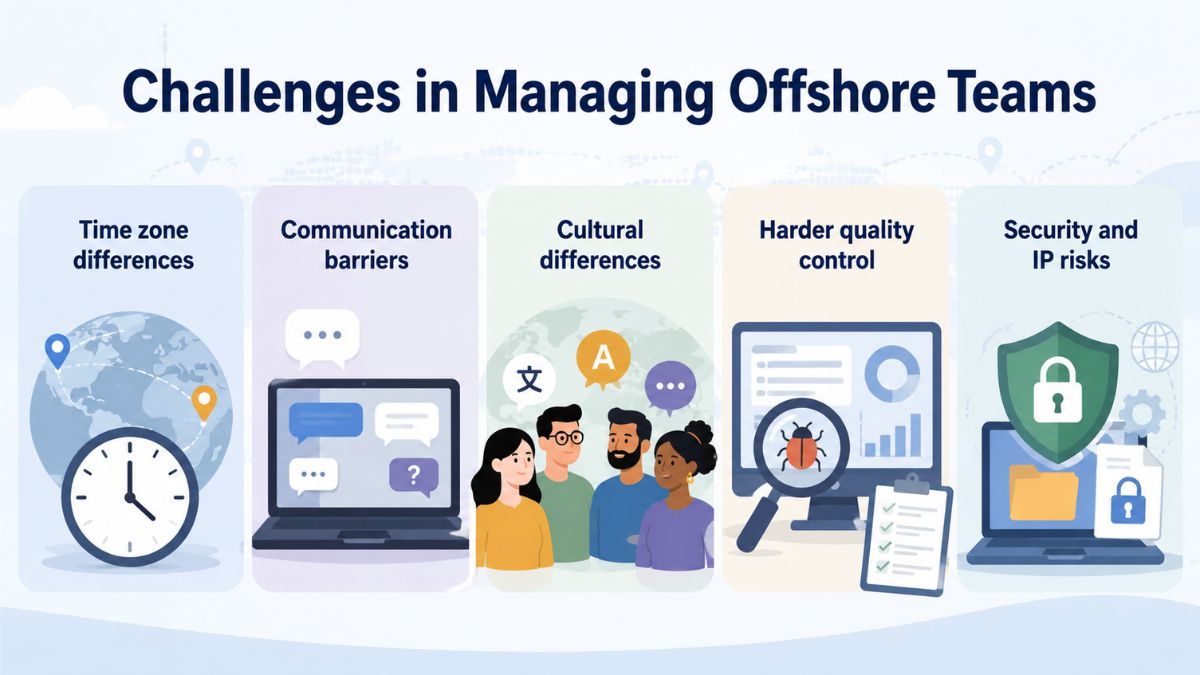
Time zone differences delay real-time collaboration
When local and offshore teams work during different business hours, simple questions can take half a day to resolve. This slows decisions, extends feedback loops, and affects sprint velocity. In Buffer’s remote work surveys, 19% of respondents cited working across time zones as their biggest struggle.
Solutions:
- Guarantee 90–120 minutes of overlap for daily stand-ups or planning.
- Use async decision templates (context, options, recommendation, deadline for objections).
- Install a daily handover ritual: last commit & status, next steps, blockers, and asks.
Communication barriers create misalignment
86% of employees blame inefficient communication for workplace failure, according to Team Stage. In offshore teams, communication becomes harder when teams cannot rely on quick in-person clarification. As a result, it causes unclear requirements, vague feedback, or missing context, which can lead to duplicated work, rework, and missed deadlines.
Solutions:
- Publish a communication contract: channels by purpose (chat for quick, docs for decisions, tickets for work), response-time expectations, and escalation paths.
- Prefer plain language; confirm decisions in writing with owners, due dates, and success criteria.
- Use call recordings and transcripts for complex topics so no one misses details.
Cultural differences affect trust and work styles
Offshore teams often operate across different cultures, where communication styles, decision-making habits, and attitudes toward hierarchy may vary. Some may avoid raising concerns directly, while others may expect more detailed instructions before taking action.
Solutions:
- Define team norms early, including communication expectations, decision-making processes, and escalation paths.
- Schedule regular team-building activities, virtual coffee chats, or cross-team meetings.
- Encourage open feedback through retrospectives and one-on-one check-ins.
Quality control becomes harder without clear standards
Maintaining consistent quality across multiple locations can be challenging when each team follows different habits, frameworks, or interpretations of “done.” These differences may result in inconsistent coding practices, uneven testing, or design variations. Over time, this drift can affect reliability and user experience.
Solutions:
- Define coding standards, testing requirements, and a clear Definition of Done before development begins.
- Implement structured code reviews and quality assurance checkpoints throughout the project lifecycle.
- Conduct regular sprint reviews to identify issues early and ensure deliverables meet expectations.
- Use performance dashboards and project tracking tools to monitor progress without micromanaging the offshore team.
Security and IP risks increase across borders
Offshore collaboration often involves sharing source code, customer data, product documents, and internal systems with teams in another country. This creates higher security and intellectual property risks, especially for industries with strict compliance requirements such as healthcare, finance, and SaaS.
- Implement strict access controls and role-based permissions so offshore team members only access the systems and data required for their work.
- Require NDAs, confidentiality agreements, and clear intellectual property clauses to protect sensitive business information.
- Enforce compliance with relevant security and privacy standards, such as GDPR or HIPAA, and ensure offshore teams follow the same security protocols as internal staff.
Best Practices for Managing Offshore Teams
Start with a clear vision everyone understands
An offshore team should not operate like an external group completing isolated tasks. They need to understand the mission, business goals, and reason behind the project: What outcomes is the company trying to achieve? How does this team contribute to those goals? What value should their work create for users and the business?
You should share the vision early and repeat it throughout the project, not only during kickoff. When offshore teams understand the bigger picture, they can make better decisions, raise better questions, and solve problems more proactively.
Build an organized workflow
The key to a successful offshore team is to establish a clear operating structure that defines responsibilities, processes, and expectations. Team members should know who owns each task, how work moves through the delivery cycle, when reviews take place, and how performance is measured.
After defining the basics, standardize your operating system with repeatable processes and clearly defined tools for project tracking, communication, and knowledge sharing. Establish documented protocols for handovers, approvals, reporting, and cross-time-zone collaboration to keep work moving smoothly. Make responsibilities and decision-making transparent from the start.
With these foundations in place, your offshore team can work with greater clarity and consistency across locations.

Avoid micro management
Distance should not become a reason to control every small decision. When offshore teams need approval for every step, productivity slows and ownership fades.
Your focus should be shifted from daily supervision to outcome-based management. Set clear KPIs, delivery milestones, quality expectations, and communication routines, then give the team room to execute. Your role is to remove blockers, provide context, and keep work aligned with business priorities.
Define measurable KPIs
KPIs should not be used to control every activity, but to create clarity, consistency, and shared accountability. Instead of setting vague expectations, define what strong performance means in practical terms, such as delivery speed, bug resolution, system uptime, data accuracy, or customer impact.
More importantly, share KPIs openly with the offshore team and review them regularly through feedback loops and performance discussions. When everyone understands how success is measured, the team can take ownership, identify risks earlier, and improve continuously.

Build inclusion, not just interaction
Offshore teams need more than regular check-ins to perform at their best. Sending tasks, receiving updates, and holding status meetings may keep work moving, but it does not create real engagement. Inclusion means giving offshore members a voice in planning, inviting them into key discussions, and recognizing their contribution as part of the wider team.
The key is to treat offshore professionals as colleagues, not external vendors. Provide proper onboarding, share business context, and keep them informed about goals, priorities, and changes. This helps offshore teams feel included, become more invested in outcomes, and contribute beyond task execution.
Invest in continuous team development
Offshore team performance depends on how well people understand your business, tools, processes, and quality standards. Strong onboarding should introduce not only technical workflows, but also company culture, communication rules, product context, and delivery expectations. This helps new members contribute with confidence from the beginning.
Training should continue beyond the first few weeks. Offer upskilling, knowledge-sharing sessions, technical workshops, and regular feedback to keep the team growing with your business needs.

Turn cultural differences into team strength
Instead of treating these differences as barriers, managers should make them part of the team’s operating culture. Learn how offshore members prefer to work, what holidays matter to them, and how local norms may influence collaboration.
Build one shared team culture through practical routines. Offer cultural awareness sessions, celebrate important local milestones, and create common rituals such as monthly all-hands meetings, virtual team activities, or recognition sessions. Pairing new offshore members with internal buddies also helps them understand unwritten rules faster and feel connected from the start.
Best Tools for Managing Offshore Teams
When it comes to managing offshore teams, even the best strategy falls short without the right tools to back it up. Tools alone don’t fix broken processes, but the right stack helps good habits stick and turns collaboration into second nature. For distributed teams, your toolset acts as the digital “office”: it connects people, keeps work visible, and ensures consistency across time zones.
Below are the essential categories of tools and practical tips to help you manage offshore teams more effectively, covering everything from project visibility to productivity rhythm:
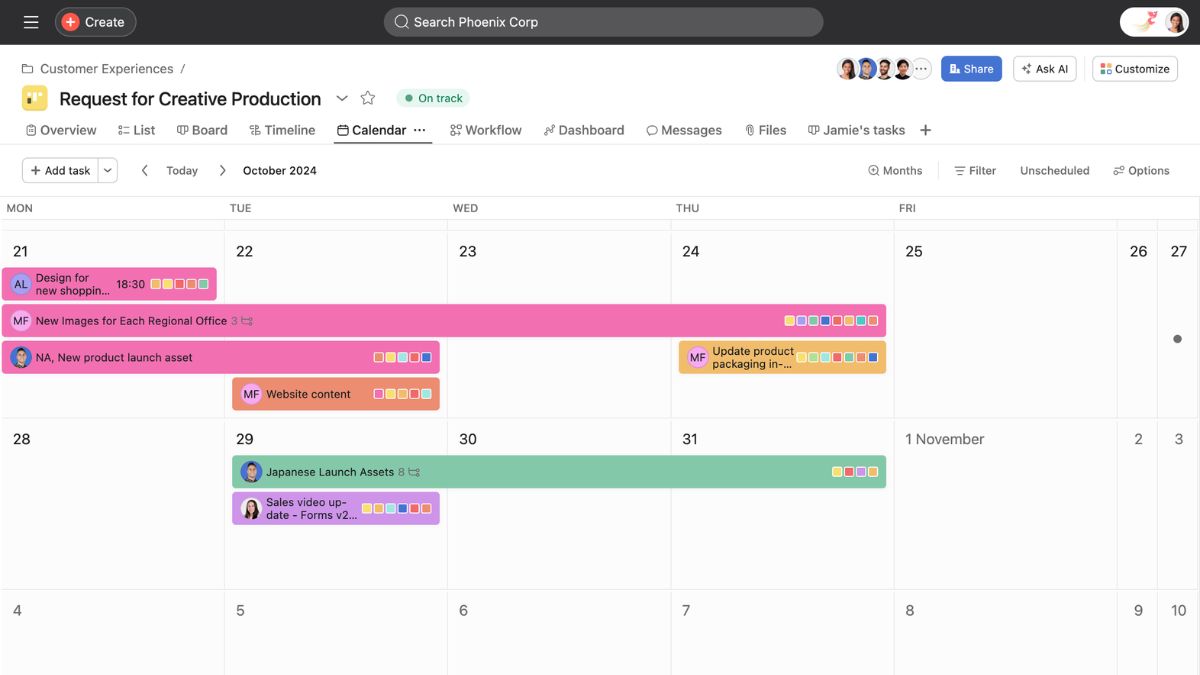
Project & Delivery management
Managing complex projects across continents requires more than spreadsheets and email threads. Modern project management tools bring structure, accountability, and transparency to offshore collaboration. They make it easy to break projects into manageable tasks, track ownership, visualize progress, and identify bottlenecks early.
Recommended Tools:
- Asana: It is useful for task assignment, project timelines, and milestone tracking. It stands out for its clean structure, helping offshore teams clearly see what they own, when work is due, and how each task connects to the broader project.
- Monday.com: Monday.com works well for teams that need visual project tracking and flexible workflows. Its customizable boards make progress, blockers, priorities, and ownership easier to understand across distributed teams.
- ClickUp: ClickUp combines task management, time tracking, documentation, goals, and reporting in one platform. It is a strong option for offshore teams with varied workflows because it reduces tool switching and keeps execution data in one place.
Communication & Meetings
Clear communication is the lifeline of every offshore operation. Without the right communication tools and discipline, even the most talented team can fall into misalignment. The goal is to make information flow seamlessly — whether teams are chatting asynchronously, holding virtual meetings, or sharing quick visual updates.
Recommended Tools:
- Slack: Slack is built for fast team messaging, file sharing, and topic-based channels. It stands out for its strong integrations, making it easier to connect project tools, alerts, and team conversations in one place.
- Zoom: Zoom is useful for video meetings, sprint reviews, client calls, and team workshops. Features such as HD video, breakout rooms, and webinar support make it effective for both daily collaboration and larger virtual sessions.
- Microsoft Teams: Microsoft Teams combines chat, video calls, file sharing, and meeting management in one workspace. Its deep Office 365 integration makes it especially valuable for businesses already using Microsoft tools.
Time, capacity, and async coordination
Time-zone diversity is one of the main advantages of offshore collaboration — but it only works when time and workload are managed transparently. Time-tracking and scheduling tools keep teams aligned on priorities, deadlines, and available working hours.
Recommended Tools:
- World Time Buddy: World Time Buddy is useful for comparing time zones and finding shared working hours. Its simple visual layout makes it easier to schedule meetings across distributed teams.
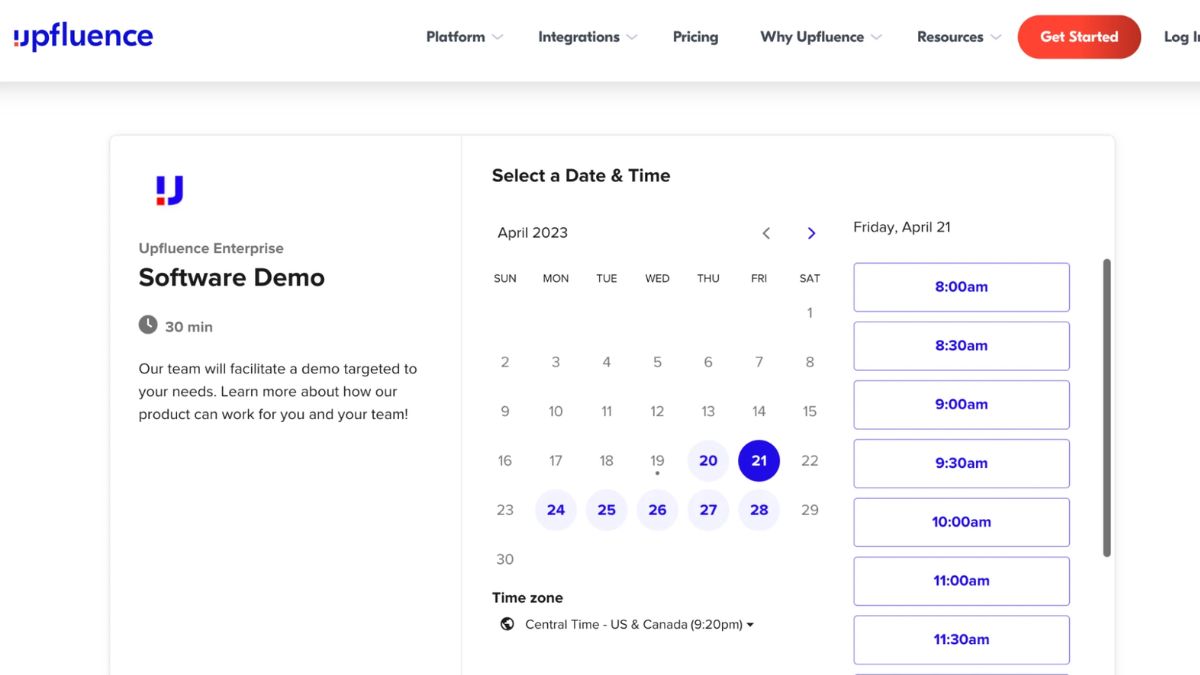
- Calendly: Calendly simplifies meeting scheduling by matching availability and removing back-and-forth emails. It is especially helpful for offshore teams that need to coordinate calls across different calendars and time zones.
- Clockify: Clockify helps teams track work hours, project time, and productivity patterns. Beyond time logging, it gives managers visibility into workload distribution and helps offshore teams stay accountable without constant supervision.
Collaboration Tools
Collaboration tools help offshore teams share ideas, co-edit documents, and work together visually. They are especially useful for planning, design discussions, brainstorming, and cross-functional alignment.
- Miro: Miro is a digital whiteboard for brainstorming, mind mapping, workshops, and planning sessions. It stands out by making remote collaboration more visual, which helps distributed teams explore ideas and align faster.
- Google Workspace: Google Workspace supports real-time editing, file sharing, and centralized document management through Docs, Sheets, Slides, and Drive. It is valuable for offshore teams because everyone can work on the same version without file confusion.
- Figma: Figma is designed for UI/UX collaboration, from wireframes to design systems and prototypes. Its real-time editing and commenting features help designers, developers, and stakeholders review work together without long feedback delays.
Team engagement tools
Building one team culture across borders requires more than meetings. These tools help managers strengthen recognition, collect feedback, and create light-touch engagement moments for offshore teams.
- Kudos: Helps team members recognize achievements, celebrate milestones, and build stronger peer-to-peer appreciation across locations.
- QuizBreaker: Uses quizzes, icebreakers, and gamified activities to make remote team bonding more natural and less forced.
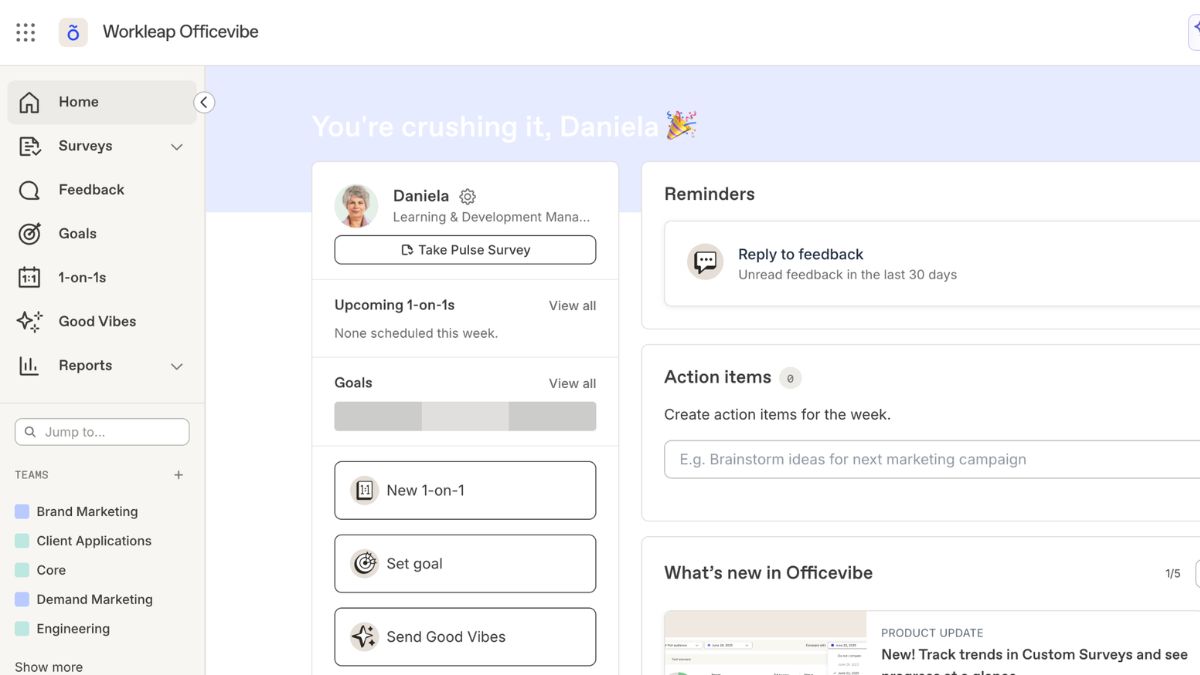
- Officevibe: Collects anonymous feedback, tracks morale, and helps managers identify engagement issues before they affect performance.
Cybersecurity and compliance tools
Offshore teams often handle sensitive source code, customer data, and internal systems. Security tools help protect access, reduce cyber risk, and support compliance across distributed environments.
- LastPass: Stores and manages passwords securely, reducing the risk of weak credentials or unsafe password sharing.
- Bitdefender GravityZone: Provides endpoint protection for distributed devices against malware, ransomware, and other cyber threats.
- OneTrust: Supports privacy, governance, and compliance management for teams working under global data protection requirements.
HR and payroll tools
Hiring and managing offshore professionals across countries can create payroll, contract, benefits, and compliance complexity. HR tools help simplify these operations and keep workforce management consistent.
- Deel: Supports international hiring, contracts, payroll, and local compliance for remote and offshore teams.
- Gusto: Manages payroll, benefits, onboarding, and HR administration in one platform for growing teams.
- BambooHR: Covers time-off tracking, employee records, performance reviews, and applicant tracking for structured HR management.
Common Mistakes When Managing Offshore Teams
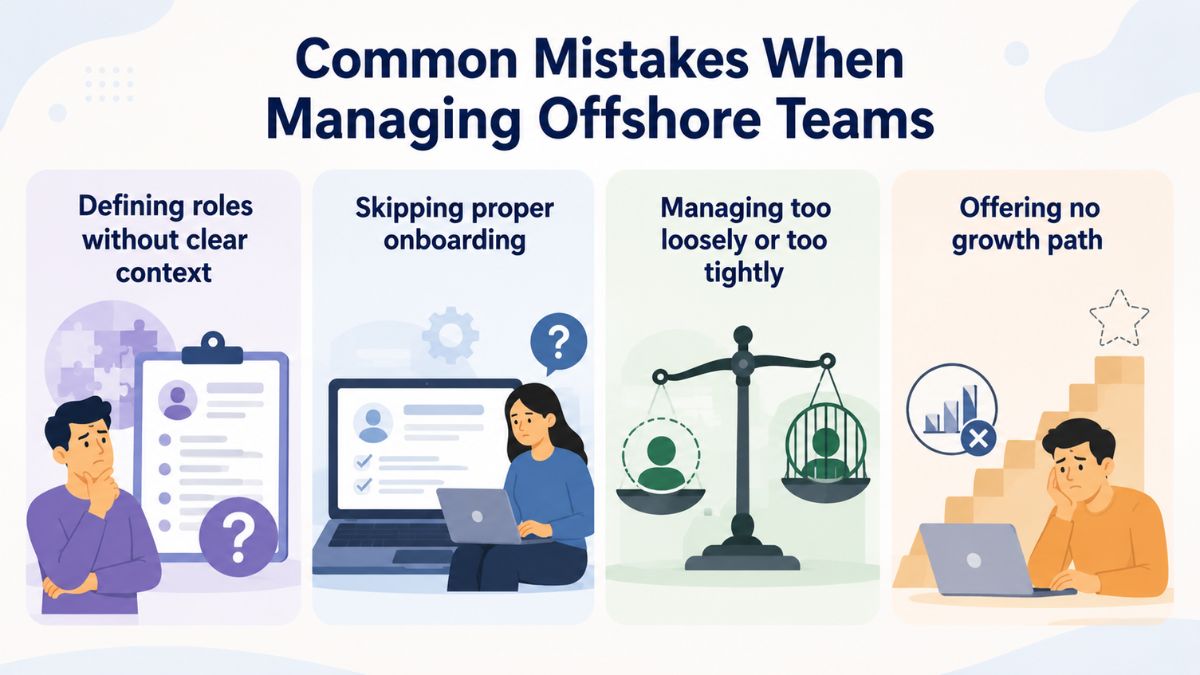
Even well-intentioned companies can run into challenges when working with offshore teams. Understanding these common mistakes can help you build stronger collaboration, improve performance, and create a more successful long-term partnership.
Defining roles without clear context
A common mistake is assigning offshore team members to roles that are not clearly adapted to the project, business goals, or delivery model. When responsibilities are vague, performance becomes inconsistent.
- The mistake: Reusing generic job descriptions or focusing only on cost reduction instead of outcomes, skills, ownership, and expected contribution.
- How to fix: Define each role around business needs, project responsibilities, success metrics, communication expectations, and collaboration scope from the start.
Skipping proper onboarding
Offshore professionals cannot perform well if they are expected to deliver immediately without enough context. Weak onboarding leads to confusion, slow ramp-up, and avoidable mistakes.
- The mistake: Giving offshore team members tasks before they understand your tools, workflows, product context, culture, and quality standards.
- How to fix: Create a structured onboarding plan with documentation, process training, cultural orientation, shadowing sessions, and clear first-month expectations.
Managing too loosely or too tightly
Poor management often appears in two extremes: ignoring offshore teams until problems arise or micromanaging every step. Both reduce trust, accountability, and productivity.
- The mistake: Treating offshore talent as transactional support or controlling their daily work because they are not physically present.
- How to fix: Set clear goals, feedback routines, KPIs, and communication cadences while giving the team enough autonomy to solve problems.
Offering no growth path
Offshore team members are more likely to leave when they see no future in the organization. Without development opportunities, even strong talent may become disengaged.
- The mistake: Using offshore professionals only for execution without offering mentorship, upskilling, recognition, or career progression.
- How to fix: Provide regular feedback, learning opportunities, expanded responsibilities, and visible recognition so offshore talent can grow with the business.
Offshore Team Management Checklist
Managing offshore teams successfully requires more than regular meetings and project tracking. Use the checklist below to assess whether your processes, communication, and management practices are strong enough to support high-performing distributed teams.
Hiring & Onboarding
- Screen for independence, communication, and technical skills.
- Documented, repeatable onboarding process.
- Clear definitions of roles, responsibilities, and expectations from day one.
- Dedicated mentor or buddy for the first month.
Communication Systems
- Async-first communication tools and practices.
- Daily, weekly, and monthly update rhythms.
- Centralized decision logs and project context.
- Protected overlap hours for live collaboration.
Work Structure
- Clear decision-making authority.
- Documented quality standards and delivery expectations.
- Project visibility without micromanagement.
- Cross-time-zone handoff processes.
Relationship & Culture
- Regular growth-focused 1-on-1s.
- Offshore team inclusion in discussions and decisions.
- Equal recognition and reward systems.
- Clear career progression paths.
Operations
- Legal, infrastructure, and operational risk plan.
- Performance metrics and feedback loops.
- Continuous learning and improvement systems.
- Scalability plan for future team growth.
Build a High-Performing Offshore Software Team With Newwave Solutions
Software development is one of the most popular and in-demand offshore services. If you’re looking for a trusted offshore software development partner, Newwave Solutions is the right choice.
With over 14 years of experience and a team of 300+ technology professionals, we provide scalable offshore software development solutions that combine technical expertise, transparent collaboration, and reliable project execution.

Here’s how we support businesses overcome common offshore collaboration challenges and complete the software development project successfully:
- Build a software development team designed around your goals: Whether you need developers, testers, designers, or project managers, we assemble the right combination of talent to help you achieve faster and more predictable project outcomes.
- Deliver reliable software with fewer risks and delays : Quality assurance is embedded throughout the software development process, helping identify issues early and ensuring stable, high-performing solutions for your users.
- Minimize security and compliance concerns: Our robust safeguards and secure development processes help protect your data, maintain compliance requirements, and reduce operational risk.
- Reduce coordination challenges across time zones : Our well-defined workflows, communication routines, and project management practices keep work moving forward efficiently, so you can focus on strategic decisions instead of day-to-day oversight.
- Improve collaboration and productivity across distributed teams: Structured communication, agile delivery practices, and transparent reporting help ensure smooth cooperation between your internal stakeholders and offshore team members.
See our portfolio to discover how we have helped businesses across industries deliver complex software projects successfully
Whether you need a dedicated offshore development team, additional engineering capacity, or end-to-end software delivery, Newwave Solutions provides the people, processes, and governance needed to help your offshore team perform as an extension of your business. Contact us to discover how we can tailor our solutions to meet your needs.
Conclusion
The key to managing offshore teams is treating them as an extension of your business rather than a separate external resource. With the right processes, tools, and leadership approach, offshore teams can deliver high-quality outcomes, reduce operational pressure, and support sustainable growth across projects and products.
If you want to build and manage high-performing offshore software teams without the complexity of hiring and coordination, Newwave Solutions can help. From team setup to project governance and quality assurance, we make offshore software development easier to manage, allowing you to focus on business growth while we handle execution.
Book a consultation with our experts today to discuss your project requirements and explore the right offshore team model.
FAQs
1. I have offshore teams and with different time zones, how do I manage the situation?
Guarantee 90–120 minutes of overlap for decisions and stand-ups. Move everything else to async: handover notes, decision memos with a response deadline, and recorded demos. Keep a shared calendar of working hours, holidays, and releases. Rotate meeting times if teams are far apart to distribute the pain fairly.
2. What methods I can use to monitor my offshore team productivity?
Track outcomes and flow, not presence: lead time, deployment frequency, change failure rate, MTTR, and sprint goal completion. Add customer-visible quality metrics (defect escape rate, p95 latency, support backlog). Use dashboards tied to your board and CI/CD, and review trends in retros. Time trackers (when required) should inform planning—not micromanagement.
3. About offshore teams – what are the KPI’s?
They align outcomes, remove blockers, and protect team health. Practically: refine the backlog with product, maintain quality gates, orchestrate overlap windows and handovers, enforce documentation and security hygiene, nurture growth, and keep stakeholders informed with crisp, visual status updates. In short: they create the conditions for trust and autonomy.
4. How do I build trust with an offshore team?
Trust is built through transparency, consistent communication, and giving team members ownership of their work. Instead of micromanaging, managers should focus on clear expectations, measurable outcomes, and regular feedback.
5. What is the best way to onboard offshore team members?
A strong onboarding process should include company introductions, role expectations, workflow documentation, communication guidelines, and access to necessary tools. Assigning a mentor or point of contact can also help new offshore employees adapt faster.
To Quang Duy is the CEO of Newwave Solutions, a leading Vietnamese software company. He is recognized as a standout technology consultant. Connect with him on LinkedIn and Twitter.



Read More Guides

Get stories in your inbox twice a month.
Let’s Connect
Let us know what you need, and out professionals will collaborate with you to find a solution that enables growth.
Leave a Reply