


Dating App Development: How To Create A Dating App
Dating app development represents a booming opportunity in 2025-2026 as the global market reaches $13.1 billion with over 500 million users worldwide, driven by apps like Tinder, Bumble, and Hinge. Those apps have revolutionized personal connections through innovative matching algorithms and intuitive interfaces.
This guide will dig into the details of this topic by providing a complete roadmap for creating a standout dating app, covering core features, technology selection, step-by-step dating app development processes, and proven strategies for market success. If you are about to join the dating app competition, then read on!
What is Dating App Development?
Dating app development is the process of designing, building, and deploying a mobile or web-based application specifically tailored to help users discover, match, and communicate with potential partners. Such development involves combining user profile management, matching algorithms, real-time communication, and security/privacy mechanisms to create a platform for meaningful connections. In recent years, dating app development has become a fast-growing segment in tech as more people turn to mobile apps for relationships and social interactions.
Example:
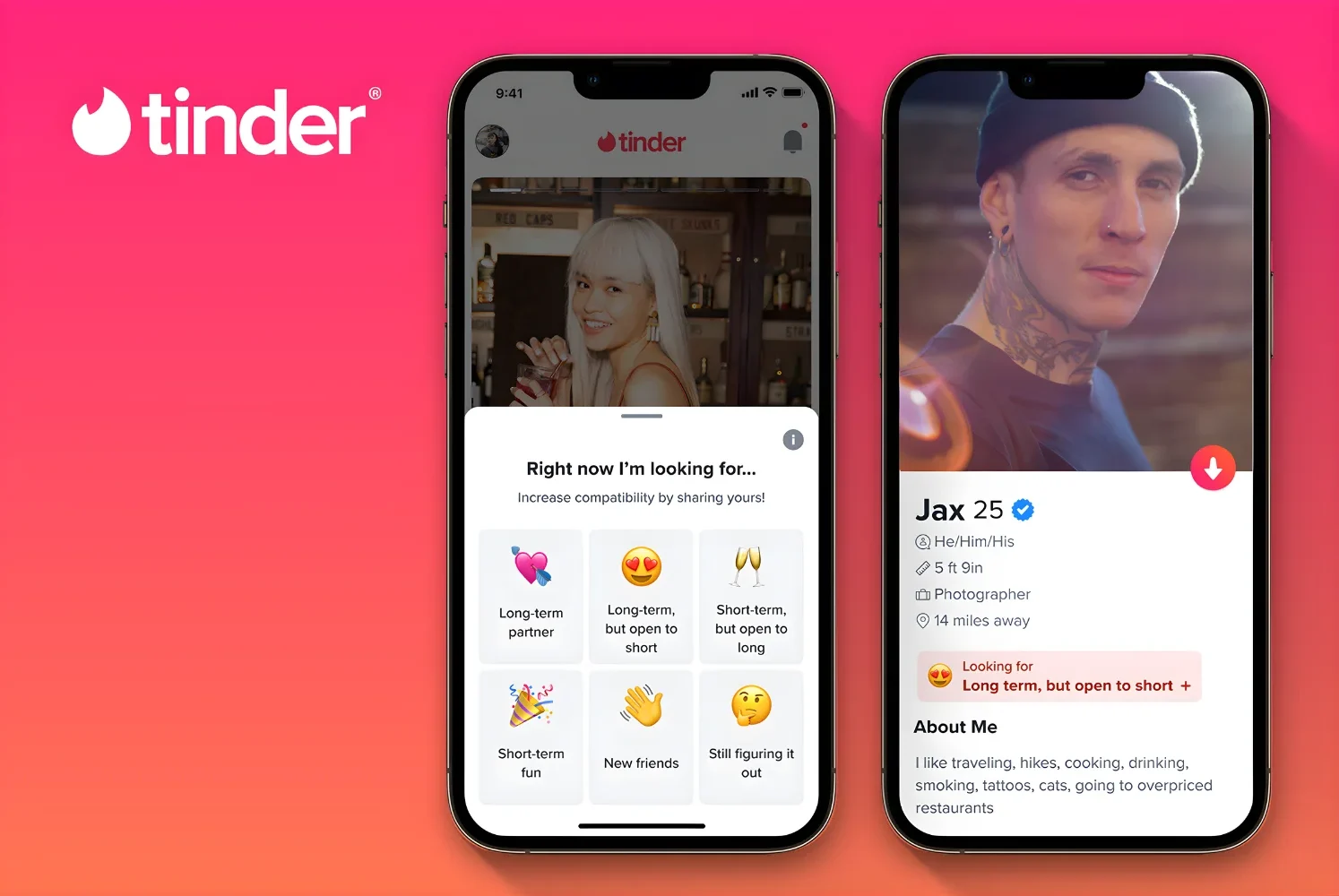
A prime example is Tinder — the team behind Tinder built its app with swipe-based matching and real-time messaging features, which helped the app reach over 60 million monthly active users and generate nearly $2 billion in revenue in 2024.
>>> See more: Top 8 Apps Like Snapchat: Best Snapchat Alternatives
Features of Dating App Development:
A basic dating app must include a set of core features — and ideally some advanced ones — to meet modern user expectations and stand out from the competition.
Core Features:
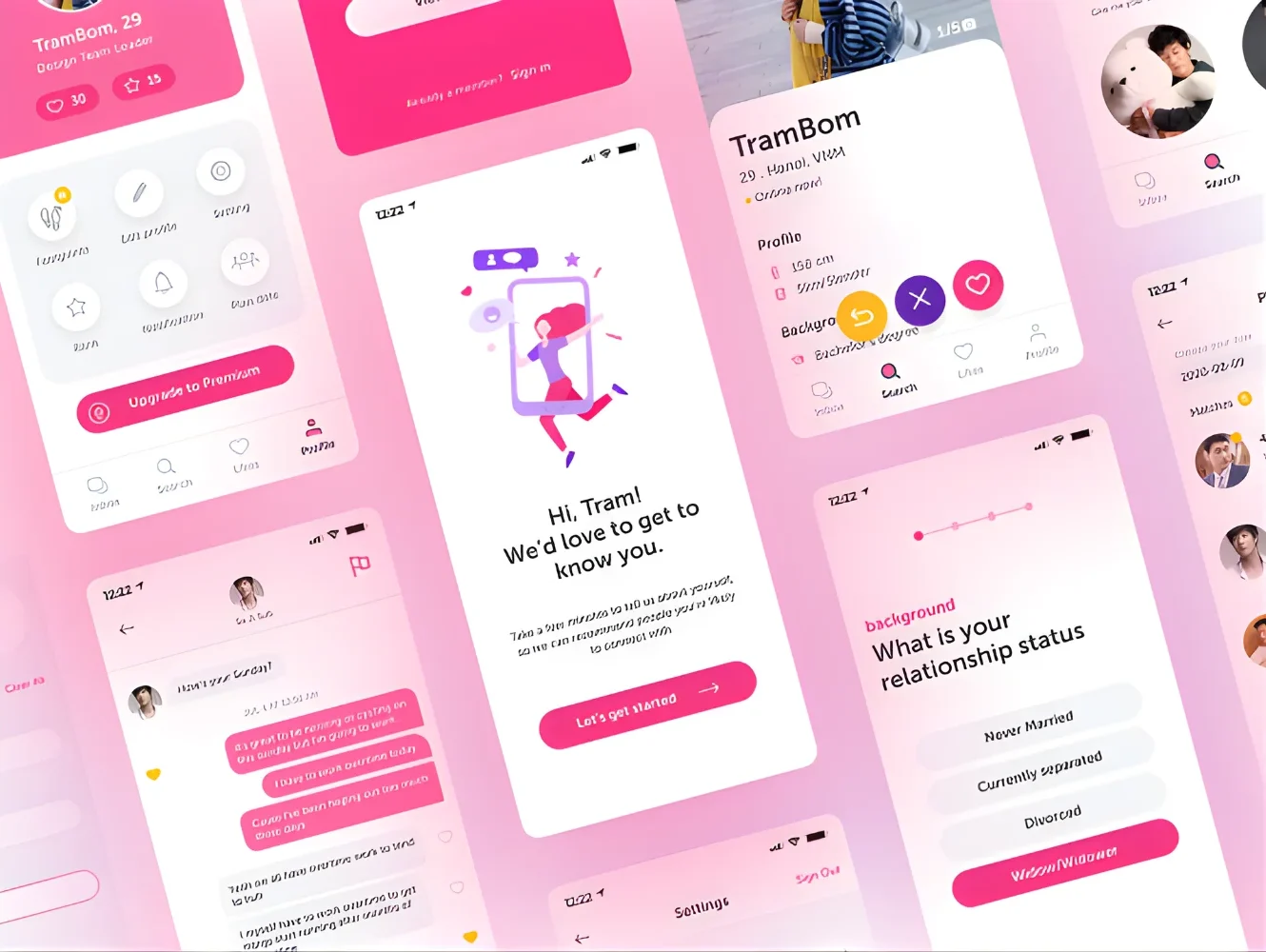
- User registration & profile creation (with photos, bio, preferences)
- Swipe or matching mechanism (swipe/like/pass/compatibility matching)
- Real-time chat/messaging (text, possibly media, notifications)
- Geolocation & search filters (distance, age, interests, preferences)
- Match notifications & user-activity feed
Advanced / Differentiating Features:
- In-app video or voice call functionality
- Profile verification/security & fraud prevention (ID check, photo verification)
- Smart matching algorithms (using behavior, preferences, AI/ML)
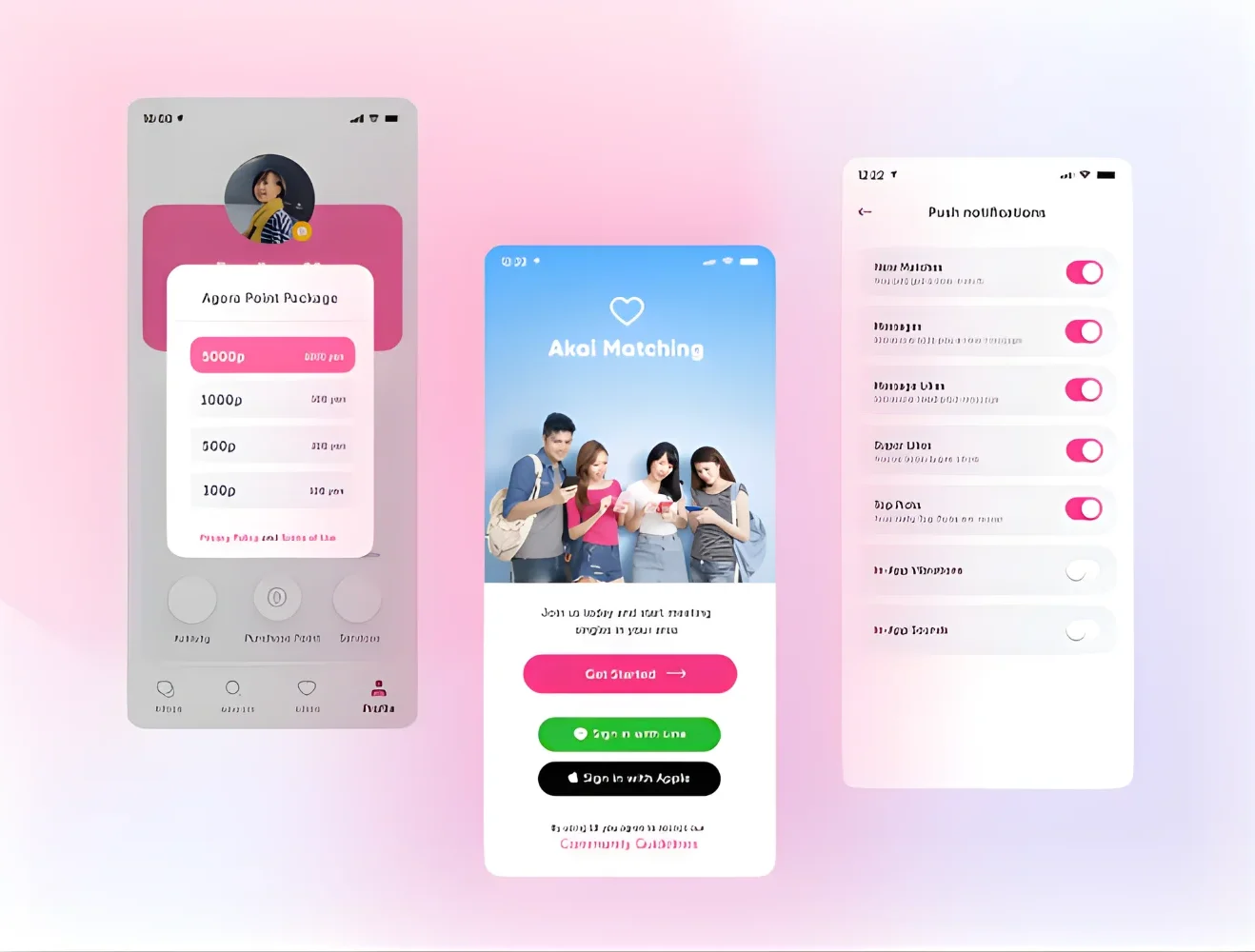
- Push notifications & engagement features (daily boosts, reminders, curated matches)
- Privacy settings, block/report tools, and secure data encryption
Why Make Your Own Dating App?
Now, why build your own dating app? Creating a dating app offers numerous benefits, including:
- Strong and Growing User Demand: The global dating-app user base has surged to hundreds of millions, reflecting continuously rising demand for digital matchmaking services. Because so many singles now rely on apps for social connection and relationship seeking, creating a new dating app offers access to a vast, active audience from the start.
- High Market Growth and Revenue Potential: The online dating market has shown consistent growth. Global revenue recently reached over USD 6.18 billion in 2024, and projections estimate the market value could more than double by the early 2030s. This growth trajectory indicates that a well-designed app can quickly generate steady income, especially through subscriptions, premium features, or monetization models.
- Opportunity to Serve Niche Markets & Underserved Segments: The diversity of user preferences and demographics—from age groups, orientations, interests to cultural backgrounds—creates space for niche dating apps. A specialized platform can position itself distinctively, catering to communities or preferences neglected by mainstream apps, which increases chances of user loyalty and differentiation.
- Flexibility and Full Control Over Features & Experience: Developing your own dating app allows full customization of matching algorithms, user flows, design language, and unique features (e.g., verification, privacy levels, compatibility filters). Such flexibility supports building a user experience tailored to your target audience and business model, which is difficult to achieve with off-the-shelf or white-label solutions.
- High Engagement & Retention Opportunities: Dating apps typically record strong engagement metrics, driven by frequent user visits, interactions, and active matchmaking cycles. When combined with thoughtful UX, trust & safety features, and community building, a custom app has good potential for high retention and long-term user loyalty.
- Rapid Path to Profitability with Modern Monetization Models: With proven monetization models—such as premium subscriptions, freemium upgrades, in-app purchases, virtual gifts, and advertising — a dating app can convert active user base into revenue relatively quickly. Early launch of a well-designed MVP allows validation of market fit and revenue potential before scaling investment.
>>> See more: A Detailed Guide To Build Property Listing App Laravel
4 Main Types of Dating Apps
When you decide to create a dating app, understanding the different types of dating apps is crucial. Each type offers unique features that cater to specific user preferences. Below are the four most common types of dating apps available:
| Type of App | Description | Advantages |
Examples |
|
1. Geolocation-based Dating Apps |
Use the user’s location to suggest nearby matches. |
|
Tinder, Happn, Grindr |
|
2. Questionnaire-based Dating Apps |
Match users based on detailed profiles and compatibility questionnaires. |
|
eHarmony, OkCupid, Match.com |
|
3. Traditional Dating Apps |
Combine geolocation and questionnaire elements for balanced matching. |
|
Bumble, Hinge, Plenty of Fish |
|
4. Niche-based Dating Apps |
Cater to specific demographics, interests, or lifestyles. |
|
JDate, Farmers Only, The League |
How to Create a Dating App: A Step-by-Step Process
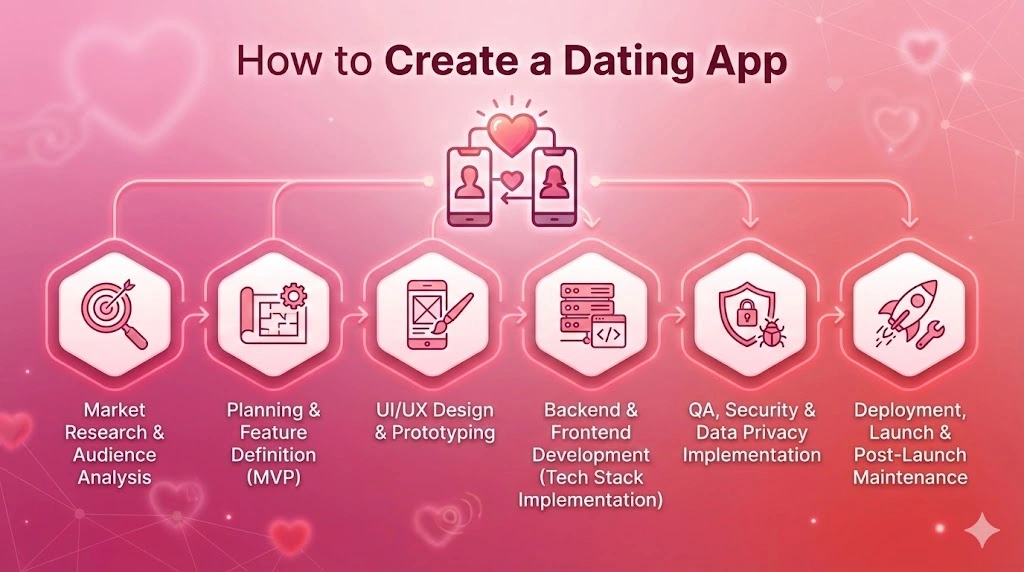
Creating a dating app involves several crucial steps, from conceptualization to launching and maintenance. This guide will walk you through the detailed dating app development process from scratch.
Step 1: Market Research & Audience Analysis
Your team conducts thorough market research and audience analysis to establish the essential foundation for the dating app project because this step reveals precise target demographics and authentic user preferences. Developers study comprehensive demographic trends, behavioral patterns, and competitor landscapes within the dating market to identify profitable gaps and underserved niches ready for disruption.
Step 2: Planning & Feature Definition (MVP)
Your business defines a well-structured planning phase and feature scope for the Minimum Viable Product (MVP) that prioritizes only indispensable elements like user profiles, matching algorithms, and basic chat functionality for initial release. This clear MVP definition before development maintains cost efficiency and accelerates time-to-market while enabling valuable early user validation through authentic testing.
In case you are unfamiliar with the MVP term and its application, feel free to explore our latest blog on What is MVP (Minimum Viable Product).
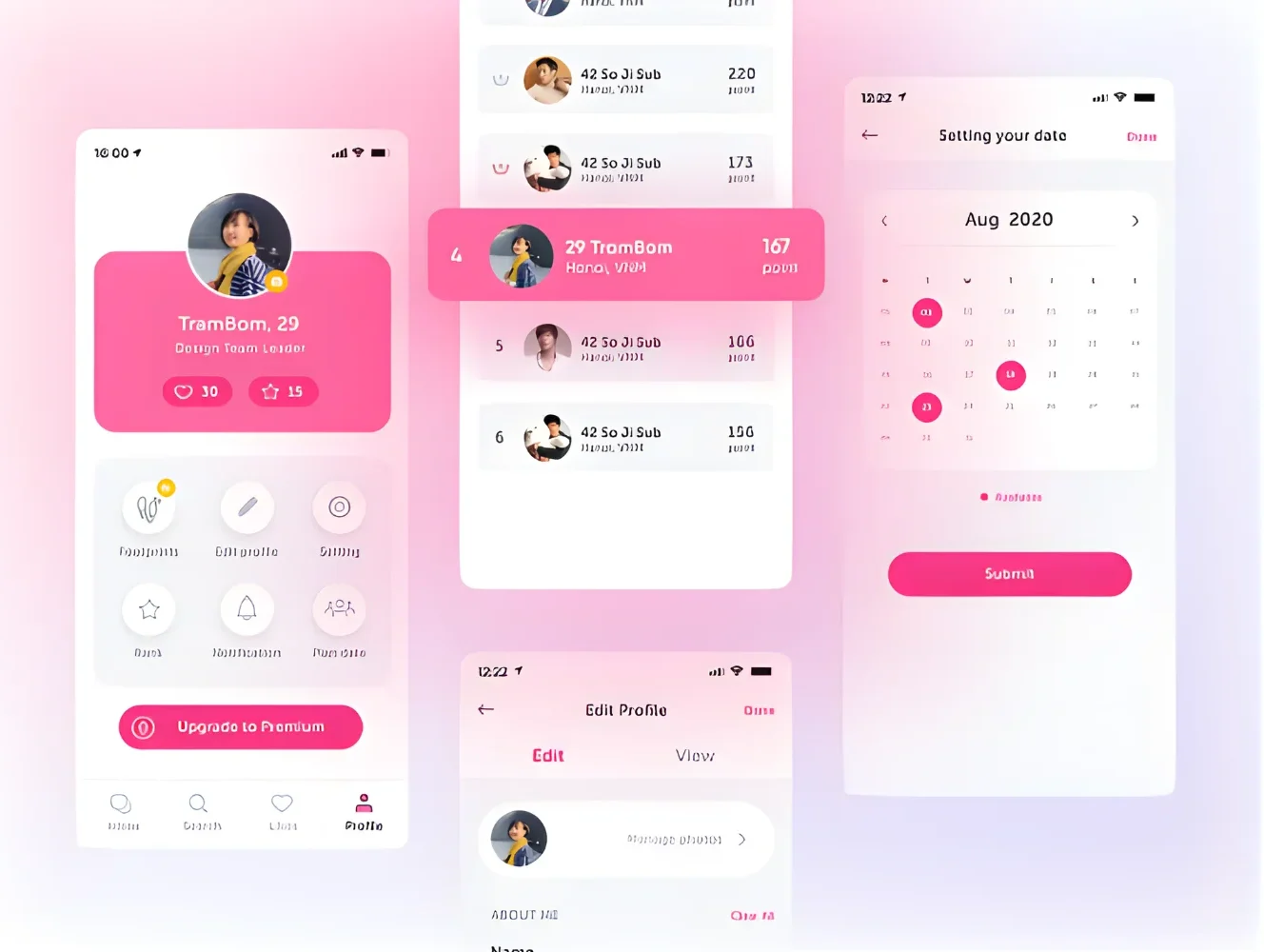
Step 3: UI/UX Design & Prototyping
Your design team creates effective UI/UX prototypes that shape user perception and interaction patterns through intuitive navigation, compelling profile layouts, and smooth gesture-based flows like swiping and messaging. Early prototyping validates design assumptions and user experience flows without heavy coding investment, which minimizes costly redesign risks and fosters immediate user comfort from first interactions.
Step 4: Backend & Frontend Development (Tech Stack Implementation)
Your development team implements backend and frontend technologies that construct the robust core infrastructure connecting dynamic user interfaces with secure data storage, matching logic, and real-time communication systems. Backend handles critical functions including authentication, privacy controls, and scalable data management while frontend delivers responsive experiences across devices, which eliminates technical debt for future scalability.
Step 5: QA, Security & Data Privacy Implementation
Your QA specialists execute rigorous testing combined with comprehensive security measures that protect application reliability and user trust, essential for dating platforms managing sensitive information. Extensive cross-device testing uncovers bugs and performance issues while encryption, authentication, and fraud detection safeguard personal data, which ensures regulatory compliance and builds lasting user confidence.
Step 6: Deployment, Launch & Post-Launch Maintenance
Your operations team manages strategic deployment and launch execution that transitions the app from development to production through app store submissions, cloud infrastructure setup, and user onboarding strategies. Post-launch maintenance sustains platform viability via systematic bug fixes, performance optimization, and feature enhancements driven by user feedback, which guarantees stability and competitive adaptability.
How Much Does It Cost to Make a Dating App?
The development of a dating app involves a multifaceted process that influences its final cost. Since each custom-built app is unique, estimating the budget varies based on several factors. Some key factors influencing costs include design complexity, functionality, features, and projected user base post-launch.
Below is a brief estimation of the total costs for dating app development:
|
Cost Component |
What It Covers |
Estimated Range* |
| MVP Development (basic features) | Profile, matching, chat, simple UI/UX | USD 30,000 – 60,000 |
| UI/UX Design & Front-End | Custom designs, animations, and mobile responsiveness | USD 5,000 – 20,000 |
| Backend Development & Server Setup | Database, APIs, user management, matching logic, hosting | USD 15,000 – 80,000+ |
| Real-Time Messaging & Additional Features | Video/voice chat, push notifications, algorithms | USD 5,000 – 25,000 |
| QA & Security Implementation | Testing, security audits, privacy compliance | USD 3,000 – 10,000 |
| Deployment & Launch | Store submission, server setup, initial marketing | USD 1,000 – 5,000 |
| Maintenance & Updates (annual) | Bug fixes, feature updates, server maintenance | 10–20% of the initial build cost per year |
*Estimated ranges vary significantly based on app complexity, team location, and required scale. For an “advanced dating app” with full features, the total cost may exceed USD 120,000.
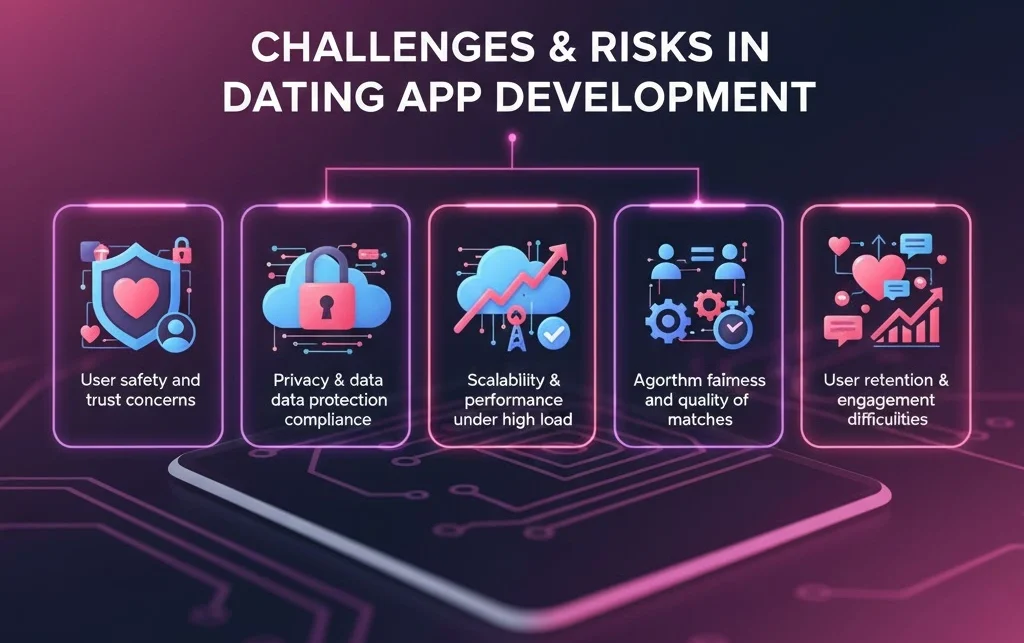
Common Challenges & Risks in Dating App Development
- User safety and trust concerns — Risk of fake profiles, harassment, or misuse of personal data may undermine user trust; mitigation requires strong verification, moderation, and privacy protocols.
- Privacy & data protection compliance — Handling personal information responsibly and complying with data privacy regulations (GDPR, local laws) demands encryption, secure storage, and transparent policies.
- Scalability & performance under high load — As the user base grows, the backend must scale smoothly; failure to do so can lead to slow responses, downtime, or poor user experience. Careful architecture and infrastructure planning are needed.
- Algorithm fairness and quality of matches — Poor matching logic can frustrate users; refining algorithms and leveraging user feedback or AI may be required for better matching accuracy.
- User retention & engagement difficulties — Without strong engagement features (notifications, user safety, UI/UX), apps risk high churn; continuous updates and user-centric features are essential.
Conclusion
The dating app development involves a multifaceted process that encompasses various stages, from conceptualization to implementation. By understanding the core features and functionalities that drive user engagement and satisfaction, you can create a compelling and successful dating app that resonates with your target audience. Furthermore, make sure you can estimate the costs associated with dating app development for appropriate financial planning and resource allocation.
As your business considers IT outsourcing for developing a dating app or other types of applications, Newwave Solutions stands out as a trusted and reliable partner. With over 14 years of experience and a team of more than 300 skilled technology professionals, we deliver high-quality cross-platform app development services – including web app development solutions and mobile app development services – that support the entire process from ideation and design to deployment and ongoing maintenance.
Contact us to learn more about our reputable and high-standard app development solutions.
Contact Information:
- Head Office (Hanoi): 1F, 4F, 10F, Mitec Building, Cau Giay Ward, Hanoi City, Vietnam
- Branch Office (Tokyo): 1chōme118 Yushima, Bunkyo City, Tokyo 1130034, Japan
- Hotline: +84 985310203
- Website: https://newwavesolution.com/
- Email: [email protected]
To Quang Duy is the CEO of Newwave Solutions, a leading Vietnamese software company. He is recognized as a standout technology consultant. Connect with him on LinkedIn and Twitter.



Read More Guides
Get stories in your inbox twice a month.
Let’s Connect
Let us know what you need, and out professionals will collaborate with you to find a solution that enables growth.
Leave a Reply