


Top 10 Popular Java Application Programs Examples In Real-World
Java is one of the most popular programming languages used in the world of software development, as there are over 3 billion devices of different platforms – Windows, Unix or Linux, Macintosh, Mac OS, Android, etc. that use Java for the development of software and applications. In addition to that, Java has its footprint in many enterprises’ custom-made solutions and embedded systems, ranging from banks & insurance companies to retailers and manufacturers.
In this blog, we will investigate 10 common cases of Java application programs examples to see how major businesses and enterprises implement Java programming in their business model.
Why Java Still Dominates Application Development?
The Java programming language remains one of the most popular choices today despite the rise of many newer languages. Its continued relevance is driven by tangible business-level benefits in large-scale software engineering and outsourcing engagements. Below are key reasons that explain why Java continues to dominate.
- Platform independence (JVM support): Java’s “Write Once, Run Anywhere” philosophy ensures that compiled code can run on any device or operating system that supports the Java Virtual Machine, which cuts development costs and simplifies cross-platform deployment.
- Mature ecosystem of frameworks and libraries: Because Java has been around for decades, it offers well-established frameworks (such as Spring Boot, Hibernate), build tools, and libraries that accelerate development and reduce risk.
- Enterprise-grade security and stability: Java’s architecture includes strong security features such as byte-code verification, sandboxing, and stable backward compatibility, which make it favourable in regulated sectors such as finance or healthcare.
- Large global talent pool: With millions of Java developers and a long history of enterprise adoption, companies find it easier to hire, outsource, and scale teams using Java, which reduces resource risk in outsourced projects.
- High scalability for demanding workloads: Java supports multithreading, distributed systems, and high-throughput architectures, which enable enterprises to build robust backend services and mission-critical applications.
>>>Read more: Everything to know about Java Software Development
Top 10 Real-World Java Application Programs Examples
Now, let’s take a look at the top 10 cases of Java application programs examples in the real world to see how enterprises successfully apply the Java programming language to their operation/ services.
1. Mobile Applications
Java plays a crucial role in mobile applications by supporting robust backend services, cross-platform logic, and large-scale concurrency, which enables streaming apps to handle millions of users simultaneously. Many streaming services choose Java for its stability, rich library ecosystem, and compatibility with Android devices. Enterprises leveraging mobile applications often rely on Java to ensure high availability and responsiveness in global usage.
Features:
- Multi-threading and concurrency management that allows many users to stream simultaneously without impacting performance.
- Platform independence via the Java Virtual Machine (JVM), enabling parts of the mobile service logic to be reused across Android and backend services.
- Mature libraries and frameworks (e.g., Spring Boot, JPA) that support rapid development of RESTful APIs and microservices.
- Strong memory management and garbage collection support that helps maintain performance under high load.
Example: Spotify uses Java for its recommendation engine and desktop client integration, which allowed the company to support millions of concurrent listeners while maintaining smooth playback and user experience.

2. Web-based Applications
In large e-commerce platforms, Java underpins backend systems by offering scalability, microservices architecture, and reliable performance, which are essential for handling high transaction volumes and complex web workflows. Enterprises in the web-based domain adopt Java because the language supports robust service-oriented architecture and enterprise-grade operations. The comparison of Java application programs examples is particularly relevant when outsourcing backend web systems.
Features:
- Microservices frameworks (such as Spring Boot) facilitate modular, scalable server architectures and fast deployments.
- JVM performance optimisations and efficient I/O that support high-throughput request handling.
- Extensive integration with enterprise databases, messaging systems, and caching layers for complex workflows.
- Strong developer tooling, monitoring, and debugging support that aid in maintaining large web-platform operations.
Example: Amazon uses Java extensively for its backend e-commerce platform and AWS infrastructure, which enables the company to manage billions of transactions, maintain high availability, and deliver consistent performance globally.
3. Enterprise Applications
Java continues to serve as a cornerstone language for enterprise-grade applications, especially in sectors such as banking, insurance, and financial services, where security, maintainability, and scalability are critical. Enterprises outsourced for such systems often select Java because it aligns with stringent compliance, dependency management, and large-team development practices. The term Java application programs examples thus, includes major enterprise backend systems built in Java.
Features:
- Enterprise-level frameworks (like Java EE / Jakarta EE) that support multi-tier architectures, transaction management, and security.
- Long-term maintainability via static typing, modular code structure, and strict coding standards.
- Proven reliability under high load and complex business logic typical in finance and banking sectors.
- Robust tooling for audit trails, regulatory compliance, and change management, which makes Java suitable for enterprise systems.
Example: A global bank like Barclays uses Java to build and maintain its core banking systems, enabling secure processing of financial transactions, regulatory compliance, and high availability across international operations.

4. Gaming Applications
Java application programs examples in gaming demonstrate how the language supports cross-platform game engines, modifiable architecture, and community extensions, making it a natural fit for large-scale games with global user bases. Game developers often choose Java because it allows code reuse across platforms, supports real-time updates, and facilitates strong community ecosystems.
Features:
- Cross-platform compatibility where game logic written in Java runs on multiple operating systems with minimal modification.
- Mod-friendly architecture that enables community contributions, plugin systems, and dynamic content updates.
- Real-time event management and threading support capable of handling large numbers of users and in-game events.
- Easy integration with networking libraries and game-specific frameworks for multiplayer and server-client interactions.
Example: Mojang’s Minecraft originally used Java for the desktop version, enabling community mods, cross-platform play and a stable, scalable architecture that served hundreds of millions of players over many years.
5. Distributed Applications
Distributed systems require code bases that support service orientation, fail-over, high concurrency, and global deployment—areas where Java excels, making it common in infrastructure and provider ecosystems. Enterprises engaging in distributed application development look at Java application programs examples to ensure the stack supports microservices, containers, and large-scale orchestration.
Features:
- JVM support for multithreading and non-blocking I/O that underpins high-concurrency services.
- Strong library ecosystem for distributed computing frameworks, message queues, and service meshes.
- Portability across cloud environments allows Java applications to run consistently across different platforms.
- Mature DevOps tooling and containerisation support that facilitates distributed deployment, monitoring, and scaling.
Example: Amazon AWS uses Java in many of its internal services and for deploying Java applications via Elastic Beanstalk and EKS clusters, enabling automated build-and-deploy pipelines, high-availability microservices, and global infrastructure scale-up.

6. Big Data Technology Applications
Big data applications demand high throughput, efficient data processing, and framework integration, and Java remains a strong language in this domain due to performance, ecosystem maturity, and enterprise adoption. When enterprises build solutions using Java application programs examples for big data, they benefit from reliability, integration with data platforms, and long-term support.
Features:
- High-performance data processing frameworks (such as Hadoop, Spark) built for or compatible with Java.
- Extensive libraries and APIs for data ingestion, transformation, streaming, and batch processing.
- Strong typing and modularity help manage complex data pipelines and large codebases.
- Seamless interoperability with enterprise data warehouses, message brokers, and analytics platforms.
Example: Facebook leverages Java for large parts of its data analytics infrastructure and streaming services, enabling the company to process massive volumes of user data, deliver insights in real time, and support global operations at scale.
7. Trading Applications
Financial trading systems require ultra-low latency, high reliability, audit trails, and complex rule engines; Java is frequently used in this sector for these characteristics and as part of Java application programs. Firms in finance use Java to support real-time trading, risk calculation, and integration with legacy systems.
Features:
- Low-latency processing and threading models that satisfy trading system performance demands.
- Strong integration with legacy systems, databases, and messaging infrastructure prevalent in finance.
- Full support for formal audit, security, compliance, and transaction management frameworks.
- High-maintainability and long-term viability, essential in financial services with decade-long system lifecycles.
Example: Murex uses Java to build its trading applications and risk-management platforms, enabling financial institutions to execute trades, calculate risk exposure, and comply with regulatory requirements with high reliability.
8. Robotics Applications
Robotics and automation systems require real-time control, hardware interface integration, complex algorithms, and stable runtime—areas where Java application programs show Java’s applicability beyond traditional IT applications. In robotic applications, Java is used for embedded systems, middleware, simulation, and control logic.
Features:
- Integration with hardware APIs and real-time control systems via Java libraries and native bridges.
- Modular architecture that supports simulation, control, data logging, and analytics within robotic systems.
- Cross-platform capability allows the same control software to run on multiple types of hardware.
- Robust fault-tolerance and recovery mechanisms built into enterprise Java frameworks, which enhance system reliability.
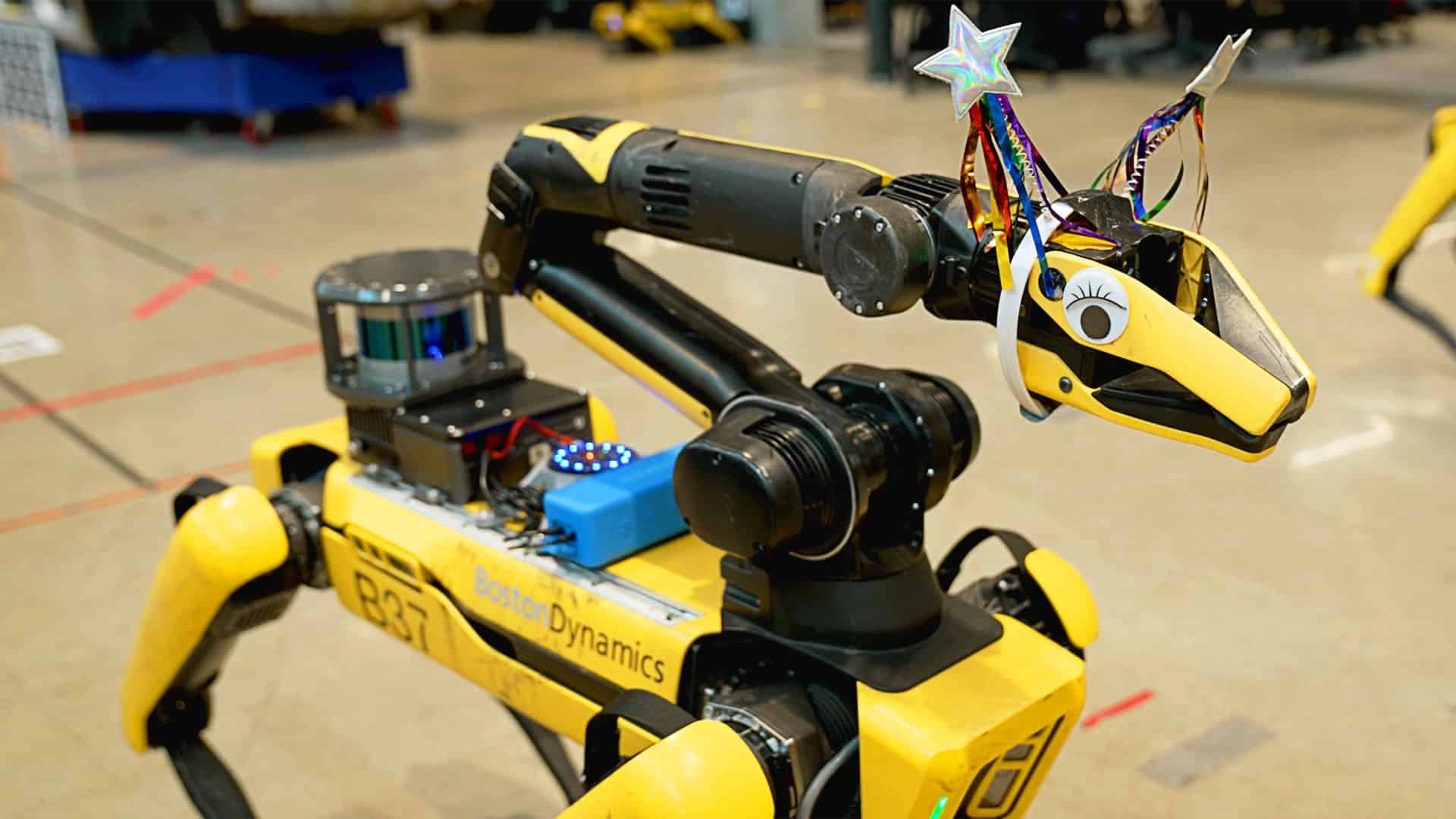
Example: Boston Dynamics uses Java in some of its middleware and control software components to coordinate robot behaviours, process sensor data, and ensure real-time operations with high reliability.
9. Education Applications
Educational platforms require scalable web services, content management, analytics, and user interaction at scale; Java remains one of the go-to languages in this domain, so it is included among Java application programs examples. Enterprises delivering educational software choose Java for its scalability, security, and large-team support.
Features:
- Scalable server-side infrastructure that handles large numbers of users, courses, and concurrent sessions.
- Secure user authentication, role-based access, and data protection are common in enterprise educational systems.
- Large-scale analytics and reporting capabilities built on Java for tracking learning progress, outcomes, and system health.
- Integration with third-party services, APIs, and learning-management systems using Java frameworks.
Example: Coursera uses Java for some of its backend microservices, enabling it to support millions of learners globally, deliver content reliably, and scale platform operations while maintaining high availability.
10. IoT Applications
Internet of Things (IoT) systems demand connectivity, data ingestion, device-to-cloud interface, real-time processing, and cross-platform deployment; hence, Java application programs examples include IoT solutions built in Java. Many enterprises building IoT platforms select Java for its portability, robustness, and ecosystem support.
Features:
- Embedded JVM or Java variants for device-side logic, enabling uniform code across sensors, gateways, and cloud.
- Connectivity protocols and libraries for MQTT, WebSockets, and REST built in Java.
- Scalable backend services that process device data, perform analytics, and generate insights in real time.
- Cross-platform deployment capabilities that allow Java-based code to run on edge devices, gateways, and the cloud alike.
Example: Bosch uses Java-based frameworks and middleware to build its IoT device-management and cloud-integration platforms, enabling real-time sensor data collection, device control, and scalable edge-to-cloud operations.

How to choose the appropriate Java application for your business
After exploring the top 10 common applications and how enterprises apply Java in those domains, you now understand how Java can be used in practice. To further refine your decision on adopting Java for your business, here are the key selection criteria and questions to evaluate:
- Budget alignment: Determine whether your project budget allows for Java-stack development, licensing, talent cost, and maintenance overhead.
- Performance requirement: Consider if your application must handle high throughput, concurrency, or global scale, in which case Java may be appropriate.
- Enterprise context: Assess if your business requires long-term maintainability, compliance, audit trails, and large team coordination, which favour Java.
- Talent availability and outsourcing fit: Evaluate whether your team or outsourcing partner has strong Java expertise, access to libraries, and proven workflow in Java.
- Technology lifecycle and ecosystem: Ask whether the Java stack chosen will be supported, has community backing, and long-term viability for your business domain.
- Business agility vs structure trade-off: Determine whether your project demands rapid pivots and prototypes (which might lean toward more flexible languages) or whether stability and structure dominate, favouring Java.
- Outsourcing partner capability: Ask whether your potential outsourcing vendor has delivered enterprise-grade Java application programs examples, a strong portfolio, and a governance model.
How Newwave Solutions helps you utilize Java for Project Development
Newwave Solutions applies Java technology to architect, build, and maintain enterprise-grade applications that meet complex business requirements across industries. The company supports large-scale systems with robust architecture consulting, cross-platform deployments, and modern best practices, thereby enabling clients to scale reliably and respond quickly to market changes. With Java at the core, Newwave ensures performance, security, and long-term maintainability for mission-critical applications.
What services do we provide?
- Java Web Development Services – Building secure, high-performance web applications using Java frameworks such as Spring Boot and Hibernate.
- Java App Development Services – Delivering native and cross-platform mobile and desktop applications with Java, tailored to complex enterprise workflows.
- Hire Java Developers – Providing dedicated Java engineering teams or staff-augmentation models to integrate with client projects, ensuring deep expertise without hiring overhead.
How do we work?
Newwave Solutions begins by assessing your business objectives, technical requirements, team composition, and the strategic ecosystem surrounding your project. Based on that evaluation, the team recommends whether Java is the optimal stack—taking into account factors such as performance needs, cross-platform demands, enterprise governance, and outsourcing strategy. The roadmap then aligns full-stack Java development, architecture consulting, and managed services to deliver value-driven outcomes with predictable cost and quality.
Final thoughts
The above 10 Java application programs examples have given you the insights into how enterprises & companies apply the Java programming language in their service line. Remember to follow our advice to help you choose the suitable application or expertise for applying Java effectively to your project development.
If you need consultation on Java-based projects, Newwave Solutions is here to help you. Contact us now, and our Java developers can help you from scratch, from idea planning to execution and deployment.
Contact Information:
- Head Office (Hanoi): 1F, 4F, 10F, Mitec Building, Cau Giay Ward, Hanoi City, Vietnam Branch Office (Tokyo): 1chōme118 Yushima, Bunkyo City, Tokyo 1130034, Japan
- Hotline: +84 985310203
- Website: https://newwavesolution.com
- Email: [email protected]
To Quang Duy is the CEO of Newwave Solutions, a leading Vietnamese software company. He is recognized as a standout technology consultant. Connect with him on LinkedIn and Twitter.



Read More Guides
Get stories in your inbox twice a month.
Let’s Connect
Let us know what you need, and out professionals will collaborate with you to find a solution that enables growth.
Leave a Reply