


The Complete Guide To Medical Software Development
The medical sector is undergoing a significant digital transition, with medical software development providing healthcare providers and patients with a top-notch experience. Many businesses have embarked on developing medical software but face numerous challenges due to complexity and a lack of experience during implementation.
If your business is interested in medical software development, this blog will provide comprehensive information covering the main types, key features, technology stacks, and a detailed step-by-step development process.
What is Medical Software Development?
Medical software development refers to the process of creating software applications that are specifically designed for use in the healthcare industry. These applications can be used by healthcare professionals, patients, and other stakeholders to improve the efficiency, effectiveness, and safety of healthcare services.
Some examples of medical software include electronic health records (EHR) systems, patient scheduling and appointment management systems, laboratory information systems, and telemedicine app development platforms. Medical software development typically involves a team of software developers, designers, and testers who work together to create a software product that meets the needs of the healthcare industry.
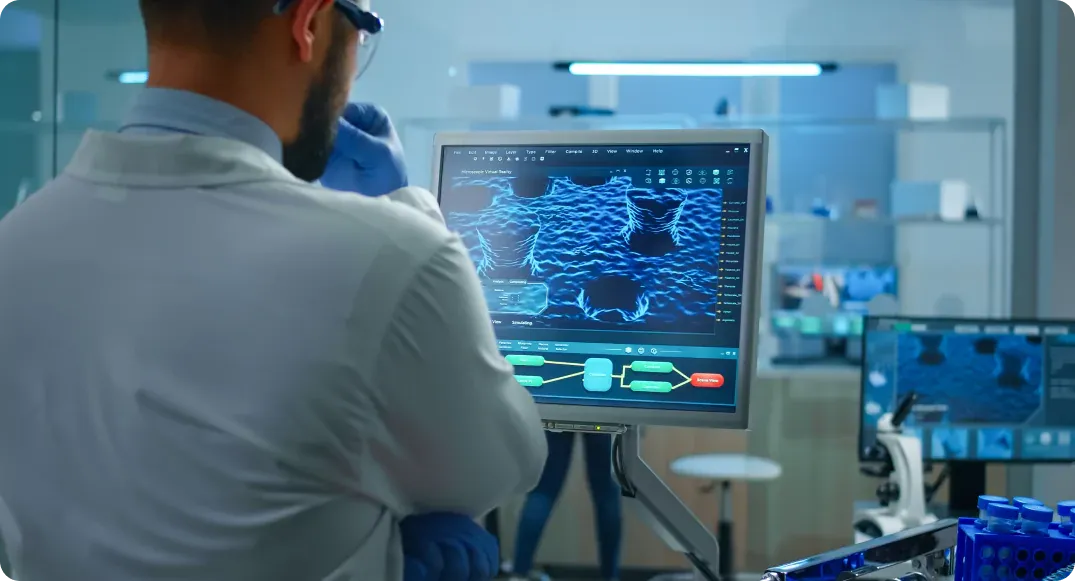
Note that if you go for medical device software development, then the development process is subject to strict regulations to ensure its safety and effectiveness. In the United States, the Food and Drug Administration (FDA) is responsible for regulating medical devices, including the software used in these devices. They have specific guidelines and requirements for the development, testing, and approval of medical device software.
Benefits of Medical Software Development
- Operational efficiency improvement: Medical software development enables clinics and hospitals to streamline workflows, reduce administrative burdens, and minimise manual tasks. The efficiency gains allow staff to focus more on patient-care activities rather than paperwork.
- Improved patient care quality: Custom medical solutions provide clinicians with rapid access to patient data, diagnostic tools, and remote-care capabilities, which result in more informed decisions and better outcomes.
- Expanded patient access: Software solutions such as telemedicine and mobile health apps expand reach beyond traditional clinics, enabling providers to serve remote or underserved populations and thereby grow their patient base.
- Cost reduction and revenue optimisation: Automated and integrated systems reduce errors, minimise claims denials, and streamline billing, helping healthcare organisations reduce overheads and improve financial performance.
- Enhanced data-driven insights: Medical software captures rich operational and clinical data, which healthcare organisations can analyse to identify trends, improve services, and support strategic decision-making.
5 Main Types of Medical Software Solutions
To identify the exact type of medical software your business should focus on, here are the 5 main kinds of solutions:
EHR/EMR Systems
Electronic Health Records (EHR) or Electronic Medical Records (EMR) systems serve to collect, store, and manage patient health data across care settings, enabling healthcare providers to access histories, diagnoses, and treatment plans in one unified platform. These solutions benefit clinicians and care teams by reducing duplicate records, improving coordination, and supporting better patient outcomes.

Telemedicine Platforms
Telemedicine platforms allow patients and providers to engage remotely through video consultations, messaging, and monitoring tools, extending healthcare access beyond traditional in-person visits. These systems are particularly useful for rural and underserved populations, helping clinics reduce wait times and expand service reach.
Medical Device Software (SaMD)
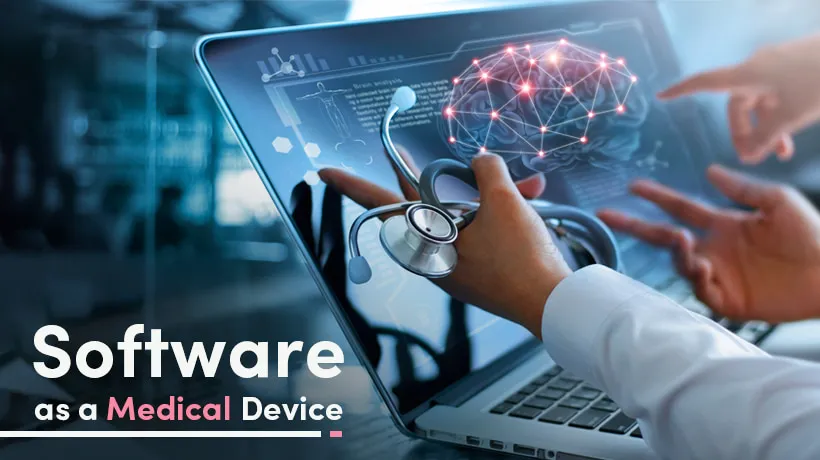
Software as a Medical Device (SaMD) encompasses applications and algorithms that perform medical functions independent of hardware devices, such as diagnostic tools or monitoring systems. These solutions often require regulatory clearance and integrate with clinical workflows to support decision-making by healthcare professionals.
Hospital Management & Practice Management Systems
Hospital management and practice management systems are designed to streamline administrative, financial, and operational aspects of clinics or hospitals—such as scheduling, billing, resource allocation, and workflow tracking. These solutions help healthcare organisations optimise efficiency, reduce operational cost,s and improve service delivery.
Medical Billing & Coding Software
Medical billing and coding software automates revenue cycle management by handling claims processing, insurance verification, invoicin,g and reimbursement workflows. This type of software is critical for healthcare providers to reduce claim denials, accelerate payment cycles, and maintain financial stability.
Key Features & Functionalities of Medical Software
Below are essential features that medical software solutions must include to meet clinical, operational, and regulatory demands:
- Patient profile and demographics management: A central component that stores patient identifiers, contact details, and biographical data in a secure repository, which supports accurate record keeping and data consistency across care teams.
- Appointment scheduling and workflow management: A module that manages booking, rescheduling, reminders, and patient-flow tracking, which helps clinics minimise no-shows, optimise provider time, and streamline front-desk operations.
simbo.ai - Medical device and third-party integration: Functionality that allows the software to connect with diagnostic devices, wearable sensors, and external systems, enabling automatic data capture and seamless interoperability in modern clinical environments.
- Data analytics and reporting dashboard: An analytics layer that transforms clinical, administrative, and operational data into visual insights and dashboards, which support decision-making, performance monitoring, and continuous improvement.
Helixbeat - Security, compliance, and audit-trail controls: Robust features such as encryption, role-based access control, logging, HIPAA/GDPR adherence, and verification workflows, all of which protect patient data, ensure trust, and reduce legal risk.
4 Core Tech Stacks to Use in Medical Software Development
The technology stack used in medical software development will depend on the specific needs and requirements of the software being developed. However, some common technologies that may be used in the development of medical software include:
- Programming languages: Some popular programming languages for medical software development include Java app development, Python web development, C#, and C++.
- Databases: Medical software often involves storing and managing large amounts of data, so a robust database system is important. Some common databases used in medical software development include MySQL, PostgreSQL, and MongoDB.
- Frameworks: For web-based medical software, developers may use frameworks such as Django, Rails, or ASP.NET to build and maintain the application. For medical software that is designed to be used on mobile devices, developers may use frameworks such as React Native or Flutter to build native mobile applications.
- Integration tools: Medical software may need to integrate with other systems and applications, such as electronic health records (EHR) systems or laboratory information systems. In these cases, developers may use integration tools such as MuleSoft or Dell Boomi to facilitate data exchange between systems.
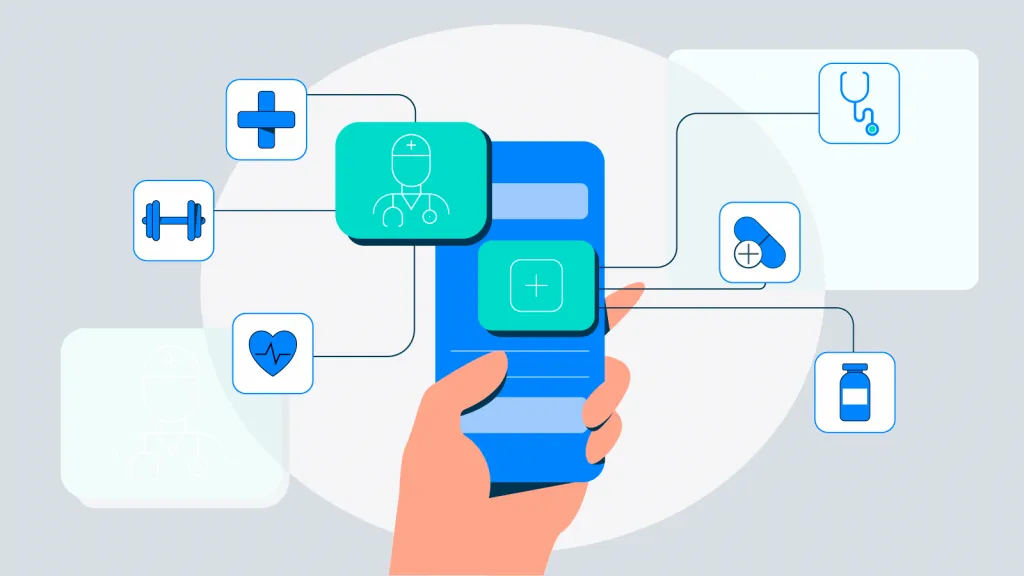
It’s important to note that the technology stack used in medical software development will depend on the specific needs and requirements of the software being developed.
Medical Software Development: How to Launch Your Medical Software
Just like other software, medical software is not different at all in terms of managing various activities. Notably, there are critical steps involved in the entire process of developing medical software. Each grade serves a crucial purpose in the whole process. Let us get straight to the step-by-step process of developing medical software!
Step 1: Determining Medical Software Requirements
In any development process, the determination of requirements is critical. In developing medical software, you first need to establish the criteria for the entire software. Your decision-makers can use this information to cross-check clinical, patient, and user information that will be useful for showing the activities that need to be fulfilled in the entire process of software development.
Step 2: Researching and Proposing a Prototype of the Medical Software
After you determine the requirements, the entire development team should collect essential information that will help you develop a medical software solution. You and other members of the team will evaluate possible solutions for your project.
Step 3: Design and Development
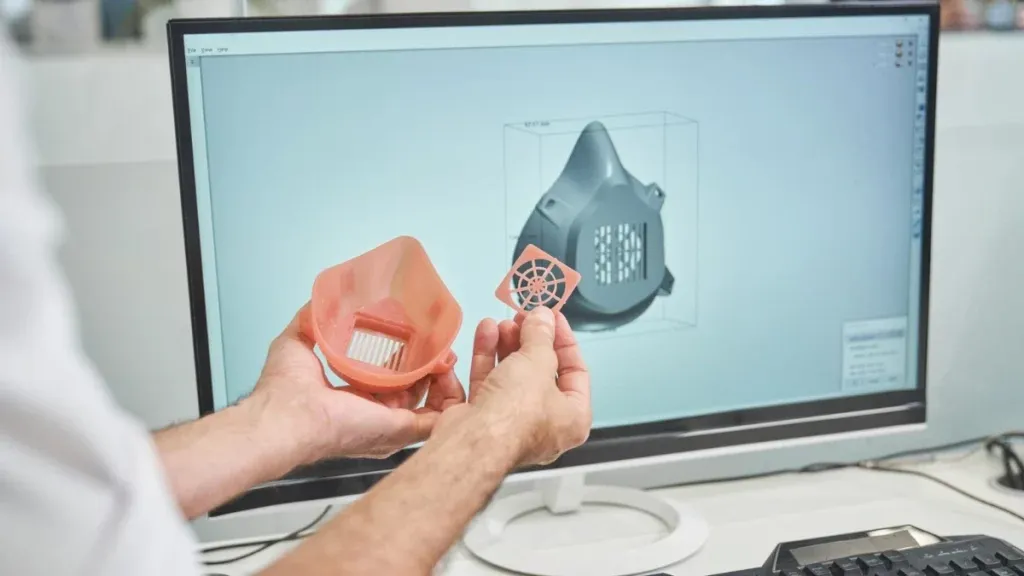
Real work starts in the design and development stage. In the initial step, a team of experts develops a prototype of the medical software. But at this stage, the prototype is used for designing and building custom medical software. More importantly, these experts ensure that custom software sticks to all project guidelines. They also make sure that the postulated outcome meets various medical agencies’ standards and policies.
Step 4: Medical Software Testing
Medical software should be tested extensively to ensure no errors or hitches occur when it is used. If the software works as intended, it can be implemented for full use. Testing is critical because mistakes made while testing could lead to future problems.

Step 5: Medical Software Validation and Deployment
The final stage of developing medical software is validation. The software has gone through rigorous debugging and testing, so it’s ready for use once it’s validated. There are several advanced validations and accreditations to ensure that the software doesn’t fail during usage. More importantly, at this stage, the team chooses to work on the project and seeks approval from the FDA and other validation forms. Once validated, the software undergoes deployment and is made available to all necessary health facilities.
Cost & Time Benchmarks for Medical Software Development
Cost Estimates:
| Project Scale | Estimated Cost (USD) |
Description |
| Basic MVP | $50,000 – $100,000 | Core modules like patient profiles and scheduling, with minimal integrations. |
| Mid-Tier Custom Solution | $100,000 – $250,000 | Multiple modules, integrations (EHR, billing), moderate user base. |
| Enterprise Grade | $250,000 + | Full platform with advanced analytics, multisite deployment, and full compliance. |
Time Estimates:
- Development of a basic MVP typically takes about 3-6 months from requirement gathering to deployment.
- More comprehensive solutions often require 9-18 months, given the need for integrations, compliance, testing, and scalability.
Challenges in Medical Software Development
- Data security & compliance complexity: Medical software must adhere to standards such as HIPAA, GDPR, and FDA regulations. Failure to meet these requirements can expose organisations to legal penalties and reputational damage.
- Legacy systems integration: Many healthcare institutions operate with outdated systems and databases, and integrating new software with those legacy platforms can be time-consuming and risky. The mismatch often leads to project delays or technical debt.
- High initial investment and long ROI timelines: Custom medical software development demands significant resources upfront, both in budget and time, which may delay return on investment and challenge smaller organisations.
- User adoption and change management: Healthcare staff may resist new workflows or software changes, and insufficient training or support can hamper usage and reduce intended benefits. Proactive training, pilot rollout, and user-feedback loops help mitigate these barriers.
- Scalability and performance risks: As patient volumes and data loads grow, medical software must scale efficiently without performance degradation. Poor scalability can lead to system failures or slower response times, undermining patient care.
Newwave Solutions: Your Partner in Developing Medical Software
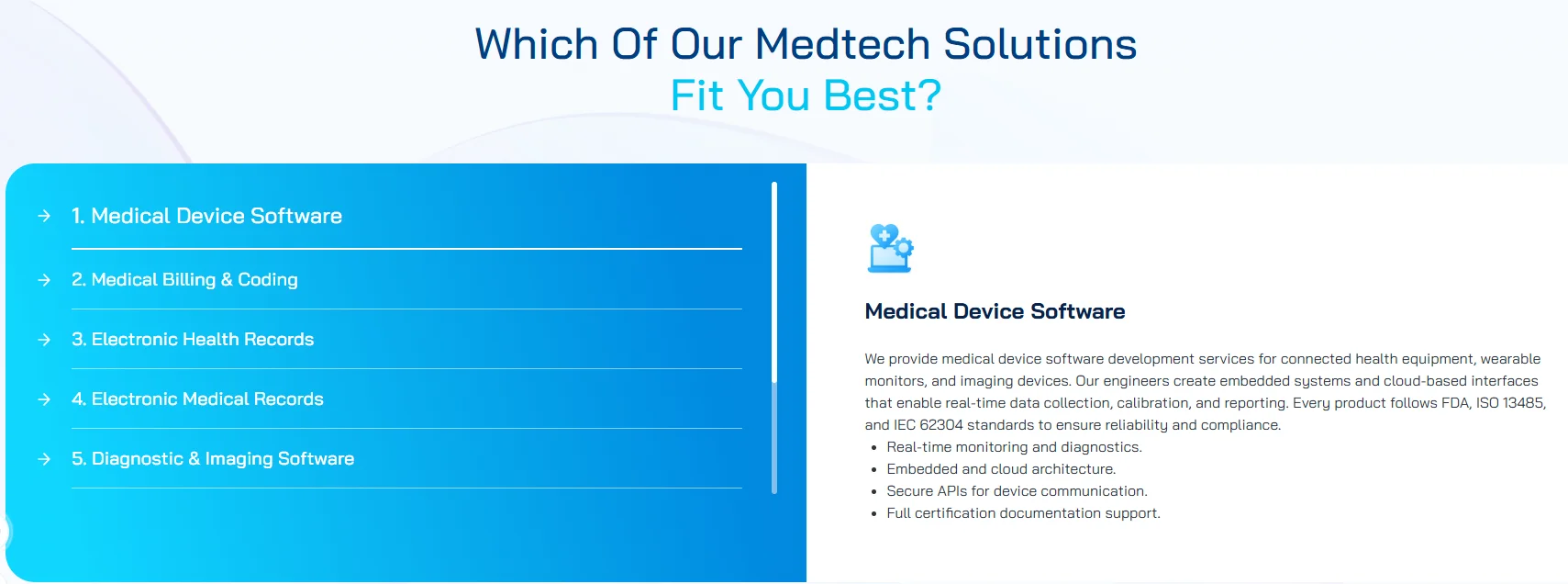
If your business is looking for a professional service provider to help develop your own medical software from scratch, Newwave Solutions is among the best options to consider. We have completed several medical software development projects, including embedded programming, API integration, client-server architecture, medical clinic software development, and more.
One of our best medical software development projects is about designing a medication tracker app for our client’s hospital. Below is what we’ve achieved:
- Maintain and update new features while ensuring system stability.
- Wrote testing source code to ensure correctness throughout the maintenance process and successful new feature updates.
- Optimized the server for optimum information intake
- Built a fast tablet application with real-time, scalable ECG visualizations and many other vital functions.
- Users can browse information like ingredients or side effects of more than 12.500 types of OTC drugs and 22.000 types of prescriptions.
Newwave Solutions commits to supporting your entire medical software development services journey, from the initial idea and drafting stages through to launching, maintaining, and continuous improvement. With Newwave Solutions, you gain a reliable partner dedicated to turning your healthcare software vision into a practical, high-impact reality.
Conclusion
The future of medical software development is poised for rapid innovation with advancing technologies such as artificial intelligence, telemedicine, and IoT transforming healthcare delivery and patient management. The industry will increasingly embrace scalable, secure, and interoperable systems that enhance clinical workflows and patient outcomes globally.
As digital adoption rises and regulatory frameworks evolve, medical software will continue to become more intelligent, user-centric, and accessible.
Contact Newwave Solutions today to make your medical software development journey smoother, faster, and more effective than ever before.
Contact Information:
- Head Office (Hanoi): 1F, 4F, 10F, Mitec Building, Cau Giay Ward, Hanoi City, Vietnam
- Branch Office (Tokyo): 1chōme118 Yushima, Bunkyo City, Tokyo 1130034, Japan
- Hotline: +84 985310203
- Website: https://newwavesolution.com
- Email: [email protected]
To Quang Duy is the CEO of Newwave Solutions, a leading Vietnamese software company. He is recognized as a standout technology consultant. Connect with him on LinkedIn and Twitter.



Read More Guides


Get stories in your inbox twice a month.
Let’s Connect
Let us know what you need, and out professionals will collaborate with you to find a solution that enables growth.
Leave a Reply