


Healthcare Desktop Application Developmentfor Multi-System Workflow Modernization
Healthcare - Japan - Software Development - 11 Members - 1 year
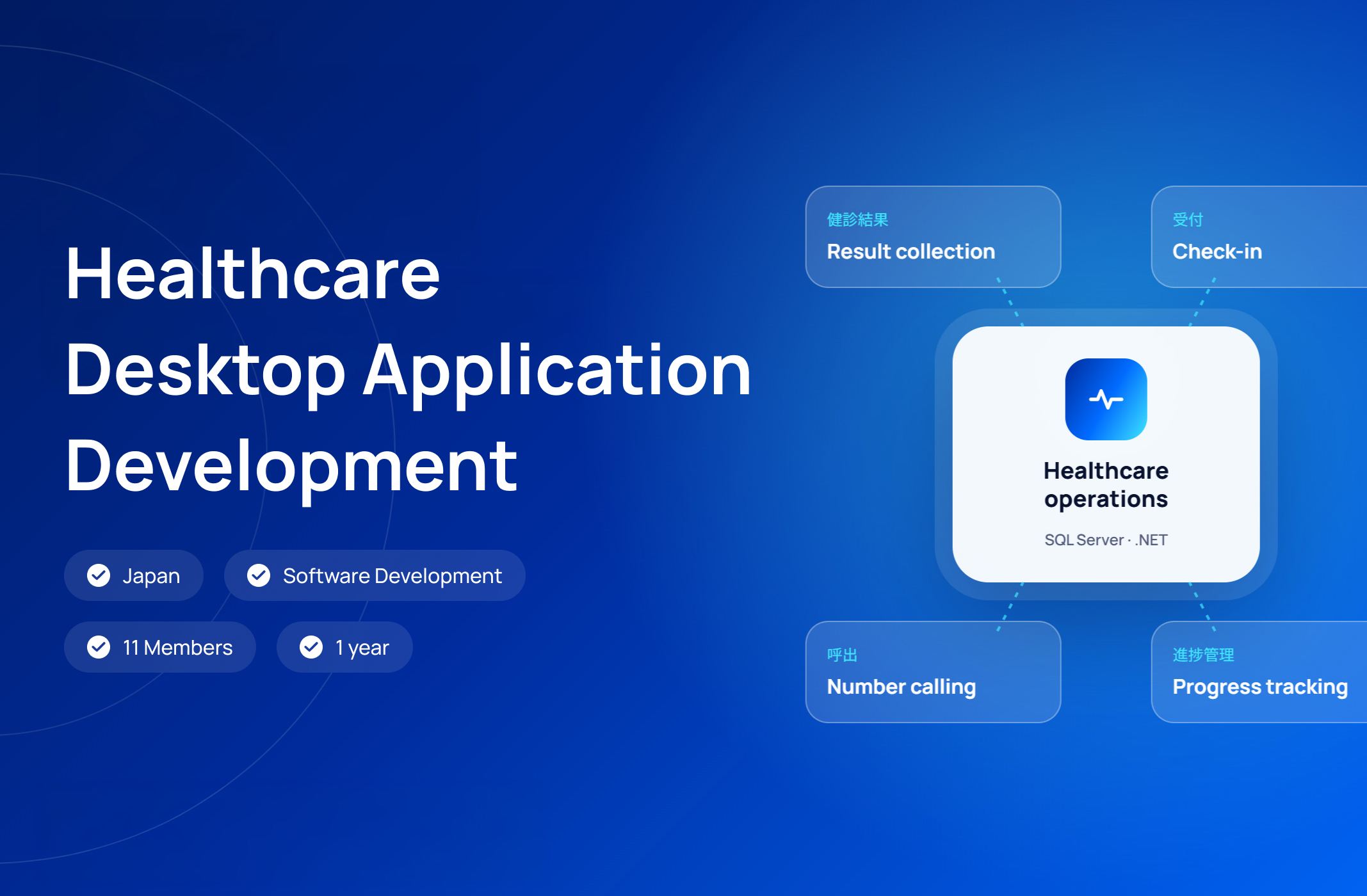
The client, a Japan-based provider of healthcare software and medical technology solutions, needed development support for systems used to modernize healthcare operations. The engagement covered both new system development and improvements to existing systems, supporting workflows such as examination result collection, check-in, number calling and examination progress tracking.
Newwave Solutions joined the project under the OSDC model with an 11-member team, contributing to desktop application development across multiple healthcare operation systems. Multiple modules have already been released and are being used by end users.
Client Context
The client provides healthcare software and solutions for medical service operations in Japan. Its systems support different workflows inside healthcare facilities, including health examination data collection, check-in, number calling and examination progress tracking.
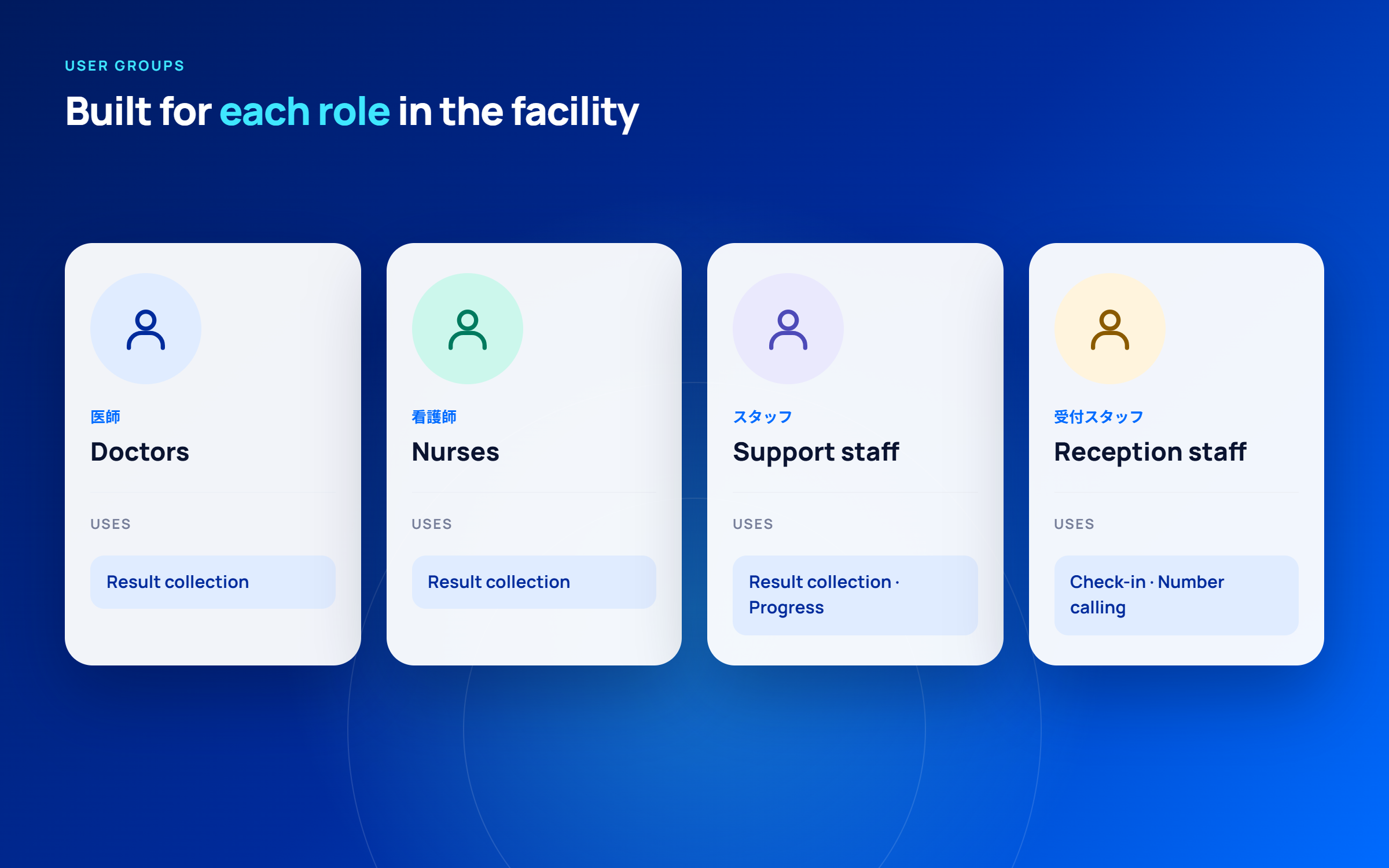
Because each system serves a different operational flow, the end users also vary. For example, the examination data collection system is used by doctors, nurses or support staff at healthcare facilities, while the check-in system is mainly used by reception staff.
The broader project purpose was to develop new systems and improve existing ones, helping the client modernize healthcare service operations with more flexible software solutions.
Business Challenges
The client needed systems that could support healthcare digital transformation and improve how medical facility workflows are handled.
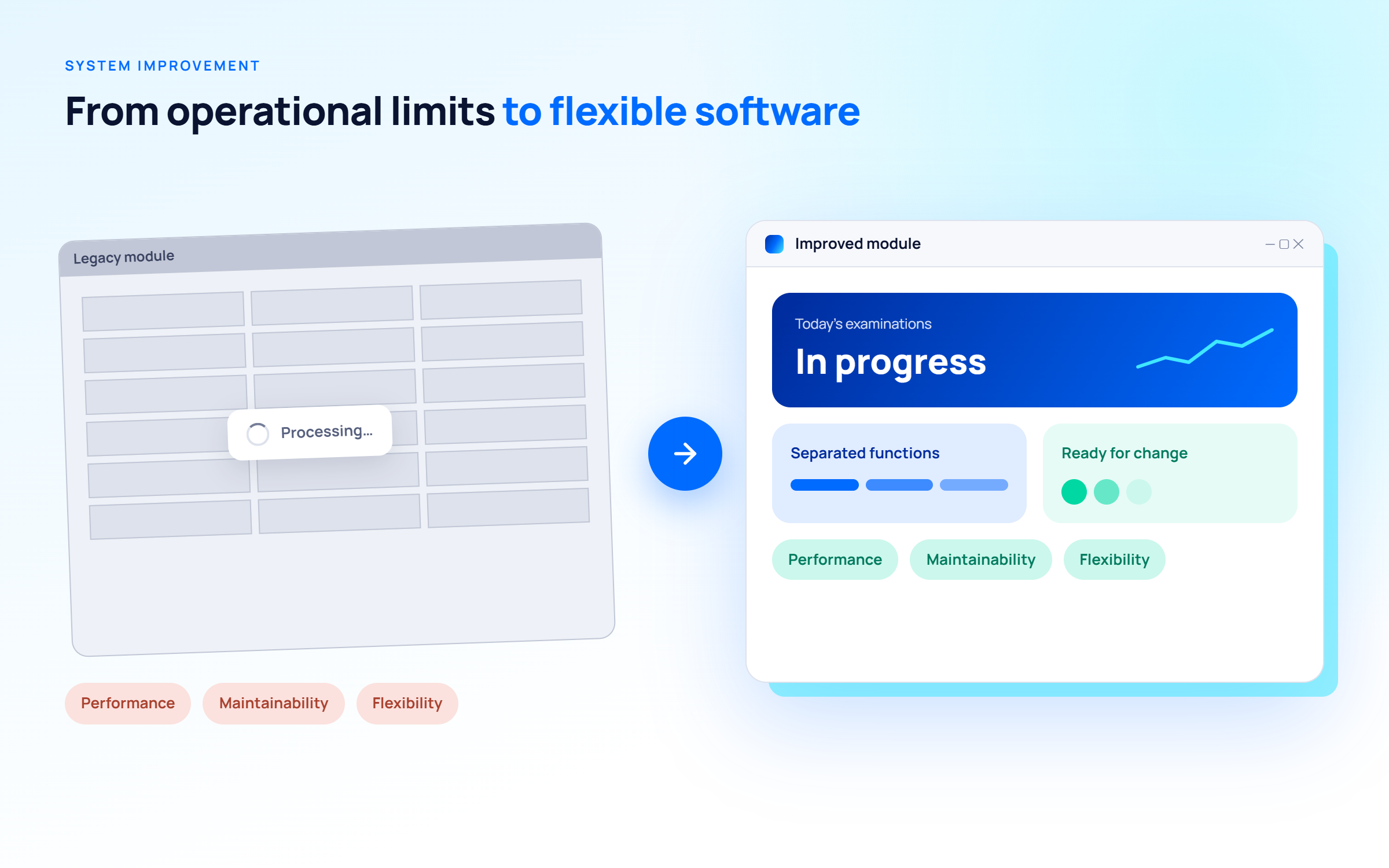
Existing systems needed improvement to address limitations in performance, maintainability and operational flexibility.
The engagement covered different healthcare operation systems, including examination result collection, check-in, number calling and examination progress tracking.
Our Approach
Newwave Solutions approached the engagement as a long-term healthcare software development project covering both new system development and improvement of existing applications. Because each system supported a different healthcare workflow and user group, the team focused on separating logic by function and keeping each process aligned with its actual operating sequence.
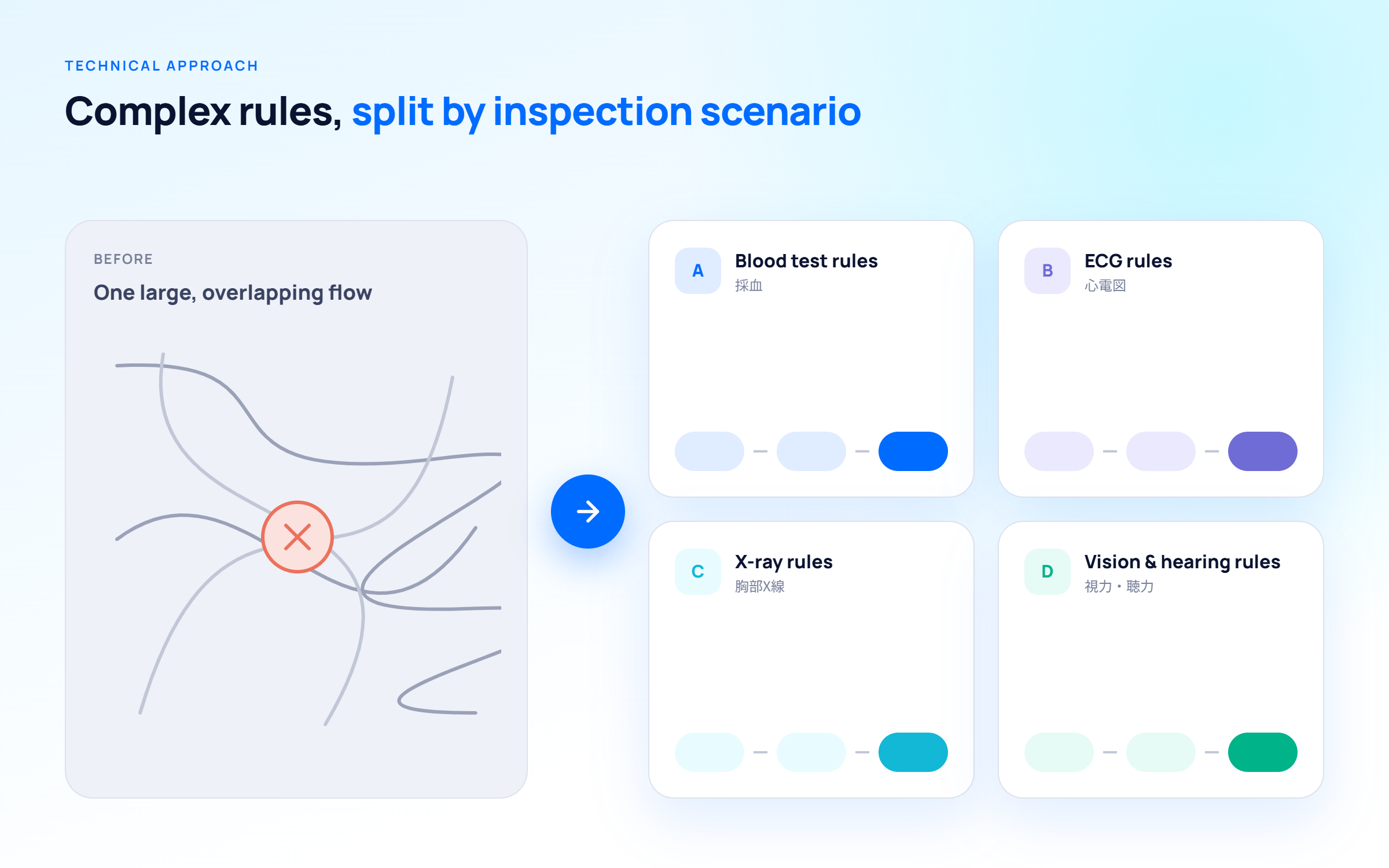
For complex examination-related logic, the team divided processing by function or by specific inspection scenario. Condition branches were separated and executed in the required business sequence, helping avoid unnecessary overlap or parallel processing
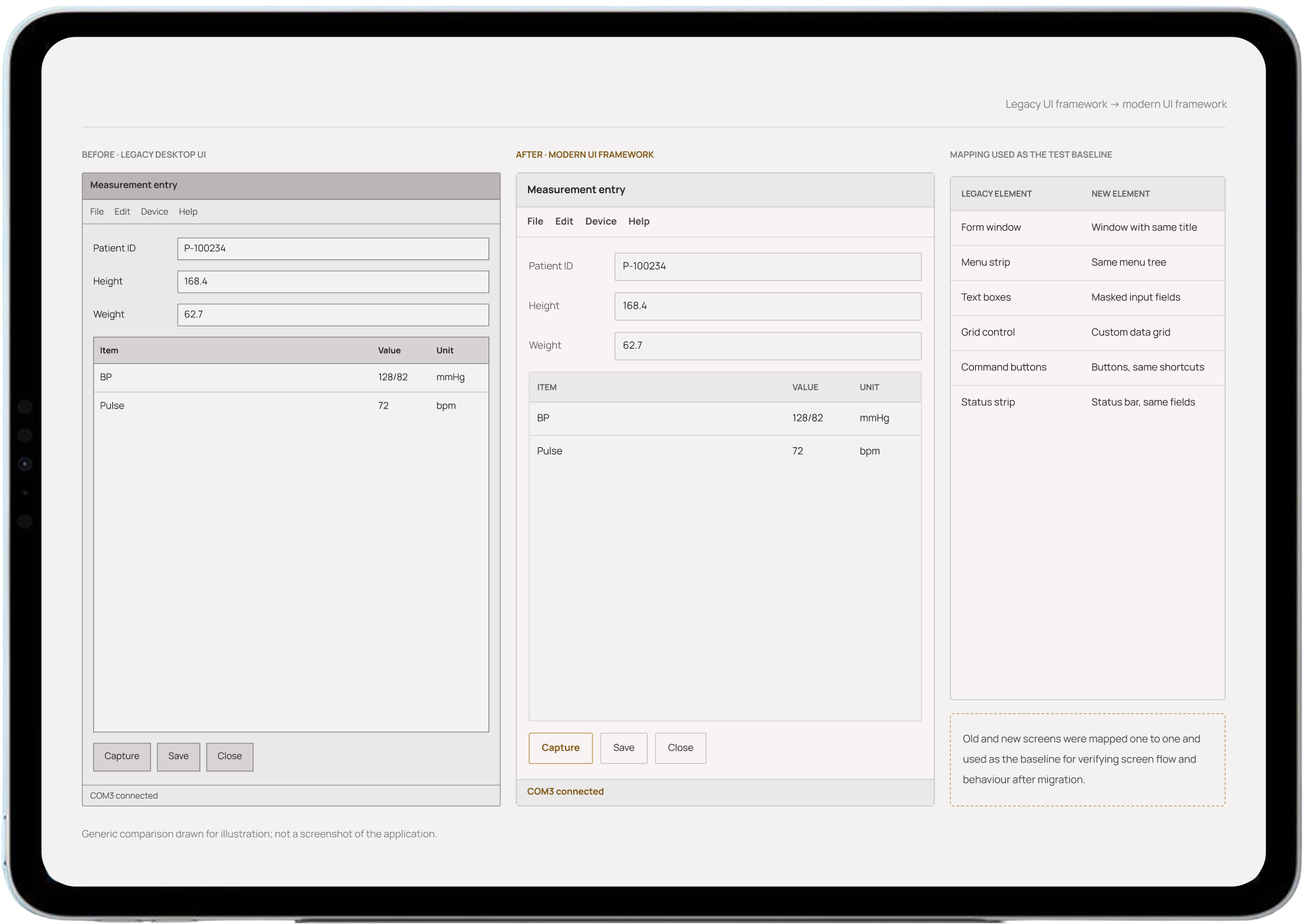
For existing applications, the team supported improvement work aimed at addressing limitations in performance, maintainability and operational flexibility. This kept the engagement aligned with both new system development and modernization of systems already in use.
Technical Decisions

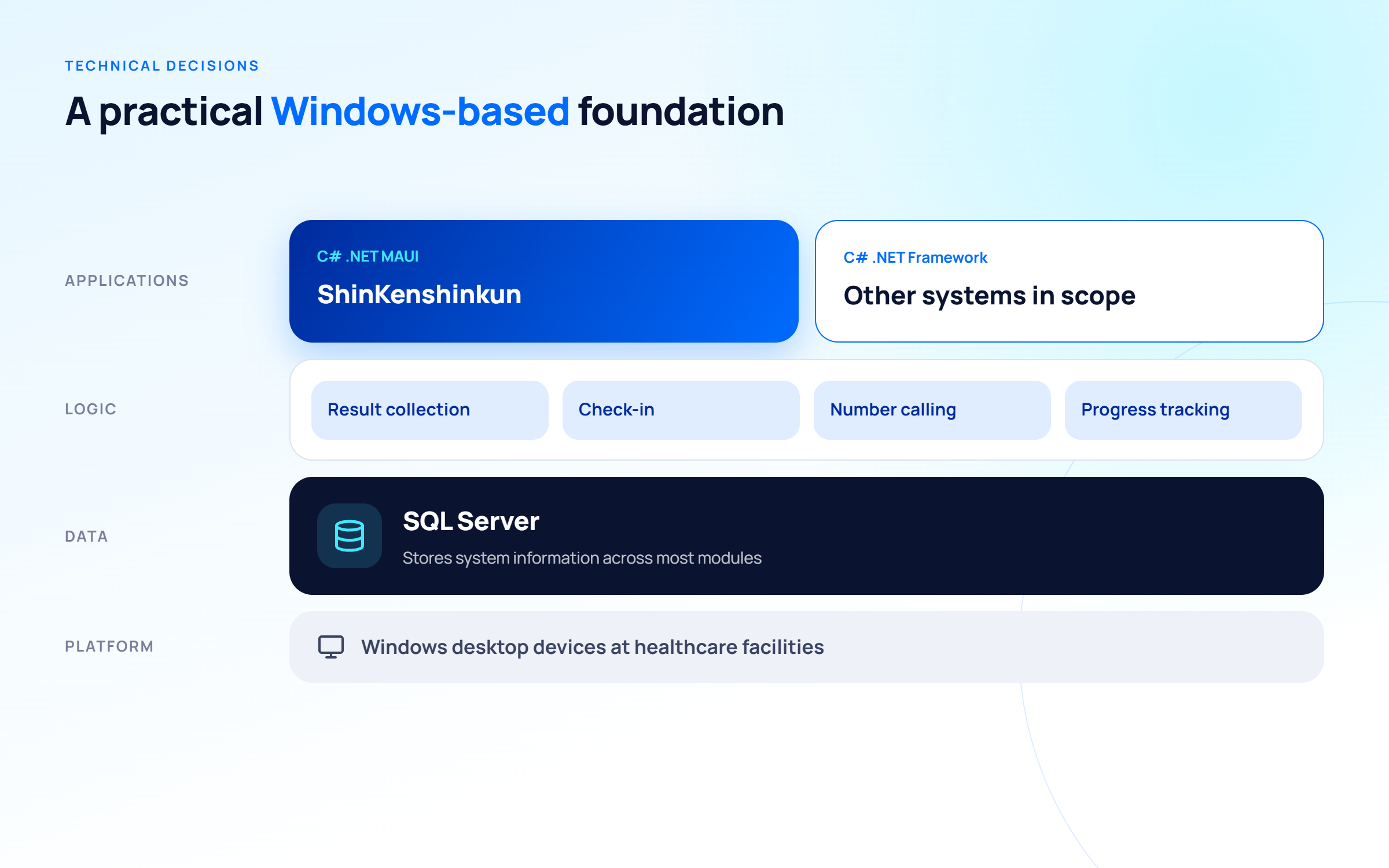
C# .NET MAUI
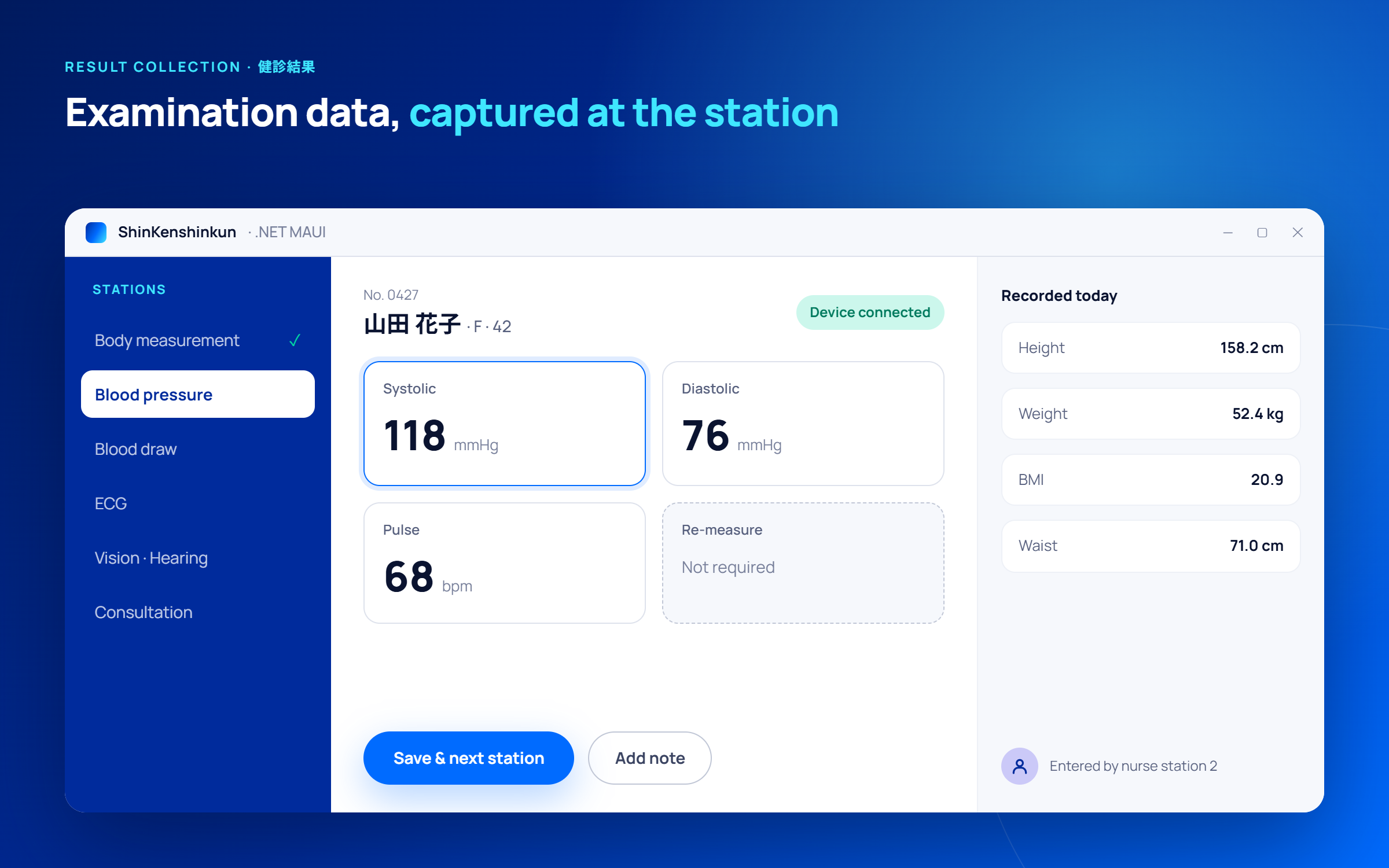
.NET MAUI was used for ShinKenshinkun, supporting development for one of the healthcare desktop application systems in the engagement.

C# .NET Framework
.NET Framework was used for other systems within the project scope, supporting continued development and improvement across existing healthcare applications.

SQL Server
SQL Server was used to store system information across most modules. As the applications were Windows-based, it provided a practical database foundation for the project.

Function-level logic separation
Processing logic was divided by function or inspection scenario to prevent large, overlapping execution flows and make complex healthcare rules easier to manage.

Sequential condition handling
Business condition branches were separated and processed according to the required operational order, avoiding unnecessary parallel handling.

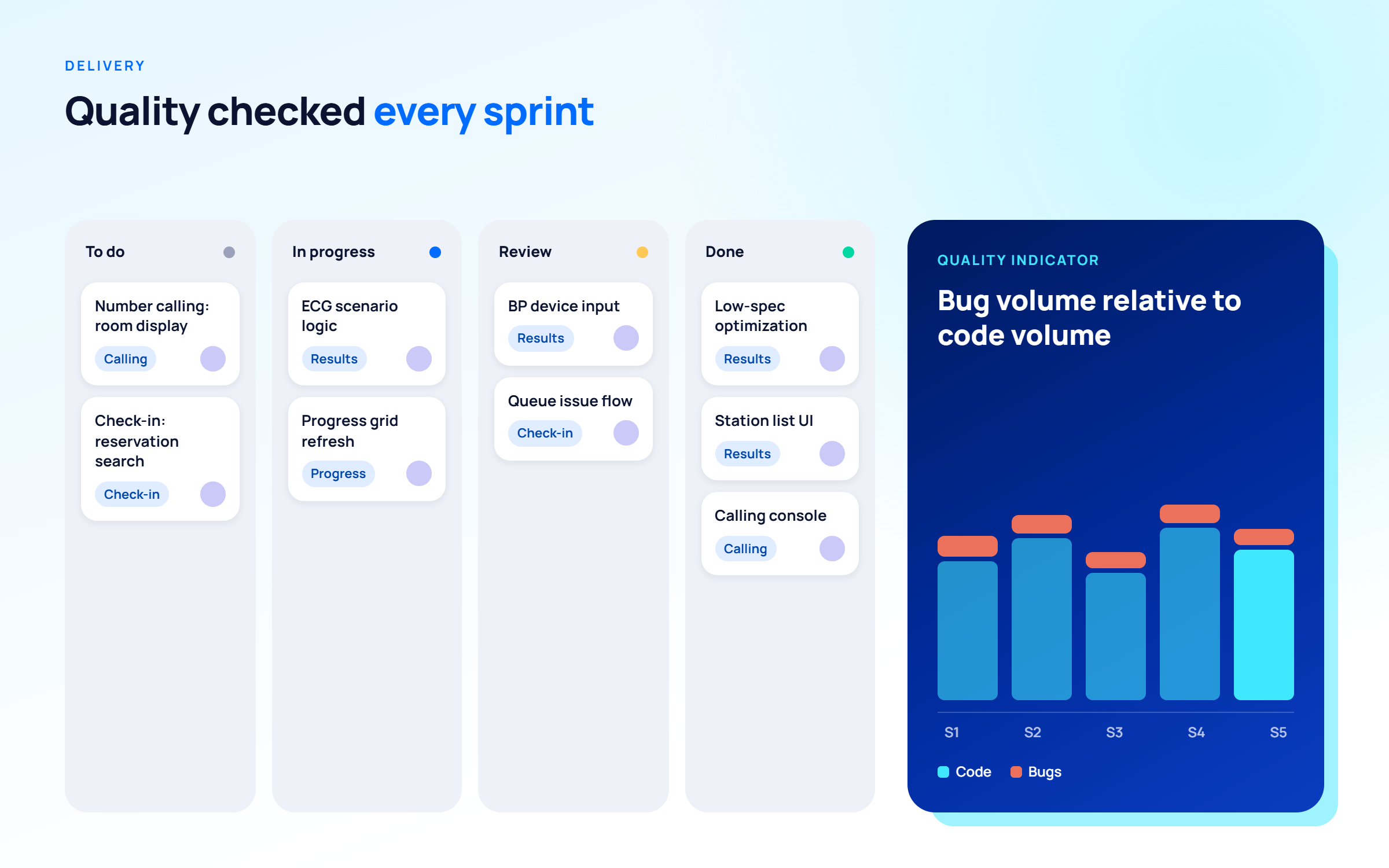
Sprint-based quality control
Delivery was managed through sprint-based work, with quality evaluated using indicators such as bug volume relative to code volume based on the available project assessment

Performance optimization for low-spec devices
Performance handling was required because some end-user devices had limited hardware capacity. For ShinKenshinkun, the team completed optimization, and end users have continued using the system without reported performance complaints.
Newwave Solutions joined the project under a Dedicated Team model with an 11-member team. The one-year engagement covers development work across multiple healthcare desktop application systems.
The team supports both new development and improvements to existing systems. Delivery is managed through sprint-based work, with progress maintained across each sprint. Quality has been evaluated using indicators such as bug volume relative to code volume, based on the available project assessment.
Risk Handling
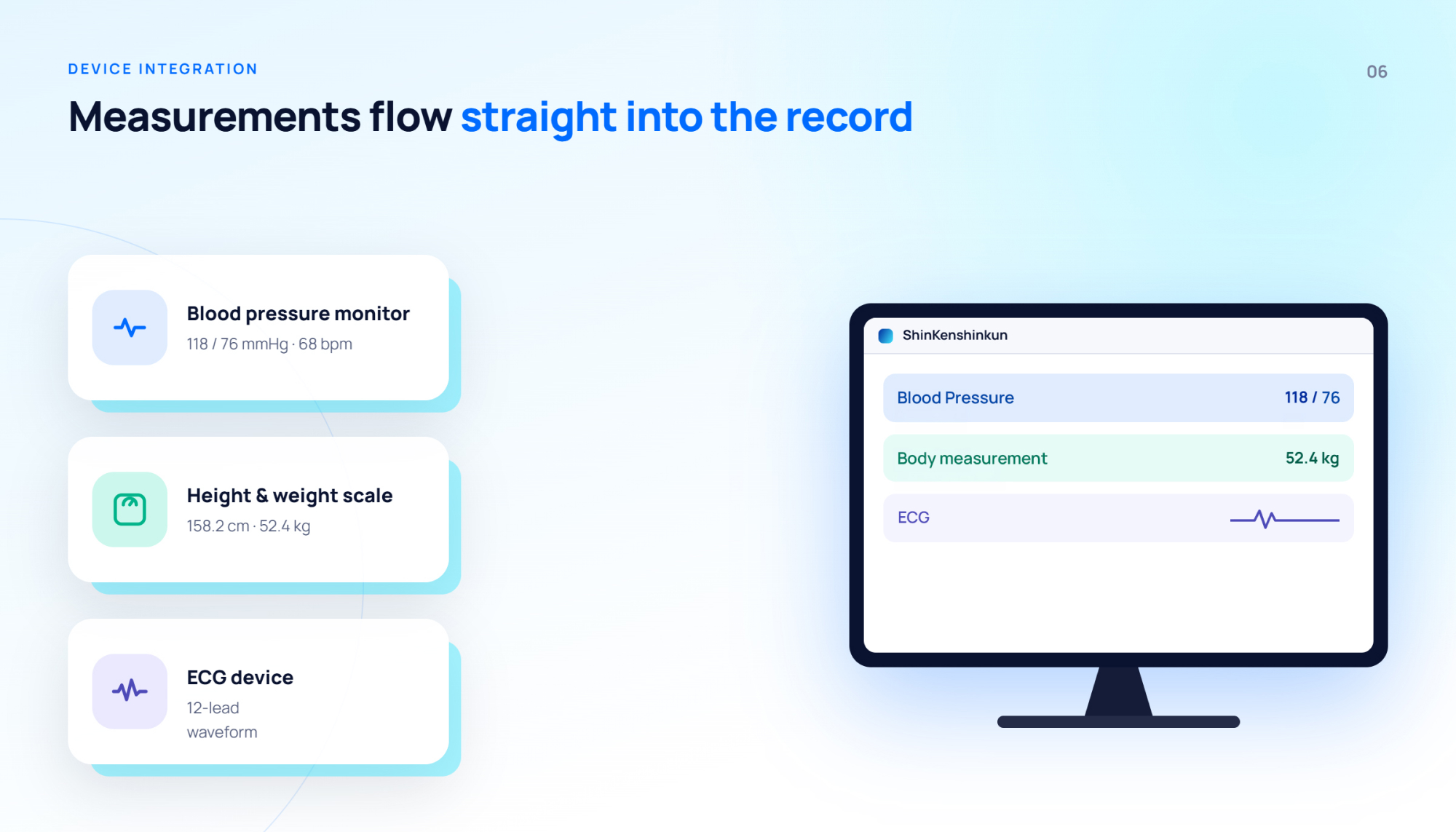
A key technical risk came from the combination of complex healthcare workflow conditions, dynamic UI behavior, device integration and low-performance end-user machines. If too many conditions or device-related processes were handled together, the applications could become harder to maintain and more likely to slow down during heavy processing.
Newwave Solutions addressed this by separating logic by function or inspection scenario and controlling condition branches according to the required business sequence.
Delivered Outcomes
The project has already released many modules, and end users are currently using the systems.
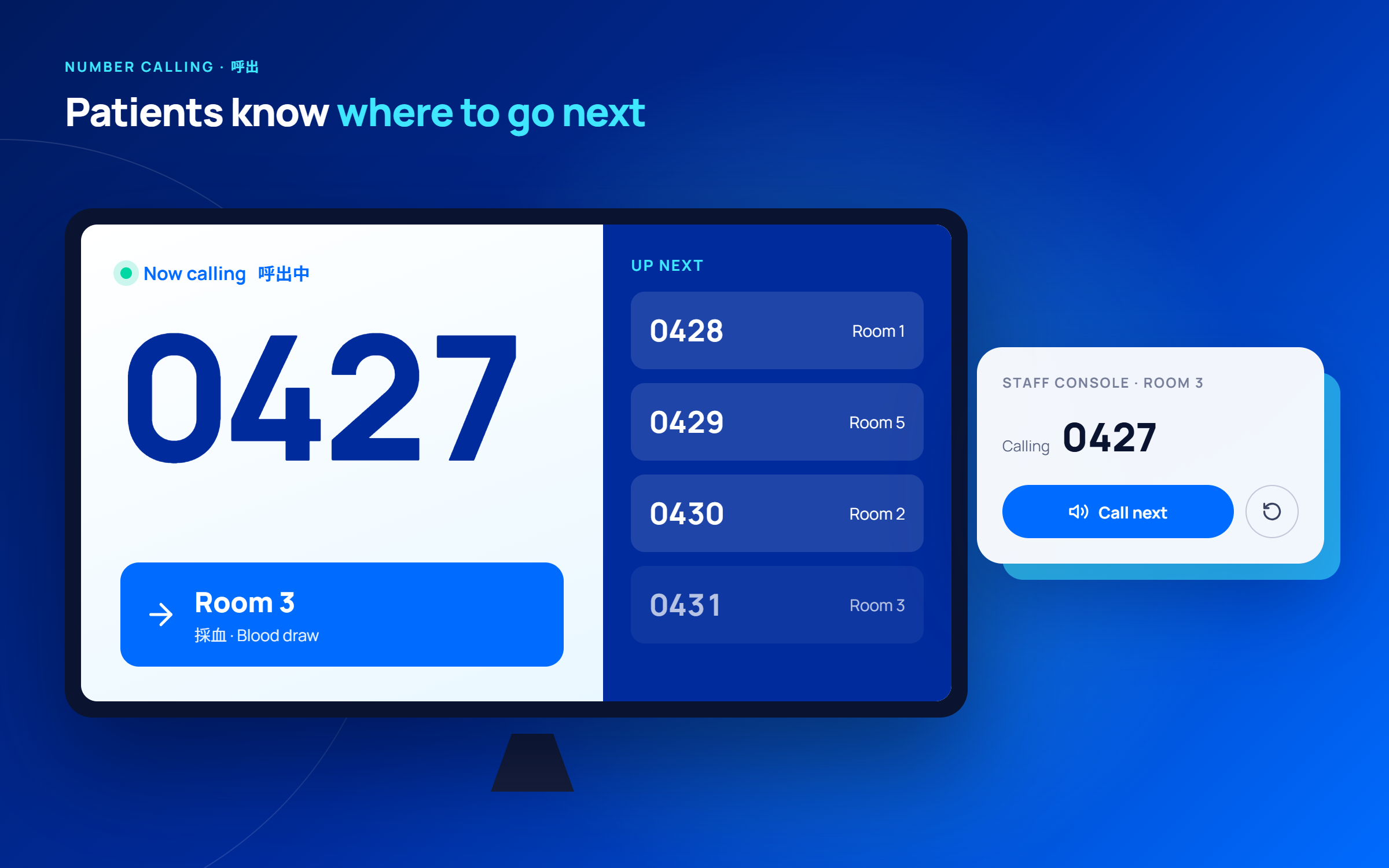
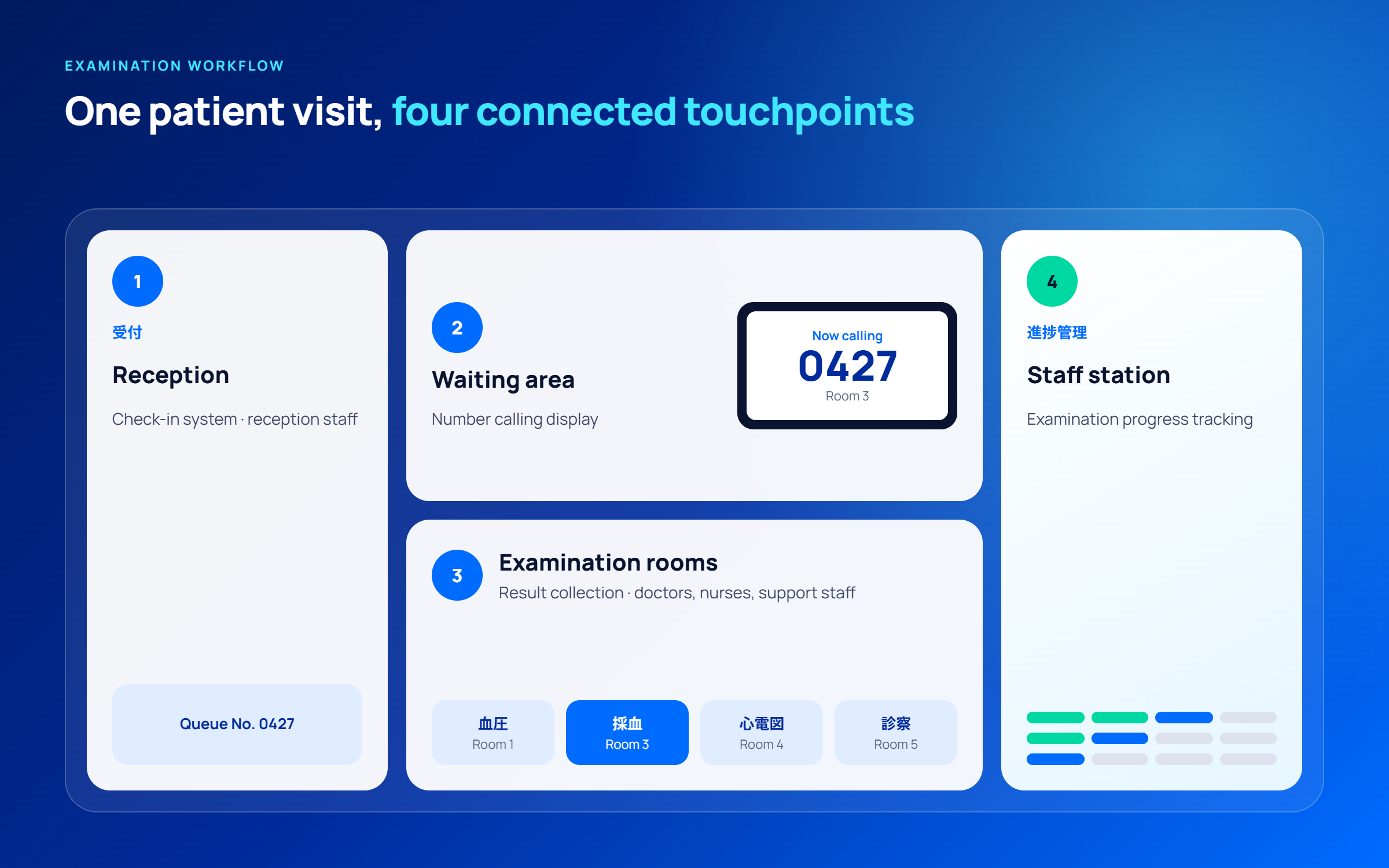
The engagement supports systems related to health examination data collection, check-in, number calling and examination progress tracking.
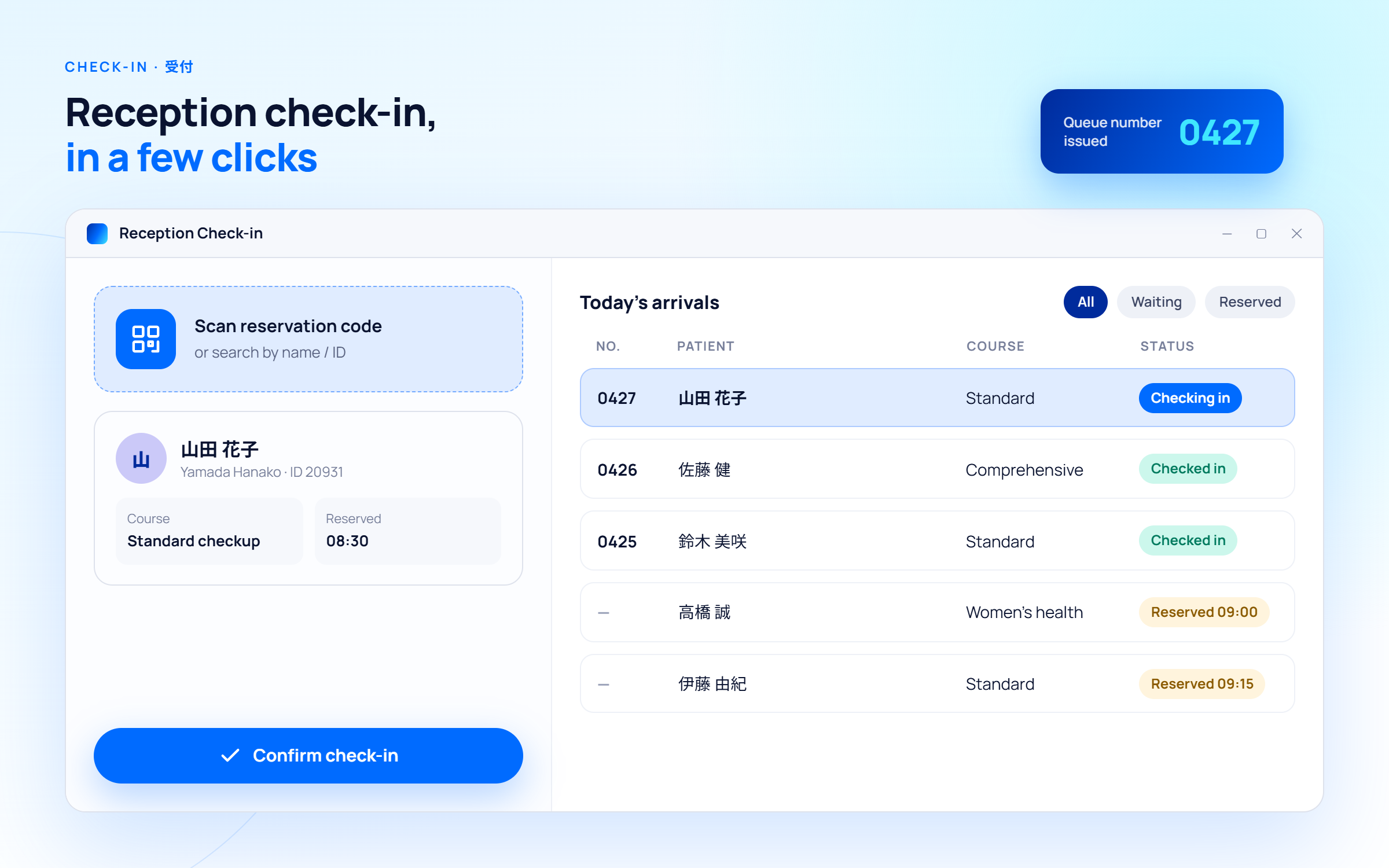
Depending on the system, users include doctors, nurses, support staff and reception staff at healthcare facilities.
ShinKenshinkun has been optimized for low-performance end-user devices. End users have used the system for a long period without reported performance complaints.
Business Impact
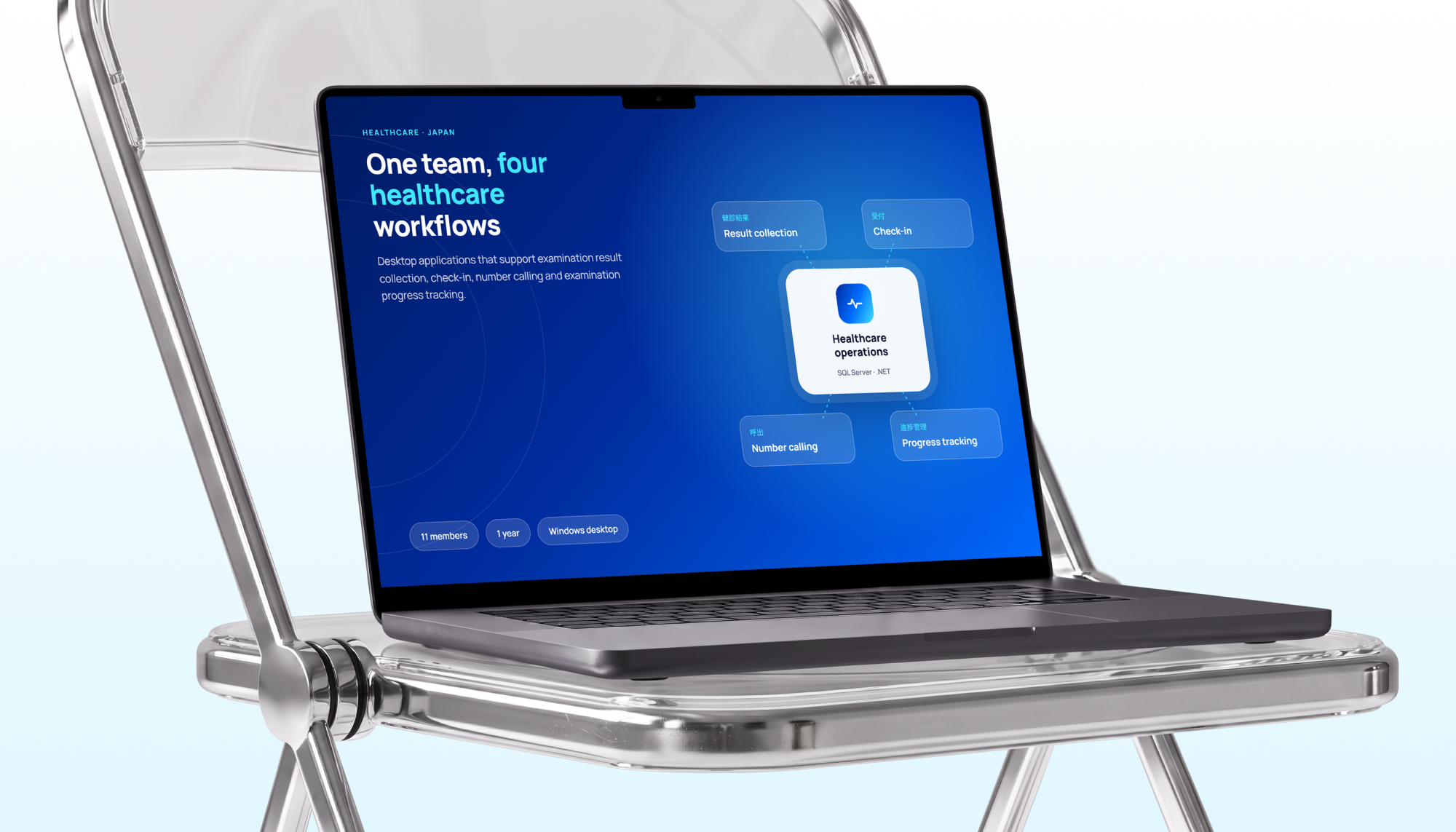
The project supports the client’s healthcare software modernization by covering both new system development and improvements to existing applications. This helps the client respond to healthcare workflow needs while addressing existing limitations in performance, maintainability and operational flexibility.
For healthcare facilities, the systems support different touchpoints in the examination workflow, including data collection, check-in, number calling and progress tracking. For the client, the Dedicated Team model provides a delivery structure for handling multiple healthcare desktop application needs within one engagement.
The engagement also gives the client a practical foundation for maintaining and improving healthcare software systems over time, instead of treating modernization as a one-off development activity.
Related Case Study
Let’s Build Something Extraordinary
Sign up for a 30 min no-obligation strategic session with us. Transform your Ideas into scalable reality.