


Technical Debt Management for Modern Engineering Teams
In the pursuit of meeting tight deadlines, many development teams inadvertently accumulate technical debt, which can lead to increased maintenance costs and system instability over time. To address this, a structured approach to technical debt management allows businesses to systematically resolve code inefficiencies while ensuring that their engineering velocity remains high. Throughout this article, we will explore the core causes of debt and provide actionable insights on how to collaborate with expert companies to manage these challenges effectively.
What is Technical Debt?
Technical debt refers to the additional development effort that teams must invest in later when they choose quick or suboptimal solutions instead of implementing well-designed and maintainable code from the beginning. The concept was introduced by software engineer Ward Cunningham to explain how short-term development decisions create long-term costs similar to financial debt.
In modern software engineering, technical debt often accumulates through rapid development cycles, architectural shortcuts, or incomplete documentation, which eventually increases maintenance complexity and operational risks. Therefore, structured technical debt management becomes essential for organizations that want to maintain scalable, reliable, and sustainable software systems.
Types of Technical Debt
Not all code issues are created equal, and failing to distinguish between intentional shortcuts and accidental messiness can lead to disastrous architectural failures. We will explore the different classifications of technical debt to help you identify which types require immediate remediation and which can be strategically managed over time.
- Code Debt – Code debt occurs when developers implement quick fixes, duplicated logic, or poorly structured code to meet short deadlines, which later increases debugging time and slows down feature development. This type of debt often creates long-term maintenance problems because future changes require extensive refactoring.
- Architecture Debt – Architecture debt appears when system design decisions prioritize speed over scalability, resulting in rigid system structures that limit long-term flexibility. This issue often forces organizations to redesign large portions of their systems when the platform grows.
- Infrastructure Debt – Infrastructure debt arises when organizations continue running outdated environments, deployment pipelines, or configuration systems that are incompatible with modern DevOps practices. As a result, infrastructure instability can increase operational risks and deployment failures.
- Documentation Debt – Documentation debt occurs when software teams neglect proper documentation of code, APIs, or system architecture, making it difficult for future developers to understand or maintain the system. Over time, this knowledge gap slows development velocity and increases onboarding complexity.
- Test Debt – Test debt emerges when development teams skip automated testing or reduce quality assurance coverage to release features faster. Consequently, the system becomes more vulnerable to hidden bugs and regression issues.
Why Technical Debt Becomes a Serious Engineering Problem
What begins as a minor “quick fix” can rapidly evolve into a systemic bottleneck that paralyzes your development speed and stifles innovation. This section examines the severe long-term consequences of unmanaged debt, providing insights into how it erodes code quality, increases operational costs, and demoralizes engineering teams.
- Slower product development cycles – Poor code quality slows feature development because engineers must constantly fix legacy issues before implementing new functionality.
- Rising system maintenance complexity – Legacy code requires more time and engineering effort to maintain, which reduces overall developer productivity and increases operational costs.
- Security vulnerabilities and defects – Technical debt often introduces hidden bugs and vulnerabilities that can compromise application stability and cybersecurity.
- Limited scalability and system performance – Outdated architectures restrict system scalability and degrade application performance when workloads increase.
Key Causes of Technical Debt in Software Development
Technical debt is rarely the result of a single bad decision but rather a combination of tight deadlines, evolving requirements, and shifting market pressures. By analyzing these primary root causes, you will gain a clearer understanding of why debt accumulates in your pipeline and how to prevent it from reaching unmanageable levels.
- Rapid product delivery pressure – Tight release schedules often force engineering teams to prioritize speed over maintainability, which leads to shortcuts that accumulate technical debt.
- Poor architectural decisions – Inadequate system design choices can introduce long-term complexity that becomes difficult to modify as the software evolves.
- Lack of documentation – Missing documentation prevents engineers from fully understanding legacy codebases, which slows debugging and increases development risks.
- Legacy dependencies and outdated frameworks – Software systems that rely on obsolete libraries or unsupported frameworks often accumulate technical debt because upgrades become progressively harder.
- Insufficient testing or quality assurance – Development processes that lack automated testing or structured QA practices allow hidden bugs and fragile code structures to persist.
How to Manage Technical Debt Effectively
Ignoring technical debt is a strategy for failure, yet many teams struggle to find the right balance between shipping new features and refactoring old code. This guide provides actionable strategies and frameworks for effective debt management, empowering your team to prioritize technical health without compromising business delivery targets.
Identify and Measure Technical Debt
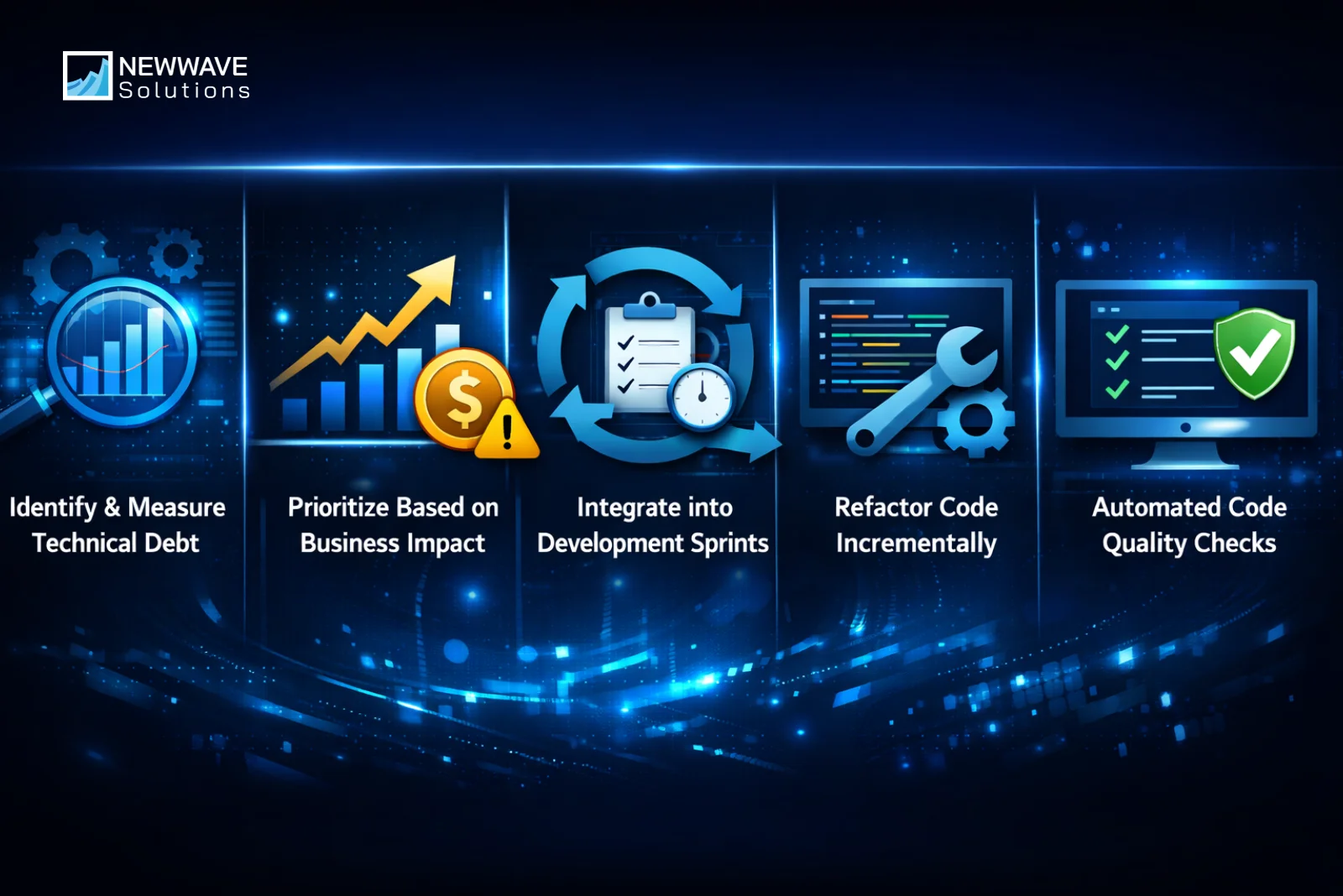
Engineering teams must first identify technical debt across the codebase through structured audits, static code analysis, and architecture reviews. Modern analytics platforms and automated code inspection systems can quantify technical debt in measurable metrics such as code complexity, maintainability index, and defect density. This measurement process allows teams to understand the scale of technical debt and build an effective roadmap for how to manage technical debt across large systems.
Prioritize Debt Based on Business Impact
Organizations should prioritize technical debt according to business impact rather than addressing issues randomly. Engineering leaders often categorize debt based on risk factors such as system performance degradation, security vulnerabilities, and operational disruptions. This prioritization framework ensures that managing technical debt focuses first on the areas that threaten business continuity or customer experience.
Integrate Debt Tasks into Development Sprints
Agile teams should integrate technical debt tasks directly into sprint planning rather than treating them as separate maintenance work. Product owners and engineering managers can allocate a portion of each sprint for refactoring tasks or code quality improvements. This practice ensures that technical debt reduction becomes part of everyday development rather than an occasional cleanup effort.
Refactor Code Incrementally
Incremental refactoring helps engineering teams reduce technical debt gradually without interrupting product development. Instead of rewriting entire systems, developers improve code modules step by step while maintaining system functionality. Over time, this incremental improvement approach significantly enhances system maintainability and scalability.
Implement Automated Code Quality Checks
Automation tools can detect code smells, vulnerabilities, and architectural inconsistencies before they reach production environments. Modern static analysis platforms such as SonarQube automatically analyze code quality and identify potential technical debt issues during CI/CD pipelines. These technical debt management tools help teams prevent new debt from accumulating while continuously improving code quality.
Future Trends in Technical Debt Management
The complexity of modern software systems continues to grow as organizations adopt microservices architectures, cloud platforms, and distributed applications. As a result, technical debt has become a strategic engineering concern rather than a pure technical maintenance issue.
Technology leaders increasingly integrate automated analysis, AI-assisted refactoring tools, and DevOps governance models to improve the effectiveness of technical debt management programs. These innovations enable organizations to detect risks earlier, measure technical debt more accurately, and prioritize remediation activities more efficiently.
The predicted trends in Technical Debt Management:
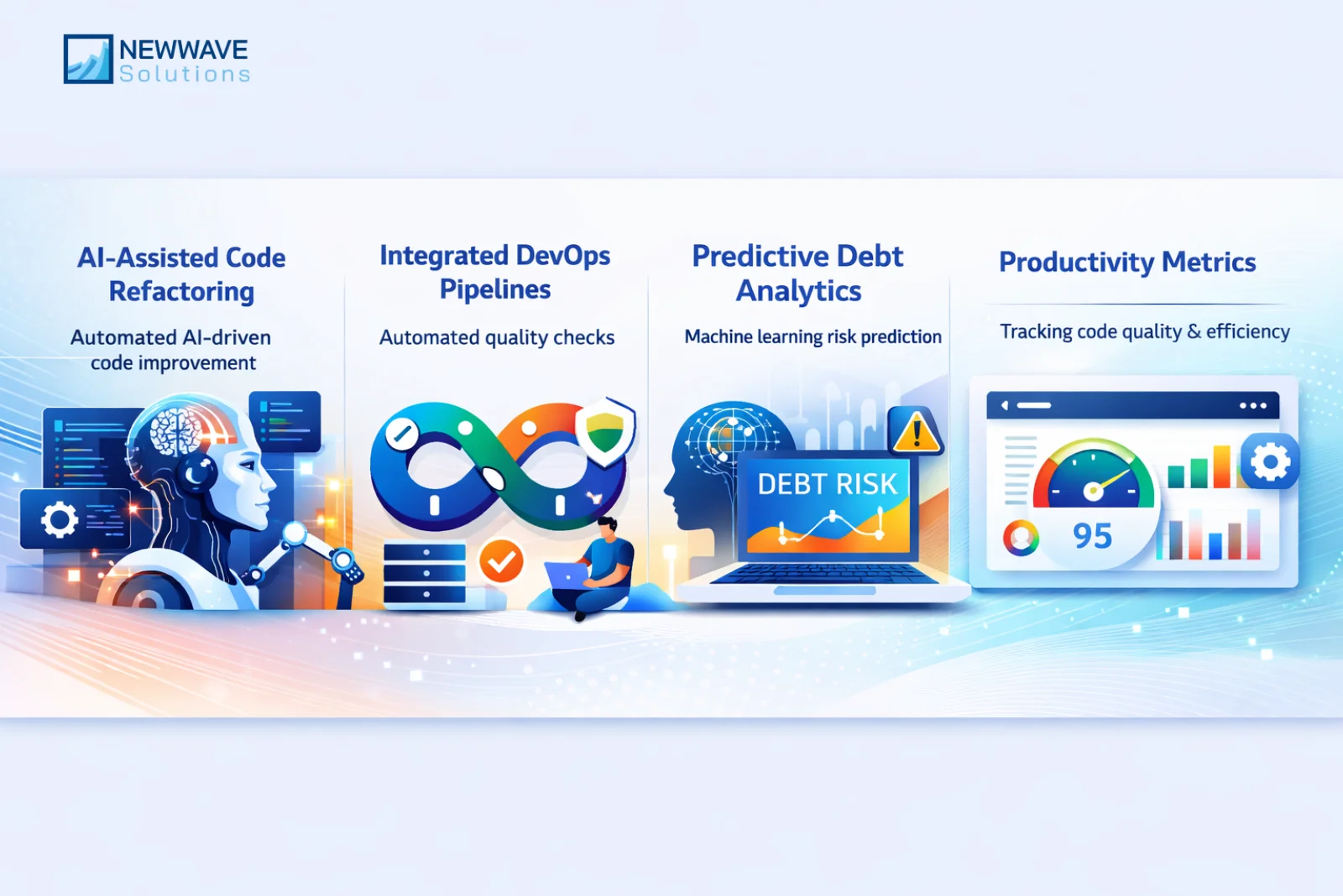
- AI-assisted code analysis and refactoring – Artificial intelligence platforms increasingly analyze code patterns and automatically suggest refactoring improvements to reduce technical debt.
- Integrated DevOps quality pipelines – Continuous integration pipelines now include automated quality gates that detect code smells, vulnerabilities, and architectural issues before code deployment.
- Predictive technical debt analytics – Machine learning models analyze historical development patterns to predict future technical debt risks and recommend preventative improvements.
- Engineering productivity metrics – Modern development platforms increasingly combine code quality metrics with developer productivity insights to improve decision-making in technical debt reduction.
Best Companies for Managing Technical Debt in Software
For many organizations, the sheer volume of inherited legacy code is too overwhelming to handle internal resources alone. We have curated a list of professional software consulting firms and management experts—including specialized partners like Newwave Solutions—who possess the tools and expertise to help you audit, refactor, and modernize your infrastructure efficiently.
1. Newwave Solutions
Newwave Solutions provides a comprehensive ecosystem of engineering services designed to help enterprises reduce technical debt while improving long-term software scalability and maintainability. The company combines software modernization expertise, DevOps engineering practices, and advanced quality assurance capabilities to address technical debt at both the code and architectural levels.
Key services supporting technical debt management:
- Software Development Services & Software Maintenance Services: Engineering teams refactor legacy codebases, improve system architecture, and maintain software platforms to eliminate structural technical debt.
- Legacy System Modernization: Technical debt remediation is a critical stage of modernization initiatives because outdated architectures often contain hidden code dependencies and performance bottlenecks.
- Software Product Development & Quality Assurance Testing (QA): Advanced QA frameworks help detect vulnerabilities, logic errors, and code quality issues early in the development lifecycle.
- Emerging Technology Services: Newwave Solutions also develops advanced platforms using blockchain, artificial intelligence, and IoT technologies to modernize enterprise software ecosystems.
Through these capabilities, Newwave Solutions supports enterprises that need to reduce technical debt while transforming legacy platforms into scalable and future-ready digital systems.
2. Thoughtworks
Thoughtworks is a global technology consultancy founded in 1993 that specializes in software engineering, digital transformation, and enterprise platform modernization for organizations worldwide. Thoughtworks helps enterprises analyze architectural weaknesses, refactor legacy codebases, and redesign outdated software systems so that organizations can maintain long-term engineering sustainability. Through agile engineering practices, modernization frameworks, and the well-known Technical Debt Quadrant methodology, Thoughtworks enables engineering teams to reduce technical debt while improving developer productivity and system reliability.
Key strengths:
- Pioneers of the Technical Debt Quadrant methodology for classifying technical debt types
- Extensive experience modernizing mission-critical enterprise platforms
- Proven ability to improve developer productivity and reduce system complexity
3. EPAM Systems
EPAM Systems is a global software engineering and IT consulting company founded in 1993 that provides digital engineering, cloud transformation, and enterprise platform development services for large organizations. EPAM helps organizations address technical debt through large-scale platform modernization, architectural optimization, and AI-assisted code transformation initiatives. The company combines engineering consulting, cloud migration expertise, and automated refactoring pipelines to reduce technical debt across legacy systems while improving system scalability and delivery speed.
Key strengths:
- Engineering Excellence Framework for architecture modernization
- AI-assisted refactoring pipelines that accelerate code optimization
- Advanced engineering dashboards for tracking and visualizing technical debt
Conclusion
Technical debt is an unavoidable reality in modern software development; however, organizations that implement structured technical debt management practices can successfully maintain sustainable engineering velocity and system reliability. By combining clear governance, modern development tools, and effective engineering strategies, companies can significantly reduce technical debt while continuing to deliver continuous innovation and long-term business value.
If you require expert assistance in navigating these complexities, Newwave Solutions stands ready as your trusted partner to provide comprehensive support in solving technical debt. We encourage you to reach out to Newwave Solutions asap so we can collaborate on optimizing your system’s health and accelerating your product development lifecycle without technical constraints.
To Quang Duy is the CEO of Newwave Solutions, a leading Vietnamese software company. He is recognized as a standout technology consultant. Connect with him on LinkedIn and Twitter.



Read More Guides




Get stories in your inbox twice a month.
Let’s Connect
Let us know what you need, and out professionals will collaborate with you to find a solution that enables growth.
Leave a Reply