


Traditional vs Agile Software Development: Which Method Suits Your Business?
Over the last decade, agile software development models have taken over traditional software development models. In comparison to the traditional method, which is a sequential development that flows steadily downwards through several phases, agile project management has proved to be a very efficient, practical, and flexible approach. In the constantly changing marketplace, the choice of software development models should be made based on the nature of the business and the objective of the project.
If you still wonder whether an agile software development approach is right for your project, or what the differences are between Traditional vs Agile software development, Newwave Solutions has prepared this exclusive guide for you. Now, let’s get started!
What is Traditional Software Development?
Traditional software development is a sequential process that flows steadily downwards through several phases, often used to design and develop simple software with minor security and functionality requirements. Traditional software development methodologies are based on pre-organized phases/stages of the software development life cycle: Analysis – Design – Implement – Coding & Testing – Maintenance. In each phase, there are specific deliverables and detailed documentation that have undergone a thorough review process.
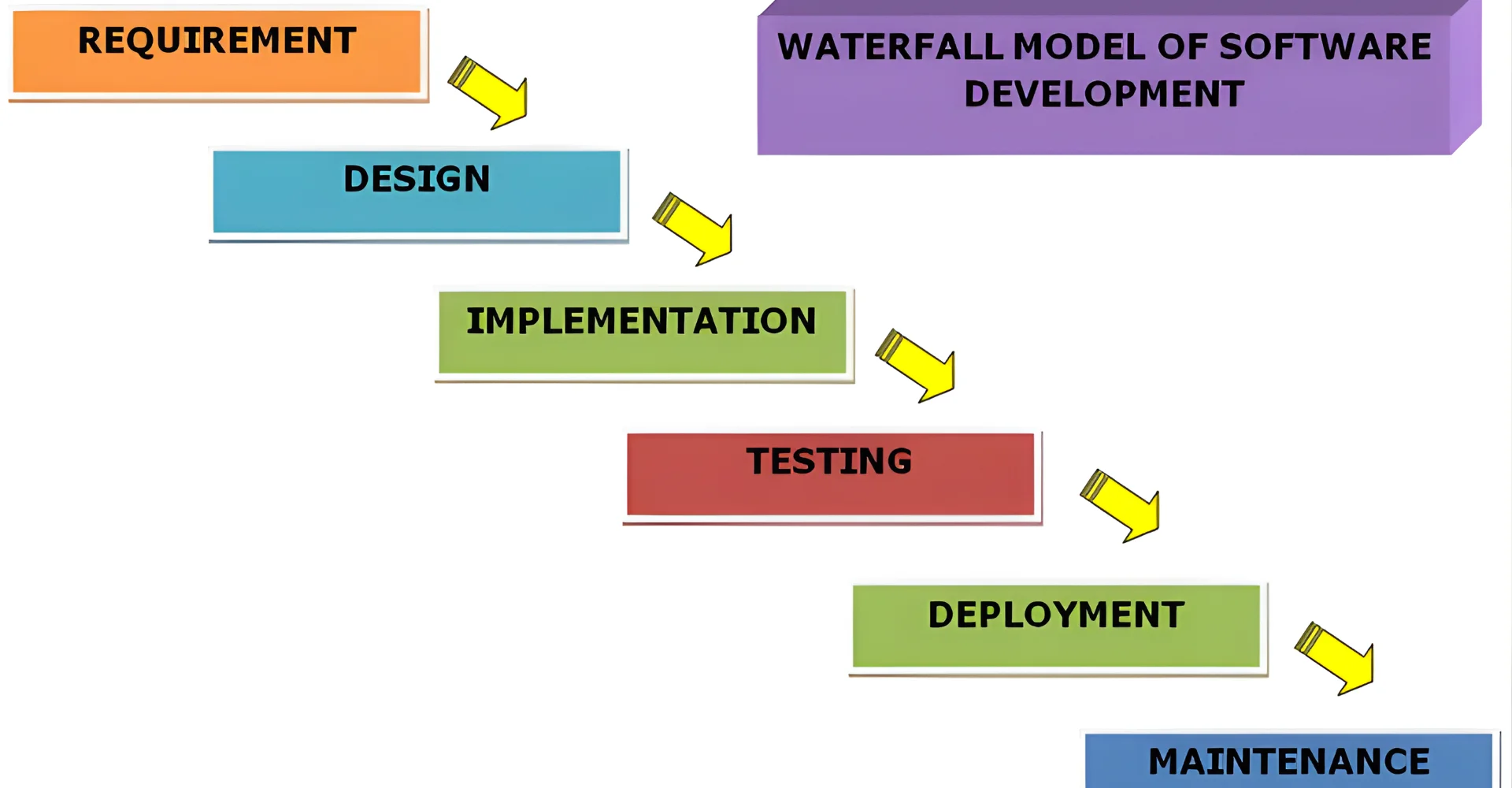
This approach is suitable for projects with precise requirements, which means project owners know exactly what they want and can confidently say that there won’t be any major changes in scope throughout the project development. However, with a project that requires constant development and modification, traditional development procedures might fail to achieve project goals. In the traditional software development approach, the entire set of requirements has to be given in the initial phase without changes in later phases, which impact the final outcomes of the project. The disadvantages of this approach are cost, team effort, and time.
Pros & Cons of Traditional Software Development
Pros:
- The model provides predictable cost and time estimates because all phases (requirements, design, implementation, testing) are planned upfront, which helps enterprises forecast budget and timeline more accurately.
- The sequential structure delivers clear documentation and deliverables at each stage, thereby improving traceability and compliance for regulated industries.
- The approach ensures rigorous quality control at defined milestones, which means defects are often identified before deployment, reducing production failure risk.
Cons:
- The methodology suffers from low flexibility in requirement changes because once the design phase is completed, making adjustments is costly and time-consuming.
- The approach can lead to a longer time to market, since testing and deployment happen after full completion of development, delaying user value delivery.
- The method often results in limited customer involvement throughout the process, which can create a product misaligned with end-user needs and reduce satisfaction.
- The process can be cost-intensive and resource-heavy, especially for large or complex projects, because of the comprehensive upfront planning and rigid phase transitions.
What is Agile Software Development?
Agile software development is a precise and customer-friendly approach that is used to design complicated software with a focus on flexibility and security. Throughout three phases of agile software development, namely Project initiation – Sprint planning – Demos, users have the opportunity to make modifications based on business context and changes in customer demand. It enhances mutual understanding between the developer and the user through evaluating solution modules to determine whether the business need is being met, thus ensuring quality outcomes.
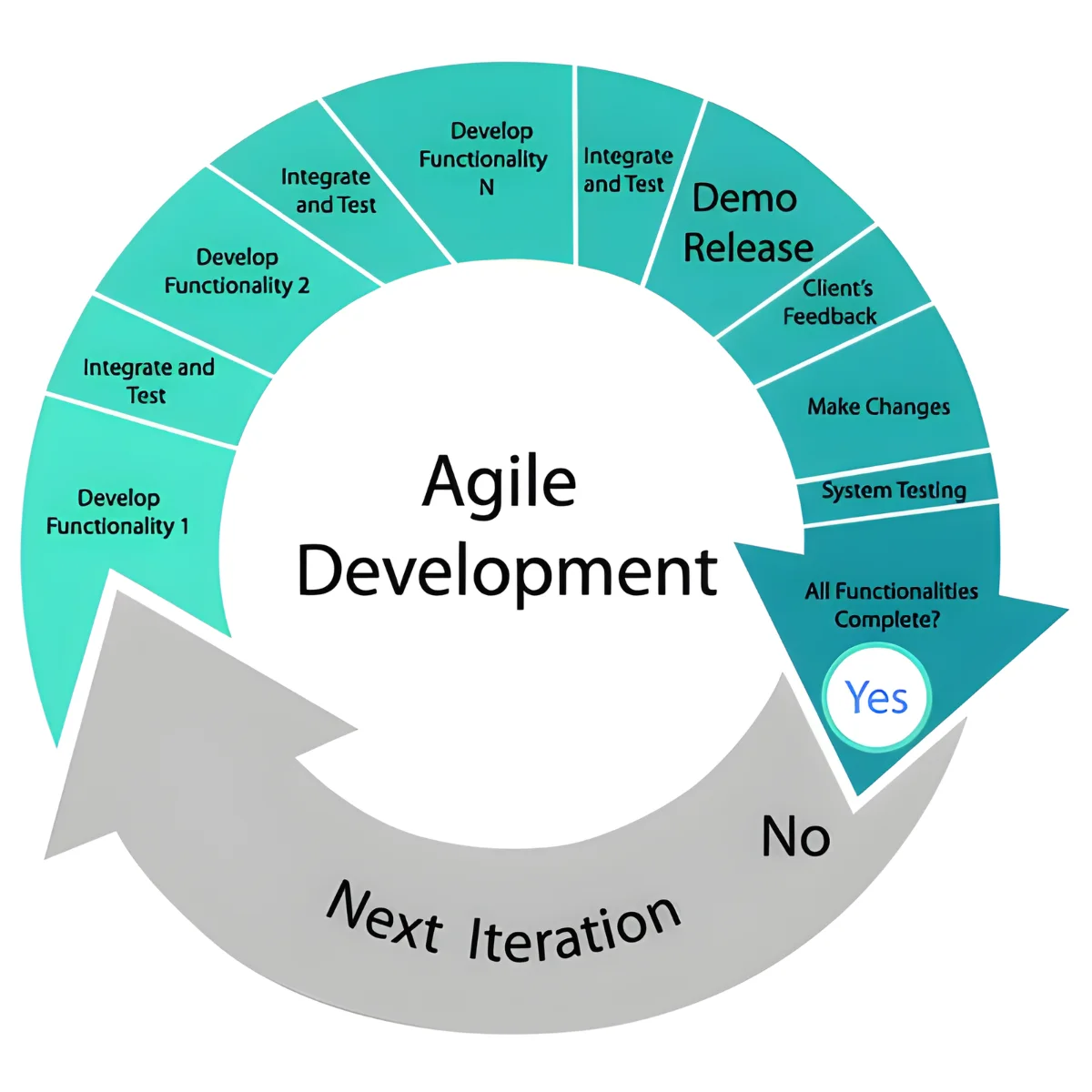
In this approach, the project can be divided into different modules and can be delivered periodically. Agile proposes an incremental and iterative approach to development to increase cost and time efficiency.
Pros & Cons of Agile Software Development
Pros:
- Agile enables fast delivery of working software increments, which allows enterprises to realise value early and collect feedback quickly to steer the project.
- The methodology supports high adaptability to changing requirements, enabling teams to respond to evolving business needs or market shifts rather than being locked into a fixed plan.
- Agile fosters closer collaboration between stakeholders and development teams, thus improving alignment, transparency, and user satisfaction.
- Continuous integration of testing and iterative feedback helps maintain stronger product quality and reduces defect risk because issues are caught earlier in each iteration.
Cons:
- Agile can present difficulty in accurate forecasting of cost and schedule, because iterative scope changes and flexible requirements make it harder to predict timelines and budgets precisely.
- The approach may lack extensive upfront documentation and design, which can lead to architectural issues or scaling problems later if the team neglects design discipline.
- Agile may create challenges for large, distributed teams or regulated environments, because its emphasis on informal communication and rapid change conflicts with strict compliance, documentation, or oversight requirements.
- There is a risk of team burnout and scope overload, as the focus on rapid iterations can generate high-pressure environments and require strong discipline to avoid over-committing in each sprint.
>>>Explore more: Agile Approach to Software Development 101
Traditional vs Agile Software Development: The Ultimate Comparison
Making a clear comparison between traditional and agile software development requires evaluation across multiple criteria such as planning, flexibility, stakeholder involvement, and delivery speed. Below is a detailed comparison table that reflects the latest insights for both methods.
| Criterion | Traditional Software Development | Agile Software Development |
| Planning & Execution | The methodology emphasises comprehensive upfront planning and a sequential flow of phases, which provides predictability but limits adaptability. | The methodology emphasises iterative planning and short cycles of delivery, which allows for flexibility and rapid adaptation to change. |
| Scope & Requirements | Requirements are expected to be stable and well-defined before development begins, which lowers uncertainty but also reduces responsiveness to change. | Requirements may evolve during the project, which supports innovation and changing business needs, though it can increase unpredictability. |
| Customer/Stakeholder Involvement | Customer involvement is typically limited to the initial and final stages, which can result in misalignment with user needs. | Customers or stakeholders are engaged continuously throughout the development cycles, enhancing alignment with business goals. |
| Time to Market | The time to market tends to be longer because major functionalities are delivered only near the end of the project, increasing the risk of outdated requirements. | Value delivery can happen earlier through incremental releases, which reduces risk and enables faster feedback loops. |
| Documentation & Process Governance | The model emphasises detailed documentation, rigid change control, and clearly defined phases, which favour regulated industries but may reduce agility. | Documentation tends to be lighter, processes are more flexible, and change control is more adaptive, which increases responsiveness but may reduce formal audit trails. |
| Risk & Quality Management | Risks are managed by extensive upfront analysis and fixed plans, which offer control but may fail to catch emerging issues until late. | Risks are mitigated through frequent iterations, testing, feedback, and adaptation, which supports improved responsiveness to change but requires disciplined teams. |
| Best Fit Use-Cases | Suitable for projects with clear, stable requirements, fixed budgets, and minimal expected change (e.g., regulated industries, infrastructure systems). | Best for dynamic, uncertain environments where requirements may evolve, innovation is critical, and rapid delivery is valued. |
How Do You Choose The Right Method For Your Project?
It is important to note that there is no ‘one-size-fits-all’ approach for every project. The choice to implement a method depends on many factors, such as the project’s objectives, size, resources, etc. The project manager should discuss with the related stakeholders of the project to choose a suitable methodology. Analyzing the project requirements, the technology involved in the project, the risks and threats, as well as the time and budget.
When selecting between traditional and agile development approaches, decision-makers should evaluate several key criteria to ensure alignment with project goals and organisational readiness:
- Requirement stability: You should assess whether the project’s requirements are well-defined and unlikely to change significantly, which suggests a traditional approach may suit; whereas if the requirements are volatile, agile may be more appropriate.
- Project size and complexity: You should consider whether the project involves many inter-dependent systems, strict regulatory constraints, or large teams, in which case traditional methods may provide better structure; conversely, smaller, modular, high-innovation projects often benefit from agile.
- Time to market urgency: You should gauge the urgency of delivering business value — if rapid feedback and incremental releases are required, agile offers advantages; if time is less critical and predictability is paramount, a traditional model may apply.
- Team experience and organisational culture: You should evaluate whether the internal team and stakeholders are comfortable with flexible, iterative methods and self-organising practices (agile) versus a more hierarchical, plan-driven process (traditional).
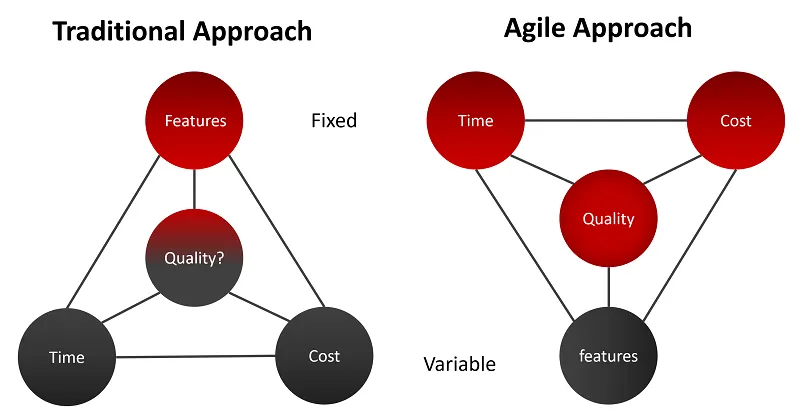
- Budget and contract model: You should review whether the budget and contract require fixed-scope, fixed-price deliveries (favours traditional) or allow variable scope and iterative deliveries (favours agile).
- Risk and compliance requirements: You should determine whether the project has high regulatory, security, or audit demands that favour heavy documentation and control (traditional), or whether adaptation to change, innovation, and frequent releases are more important (agile).
Conclusion
We hope by now you have gained a sufficient understanding of the difference between Traditional vs Agile software development methods. When you involve developers and customers in essential processes, the result is much more rewarding in terms of quality, productivity, better business value, lower costs, and quicker time-to-market speeds.
In case you need help getting started with your project, Newwave Solutions has an adept team in the agile software development approach. Contact us to find out more.
Contact Information:
- Head Office (Hanoi): 1F, 4F, 10F, Mitec Building, Cau Giay Ward, Hanoi City, Vietnam
- Branch Office (Tokyo): 1chōme118 Yushima, Bunkyo City, Tokyo 1130034, Japan
- Hotline: +84 985310203
- Website: https://newwavesolution.com
- Email: [email protected]
To Quang Duy is the CEO of Newwave Solutions, a leading Vietnamese software company. He is recognized as a standout technology consultant. Connect with him on LinkedIn and Twitter.



Read More Guides
Get stories in your inbox twice a month.
Let’s Connect
Let us know what you need, and out professionals will collaborate with you to find a solution that enables growth.
Leave a Reply