


In this article, we will investigate in detail the Waterfall software development model, its key phases, pros & cons, when to use it, etc., so that you can understand in depth this model of the Software Development Life Cycle (SDLC).
Waterfall Software Development Model: Key Phases & When To Apply
Insights
June 4, 2022
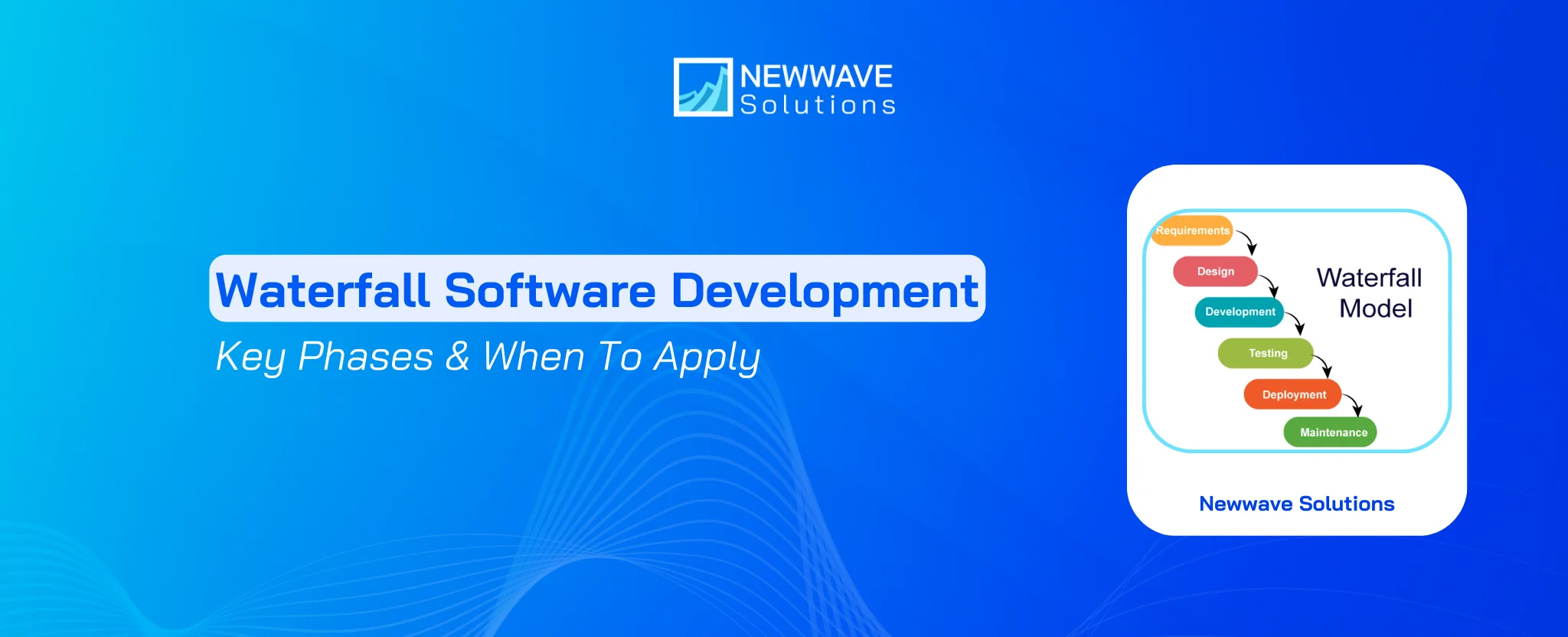
If you are about to start a software development project, it is critical that you understand typical project-management methodologies. Classical waterfall models remain a foundational approach alongside Agile methods such as Scrum, Kanban, and Sigma.
What is the Waterfall Software Development Life Cycle?
The waterfall software development life cycle is a linear and sequential methodology in which each phase of the software project is completed before the next one begins. It plays a critical role in projects that require clear structure, extensive documentation, and predictable outcomes, especially in enterprise settings. Because of its disciplined progression, the waterfall model remains important for large-scale developments and regulatory environments.
Example:
Boeing applied this Waterfall model in the development of its aerospace software systems. The Waterfall approach allowed Boeing to meticulously plan and document each phase, ensuring high safety standards and regulatory compliance, resulting in well-structured, reliable software for its aircraft.

Breakdown Key Phases of Waterfall Software Development Model
Technically, the waterfall software development life cycle can be divided into 6 main phases, namely Requirements, Design, Implementation, Verification (Testing), Deployment, and Maintenance. Each of the phases is essential to the building of the software and must be carefully implemented to ensure the success of the project. Let’s dig into the detailed phases below:
Phase 1 – Requirements Gathering
In this phase, the project team collaborates with stakeholders to capture all functional and non-functional requirements, documents these clearly, and obtains formal sign-off. The team establishes what the product must do, what constraints apply, and defines the scope of work with minimal ambiguity. It is important to ensure completeness and avoid scope creep later, since changes become highly costly once subsequent phases begin.
Phase 2 – System & Architecture Design
During the system design phase, engineers and architects translate requirements into a detailed technical design, including system architecture, data models, interface specifications, and selected technologies. The deliverables serve as a blueprint for implementation and provide clarity about module interactions and dependencies. It is crucial to validate design assumptions early and ensure design decisions align with operational constraints and scalability needs.
Phase 3 – Implementation (Coding)
In the implementation phase, developers write source code based on the approved design, following coding standards and guidelines while building each module sequentially. The team tracks progress against design milestones and integrates the modules into a working system, often using version control and code reviews. Care must be taken to adhere strictly to the design and minimise deviations, because once coding is complete, it is difficult to revisit earlier phases.
Phase 4 – Testing & Verification
The testing and verification phase involves systematic verification of each module, integration testing, system testing, and validation against requirements, in order to find defects and confirm correct behaviour. Quality assurance teams execute test cases, document results, and ensure the product meets acceptance criteria prior to deployment. It is highly recommended to plan and execute rigorous test coverage at this stage because any defects found later would increase cost and delay.
Phase 5 – Deployment (Installation)
At the deployment stage, the completed and verified software is released into the production environment, configured, installed, and made available for end-users, accompanied by user training and documentation. The operations team ensures a smooth transition from development to live use, monitors performance, and addresses initial issues arising in production. It is important to plan deployment logistics and contingencies because any disruption at this stage can impact business operations significantly.
Phase 6 – Maintenance & Support
Once deployed, the software enters the maintenance phase, where the team handles bug fixes, performance enhancements, updates, and possibly evolving requirements over the product lifecycle. The support team documents issues, applies patches, and monitors system health to ensure continued reliability and usability. For enterprise applications, it is essential to maintain a formal change control process and track maintenance activities to ensure compliance and long-term stability.

Pros & Cons of the Waterfall Software Development Model
Pros
- Predictable milestone tracking: The Waterfall model’s linear sequence of phases enables project managers to easily map out timelines, budgets, and deliverables, which supports tight oversight and clear progress visibility.
- Comprehensive documentation: Each phase in the Waterfall lifecycle produces detailed documentation (requirements, design specs, technical specs) that helps with future maintenance, auditing, and knowledge transfer.
- Clear role and phase boundaries: With defined hand-offs between phases, teams know exactly when one stage ends and another begins, reducing overlaps and confusion in structured environments.
- Well-suited for fixed requirements: When a project’s requirements are stable and unlikely to change, the Waterfall model provides a disciplined approach that minimises surprises.
- Ease of management and governance: Because the model is straightforward and sequential, stakeholders and regulators in enterprise or regulated industries find it easier to govern and audit.
Cons
- Inflexible to change: The sequential nature means that once a phase is completed, it is very difficult and costly to go back, which makes the model ill-suited for changing requirements.
- Late testing and feedback: Testing often occurs near the end of the project, which means defects and misalignments may only surface late and require expensive rework.
- Poor fit for dynamic or complex projects: Projects where requirements evolve or technology changes rapidly will struggle under the Waterfall model’s rigidity.
- Heavy documentation overhead: The emphasis on detailed documentation and phase-gate reviews adds time and can slow down delivery and responsiveness.
- Minimal stakeholder feedback during development: Because the product may only be visible late in the lifecycle, users and stakeholders may not recognise misalignments until late, increasing the risk of dissatisfaction.
When to Use the Waterfall Model for Software Development
After exploring the pros and cons of the Waterfall model, you may still be uncertain whether this approach suits your business needs. If you remain hesitant, we offer several common scenarios where the Waterfall model is typically applied, allowing you to compare these cases with your company’s demands, requirements, and available resources:
- Fixed-scope regulatory or compliance project: When requirements are well-defined upfront and must satisfy strict regulatory standards, the Waterfall model offers the structure and documentation required.
- Short-term or small-scale project with stable technology: If the system to be built is relatively small and the technology stack is unlikely to change, Waterfall can provide predictability and faster execution.
- Enterprise project in a highly regulated industry (e.g., aerospace, defense, healthcare): Projects where changes are rare and audit trails are essential benefit from the sequential flow and documentation discipline of Waterfall.
- Outsourced development with clear contractual deliverables: When an outsourcing contract defines fixed deliverables, schedule, and budget, the Waterfall model helps align the vendor and client expectations in a controlled way.
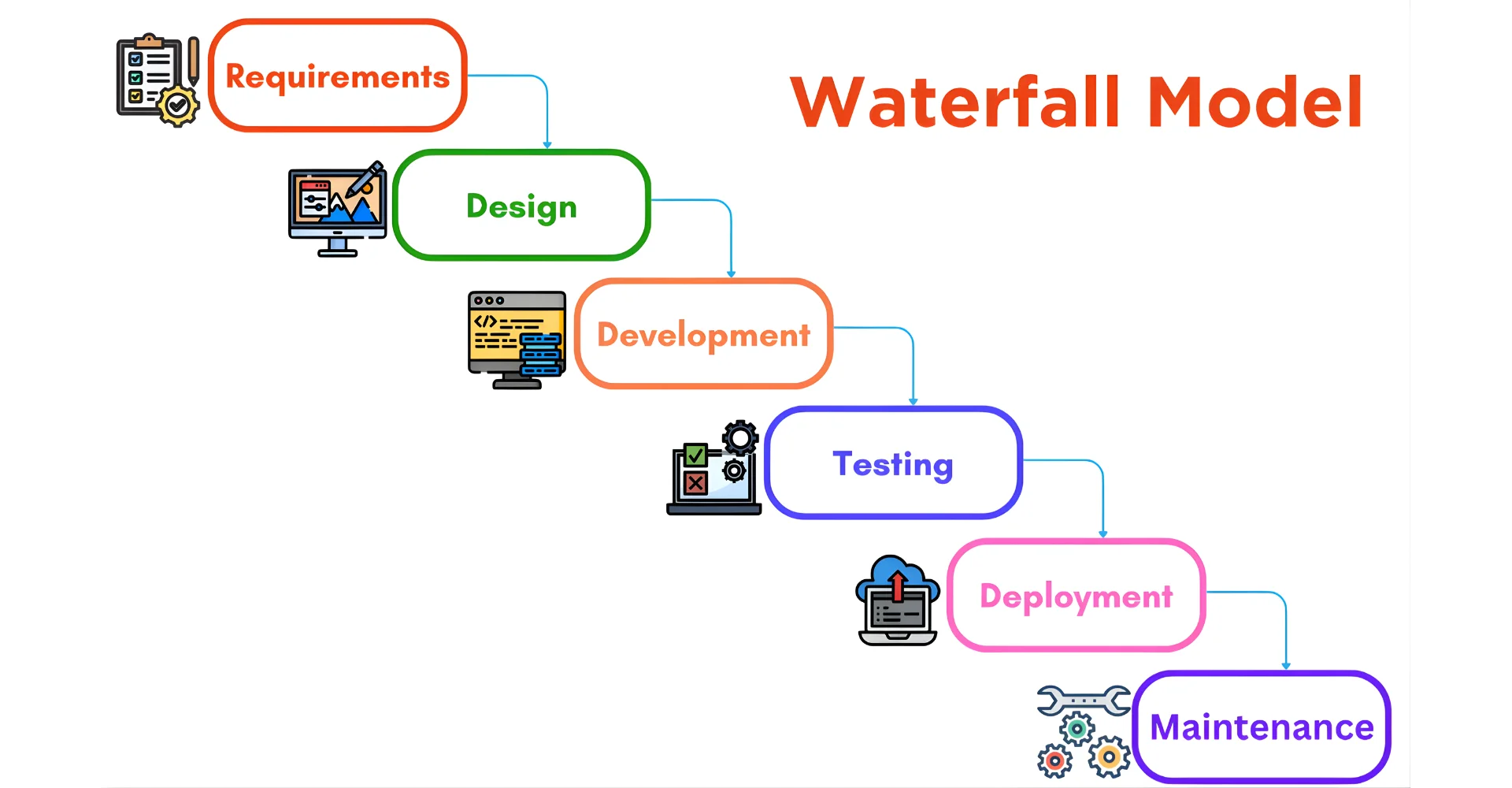
Note: If you believe that the Waterfall software development model does not fit with your business’s requirements, you can check out other SDLC models below to discover an appropriate software development approach for your firm:
V Model in Software Development
Agile Approach to Software Development
Iterative Software Development Model
Final Thoughts
When developing software, choosing the right method is critical. In case you decide to apply the classical Waterfall software development approach, you must clearly identify the deliverables of each phase. If deliverables are straightforward and testable, the waterfall software development life cycle will yield the best results.
Newwave Solutions is a trusted partner with 14+ years of experience in providing expert software development services to companies, enterprises, and individuals worldwide. Despite the approach you choose, our team of experts can give you the best possible advice to increase your project’s efficiency and overall performance. Contact our consultants to discuss your project in detail today.
Contact Information:
- Head Office (Hanoi): 1F, 4F, 10F, Mitec Building, Cau Giay Ward, Hanoi City, Vietnam Branch Office (Tokyo): 1chōme118 Yushima, Bunkyo City, Tokyo 1130034, Japan
- Hotline: +84 985310203
- Website: https://newwavesolution.com
- Email: [email protected]
To Quang Duy is the CEO of Newwave Solutions, a leading Vietnamese software company. He is recognized as a standout technology consultant. Connect with him on LinkedIn and Twitter.



Read More Guides
SUBSCRIBE OUR NEWSLETTER
Get stories in your inbox twice a month.
Let’s Connect
Let us know what you need, and out professionals will collaborate with you to find a solution that enables growth.
Leave a Reply