


Virtual Reality App Development: From Concept to ROI
What if you could eliminate 40% of critical errors before they ever happen? At Johns Hopkins, surgeons achieved exactly this by mastering complex procedures in immersive virtual reality app development environments long before performing actual surgery. This is the new reality of VR—it’s no longer a gaming gadget, but a precision tool for solving real business problems. But leveraging this power requires navigating complex questions about cost, development, and strategy. This guide provides the clear roadmap you need to transform your operations with virtual reality app development.
What is VR App Development?
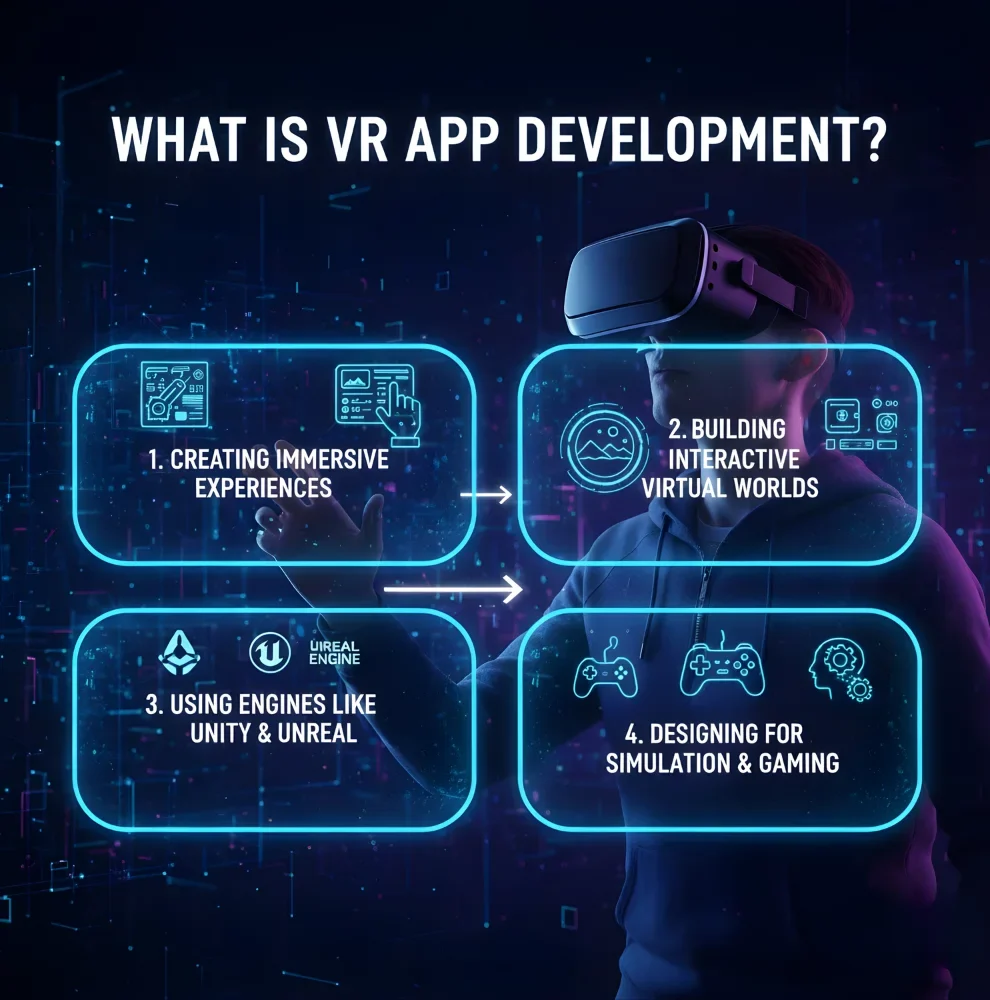
At its core, a VR app is a software application that generates immersive, computer-simulated environments which users can explore and interact with in a way that feels real, primarily through a VR headset. It’s a deliberate deception of the senses—sight, sound, and sometimes touch—to create a powerful sense of presence in a digital world.
The concept dates back to the 1960s with Morton Heilig’s “Sensorama,” but it’s the last decade that has seen VR explode into the mainstream. The 2012 Oculus Rift Kickstarter campaign reignited commercial interest, leading to a rapid evolution in hardware affordability and software sophistication. This has propelled the VR market from a niche gaming novelty to a robust industrial tool.
The VR application market has matured considerably, with distinct trends shaping development priorities:
- Enterprise VR training reached $4.16 billion in 2024, growing at 44.88% annually, with 75% of Fortune 500 companies deploying VR solutions
- By 2030, enterprise users will account for over 60% of total VR revenue, with PwC projecting VR training to contribute $294 billion to the global economy
- Standalone headsets like Meta Quest 3 have democratized access by eliminating PC requirements, expanding both consumer and enterprise markets
- Healthcare and education lead vertical adoption, leveraging VR to solve training and visualization challenges that traditional methods cannot match
The shift toward practical, problem-solving applications marks a fundamental transition from VR as novelty to VR as a tool. Organizations now evaluate VR projects using traditional ROI metrics—training time reduction, error rate decrease, customer conversion improvement—rather than engagement scores alone.
Which Industries Are Leveraging VR App Development?
The application of VR technology is creating seismic shifts across numerous sectors. It’s not just about creating a cool experience; it’s about delivering tangible ROI through enhanced efficiency, safety, and understanding.
1. Healthcare: Practicing on Digital Patients
The healthcare software development service uses VR for everything from surgical training to patient treatment. Surgeons can practice complex procedures on accurate 3D models of human anatomy, significantly reducing risks and improving patient outcomes. For patients, VR is used in exposure therapy for phobias, PTSD treatment, and even physical rehabilitation, making exercises more engaging and trackable. The driving force here is risk mitigation and enhanced skill acquisition without real-world consequences.
2. Real Estate & Architecture: Walking Through Dreams
For architects and real estate agents, VR solves a fundamental problem: selling unbuilt space. Custom virtual reality app development allows the creation of immersive 3D walkthroughs of buildings, homes, and commercial properties. Clients can don a headset and experience the scale, layout, and lighting of a property long before the foundation is poured. This leads to faster client buy-in, more informed design decisions, and the ability to market properties globally.
Investigate our real estate software development solution to support you build a complete product/ service to compete in the intense real estate field.
3. Manufacturing & Automotive: Prototyping at the Speed of Thought
The automotive and manufacturing sectors have embraced VR for virtual prototyping and design reviews. Instead of building expensive physical prototypes, engineers can assemble a vehicle or a complex machine in VR. They can identify design flaws, test ergonomics, and simulate the assembly line process, saving millions in VR development costs and compressing time-to-market. The “why” is clear: massive cost savings and accelerated innovation cycles.
4. Retail & E-commerce: The Ultimate Fitting Room
VR is tackling the high return rates and hesitation in online shopping. Virtual stores allow customers to browse products in a lifelike setting. More advanced applications include virtual try-on for clothes, glasses, or even seeing how a piece of furniture would look in their own living room through augmented reality overlaps. This application directly enhances customer confidence and reduces purchase friction.
5. Education & Corporate Training: Learning by Doing
From classrooms to corporate boardrooms, VR is revolutionizing training. Instead of reading a manual, a trainee mechanic can disassemble a virtual engine. An employee can practice public speaking in front of a virtual audience. A student can take a field trip to ancient Rome. This Edtech solution leads to significantly higher knowledge retention and a safer environment for practicing high-stakes skills.
The unifying insight across these industries is that VR’s power lies in its ability to bridge the experiential gap. It provides a safe, cost-effective, and profoundly effective medium for simulation, visualization, and training that 2D screens simply cannot match.
What Are the Tangible Benefits of Investing in VR App Development?
Moving beyond the “wow” factor, VR offers strategic advantages that can fundamentally improve business operations and customer engagement. Let’s analyze the core benefits.
1. Unparalleled Immersive Training and Simulation
The benefit stems from VR’s core function: creating a controlled, repeatable, and safe simulation of reality. The impact is a dramatic reduction in training costs, equipment damage, and, most importantly, physical risk. For example, training a pilot or a welder in VR eliminates fuel costs, material waste, and potential for injury. This leads to a more skilled and confident workforce, as individuals can practice complex tasks hundreds of times until they achieve mastery.
2. Significant Cost and Time Reduction
This benefit is most evident in the design and prototyping phases. 3D virtual reality app development allows for the creation and iteration of digital prototypes. The cost of changing a digital model is negligible compared to retooling a factory line or rebuilding a physical prototype. This agility compresses development cycles, enabling companies to innovate faster and bring products to market more efficiently than competitors relying on traditional methods.
3. Enhanced Customer Engagement and Brand Connection
In a crowded market, experience is the differentiator. A VR experience is inherently memorable and shareable. Whether it’s a virtual test drive of a new car or a tour of a hotel resort, you are not just showing a customer your product; you are making them feel it. This emotional connection fosters stronger brand loyalty and can be a decisive factor in the purchasing process, directly influencing conversion rates.
4. Improved Data Visualization and Collaborative Decision-Making
Complex data sets, from architectural blueprints to financial models, can be difficult to grasp in 2D. VR transforms this data into an interactive 3D landscape that teams can walk through and explore together, regardless of their physical location. This shared spatial understanding leads to more insightful analysis, identifies hidden problems, and accelerates consensus, making collaborative meetings vastly more productive.
The overarching insight is that VR’s ROI is not just financial. It’s measured in safer employees, more confident customers, faster innovation, and better, data-driven decisions.
What Challenges Will You Face in VR App Development?
While the potential is immense, the path to a successful VR application is paved with unique technical and user-experience hurdles. Acknowledging and planning for these challenges is critical.
1. Navigating Hardware Limitations and Fragmentation
The VR hardware market is diverse, ranging from high-end PC-connected headsets (like Valve Index) to standalone devices (like Meta Quest 3) and smartphone-based solutions. This fragmentation means you must make early, strategic decisions about your target platform, as each has different performance capabilities, input methods, and user demographics. Developing for all platforms multiplies cost and complexity. The solution is to start with a clear understanding of your user and their likely hardware, potentially adopting a scalable development approach using engines like Unity or Unreal that support multi-platform deployment.
2. Conquering the User Experience (UX) Hurdle
VR UX is an entirely new discipline. Traditional UI/UX principles do not directly translate. Designers must combat motion sickness, create intuitive 3D interfaces, and design comfortable interaction paradigms. A poorly designed VR experience can cause discomfort and be immediately rejected by users. Overcoming this requires iterative user testing and adhering to established VR UX best practices, such as using teleportation for movement and ensuring a stable frame rate, to guarantee user comfort and engagement.
3. Managing High Development Costs and Complexity
The question, “How much does it cost to develop a VR app?” has a complex answer. Costs can range from $40,000 for a simple proof-of-concept to over $500,000 for a high-fidelity, enterprise-grade application. The expense is driven by the need for specialized 3D modelers, animators, and VR developers, as well as the computational power required. To manage this, businesses must meticulously define their MVP (Minimum Viable Product) to control scope and budget, focusing on core functionality that delivers value before adding advanced features.
4. Ensuring Compelling and Sustainable Content
A VR application is not a one-off project; it’s a platform that requires engaging content to retain users. The “build it, and they will come” model fails if the experience is shallow. The challenge is creating an application with inherent replay value or a clear content update strategy. This could mean designing generative experiences, user-generated content tools, or a roadmap for regular new content releases to keep the audience engaged long-term.
The key takeaway is that these challenges are not insurmountable. They are manageable through careful planning, expert partnership, and a user-centric development philosophy that prioritizes a comfortable and valuable experience over technological spectacle.
Real-World Examples of VR App Development in Action
To understand the theory in practice, let’s examine how pioneering companies are deploying VR to solve specific problems.
1. Walmart’s VR Training Academy: Scaling Excellence in a Complex World
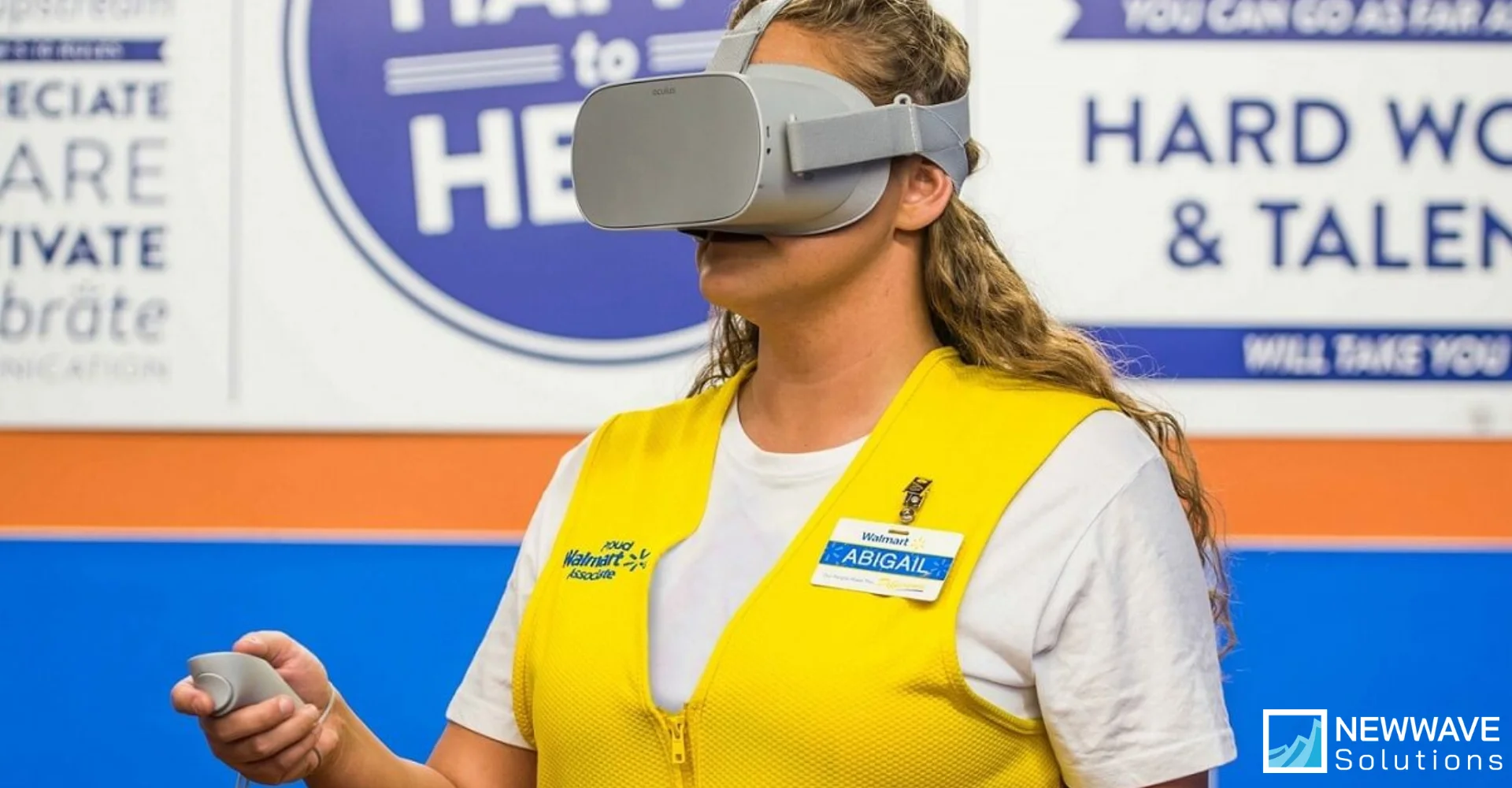
When Walmart faced the monumental challenge of preparing over one million store associates for high-pressure retail environments, traditional training methods proved insufficient. Classroom sessions couldn’t replicate the psychological pressure of Black Friday crowds or the nuanced demands of customer service interactions. The retail giant turned to custom virtual reality app development to create what would become one of the largest corporate VR training deployments globally.
Walmart developed a comprehensive VR training system deployed across all 4,700 U.S. stores, creating a scalable training platform that could consistently deliver high-quality experiential learning.
- Immersive Scenario Library: The training modules covered diverse real-world situations:
- Peak Season Preparedness: Navigating packed aisles and long checkout lines during holiday rushes
- Technology Adoption: Operating new store equipment like automated shelf-scanning robots and pick-up towers
- Customer Service Excellence: Handling difficult interactions and complaint resolution
- Safety Protocols: Managing emergency situations, including active shooter scenarios
- Psychological Fidelity: The training environments captured crucial environmental details—background noise, multiple simultaneous demands, stressed customers—creating genuine psychological responses that closely mirrored actual workplace stress.
The results demonstrated VR’s transformative impact on workforce development. VR-trained employees showed 10-15% higher confidence scores and consistently improved performance metrics compared to traditionally trained colleagues. The system’s value became particularly evident during the 2020 pandemic when in-person training became impossible. While competitors struggled with inadequate video-based alternatives, Walmart’s VR training continued uninterrupted, proving that immersive technology could maintain operational continuity while developing practical skills at scale.
2. STRIVR: Transforming Workforce Training
STRIVR addresses a critical gap in corporate training: the difference between knowing a procedure and being able to execute it under pressure. Traditional training methods often fail to create the muscle memory and quick decision-making needed for high-stakes situations. STRIVR’s VR application development platform delivers realistic, repeatable simulations that bridge this gap across multiple industries.
STRIVR creates enterprise-grade training simulations that place employees in authentic work environments, from retail floors to factory lines and corporate settings.
Key Training Applications:
- Soft Skills Development: Practicing difficult conversations, customer service scenarios, and leadership situations
- Technical Skills Training: Operating complex machinery, following safety protocols, and mastering operational procedures
- Onboarding Acceleration: Getting new hires up to speed faster through consistent, standardized training experiences
- Data-Driven Insights: The platform captures performance metrics that help organizations identify skill gaps and measure training effectiveness:
- Decision Tracking: Monitoring choices made during critical scenario moments
- Behavioral Analytics: Assessing response times and action sequences
- Performance Benchmarking: Comparing individual and team performance against established standards
Companies using STRIVR report significant improvements in employee performance and operational efficiency. Verizon achieved a 35% reduction in training time while improving knowledge retention. BMW Group manufacturing plants saw a 90% reduction in training-related disruptions to production lines. The technology enables organizations to train employees more effectively while reducing the costs and risks associated with traditional training methods, proving that immersive learning directly impacts business outcomes.
3. Matterport: Redefining Property Visualization
The real estate industry has long struggled with a fundamental limitation: how do you help someone truly understand and connect with a property they cannot physically visit? Matterport solved this pervasive problem by leveraging 3D virtual reality app development to create immersive digital twins of physical spaces, transforming how properties are marketed and evaluated.
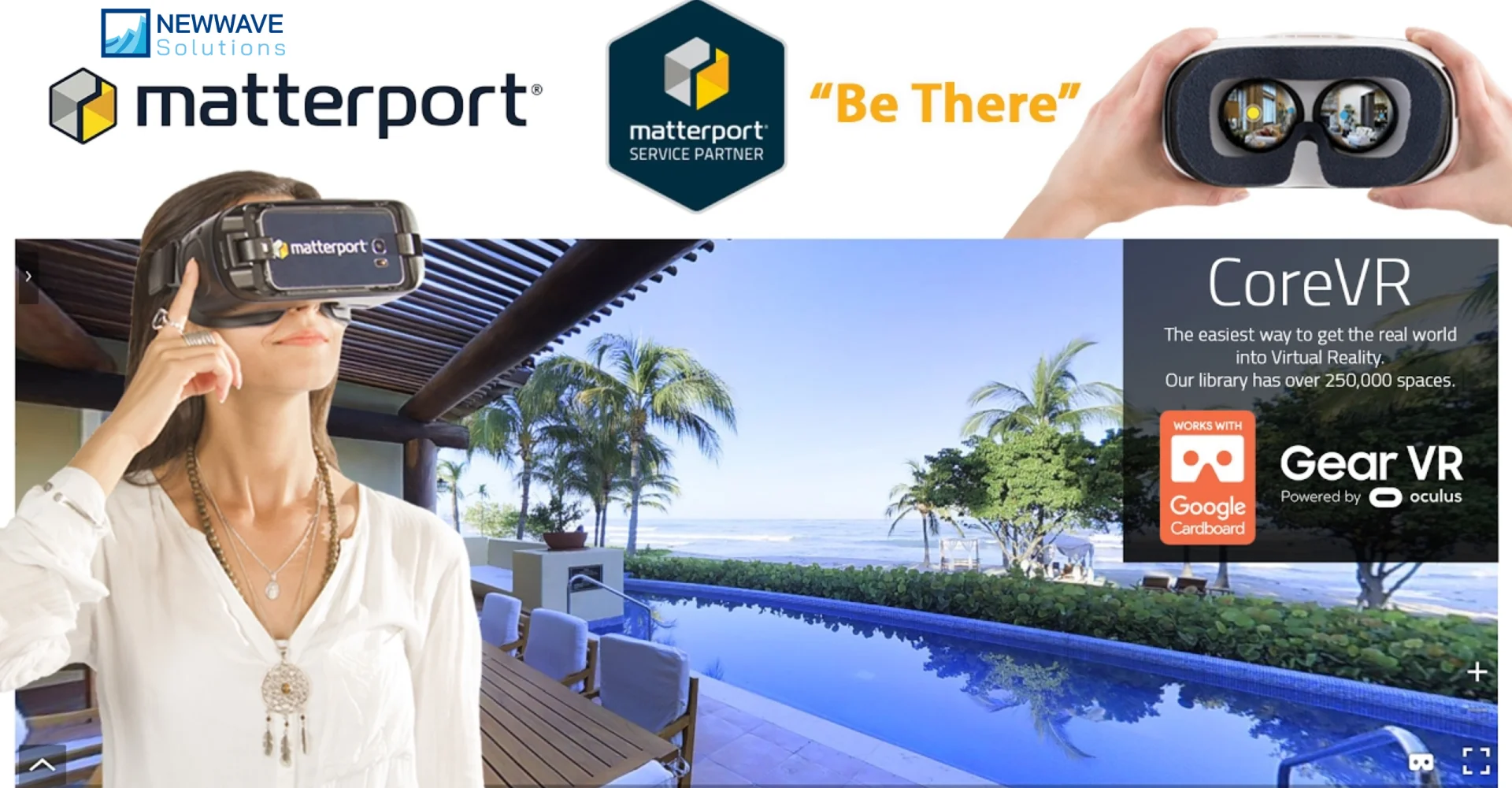
At the heart of their solution is a specialized 360-degree camera system and sophisticated software that stitches together captures into a seamless, interactive 3D model.
Key Features of the VR Experience:
- Self-Guided Exploration: Potential buyers or tenants can navigate the digital twin at their own pace, moving from room to room with simple clicks or, in VR, by virtually “walking” through the space.
- True-to-Life Scale and Flow: Unlike static photos or videos, the Matterport experience preserves the genuine sense of scale, spatial relationships, and flow between rooms, which is critical for forming an accurate impression.
- Interactive Measurement Tools: Users can activate built-in tools to measure room dimensions, countertop lengths, or ceiling heights directly within the model, providing practical data that aids decision-making.
- The “Dollhouse” and “Floor Plan” Views: These unique overview modes allow users to instantly understand the property’s layout from a bird’s-eye perspective, something impossible to glean from a traditional gallery of images.
The impact on the real estate and architecture sectors has been profound. Matterport has become the standard for digital property marketing, dramatically increasing qualified buyer interest by enabling remote prospects to conduct thorough, initial vetting from anywhere in the world. This saves immense time and resources for both agents and clients, accelerates sales cycles, and has proven particularly invaluable for marketing unbuilt or off-plan properties.
How to Develop a VR App
The process of creating a VR application is a structured journey from concept to launch. Here is a synthesized roadmap to guide your project.
- Define Your Core Objective and Audience: Start by asking “Why?” What specific problem are you solving? Who is the end-user? A clear, value-driven goal is the compass for every decision that follows.
- Establish Technical Requirements and Compatibility: Determine the level of immersion (fully immersive, semi-immersive, desktop VR) and target hardware (Standalone, PCVR, Mobile). This decision is the primary driver of cost, performance, and user reach.
- Select the Development Platform and Game Engine: The two dominant game engines are Unity and Unreal Engine. Unity is known for its broader platform support and gentler learning curve, while Unreal delivers superior, high-fidelity graphics. Your choice will depend on your team’s expertise and visual requirements.
- Architect the User Experience (UX) and User Interface (UI): This is where you storyboard the user’s journey. Design intuitive 3D interactions and a UI that exists within the virtual world, not as an overlay. Prioritize user comfort above all else.
- Create Assets and Prototype: 3D artists model the environments, objects, and characters. A rough, interactive prototype is built to test core mechanics and user flow before full-scale production begins.
- Develop and Integrate: Programmers code the application logic, integrate the 3D assets, and implement audio and haptic feedback. This phase is highly iterative, with continuous testing.
- Rigorous Quality Assurance (QA): QA in VR is exhaustive. Testers check for not just bugs, but also performance (maintaining a stable 90+ FPS is critical), user comfort, and hardware compatibility.
- Deploy, Distribute, and Iterate: Release the application on the chosen platform(s)—such as the Oculus Store, SteamVR, or a custom enterprise channel. Monitor user feedback and analytics to plan for future updates and improvements.
Navigating this blueprint requires a blend of technical expertise and creative vision. For over 14 years, Newwave Solutions has emerged as a top-tier provider of app development services, trusted by global clients to deliver robust, scalable, and user-centric VR applications. Our deep domain expertise allows us to guide you through each step of this complex process, ensuring your investment delivers maximum impact.
Wrapping Up
Virtual Reality app development represents a fundamental shift in human-computer interaction. It moves us from being external observers of a screen to active inhabitants of digital worlds. The journey is complex, requiring a careful balance of technological prowess and human-centered design, but the payoff is the ability to solve problems in ways previously confined to imagination. It’s not about adopting a new technology for its own sake; it’s about harnessing its unique power to train more effectively, design more intelligently, and connect more profoundly.
Are you ready to explore how a strategic VR initiative can transform your business operations and create unparalleled value for your customers? Contact Newwave Solutions today for a free, no-obligation consultation. Let our experts help you translate your vision into an immersive reality that delivers measurable results.
To Quang Duy is the CEO of Newwave Solutions, a leading Vietnamese software company. He is recognized as a standout technology consultant. Connect with him on LinkedIn and Twitter.



Read More Guides
Get stories in your inbox twice a month.
Let’s Connect
Let us know what you need, and out professionals will collaborate with you to find a solution that enables growth.
Leave a Reply