


VR Game Development: How to Create Immersive Experiences
Remember the first time a game truly transported you to another world? VR game development is the discipline dedicated to shattering that final barrier, replacing the screen in front of you with a universe all around you. It’s not just a new way to play; it’s a fundamental re-imagining of human-computer interaction. If you are looking at the digital horizon, understanding the intricacies of Virtual Reality game development is no longer a niche interest—it’s a strategic imperative to grasp one of the most engaging mediums of our time.
What is VR Game Development?
VR game development is the process of creating interactive digital experiences that are primarily consumed through a virtual reality headset. Unlike traditional game development, which is viewed on a flat screen, VR development constructs a 360-degree, stereoscopic 3D environment that responds to the user’s head and body movements, creating a powerful illusion of “presence”—the feeling of actually being inside the game world.
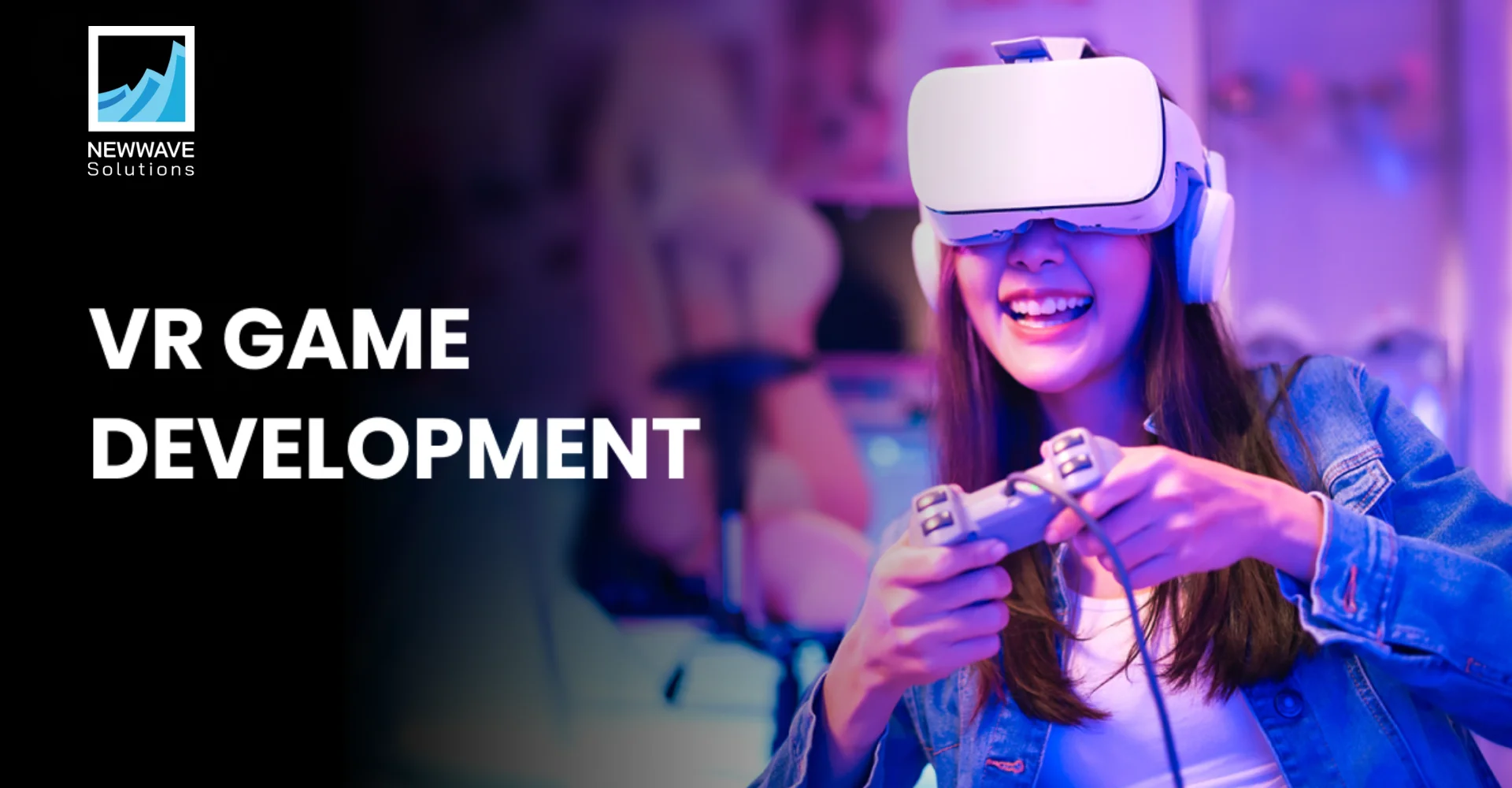
The concept of VR isn’t new; its roots trace back to the Sensorama of the 1960s and military simulators of the 80s. However, the modern era of consumer virtual reality VR game development began in earnest around 2012 with the Oculus Rift Kickstarter, which democratized access to high-quality, head-mounted displays. This sparked an industry-wide race, leading to the advanced standalone and PC-powered headsets we have today.
The market reflects this explosive growth. The global VR gaming market size was valued at USD 18.71 billion in 2022 and is projected to expand at a compound annual growth rate (CAGR) of 31.8% from 2023 to 2030 (Grand View Research). This isn’t just driven by hardware sales; it’s fueled by player demand for deeper immersion. Current trends highlight a shift beyond novelty experiences towards full-fledged, narrative-driven titles, social VR platforms where users interact as avatars, and the emerging fusion of VR with fitness through rhythm games and active shooters.
Ready to create worlds that feel real? Our game development service brings your VR vision to life with technical expertise and creative innovation.
Why Should You Consider VR Game Development?
Venturing into VR is more than following a trend; it’s about harnessing a unique set of advantages that are reshaping entertainment, training, and human connection. The benefits stem from VR’s core differentiator: unparalleled immersion. Let’s analyze what this truly means for you and your projects.
1. Unmatched Player Immersion and Emotional Connection
The primary benefit of VR is its ability to generate a state of “presence“. This isn’t just a visual upgrade; it’s a psychological phenomenon where your brain accepts the virtual world as real. This is achieved through stereoscopic vision, 3D spatial audio, and 1:1 motion tracking. The impact is profound: a jump scare in a horror game becomes heart-stopping, the scale of a dinosaur becomes awe-inspiring, and a quiet moment in a virtual landscape can feel genuinely peaceful.
This deep emotional resonance leads to higher player engagement, stronger brand recall, and more powerful storytelling opportunities than any other medium.
2. A New Dimension of Gameplay Mechanics
VR fundamentally changes how players interact with a game world. Instead of pressing ‘X’ to open a door, you physically reach out and turn the handle. This allows for intuitive and innovative gameplay that is impossible to replicate on a traditional controller.
- Physicality: Games like Beat Saber use your whole body as the controller. Boneworks pioneers realistic physics-based interactions, where every object can be grabbed, thrown, or used as a tool.
- Spatial Problem-Solving: Puzzles can exist in full 360 degrees, requiring you to physically look around and manipulate the environment in three dimensions.
- Natural Interfaces: Aiming a weapon becomes a skill of real-world hand-eye coordination, not just managing analog stick sensitivity.
This shift from abstract button presses to tangible, physical actions creates a deeper cognitive and muscle-memory connection to the experience.
3. A Competitive Edge in a Growing Market
While the market is expanding, it remains less saturated than the traditional PC or mobile gaming spaces. This presents a significant opportunity for studios and publishers to establish a strong foothold and build a dedicated community. Being an early innovator in a specific genre within VR can cement your reputation as a leader. Furthermore, the types of VR games in development today are setting the standards for tomorrow. By investing now, you position yourself at the forefront of the next wave of interactive entertainment, attracting both players and investment from those looking toward the future.
In essence, the benefits of VR game development converge on its ability to create more memorable, impactful, and innovative experiences. It’s a tool for creating not just games, but worlds that players can truly step into and feel.
What Are the Challenges of VR Game Development
For all its potential, the path to creating a successful VR title is fraught with unique challenges that demand specialized expertise. Acknowledging and understanding these hurdles is the first step toward overcoming them.
Navigating the Technical Labyrinth of Performance
The single biggest technical challenge in VR is performance. To maintain immersion and prevent motion sickness, VR applications must run at a high, stable frame rate—typically 90 frames per second (FPS) or higher for each eye. This is effectively rendering the game twice, at a resolution and speed far beyond what most traditional games require. Dropping below this threshold can instantly break presence and cause discomfort for the user. This demands ruthless optimization: simplifying 3D models, implementing advanced rendering techniques like foveated rendering, and writing highly efficient code. The impact is a longer, more complex, and often more expensive development cycle focused intensely on technical perfection.
The Paramount Challenge of User Comfort
In traditional gaming, a bug might be annoying. In VR, a poorly designed interaction can be physically nauseating. Issues like motion sickness, eye strain, and simulator sickness are significant barriers to adoption. These are often caused by a mismatch between what the user’s eyes see and what their vestibular system (the body’s balance center) feels. Mitigating this requires careful design:
- Providing robust comfort options (e.g., teleportation movement alongside smooth locomotion).
- Designing movement systems that minimize artificial camera sway.
- Ensuring a consistent frame rate.
- Avoiding in-game camera cuts that the user doesn’t control.
Overcoming this challenge is not just a technical feat but a core design philosophy that must be woven into every aspect of the virtual reality game development process.
Hardware Fragmentation and Accessibility
The VR hardware landscape is diverse, ranging from high-end PC-connected headsets like the Valve Index to standalone devices like the Meta Quest 3 and smartphone-based systems. Each platform has different performance capabilities, input methods (controllers), and tracking technologies. Developing a game that runs well across multiple devices can be like developing for several different consoles simultaneously. This fragmentation complicates development, increases testing overhead, and forces difficult decisions about which audience to target. Furthermore, the cost of high-end VR hardware, while decreasing, still presents a barrier to entry for many consumers, directly impacting your potential market size.
VR Game Development in Action: Case Studies of Immersion
To understand the theory, it’s best to look at the practice. The following titles aren’t just popular VR games; they are masterclasses in how to leverage the medium to create unique and defining experiences.
1. Beat Saber: Simplicity Executed Perfectly
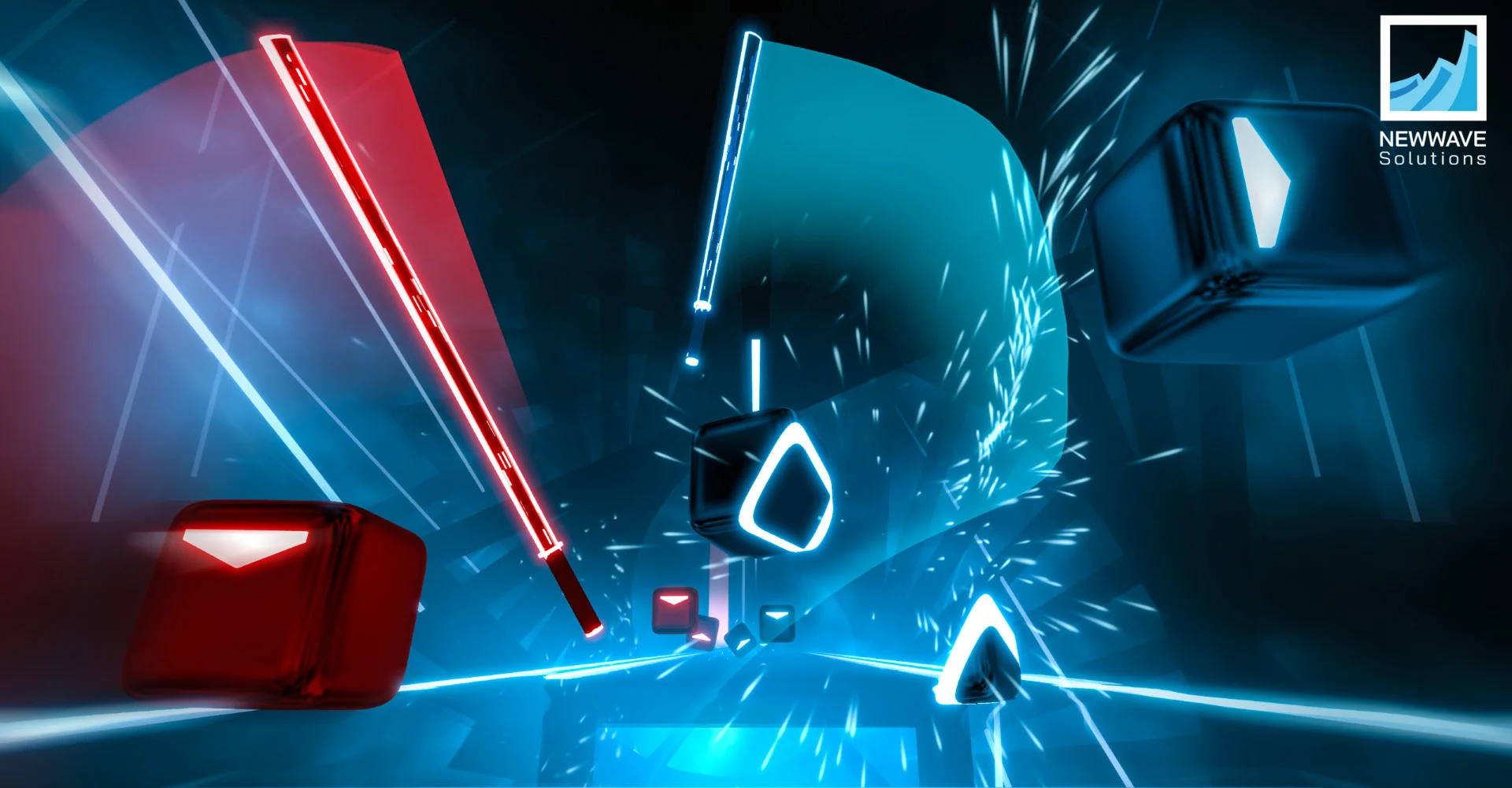
Beat Saber has reached almost 10 million players who unlocked the first achievement on Quest alone, making it the most commercially successful VR game to date. The core mechanic is elegantly simple: slice colored blocks to rhythm music using lightsaber-like controllers. Yet this simplicity conceals sophisticated design decisions that make it extraordinarily effective as a VR experience.
Key VR Implementation Elements:
- Stationary gameplay design that positions players in a fixed stance with blocks approaching from a single direction, eliminating locomotion-related comfort issues
- Natural full-body movement through arm swings and dodging that doesn’t create visual-vestibular conflict
- Rhythm-driven progression that provides inherent replayability without requiring complex narrative or world-building
- Lean content architecture that enabled relatively rapid development while perfectly showcasing VR’s unique capabilities
From a business perspective, Beat Saber demonstrates the viability of VR-native gameplay that couldn’t exist in traditional formats. Former Oculus CTO John Carmack stated that Beat Saber was “far more important than Half-Life: Alyx” in pushing VR adoption, highlighting how accessible, immediately satisfying experiences often drive market growth more effectively than ambitious AAA projects. The game’s success also validated music licensing models in VR and proved that standalone VR could support premium-priced titles.
2. Resident Evil 4 VR: Adaptation Done Right
Capcom’s VR adaptation of Resident Evil 4 illustrates a successful translation of existing games into virtual reality. Rather than simple camera perspective changes, the development team rebuilt interaction systems, redesigned combat for physical aiming and reloading, and adjusted pacing to accommodate VR fatigue factors.
Strategic Adaptation Decisions:
- Third-person cutscenes during critical story moments to prevent motion sickness from camera movements outside player control
- Physical inventory systems where players reach over their shoulders to grab weapons or search their pockets for items
- Combat redesign for physical aiming and manual reloading that respects the source material while embracing VR’s strengths
- Pacing adjustments that account for VR-specific fatigue without diminishing tension
This approach offers a viable middle path for studios with existing IP: leverage proven gameplay concepts and content while reinventing interaction paradigms for VR. The development timeline and cost remain substantial but benefit from established narratives, level designs, and asset libraries that reduce creative risk.
3. Half-Life: Alyx: AAA Production Values in VR
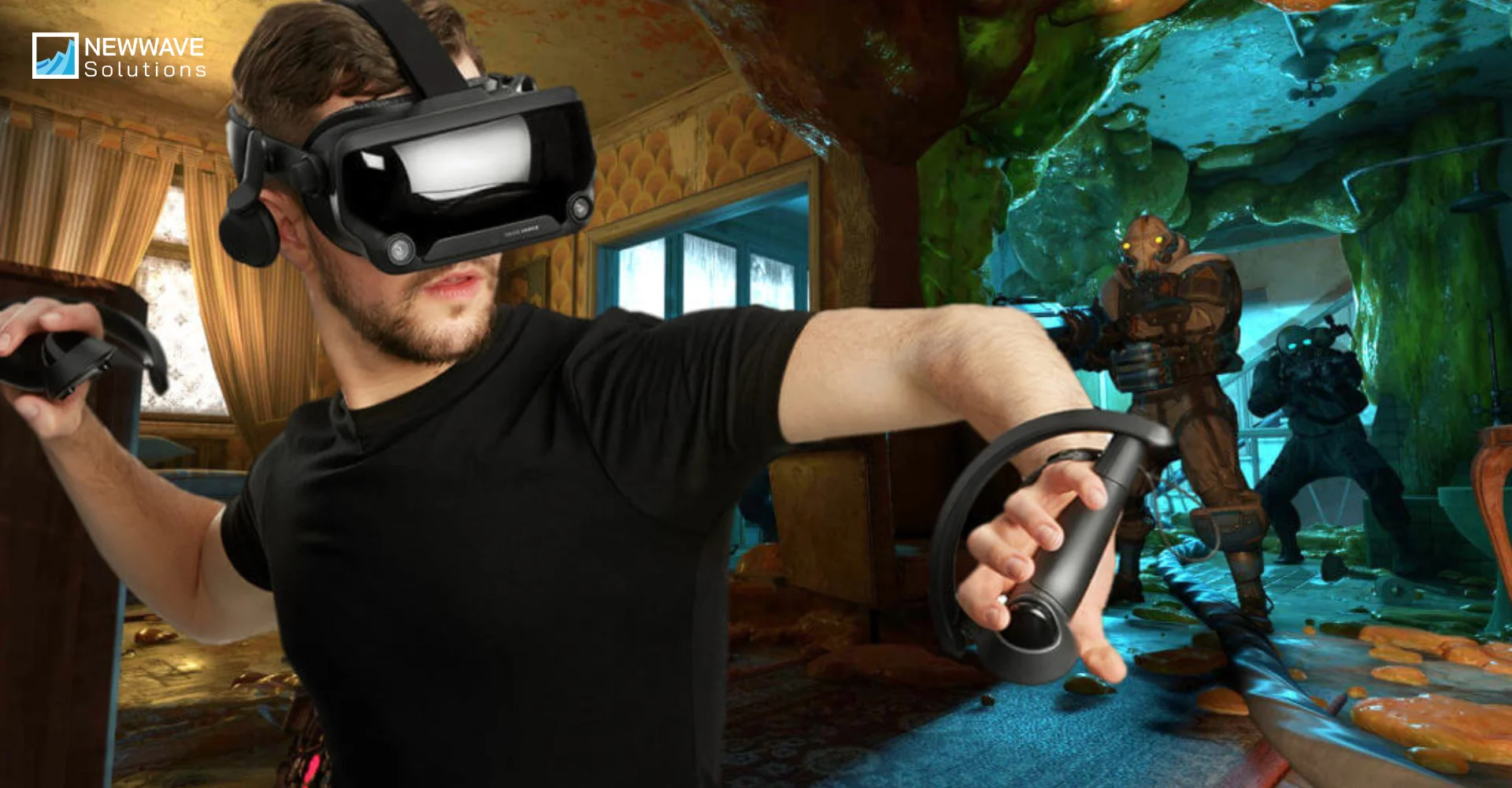
Half-Life: Alyx became Steam’s best and most rated VR-only game, achieving universal acclaim less than a year after release. Valve’s approach represented the opposite strategy from Beat Saber—a full-scale narrative-driven first-person experience that adapted traditional gaming’s most popular genre for VR.
VR-Specific Design Compromises:
- Teleportation-first locomotion as the default option rather than smooth walking to maintain comfort
- Physical weapon reloading requires manual manipulation of magazines and slides instead of button presses
- Diegetic health management where players physically reach to inject syringes
- Environmental interaction depth that lets players lean around corners, examine objects from all angles, and manipulate the world naturally
These VR-specific interactions transform familiar gaming into visceral experiences where your physical actions directly control outcomes. Alyx proved that narrative depth and production values can coexist with VR’s unique constraints if game developers commit to ground-up VR design rather than retrofitting existing games.
4. Superhot VR: Time Mechanics That Exploit VR’s Strengths
Superhot VR demonstrates how unique gameplay mechanics can transform VR from a technical constraint into a strategic advantage. Time moves only when you move, converting the shooter genre into a puzzle-action hybrid where physical stillness becomes a core mechanic.
Design Innovations:
- Time-movement linkage that naturally encourages players to pause between actions, preventing sustained rapid motion that triggers discomfort
- Minimalist art style supporting aggressive optimization and enabling smooth performance across hardware tiers
- Strategic stillness as a core gameplay mechanic rather than a comfort accommodation
- Physical dodging that turns body movement into essential gameplay rather than an optional enhancement
The stark minimalist art style supports aggressive optimization, enabling smooth performance across hardware tiers without compromising the experience. Superhot VR proves that stylistic choices aligned with technical constraints can become distinctive brand assets rather than compromises.
How to Develop a VR Game?
Creating a successful VR game isn’t about checking boxes on a list of features; it’s about engineering a state of presence. This feeling of “being there” is fragile, built upon a foundation of intuitive design, relentless technical optimization, and deeply engaging mechanics. Embarking on your own VR game development journey is a structured process that blends creative vision with technical discipline.
Here is a synthesized roadmap of the critical phases.
1. Choosing the Right Game Engine and Development Tools
The foundational decision is your game engine. The two dominant players are Unity and Unreal Engine.
- Unity is often praised for its accessibility, strong mobile performance (crucial for standalone headsets), and a massive asset store. It’s a common choice for indie developers and studios focused on Quest development.
- Unreal Engine is known for its high-fidelity graphics out of the box, making it a powerhouse for creating visually stunning, PCVR experiences. Its Blueprint visual scripting system can also lower the barrier to entry for prototyping.
The choice hinges on your team’s expertise, artistic goals, and target platform. Complementing the engine, you’ll need SDKs (Software Development Kits) from headset manufacturers (like Oculus Integration for Unity or OpenXR) to handle headset-specific features.
2. Implementing VR-Specific Features and Mechanics
This is where you build the core “VR-ness” of your game. This phase involves:
- Setting up Camera Rig and Controllers: Implementing the system that tracks the headset and controllers as the player’s in-game avatar.
- Designing Locomotion: Deciding and implementing how the player moves. Will you use teleportation, smooth locomotion, arm-swinging, or a node-based system? This decision is critical for comfort.
- Building Interactivity Systems: Creating the code and physics that allow players to grab, push, throw, and use objects. This is where you make the world feel tangible.
3. Optimizing Performance and Ensuring Compatibility
This is an ongoing, iterative process that runs parallel to development. It involves:
- Profiling: Constantly using engine tools to monitor frame rate and identify performance bottlenecks (CPU, GPU, memory).
- Optimization Techniques: Reducing polygon counts, using efficient lighting and shaders, implementing Level of Detail (LOD) systems, and culling objects that are out of sight.
- Cross-Platform Testing: Rigorously testing your build on every target device to ensure a consistent and comfortable experience for all users, despite hardware differences.
The development process for VR demands front-loading technical validation and comfort testing rather than following traditional “content first, optimization later” pipelines. This inverted approach prevents the costly reality where you’ve built substantial content that must be dramatically simplified or entirely rebuilt to meet performance targets.
Consider the option to hire professional game developers from Newwave Solutions if you are looking for professionals to handle the technical heavy lifting, from scalable architecture to stunning visuals. As a result, you can focus on creating a game that players will love.
FAQs
How long does it take to develop a VR game?
The timeline varies dramatically based on scope. A simple, minimalist experience like the initial prototype of Beat Saber could be developed in a few months. A mid-scope indie title with a few hours of gameplay typically takes 1-2 years. A large, narrative-driven AAA project like Half-Life: Alyx can take three years or more. The complexity of interactions and the intensive optimization required add significant time compared to traditional 2D or mobile games.
What are the main types of VR headsets I should target?
The market is segmented into three main categories: Standalone (e.g., Meta Quest 3, Pico 4), which are all-in-one and offer the greatest accessibility; PC-Powered (e.g., Valve Index, HTC Vive Pro 2), which deliver the highest fidelity but require a powerful computer; and Console-Powered (e.g., PlayStation VR2), which are tied to a specific gaming console. Your target audience and game’s visual ambitions will guide this choice.
What is the difference between VR and AR game development?
VR (Virtual Reality) immerses the user in a completely digital environment, blocking out the real world. AR (Augmented Reality) overlays digital elements onto the user’s view of the real world, through a smartphone (like Pokémon GO) or transparent glasses (like Microsoft HoloLens). The development considerations, tracking technologies, and design philosophies are distinct.
How much does it cost to develop a VR game?
Cost is equally variable. A small indie project might range from $30,000 to $100,000. A more ambitious indie title with a small team can cost between $100,000 and $500,000. High-end, studio-quality VR games easily require budgets of $1 million to $10+ million. The primary cost drivers are team size, development duration, and the level of visual fidelity and animation quality you aim to achieve.
Final Thought
VR game development represents a paradigm shift, moving us from interacting with digital worlds to inhabiting them. The journey is complex, demanding a delicate balance between technological innovation and profound respect for human perception. This medium is still being defined, and its future will be shaped by those who dare to build for it.
Are you ready to step into the immersive frontier and build the next defining VR experience? Contact Newwave Solutions today, and together we can build your ideal VR game to dominate the industry in the near future. Let our 14 years of expertise in cutting-edge game development guide your project from visionary concept to market-ready reality.
To Quang Duy is the CEO of Newwave Solutions, a leading Vietnamese software company. He is recognized as a standout technology consultant. Connect with him on LinkedIn and Twitter.



Read More Guides



Get stories in your inbox twice a month.
Let’s Connect
Let us know what you need, and out professionals will collaborate with you to find a solution that enables growth.
Leave a Reply