


What Is AIOps and How It Transforms IT Operations
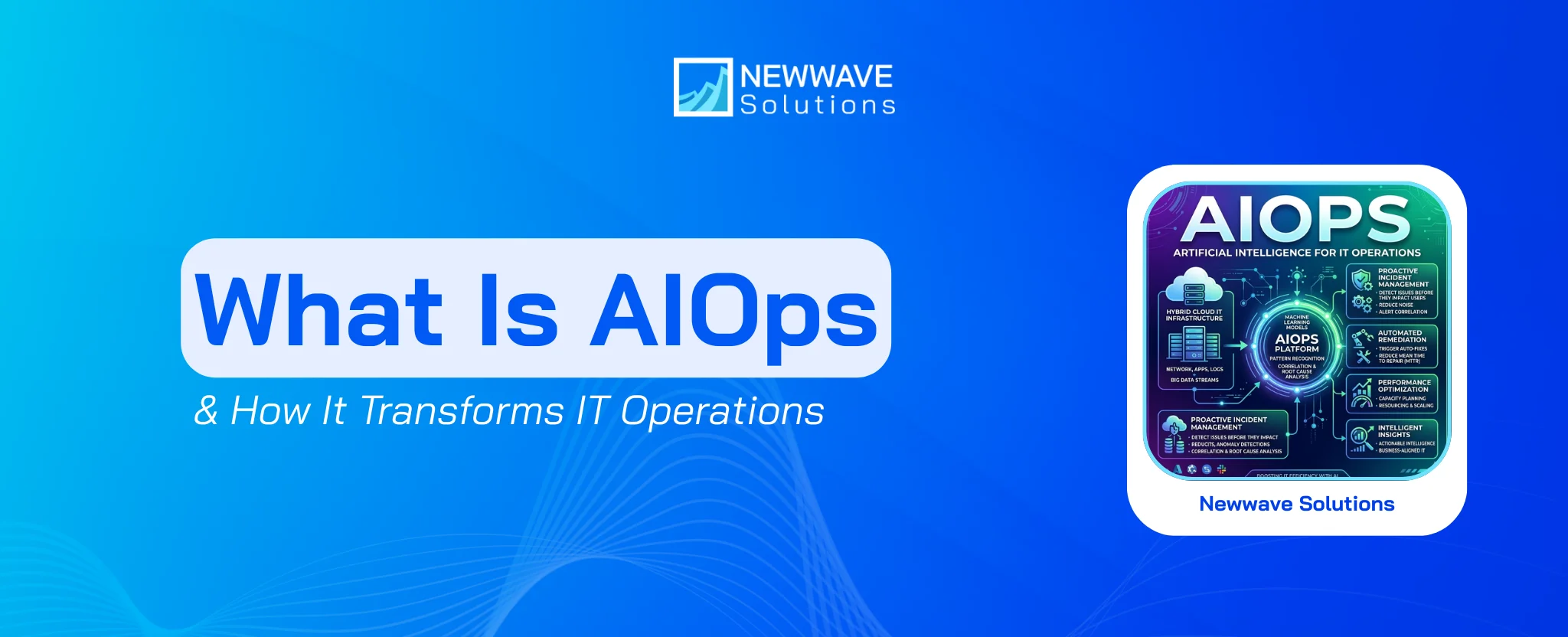
With artificial intelligence increasingly applied across industries to reduce costs and boost productivity, the concept of AIOps has emerged as a strategic technological response to the growing complexity of modern IT environments. AIOps (Artificial Intelligence for IT Operations) combines AI, machine learning, and analytics to automate and optimize routine IT workflows, enabling early anomaly detection and proactive remediation across systems. This article explores what is AIOps, its defining characteristics, reasons enterprises adopt it, and some leading companies and technologies advancing this field today.
What Is AIOps?
AIOps — short for Artificial Intelligence for IT Operations — refers to the application of advanced analytics, machine learning, and automation technologies to enhance and streamline traditional IT operations processes, from monitoring and event correlation to incident detection and resolution. By ingesting and analyzing large volumes of metrics, logs, and events, AIOps automates repetitive tasks and provides real-time insights that improve system performance, reduce downtime, and elevate operational efficiency.
Example: Google utilizes AIOps technologies to monitor vast distributed services, automatically identifying anomalies and optimizing resource allocation before degradation impacts customers, which enhances service reliability and reduces operational costs. Enterprises that adopt AIOps see mean time to repair (MTTR) drop significantly due to faster detection and automated remediation.
How AIOps Works
Understanding the AIOps process helps teams see how data transforms into actionable automation and insights. A typical AIOps workflow follows a cycle of observe → analyze → act, enabling IT operations to move from reactive problem solving to proactive, AI-driven management:
- Observe: Collect and centralize massive quantities of operational data from sources such as logs, metrics, and events.
- Analyze: Apply machine learning and analytics to uncover patterns, anomalies, and correlations across data streams.
- Act: Trigger automated responses or deliver curated recommendations to IT teams for remediation or optimization.
This lifecycle empowers organizations to identify issues earlier, correlate related events efficiently, and reduce manual intervention in routine tasks.
Key Components of AIOps
- Automated Data Ingestion — The system continuously gathers metrics, logs, and events from diverse IT sources so that no critical information is missed.
- Machine Learning & Analytics — Algorithms analyze patterns and anomalies in real time, enabling insights and predictions that humans might overlook.
- Event Correlation & Root Cause Analysis — Connected event data helps teams diagnose underlying problems faster than manual investigation.
- Automated Remediation — The platform initiates automated or guided responses to operational alerts, reducing response time and manual work.
- Real-time Monitoring & Observability — Provides continuous visibility into performance across applications and infrastructure so that evolving issues can be detected early.
Why Enterprises Are Adopting AIOps?
Enterprises are rapidly integrating AIOps into their operational strategies because it delivers significant practical benefits that improve reliability, efficiency, and business outcomes:
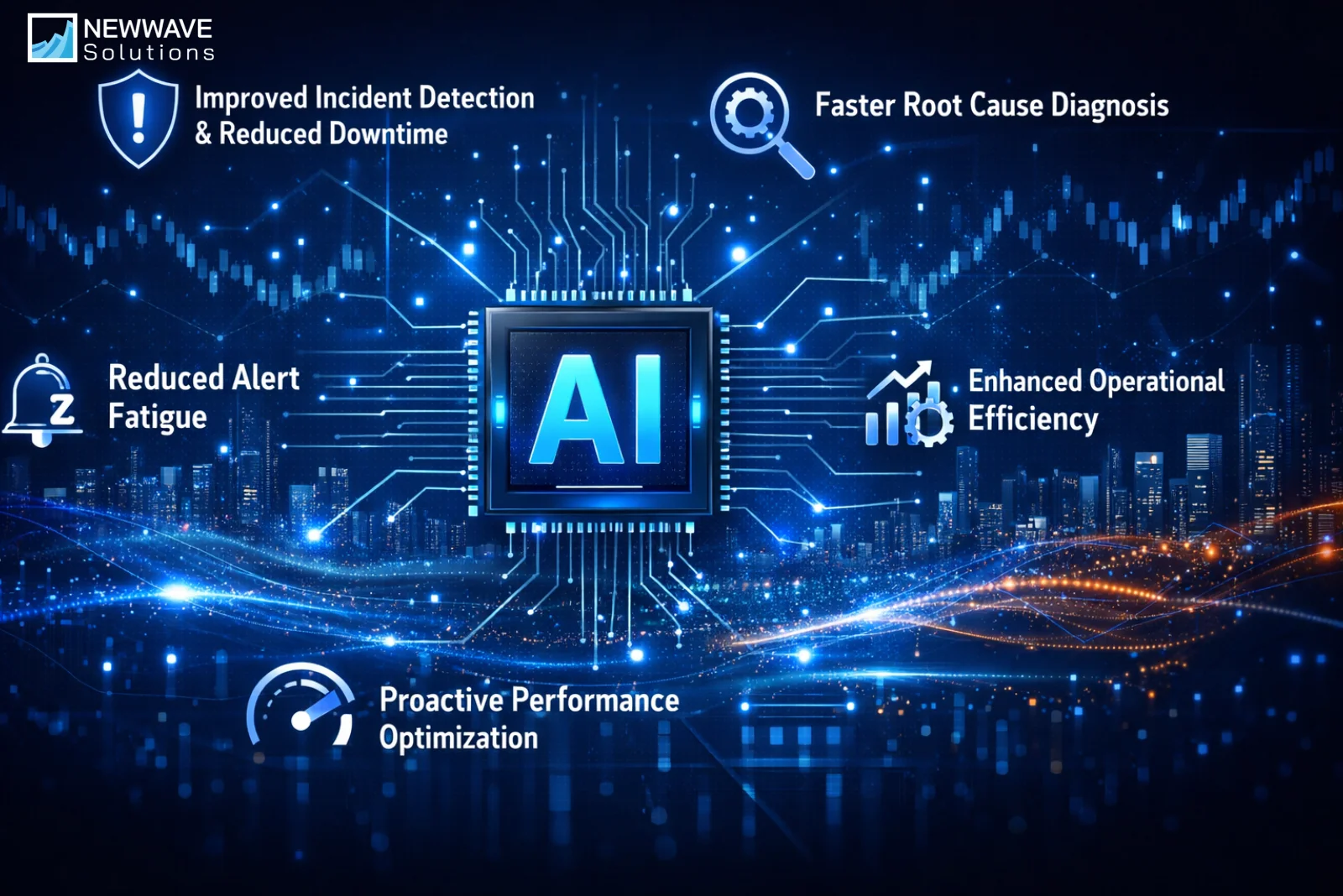
- Improved Incident Detection & Reduced Downtime: Modern AIOps systems detect anomalies and irregular behavior before they impact end users, which minimizes outages and ensures higher availability of critical services. By using AI-driven analysis, IT teams can proactively mitigate issues that traditional monitoring might miss.
- Faster Root Cause Diagnosis: When performance disruptions occur, AIOps correlates complex events from different sources to pinpoint the root cause more quickly than manual methods. This accelerates resolution time and reduces the business impact of system issues.
- Reduced Alert Fatigue: By intelligently filtering, grouping, and prioritizing alerts, AIOps allows IT staff to focus on high-value problems rather than sifting through noise. This efficiency frees teams to contribute more strategically rather than reactively.
- Enhanced Operational Efficiency: Automating common workflows and repetitive tasks reduces human overhead and error, improving IT productivity overall. AIOps enables IT teams to manage increasingly complex environments with fewer resources.
- Proactive Performance Optimization: Predictive analytics help enterprises anticipate performance trends and capacity needs before they become critical problems, enabling smarter resource allocation and system tuning.
Common AIOps Use Cases Across IT Environments
Since its inception, AIOps has been applied to a wide range of IT operational scenarios that directly impact enterprise performance and reliability, and many organizations are now leveraging these use cases to modernize their IT workflows. Below are some of the most practical and widely adopted AIOps use cases that IT teams implement today:
- Automated Incident Triage and Resolution: AIOps systems excel at automatically prioritizing and categorizing incoming alerts to ensure that critical vulnerabilities are addressed with the highest urgency. By correlating data from multiple streams, these platforms trigger automated remediation workflows without human intervention, effectively slashing response times and preventing costly service disruptions.
- Event Correlation Across Tools: Modern IT infrastructures often generate an overwhelming volume of noise from disparate monitoring systems, making it difficult for teams to identify genuine threats. AIOps solves this by weaving related events into a unified narrative, allowing engineers to cut through the clutter and rapidly pinpoint the core problem impacting system performance.
- Root Cause Analysis Automation: While traditional manual diagnosis can exhaust hours or even days of technical resources, AIOps leverages machine learning to analyze complex patterns across logs and metrics in seconds. This instantaneous pinpointing of an issue’s origin enables faster remediation and significantly bolsters overall system availability.
- Anomaly Detection in Real Time: By continuously learning and establishing “normal” performance baselines, AIOps can flag subtle deviations—such as unusual memory spikes or latent network ripples—well before they escalate into business-impacting failures. This proactive early-warning capability allows IT teams to intervene and fortify resilience before the end-user ever notices a glitch.
- Predictive Capacity and Performance Planning: AIOps analyzes vast historical datasets to forecast future resource demands and performance trends with remarkable accuracy. Such foresight empowers enterprises to anticipate scaling requirements and optimize infrastructure spending, effectively preventing the financial strain of over-provisioning or the risks of under-provisioning.
- Smarter Alert Noise Reduction: To combat the “alert fatigue” that often plagues DevOps teams, AIOps intelligently filters and prioritizes notifications based on real-time business context and historical significance. This strategic refinement ensures that human experts remain focused on high-impact issues, thereby boosting collective productivity and reducing operational burnout.
Challenges & Best Practices in AIOps Implementation
Implementing an AIOps strategy is complex and requires careful planning, cross-team alignment, and robust infrastructure integration to deliver real value rather than simply more data. Below are common challenges enterprises face when adopting AIOps, followed by practical practices to navigate these hurdles effectively.
Challenges in AIOps Implementation
- Data Silos and Quality Issues – Many organizations struggle to consolidate data from disparate sources like logs, metrics, ticketing systems, and monitoring tools, leading to incomplete or inconsistent datasets that impede AIOps accuracy and insights. In order to solve this, enterprises should implement centralized data lakes and standardized data formats to ensure clean, high-quality inputs for AI models.
- Integration Complexity with Legacy Systems – AIOps must integrate deeply with existing ITSM, cloud, and DevOps toolchains, which is challenging when legacy systems lack modern APIs or consistent data schemas. To address this, firms can adopt phased integration strategies, starting with high-priority systems and gradually expanding as governance and compatibility improve.
- Skill Gaps and Cultural Resistance – Teams may lack experience with AI technologies and may view automation as a threat, which slows adoption and reduces effectiveness. To solve this, leaders should invest in targeted training and change management programs that build AI fluency while articulating AIOps as an efficiency and collaboration enabler.
- Alert Noise and Tool Sprawl – Without proper configuration, AIOps tools can inherit the same alert overload problems they were meant to fix, leading to confusion rather than clarity. To overcome this, enterprises should define clear alert thresholds, prune unnecessary monitors, and align alerts with business outcomes.
- Security and Compliance Concerns – AIOps systems handle large volumes of operational data, which raises security and governance issues around access, storage, and privacy. To mitigate this, teams should embed robust security controls, encryption, and compliance checks into the AIOps pipeline from the start.
Best Practices for AIOps Implementation
- Plan Phased AIOps Adoption – Rather than attempting a broad rollout, start with a scoped pilot around critical systems or high-value workflows to demonstrate early wins and refine the strategy.
- Align AIOps with DevOps/ITSM – Close collaboration between IT operations, DevOps, and service management teams ensures that AIOps insights translate into practical workflows and shared SLAs, enhancing effectiveness and accountability.
- Build Strong Observability Foundations – Before AI can add value, teams should establish comprehensive observability across applications and infrastructure so that data is consistent and complete for analysis.
- Define Clear KPIs and ROI Metrics – Set measurable goals (e.g., reduced MTTR, decreased alert volume, improved uptime) to track AIOps impact and guide continuous improvement.
- Ensure Human-In-The-Loop Oversight – While automation is powerful, including humans in validation and escalation workflows ensures that AIOps recommendations are contextualized and aligned with broader business priorities.
Top AIOps Companies Leading the Market
Your enterprise isn’t alone in navigating the complexity of modern IT operations, as many leading AIOps companies have already deployed successful strategies that enhance reliability, automation, and operational insight. Below are notable providers shaping the AIOps landscape, including one detailed case study on Newwave Solutions.
1. Newwave Solutions – Professional AI Software Development
Newwave Solutions is a technology partner specializing in AI-driven solutions and advanced operational automation, offering expertise in cloud-native and AI integration that supports enterprise digital transformation. The company leverages deep capabilities in AI and machine learning to build intelligent software systems, and its AIOps-aligned services help organizations streamline IT operations and reduce manual effort across distributed environments.
Through its offshore software development services, Newwave Solutions combines industry best practices with customized automation frameworks to deliver measurable improvements in system performance and operational resilience.
AIOps applications:
- AI & ML Expertise for Intelligent Operations – Newwave Solutions builds advanced AI software development services, including machine learning models and automated operational workflows, which provide the foundation for AIOps-ready systems.
- Cloud-Native & DevOps Integration – With deep experience in microservices, Docker, Kubernetes, DevOps software development, and CI/CD, Newwave integrates operational automation into modern delivery pipelines.
- 24/7 Maintenance & Big Data Handling – Newwave’s support services leverage AIOps principles to manage large data sets and maintain infrastructure health with minimal downtime.
Newwave Solutions consistently demonstrates its advanced capabilities in developing and integrating AIOps into diverse projects, ensuring that enterprise operations remain resilient and highly automated. By continuously upgrading and adapting to the latest AIOps trends, the company delivers cutting-edge software development services, web/app development solutions, and emerging technology services that empower modern businesses to stay ahead of the digital curve.
2. BigPanda – Incident Intelligence & Automation
BigPanda is an AIOps-centered software company known for its incident intelligence and automation solutions that help enterprises prevent service outages and streamline IT event management. By correlating alerts, automating incident triage, and connecting events to probable causes, BigPanda enhances operational clarity and accelerates troubleshooting across complex environments.
3. BMC Helix – Enterprise-Grade Service Management & AIOps Platform
BMC Helix is a next-generation AI-driven enterprise platform offering integrated service management and AIOps capabilities that automate workflows, detect anomalies, and optimize performance in hybrid IT environments. The platform combines infrastructure management, incident prediction, and advanced analytics to support large organizations’ operational needs.
4. ScienceLogic – Unified AIOps & Infrastructure Observability
ScienceLogic provides an AIOps platform (SL1) that unifies infrastructure monitoring, observability, and workflow automation, enabling IT teams to proactively detect and resolve issues across cloud and on-premises environments. Its data-driven insights and automated alerting help enterprises maintain high availability and performance at scale.
5. Moogsoft – Automated Incident Detection & Noise Reduction
Moogsoft focuses on automated incident detection and alert noise reduction by applying machine learning to correlate events and prioritize meaningful signals. This approach significantly reduces alert fatigue and improves operational responsiveness for IT teams managing complex systems.
The Future of AIOps in IT Operations
AIOps is set to play an increasingly central role in autonomous IT operations as enterprises push toward self-healing systems and deeper integration with digital transformation strategies. Beyond routine automation, the next generation of AIOps technologies will blend predictive intelligence, automated remediation, and adaptive workflows that require minimal human intervention. Some key future trends include:
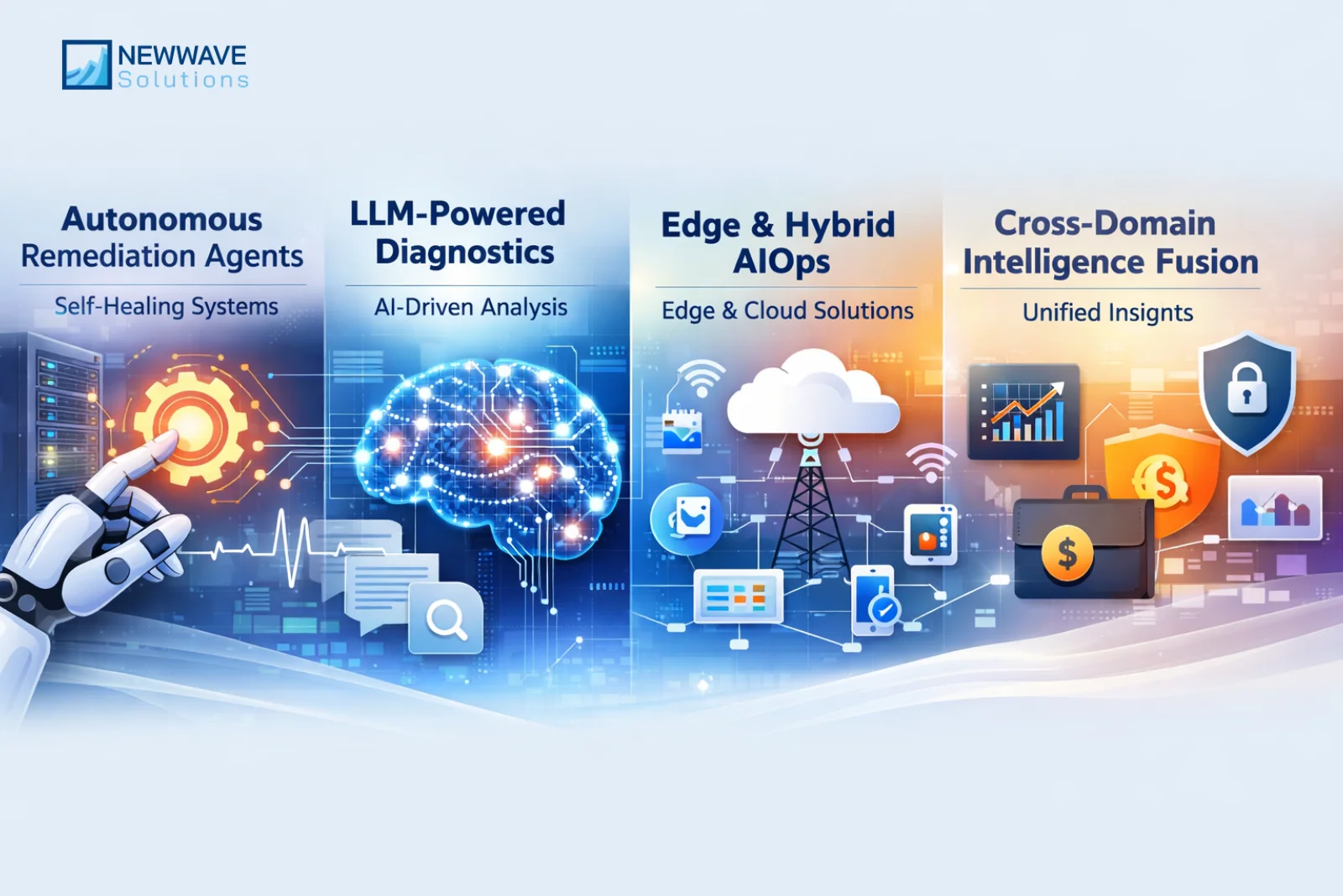
- Autonomous Remediation Agents – AI models that not only detect issues but take corrective action in real time without manual triggers, enhancing system resilience and reducing human workload.
- LLM-Powered Diagnostics – Integrating large language models with AIOps to interpret complex logs, documentation, and incident context, which accelerates root cause analysis and reduces cognitive load on IT staff.
- Edge & Hybrid AIOps – Extending AIOps capabilities to edge computing and hybrid cloud deployments to support distributed architectures and IoT-driven environments.
- Cross-Domain Intelligence Fusion – Combining insights from security, performance, and business analytics to deliver unified operational decisions that align with organizational goals.
These trends point toward a future where AIOps not only enhances IT operations but also becomes a strategic enabler of business agility, performance forecasting, and innovation.
Conclusion
AIOps is not just a trend but a fundamental shift in how modern enterprises manage their digital ecosystems. By harnessing the power of AI and machine learning to automate complex tasks, provide deep operational visibility, and enable proactive intervention, AIOps revolutionizes IT operations from being reactive to truly predictive. As digital transformation goals become more ambitious, adopting AIOps strategies is essential for any IT team looking to maintain high system availability and strategic agility in an increasingly complex world.
Do not hesitate to partner with Newwave Solutions if you are looking for an offshore software development service provider with the proven capability to integrate AIOps into your projects. We help you optimize budgets, monitor system performance in real-time, and implement automated incident triage to handle routine errors without manual intervention.
With a dedicated team of developers, designers, and QA engineers boasting over 14 years of experience, Newwave Solutions is confident in our ability to apply AI and machine learning to your unique requirements—effectively reducing human dependency and automating your workflows for maximum efficiency.
To Quang Duy is the CEO of Newwave Solutions, a leading Vietnamese software company. He is recognized as a standout technology consultant. Connect with him on LinkedIn and Twitter.



Read More Guides
Get stories in your inbox twice a month.
Let’s Build Something Extraordinary
Sign up for a 30 min no-obligation strategic session with us. Transform your Ideas into scalable reality.
Leave a Reply