


Procurement Outsourcing — Strategy, Services & Market Leaders
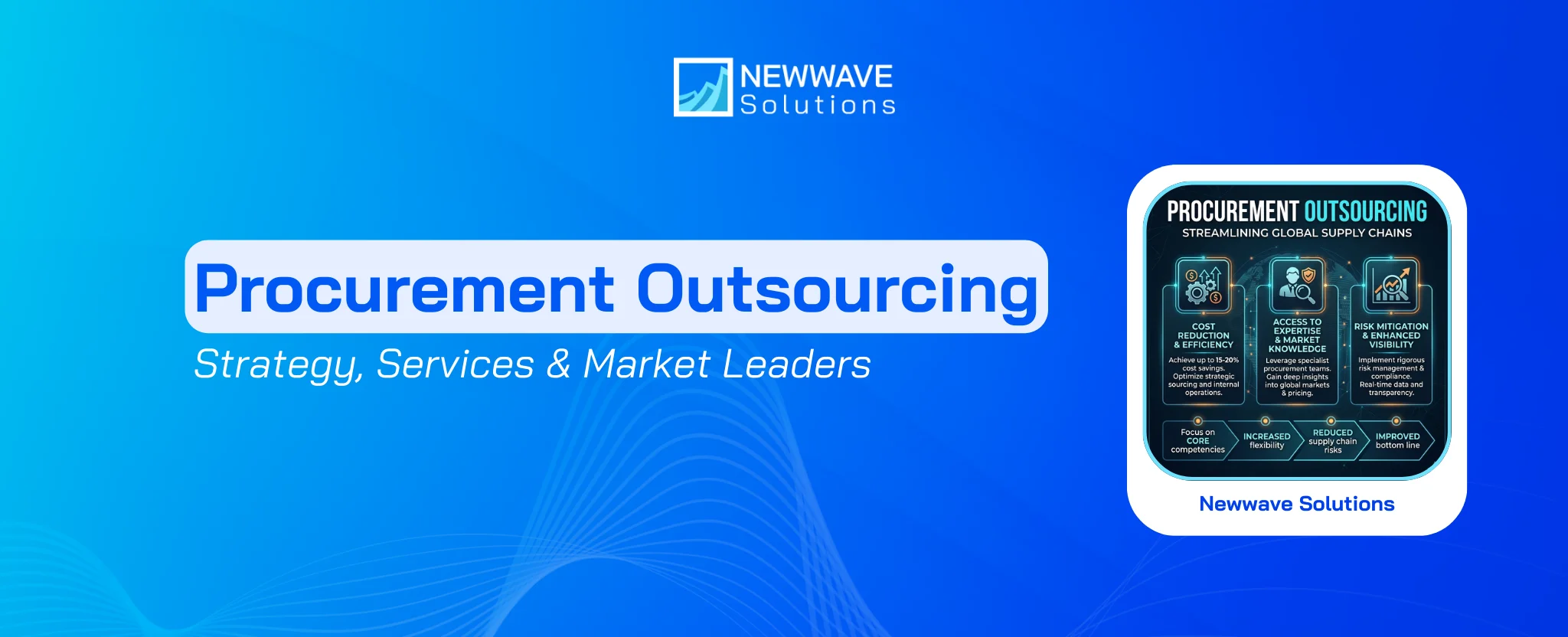
Procurement outsourcing has emerged as a strategic business practice in response to real-world demands for more efficient purchasing and supplier management, enabling organizations to delegate these critical activities to specialized external providers. As supply chains grow more complex and competitive pressures intensify, companies increasingly rely on procurement outsourcing services and models such as end-to-end procurement outsourcing to preserve internal focus on core functions and accelerate process performance. In the following sections, we will clarify what is procurement outsourcing, examine its core benefits, outline key service models, and present leading procurement outsourcing companies in the global market.
What Is Procurement Outsourcing?
Procurement outsourcing refers to the practice of transferring responsibility for some or all procurement activities — such as supplier sourcing, contract negotiation, purchase order management, and supplier performance evaluation — to an external service provider to improve cost control, operational capacity, and strategic sourcing outcomes. This model differs from general business process outsourcing (BPO) because it is specifically tailored to the procurement function, and it can range from tactical support for transactional tasks to full lifecycle management of procurement operations.
By leveraging specialized expertise and external systems, enterprises can accelerate purchasing efficiency and increase supplier performance without the burden of internal resource constraints.
Example: Microsoft strategically outsourced its global procurement operations to Accenture to automate complex transactional processes and leverage advanced AI-driven sourcing analytics. This collaboration successfully delivered significant cost reductions and enhanced supply chain transparency, allowing Microsoft to refocus its internal talent on high-level innovation and strategic growth.
Why Enterprises Choose Procurement Outsourcing
Procurement outsourcing is becoming widely adopted by enterprises as an effective way to optimize business operations, improve budgeting outcomes, and respond to growing complexity in supply networks. Many organizations are switching from internal procurement teams to external providers because of the measurable business impact and strategic benefits this model delivers.
- Cost Efficiency — External procurement providers leverage scale, market intelligence, and supplier connections to negotiate better terms, reduce overall spend, and achieve cost savings that would be difficult for internal teams to secure on their own. This cost leverage helps enterprises reduce expenses and improve bottom-line performance across categories.
- Operational Focus — By outsourcing routine and time-consuming procurement tasks, internal teams are freed up to focus on strategic initiatives such as product innovation and market expansion, which enhances overall business agility and team productivity.
- Access to Expertise — Specialized procurement partners bring deep knowledge in category management, spend analysis, and supplier negotiation experience that many enterprises lack internally, leading to higher-quality procurement decisions and stronger supplier relationships.
- Scalability — Outsourced procurement services are inherently flexible and can quickly adjust to shifts in demand or business growth, enabling enterprises to scale operations without hiring and training new internal staff.
- Risk and Compliance Management — Procurement outsourcing providers help ensure that procurement processes meet regulatory, quality, and risk standards, which reduces compliance issues and strengthens operational governance.
Common Procurement Outsourcing Models
Understanding the different models of procurement outsourcing helps enterprises choose the best fit for their operational goals and strategic vision. Each model serves a particular purpose, and selecting the right approach depends on factors such as process complexity, internal capacity, and desired oversight.
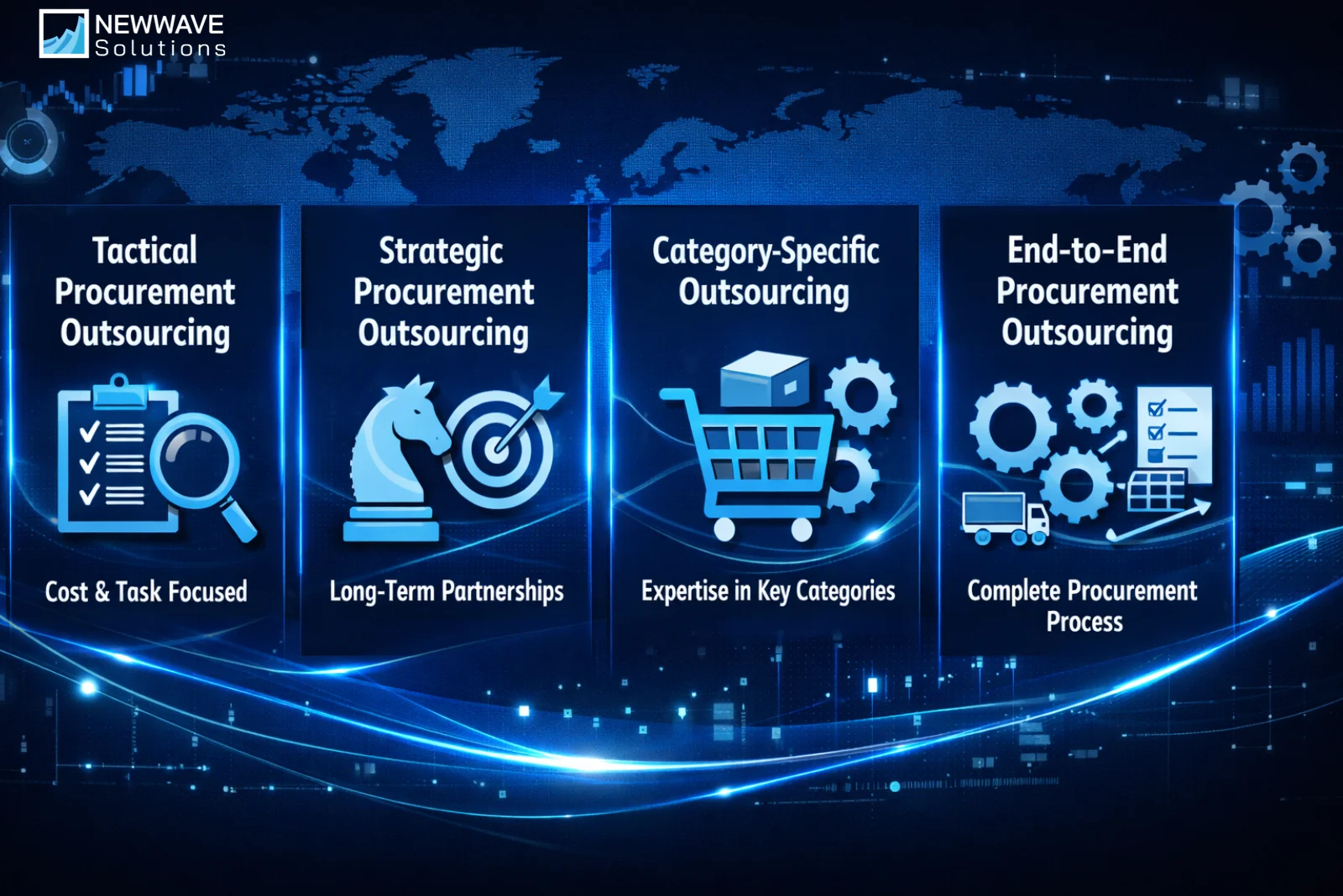
- Tactical Procurement Outsourcing — This model focuses on day-to-day, transactional procurement tasks such as processing purchase orders, managing requisitions, and maintaining supplier communications, which allows internal teams to reduce administrative burden while maintaining operational continuity.
- Strategic Procurement Outsourcing — Strategic outsourcing involves higher-value activities such as sourcing critical categories, negotiating long-term contracts, and performing spend analysis, which enables enterprises to improve supplier performance and achieve better terms.
- Category-Specific Outsourcing — Some organizations choose to outsource procurement work for specific categories — such as IT services or raw materials — which allows them to gain specialized expertise and performance improvements within that category without overhauling the entire procurement function.
- End-to-End Procurement Outsourcing — In this comprehensive model, an external provider manages the full procurement lifecycle from sourcing to supplier management and contract execution, enabling enterprises to optimize every phase of procurement while maintaining accountability and performance standards.
Main Challenges in Procurement Outsourcing
While procurement outsourcing offers significant advantages, enterprises may face challenges when implementing this model, particularly if internal readiness or governance structures are not fully mature. To help your organization prepare for a successful engagement, here are key challenges along with practical solutions that mitigate risk and ensure a smoother transition.
- Provider Selection and Alignment — Selecting the right outsourcing partner that understands your business context can be difficult, and poor alignment can lead to miscommunication and performance issues; therefore, enterprises should conduct thorough evaluations, reference checks, and alignment workshops before engagement.
- Data Integration and Visibility — Difficulty integrating internal systems with external supplier management platforms can hinder visibility and control over procurement data; to address this, invest in robust integration planning and technology alignment with clear data governance protocols.
- Change Management Resistance — Internal teams may resist outsourcing due to concerns about loss of control or role changes, so companies should implement transparent communication strategies and involve stakeholders early to foster buy-in and shared objectives.
- Compliance and Quality Control — Ensuring that the outsourcing provider adheres to internal quality standards and regulatory requirements can be challenging; enterprises should establish clear service level agreements (SLAs) and compliance audits to maintain standards.
- Performance Monitoring and Governance — Maintaining performance oversight with external providers can be complex without structured governance, and to remedy this, organizations should define KPIs, regular reporting mechanisms, and governance councils to track progress and corrective actions.
Top Procurement Outsourcing Companies
To proceed with procurement outsourcing successfully, the first step is finding a reputable and capable partner that understands your business landscape and can deliver high-impact results. There are numerous procurement outsourcing service providers around the world, and the following five companies represent some of the most widely recognized and trusted options in the market today.
1. Accenture
Accenture is a global professional services firm headquartered in Dublin, Ireland, and is widely regarded as a top leader among procurement outsourcing companies due to its blend of advanced technology integration and extensive consulting expertise. The company supports multinational corporations with end-to-end procurement transformation and digital sourcing solutions that improve compliance and reduce maverick spend globally. Accenture’s services are built on a strong foundation of analytics, strategic advisory, and global delivery capabilities that help enterprises optimize procurement functions at scale.
Key services:
- Procurement strategy consulting
- Supplier spend optimization
- Digital procurement transformation
- Category management and sourcing
- Compliance and risk management
2. GEP
GEP is a leading US-based provider known for its end-to-end procurement outsourcing offerings that integrate AI-powered software and consulting services to streamline the entire procure-to-pay lifecycle. With tools such as GEP SMART™, the company combines technology with strategic sourcing, spend analysis, and supplier performance management to deliver measurable cost savings and operational agility. GEP’s global reach and AI-driven framework make it a preferred partner for large enterprises looking to enhance efficiency and resilience across their supply chains.
Key services:
- End-to-end procurement management
- Spend analysis and savings tracking
- Supplier performance and risk management
- Strategic sourcing services
- Procurement technology integration
3. IBM
IBM Corporation, headquartered in Armonk, New York, is a well-established technology and consulting company that delivers comprehensive outsourced procurement solutions, particularly for enterprises in highly regulated industries. Its offerings include cognitive procurement processes that leverage AI and analytics to enhance sourcing visibility, risk detection, and contract compliance throughout hybrid and global supplier networks. This focus on data-driven procurement and risk analytics supports better decision-making and operational transparency across complex enterprise environments.
Key services:
- Cognitive procurement and analytics
- Supplier lifecycle management
- Contract optimization and compliance
- Spend and risk intelligence
- Procure-to-pay automation
4. Infosys BPM
Infosys BPM is the business process management subsidiary of Infosys, headquartered in Bengaluru, India, and operates globally with extensive outsourcing and transformation capabilities in procurement functions. The company supports clients with integrated procurement outsourcing services that include sourcing support, supplier onboarding, contract lifecycle management, and spend analytics, all enhanced by digital intelligence and automation. Infosys BPM’s strong IT heritage and operational scale make it a compelling choice for enterprises seeking cost-efficient and technology-integrated procurement solutions.
Key services:
- Supplier onboarding and governance
- Contract lifecycle management
- Sourcing and category management
- Procurement automation
- Spend and compliance analytics
5. Capgemini
Capgemini, headquartered in Paris, France, is a global leader in technology and consulting services that also provides robust procurement outsourcing support as part of its broader business transformation offerings. The firm combines deep industry expertise with digital procurement solutions to help clients realign procurement processes with enterprise value creation and sustainability goals, particularly in areas like source-to-pay optimization and supplier collaboration. Capgemini’s integrated approach is designed to improve efficiency while strengthening supplier relationships and enabling procurement modernization.
Key services:
- Digital procurement transformation
- Supplier collaboration and compliance
- Sourcing strategy and execution
- Category and spend optimization
- Procurement process automation
If your enterprise is seeking professional and reputable outsourcing solutions beyond procurement, Newwave Solutions is ready to assist you instantly with our comprehensive technological expertise. With a powerhouse of 300+ high-quality IT specialists and over 14 years of industry experience, we deliver top-tier IT staffing, custom software development, and mobile/web solutions at the most competitive market rates.
Explore our expert, high-quality outsourcing services to scale your business:
- Software Development Outsourcing: End-to-end product development tailored to your unique business requirements.
- Offshore Software Development: High-performance remote teams that act as a seamless extension of your in-house department.
- IT Outsourcing Services: Strategic technical support and infrastructure management to drive your digital transformation.
Procurement Outsourcing vs. In-House: Key Differences
To understand whether procurement outsourcing or retaining in-house procurement is right for your business, the following comparison table highlights the major distinctions between these two approaches, including a clear verdict on which method typically offers advantages under typical enterprise scenarios.
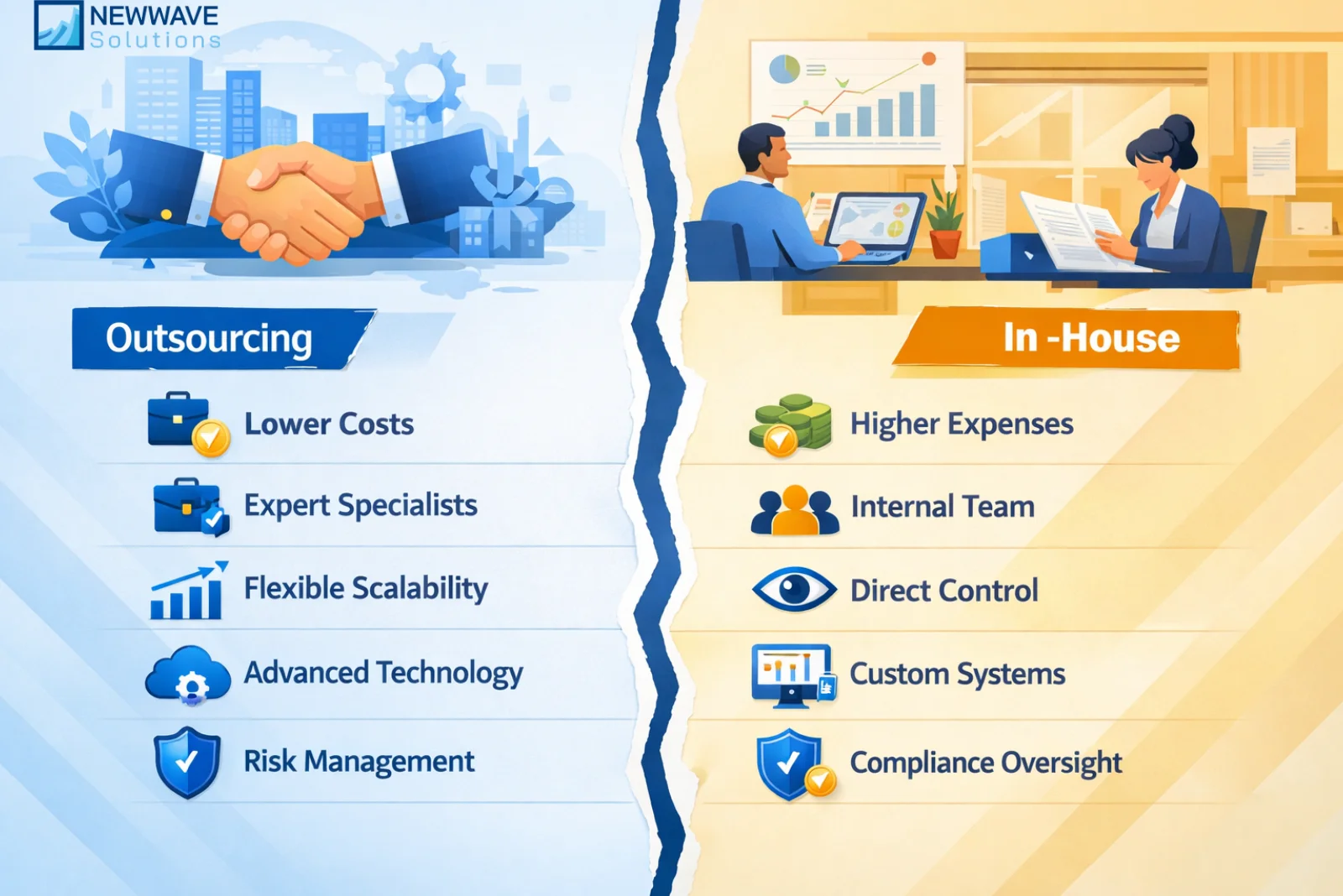
| Element | Procurement Outsourcing | In-House Procurement |
Verdict |
| Cost Structure | Predictable, often lower long-term costs due to scale and expertise | Higher internal headcount and training costs | Outsourcing — more cost-efficient for large or growing procurement needs |
| Expertise & Capabilities | Access to global talent and specialized teams | Limited by internal resource experience | Outsourcing — provides broader specialized knowledge |
| Scalability | Flexible and easily scalable with demand | Scaling requires hiring and training | Outsourcing — more adaptable to growth |
| Control & Visibility | Requires strong governance structures | Direct control over all processes | In-House — better for tightly integrated procurement work |
| Technology Adoption | Leverages advanced platforms and analytics | Technology depends on internal investment | Outsourcing — rapid adoption, strong tech enablement |
| Risk & Compliance Management | Outsourcing firms bring structured compliance frameworks | In-house must build and maintain frameworks | Outsourcing — strong compliance and risk oversight |
The build-vs-buy debate looks different depending on the function being evaluated, and procurement is no exception. A broader breakdown of the trade-offs involved is covered in this side-by-side comparison of in-house vs outsourcing, which maps out the key decision factors across cost, control, and scalability.
When to Outsource Procurement?
Even after identifying suitable procurement outsourcing partners, it is essential to determine whether outsourcing or in-house procurement better aligns with your business objectives. The following scenarios can help you make that choice with clarity:
When to Outsource Procurement
- The organization lacks internal expertise or specialized procurement resources.
- Procurement processes are consuming excessive internal operational time.
- Supplier management or compliance requirements are highly complex.
- Strategic sourcing needs are driving cost reduction and market expansion.
- The enterprise is scaling rapidly and needs flexible resource support.
When to Utilize In-house Procurement
- Procurement activities are tightly integrated with core product development workflows.
- Internal teams possess deep category expertise and strong supplier relationships.
- The company prioritizes direct control over all sourcing and vendor management decisions.
- Strategic initiatives require proprietary insights that in-house teams already deliver.
- The cost of outsourcing outweighs the perceived benefits based on current operational efficiency.
Conclusion
To sum up, procurement outsourcing represents a strategic shift for enterprises seeking to streamline purchasing operations, reduce costs, and access specialized procurement competencies while redirecting internal resources toward core strategic priorities. By understanding what procurement outsourcing is and selecting appropriate service models — whether tactical support or comprehensive end-to-end procurement outsourcing — organizations can enhance efficiency, compliance, and supplier performance measurably.
Don’t forget that if your business requires high-quality IT outsourcing solutions alongside your procurement strategy, Newwave Solutions stands as your most reliable partner to deliver those specialized services.
To Quang Duy is the CEO of Newwave Solutions, a leading Vietnamese software company. He is recognized as a standout technology consultant. Connect with him on LinkedIn and Twitter.



Read More Guides
Get stories in your inbox twice a month.
Let’s Build Something Extraordinary
Sign up for a 30 min no-obligation strategic session with us. Transform your Ideas into scalable reality.
Leave a Reply