


Best AI Code Generator: Top Tools Compared for Developers
AI code generators have become one of the most impactful tools in a modern developer’s toolkit, capable of generating production-ready code, automating debugging, and compressing development timelines significantly. Yet with so many options available in 2026 — each with different strengths, pricing models, and integration capabilities — selecting the best AI code generator requires a more structured evaluation than most teams currently apply. This article provides that structure: a clear comparison of the top tools, the key features that matter most, and the decision criteria that align tool selection with real business outcomes
What Is an AI Code Generator?
An AI code generator is a software tool powered by Large Language Models (LLMs) that can produce functional code from natural language instructions, autocomplete in-progress code, and assist with debugging and refactoring tasks. These tools are trained on massive datasets of public code repositories, which gives them the ability to recognize patterns, understand context, and generate syntactically correct, semantically relevant code across dozens of programming languages.
How AI code generators work:
- Natural language to code translation — The developer describes what they need in plain English, and the tool generates the corresponding code. This removes the need to recall exact syntax and accelerates the translation of ideas into implementation.
- Context-aware autocompletion — As the developer types, the AI analyzes the surrounding code and suggests the most likely next lines or blocks. Suggestions are informed by the full context of the file or repository, not just the current line.
- Debugging and refactoring assistance — The tool identifies errors, explains what went wrong, and suggests corrected or optimized versions of the code. This compresses the debugging cycle significantly, especially for complex logic issues.
The key insight is that modern AI tools understand both human language and programming languages simultaneously, which is what enables them to act as a genuine real-time coding partner rather than a simple autocomplete engine.
Best AI Code Generators in 2026
The market for AI coding tools has matured significantly, and a clear set of leading platforms has emerged — each optimized for a different developer profile, use case, and organizational context. Understanding the competitive landscape is the starting point for any serious evaluation.
Top 7 AI Code Generators Available
The following tools represent the most widely adopted and highest-performing AI code generators available in 2026:
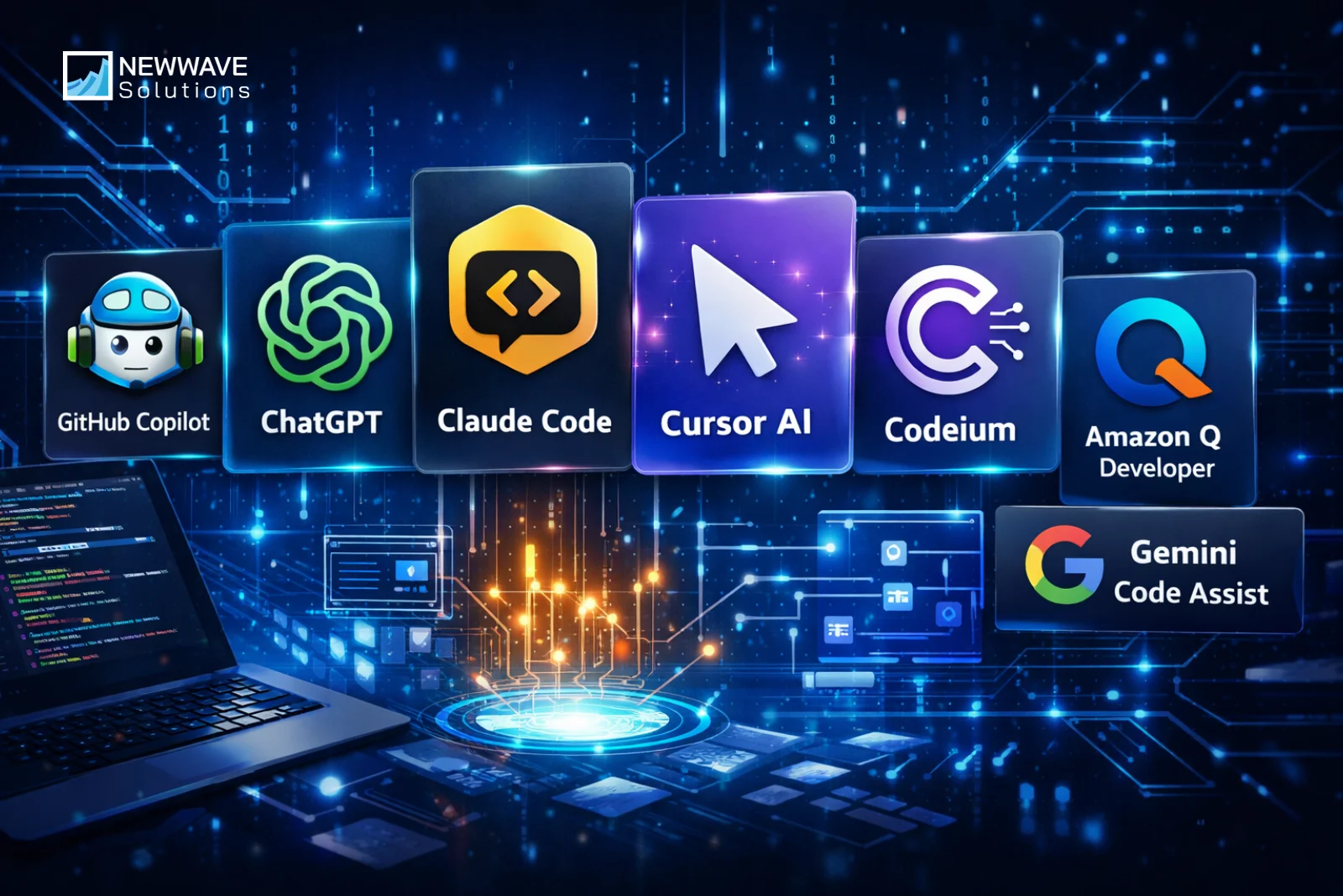
- GitHub Copilot — Built by GitHub and powered by OpenAI models, Copilot is the most widely used AI coding assistant in the developer community, with deep integration across major IDEs.
- ChatGPT (GPT-based coding) — OpenAI’s flagship conversational AI offers strong coding capabilities, particularly for debugging, code explanation, and flexible problem-solving across languages.
- Claude Code — Anthropic’s coding-focused tool brings strong reasoning capability and deep code comprehension, making it well-suited for complex architectural tasks and large codebase analysis.
- Cursor AI — A purpose-built AI code editor with repository-level context awareness, designed for full-stack developers who need the AI to understand the entire project — not just the current file.
- Codeium — A cost-accessible alternative with a generous free tier, offering solid autocomplete and generation performance for individual developers and small teams.
- Amazon Q Developer — Amazon’s enterprise-grade AI coding assistant integrates tightly with AWS services and is optimized for cloud-native development workflows.
- Gemini Code Assist — Google’s AI coding tool brings strong reasoning capability and a large context window, making it well-suited for complex, large-scale application development.
|
Tool |
Best For | Key Strengths |
Limitations |
| GitHub Copilot | Professional developers | IDE integration, real-time suggestions | Requires paid subscription |
| ChatGPT | General coding and debugging | Flexibility, explanation quality | Not IDE-native |
| Claude Code | Complex tasks and architecture | Deep reasoning, large context handling | Higher cost tier |
| Cursor AI | Full-stack development | Repo-level context awareness | Steeper learning curve |
| Codeium | Budget-conscious users | Solid free tier performance | Fewer advanced features |
| Amazon Q Developer | Enterprise / AWS environments | Cloud-native integration | AWS ecosystem dependency |
| Gemini Code Assist | Large-scale applications | Strong reasoning + large context window | Limited adoption so far |
Key Features to Look for in the Best AI Code Generator
With so many tools claiming similar capabilities, the evaluation comes down to a specific set of features that determine whether a tool actually improves delivery in practice — or just adds friction.
- Code accuracy and quality — The tool should generate code that is not just syntactically correct but also logically sound and aligned with the developer’s intent. Output quality varies significantly across tools, especially for complex or domain-specific tasks.
- IDE integration — Native integration with VS Code, JetBrains, or the team’s existing editor is essential for adoption. Tools that require context-switching or manual copy-paste create more friction than they eliminate.
- Multi-language support — Most enterprise codebases span multiple languages and frameworks. A tool that performs well only in Python or JavaScript will have limited utility for teams working across a full stack.
- Security and compliance — AI-generated code can introduce vulnerabilities if not carefully reviewed. Enterprise teams should evaluate whether the tool includes security scanning, license compliance checks, and data privacy protections for the code it processes.
- Customization and fine-tuning — The ability to adapt the model to a specific codebase, coding style, or internal API significantly improves output relevance. This matters most for large teams with established architecture conventions.
- Collaboration features — Shared context, team usage policies, and admin controls become important at scale. Individual developer experience is a starting point, but enterprise adoption requires tools that support team-level governance.
The two factors that most consistently determine adoption success are accuracy and integration. A tool with mediocre suggestions embedded natively in the IDE will outperform a more capable tool that disrupts the development workflow.
Benefits of Using AI Code Generators
The productivity case for AI coding tools is well-established — but the benefits extend beyond raw speed, and understanding the full value picture helps teams make a stronger internal case for adoption.
- Faster development cycles — AI tools reduce the time spent on boilerplate, repetitive patterns, and syntax lookup. Some teams report saving 10–15 hours per developer per week, which compounds significantly across a team of ten or twenty engineers.
- Reduced repetitive coding tasks — Scaffolding, test generation, documentation writing, and CRUD operations are all tasks that consume developer time without requiring deep expertise. AI handles these well, freeing engineers for the higher-value work that actually requires their judgment.
- Improved code quality — AI assistants catch common mistakes, suggest better patterns, and encourage consistent style — raising the floor of code quality across the team, not just for individual contributors.
- Better team productivity — Junior developers ramp up faster with AI assistance, and senior engineers spend less time reviewing obvious issues. The net effect is a more evenly distributed productivity lift across experience levels.
- Cost savings — Faster delivery cycles and reduced debugging time translate directly into lower development costs. For enterprises running large engineering programs, a 20–30% efficiency improvement represents a material budget impact.
Limitations and Risks of AI Code Generators
Honest evaluation requires acknowledging the limitations alongside the benefits. AI code generators are powerful — but they are not infallible, and teams that treat their output as ground truth will eventually encounter problems.
- Security vulnerabilities in generated code — Research consistently shows that AI-generated code can contain security flaws, particularly around input validation, authentication logic, and cryptographic implementation. Every AI-generated code block should go through the same security review process as human-written code.
- Lack of deep business context — AI tools know programming languages and common patterns, but they do not understand your specific domain, your data model, or your organization’s architectural decisions. Generated code that looks correct in isolation may be fundamentally misaligned with the system it is meant to extend.
- Dependency on prompt quality — The quality of AI output is directly proportional to the quality of the instructions provided. Vague or ambiguous prompts produce generic or incorrect code, which means that the skill of prompting effectively becomes a new competency team needs to develop.
- Risk of incorrect logic — AI tools generate plausible-looking code, which is precisely what makes logic errors dangerous. A function that compiles and runs without errors but produces incorrect results can be harder to catch than a syntax error, especially in complex business logic scenarios.
How to Choose the Best AI Code Generator for Your Needs
The right tool depends on the specific context — team size, project complexity, budget, and security requirements all influence which option delivers the best outcome. The table below provides a starting framework for matching use cases to tools:
| Use Case |
Recommended Tool |
| Beginner developers | ChatGPT |
| Professional development teams | GitHub Copilot |
| Enterprise environments | Amazon Q / Claude Code |
| Budget-conscious users | Codeium |
| Complex systems and full-stack projects | Cursor AI |
Beyond the table, five considerations should drive the final decision:
- Project complexity — Simple CRUD applications and internal tools have different requirements than distributed systems or compliance-sensitive platforms. More complex projects benefit from tools with deeper reasoning and context handling.
- Team size — Individual developers can adopt any tool independently; larger teams need governance features, shared configurations, and admin controls that only some platforms provide.
- Budget — Free tiers from Codeium or ChatGPT work well for experimentation. Production-grade enterprise use cases typically require paid plans with higher usage limits, priority support, and security controls.
- Tech stack — Some tools perform significantly better in certain language ecosystems. Testing a tool against the team’s actual stack — not just benchmarks — is the most reliable evaluation method.
- Security requirements — Teams working with sensitive data, proprietary code, or regulated industries need to evaluate how each tool handles code privacy, data retention, and compliance certification before committing to adoption.
Future Trends of AI Code Generators
The tools available in 2026 are impressive — but they represent an early stage of what AI-assisted development will eventually look like. The trajectory is clear, and teams that understand where the technology is heading can make adoption decisions that remain relevant over a longer horizon.
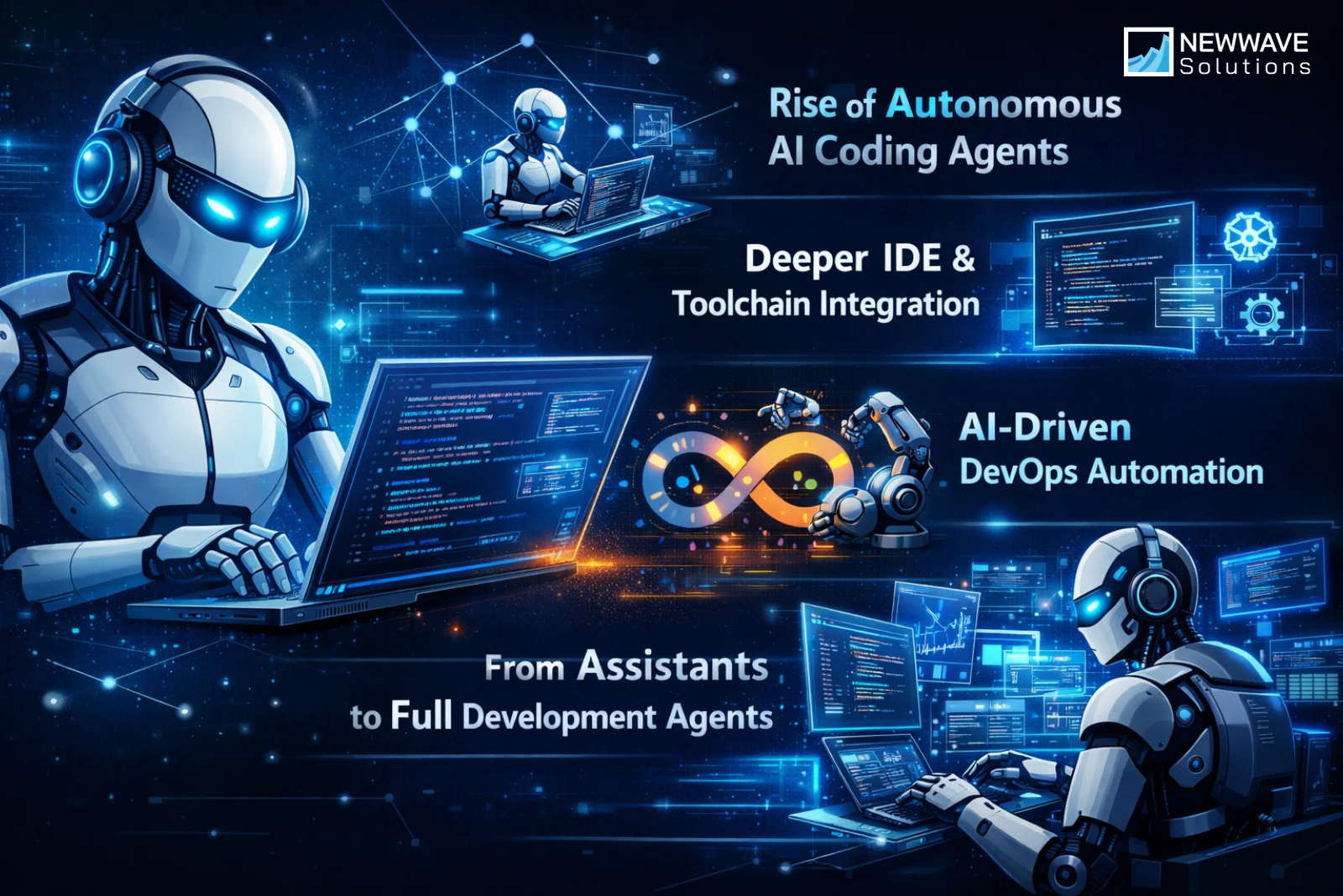
- Rise of autonomous AI coding agents — The next generation of tools will not just suggest code — they will plan, implement, test, and deploy features with minimal human input. Early versions of this capability already exist in tools like Cursor and Claude Code, and the capability is advancing rapidly.
- Deeper IDE and toolchain integration — AI assistance is moving from a separate tool into the fabric of the development environment itself. Future IDEs will likely have AI embedded at every layer — from file navigation and search to architecture visualization and automated refactoring.
- AI-driven DevOps automation — AI code generators are beginning to extend their reach beyond writing code into the deployment pipeline — automating test generation, infrastructure configuration, and release management. This positions AI as a continuous delivery accelerator, not just a coding assistant.
- Shift from assistant to full development agent — The most significant long-term trend is the evolution of tools that assist developers to agents that can autonomously manage entire development workflows. This shift will reshape team structures, skill requirements, and the economics of software delivery.
How Newwave Solutions Helps Enterprises Leverage the Best AI Code Generators
Modern enterprises are increasingly adopting AI coding tools to accelerate software development. However, many organizations quickly realize that using the best AI code generator alone does not guarantee production-ready systems. The challenge often lies in transforming AI-generated code into scalable, secure, and business-aligned software solutions. As a result, enterprises need more than standalone tools. They require a structured approach to AI adoption that combines advanced technology with engineering expertise.
Newwave Solutions addresses these challenges by delivering end-to-end AI Software Development Services that help organizations move from experimentation to real-world implementation. The company combines domain expertise, agile processes, and advanced AI technologies to build intelligent software solutions aligned with business objectives.
Instead of focusing only on code generation, Newwave Solutions supports enterprises across the entire AI lifecycle:
- AI consulting and solution design: The team analyzes business needs and identifies high-impact AI use cases before development begins.
- Custom AI model development and integration: Engineers build tailored AI models and integrate them into existing systems, ensuring real-world applicability.
- AI-powered software engineering: AI tools are combined with human expertise to deliver high-quality, maintainable, and scalable code.
- Data engineering and infrastructure setup: The company ensures that data pipelines, cloud infrastructure, and AI environments are optimized for performance.
Newwave Solutions enables enterprises to move beyond isolated AI tools and build fully integrated, intelligent software systems that drive long-term value. By combining advanced AI technologies with structured engineering practices, the company ensures that AI investments translate into scalable and sustainable business growth.
Conclusion
The best AI code generator for your team is ultimately the one that fits your workflow, your security requirements, and your delivery goals — and in 2026, the options are strong enough that every serious development organization should have at least one integrated into their pipeline. If your team is ready to move from evaluation to implementation, Newwave Solutions provides the technical expertise and delivery infrastructure to help you adopt AI coding tools at scale and turn that adoption into a measurable competitive advantage.
Approach Newwave Solutions and boost your AI project effectively today!
To Quang Duy is the CEO of Newwave Solutions, a leading Vietnamese software company. He is recognized as a standout technology consultant. Connect with him on LinkedIn and Twitter.



Read More Guides


Get stories in your inbox twice a month.
Let’s Build Something Extraordinary
Sign up for a 30 min no-obligation strategic session with us. Transform your Ideas into scalable reality.
Leave a Reply