


Cloud Computing in Healthcare: Benefits, Use Cases & Adoption Guide
Cloud computing in healthcare is gaining importance as patient data, telemedicine, AI, medical imaging, and connected systems place greater pressure on traditional healthcare IT infrastructure. Cloud platforms provide flexible computing capacity and easier access to data, helping healthcare organizations support digital services without continually expanding on premise infrastructure.
To support you in the migration journey, this guide explores the benefits and real-world applications of healthcare cloud computing, the available cloud models, and the security and implementation factors that matter when planning adoption.
Key takeaways
|
What is Cloud Computing in the Healthcare Industry?
Cloud computing in healthcare is the use of internet hosted remote servers and networks to store, manage, and process healthcare data and applications. Instead of relying only on on premises data centers, healthcare providers can run workloads through cloud based infrastructure.
This model can support modern telehealth solutions, improve operational efficiency, and contribute to better experiences for both clinicians and patients. It also changes how healthcare organizations access and manage digital resources by shifting part of their infrastructure away from locally hosted systems.
Key Benefits of Cloud Computing in Healthcare
Cloud computing can help healthcare organizations build a more flexible and efficient IT environment while supporting better access to critical systems and services. Its value comes from improving how resources are managed, scaled, and delivered across healthcare operations.
Improved data access and sharing
Limited access to medical data can slow patient care, particularly when healthcare professionals cannot quickly retrieve or exchange the information needed to make informed decisions.
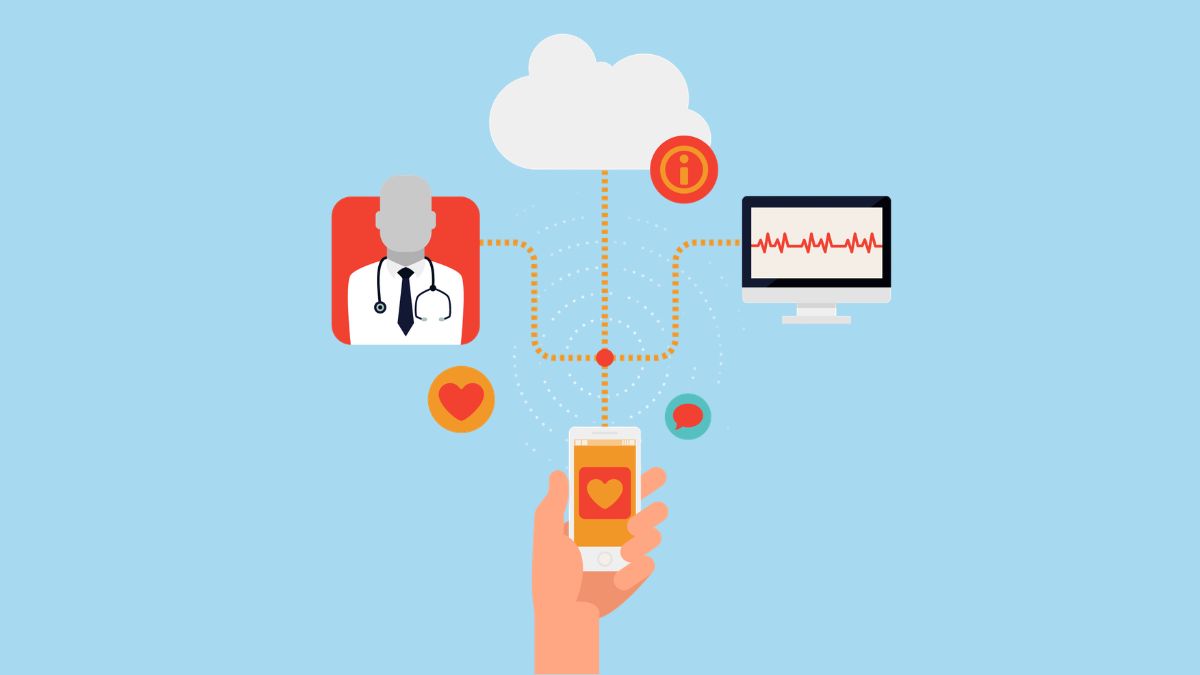
Cloud-based systems help address this by enabling real-time data access, stronger interoperability, and smoother information sharing across departments, healthcare providers, administrators, and connected medical devices. This allows care teams to coordinate more effectively and build more complete treatment plans.
Cloud computing can also strengthen continuity of care and make telehealth sessions more effective by keeping relevant information accessible across care settings. For patients, it provides greater visibility and control over their health information, including test results, medical history, and data collected through remote monitoring devices.
Cost efficiency
Running healthcare workloads on premises can require significant upfront spending on hardware, networking, facilities, power, cooling, and IT staffing. Cloud computing can shift part of these costs from capital expenditure to operational expenditure, particularly in public cloud environments where organizations pay for the resources they use. This can provide greater financial flexibility while reducing dependence on large infrastructure investments.
Healthcare cloud environments can also support automation across tasks such as clinical documentation and administrative work, reducing time spent on manual processes and helping staff respond more quickly to changing resource demands. With 35.4% of U.S. healthcare workers, including more than 57% of primary care physicians, experiencing burnout, automation may also help improve employee satisfaction and reduce turnover.
More reliable and rapid system recovery
Cloud native disaster recovery can replicate healthcare workloads across multiple availability zones and regions, helping organizations meet strict recovery time objectives and recovery point objectives.
Services such as Azure Site Recovery and AWS Elastic Disaster Recovery provide automated failover and failback capabilities, which can reduce downtime caused by natural disasters, cyberattacks, or human error. These cloud based recovery solutions can also support immutable backups and ransomware detection to help protect PHI and mission critical systems.
Compared with maintaining traditional secondary data centers, this approach can allow healthcare IT teams to manage recovery more efficiently and at a lower cost.
A practical path to modernize legacy systems
Healthcare organizations often need to modernize technology gradually because replacing every legacy system at once can be complex and costly. Cloud enablement can help bridge this gap by moving selected systems and data into more accessible cloud environments.
For example, siloed diagnostic images can be migrated to a vendor neutral archive in the cloud, making them easier to access across the organization. Other legacy departmental systems can also be moved to the cloud, which can reduce related infrastructure costs while expanding access to the applications and data they support.
Improved patient experience
Patient empowerment can play an important role in improving the healthcare experience. This is especially relevant as a recent Gallup poll found that Americans’ perception of healthcare quality reached a 24-year low, with the share rating U.S. healthcare as excellent or good falling 10 percentage points since 2020.
When implemented with a patient centered approach, cloud computing can help healthcare organizations provide digital services that give patients greater convenience and control over their care, including:
- Personalized health dashboards
- Online portals with access to historical health data and scheduling functions
- Streamlined, user friendly bill payment tools
Cloud technology can also support advanced capabilities such as AI powered clinical decision support systems, which may help improve treatment and quality of care. As healthcare moves further toward value-based care, these capabilities can also contribute to better HCAHPS rating and reimbursement outcomes.

More focus on the core care mission
As healthcare organizations add more hardware, software, storage requirements, and specialized IT needs, managing technology can take attention away from their primary care mission. At the same time, digital services such as online scheduling, patient data consolidation, and virtual consultations remain essential parts of the patient experience.
Cloud computing can help reduce this operational burden by shifting more infrastructure management to a cloud partner. This allows healthcare teams to spend less effort maintaining complex IT environments and focus more resources on care delivery and community health priorities.
Greater agility for changing business needs
A cloud-based strategy can help healthcare organizations scale infrastructure and add new capabilities more quickly as business conditions change. Unlike on premises environments, which may require time for procurement and infrastructure setup, cloud resources can be provisioned without waiting for new hardware to be purchased and delivered.
Additionally, cloud deployment can provide additional computing power and storage much faster. It speeds development by using reusable components instead of large monolithic applications. This helps healthcare organizations respond more quickly to changing operational needs.
Easier access to advanced technologies
Strategic cloud enablement can help healthcare organizations access faster updates and more extensible technology. Cloud based environments can support:
- Artificial intelligence and machine learning: Provide the computing and storage capacity needed to work with large volumes of healthcare data.
- Low code application development: Allow more users, including non developers, to build applications and support faster scaling.
- Robotic process automation: Help automate operational and clinical workflows to reduce manual effort.
Common Types of Cloud Computing in Healthcare
The main types of cloud computing in healthcare can be grouped into 2 types, which are deployment models and service models. In practice, healthcare systems may combine multiple models to meet different operational, technical, and business needs.
Deployment models
Cloud deployment models describe the environment in which cloud resources are hosted and how they are managed.
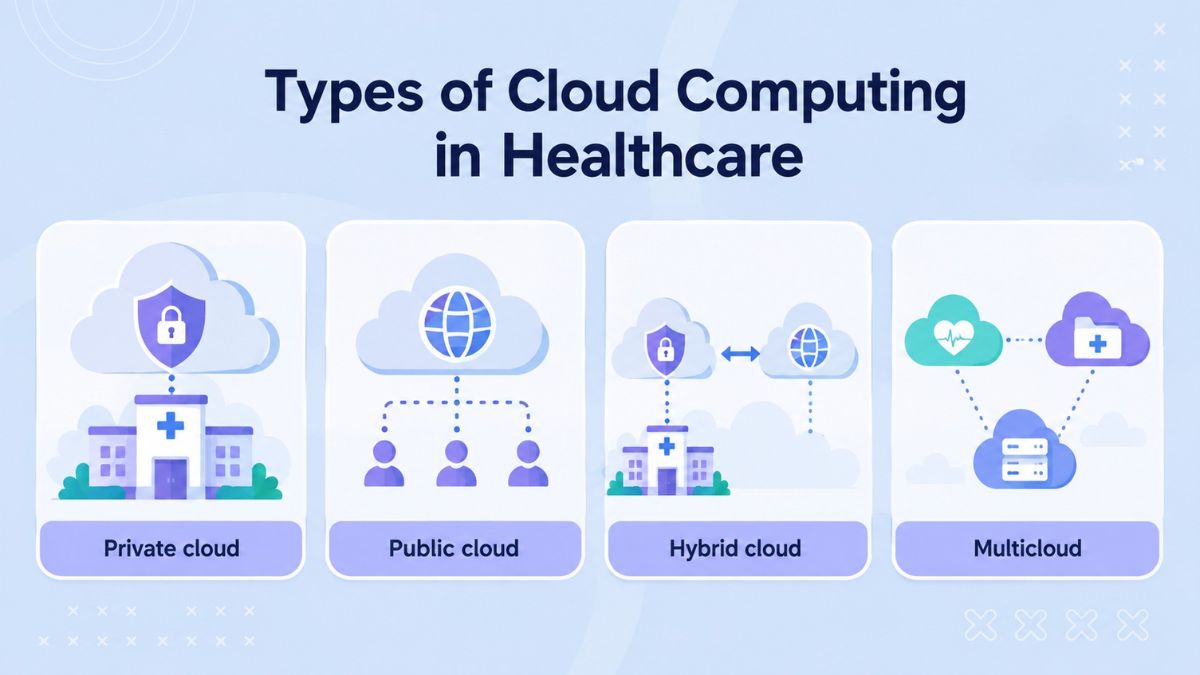
1. Private cloud
A private cloud is dedicated to one organization and is accessible only through its private network and authorized identities. It may be hosted by a cloud service provider or deployed on premises. When hosted internally, the organization needs staff with the expertise to manage the cloud infrastructure.
2. Public cloud
A public cloud is delivered over the internet by a cloud service provider that offers resources such as virtual machines, storage, and cloud management applications to business customers. Although security controls such as multifactor authentication, single sign-on, and role-based access are increasingly common, healthcare organizations may require additional safeguards to meet HIPAA and HITRUST requirements.
3. Hybrid cloud
A hybrid cloud combines a private cloud with one or more public clouds from the same provider. Healthcare organizations can use different environments for different workloads, such as running clinical or financial applications in a private cloud while using public cloud resources for big data research or backups. With appropriate management and analytics tools, workloads can also be moved between environments as needed.
4. Multicloud
A multicloud approach uses private and public cloud resources from multiple providers. This can help healthcare organizations choose services based on factors such as geography, contract terms, specific capabilities, business continuity, and disaster recovery needs. However, it also requires managing multiple vendor relationships and contracts.
Service models
Cloud service models define the level of control, responsibility, and abstraction that healthcare organizations have when using cloud resources.
1. Software as a Service (SaaS)
SaaS gives healthcare organizations access to third-party software hosted in the cloud rather than installed on internal devices or servers. Subscriptions are typically charged per user and may include licensing, maintenance, and upgrades.
2. Infrastructure as a Service (IaaS)
IaaS provides computing, networking, and storage resources for workloads hosted on a cloud provider’s infrastructure. It is often used for lift-and-shift migrations, although organizations may also modernize existing applications or build new ones. The healthcare IT team remains responsible for operating the software and monitoring how cloud resources are used.
3. Platform as a Service (PaaS)
PaaS provides the infrastructure, middleware, development environment, and tools needed to build, test, and deploy cloud applications. Because the cloud provider manages the underlying infrastructure, healthcare IT teams can focus more directly on application development while using cloud capabilities such as automation and interoperability.
4. Serverless
Serverless computing allows developers to run code without directly managing servers. The cloud provider handles server provisioning, scaling, maintenance, security, and management as workloads change. This model can scale resources automatically in response to defined events and is often used for Internet of Medical Things data processing and website backend services.
Real-World Applications of Cloud Computing in Healthcare
Cloud computing is increasingly used in healthcare to support clinical and operational needs, improving how patient data is managed and how care is delivered.
Electronic health record (EHR) and electronic record management (ERM)
Cloud-based EHR and EMR systems can make formerly siloed patient information easier to access and manage. By bringing records into a cloud environment, healthcare organizations can improve coordination between care teams, provide a more complete view of patient history, and give professionals more information to support patient care decisions.
Cloud scalability also makes these systems useful as medical and operational records continue to grow, particularly when organizations need to manage large volumes of healthcare data.
Telemedicine and remote patient monitoring
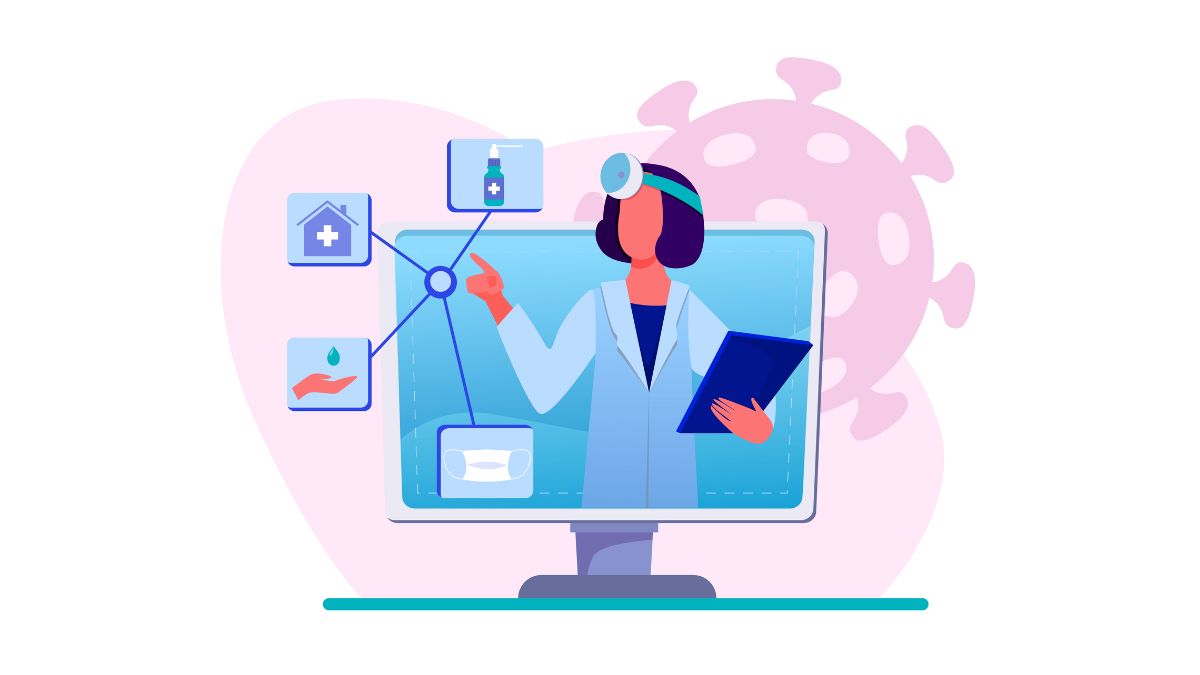
Cloud based telemedicine can expand access to care for patients who face barriers to in person visits, including busy schedules, limited transportation, mobility challenges, or living in underserved areas. Reliable cloud connectivity helps providers maintain remote interactions and deliver care beyond traditional healthcare facilities.
Cloud based remote patient monitoring also allows wearable devices to collect health information between visits and transmit it to healthcare professionals for real time analysis.
More frequent patient data can help providers make informed decisions for people with chronic conditions and identify potential issues before they become more serious. By enabling earlier attention to emerging problems, remote monitoring may also help reduce unnecessary emergency room visits.
Medical data storage and sharing
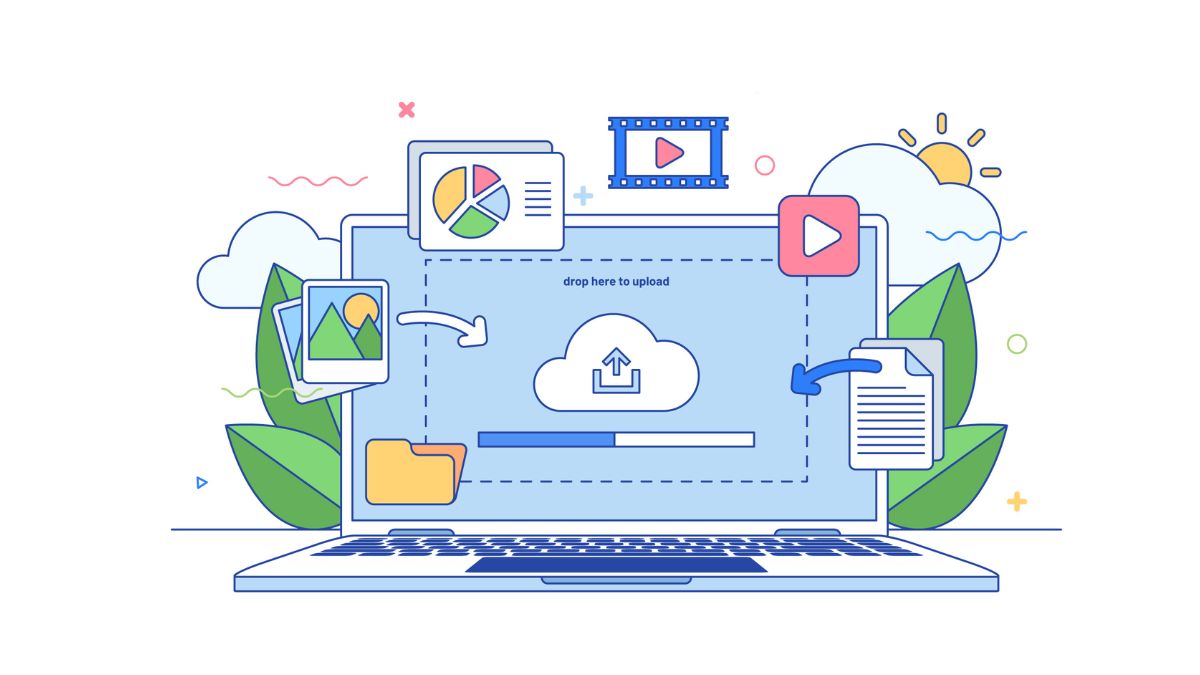
Healthcare organizations need to manage not only text-based medical records but also storage-intensive files such as X-rays, MRIs, and CT scans. Cloud-based picture archiving and communication systems, or PACS, allow organizations to expand storage capacity as demand increases without purchasing additional hardware or changing their underlying infrastructure.
HIPAA-compliant Imaging as a service solution can also support secure sharing of medical images with patients. According to the provided source, these solutions can provide predictable per-study pricing and deliver 40% lower total cost over 6 years. Cloud storage can also give organizations that must retain files for several years more predictable monthly storage expenses.
Artificial intelligence and machine learning
Cloud infrastructure can provide the computing and storage resources needed to train AI and machine learning models on large medical datasets. These models can identify patterns that may be difficult to detect manually, while predictive analytics can evaluate patient information for possible disease risks or subtle changes in medical images that may support earlier diagnosis and intervention.
Generative AI can also support healthcare workflows by helping organizations:
- Streamline clinical documentation and charting.
- Create personalized patient education materials.
- Translate medical information into simpler language to improve health literacy.
How to Successfully Implement Cloud Computing in Healthcare
Successful adoption of cloud computing in healthcare requires more than simply moving data and applications to the cloud. It depends on a well-structured approach that ensures the new environment is carefully planned and fully aligned with the needs of healthcare operations.
- Step 1 – Assess current IT infrastructure and cloud readiness: Start by reviewing existing systems, applications, and data workflows to understand migration requirements. A readiness assessment can help identify compliance considerations, data sensitivity, security gaps, and which systems are suitable for moving to the cloud.
- Step 2 – Choose the right cloud deployment model: Selecting between public, private, and hybrid cloud models depends on operational and compliance requirements. Public clouds can provide flexibility and scalability, while private clouds offer greater control. Hybrid approaches can balance the needs of sensitive healthcare data with scalable cloud resources.
- Step 3 – Build a security and compliance roadmap: Security should be planned throughout the cloud implementation process. Key considerations include encryption, identity and access management, least-privilege access, continuous monitoring, audit logs, and incident response planning to help protect patient information and support compliance requirements.
- Step 4 – Plan a phased migration strategy: A step-by-step approach helps reduce disruption during implementation. Organizations can begin with lower-risk systems, such as backups or collaboration tools, before moving critical healthcare platforms such as electronic medical records, medical imaging, and billing systems.
- Step 5 – Train teams and support digital adoption: Successful implementation depends on helping clinical and administrative teams adapt to new workflows, security practices, and cloud tools. Ongoing guidance and support can improve adoption and reduce resistance to technology changes.
- Step 6 – Work with an experienced healthcare cloud provider: A suitable partner should be evaluated based on healthcare experience, security practices, compliance standards, support capabilities, and pricing transparency. The right provider can help reduce implementation risks and support long-term cloud operations.
Challenges and Risks of Adopting Cloud Computing in Healthcare
While cloud computing offers opportunities to improve scalability and operational efficiency, adoption also requires careful management of security, compliance, integration, and workforce challenges. Healthcare organizations need to address these risks early to build a cloud environment that protects sensitive information and supports reliable operations.
Data privacy and security
Healthcare organizations manage highly sensitive personally identifiable information (PII) and protected health information (PHI), making security one of the most critical concerns when adopting cloud solutions. Cloud providers such as AWS, Azure, and Google Cloud offer HIPAA-eligible services, Business Associate Agreements (BAAs), and compliance certifications such as HITRUST CSF, SOC 2 Type II, and FedRAMP.
These protections support the provider’s responsibilities within the shared responsibility model, including physical security, infrastructure protection, and core encryption capabilities. However, healthcare organizations remain responsible for configuring workloads correctly to ensure patient data remains protected.
Key security considerations include:
- Identity and access management (IAM): Applying least-privilege access, role-based access control (RBAC), conditional access policies, and multi-factor authentication (MFA) to control who can access sensitive healthcare data.
- Encryption: Protecting PHI at rest and in transit through encryption tools, including provider-native key management solutions and customer-managed keys or hardware security modules (HSMs).
- Monitoring and threat detection: Using cloud-native monitoring tools to identify unusual activity, support incident response, and improve security visibility.
- Audit logging and compliance monitoring: Maintaining continuous monitoring practices aligned with healthcare security requirements and frameworks such as HIPAA, HITRUST, and NIST 800-53.

Regulatory compliance
Compliance remains a major challenge in the healthcare industry, where organizations must meet strict requirements for protecting patient information. In the United States, healthcare organizations handling PHI must comply with Health Insurance Portability and Accountability Act (HIPAA) standards. Failure to maintain compliance can result in legal action, financial penalties, and reduced trust.
Cloud providers support compliance through HIPAA-eligible services, encryption capabilities, physical security controls, and compliance certifications. However, healthcare organizations must actively manage their responsibilities within the shared responsibility model.
This includes:
- Enforcing appropriate IAM policies
- Encrypting PHI using managed keys or HSMs
- Monitoring security logs
- Applying continuous compliance checks
Clear ownership of these responsibilities is essential for maintaining HIPAA and HITRUST compliance in cloud environments. Organizations may also work with managed IT service providers with HITRUST certification to strengthen their ability to meet healthcare data security and privacy requirements.
Legacy system integration and migration
Many healthcare providers still rely on legacy on-premises systems, including electronic health record (EHR) platforms, that were not originally designed for cloud environments. Moving these systems to the cloud can require significant planning because existing applications and workloads may need to be adapted, rebuilt, or modernized.
Cloud migration experts can help healthcare organizations create a strategic modernization roadmap while reducing disruption during transformation projects. A phased migration approach is often required, where some services remain on-premises until they are ready to be rearchitected and moved to a cloud environment.
However, migrating complex healthcare systems can be time-consuming and resource-intensive, especially when organizations rely only on internal teams without specialized cloud expertise.
Skills gaps
Cloud adoption requires specialized skills to plan, execute, and manage migration projects successfully. While internal IT teams may have experience managing traditional infrastructure or basic cloud environments, they may not have the expertise needed for complex cloud migration and ongoing management.
These knowledge gaps can create challenges during planning, implementation, and optimization phases. Working with healthcare-focused IT providers can help organizations:
- Develop a structured cloud migration roadmap
- Access specialized technical expertise
- Support internal staff training
- Improve long-term cloud management capabilities
Security and Compliance Requirements for Cloud Integration in Healthcare
Security and regulatory compliance are key considerations in the adoption of cloud computing in healthcare, as organizations must ensure that patient information is handled responsibly within digital environments.
1. HIPAA and healthcare regulatory compliance
Cloud-based healthcare solutions must meet HIPAA requirements for protecting the privacy, security, and integrity of protected health information. This includes safeguards such as access controls, audit logs, data encryption, and procedures for breach notification.
Organizations operating across different markets may also need to comply with regulations such as GDPR, HITECH, and relevant regional privacy laws. Using cloud environments designed to support these requirements can help healthcare providers manage data securely while meeting regulatory obligations across jurisdictions.
2. Data encryption and identity management
Healthcare data should be encrypted both at rest and while being transmitted to reduce the risk of unauthorized access. Identity and access management controls also help limit sensitive systems and information to approved users.
Measures such as multi-factor authentication and zero-trust frameworks can strengthen access management by requiring users and access requests to be verified before sensitive healthcare resources are reached.
3. Disaster recovery and business continuity
Cloud technology can support disaster recovery through automated backups and replication of data across multiple regions. These capabilities help healthcare organizations restore systems and information after disruptions such as system failures, cyber incidents, or natural disasters.
Maintaining reliable backup and recovery processes is therefore an important part of protecting healthcare operations and supporting service continuity in cloud environments.
4. Shared responsibility for cloud security
Cloud security follows a shared responsibility model. Cloud service providers are responsible for protecting the underlying infrastructure, physical data centers, and core cloud services they operate.
Healthcare organizations remain responsible for areas such as patient data protection, user access, application security, and compliance configurations. Effective cloud security therefore depends on clearly understanding which controls are managed by the provider and which remain under the healthcare organization’s responsibility.
Future of Cloud Computing in Healthcare Industry
Cloud computing is becoming a core part of healthcare’s digital transformation, supporting everything from data management to patient care delivery. As adoption grows, the industry is expected to see steady expansion driven by the need for more efficient, scalable, and connected healthcare systems.
Growing use of cloud-powered generative AI
Generative AI is becoming a core capability in cloud-based healthcare systems. IDC projects that by 2027, about 70% of the healthcare industry will use cloud-powered generative AI to reduce data and workflow fragmentation across care settings. This is expected to improve diagnostic accuracy, clinical decision support, and overall patient safety.
Beyond clinical use, generative AI is also being applied to administrative and operational challenges. Healthcare providers can use it to improve forecasting, optimize supply chains, and manage resources more effectively, leading to smoother operations and reduced inefficiencies.
Greater convergence of edge computing and IoMT
The integration of edge computing with the Internet of Medical Things (IoMT) is reshaping how patient data is collected and processed. By handling data closer to its source, edge computing enables faster responses from connected medical devices while still relying on the cloud for long-term storage and deeper analysis.
This combined approach also supports hospital efficiency by improving real-time monitoring and operational visibility. As a result, healthcare organizations can better manage equipment, track assets, and reduce unnecessary costs.
More focused and phased cloud transformation
Healthcare organizations are increasingly adopting a gradual approach to cloud transformation rather than large-scale, immediate shifts. This allows them to reduce risk while steadily building cloud capabilities aligned with their operational priorities.
McKinsey & Company describes healthcare cloud transformation as a three-step process: define a strategy with clear objectives, migrate one domain at a time, and build the technology and process foundations needed to strengthen cloud operations over the long term. This phased approach can help organizations manage complexity while working toward sustained value from cloud adoption.
Partner with Newwave Solutions to Adopt Cloud Computing for Healthcare
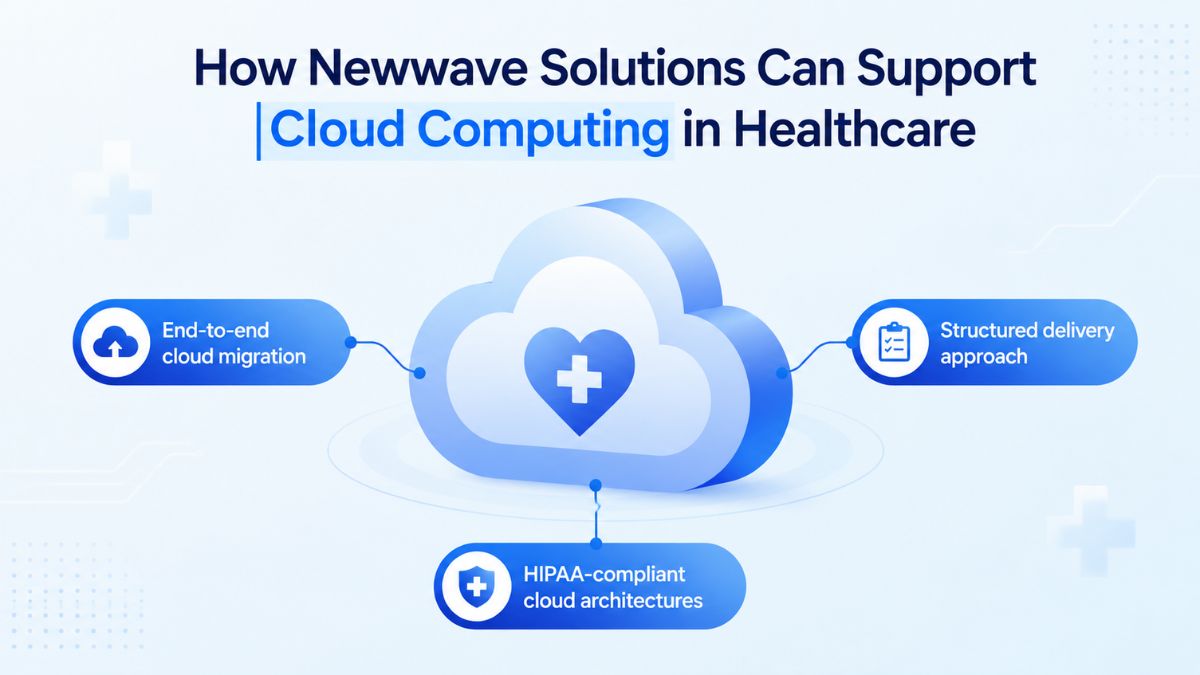
Newwave Solutions supports healthcare organizations with end-to-end cloud migration, from cloud strategy and readiness assessment to moving workloads, modernizing applications, and optimizing cloud environments.
Our structured delivery approach helps organizations transition critical healthcare systems while minimizing operational disruption and building a scalable foundation for long-term cloud adoption.
We also design HIPAA-compliant cloud architectures with security and regulatory requirements considered throughout the cloud environment. By combining migration expertise with healthcare-focused cloud architecture, Newwave Solutions helps organizations modernize their infrastructure while maintaining the security, reliability, and scalability required for clinical and administrative systems.
Conclusion: Preparing Healthcare Organizations for Cloud Adoption
Cloud adoption can give healthcare organizations a more flexible foundation for managing data, supporting digital care, and improving operational efficiency. However, the value of cloud computing in healthcare depends on choosing the right deployment approach, maintaining strong security and compliance controls, and planning migration around existing systems and business priorities.
Before moving forward, organizations should evaluate which workloads belong in the cloud, how patient data will be protected, and whether the architecture can scale without disrupting critical services. A phased migration can help balance modernization with operational continuity.
Newwave Solutions can support this transition through end-to-end cloud migration and HIPAA-compliant cloud architecture designed around healthcare requirements. Contact our team to get started with a tailored cloud strategy for your healthcare organization.
FAQs
1. What are the different types of cloud computing used in healthcare?
Healthcare organizations can use four main deployment models: public, private, hybrid, and multicloud. Common service models include SaaS, IaaS, PaaS, and serverless computing, with the right choice depending on workload, security, management, and scalability requirements.
2. Is cloud computing HIPAA compliant?
Cloud computing can support HIPAA compliance when the environment is configured and managed according to HIPAA requirements. Healthcare organizations still need appropriate safeguards such as data encryption, access controls, audit logs, breach procedures, and secure compliance configurations.
3. What are the disadvantages of cloud computing in healthcare?
Potential disadvantages include security and privacy risks, regulatory complexity, migration challenges, and the need to manage responsibilities between healthcare organizations and cloud providers. Multicloud environments can also increase complexity because organizations must manage multiple vendors, contracts, and cloud resources.
4. How can we use cloud computing in healthcare?
Healthcare organizations can use cloud computing for EHR and EMR management, telemedicine, remote patient monitoring, medical image storage and sharing, and AI and machine learning workloads. Cloud infrastructure can also support administrative automation, data analysis, disaster recovery, and resource management.
5. Which cloud platform is best for healthcare?
There is no single cloud platform that is best for every healthcare organization. The right choice depends on factors such as workload requirements, security and compliance needs, scalability, existing systems, geographic requirements, and the level of cloud management the organization can support.
To Quang Duy is the CEO of Newwave Solutions, a leading Vietnamese software company. He is recognized as a standout technology consultant. Connect with him on LinkedIn and Twitter.



Read More Guides
Get stories in your inbox twice a month.
Let’s Build Something Extraordinary
Sign up for a 30 min no-obligation strategic session with us. Transform your Ideas into scalable reality.
Leave a Reply