


Top 10 Healthcare CRM Software to Consider in 2026
As demand for efficient, personalized medical services continues to grow, healthcare organizations are seeking better ways to manage patient relationships, streamline workflows, and improve service quality. However, fragmented data, disconnected communication channels, and manual processes can make it challenging to deliver consistent and patient-centered experiences.
Healthcare CRM software provides a centralized approach to connecting patient information, automating interactions, and supporting more coordinated care management. This guide covers what healthcare CRM systems are, their key features and benefits, leading solutions to consider, and important factors for choosing the right platform to improve healthcare operations.
Key Takeaways
|
What is a Healthcare CRM?
A healthcare CRM is specialized software designed to manage patient interactions and support healthcare processes more efficiently. Acting as a centralized hub for patient data, healthcare CRM software allows authorized healthcare professionals to access and retrieve information more seamlessly.
Key benefits of implementing CRM software in healthcare include:
- Enhanced patient relationships: Healthcare CRM enables more personalized communication and tailored experiences, helping strengthen interactions between patients and healthcare providers.
- Effective data management: By centralizing patient information, healthcare CRM software helps ensure that accurate and up-to-date data is easier to access, supporting more informed decision-making by healthcare professionals.
- Streamlined communication: Integrated communication tools help healthcare teams coordinate more effectively, improving collaboration and supporting timely patient care.
- Improved patient engagement and satisfaction: Personalized interactions and proactive outreach can enhance patient engagement, contributing to higher satisfaction and stronger patient relationships.
- Increased operational efficiency: Workflow automation and streamlined processes help optimize resource allocation and scheduling, allowing healthcare teams to focus more effectively on patient care.
Key Features of CRM Software for Healthcare
Healthcare CRM software provides a set of tools that help healthcare organizations manage patient relationships, improve data access, and streamline operational processes. While features vary by platform, most solutions focus on improving communication, workflow efficiency, and coordination across healthcare activities.
360° patient data management
Healthcare CRM platforms can consolidate patient information, including demographics, medical history, interactions, and communication records, into a unified profile. This allows authorized healthcare staff across departments to access relevant information more efficiently and maintain more consistent patient records.
Smart appointment scheduling
Smart scheduling features allow patients to manage appointments online, check available time slots, and book visits more conveniently. Healthcare organizations can also use automated reminders and follow-ups to support appointment management.
EHR/EMR and third-party system integration
Integration capabilities enable CRM software in healthcare to connect with electronic health records (EHR), electronic medical records (EMR), billing systems, and payment platforms. These connections help synchronize information and support processes such as financial transactions, invoicing, and claims management.
Patient self-service portals
Patient portals provide secure access to healthcare information, including medical records, lab results, and treatment plans. They also enable direct communication between patients and care teams, helping improve transparency and patient engagement.
Document management
Healthcare CRM systems can provide centralized storage for medical and administrative documents. Authorized users can access records in real time, support consistent recordkeeping, and retrieve patient information more efficiently.
AI-powered automation and predictive analytics
AI capabilities in healthcare CRM software can analyze patient and operational data to identify trends, recognize care gaps, and support data-driven decision-making. These tools can also automate routine processes such as follow-ups, task assignments, and patient data updates.
Omnichannel communication management
CRM software for the healthcare industry can bring together communication channels such as email, SMS, chat, and phone into a single platform. This helps healthcare teams maintain consistent messaging and manage patient interactions across different touchpoints.
Marketing and patient outreach tools
Healthcare CRM solutions may include tools for creating targeted campaigns, segmenting audiences, and automating engagement activities. These capabilities support patient outreach efforts and help organizations maintain communication with existing patients.
Customizable dashboards and reporting
Reporting and dashboard features allow users to monitor key performance metrics, such as patient satisfaction rates, frequently used services, and appointment no-shows. These insights can support planning and operational decision-making.
Mobile accessibility
Mobile access enables healthcare professionals to securely view and update information, communicate with teams, and make decisions while using mobile devices from different locations.
How We Evaluated Healthcare CRM Software
To evaluate healthcare CRM software, we considered factors that reflect the practical needs of healthcare organizations. The assessment focused on how each platform supports healthcare workflows, manages patient data, and adapts to different operational requirements.
- Healthcare-specific capabilities: Assessed features such as patient journey tracking and healthcare-related functionality, including HIPAA readiness where applicable.
- Customization and scalability: Considered the ability to adapt the platform or support healthcare CRM development for different organizational needs and growth requirements.
- Automation and integrations: Reviewed automation capabilities and integration options that support more efficient workflows and connected systems.
- Data management capabilities: Evaluated how effectively each solution manages and organizes information for healthcare providers.
- Pricing and implementation considerations: Examined pricing transparency, scalability, user experience, and implementation complexity.
- Suitability for different healthcare organizations: Considered how well each platform fits the needs of clinics, hospitals, and healthcare SaaS teams.
Top 10 Healthcare CRM Software That’s Worth Considering
Choosing the right healthcare CRM software requires a clear understanding of each platform’s capabilities, pricing, and suitability for different healthcare needs. Below are 10 CRM solutions worth considering based on their key features, integrations, and overall value.
| Software | Best for | Key healthcare capabilities | EHR/Healthcare integration | Starting price |
| Microsoft Dynamics 365 | Large healthcare enterprises seeking strong integration with Microsoft’s productivity and cloud ecosystem | Unified patient view, care coordination, patient care plans, healthcare analytics, workflow automation | Integrate with Electronic Health Records (EHR) systems like Epic and Cerner | Starts at $105/user/month for Field Service. |
| Zoho CRM for Healthcare | Small and mid-sized healthcare institutions seeking an affordable and flexible CRM solution | Patient data management, patient onboarding, appointment scheduling, consent forms, referral management, workflow customization | Integrate with EHR/ EMR | Starts at $20/user/month. |
| Salesforce Health Cloud | Healthcare organizations focusing on patient engagement and care coordination | 360° patient management, care coordination, patient engagement campaigns, healthcare data models | Integrate with EHR systems like Epic or Cerner | Salesforce CRM Enterprise starts at $100/user/month. |
| HubSpot | Healthcare institutions seeking an easy-to-use CRM for communication, engagement, and workflow automation | Patient communication management, reporting dashboards, workflow automation, CRM customization | Integrates with major EHR systems via APIs, FHIR, middleware, or native apps | Professional and Enterprise plans typically start around $50–$75/user/month |
| Creatio CRM | Midsize to large healthcare organizations seeking customizable CRM workflows and AI-powered automation | AI agents, patient management, self-service portals, document automation, workflow customization, analytics, reporting | Supports EHR integrations through no-code framework and third-party applications | Platform plans range from $25–$85/user/month. CRM products start at $15/user/month |
| Zendesk | Healthcare organizations prioritizing patient support, communication, and service management | Patient interaction management, omnichannel communication, service workflows, customer support automation, reporting | Can integrate with EHRs, medical devices, and appointment history systems | General CRM/support plans start at $19/agent/month. |
| Oracle NetSuite CRM | Organizations seeking an integrated CRM for customer relationships, sales, and operational management | Sales automation, marketing automation, customer service, partner management, case management, order management | Integrate with EHR/ EMR | Custom quote
|
| Innovaccer CRM | Healthcare organizations seeking a healthcare-focused CRM for patient engagement and care coordination | Unified patient data, patient outreach automation, interaction tracking, segmentation, analytics, appointment support, population health workflows | Integrates patient data from multiple healthcare sources | Custom quote
|
| Epic Cheers | Healthcare organizations already using the Epic ecosystem that need patient engagement and outreach capabilities | Patient outreach management, personalized communication, engagement workflows, care gap outreach, engagement analytics | Native integration with Epic EHR ecosystem | Custom quote
|
| DATAMATICS DXHealth+ | Healthcare organizations seeking digital transformation through AI, analytics, and automation | Healthcare data integration, AI analytics, predictive insights, workflow automation, operational optimization, patient engagement support | Integrate with industry-leading EHR systems.
|
Custom quote |
Microsoft Dynamics 365
Best for: Large healthcare enterprises seeking a CRM platform with strong integration across Microsoft’s productivity, cloud, and business application ecosystem.
Healthcare focus: General CRM adapted for healthcare with healthcare-specific capabilities available through Microsoft Cloud for Healthcare.
Microsoft Dynamics 365 is a CRM and ERP platform that supports patient management, care coordination, and operational workflows within a connected Microsoft ecosystem.
Through integrations with Microsoft Power Platform, Azure, Teams, and Outlook, healthcare organizations can customize solutions to manage patient relationships, improve collaboration, and optimize healthcare processes. The platform also supports personalized care delivery, remote patient monitoring, and data-driven decision-making through analytics capabilities.
Standout capabilities
- Unified patient view: Consolidates patient information into a centralized view, allowing healthcare teams to access data more efficiently for analysis and care planning.
- Care coordination tools: Enables teams to create, personalize, and manage patient care plans within a shared workspace.
- Healthcare analytics: Uses operational and clinical data insights to identify trends and support informed decision-making across healthcare facilities.
- Microsoft ecosystem integration: Connects with tools such as Microsoft Teams, Azure, Power Platform, and Outlook to improve communication and workflow management.
- Pre-built healthcare templates: Provides templates that help healthcare teams organize collaboration spaces for patient care and administrative activities.
- Security and compliance support: Includes HIPAA compliance support and role-based access controls for managing healthcare data.
Pricing: Microsoft Dynamics 365 pricing starts at $105 per user/month for the Field Service application. Healthcare solutions based on Dynamics 365 and Power Platform may require additional Dynamics 365 apps or add-on licenses depending on the selected capabilities.
Limitations: Healthcare-specific features may require additional licenses and Microsoft ecosystem products, which can increase overall costs.
Zoho CRM
Best for: Small and mid-sized healthcare institutions looking for a cost-effective and flexible CRM solution.
Healthcare focus: General CRM with healthcare-focused customization options for patient communication, appointment management, and healthcare workflows.
Zoho CRM provides healthcare organizations with a customizable platform to manage patient interactions, appointments, referrals, and administrative workflows. The solution combines CRM functionality with healthcare-related tools and integrations, allowing smaller healthcare institutions to adapt the system to their operational needs without requiring a highly complex setup.
Through the wider Zoho ecosystem, including Zoho Sign, Inventory, and Connect, organizations can extend CRM capabilities across communication, documentation, and daily business processes.
Standout capabilities:
- Patient data management: Supports electronic medical records to centralize patient information and improve visibility across healthcare teams.
- Patient onboarding tools: Simplifies registration processes, reduces paperwork, and supports a smoother patient experience.
- Appointment scheduling: Provides scheduling capabilities designed to support coordination across multiple clinics.
- Customizable consent forms: Helps manage patient authorizations and support compliance requirements.
- Referral management: Enables more efficient communication between departments and care providers through streamlined referral processes.
- Healthcare system integration: Supports EHR and HIMS integrations to synchronize clinical and administrative information.
- Data protection: Maintains GDPR compliance to help protect patient data and sensitive information.
Pricing: Zoho CRM pricing starts at $20 per user/month. Healthcare organizations may require higher-tier plans, which typically start around $50 per user/month and include capabilities such as AI insights, territory management, and custom automation features.
Limitations: Healthcare-specific capabilities may require additional customization or related Zoho products.
Salesforce Health
Best for: Healthcare organizations focusing on patient engagement and care coordination.
Healthcare focus: Healthcare-specific CRM through Salesforce Health Cloud built on the Salesforce platform.
Salesforce brings CRM capabilities into healthcare by creating a connected view of patient, member, and partner interactions. The platform helps organizations combine clinical and non-clinical information, enabling care teams to access a more complete picture of each patient and coordinate communication across different touchpoints.
For healthcare-specific needs, Salesforce Health Cloud extends the core CRM with tools designed for healthcare workflows. It provides a shared view for care teams, supports process automation, and improves collaboration among clinical, insurance, and administrative teams.
Additional AI capabilities through Salesforce Einstein and Agentforce 1 provide predictive insights, recommendations, and segmentation features to support data-driven decisions.
Standout capabilities:
- 360° patient management: Unifies patient information to support more personalized and continuous care experiences.
- Health Cloud capabilities: Provides healthcare-focused tools for care coordination, workflow automation, and collaboration across teams.
- EHR and data integration: Connects with healthcare systems and external data sources to improve data accessibility and consistency.
- Process automation: Uses Salesforce Flows to automate workflows and improve operational efficiency.
- Flexible customization: Allows organizations to configure custom fields, apps, and objects based on departmental requirements.
- AI-powered insights: Leverages Salesforce Einstein and Agentforce 1 for predictive analytics, personalized recommendations, and intelligent segmentation.
- Patient engagement tools: Supports targeted communication through dynamic email marketing and automated campaigns.
Pricing: Salesforce CRM Enterprise Edition starts at $100 per user/month. Healthcare-specific solutions such as Health Cloud range from $350 to $750 per user/month, depending on deployment scale and integrated AI capabilities.
Limitations: Some advanced capabilities, such as healthcare-specific workflows and AI-powered features, are not included in the standard CRM package and require separate licenses or add-ons.
Hubspot
Best for: Healthcare institutions seeking a multi-component CRM to enhance patient satisfaction and streamline communication.
Healthcare focus: General CRM adapted for healthcare organizations with customizable tools for patient engagement, communication, and workflow automation.
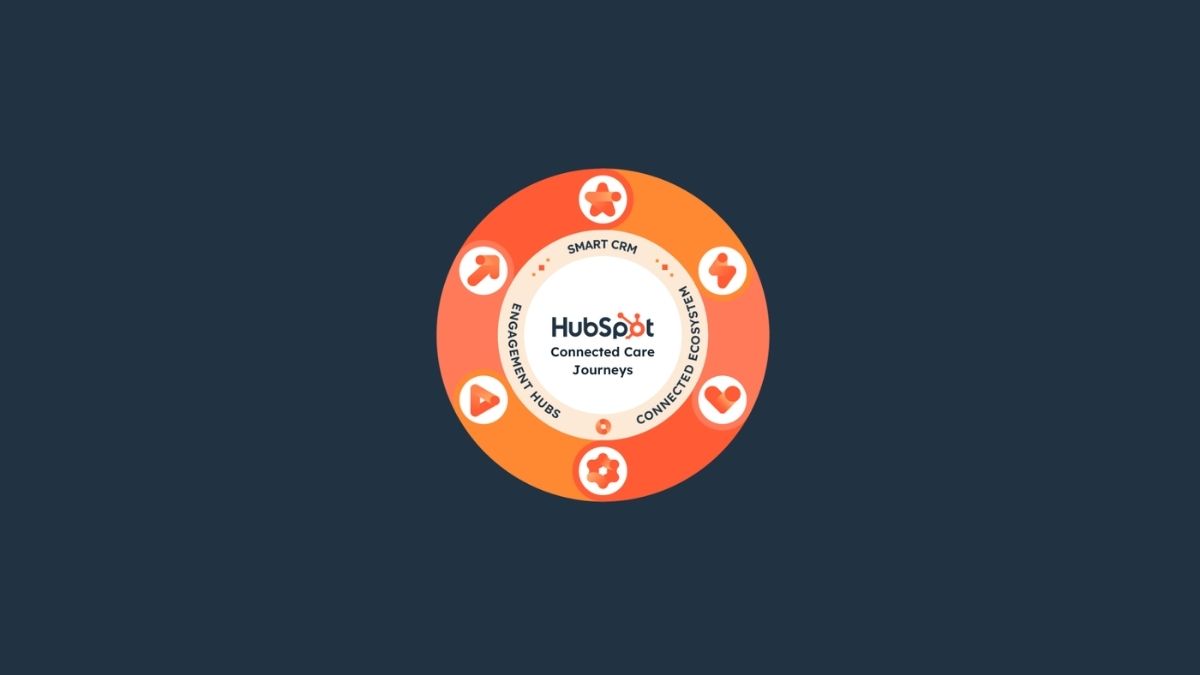
HubSpot is an all-in-one CRM platform that brings marketing, sales, service, content, and data management into one system. Healthcare organizations can adapt its workflows to manage patient information, communication, and engagement more efficiently.
The platform also automates routine activities such as personalized email campaigns, appointment reminders, and inquiry management. Its reporting dashboards track metrics related to patient acquisition, satisfaction, and retention, helping teams make data-informed decisions without requiring extensive technical expertise.
Standout capabilities:
- CRM team management: Enables organizations to organize users by department, region, or business unit and manage access to relevant records and marketing assets.
- Custom reporting dashboards: Provides centralized reporting tools to analyze patient data and monitor key performance metrics.
- Workflow automation: Automates repetitive administrative tasks and supports personalized communication workflows.
- Flexible CRM customization: Allows users to configure layouts and data presentation based on different team requirements.
- AI-powered data management: Uses built-in AI features to identify duplicate records and automate certain administrative processes.
Pricing: Healthcare organizations typically consider HubSpot Professional or Enterprise plans, which start between $50–$75 per user/month. These plans provide access to advanced customization, automation, analytics, and service management capabilities.
Limitations: Compared with healthcare-specific CRM platforms, HubSpot is primarily designed for relationship management and engagement rather than managing detailed clinical information or complex care coordination workflows.
Zendesk
Best for: Healthcare organizations prioritizing patient support, omnichannel communication, and service management.
Healthcare focus: General CRM and customer service platform adapted for healthcare use cases
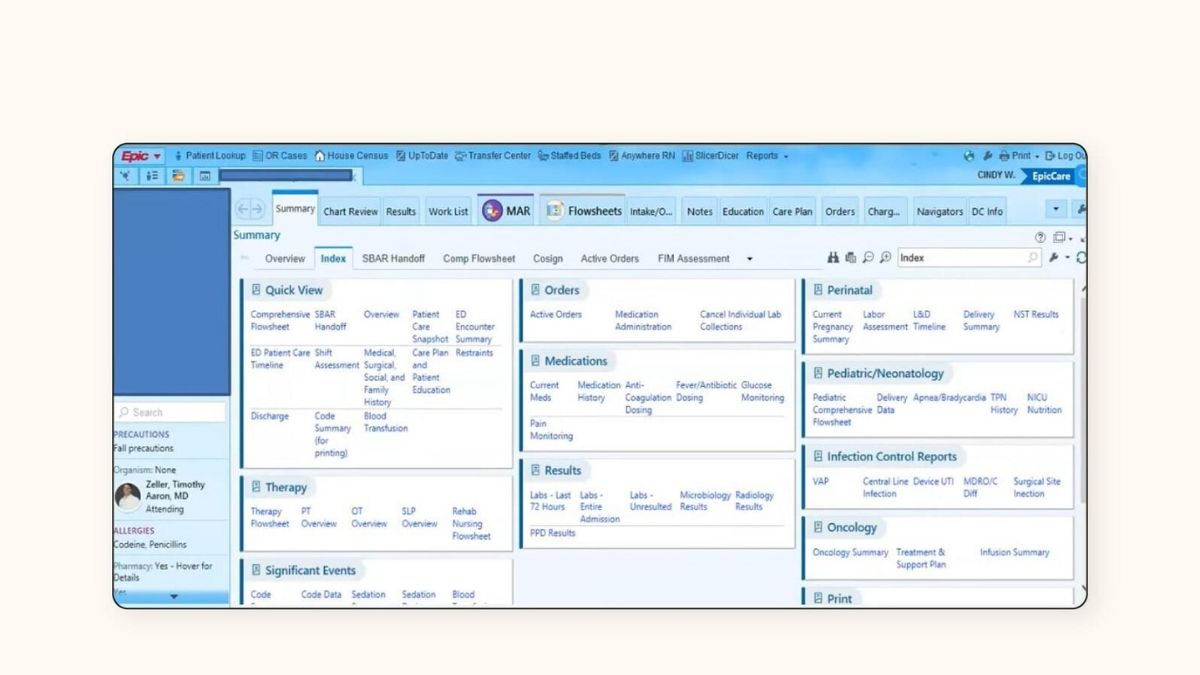
Zendesk focuses on customer service and relationship management, providing healthcare organizations with tools to manage patient inquiries, communication, and support interactions across multiple channels. Through Zendesk’s CRM capabilities and Zendesk Sell, organizations can manage customer information, automate sales processes, visualize pipelines, and maintain communication histories in one platform.
Its service-focused approach allows healthcare teams to streamline communication, personalize support experiences, and reduce time spent on repetitive administrative tasks.
Standout capabilities:
- 360° patient interaction view: Combines patient information, communication records, and relevant data sources to provide a more complete view of patient relationships.
- Omnichannel communication: Supports interactions across channels such as email, chat, and phone, allowing healthcare teams to manage patient conversations through a unified platform.
- Customer service workflow management: Provides tools to organize, track, and manage patient requests and support processes more efficiently.
- Zendesk Sell CRM capabilities: Includes sales automation, pipeline visualization, management tools, and mobile access for teams managing relationship workflows.
- Healthcare system integrations: Can connect with EHRs, medical devices, and appointment history data to improve information accessibility.
- Analytics and reporting: Provides dashboards and reporting capabilities to monitor service performance and patient interactions.
- Customizable workflows: Allows organizations to adapt service processes based on their operational requirements.
Pricing: General Zendesk CRM and support solutions start at $19 per agent/month, while Zendesk Suite plans typically range from $55 to $115+ per agent/month when billed annually. Healthcare-specific solutions with advanced capabilities may require higher-tier configurations, starting at around $325 per user/month when billed annually.
Limitations: Features such as advanced automation, permissions, and analytics are typically available in higher-priced plans.
Creatio CRM
Best for: Midsize to large healthcare organizations seeking a highly customizable CRM platform to manage patient relationships and operational workflows.
Healthcare focus: Healthcare-specific CRM solution with no-code customization, AI-powered automation, and workflow management capabilities.
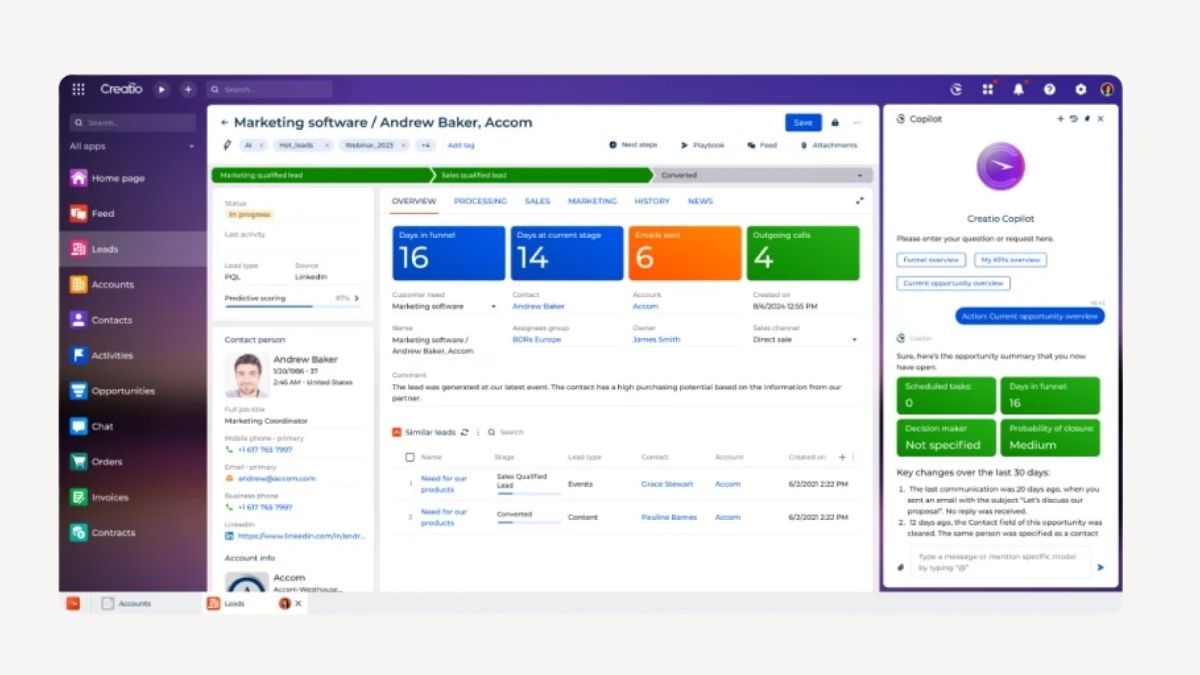
Creatio CRM is a composable CRM platform that combines sales, marketing, and service automation with healthcare-focused solutions. It supports end-to-end patient journey management by helping teams centralize patient information, automate routine processes, and improve collaboration across clinical and administrative functions.
Its no-code architecture allows workflows and interfaces to be customized with less reliance on IT resources. Built-in AI also supports workflow automation, insight generation, and conversational interaction with CRM processes.
Standout capabilities:
- AI-powered CRM automation: Uses AI agents to automate tasks, generate insights, and support processes such as patient data entry, scheduling, and billing follow-ups.
- Customizable CRM workflows: Enables organizations to adapt processes, interfaces, and applications through its no-code architecture.
- Comprehensive patient management: Centralizes patient data, communication records, and care coordination activities within one platform.
- Patient self-service portals: Allows patients to access records, schedule appointments, and communicate with healthcare providers online.
- Document management and automation: Provides tools to securely organize and process clinical and administrative documents.
- Analytics and reporting: Supports real-time monitoring of performance metrics and operational outcomes through reporting tools.
- Microsoft ecosystem integration: Allows AI tools and agents to be embedded into productivity applications such as Microsoft Outlook and Microsoft Teams.
- Extensibility through marketplace applications: Provides access to more than 400 applications and third-party add-ons through Creatio Marketplace.
Pricing: Creatio uses a composable pricing model that allows organizations to select the products they need. The platform plans range from $25 to $85 per user/month with integrated AI capabilities, while individual CRM products such as Sales, Marketing, and Service are priced at $15 per user/month.
Limitations: The platform’s extensive customization and automation capabilities may be better suited for midsize to large healthcare organizations with more complex operational requirements.
DATAMATICS DXHealth+
Best for: Healthcare organizations seeking a digital transformation platform that combines data analytics, AI, and automation to improve healthcare operations.
Healthcare focus: Healthcare-specific solution focused on data management, workflow optimization, automation, and patient engagement.
DATAMATICS DXHealth+ is a healthcare digital transformation platform designed to help organizations manage complex healthcare data and improve operational processes. The solution combines data analytics, artificial intelligence, and automation capabilities to support patient record management, clinical workflows, and administrative activities.
The platform also addresses challenges related to fragmented data systems, manual workflows, and maintaining data security standards across healthcare operations.
Standout capabilities:
- Healthcare data integration: Combines data from patient records, clinical workflows, and administrative systems to improve information accessibility.
- AI-powered analytics: Uses data analytics and predictive insights to support decision-making and identify operational patterns.
- Workflow automation: Automates manual processes to improve efficiency across clinical and administrative activities.
- Patient engagement support: Provides capabilities that help healthcare organizations improve interactions and engagement with patients.
- Operational optimization: Helps organizations improve resource allocation and streamline healthcare processes.
- Security and compliance support: Supports healthcare organizations in maintaining data security standards and compliance requirements.
Pricing: Custom quote
Limitations: Organizations seeking broader CRM functions such as sales automation, marketing management, or customer relationship workflows may require additional solutions.
Epic Cheers
Best for: Healthcare organizations already using the Epic ecosystem that want to improve patient engagement, outreach, and communication through a healthcare-specific CRM.
Healthcare focus: Healthcare-specific CRM designed for patient engagement, outreach automation, and relationship management within the Epic platform.
Epic Cheers is a healthcare CRM solution built within the Epic ecosystem to help healthcare organizations manage patient outreach, engagement, and communication. Unlike general CRM platforms, Cheers connects directly with Epic’s healthcare environment, allowing organizations to use patient information and care-related data to create more personalized interactions.
The platform supports activities such as targeted outreach, communication management, and patient engagement workflows. By bringing CRM capabilities closer to clinical data and healthcare operations, Epic Cheers helps organizations coordinate interactions across patient journeys and improve communication between patients and care teams.
Standout capabilities:
- Epic ecosystem integration: Works within the Epic environment to connect patient engagement activities with healthcare data and workflows.
- Patient outreach management: Enables organizations to create targeted outreach campaigns and personalized communications based on patient information.
- Care gap and preventive care engagement: Supports proactive communication for patient needs, such as follow-ups and preventive care activities.
- Communication management: Helps manage interactions across channels such as email, text messaging, and phone outreach.
- Patient engagement analytics: Provides visibility into outreach activities and engagement performance to support data-driven decisions.
- Contact center support: Supports patient communication workflows by providing teams with access to relevant patient context during interactions.
Pricing: Custom quote
Limitations: Epic Cheers is primarily designed for healthcare organizations using Epic, which may limit suitability for organizations using other EHR platforms.
Oracle
Best for: Organizations seeking an integrated CRM platform to manage customer relationships, sales processes, and support operations within a unified business system.
Healthcare focus: General CRM adapted for healthcare organizations
Oracle NetSuite CRM is a cloud-based customer relationship management platform designed to provide organizations with a centralized view of customer interactions and business processes. The platform helps teams manage relationships throughout the customer lifecycle, from initial engagement to ongoing support, while improving visibility across departments.
For healthcare organizations, NetSuite CRM can be adapted to support relationship management and operational coordination through its broader business management ecosystem.
Standout capabilities:
- Sales force automation: Supports lead management, opportunity tracking, and sales processes to improve visibility across the customer lifecycle.
- Marketing automation: Provides tools to manage marketing activities and customer engagement processes.
- Customer service management: Enables organizations to track and manage customer support cases within a centralized system.
- Partner relationship management: Helps manage interactions and relationships with business partners through a unified platform.
- Sales forecasting and reporting: Provides visibility into sales activities and supports forecasting processes.
- Integrated customer data management: Centralizes customer information to improve access and coordination across teams.
- Order management: Supports tracking and management of customer orders as part of broader CRM workflows.
Pricing: Oracle NetSuite pricing is customized, but a typical deployment starts with a base platform fee of $999 per month plus $99 to $199 per user, per month.
Limitations: Oracle NetSuite CRM is a general CRM platform, so healthcare organizations may require additional customization or integrations to support specialized healthcare workflows.
Innovaccer CRM
Best for: Healthcare organizations seeking a healthcare-focused CRM platform for patient engagement, care coordination, and data-driven outreach.
Healthcare focus: Healthcare-specific CRM designed to support patient relationship management, care coordination, and population health initiatives.
Innovaccer CRM is a healthcare-focused platform that helps organizations manage patient relationships through a unified view of patient data. It integrates information from multiple sources to support care coordination, patient engagement, and workflow management.
The platform provides tools for communication automation, interaction tracking, analytics, and reporting. These capabilities help healthcare providers improve patient outreach, monitor engagement activities, and support initiatives such as appointment management and population health management.
Standout capabilities:
- Unified patient data management: Integrates patient information from multiple sources into a centralized platform to improve visibility across healthcare workflows.
- Patient engagement management: Supports tracking patient interactions and managing communication activities throughout the care journey.
- Automated outreach workflows: Enables organizations to automate communication processes and improve the management of patient outreach programs.
- Care coordination tools: Helps healthcare teams organize workflows and coordinate activities across clinical and administrative processes.
- Analytics and reporting: Provides insights through analytics and reporting tools to monitor engagement activities and operational performance.
- Patient segmentation: Allows organizations to categorize patient groups and support more targeted engagement strategies.
- Appointment scheduling support: Includes capabilities that assist healthcare organizations in managing appointment-related activities.
- Population health management support: Helps providers manage broader healthcare initiatives through organized patient data and engagement workflows.
Pricing: Custom quote
Limitations: Deploying a healthcare-focused CRM may require careful planning and coordination to ensure successful adoption across different teams and processes.
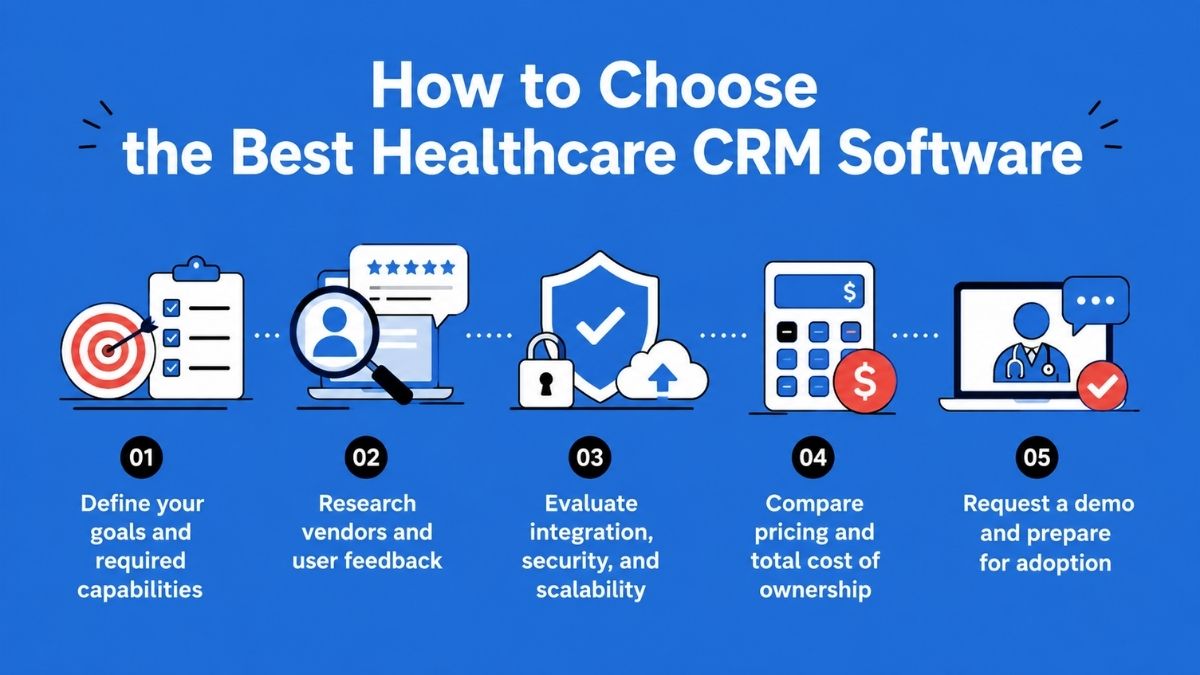
How to Choose the Best Healthcare CRM Software
Selecting the right CRM software for healthcare requires a clear understanding of your organization’s goals, workflows, and technology requirements. Consider the following factors when evaluating CRM options:
Define your goals and required capabilities
Start by identifying what you want to achieve with a CRM and the processes it should support. Determine the essential capabilities needed for your healthcare environment, such as appointment scheduling, patient portals, communication management, or workflow automation. Clear requirements help narrow down vendors that match your specific needs.
Research vendors and user feedback
Review available CRM vendors and evaluate feedback from existing users through platforms such as G2 or Capterra. User experiences can provide insights into factors such as platform usability, reliability, customer support, and overall satisfaction. Compare each solution’s compliance, functionality, and suitability for healthcare workflows.
Evaluate integration, security, and scalability
Assess whether the CRM can integrate with existing systems, including EHRs, billing platforms, and communication tools. Consider important factors such as regulatory compliance, data security, customization options, and scalability. AI and automation capabilities should also be evaluated based on their ability to streamline workflows and provide insights for decision-making.
Compare pricing and total cost of ownership
Look beyond subscription costs when comparing CRM solutions. Consider additional expenses related to implementation, training, customization, and ongoing maintenance. Evaluating the total cost of ownership helps determine whether a healthcare CRM solution can deliver long-term value without unexpected costs.
Request a demo and prepare for adoption
Before making a final decision, request product demonstrations to understand how each CRM performs in real healthcare workflows. Involve relevant teams during the evaluation process and prepare for onboarding, training, and adoption to support a smoother implementation.
Off-the-Shelf vs Custom Healthcare CRM: Which Is Right for You?
Choosing between an off-the-shelf and custom healthcare CRM depends on your organization’s workflows, integration requirements, and long-term growth plans.
An off-the-shelf CRM is often suitable for smaller healthcare practices with standard workflows and limited complexity. It can be a practical choice when organizations have:
- A single location with a smaller team.
- Standard healthcare workflows, such as general practice, dental services, or basic specialty care.
- No immediate need for complex EHR integration or multi-location reporting.
Custom healthcare CRM development becomes more valuable when standard solutions cannot fully support specific operational requirements. A custom approach may be appropriate for organizations that:
- Manage multiple healthcare locations.
- Require deeper EHR/EMR interoperability beyond available connectors.
- Have complex treatment workflows that do not fit standard CRM processes.
- Want full ownership and control over their patient relationship data architecture.
Many healthcare organizations take a gradual approach by starting with an off-the-shelf platform and reassessing their needs as they grow. This approach allows teams to validate patient communication workflows before investing in custom development.
How Newwave Solutions Support Healthcare Organizations with Custom CRM Software
Healthcare organizations need CRM solutions that align with their unique workflows, data requirements, and patient engagement goals. As a custom software development company with 15 years+ of experience, Newwave Solutions helps businesses build tailored CRM platforms that connect business processes, customer data, and existing systems into a unified platform.
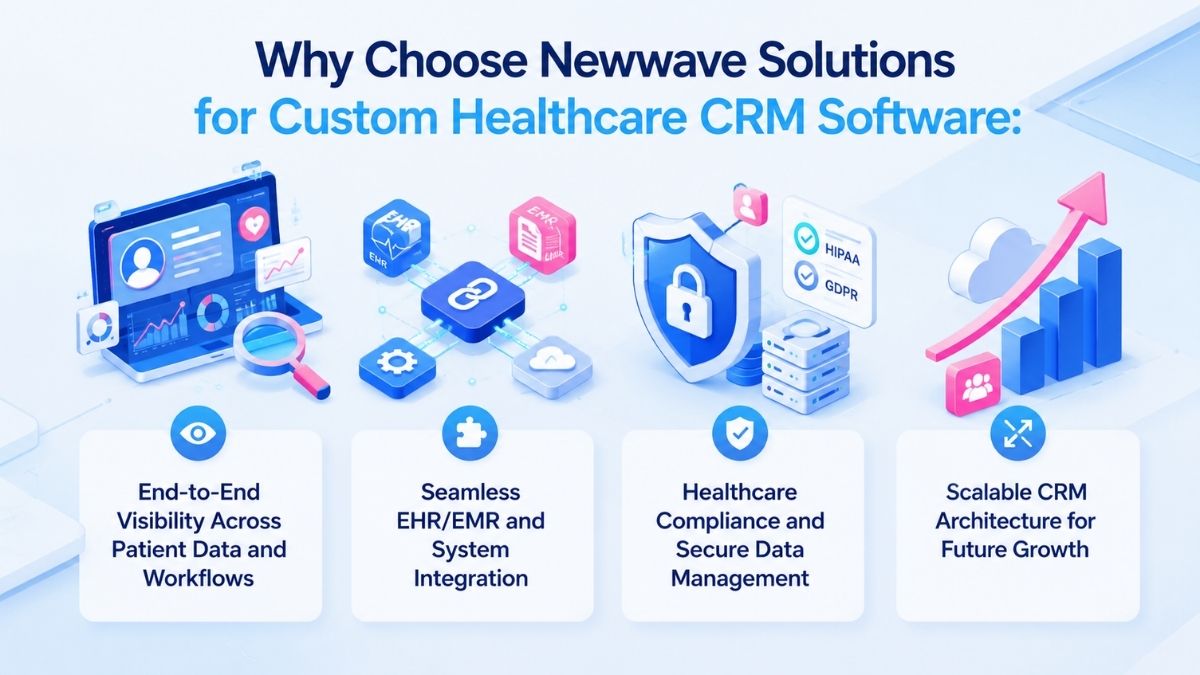
How Newwave Solutions supports healthcare organizations with our CRM solutions:
- End-to-End Visibility Across Patient Data and Workflows: We develop customized CRM solutions that centralize healthcare data and provide a unified view of patient interactions, enabling organizations to improve reporting, coordination, and decision-making.
- Seamless EHR/EMR and System Integration: Our healthcare CRM development services help connect CRM platforms with existing healthcare systems, allowing smoother data exchange between patient records, administrative processes, and communication channels.
- Healthcare Compliance and Secure Data Management: We design CRM solutions with security requirements (HIPPA, GDPR, etc) in mind, supporting healthcare organizations in managing sensitive information through structured access controls and compliance-oriented approaches.
- Scalable CRM Architecture for Future Growth: Newwave Solutions builds flexible CRM platforms that can evolve with changing business requirements, allowing healthcare organizations to expand capabilities as their operations grow.
Final Thoughts
The right healthcare CRM choice depends on finding a balance between functionality, customization, integration, and cost. While ready-made platforms can support standard workflows, organizations with complex processes may need a more flexible approach to manage patient data and operational requirements effectively.
Newwave Solutions provides custom healthcare CRM software development that help healthcare organizations design solutions around their specific workflows. From system integration to workflow automation and secure data management, we help businesses create CRM platforms that support better healthcare operations and future growth.
Connect with our team for a consultation and discover how a customized CRM solution can support your healthcare operations.
FAQs
What is the best CRM software for healthcare?
The best healthcare CRM software depends on an organization’s specific needs, including workflow complexity, integration requirements, scalability, and budget. Solutions such as Salesforce Health Cloud, Microsoft Dynamics 365, Zoho CRM may fit different use cases depending on the organization’s goals.
What are the key features of healthcare CRM?
Healthcare CRM typically focuses on managing patient information, improving communication, and streamlining healthcare workflows. Depending on the platform, it may also support system integration, automation, and analytics to help organizations deliver more coordinated services.
How much does a healthcare CRM software cost?
The cost of healthcare CRM software varies depending on the platform, number of users, required features, customization level, and integration needs. Pricing can range from subscription-based CRM plans starting at tens of dollars per user/month to enterprise healthcare solutions that require additional licenses, implementation, and customization costs.
How does a medical CRM improve patient relationships?
A medical CRM improves patient relationships by centralizing patient information and supporting more personalized communication across different touchpoints. It helps healthcare teams track interactions, manage outreach, and provide more consistent experiences throughout the patient journey.
How does healthcare CRM software increase efficiency in healthcare operations?
Healthcare CRM software improves efficiency by automating repetitive tasks, streamlining communication, and connecting patient data across workflows. By reducing manual processes and improving information access, healthcare teams can coordinate activities more effectively and make more informed operational decisions.
Source:
Baashar, Y., Alhussian, H., Patel, A., Alkawsi, G., Alzahrani, A. I., Alfarraj, O., & Hayder, G. (2020). Customer relationship management systems (CRMS) in the healthcare environment: A systematic literature review. Computer Standards & Interfaces, 71, 103442.
To Quang Duy is the CEO of Newwave Solutions, a leading Vietnamese software company. He is recognized as a standout technology consultant. Connect with him on LinkedIn and Twitter.



Read More Guides
Get stories in your inbox twice a month.
Let’s Build Something Extraordinary
Sign up for a 30 min no-obligation strategic session with us. Transform your Ideas into scalable reality.
Leave a Reply