


Let's discuss your business needs and identify practical technology solutions.
Talk to Our Experts
Software projects rarely follow the original plan from start to finish. A feature that seemed important during planning may become less relevant after user testing. New requests emerge, deadlines remain, and development teams must decide what to prioritize next. Agile methodology provides a way to manage these changes through shorter work cycles, frequent feedback, and regular adjustments to project priorities.
But how does Agile work in practice, and what makes it different from traditional project management? This article explains the principles behind Agile, how it works, and how teams apply them through frameworks such as Scrum and Kanban.
Key Takeaways
|
What Is Agile Methodology?
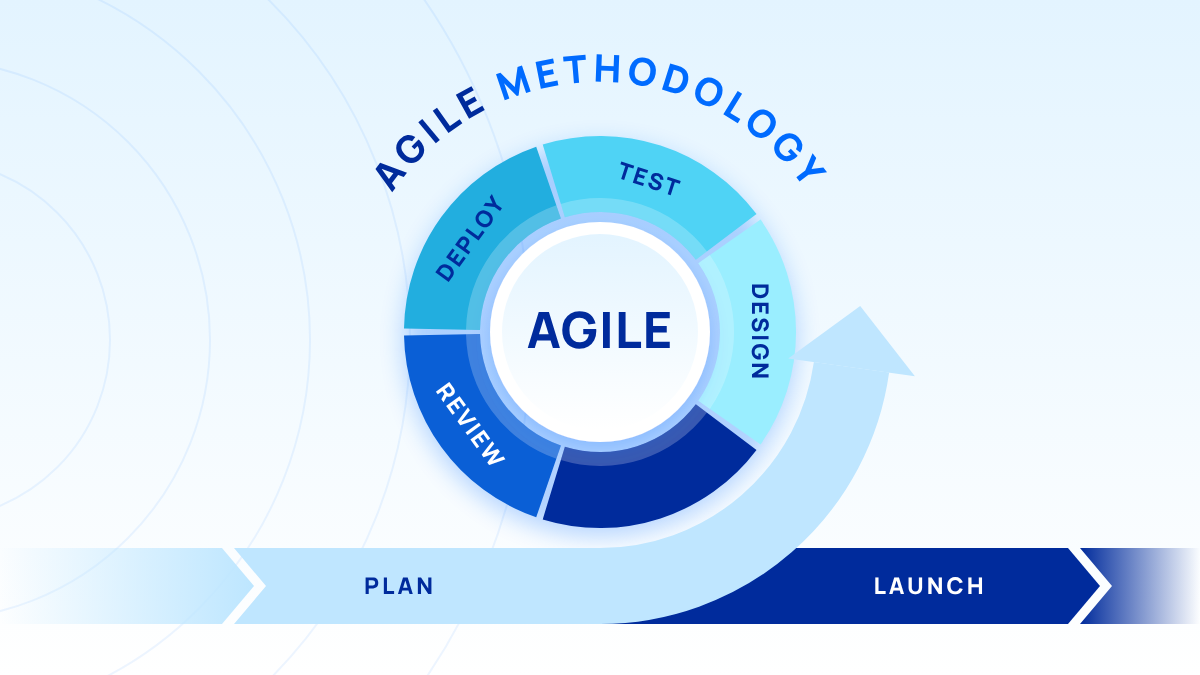
Agile methodology is a flexible approach to project management and software development that organizes work into short, repeated cycles rather than following a fixed plan from start to finish.
Teams deliver smaller portions of work, evaluate the results, and use stakeholder feedback to determine what to do next. This approach allows them to adjust priorities as requirements change while maintaining progress toward project goals.
The origin of Agile methodology
Agile emerged as software practitioners sought alternatives to development processes that relied heavily on upfront planning. With sequential approaches such as Waterfall, teams typically established requirements before development began. When those requirements changed, adjusting the project could become difficult.
In February 2001, seventeen software practitioners met in Snowbird, Utah, and created the Manifesto for Agile Software Development, commonly known as the Agile Manifesto. It established four core values and twelve principles centered on collaboration, working software, customer involvement, and the ability to respond to change.
Although Agile originated in software development, its principles have since been adopted in other fields, including product design, marketing, and project management.
Key characteristics of Agile
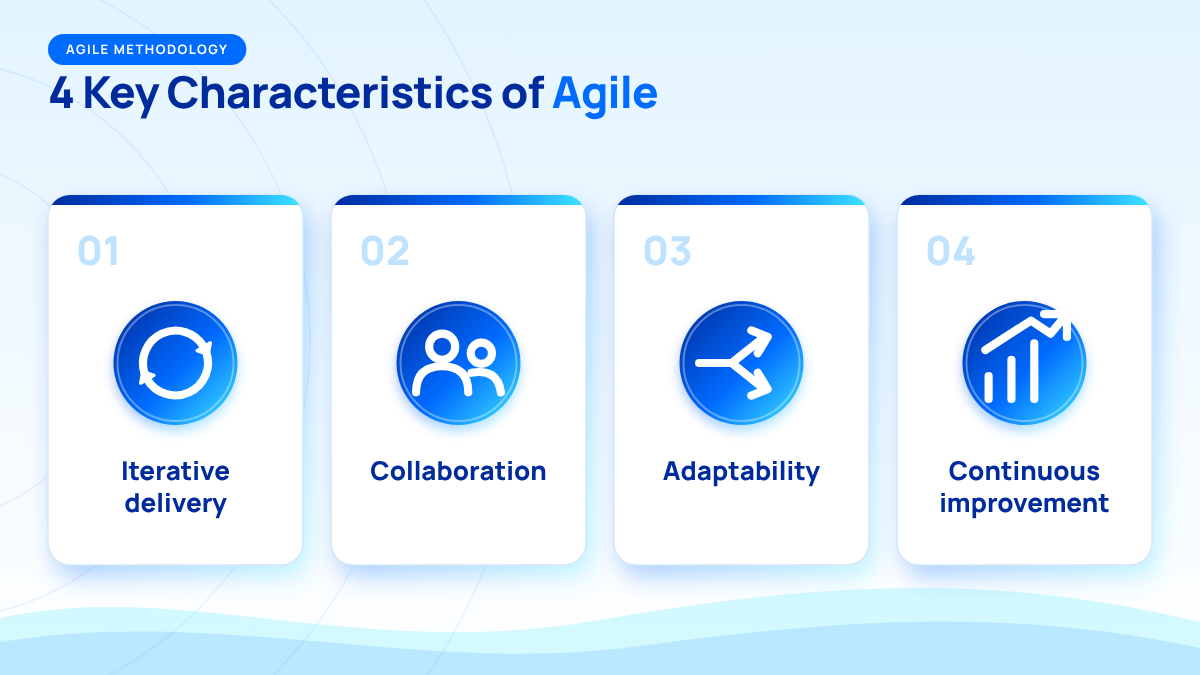
Agile methodology is defined by four characteristics that shape how teams plan, execute, and improve their work:
- Iterative delivery: Teams divide projects into shorter cycles, delivering and reviewing working results regularly rather than waiting until the project ends.
- Collaboration: Regular communication between team members, customers, and business stakeholders keeps project requirements and priorities aligned.
- Adaptability: Plans and priorities can be adjusted as customer needs, project requirements, or business conditions change.
- Continuous improvement: Teams regularly assess their work, identify inefficiencies, and refine their processes based on feedback and lessons learned.
Agile provides a set of guiding values and principles rather than prescribing one specific process. Frameworks such as Scrum and Kanban offer different ways to put these principles into practice.
What are the 4 Core Values of Agile Methodology?
The Agile Manifesto defines four core values that guide how teams approach software development. These values prioritize effective teamwork, usable software, customer involvement, and flexibility while recognizing the importance of processes, documentation, contracts, and planning.
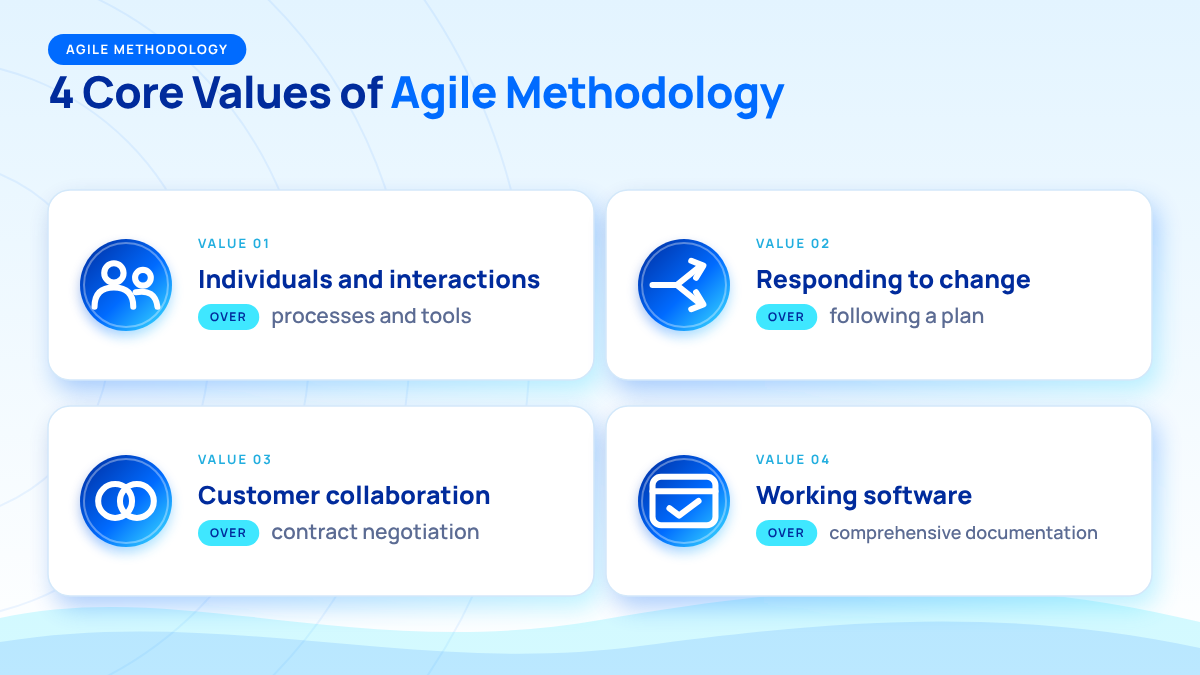
Individuals and interactions over processes and tools
Successful Agile projects depend on how well people work together. Tools and established procedures help organize development, but they cannot resolve misunderstandings or make decisions on their own.
For example, when developers encounter conflicting requirements, direct discussions with the product owner can clarify expectations before implementation continues. This reduces the risk of building features based on incorrect assumptions.
Responding to change over following a plan
Agile teams follow project plans while remaining flexible enough to adjust priorities when new information or requirements emerge.
For example, if user testing identifies a usability issue in a mobile application, the team can evaluate its impact and prioritize necessary improvements. This flexibility helps teams address changing user needs while keeping development aligned with broader project goals.
Customer collaboration over contract negotiation
Customer involvement continues throughout Agile development rather than ending once the initial requirements are agreed upon.
For instance, feedback during a product review may reveal that users need a different workflow than originally specified. The development team and customer then discuss necessary adjustments and reprioritize upcoming work. Contracts still establish responsibilities, but regular collaboration helps keep development focused on actual user needs.
Working software over comprehensive documentation
This core value emphasizes delivering tangible, usable results as the primary measure of progress. Documentation remains important, but it should serve the work being delivered without becoming an obstacle to execution.
In software development, teams prioritize building and testing functional features that users can evaluate. Feedback on working software helps teams verify whether requirements are being met and identify necessary improvements, while documentation supports future development and maintenance.
12 Principles of Agile Methodology
The 4 core values establish the foundation of Agile methodology, while its 12 principles explain how teams can apply those values in practice. They guide project delivery, team collaboration, technical quality, and continuous improvement throughout development.
| Principle | Practical Meaning |
|---|---|
| 1. Satisfy customers through early and continuous delivery of valuable software | Deliver useful product features throughout development so customers can benefit from the work and provide feedback before the entire project is completed. |
| 2. Welcome changing requirements, even late in development | Reassess requirements when customer needs or business priorities change, even during later development stages. Use new information to keep the product relevant. |
| 3. Release working software frequently | Break development into smaller, manageable increments and deliver functional software regularly. This allows stakeholders to evaluate progress and identify issues earlier. |
| 4. Maintain daily collaboration between business and development teams | Encourage frequent communication between business representatives and developers to clarify requirements, resolve questions, and coordinate project decisions. |
| 5. Build projects around motivated individuals and trust them | Give team members the resources, trust, and autonomy needed to manage their responsibilities and make informed decisions about their work. |
| 6. Prioritize face-to-face communication | Use direct, real-time conversations to resolve misunderstandings and communicate information efficiently. In distributed teams, video meetings can provide opportunities for immediate discussion. |
| 7. Working software is the primary measure of progress | Evaluate development progress based on completed, functional software. Deliverables provide concrete evidence of what the team has achieved. |
| 8. Maintain a sustainable development pace | Plan workloads and delivery schedules that teams can maintain consistently. Avoid relying on prolonged overtime to meet development commitments. |
| 9. Focus on technical excellence and quality design | Maintain sound engineering practices and software design standards. Well-structured, tested code makes future modifications easier and reduces the risk of introducing defects. |
| 10. Keep processes simple and eliminate unnecessary work | Focus resources on activities that contribute to project objectives. Avoid unnecessary features, excessive procedures, and work that adds little value. |
| 11. Encourage self-organizing teams | Allow teams to determine how best to complete their work within agreed project goals. Shared ownership encourages responsibility and informed technical decisions. |
| 12. Reflect regularly and improve continuously | Review team performance at regular intervals, identify ineffective practices, and adjust workflows to improve future development cycles. |
How Does Agile Methodology Work?
Agile methodology for software development follows an iterative process in which teams plan, develop, test, and review their work in manageable cycles. Each cycle produces results that stakeholders can evaluate, allowing teams to adjust priorities based on feedback and project needs. The following 5 steps illustrate how an Agile software development process typically works.
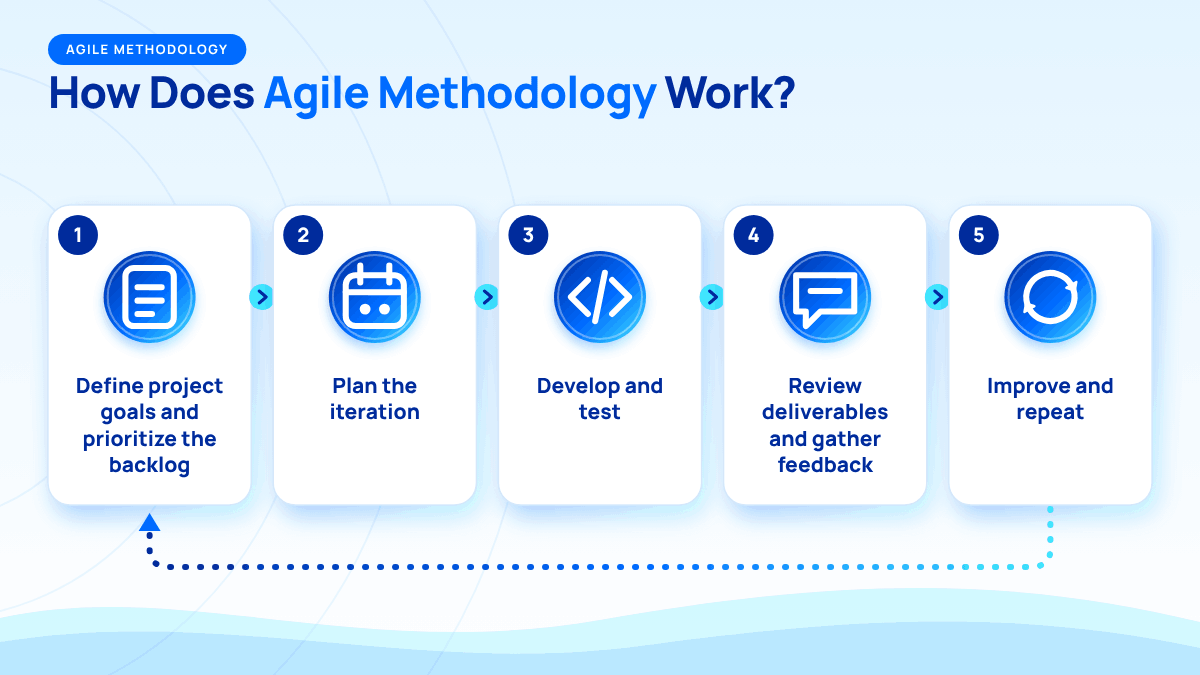
Step 1: Define project goals and prioritize the backlog
The process begins by identifying business objectives and gathering initial requirements. Teams then translate these requirements into a product backlog containing features, improvements, and other development tasks.
Working with stakeholders, the team prioritizes backlog items according to business value, urgency, and dependencies. This creates a shared understanding of what needs to be delivered while leaving room for future changes.
Step 2: Plan the iteration
Next, the team selects a set of high-priority backlog items for the upcoming development cycle. The amount of work depends on available capacity, task complexity, and any dependencies that could affect delivery.
Team members agree on the iteration’s objectives and clarify the expected outcomes. This provides a practical scope of work for the cycle without requiring every future requirement to be finalized.
Step 3: Develop and test
Developers begin implementing the selected features while testing takes place throughout the iteration. Depending on the project, testing may include unit tests, integration tests, and functional checks.
By checking software as features are developed, teams can identify defects and address them before additional functionality depends on the affected code. This differs from sequential development approaches that focus on major testing activities toward the end of the project.
Step 4: Review deliverables and gather feedback
At the end of the iteration, the team presents completed work to relevant stakeholders for review. This may involve demonstrating new functionality, checking acceptance criteria, or collecting feedback from users.
Stakeholders assess whether the deliverables meet their needs and identify any required adjustments. The findings then inform decisions about upcoming development priorities.
Step 5: Improve and repeat
After reviewing the results, the team updates the product backlog to reflect new requirements, unresolved issues, and stakeholder feedback.
The team also evaluates its working practices to identify opportunities for improvement. These may involve communication, task estimation, development quality, or coordination between team members. The next iteration begins with revised priorities, allowing the product and development process to evolve together.
For a broader understanding of how Agile fits into the complete development process, explore the software development life cycle (SDLC).
Common Types of Agile Methodologies
Agile methodology includes several frameworks and development approaches that apply Agile principles in different ways. Some focus on organizing tasks and managing delivery, while others emphasize software quality, team collaboration, or process efficiency.
| Approach | Main Focus | Typical Fit |
|---|---|---|
| Scrum | Time-boxed sprints, defined responsibilities, and regular reviews | Product development projects with evolving requirements |
| Kanban | Visual workflow management and limits on work in progress | Maintenance, support, and teams handling continuous requests |
| Extreme Programming (XP) | Engineering practices, code quality, and frequent feedback | Software projects requiring frequent changes and reliable code |
| Lean Software Development | Eliminating waste and improving the delivery of customer value | Teams seeking to reduce inefficient processes and resource use |
| Other Agile Approaches |
|
|
Scrum
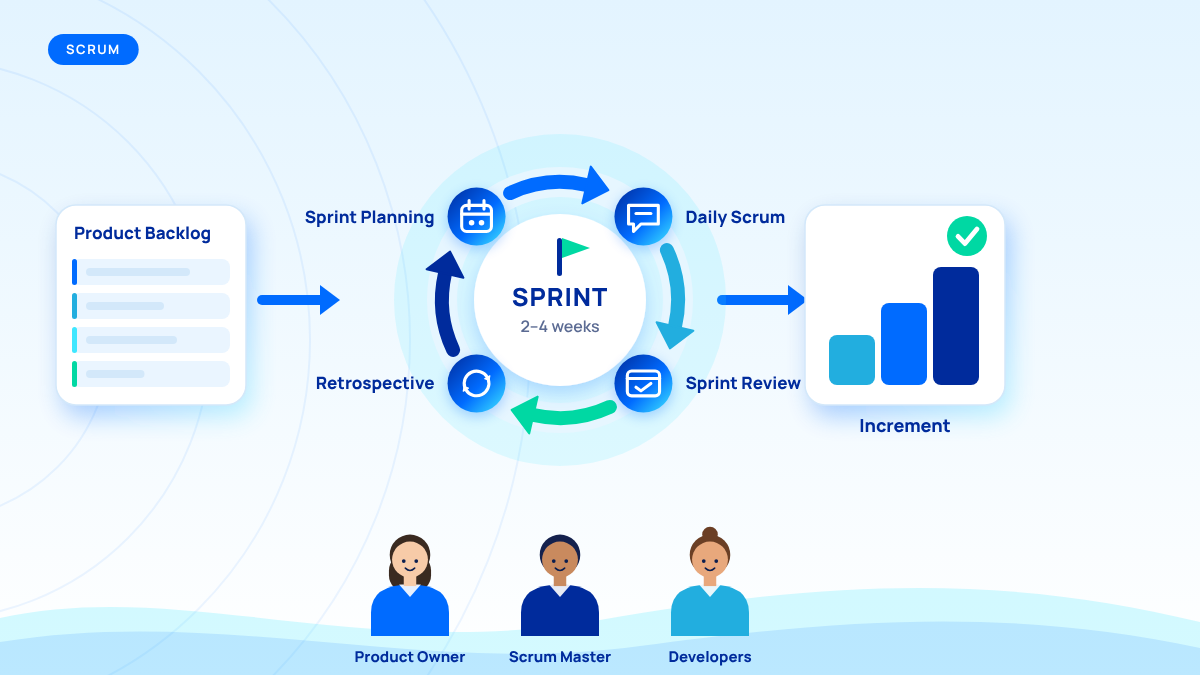
Scrum organizes complex work into fixed-length iterations called sprints, typically lasting one month or less. Each sprint has a defined goal and a selected set of work items.
The framework establishes three accountabilities: Product Owner, Scrum Master, and Developers. Together, they manage product priorities, address delivery obstacles, and complete the work needed to meet sprint goals.
Scrum includes sprint planning, daily coordination, sprint reviews, and retrospectives. These activities allow teams to inspect progress and adjust their approach regularly.
When it is suitable: Scrum works well for product development where requirements evolve and stakeholders can provide feedback throughout delivery.
Kanban
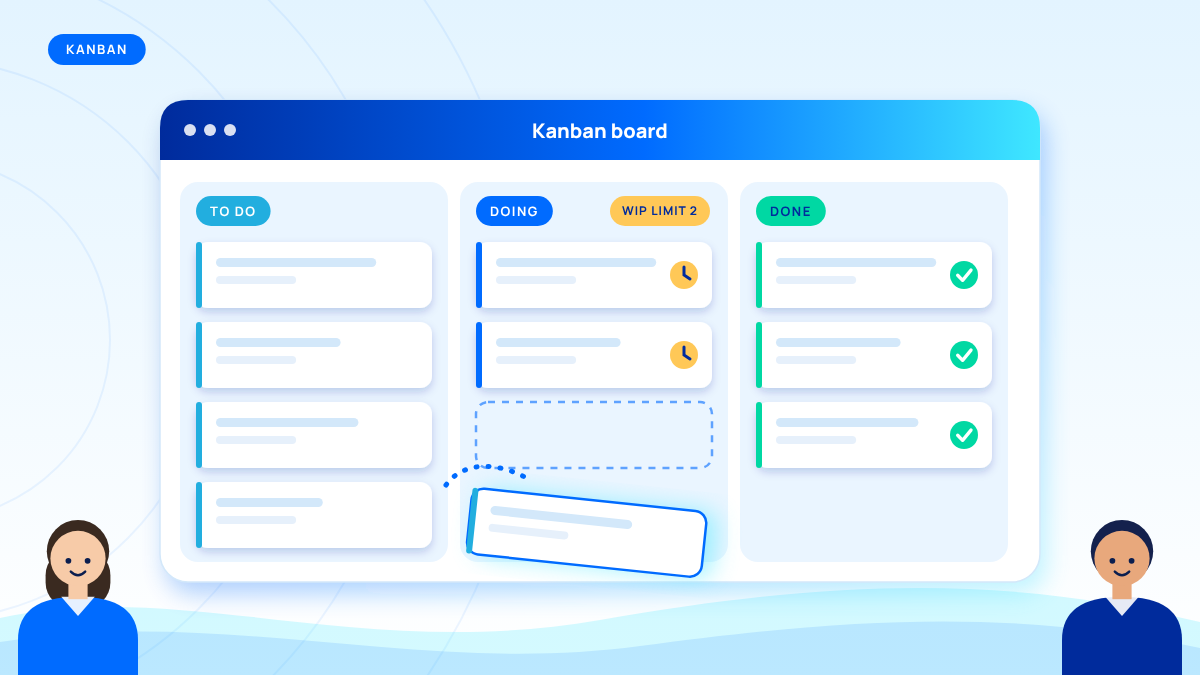
Kanban manages work by making each task’s progress visible. Teams use a Kanban board with columns such as “To Do,” “Doing,” and “Done” to represent different workflow stages. This makes it easier to track tasks and identify where work becomes delayed.
An important practice is limiting work in progress (WIP). By controlling how many tasks are active simultaneously, teams can reduce excessive task switching and concentrate on completing existing work.
Unlike Scrum, Kanban does not require fixed-length sprints. New tasks can enter the workflow as capacity becomes available, making it suitable for continuous delivery environments.
When it is suitable: Kanban is particularly useful for software maintenance, support operations, and teams managing incoming requests with changing priorities.
Extreme programming (XP)
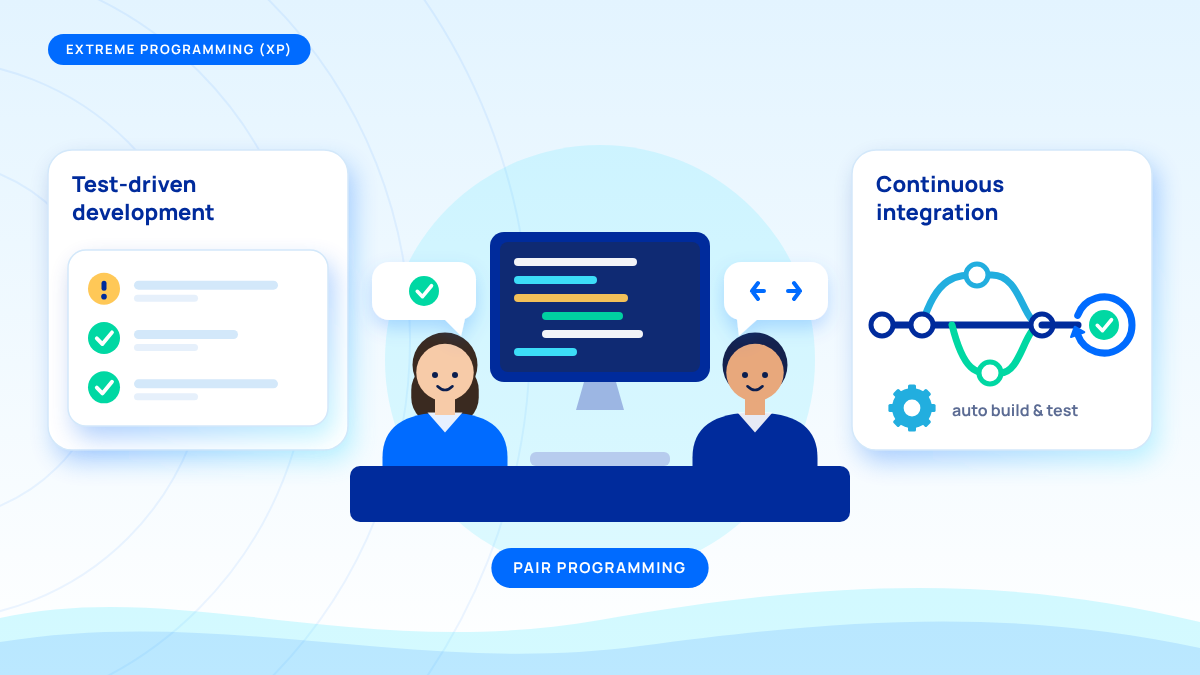
Extreme Programming (XP) applies Agile principles through specific software engineering practices. It focuses on maintaining code quality while accommodating frequent requirement changes.
XP incorporates several engineering practices to maintain software quality throughout development:
- Pair programming: Two developers share a workstation, with one writing code while the other examines the implementation and considers alternative solutions.
- Test-driven development (TDD): Automated tests define the expected behavior of a feature before its implementation. Developers then write and refine code until those tests pass.
- Continuous integration: Developers merge changes into a shared codebase regularly, where automated builds and tests check whether new updates affect existing functionality.
Lean software development
Lean draws on lean manufacturing, a production philosophy developed through Toyota’s manufacturing system that focuses on minimizing waste and improving efficiency. Applied to software development, it encourages teams to eliminate unnecessary tasks, reduce delays, and focus resources on activities that deliver value to customers.
Teams examine their development workflow to identify unnecessary work, delays, and inefficient handoffs. They then adjust processes to improve how work moves toward delivery.
For example, a team might discover that multiple approval stages repeatedly delay minor product updates. Reviewing those stages could reveal opportunities to simplify decision-making while retaining necessary quality controls.
Lean also encourages smaller delivery batches and timely feedback, allowing teams to evaluate outcomes before committing additional resources.
When it is suitable: Lean is useful for teams seeking to improve operational efficiency, reduce waste, and make better use of limited development resources.
Other Agile approaches
Several other approaches address specific project and organizational needs:
- Feature-Driven Development (FDD): Structures software development around delivering defined, customer-valued features. It suits projects where functionality can be organized into identifiable development units.
- Crystal: Uses adaptable practices based on team characteristics and project context. It places particular importance on communication, team interaction, and regular improvement.
- Dynamic Systems Development Method (DSDM): Provides a more structured approach to Agile project delivery, combining business priorities, active user involvement, and lifecycle governance.
These approaches offer alternatives when a team’s requirements do not fit the working practices of Scrum, Kanban, or XP.
Another approach worth exploring is the V-Model in the software development life cycle, which follows a sequential process with corresponding testing activities at each development stage.
Advantages and Disadvantages of Agile Methodology
Agile methodology offers several advantages for projects where requirements evolve during development. Its iterative approach allows teams to deliver usable results, collect feedback, and refine their work throughout the project. However, these benefits depend on effective planning, communication, and stakeholder involvement.
Benefits of Agile methodology
The main benefits of Agile methodology come from shorter delivery cycles, greater flexibility, and regular opportunities to evaluate project progress.
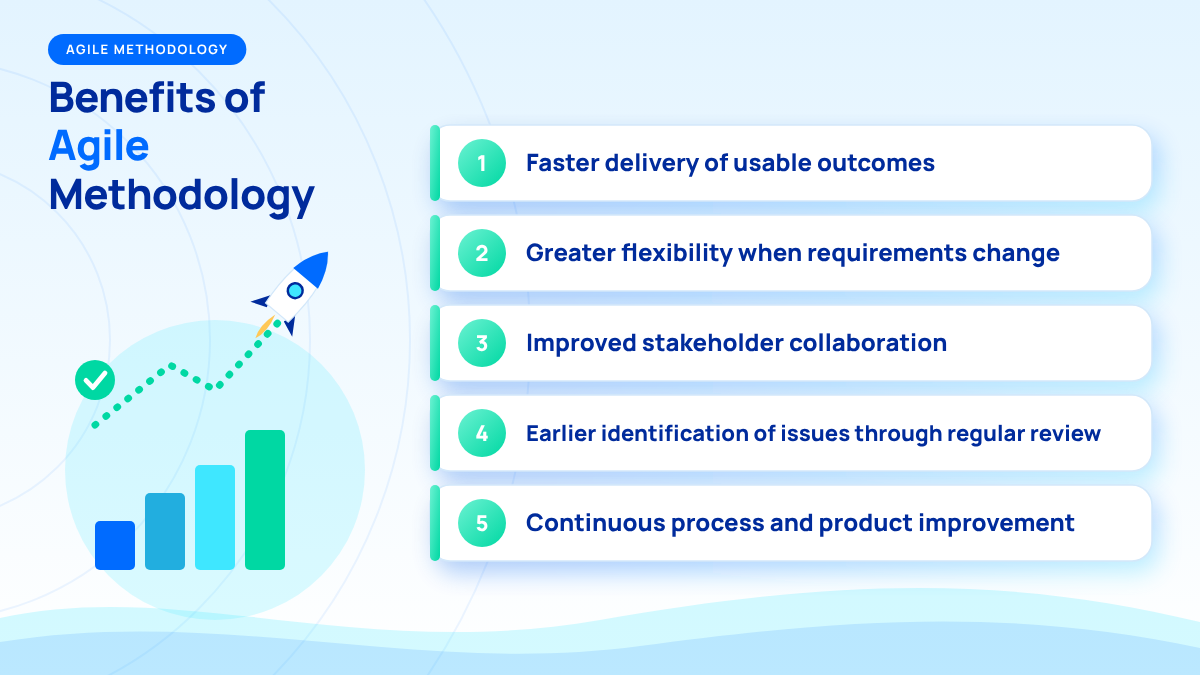
Faster delivery of usable outcomes
Agile teams divide development into smaller increments, allowing completed features to be released before the entire product is finished. Customers can begin using available functionality while development continues. This approach shortens time-to-market for priority features, provided each increment meets the necessary quality and release requirements.
Greater flexibility when requirements change
New business priorities or customer feedback require changes to the original project scope. Agile teams can incorporate these updates into the backlog and reconsider their priorities during subsequent planning cycles. This reduces the need to follow outdated requirements and allows development resources to focus on current business needs.
Improved stakeholder collaboration
Regular reviews create opportunities for stakeholders to examine working features and clarify expectations with the development team. For example, a product owner may discover during a demonstration that an approval workflow requires additional steps. Discussing this early allows the team to refine the requirements before developing related functionality.
Earlier identification of issues through regular review
Short development cycles make it possible to examine deliverables and identify problems throughout the project. Frequent testing and stakeholder reviews can reveal technical defects, requirement misunderstandings, or delivery obstacles. Addressing these findings earlier limits their impact on subsequent work and reduces the effort needed for later corrections.
Continuous process and product improvement
Agile teams use feedback to refine both the product and their development practices. Product reviews reveal opportunities to improve functionality, while retrospectives examine how the team organizes and completes its work. Adjustments to task planning, communication, or development processes gradually reduce inefficiencies and improve delivery consistency.
Challenges and limitations of Agile
While Agile methodology offers flexibility, its effectiveness depends on how teams manage changing requirements, stakeholder involvement, and development responsibilities. Several challenges can arise during implementation, particularly in complex or large-scale projects.
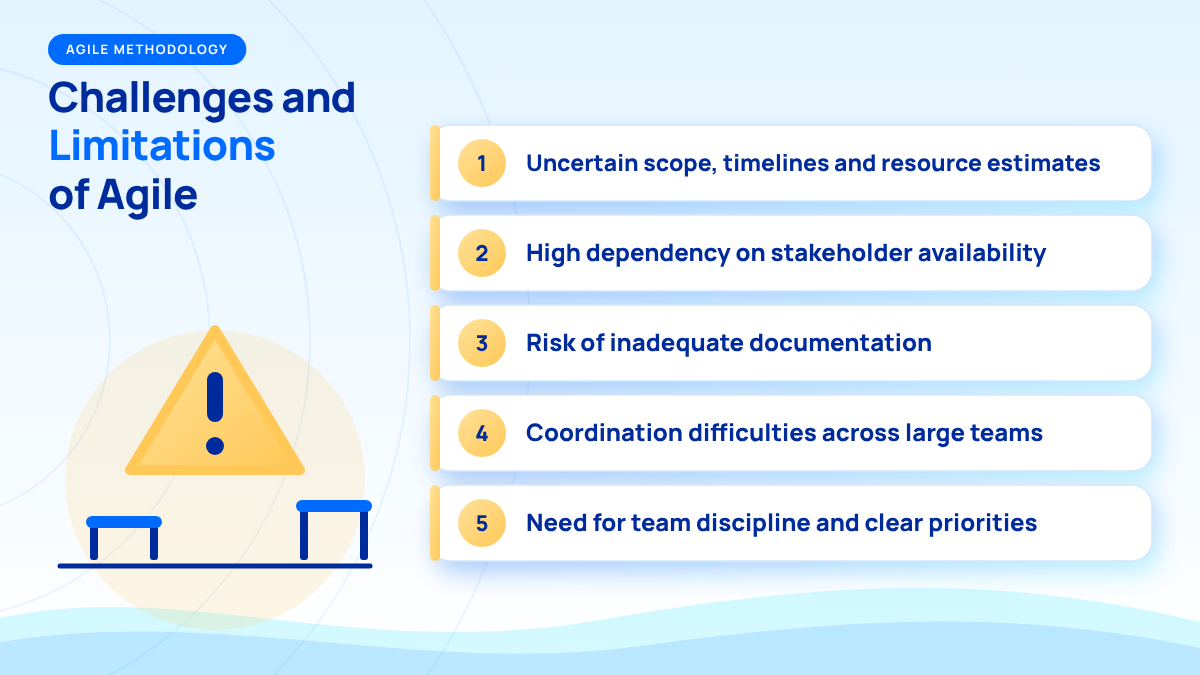
Uncertain scope, timelines and resource estimates
Agile allows project requirements to evolve throughout development. However, frequent changes can make it difficult to estimate the total workload, budget, and completion date accurately. This uncertainty becomes more challenging when projects have fixed deadlines, limited budgets, or contractual commitments that require predictable delivery.
High dependency on stakeholder availability
Agile relies on regular stakeholder input to clarify requirements, review deliverables, and make prioritization decisions.
When stakeholders are unavailable or feedback arrives late, teams may have to delay decisions or proceed with incomplete information. Frequent requests for input can also place additional demands on stakeholders managing other responsibilities.
Risk of inadequate documentation
Agile emphasizes working software, but teams may interpret this principle as a reason to minimize documentation excessively.
If technical decisions, system requirements, or important changes are poorly recorded, developers will struggle to maintain the software or transfer knowledge to new team members. This risk becomes greater in long-running projects or those involving multiple development teams.
Coordination difficulties across large teams
As projects expand, coordinating work across multiple Agile teams becomes more complicated. Different priorities, shared dependencies, and inconsistent development schedules can create delays.
For example, one team may complete a feature that depends on an API still under development by another team. Without sufficient coordination, integration work may be delayed despite progress within individual teams.
Need for team discipline and clear priorities
Agile gives teams considerable autonomy over how they organize and complete their work. However, this flexibility requires clear objectives, realistic commitments, and consistent accountability.
Teams with limited Agile experience or poorly defined responsibilities find it hard to prioritize tasks and maintain delivery progress. In such cases, additional guidance and coordination may be necessary to keep the project on track.
Agile vs. Waterfall: What Are the Differences?
Agile and Waterfall are two approaches to project management and software development. Their main difference lies in how teams organize work, manage requirements, and respond to change.
| Comparison Criteria | Agile | Waterfall |
|---|---|---|
| Project Planning | Planning evolves throughout development, with priorities reviewed during each iteration. | A detailed project plan establishes the scope, schedule, and major deliverables before execution. |
| Requirements | Initial requirements provide direction and can be refined as new information becomes available. | Requirements are defined early and generally remain stable throughout development. |
| Delivery | Functional software is developed and delivered in smaller increments. | The complete product is typically delivered after the planned development phases are finished. |
| Customer Feedback | Stakeholders provide feedback regularly through reviews and ongoing collaboration. | Customer input is concentrated around defined milestones, including requirement gathering and final acceptance. |
| Scope Changes | Changes can be evaluated and incorporated into upcoming development cycles. | Changes usually require formal assessment and adjustments to the original project plan. |
| Project Suitability | Projects involving evolving requirements, uncertain priorities, or frequent customer input. | Projects with clearly established requirements, predictable workflows, and limited expected changes. |
| When to Choose | Choose Agile when flexibility and incremental delivery are important to project success. | Choose Waterfall when predictable scope, structured planning, and sequential execution are essential. |
To explore sequential development in greater detail, read our guide to the waterfall software development life cycle.
How to Implement Agile Methodology in Your Team Effectively
Successful Agile implementation starts with understanding how your team works and what the project needs to achieve. A practical approach allows teams to adopt Agile gradually, refine their working practices, and build a sustainable development process.
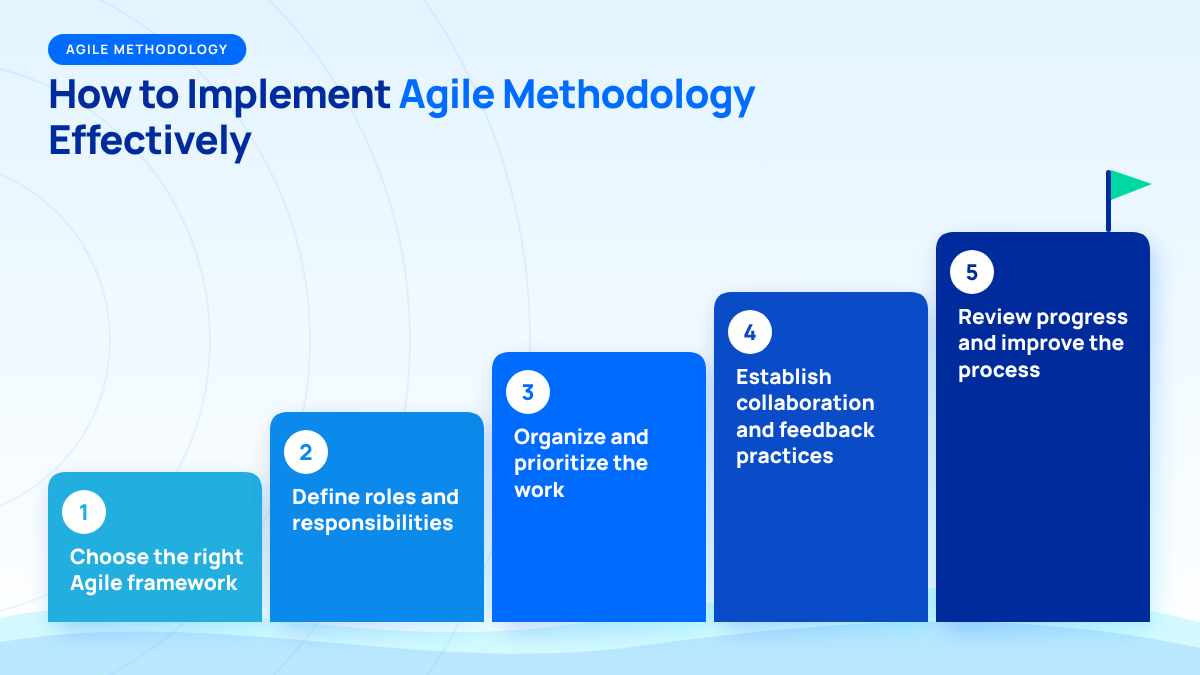
| Implementation step | Practical output |
|---|---|
| 1. Choose the right Agile framework | A selected approach with a clear reason for using it and a point to review its suitability. |
| 2. Define roles and responsibilities | Clear ownership of priorities, technical decisions, stakeholder feedback, and escalation. |
| 3. Organize and prioritize the work | An ordered backlog with clear requirements, acceptance criteria, and visible dependencies. |
| 4. Establish collaboration and feedback practices | Agreed review points, quality expectations, and a shared record of decisions. |
| 5. Review progress and improve the process | A relevant performance measure and one specific improvement to evaluate. |
Step 1: Choose the right Agile framework
Start by evaluating your team’s size, project requirements, and experience with Agile practices. These factors determine which framework best supports your development workflow.
For example, Scrum may suit teams developing new products through planned iterations. Kanban can be more appropriate for teams managing continuous maintenance requests and frequently changing priorities.
Step 2: Define roles and responsibilities
Establish who is responsible for product priorities, technical execution, and decisions that affect project delivery. Regardless of the framework, team members should understand who can approve requirements, resolve blockers, and make decisions about implementation.
For example, a Kanban team may assign responsibility for managing incoming requests, maintaining workflow priorities, and resolving delivery bottlenecks. These responsibilities should be clearly defined, even when the framework does not prescribe specific roles.
Step 3: Organize and prioritize the work
Translate project objectives into a manageable backlog of features, improvements, and development tasks. Prioritize items based on business value, urgency, and implementation dependencies.
Next, organize the work according to your selected framework. Scrum teams plan work around sprint goals, while Kanban teams manage tasks through a continuous workflow. Keep priorities visible so team members understand what needs attention and how their tasks contribute to project objectives.
Step 4: Establish collaboration and feedback practices
Once responsibilities and work priorities are defined, establish how the team will communicate during development and involve stakeholders in reviewing results.
Use regular team discussions to identify blockers and coordinate dependent tasks. As work progresses, organize reviews or demonstrations where stakeholders can evaluate completed features against project objectives.
Feedback should lead to clear decisions about the next steps. Record necessary changes, clarify outstanding requirements, and update the backlog, so upcoming work reflects agreed priorities.
Step 5: Review progress and improve the process
With delivery and feedback practices in place, the team can evaluate whether its workflow is producing the expected results.
Track relevant metrics, such as sprint burndown or cycle time, alongside completed deliverables and stakeholder feedback. These indicators can reveal recurring delays, unrealistic workloads, or gaps between planned and actual progress.
Use these findings during retrospectives to identify underlying issues and agree on specific improvements. Apply the adjustments in subsequent work cycles, then assess whether they improve delivery performance.
Where Is Agile Methodology Used?
Although the Agile methodology approach originated in software development, its principles can support projects across different industries. Its application varies depending on the type of work, how deliverables are produced, and when teams can collect feedback.
Agile in software development
Agile methodology in software development is one of the most common applications. Teams use iterative development cycles to build, test, and refine software as requirements evolve.
For example, a company developing a customer relationship management (CRM) system might prioritize contact management before adding reporting and automation features. Each completed increment gives stakeholders an opportunity to evaluate functionality and request adjustments.
Agile in product development
Agile can also guide the development of physical and digital products, especially when teams need to validate design decisions before committing to full production.
Consider a manufacturer developing a new smart home device. The product team could test an early prototype, gather usability feedback, and modify the design before finalizing manufacturing specifications.
These review cycles may reduce unnecessary redesign work and reveal product issues earlier. However, physical production constraints can limit how quickly certain changes can be implemented.
Agile beyond software development
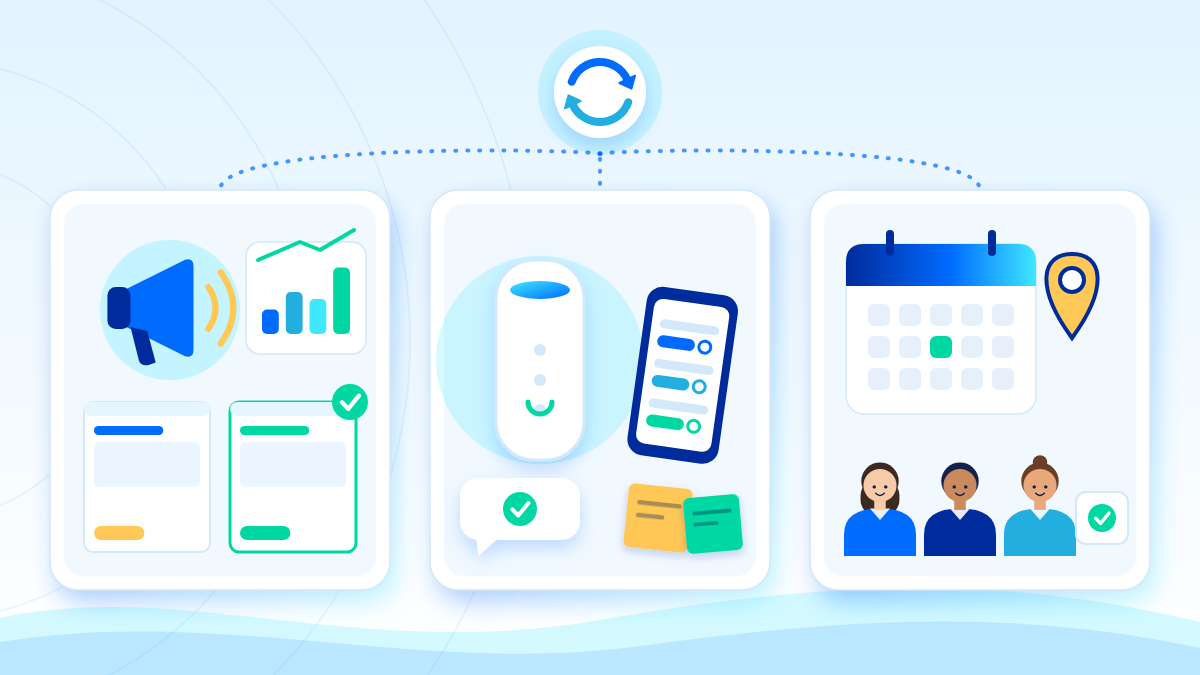
Agile practices are also applicable to business functions where teams manage evolving priorities, coordinate multiple activities, or learn from results.
In marketing, teams may organize campaigns into short work cycles and evaluate performance before planning the next set of activities. For example, a team could test different landing page layouts and use conversion data to guide subsequent improvements.
Event management offers another application. Organizers can track venue arrangements, supplier commitments, and promotional activities through a shared workflow. Regular progress reviews allow teams to identify delays and adjust outstanding tasks when circumstances change.
How Is Agile Methodology Evolving with AI?
AI is becoming part of Agile methodology by supporting project planning and decision-making. It can analyze historical sprint performance, team capacity, and backlog data to identify potential delays, estimate workloads, and recommend priorities. These insights allow teams to adjust their plans based on project conditions.
During development, AI tools can assist with coding, testing, and code reviews while monitoring workflow data for bottlenecks and quality issues. AI can also analyze stakeholder feedback and product performance to identify areas for improvement, informing decisions in subsequent iterations.
For teams adopting AI in Agile, the priority should be identifying where data-driven insights can improve existing workflows. Start with specific challenges, such as inaccurate estimates or recurring delivery delays, and evaluate whether AI recommendations produce measurable improvements. Human oversight remains essential to ensure decisions reflect business priorities, technical constraints, and stakeholder needs.
Conclusion
A successful project needs room to evolve as business priorities change. Agile methodology creates that flexibility through incremental delivery, regular feedback, and ongoing refinement. Frameworks such as Scrum, Kanban, and XP give teams different ways to manage work while keeping development focused on meaningful outcomes.
Newwave Solutions supports businesses throughout the software development lifecycle using Agile practices suited to their projects. We work with clients to clarify requirements, organize development priorities, and review progress as new information emerges. Our approach keeps collaboration connected to the software being delivered.
Connect with us to explore an Agile development approach tailored to your software development project.
FAQs
1. What is Agile methodology in simple words?
Agile methodology is a flexible approach to project management and software development. Teams divide projects into smaller tasks, deliver working solutions regularly, and use customer feedback to make improvements. This allows them to respond to changing requirements without waiting until the entire project is completed.
2. What’s Agile vs Scrum?
Agile is a set of values and principles that emphasize flexibility, collaboration, and continuous improvement. Scrum is a specific Agile framework that organizes work into short, fixed-length cycles called sprints. It defines responsibilities, events, and processes for managing development.
3. What is Agile vs waterfall?
The main difference is how projects are planned and delivered. Agile uses iterative development, allowing requirements and priorities to evolve through regular feedback. Waterfall follows a sequential process, where project phases are generally completed in a predefined order. Agile suits projects with changing requirements, while Waterfall is often appropriate when requirements are stable and clearly defined.
4. What is the downside of Agile?
Agile can make project budgets, timelines, and overall scope harder to predict when requirements change frequently. It also requires consistent stakeholder participation, clear priorities, and strong team coordination. Without these conditions, teams may experience repeated rework, delivery delays, or insufficient documentation.
5. Is Agile still relevant in 2026?
Yes. Agile remains relevant in 2026, especially for software projects with evolving requirements and frequent customer feedback. AI is also supporting Agile teams in planning, identifying risks, and improving delivery, while human oversight remains essential.
Read More Guides






Let’s Build Something Extraordinary
Sign up for a 30 min no-obligation strategic session with us. Transform your Ideas into scalable reality.
Leave a Reply