


Top 5 Cloud Migration Trends Shaping Modern IT
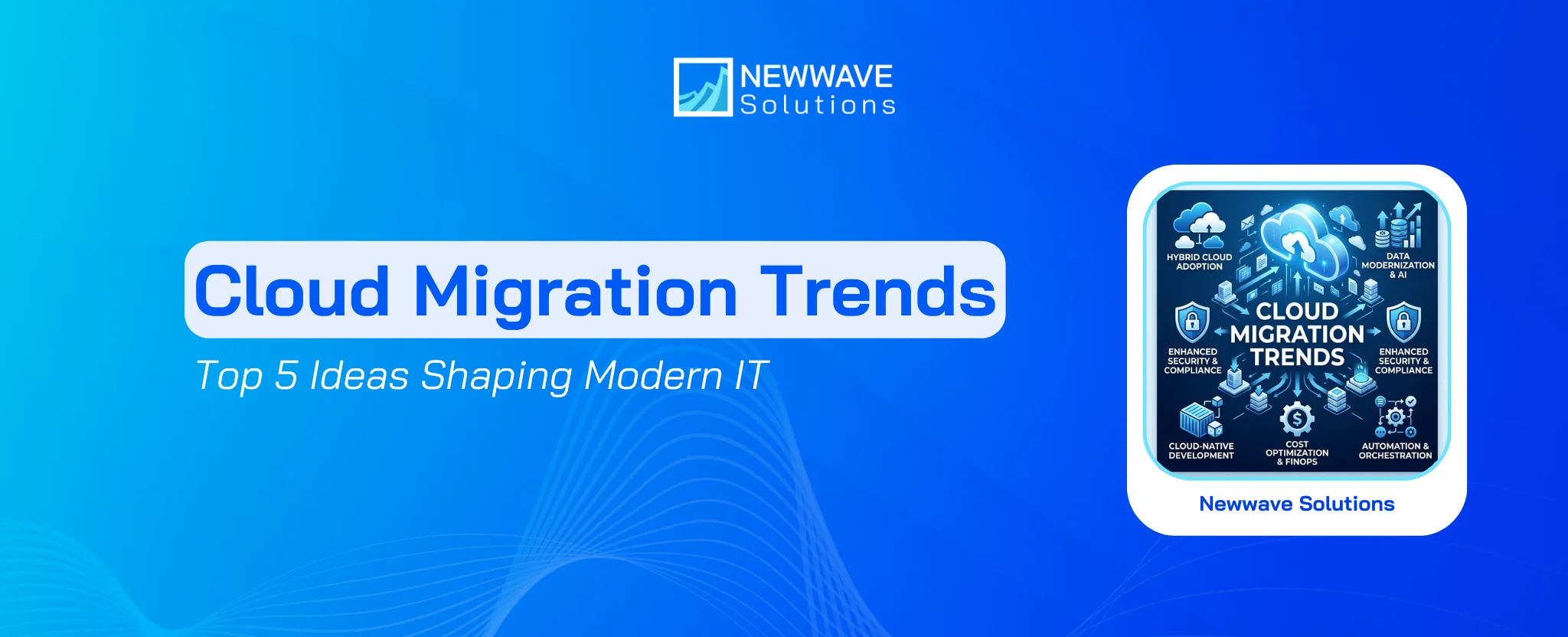
Cloud computing has become foundational to modern enterprise IT, enabling organizations to scale storage, enhance data management, and streamline operations while optimizing costs and security. As businesses increasingly prioritize strategic cloud adoption, the latest cloud migration trends are shifting beyond simple infrastructure relocation toward AI-ready environments and intelligent multi-cloud architectures that support innovation and agility. In this article, you will discover the top trends shaping cloud transformation today and learn how leveraging offshore expertise can ensure your cloud journey remains smooth and highly effective.
Why Cloud Migration Matters for Enterprises in 2026
Cloud migration has evolved into a core strategic priority for enterprises across industries, as organizations shift from traditional on-premises systems to cloud-centric infrastructure to remain competitive and agile. According to industry data, roughly 94% of organizations use cloud services, and more than half of enterprise workloads now run in public cloud environments, underscoring how mainstream cloud adoption has become in modern IT strategy.
Below are key reasons why cloud migration continues to matter for enterprises in 2026:
- Scalability & Elastic Performance – Organizations gain the ability to scale compute and storage dynamically in response to demand, which reduces bottlenecks and enhances performance under peak workloads.
- Operational Agility & Innovation – Cloud platforms enable rapid deployment of new features and services, accelerating product development cycles and time to market.
- Cost Efficiency & Optimized IT Spend – By shifting from CAPEX to OPEX models, enterprises can better manage infrastructure costs and eliminate waste from under-utilized hardware.
- Enhanced Security & Compliance Posture – Cloud providers invest heavily in security frameworks and compliance certifications, helping enterprises meet complex regulatory requirements.
- Support for Advanced Workloads (AI/ML, Data Analytics) – Cloud infrastructure facilitates high-performance computing for data-intensive workloads, making it easier to adopt machine learning, real-time analytics, and AI services.
Top 5 Cloud Migration Trends in 2026
Cloud migration continues to evolve, driven by technological innovations, business demands, and strategic shifts in enterprise IT. Below are the most influential trends shaping the cloud landscape in 2026:
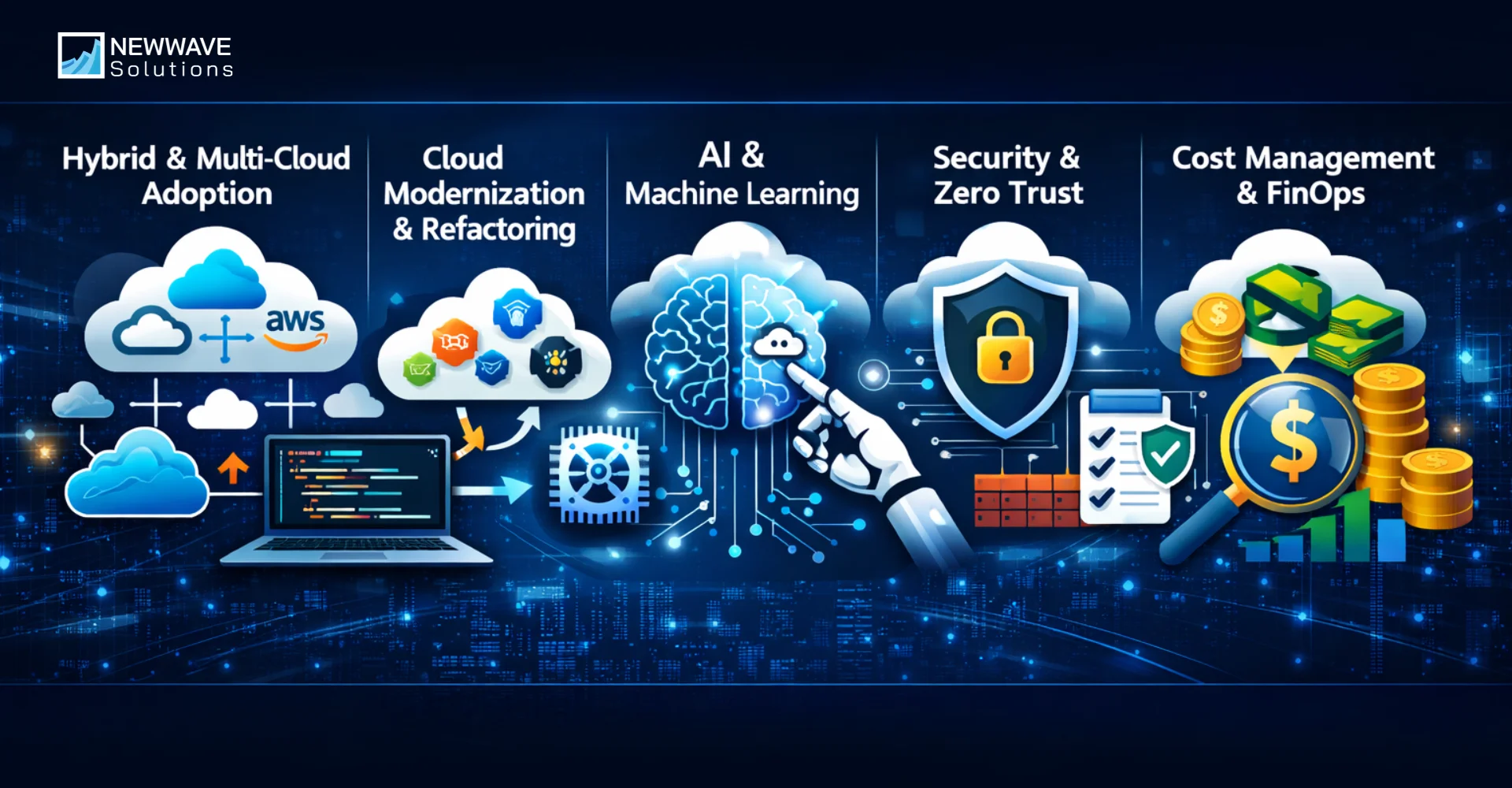
1. Hybrid and Multi-Cloud Adoption
Hybrid and multi-cloud architectures are becoming the default strategy for enterprises aiming to balance flexibility, control, and resilience in cloud adoption. Rather than relying solely on a single provider, organizations distribute workloads across private, public, and edge environments to mitigate vendor lock-in and optimize performance based on specific workload needs.
However, this trend also introduces complexities in governance, integration, and security management, requiring advanced orchestration and policy controls to ensure consistency across disparate environments. Organizations must invest in robust monitoring, automation, and compatibility tools to manage hybrid landscapes effectively.
For organizations that find a single-provider strategy too limiting, the shift toward hybrid and multi-cloud models has become one of the defining infrastructure moves of the past few years — and understanding the trade-offs is key before committing either way.
2. Cloud Native Modernization & Refactoring
Enterprises are increasingly moving beyond simple “lift-and-shift” migrations to embrace cloud-native modernization, where applications are rearchitected for microservices, containers, and serverless environments. This shift enhances scalability, resilience, and operational efficiency while unlocking continuous delivery and improved lifecycle management.
At the same time, refactoring workloads for cloud-native patterns demands skilled engineering resources and sophisticated DevOps practices, which can pose adoption challenges for teams unfamiliar with modern application architectures.
3. Cloud Migration for AI & Machine Learning
AI and machine learning workloads are rapidly reshaping cloud migration priorities, as enterprises seek platforms capable of supporting large-scale model training, inference, and real-time analytics. Cloud providers are increasingly optimizing infrastructure with GPU acceleration and managed services tailored for AI workloads.
Nevertheless, balancing the costs of specialized hardware and data movement remains a challenge, and enterprises must weigh AI-driven performance benefits against resource consumption and governance overhead.
4. Governance, Security & Zero Trust Models
Security and governance have risen to the top of cloud migration concerns, with enterprises adopting Zero Trust principles and automated compliance controls to protect distributed workloads. This ensures secure access, reduces attack surfaces, and aligns cloud environments with evolving regulatory frameworks.
Implementing advanced security architectures and continuous compliance monitoring introduces complexity, meaning that security teams must integrate identity management, encryption, and observability tools across multi-cloud portfolios.
5. Cost Management and FinOps
Effective cloud cost management is now considered fundamental to successful cloud migration, with organizations adopting FinOps practices to achieve financial accountability and visibility. By tracking usage trends and optimizing resource allocation, enterprises can curb waste, forecast budgets more accurately, and align cloud spend with business outcomes.
At the same time, adopting FinOps requires cross-functional alignment between finance, engineering, and operations teams to ensure that cost controls do not hinder innovation or performance goals.
Common Challenges in Cloud Migration
Despite the strategic benefits and widespread adoption of cloud platforms, migrating enterprise workloads to the cloud continues to present real and complex challenges that can slow progress or even derail projects entirely if not carefully addressed. The obstacles listed below are among the most frequently encountered by organizations and highlight the importance of thoughtful planning, tooling, and cross-functional alignment during cloud transformation efforts.
Legacy architecture complexity
Legacy systems often consist of tightly coupled code, outdated frameworks, and undocumented dependencies that make it difficult to move applications or databases to cloud environments without breaking critical functionality. In order to ease this transition and mitigate risks, enterprises should conduct detailed dependency mapping and adopt phased refactoring strategies that simplify the architecture before attempting migration.
Skill gaps & organizational alignment
Many organizations face a shortage of cloud-native skills and struggle to align engineering, operations, and business stakeholders around a unified migration strategy, which creates bottlenecks and miscommunication. To overcome this, companies can invest in targeted upskilling programs and establish cross-functional cloud centers of excellence that foster shared objectives and transfer institutional knowledge.
Cost overruns & scope creep
Without accurate forecasting and transparency into consumption patterns, cloud migration projects frequently exceed budget expectations due to unforeseen resource usage, hidden fees, or extended timelines. In response to this challenge, enterprises should implement robust cost monitoring tools and FinOps frameworks early in the migration lifecycle so that teams can continuously optimize spending and avoid budget overruns.
Data sovereignty and compliance
Cloud environments expose data to new regulatory landscapes, where different jurisdictions impose strict rules on where sensitive information may be stored and how it must be protected, which complicates migration planning. To address these constraints effectively, organizations should design migration architectures that incorporate region-aware data controls and compliance checks aligned with industry-specific standards.
Dependency mapping & discovery failures
Many enterprises underestimate the complexity of their existing applications and data interdependencies, leading to incomplete inventories and migration plans that fail to account for hidden system connections. As a result, migration projects can stall or suffer outages, so to minimize these risks, companies must use automated discovery tools and architectural analysis early in the planning phase to create comprehensive dependency maps that guide migration decisions.
Cloud Migration Best Practices for Enterprise Success
To ensure a successful cloud migration that aligns with organizational goals and leverages modern trends, enterprises should adopt the following best practices:
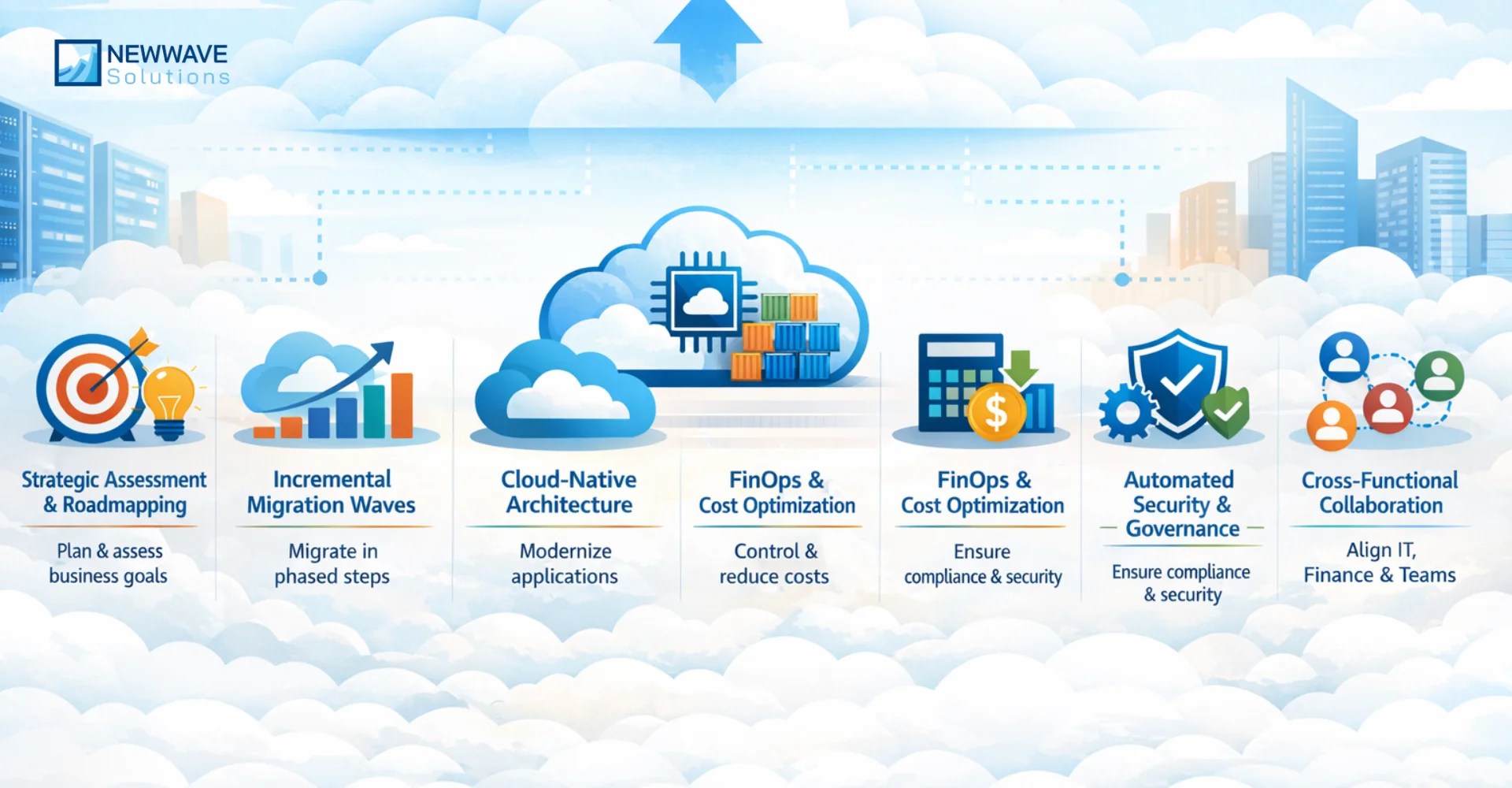
- Strategic Assessment & Roadmapping – Begin with a clear migration strategy tied to business objectives, including workload prioritization and risk assessment.
- Incremental Migration Waves – Break migration into phases, starting with low-risk workloads and iterating improvements based on results.
- Cloud-Native Architecture Adoption – Refactor or replatform applications when appropriate to fully leverage cloud scalability and resilience. Refactoring or replatforming legacy systems is rarely a one-size-fits-all decision — it depends heavily on how well your applications are positioned to take advantage of cloud-native architecture from day one.
- FinOps & Cost Optimization Frameworks – Implement financial operations practices early to manage spend and avoid budget overruns.
- Automated Security & Governance Policies – Leverage automation for identity, compliance checks, and security monitoring to ensure consistency across environments.
- Cross-Functional Collaboration & Skill Development – Foster alignment between IT, security, finance, and business units to streamline decisions and knowledge sharing.
Best Cloud Migration Tools & Technologies
Alongside the most impactful cloud migration trends, a new generation of technologies and tools has emerged to support enterprises in upgrading, optimizing, and executing cloud migration projects with greater efficiency. Below are some of the most advanced tools and technologies that can become powerful enablers in your organization’s cloud migration journey:
- Cloud Migration Platforms — Tools like AWS Migration Hub, Azure Migrate, and Google Cloud Migrate centralize the assessment and execution of workload transitions to the cloud, enabling visibility across complex environments.
- Infrastructure as Code (IaC) — Technologies like Terraform and AWS CloudFormation automate the provisioning and management of cloud resources, reducing manual errors and accelerating deployment consistency.
- Containerization & Orchestration — Platforms such as Docker and Kubernetes facilitate portable workloads, simplifying app modernization and scaling across hybrid cloud environments.
- Data Replication & Sync Tools — Services like AWS Database Migration Service (DMS) enable seamless movement and continuous synchronization of data with minimal downtime.
- Cloud Cost Optimization Tools — Solutions such as CloudHealth and Spot.io help enterprises monitor usage, reduce waste, and optimize spend throughout the migration lifecycle.
- Security & Compliance Automation — Tools like Palo Alto Prisma Cloud and Microsoft Defender for Cloud provide automated threat detection and compliance monitoring across multi-cloud environments.
These technologies empower businesses to tackle complexity, improve reliability, and accelerate the pace of migration without sacrificing quality or security.
How Offshore Teams Ensure Cloud Migration Success
Successfully executing a cloud migration project is rarely straightforward—especially for enterprises that operate complex legacy systems, tightly coupled applications, and distributed data stores. With these inherent technical complexities and the challenges outlined earlier, companies often expend significant time and budget on troubleshooting, resource coordination, and course correction, which can delay or even jeopardize strategic initiatives.
In scenarios like this, engaging a professional offshore team to handle the cloud migration process becomes a practical and strategic decision because these teams bring deep technical expertise, scalable talent, and operational leverage. Offshore teams not only reduce the burden on internal engineering resources but also enhance speed, responsiveness, and adaptability throughout the migration lifecycle. Among trusted offshore partners, Newwave Solutions stands out thanks to its established track record, structured delivery framework, and breadth of development capabilities.
Why choose Newwave Solutions for your offshore cloud migration needs:
- Cost-Efficiency & Global Talent Access: Newwave Solutions delivers cost-effective services and access to highly skilled developers, enabling enterprises to achieve up to 30% savings on development costs without sacrificing quality.
- ISO-Certified Security & Quality Standards: With ISO-certified development processes, including ISO 27001 information security management, Newwave ensures robust protection of data and intellectual property throughout the project.
- Scalable & Flexible Engagement Models: Enterprises can choose dedicated offshore teams, staff augmentation, or project-based delivery that aligns with business goals and migration scale.
- Proven Industry Experience: With over 14+ years of experience, 800+ successful projects, and 300+ IT professionals, Newwave Solutions brings proven expertise across industries such as fintech, e-commerce, and enterprise platforms.
- Seamless Collaboration Practices: Newwave emphasizes transparent communication, Agile project management, and operational integration to keep stakeholders aligned and deliver predictable outcomes.
By selecting a professional offshore software development service like Newwave Solutions, your enterprise can confidently navigate technical hurdles, ensure continuity of operations, and strategically leverage cloud migration to accelerate innovation and business value.
Consider partnering with Newwave Solutions to make your cloud migration smoother, more cost-effective, and aligned with your long-term digital transformation strategy. With expert guidance and tailored solutions, we will help your organization quickly adapt to the latest cloud migration trends, enhance operational resilience, and strengthen your competitive position in a continuously evolving market.
Conclusion
To conclude, staying informed about cloud migration trends gives your enterprise the insight needed to modernize infrastructure and stay ahead of competitors in the digital landscape. Adapting to these trends with clarity and purpose empowers teams to execute cloud initiatives with agility, security, and operational efficiency.
By engaging with an experienced offshore software development partner, you can overcome technical hurdles and strategically manage your cloud transition. Contact Newwave Solutions today for tailored guidance and high-impact cloud migration outcomes that fuel sustainable growth.
To Quang Duy is the CEO of Newwave Solutions, a leading Vietnamese software company. He is recognized as a standout technology consultant. Connect with him on LinkedIn and Twitter.



Read More Guides
Get stories in your inbox twice a month.
Let’s Connect
Let us know what you need, and out professionals will collaborate with you to find a solution that enables growth.
Leave a Reply