


DevOps vs DevSecOps: Which Approach Is Better for Modern Dev Teams?
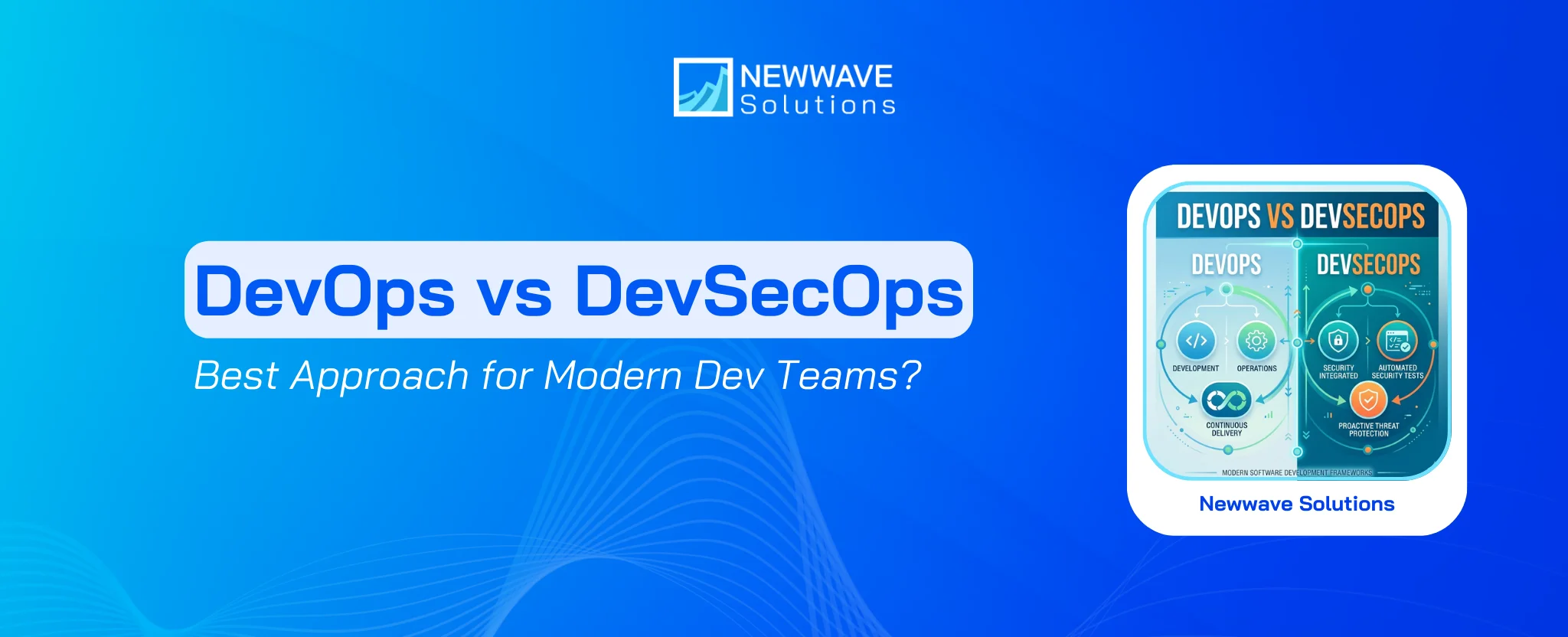
The majority of modern software development today requires a strategic balance between rapid delivery and robust security controls within automated CI/CD pipelines. While many organizations successfully utilize the collaboration of DevOps vs DevSecOps, the latter represents a critical evolution that embeds security into every stage of the lifecycle from the very beginning. This guide explores the core differences in tools and workflows between these two models to help you decide if upgrading a security-first approach is the right move for your business.
What Is DevOps?
Let’s explore what is DevSecOps vs DevOps first. DevOps is a software development methodology that focuses on collaboration between development and operations teams in order to streamline application delivery and infrastructure management. This approach also emphasizes automation of CI/CD pipelines so that organizations can achieve faster software delivery while maintaining operational stability.
Workflow
The DevOps workflow represents a continuous software delivery pipeline in which development teams and operations engineers collaborate closely to automate testing, integration, deployment, and monitoring tasks. Each stage of the process feeds feedback into the next iteration so that teams can improve code quality and deployment speed over time.
DevOps pipeline flow: Plan → Code → Build → Test → Release → Deploy → Monitor
This pipeline enables organizations to maintain continuous integration and continuous delivery while ensuring that software updates reach production environments efficiently.
Pros & Cons
Pros
- Faster release cycles – DevOps enables frequent deployment and faster iteration of software features.
- Improved collaboration – Development and operations teams share responsibilities and communicate more efficiently.
- Automated delivery pipelines – CI/CD automation reduces manual work and minimizes human error.
- Higher deployment frequency – Continuous integration pipelines allow organizations to deliver updates quickly.
- Better system reliability – Monitoring and feedback loops help teams identify operational issues early.
- Improved productivity – Automation reduces repetitive operational tasks for engineering teams.
- Scalable infrastructure management – DevOps practices integrate well with cloud-native infrastructure and infrastructure-as-code tools.
Cons
- Security often implemented later – Security validation sometimes occurs near the end of the development lifecycle.
- Operational complexity – Automation pipelines and toolchains require skilled engineers to maintain them.
- Cultural transition challenges – Organizations may struggle to adopt DevOps culture across traditional IT teams.
- Toolchain integration issues – Multiple tools within the DevOps ecosystem may create compatibility challenges.
What Is DevSecOps?
DevSecOps is an extension of DevOps that integrates security into the entire software development lifecycle while maintaining the collaborative culture between development and operations teams. In this model, security becomes a shared responsibility among developers, security engineers, and operations specialists instead of being treated as a separate stage.
Workflow
A DevSecOps pipeline introduces automated security verification throughout the development process while preserving the same continuous delivery structure used in DevOps environments.
DevSecOps pipeline flow: Plan → Code → Build → Security Scan → Test → Release → Compliance Check → Deploy → Monitor
Security checks such as static application security testing, dependency vulnerability scanning, and compliance verification are embedded directly into the CI/CD pipeline.
Pros & Cons
Pros
- Integrated security automation – Security checks run automatically throughout the development pipeline.
- Early vulnerability detection – Security scanning identifies issues earlier in the software lifecycle.
- Improved compliance management – Continuous security monitoring supports regulatory requirements.
- Shared security responsibility – Developers and operations teams collaborate with security specialists.
- Reduced remediation costs – Early vulnerability detection lowers the cost of fixing security issues.
- Stronger application resilience – Continuous security testing reduces the likelihood of breaches.
- Secure cloud-native deployments – DevSecOps integrates security into container and microservice environments.
Cons
- Higher implementation complexity – Security automation requires additional tools and expertise.
- Longer initial setup time – Integrating security controls into pipelines may require process redesign.
- Specialized security skills required – Teams must learn secure coding practices and security testing tools.
- Potential pipeline slowdowns – Security scanning may increase build times if not optimized.
DevOps vs DevSecOps: Similarities
While they prioritize different stages of protection, both frameworks share a common DNA rooted in automation, continuous integration, and a culture of shared responsibility. This section outlines their shared characteristics to show how both models aim to break down departmental silos and enhance overall deployment frequency.
- Both DevOps and DevSecOps promote strong collaboration between engineering teams to improve software delivery efficiency.
- Both approaches rely heavily on automation to reduce manual work and improve reliability in software pipelines.
- Continuous integration and continuous delivery remain core operational practices for both methodologies.
- Each approach encourages rapid feedback loops from builds, tests, and production monitoring to improve the next development of iteration.
- Both environments typically use similar CI/CD infrastructures and automation tools for deployment of pipelines.
- DevSecOps frequently extend existing DevOps pipelines by introducing security validation checkpoints rather than replacing the workflow entirely.
DevOps vs DevSecOps: Key Differences
Understanding the technical and operational distinctions between these two methodologies is essential for building a resilient digital infrastructure that balances speed with safety. By examining the detailed DevOps vs DevSecOps difference, enterprises can accurately evaluate their risk tolerance and resource capacity to choose the approach that best optimizes their software development lifecycle.
|
Element |
DevOps | DevSecOps |
Verdict |
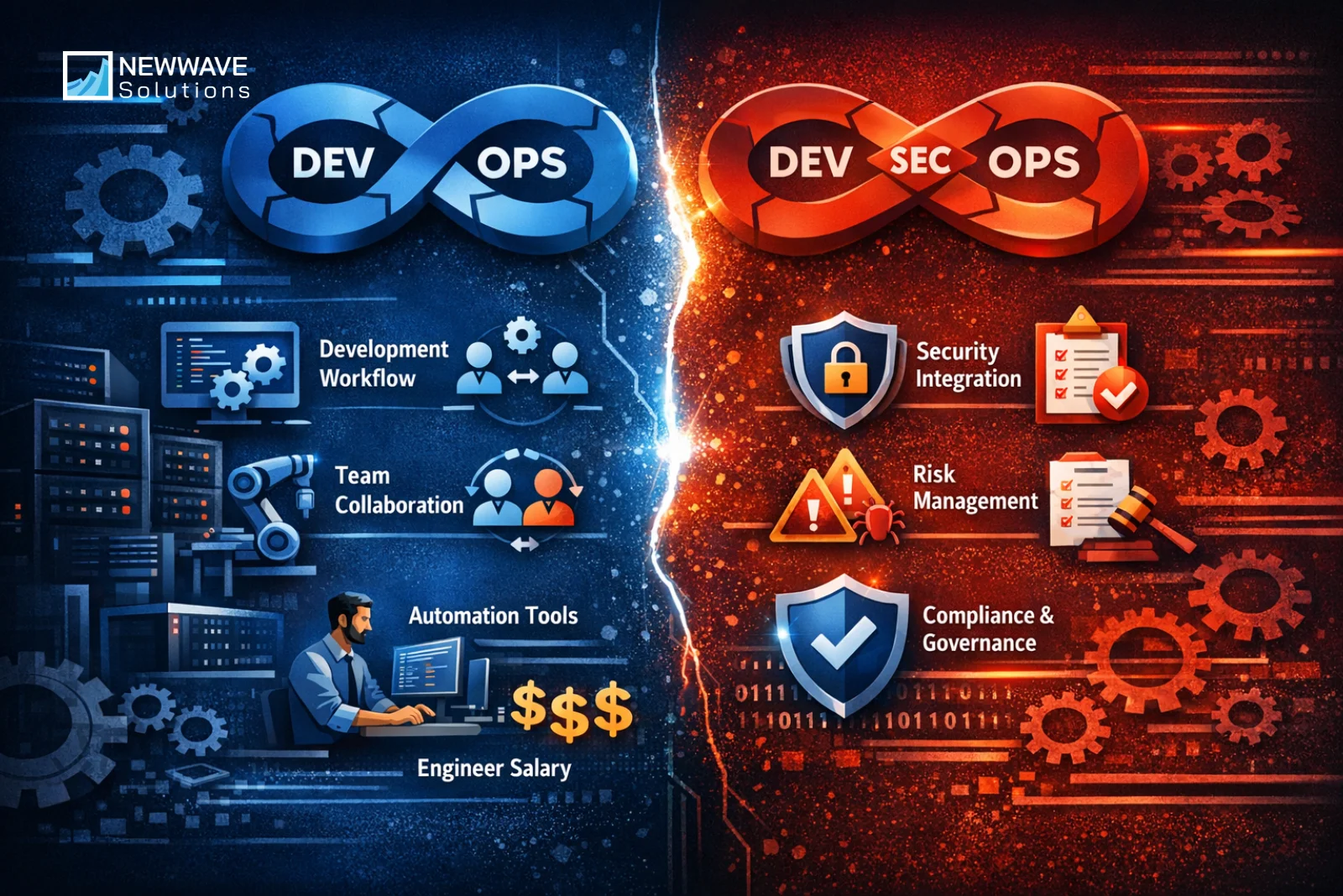
| Security Integration | Security often occurs later in development | Security integrated across entire SDLC | DevSecOps |
| Development Workflow | Focus on CI/CD speed and automation | CI/CD pipeline with security gates | DevSecOps |
| Team Responsibility | Dev and Ops collaboration | Dev, Sec, and Ops collaboration | DevSecOps |
| Automation Tools | Build, test, deploy automation | Security scanning and compliance automation | DevSecOps |
| Risk Management | Focus on operational reliability | Focus on vulnerability prevention | DevSecOps |
| Compliance Monitoring | Often manual audits | Continuous compliance automation | DevSecOps |
| Engineer Salary | Competitive but standard DevOps roles | Higher demand for secure pipeline expertise | DevSecOps |
1. Security Integration
In a traditional DevOps environment, the primary focus is placed on achieving maximum delivery speed and operational efficiency, which often leads to security testing being treated as a final-stage audit or a pre-release penetration test. Consequently, this “bolt-on” security approach can result in the late discovery of vulnerabilities, significantly increasing the complexity and cost of remediation.
Conversely, DevSecOps mandates that automated security scanning be woven into every single phase of the development cycle, from initial coding to the final build. This “shift-left” strategy ensures that potential threats are identified and mitigated in real-time before the code ever reaches a production environment.
Verdict: DevSecOps is the superior choice for modern enterprises because its integrated nature ensures that security is a foundational element of the workflow rather than a secondary consideration.
2. Development Workflow
DevOps workflows are characterized by high-speed CI/CD automation, enabling engineering teams to build, test, and deploy applications with minimal friction. These pipelines are primarily optimized for seamless integration testing and rapid operational monitoring to ensure system stability during frequent updates.
While maintaining this core pipeline structure, a DevSecOps workflow introduces mandatory security checkpoints such as automated dependency analysis and compliance verification. These additional layers are designed to validate the integrity of every code change without compromising the overall momentum of the deployment cycle.
Verdict: DevSecOps provides a more balanced and sustainable workflow by harmonizing the need for rapid deployment with the necessity of proactive security validation.
3. Team Collaboration
The culture of DevOps is built upon breaking down traditional silos between developers and operations staff to foster shared responsibility for software reliability. This collaboration ensures that both teams are equally invested in the performance and uptime of the final product.
DevSecOps expands this collaborative circle by integrating security professionals directly into the daily engineering workflow, providing developers with continuous, expert-led security guidance. By making security a shared priority for everyone involved, the organization eliminates the friction typically caused by isolated security teams.
Verdict: DevSecOps proves more effective for complex projects as it ensures that security expertise is embedded into the DNA of the engineering team rather than acting as an outside observer.
4. Automation Tools
The DevOps toolchain is typically centered around CI/CD platforms, Infrastructure-as-Code (IaC) solutions, and performance monitoring tools to streamline delivery. These technologies are chosen specifically for their ability to automate repetitive operational tasks and maintain configuration consistency.
In contrast, the DevSecOps ecosystem is enhanced with specialized security automation, including static and dynamic code analysis (SAST/DAST), container vulnerability scanning, and secrets management. These tools work in tandem with operational automation to create a comprehensive defense-of-depth within the software factory.
Verdict: DevSecOps offers significantly broader automation coverage because it protects the integrity of the code while simultaneously automating its deployment.
5. Risk Management
Within a DevOps framework, risk management is primarily focused on operational hazards such as deployment failures, system downtime, or performance bottlenecks. Success is measured by the ability of the team to maintain high availability and recover quickly from unexpected production errors.
DevSecOps frameworks shift the focus toward mitigating cybersecurity risks by proactively identifying misconfigurations and potential attack paths before software reaches the end-user. This approach treats security vulnerabilities with the same level of urgency as a system outage, ensuring a more resilient final product.
Verdict: DevSecOps offers much stronger protection against modern cyber threats because it emphasizes early detection and prevention over reactive patching.
6. Compliance and Governance
Under a DevOps model, compliance is often verified through periodic security reviews or manual audits conducted just before a major release. This intermittent approach can lead to “compliance gaps” where security standards are not consistently maintained throughout the development process.
DevSecOps pipelines solve this by integrating compliance-as-code directly into the automation cycle, ensuring that every release automatically adheres to corporate and regulatory governance policies. Continuous evidence generation is a hallmark of this model, making it much easier for enterprises to pass formal audits.
Verdict: DevSecOps delivers far more reliable compliance outcomes because security governance is enforced automatically during every stage of the development lifecycle.
7. Engineer Salary
The DevOps vs DevSecOps salary landscape indicates that professionals specializing in DevSecOps often command higher compensation due to their dual mastery of infrastructure and cybersecurity. As threats become more sophisticated, the market value for engineers who can secure a pipeline while scaling it continues to grow rapidly.
To excel in these roles, professionals must possess a deep understanding of secure coding practices and compliance frameworks in addition to traditional CI/CD management skills. This rare combination of expertise makes them invaluable assets to any organization handling sensitive data or operating in regulated industries.
Verdict: DevSecOps professionals currently command higher market demand because global enterprises are increasingly prioritizing “Security-by-Design” in their software development initiatives.
DevOps vs DevSecOps: Which is Better for Enterprises
After analyzing the operational characteristics of both approaches, we can conclude that DevSecOps represents a stronger long-term strategy for companies that build complex software platforms or cloud infrastructure. From the perspective of a technology partner with over 14 years of experience delivering IT outsourcing services and software development solutions, we acknowledge that DevSecOps often provides better outcomes for enterprise-grade systems.
Why DevSecOps often outperforms DevOps for modern enterprises:
- Integrated security governance: Security policies remain embedded throughout the development of lifecycle, which significantly reduces the risk of releasing vulnerable applications.
- Lower long-term remediation costs: Early vulnerability detection allows engineering teams to fix security issues during development rather than after production deployment.
- Better regulatory compliance: Continuous compliance validation helps organizations meet strict industry standards such as finance and healthcare regulations.
- Secure cloud-native infrastructure: Modern cloud environments benefit from automated security scanning and policy enforcement embedded in DevSecOps pipelines.
Although DevSecOps is widely considered a stronger approach in many scenarios, not every organization must immediately replace DevOps software development practices. Businesses should carefully evaluate their security requirements and operational maturity before choosing the most appropriate methodology for their development of pipelines.
When Should Companies Use DevOps vs DevSecOps?
Choosing between these two methodologies depends on your project’s specific risk profile, regulatory requirements, and the maturity of your existing technical infrastructure. We will provide a detailed breakdown of specific business scenarios below to help you decide when to stick with standard DevOps or when to transition to a more secure DevSecOps environment.
When to apply DevOps?
- Small teams or early-stage startups: These organizations prioritize speed to market above all else, making the agility and lower overhead of a standard DevOps pipeline more practical than the complex security layers of DevSecOps.
- Internal applications with low security risks: Projects like internal employee dashboards or basic administrative tools do not require the intensive security automation of DevSecOps, as they operate within a closed network with minimal exposure to external threats.
- Rapid MVP development: When the goal is to validate a product concept through a Minimum Viable Product (MVP), DevOps allows for the fastest possible iteration cycles without the delays of rigorous security screening at every stage.
- Legacy applications in stable environments: Systems that are rarely updated and reside on isolated, legacy infrastructure benefit more from the stability-focused deployment of DevOps rather than a total re-architecture for DevSecOps integration.
- Public information or static marketing websites: Because these sites handle non-sensitive data and have limited attack surfaces, the standard automated deployment features of DevOps are sufficient to maintain performance and uptime.
When to apply DevSecOps?
- Regulated industries (Finance, Healthcare): Organizations in these sectors must adopt DevSecOps to ensure that every code change remains compliant with strict legal frameworks like HIPAA or PCI DSS through automated audit trails.
- Cloud-native and distributed infrastructure: Since cloud environments expand the attack surface, DevSecOps is necessary to automate security configurations and identity management across thousands of microservices and containers.
- Applications handling sensitive user data: Any platform managing Personal Identifiable Information (PII) or financial transactions requires the continuous vulnerability scanning of DevSecOps to prevent catastrophic data breaches and loss of customer trust.
- High-traffic E-commerce platforms: These applications are frequent targets for automated bot attacks and SQL injections, requiring the real-time threat detection and rapid patching capabilities that only a DevSecOps model provides.
- Government and Defense contracts: Public sector projects demand the highest level of security assurance, making the “security-by-design” philosophy of DevSecOps a non-negotiable requirement for project approval and data sovereignty.
The Future of DevOps and DevSecOps
Industry experts increasingly recognize that the future of software delivery will depend on combining rapid development practices with strong security frameworks. Many organizations are therefore expanding DevOps pipelines with integrated security capabilities to achieve both agility and protection.
Technology analysts also predict that DevSecOps adoption will accelerate as organizations migrate to cloud-native architectures and face increasing cybersecurity threats. As a result, the traditional DevOps model is gradually evolving toward security-first development pipelines.
Key trends shaping the future
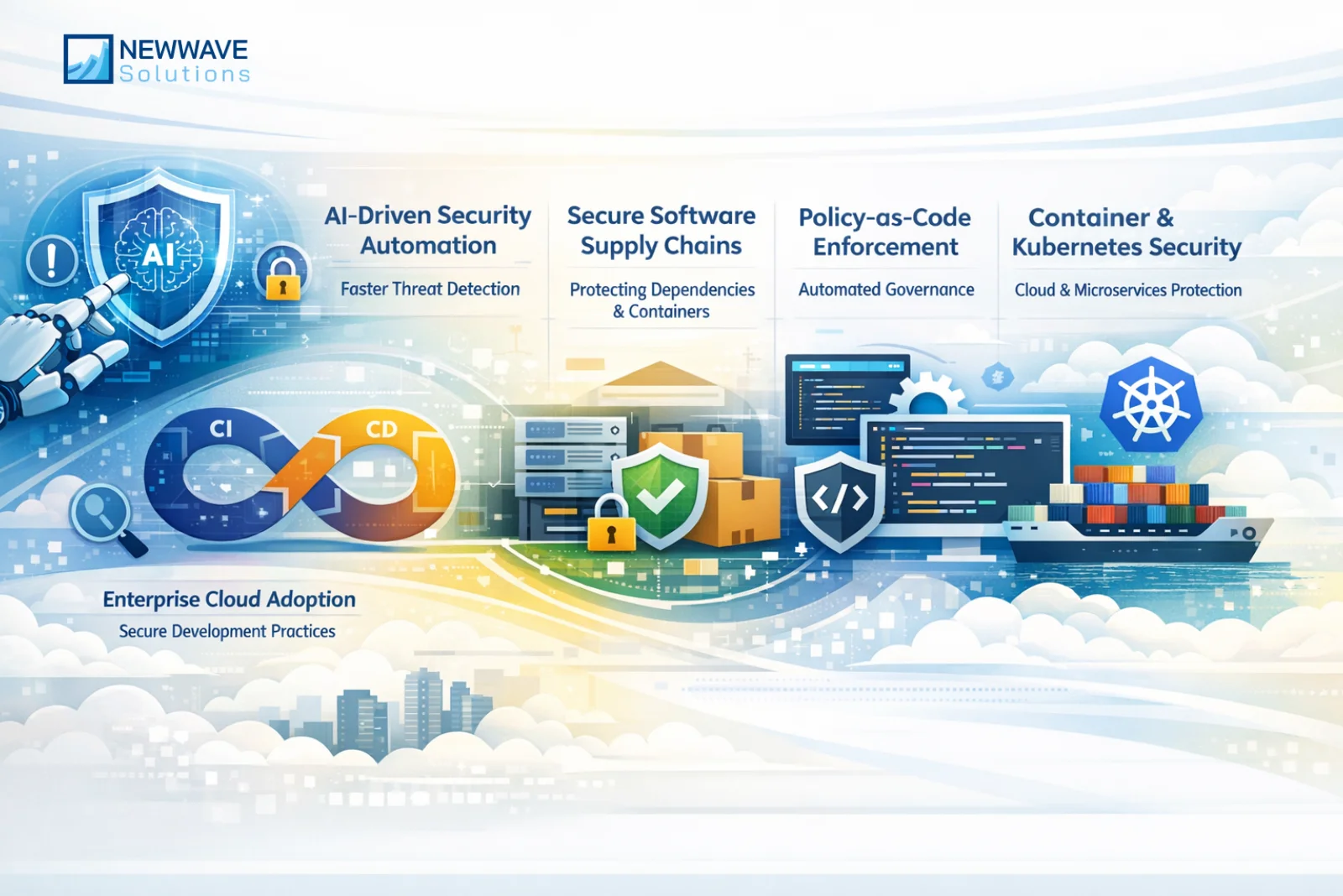
- AI-driven security automation will enable faster detection of vulnerabilities and anomalies within CI/CD pipelines.
- Secure software supply chains will become critical as organizations protect dependencies, libraries, and container images.
- Policy-as-code security models will allow automated enforcement of governance rules within development pipelines.
- Container security and Kubernetes scanning will become essential as microservices architectures dominate modern cloud environments.
- DevSecOps adoption across enterprise cloud platforms will continue growing as companies prioritize secure software delivery.
Why Global Clients Trust Newwave Solutions for DevOps/ DevSecOps-Driven Software Development Services?
Currently, we notice that many organizations are struggling to implement DevOps or DevSecOps models independently due to a significant lack of technical resources, practical experience, and specialized security expertise. If your business is facing similar hurdles and requires a professional, reputable partner to lead your transformation, Newwave Solutions confidently provides the comprehensive solutions you need.
With over 14 years of experience and a talent pool of 300+ experts, we have successfully delivered more than 800 projects as a trusted partner in end-to-end DevOps and DevSecOps solutions. We go beyond mere tool implementation to help enterprises redesign their software delivery processes for superior speed, reliability, and security throughout the entire development lifecycle. Our team covers every stage of the DevOps journey—from strategic consulting and infrastructure automation to continuous CI/CD optimization—ensuring your business reduces risks and accelerates release cycles effectively.
How Can We Support Your DevOps/ DevSecOps Software Development?
Newwave Solutions provides specialized software development services across various high-stakes sectors, ensuring your infrastructure is both agile and secure:
- Finance & Fintech Development Services: Our team builds secure, compliant pipelines specifically designed for banking applications, digital payment systems, and high-frequency trading platforms.
- Healthcare: We provide HIPAA-compliant automation and continuous monitoring to support mission-critical medical software and patient management platforms.
- E-commerce & Retail Web Development Services: We deploy scalable CI/CD pipelines that empower online stores, digital marketplaces, and omnichannel platforms to handle massive traffic surges.
- Education & E-learning Solutions: We establish reliable, high-performance infrastructure for online learning platforms and global content delivery systems to ensure uninterrupted education.
- Real Estate & PropTech: Our experts create streamlined platforms for property management, digital listing services, and secure real estate transactions through automated workflows.
- Game Development & Entertainment: We implement automated deployments and real-time monitoring to deliver immersive, high-performance gaming experiences with zero downtime.
>>> Ready to elevate your project? Contact us today to discuss in detail how we can apply fast, effective, and high-quality DevOps/DevSecOps solutions to your software development and digital service projects
Conclusion
While DevOps accelerates software delivery speed, DevSecOps ensures efficiency by seamlessly embedding security protocols throughout the entire pipeline. Choosing the right path between DevOps vs DevSecOps ultimately depends on your specific regulatory environment and how much risk your delivery strategy can tolerate.
Remember that Newwave Solutions is always available to support enterprises that are struggling to apply or integrate DevSecOps into their software development process to enhance overall project security.
To Quang Duy is the CEO of Newwave Solutions, a leading Vietnamese software company. He is recognized as a standout technology consultant. Connect with him on LinkedIn and Twitter.



Read More Guides
Get stories in your inbox twice a month.
Let’s Connect
Let us know what you need, and out professionals will collaborate with you to find a solution that enables growth.
Leave a Reply