


The Entire Mobile App Development Process: From Idea to Launching
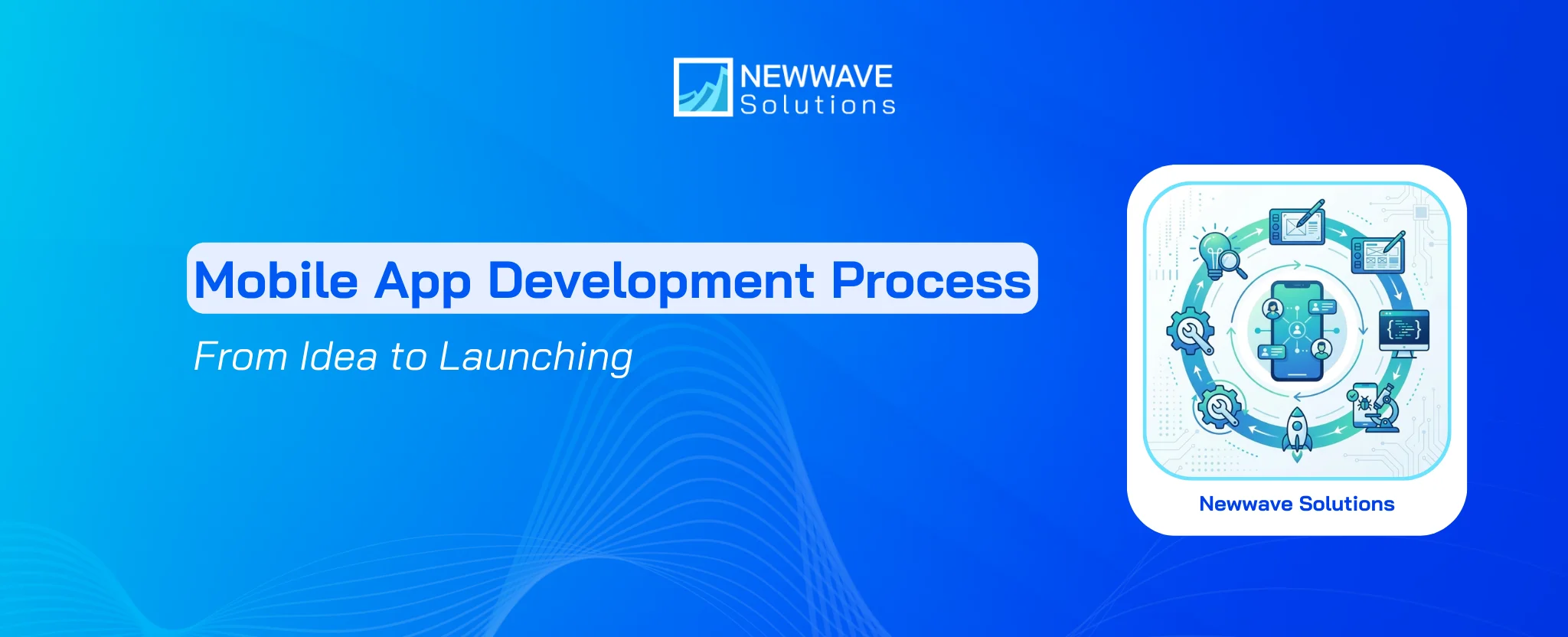
Many businesses struggle with the mobile app development process because they don’t know where to start, which steps to follow, or how to plan for timelines, budgets, and the right technologies. This often leads to wasted resources, missed deadlines, and apps that fail to meet user expectations. In this blog, we will provide everything you need to know about the process, so follow along to gain the clarity and confidence needed to build the best mobile app for your business.
Why Following a Structured Mobile App Development Process Matters?
In my experience working with multiple clients, one of the biggest pain points I’ve seen is businesses rushing into app creation without truly understanding the mobile application development process. A structured mobile app development process prevents these issues by providing a clear roadmap that guides every stage of building, testing, and launching a successful product.
Below are some common reasons why a structured process is essential for businesses in developing quality mobile apps:
- Improved Efficiency: A structured process ensures that every stage, from planning to deployment, is organized, reducing wasted effort and accelerating delivery.
- Better Cost Management: By mapping out resources and timelines in advance, businesses can avoid unexpected expenses and stay within budget.
- Higher Quality Output: Continuous testing and validation at each step improve reliability, usability, and performance of the final product.
- Reduced Risks: Identifying challenges early in the process helps prevent costly mistakes and minimizes technical or security issues.
- Stronger User Satisfaction: A user-focused approach throughout the process leads to apps that are more engaging, intuitive, and impactful.
- Scalability for Growth: Structured planning makes it easier to integrate new features and scale the app as business needs evolve.
7 Key Steps of the Mobile App Development Process
By following proven mobile app development steps, businesses can reduce risks, manage costs, and ensure the final product meets user expectations. Below are the seven essential stages that form the backbone of a successful project.

Step 1 – Idea & Requirement Analysis
Every mobile app starts with a clear idea. At this stage, businesses must define the problem the app will solve, identify the target audience, and research competitors.
Checklist:
- Define the app’s purpose and goals.
- Conduct market research to validate demand.
- Collect user requirements and success metrics.
Reminder: A poorly defined idea leads to wasted resources—invest time here to avoid bigger mistakes later.
Step 2 – Planning & Strategy
Once the idea is validated, planning gives the project structure. This step covers outlining features, deciding on the technology stack, and creating a project roadmap.
Checklist:
- Decide whether to build for iOS, Android, or both.
- Map out features and prioritize must-haves.
- Define budget, resources, and development timeline.
Reminder: Planning is where you balance ambition with practicality to ensure the app is both achievable and scalable.
Step 3 – UI/UX Design
Design determines how users will interact with the app. This step focuses on creating wireframes, prototypes, and user flows that are both functional and visually appealing.
Checklist:
- Create wireframes and mockups.
- Test navigation flows with sample users.
- Ensure accessibility and responsive layouts.
Reminder: A great design reduces friction and keeps users engaged longer.
Step 4 – App Development
This is the execution stage where the app is built. Developers work on both frontend (interface and features) and backend (databases, servers, APIs).
Checklist:
- Choose native or cross-platform frameworks (Swift, Kotlin, Flutter, React Native).
- Implement APIs and backend services.
- Follow Agile or sprint-based methods for incremental progress.
Reminder: Keep the code modular and scalable to make future updates easier.
Step 5 – Testing & Quality Assurance
Testing ensures that the app runs smoothly and securely before reaching users. This step involves multiple testing types to eliminate bugs and ensure quality.
Checklist:
- Perform functional, usability, and performance testing.
- Test on different devices and operating systems.
- Fix bugs and retest until stable.
Reminder: Skipping thorough testing is the fastest way to lose user trust.
Step 6 – Deployment & Launch
After passing tests, the app is ready for release. Deployment involves submitting to app stores, meeting compliance requirements, and preparing for user onboarding.
Checklist:
- Follow Apple App Store and Google Play submission guidelines.
- Prepare marketing and launch campaigns.
- Monitor approval processes and feedback.
Reminder: App store approval can take time—plan your launch schedule accordingly.
Step 7 – Post-Launch Maintenance & Updates
The process doesn’t end with launch—ongoing support is critical. Regular updates, bug fixes, and feature improvements keep the app relevant.
Checklist:
- Monitor app performance and crash reports.
- Collect user feedback for new updates.
- Release security patches and performance improvements.
Reminder: Continuous maintenance ensures long-term success and user retention.
From idea validation to ongoing maintenance, these seven stages represent the essential mobile app development process steps. By approaching each step with careful planning and execution, businesses can transform concepts into functional, user-friendly apps that drive growth and innovation.
Best Practices for a Successful Mobile App Development Process
From the partnership with different B2B businesses globally, I have witnessed how companies or teams that ignore best practices in step-by-step mobile app development often face delays, cost overruns, or disappointing user feedback. On the other hand, those who follow proven approaches consistently deliver apps that are more secure, scalable, and user-friendly.
The following practices can help businesses get the most out of their development journey:
- Adopt Agile Methodology: Breaking work into sprints allows faster iterations, continuous testing, and quicker adjustments based on user or stakeholder feedback. This approach keeps the project flexible and aligned with business goals.
- Prioritize Security and Compliance: Embedding security measures from the start protects user data and helps meet regulatory requirements, which is crucial in industries like healthcare or finance.
- Native Development: Building apps separately for iOS and Android offers the highest performance, best access to device features, and a smoother user experience—suitable when quality and speed matter most.
- Cross-Platform Development: Frameworks like Flutter or React Native allow one codebase for both iOS and Android, reducing development time and cost while maintaining strong performance. This is ideal for startups or businesses targeting multiple platforms quickly.
- Hybrid Development: Combining web and mobile technologies provides flexibility and faster deployment, though it may compromise performance slightly. This approach works well for businesses prioritizing speed-to-market and broad accessibility.
- User-Centered Design: Continuously testing prototypes with real users ensures the final product is intuitive and engaging, which directly impacts adoption and retention rates.
- Continuous Monitoring and Updates: Even after launch, tracking performance metrics and releasing updates ensures the app evolves with user needs and market trends.
Timeline & Budget to Develop a Mobile App
When planning a project, two of the most critical factors in the mobile app development process are timeline and budget. These elements are closely connected: the more complex an app becomes in terms of features, platforms, and testing, the longer it takes to build and the more it costs.
- Simple Apps: A basic app with core features (e.g., calculators, note-taking apps) usually takes 2–3 months to develop and costs around $20,000–$40,000, depending on design and testing requirements.
- Medium Complexity Apps: Apps with integrations like payment systems, geolocation, or moderate backend services (e.g., food delivery or fitness apps) can take 4–6 months and cost between $40,000–$100,000.
- Complex Apps: Enterprise-level or feature-rich apps, such as social media platforms or large-scale e-commerce apps, often require 9–12 months or more and budgets exceeding $100,000–$300,000.
Key factors influencing both cost and timeline include:
- Features and Functionality: Advanced features like chat, AR/VR, or AI significantly extend development time and costs.
- Platforms: Developing for both iOS and Android natively doubles efforts, while cross-platform frameworks reduce duplication but may limit performance.
- Design Complexity: Highly customized UI/UX demands more resources compared to standard design templates.
- Testing & QA: Comprehensive testing across devices, operating systems, and networks ensures quality but also adds to timelines.
- Maintenance & Updates: Post-launch support is an ongoing cost, typically 15–20% of the initial budget annually.
The timeline and budget should be planned together from the start of the mobile application development process. By balancing features, platform choice, and testing requirements, businesses can avoid scope creep, stay within budget, and still deliver an app that meets user expectations.
Common Challenges in the Mobile App Development Process
Based on the experiences of multiple B2B businesses and firms globally, we have gathered some of the most common challenges in the mobile app development process, along with possible solutions to each:

- Unclear project requirements often lead to scope creep. When goals and features are not clearly defined at the beginning, projects tend to expand in unexpected directions. The solution is to invest time in requirement analysis and documentation, which I have seen reduce rework costs by nearly 30% in enterprise projects.
- Cross-platform compatibility remains a common struggle. Apps may function well on one device but fail to deliver the same performance across iOS and Android. The best approach is to use cross-platform frameworks like Flutter or React Native.
- Security concerns are a major risk in today’s digital environment. Data breaches or poorly secured APIs can erode user trust and damage brand reputation. A structured security-first approach—embedding encryption, compliance checks, and regular audits—helps mitigate these risks.
- User retention is harder than acquisition in mobile apps. Many businesses launch apps only to see high uninstall rates within the first month. Based on my experience, involving users early in prototype testing and focusing on intuitive UX significantly improves long-term engagement.
- Managing development costs is a constant challenge. Budgets often spiral out of control when unexpected technical issues arise or when too many features are added mid-way. Deloitte reports that phased development using Agile methods allows businesses to control costs and deliver incremental value.
- App store approval can delay launches. Both Apple App Store and Google Play have strict guidelines, and rejections can set timelines back. Preparing documentation early and testing compliance standards throughout development prevents these costly delays.
- Keeping pace with rapid technology changes creates ongoing pressure. Mobile frameworks, operating systems, and devices evolve quickly, leaving apps outdated if not maintained. The solution is to plan for continuous updates as part of the long-term mobile app development strategy.
Choosing the Right Mobile App Development Partner: Newwave Solutions
Developing a high-performance mobile application requires not only technical expertise but also a deep understanding of user experience and platform-specific requirements. If your enterprise is struggling with a lack of internal resources or specialized mobile developers, Newwave Solutions offers the professional expertise needed to transform your concept into a market-leading digital product.
Leveraging over 14 years of industry experience, our team of 300+ professionals specializes in building secure, scalable, and high-quality mobile applications for global clients. We pride ourselves on delivering end-to-end solutions that cover everything from UI/UX design services to final deployment, ensuring your mobile presence is both impactful and technically sound.
Professional Mobile App Development Services at Newwave Solutions:
- Native App Development Services: We specialize in creating high-performance iOS and Android app development solutions tailored to the specific technical requirements and user behaviors of each platform.
- Cross-Platform App Development Services: Our developers leverage modern frameworks like React Native and Flutter to build versatile applications that run seamlessly on multiple platforms while maintaining a native-like feel.
Allow Newwave Solutions to be your trusted partner in achieving an efficient, cost-optimized, and successful mobile app development journey for your enterprise.
Conclusion
Our guided mobile app development process above has covered every stage from planning and design to coding, testing, deployment, and ongoing maintenance. Along the way, businesses must consider budget, choose the right technologies, address challenges, etc. By following these steps, enterprises can deliver applications that are both user-friendly and future-ready.
If you want the best quality results without unnecessary risks, Newwave Solutions offers end-to-end mobile app development services tailored for enterprises and startups. Whether you are new to the industry or lack prior experience, our team ensures your vision is transformed into a secure, scalable, and high-performing mobile app.
FAQs
1. How long does it take to build a mobile app?
Building a mobile app usually takes between 2 and 9 months, depending on how many features it has, the complexity of the design, and the platforms you choose.
2. What is the average cost of developing a mobile app?
The cost of a mobile app can range from $20,000 for simple apps to over $200,000 for complex, enterprise-level solutions, based on features and technologies.
3. Do I need a native or cross-platform app?
If you want the best performance and access to device features, a native app (built separately for iOS and Android) is ideal. If you need faster development at lower cost, a cross-platform app (one codebase for both) is a good choice.
4. How do I ensure app security during development?
Security comes from building safe code, encrypting sensitive data, testing for vulnerabilities, and following platform security guidelines from Apple and Google.
5. Can startups follow the same development process as enterprises?
Yes, startups can use the same mobile app development process, but they usually start smaller with fewer features. This helps them test ideas quickly before scaling like larger companies.
To Quang Duy is the CEO of Newwave Solutions, a leading Vietnamese software company. He is recognized as a standout technology consultant. Connect with him on LinkedIn and Twitter.



Read More Guides


Get stories in your inbox twice a month.
Let’s Connect
Let us know what you need, and out professionals will collaborate with you to find a solution that enables growth.
Leave a Reply