


Reducing Manual Garment Verificationin Healthcare Facilities from a Full Day to Minutes
Manufacturing - Australian Client - Mobile App Development – Fixed Price - 4 months – 3 Members
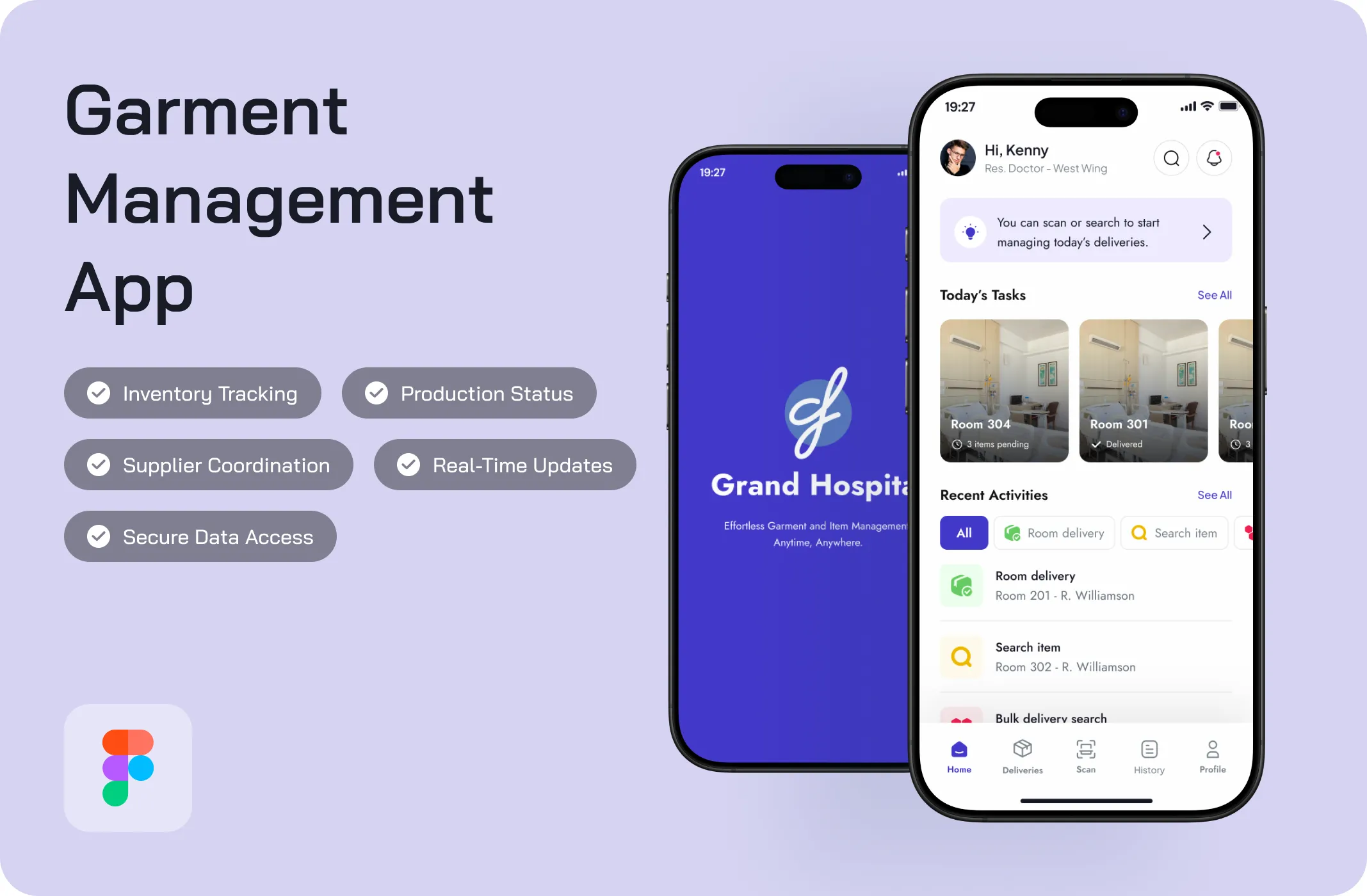
Hospitals and other large facilities may need to verify large volumes of garments and room assets, making manual, item-by-item checks highly time-consuming. Newwave Solutions developed a mobile application that supports bulk RFID scanning and connects with specialized devices such as TSL readers. After being successfully tested on the client’s actual device, the application reduced garment verification from an entire day to only a few minutes while supporting RFID-based checks for both garments and room assets.
Client Context
The client is an Australian solution provider developing RFID-based garment and asset management products for organizations such as hospitals and other public facilities. Its end users include cleaning, collection, and facility staff who need to manually identify and manage large volumes of garments and room assets.
As a product offered to business customers, the mobile system plays a central role in helping the client digitalize time-consuming manual checks and deliver a more scalable asset management service.


Business Stakes
Without a faster and more reliable way to capture garment and asset data, end users would remain dependent on labor-intensive checks, while the client would struggle to offer a scalable and commercially valuable management solution.
Staff had to inspect garment codes individually during collection, making high-volume checks slow and potentially taking an entire day. Continuing this process would consume significant labor and limit operational efficiency.
Manual item-by-item checks become increasingly difficult as garment and asset volumes grow. Without batch scanning, the solution would be less suitable for hospitals and other facilities managing large inventories.
The client needed its RFID offering to demonstrate a clear advantage over manual processes. If the mobile system could not reduce verification time or work reliably with RFID readers, it would be harder to position the product as a valuable management solution for business customers.
Our Approach
A major delivery risk was that the specialized RFID reader could not be provided to the development team, preventing Newwave Solutions from conducting end-to-end testing on the actual hardware. The team therefore self-tested and unit-tested each function that could be validated internally before sending an installable build to the client. The client then tested the application on the physical RFID reader and shared the results with the team. Based on this feedback, Newwave Solutions refined the affected functions and provided updated builds for further device testing until the application was successfully validated on the client’s equipment.
Technical Decisions
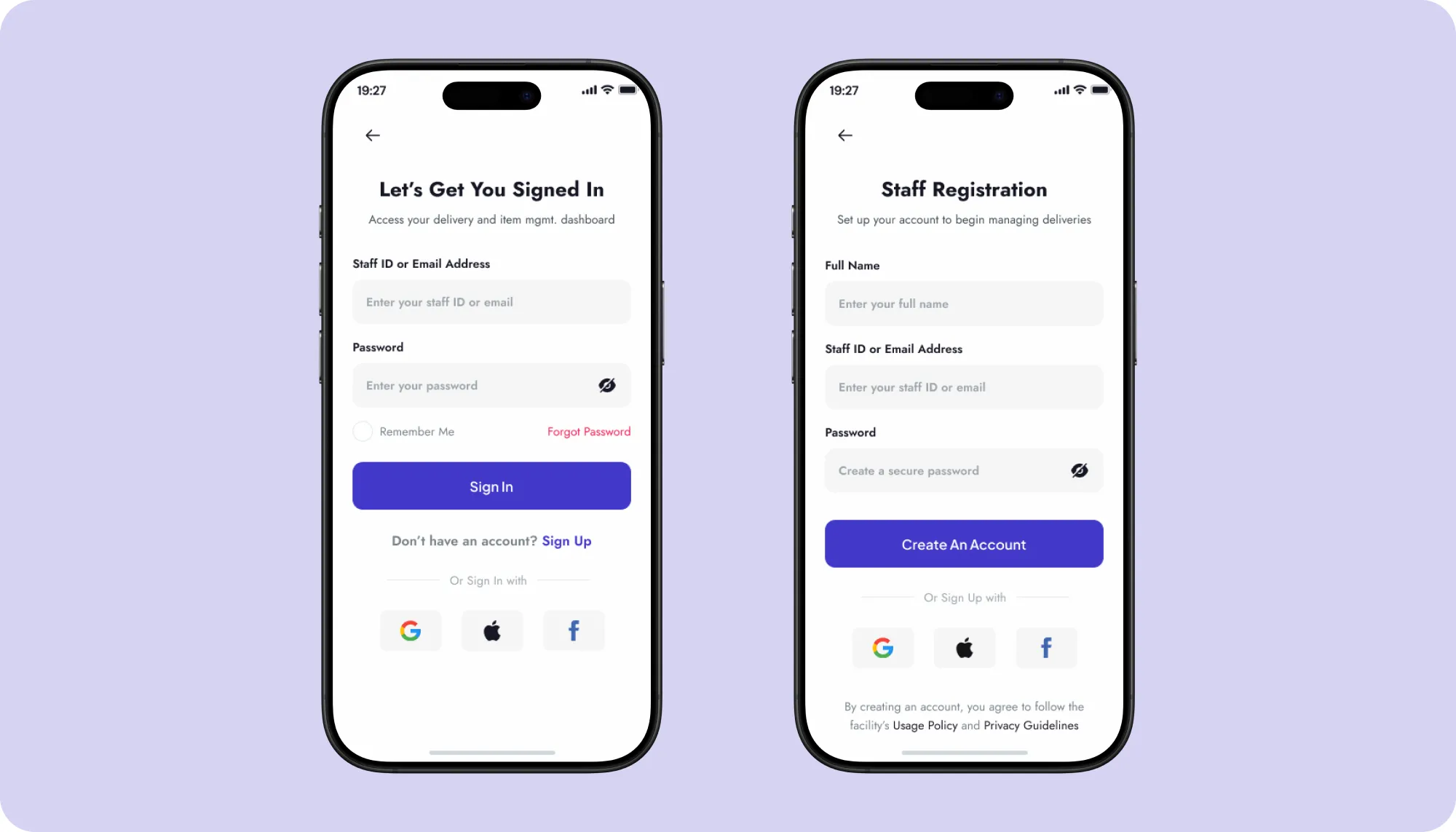
The application was designed to identify each RFID tagged item accurately and keep scanning workflows available when network connectivity was interrupted. Local data storage, later synchronization, and backend validation helped maintain operational continuity while protecting the reliability of central records.

Unique RFID identification
Each RFID tag had a unique ID registered in the database and linked to the corresponding garment or room asset. This allowed scanned items to be identified through their existing records and prevent duplicating data entries.

Offline data storage and synchronization
When network connectivity was unavailable, scan data was stored in the device’s local database and synchronized once the connection returned. This allowed staff to continue working in areas with unstable connectivity without losing captured data.

Backend data validation
After synchronization, the backend determined whether submitted data was valid before accepting it into the central system. This kept validation logic consistent and reduced the risk of incorrect records entering the management workflow.
Risk Handling
One of the project’s main delivery risks emerged when the specialized RFID reader could not be provided to the development team. Without access to the target hardware, integration issues might only become visible during final testing, increasing the risk of repeated rework and delayed validation. To reduce this uncertainty, the team self-tested and unit-tested each function before sending an installable version of the application to the client. The client installed the application, tested it on the actual RFID reader, and shared feedback with the team. Based on each round of feedback, the team adjusted the application and provided an updated build for further testing. Through this iterative cycle, the application was successfully validated on the client’s device.
Product Outcomes
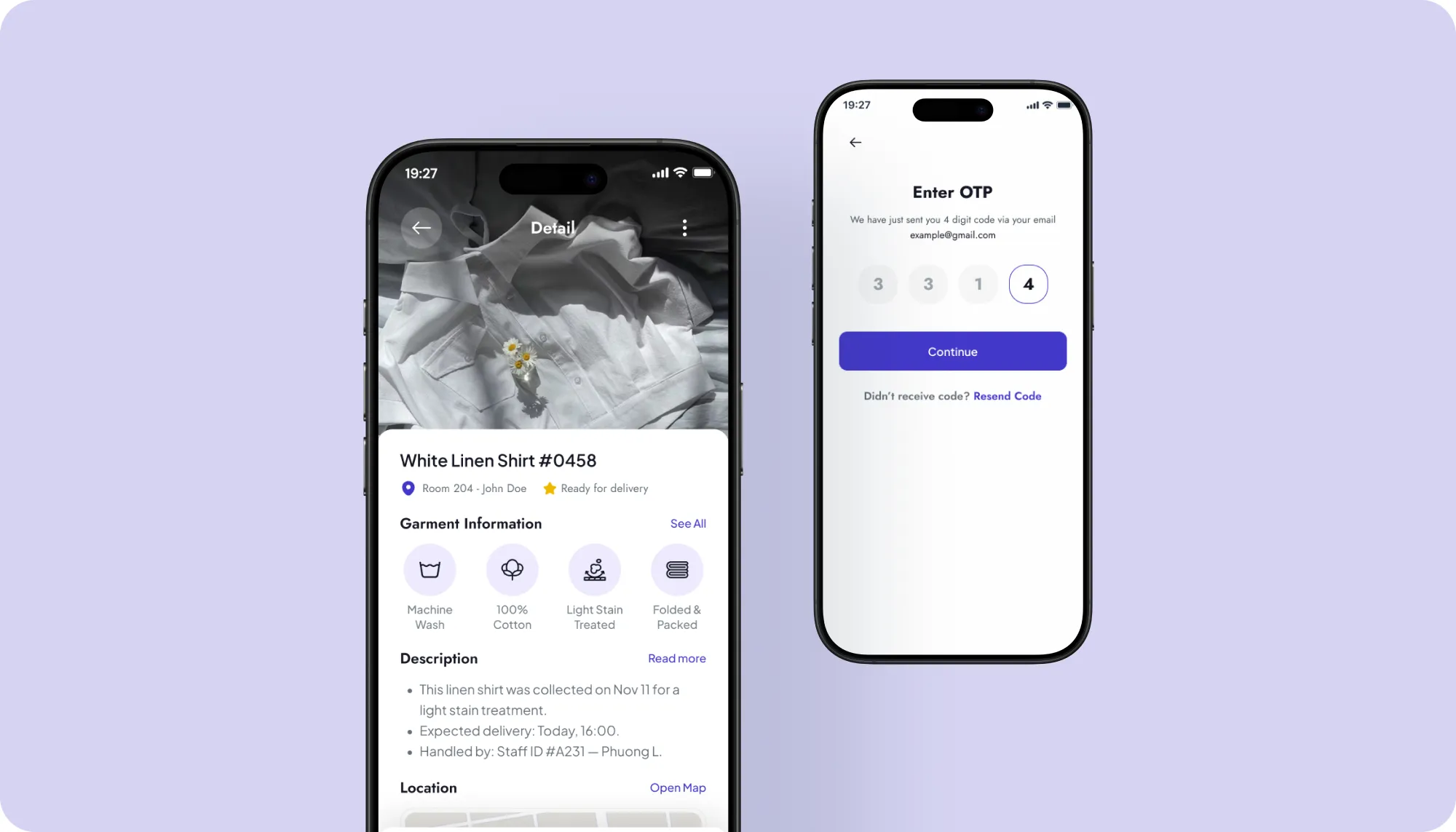
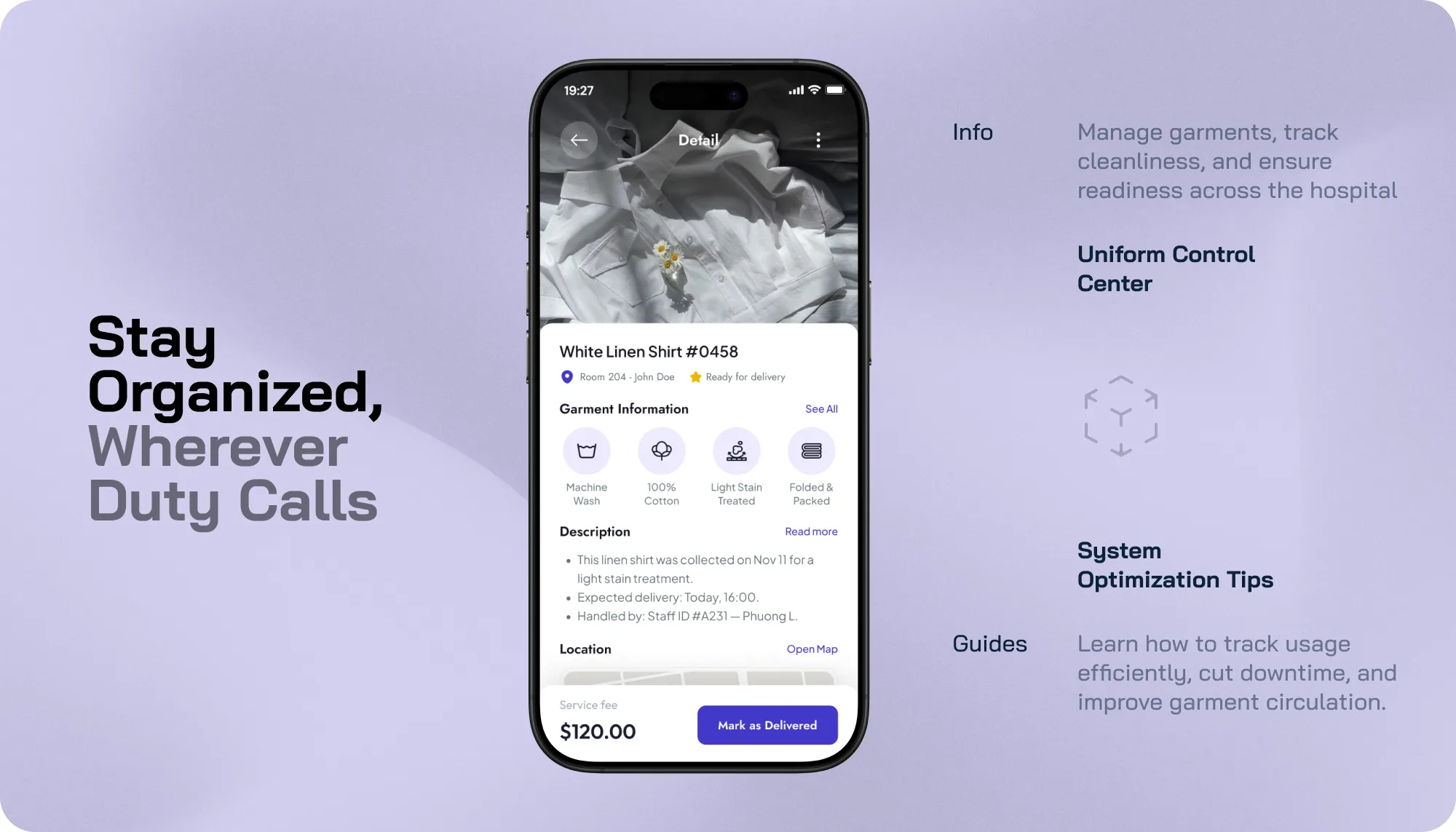
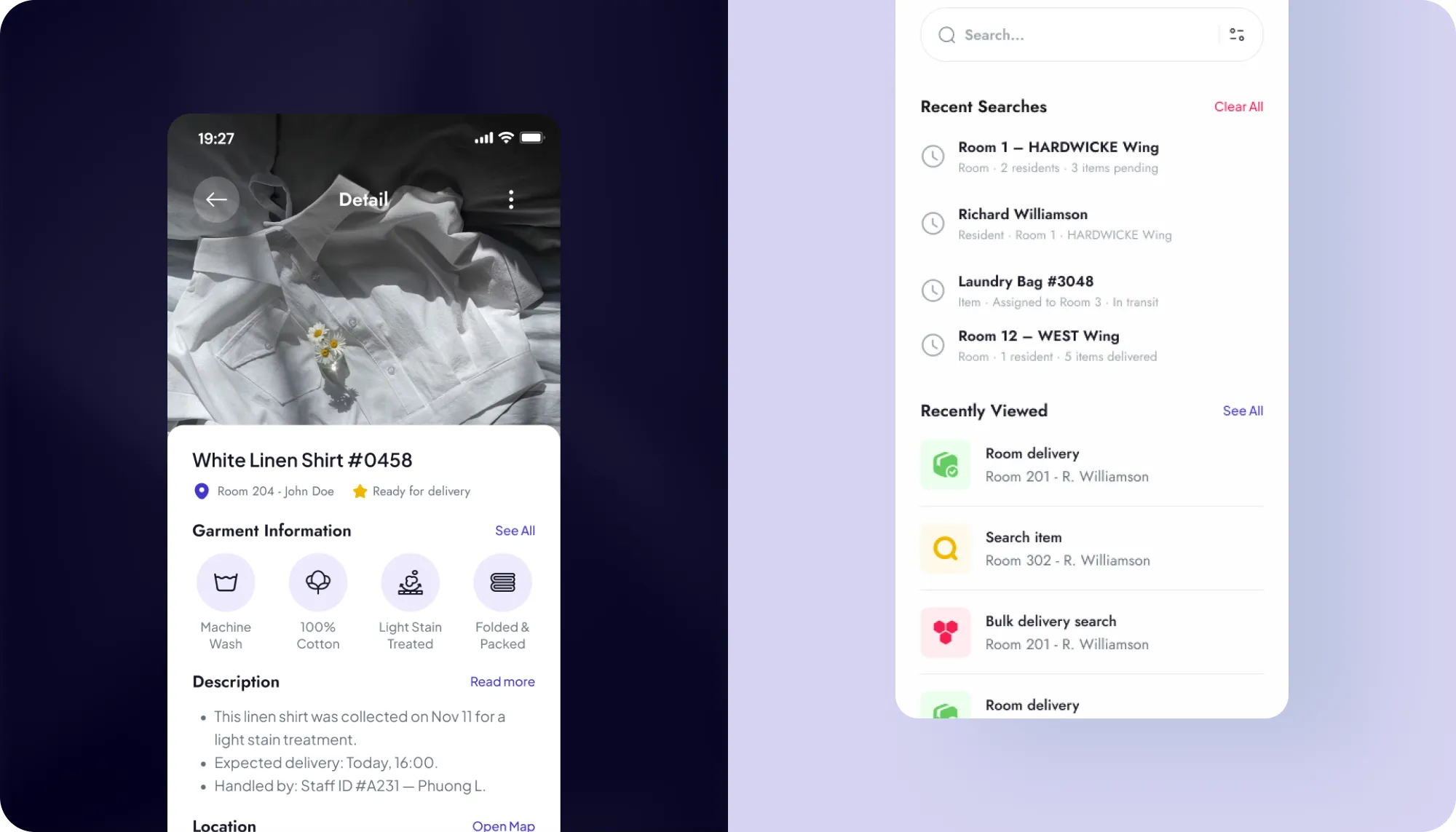
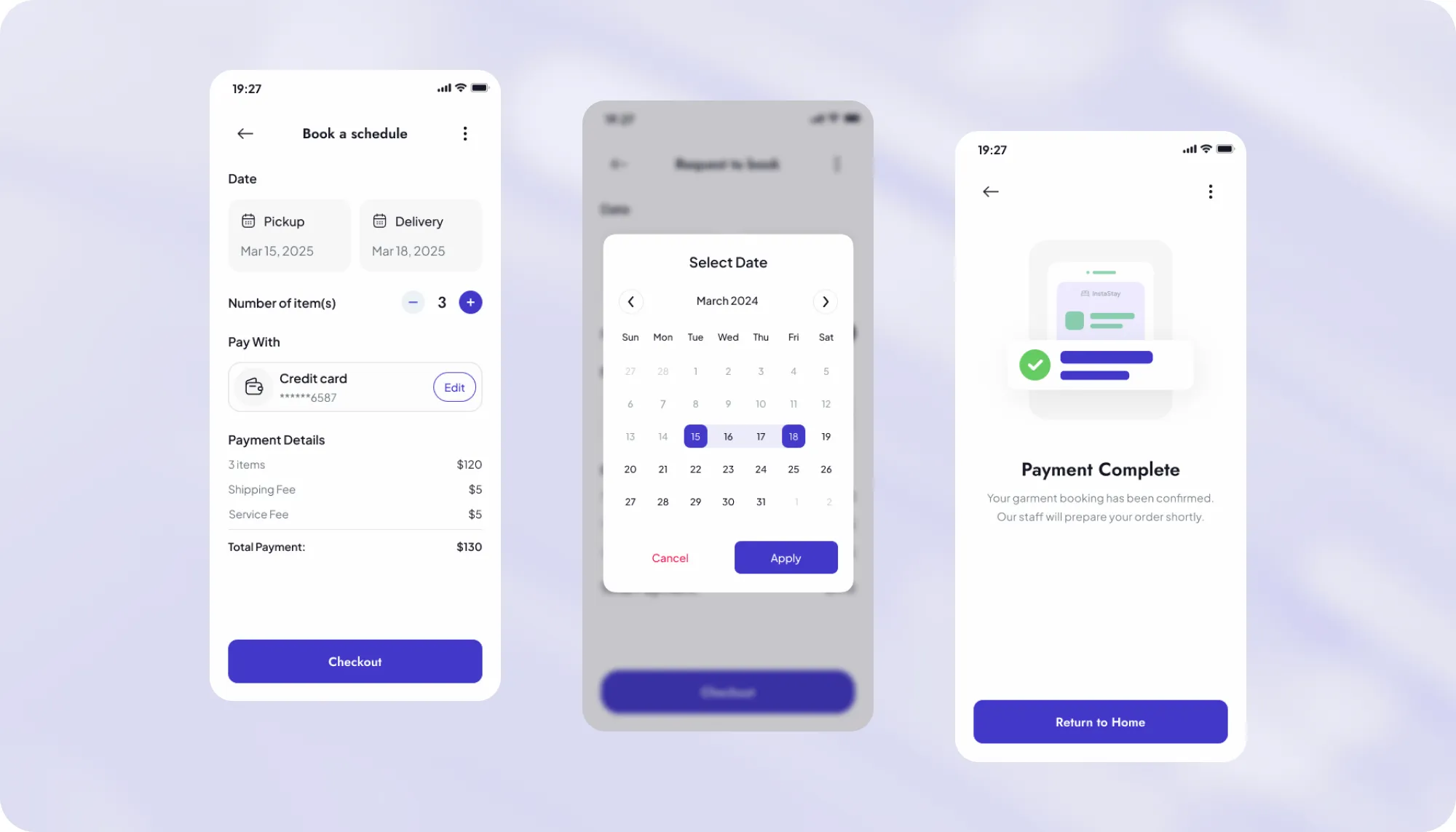
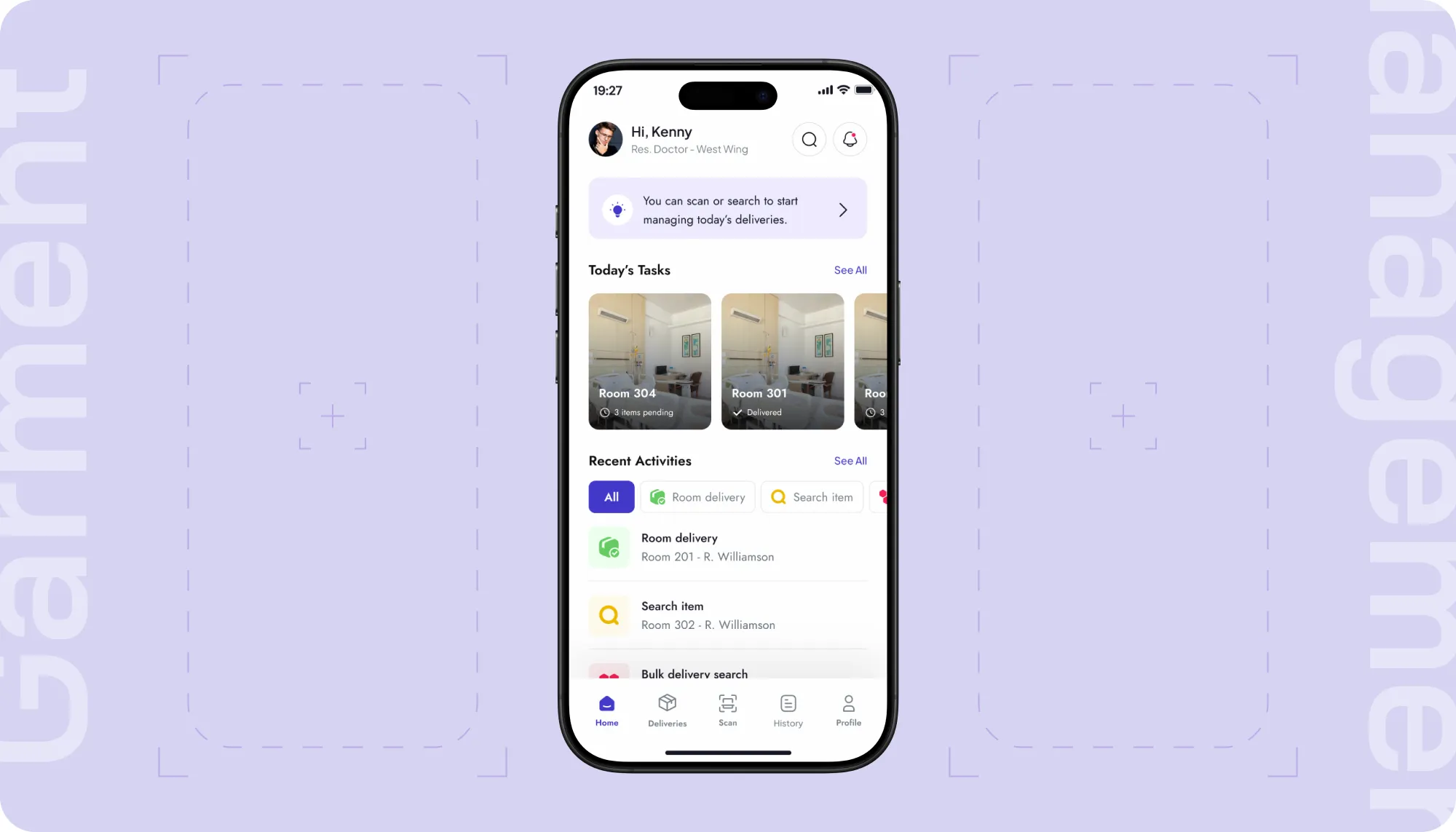
The system uses RFID tags to automate the tracking of garment distribution and collection. Staff can audit hundreds of items in minutes using a handheld reader, eliminating hours of manual counting. This capability enables managers to maintain optimal stock levels with automated low-stock alerts, preventing operational delays caused by shortages and simplifying supply chain management.
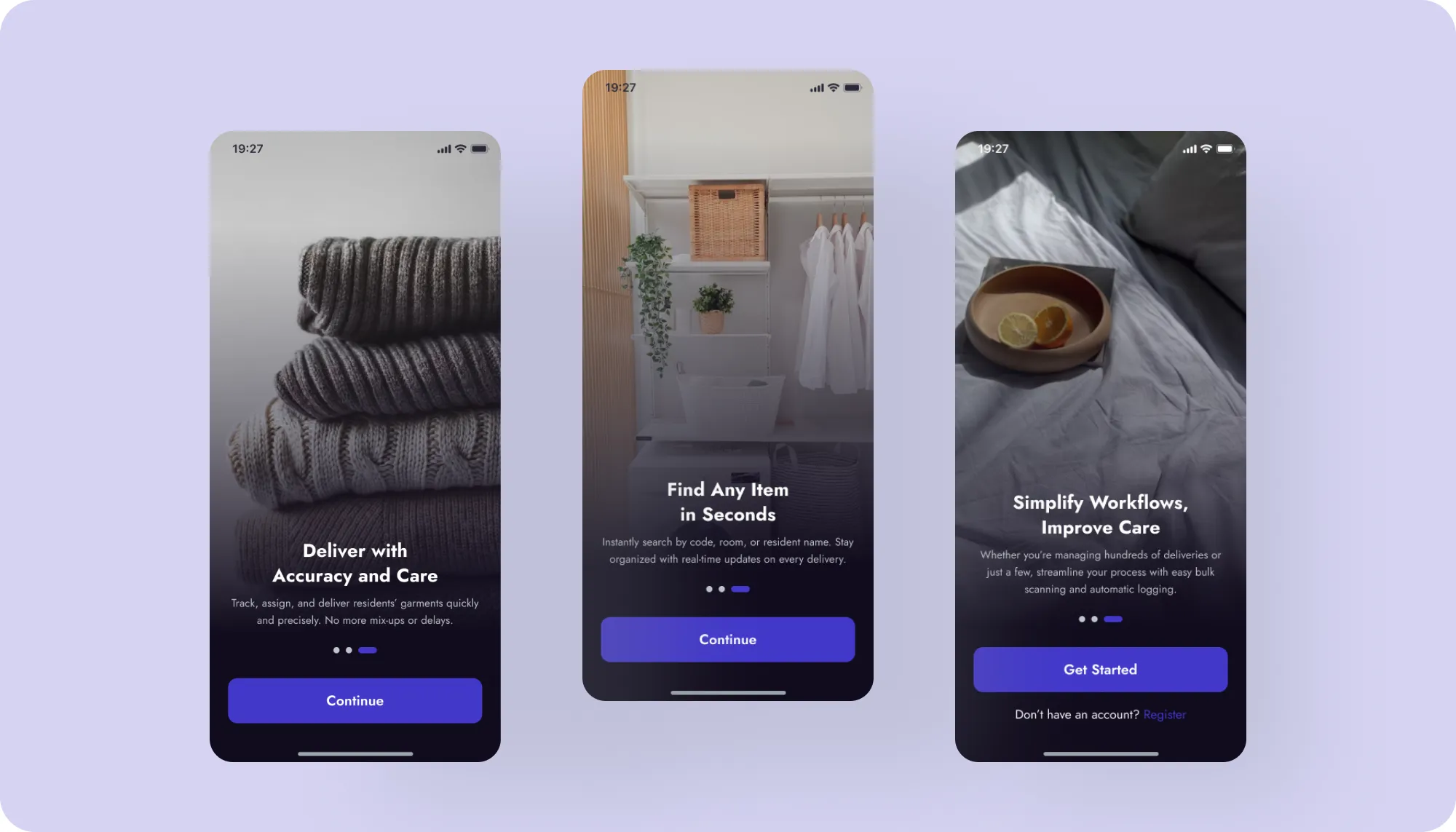
Every piece of equipment is tagged, allowing its movement and usage to be logged from check-out to check-in. The system provides a real-time audit trail. This ends the frustration of lost or misplaced assets, provides data to justify maintenance or procurement, and gives facility managers complete control over their capital equipment, reducing unnecessary repurchases.
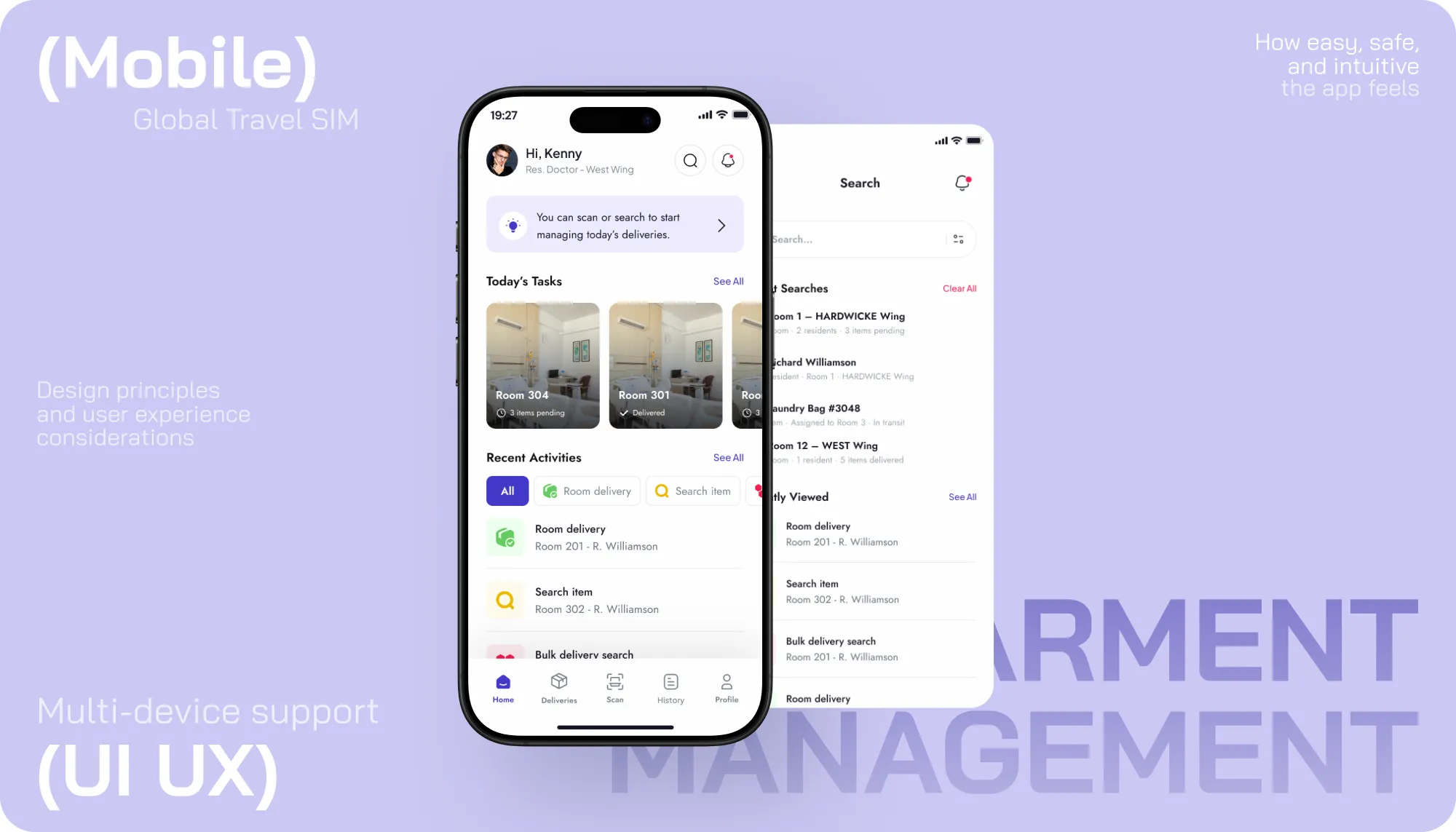
The app seamlessly pairs with RFID readers via Bluetooth/USB, supporting fast batch scans. Data syncs automatically to a central cloud database. This removes the technical barrier for staff, allowing them to focus on the task rather than the technology. Batch processing turns a previously tedious inventory day into a quick, routine scan, dramatically improving staff productivity.
Business Impact

Before the project, the client needed a practical RFID product that could address labor-intensive garment and asset verification for hospitals and other facilities. The delivered application met the project’s quality expectations and was successfully tested on the client’s actual RFID device, resolving uncertainty around its operation in the intended hardware environment. By replacing manual, item-by-item checks with RFID-based identification and supporting offline data capture, the solution gave downstream customers a more efficient and reliable workflow.
Related Case Study


Let’s Build Something Extraordinary
Sign up for a 30 min no-obligation strategic session with us. Transform your Ideas into scalable reality.