


What is Joomla? The Powerful & Flexible CMS Explained for Beginners
In the vast ecosystem of content management systems, WordPress often dominates the conversation. But what if you need a platform that offers more built-in power and flexibility without the extreme complexity of an enterprise solution like Drupal? This is where Joomla confidently steps in. Understanding what is Joomla is key for businesses and developers seeking a robust, “middle-ground” CMS. This guide will demystify Joomla for both technical and non-technical readers, exploring its core strengths, what makes it unique, and how it might be the perfect balanced solution for your next web development project.
What is Joomla?
Joomla is a free, open-source content management system (CMS) that enables users to build websites and powerful online applications without needing to write code from scratch. Think of it as a versatile toolbox that sits between the user-friendliness of WordPress and the developer-centric power of Drupal. Built on a model-view-controller (MVC) web application framework, Joomla is written in PHP and uses MySQL (or other databases) to store content and data. First released in 2005, it has since evolved into a mature, award-winning platform known for its balance of flexibility and user-friendliness.
So, what is a Joomla website? It’s a dynamic website where content is stored in a database and assembled on-the-fly when a visitor arrives, allowing for easy management and complex organization. For a non-tech user, building a Joomla site might involve using its intuitive backend to create articles and menus. For a developer or an agency offering PHP web development services, it involves leveraging its powerful framework to create custom components and templates. It’s a platform capable of handling everything from a simple blog to a sophisticated corporate web portal development service.
Why Choose Joomla?
Joomla is a perfect CMS choice if you need a powerful, flexible CMS that offers more built-in features than WordPress but is more approachable than Drupal, making it ideal for complex websites that still need to be manageable by non-technical users. Its popularity stems from providing an excellent balance of user-friendliness and extensibility.
1. Powerful Built-in Features
Unlike simpler CMSs, Joomla comes with advanced features like Access Control Lists (ACL) for detailed user permissions, robust multilingual support, and powerful menu creation tools right out of the box, reducing the need for additional extensions for basic functionality.
2. Flexibility and Extensibility
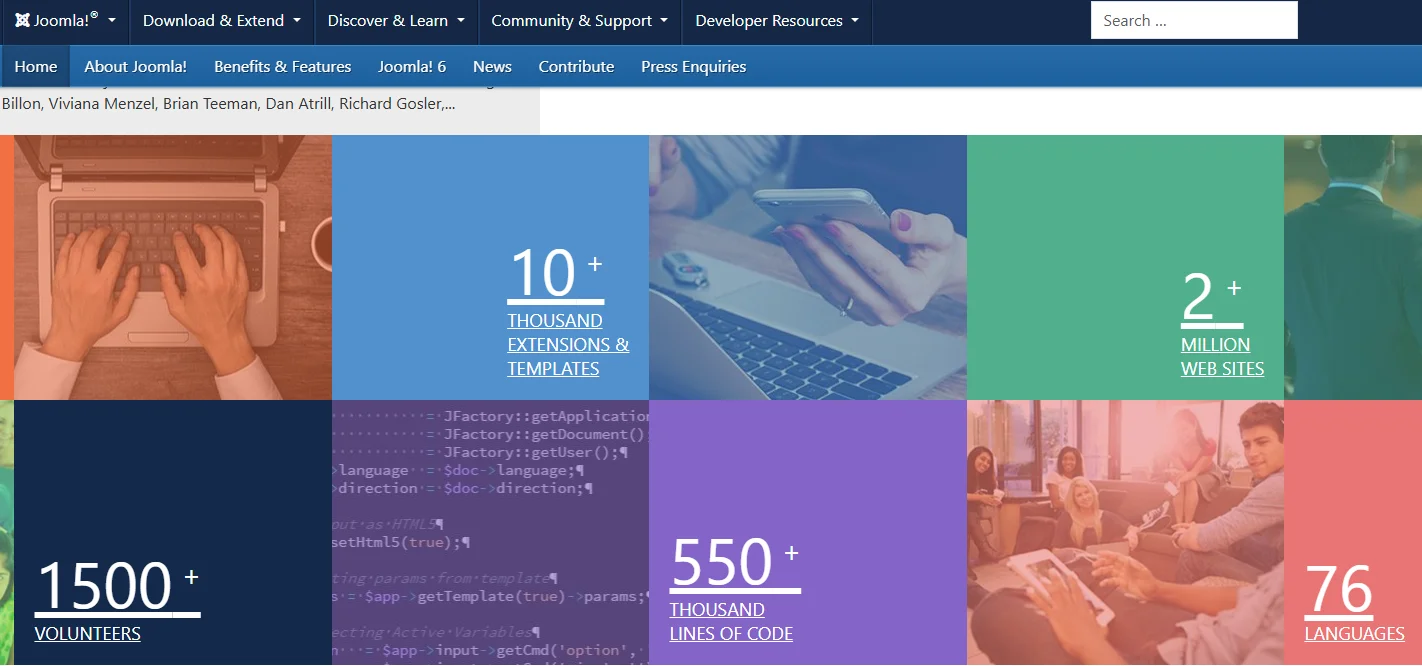
With thousands of available extensions (components, modules, plugins) and templates, Joomla can be adapted to virtually any need, from e-commerce to social networks. This makes it a highly versatile choice for software development services looking to build custom solutions.
3. Strong Security Track Record
The Joomla project has a dedicated security team and a strong track record of providing regular, timely security updates. Its clear, well-documented codebase makes it a secure foundation for business websites.
4. Active and Supportive Community
A large, global community of users and developers provides extensive free documentation, forums, and support. This means help is readily available, making it a reliable platform for long-term projects.
5. Balance of Power and Usability
Joomla finds a sweet spot, offering more power and structure than WordPress for complex sites, while being significantly easier to learn and use than Drupal for beginners and content editors.
Who Should Use Joomla?
Joomla is used by a diverse range of users, from small businesses and hobbyists to large organizations, educational institutions, and government agencies that need a powerful yet manageable CMS. It is the platform of choice for projects that have outgrown basic site builders but don’t require the heavy complexity of an enterprise framework.
- Small to Medium Businesses: Restaurants, shops, and service providers use it for professional business websites with advanced functionality.
- Educational Institutions: Schools and universities use it for their websites and internal portals.
- Non-Profit Organizations: NGOs use it to manage member directories, event calendars, and accept donations.
- Government Agencies: Various government entities use it for its security and ability to handle structured content.
- Web Developers and Agencies: Professionals who offer web development services often choose Joomla for client projects that require more flexibility than WordPress can easily provide.
What is Joomla Used For?
Its core strength is organizing and presenting complex content in a user-friendly way. Here are its most common applications.
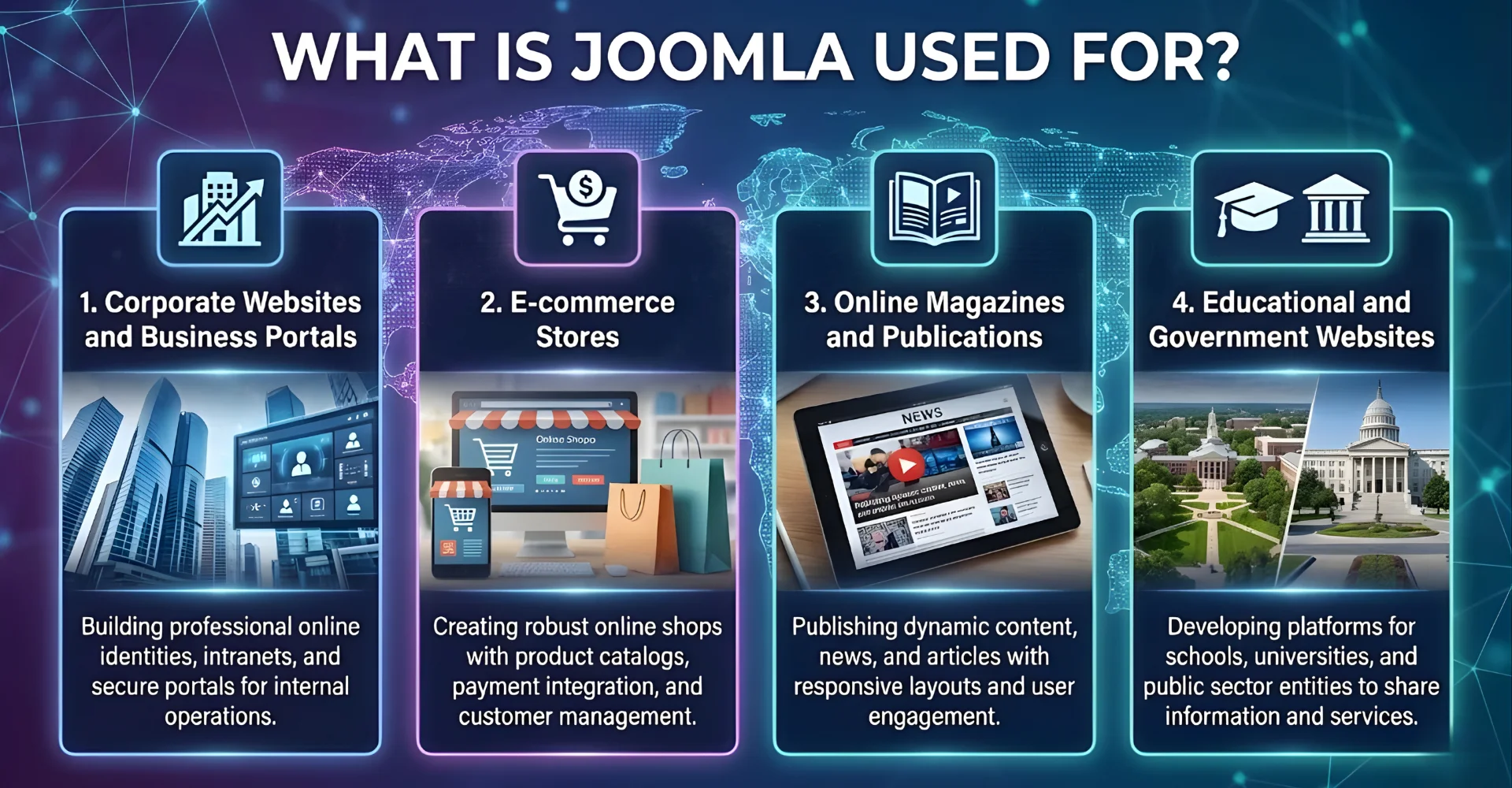
1. Corporate Websites and Business Portals
Businesses use Joomla to create professional websites that showcase their services, team, and portfolio. Its robust menu and category system allows for well-organized content structures that are easy for visitors to navigate.
Core Benefit:
- Superior Content Organization: Joomla’s advanced category and menu management systems allow for deep, hierarchical content structures, making it ideal for sites with many pages or services.
- Advanced User Permissions: Built-in Access Control Lists (ACL) provide granular control over what different users or staff members can see and edit, essential for multi-author business sites.
- Professional Presentation: A wide selection of professional templates and easy module positioning enables the creation of a polished, corporate-grade online presence without heavy customization.
2. E-commerce Stores
Through powerful extensions like VirtueMart, Joomla can be transformed into a fully-functional online store. This makes ecommerce web development services on Joomla a popular choice for businesses that want more control than hosted platforms offer.
Core Benefit:
- Unified Content & Commerce: Seamlessly blend informative blog content, product pages, and categories within a single, cohesive platform, enhancing SEO and the customer journey.
- Flexibility & Control: Unlike all-in-one SaaS platforms, Joomla-based stores offer full control over data, design, and functionality without recurring platform fees or restrictions.
- Extensible Functionality: The vast ecosystem of e-commerce extensions allows for customizing every aspect of the store, from payment gateways and shipping rules to product types and customer groups.
3. Online Magazines and Publications
Joomla’s powerful core content management features, particularly its advanced category system, make it ideal for news sites, magazines, and blogs with a large amount of content. Editors use nested categories to organize content by section, topic, and author. Joomla’s article management system supports featured articles, multi-page articles (“read more”), and versioning. Its user role system is perfect for defining permissions for writers, editors, and publishers.
Core Benefit:
- Powerful Article Management: Native support for article versioning, featured articles, and category blogging layouts provides editors with professional publishing tools out-of-the-box.
- Multi-author Workflow: Sophisticated user roles and permissions are perfect for editorial teams with writers, editors, and publishers, streamlining the content approval process.
- Structured Content Hierarchy: Effortlessly manage thousands of articles across nested categories and tags, keeping large content repositories organized and easily navigable.
4. Educational and Government Websites
Schools, universities, and government bodies use Joomla for its security, ability to handle structured content, and user permission systems. Institutions leverage Joomla’s ACL to create secure, private sections for staff or students alongside public-facing information. Its multilingual capability is crucial for government sites serving diverse populations. The structured content approach is ideal for organizing policies, procedures, and resources in a findable way.
Core Benefit:
- Enterprise-Grade Security: A dedicated security team and a strong track record of timely updates make it a trusted, compliant choice for handling sensitive public information.
- Scalable Information Architecture: Efficiently manage and present vast amounts of structured information, policies, and resources to citizens or students in a logical, findable way.
- Multi-tiered Access: Control public-facing content while also managing private internal sections for staff or students, all from a single installation.
How Does Joomla Work?
Joomla operates on a modular architecture designed for flexibility and extensibility. Understanding how does Joomla work involves looking at its core components, here is a basic workflow for you to easily understand:
- The Core & The Database: The Joomla software (PHP-based) and your database (typically MySQL) work together. The database stores all your content, user data, and settings.
- Extensions: Functionality is added through extensions:
+ Components: Large applications that form the main content (e.g., com_content for articles).
+ Modules: Smaller blocks of content displayed around the main component (e.g., login form, latest news).
+ Plugins: Small code snippets that extend functionality (e.g., for SEO, authentication).
- Templates: Control the visual design and layout of your site. They define positions where modules can be placed.
- The Request Cycle: When a user visits a page, Joomla determines which component to use, retrieves the necessary content from the database, processes it through the active template, and delivers the final HTML page to the browser.
This structure makes Joomla highly flexible. Users can manage content through an intuitive backend, while the system handles the complex work of assembling pages dynamically for each visitor.
Advantages and Disadvantages
Joomla offers a powerful set of features and great flexibility, positioning itself as a strong middle-ground option, though it comes with a steeper learning curve than some simpler alternatives.
Advantages
The pros of using Joomla are what make it an enduringly popular choice.
- Powerful Built-in Features: Includes advanced user management, access controls, and multilingual support out of the box.
- Strong Extensibility: A vast library of extensions allows you to add almost any functionality.
- Excellent Content Organization: Superior category and menu management for structuring complex sites.
- Strong Security: A dedicated security team and regular updates make it a trustworthy platform.
- Active Community: Large, supportive community provides ample resources and help.
Disadvantages
The cons are typically the trade-offs for its increased power.
- Steeper Learning Curve: More complex to learn than WordPress, especially for complete beginners.
- Fewer Design Themes: While templates are available, the selection is smaller than WordPress’s massive theme ecosystem.
- Extension Compatibility: Some extensions may not be updated regularly or may conflict with each other.
- Performance Optimization: May require more tuning for optimal performance compared to lighter platforms.
Why Partner with a Professional Joomla Development Agency?
While Joomla is designed to be user-friendly, maximizing its potential for a business-critical website often requires expert knowledge. Partnering with a professional agency that offers software development services ensures your site is built on a solid foundation, performs optimally, and is secure. These experts can navigate Joomla’s complexity efficiently, implement best practices, and create custom functionality that aligns perfectly with your business goals. This approach is often more effective than trying to hire web developer resources individually, as an agency provides a full spectrum of skills and ongoing software maintenance services.
Key advantages of partnering with experts include:
- Architectural Excellence: Professionals ensure your site is built on a solid technical foundation, with optimized performance, clean code, and a structure that is easy to maintain and scale as your business grows.
- Custom Functionality: Agencies can develop bespoke components, modules, and plugins tailored to your unique business processes, going far beyond what off-the-shelf extensions can offer.
- Enhanced Security & Compliance: Experts implement rigorous security hardening measures, configure proper user permissions, and ensure your site meets any necessary industry compliance standards from day one.
- Ongoing Optimization & Support: Beyond the launch, a professional agency provides crucial software maintenance services, including proactive updates, security patches, performance monitoring, and technical support, ensuring your investment remains protected and effective.
At Newwave Solutions, we have extensive experience with all major CMS platforms, including Joomla. Our team understands how to leverage Joomla’s strengths to create powerful, scalable websites that drive business results. We offer comprehensive web development services, from initial strategy and custom development to ongoing software maintenance services and support. Whether you need a corporate website, an e-commerce store, or a custom web application, we have the expertise to deliver a solution that meets your needs and exceeds your expectations.
Ready to build a powerful, flexible website on the Joomla platform? Contact us today for a free consultation, and let’s discuss your project!
FAQs
What is the difference between Joomla and WordPress?
While both are free, open-source CMS platforms, Joomla offers more built-in features and a more complex structure that’s better suited for sites that need to organize and display large amounts of content in specific ways. WordPress is generally easier for beginners to pick up, especially for simple blogs or brochure sites.
Is Joomla better than WordPress?
“Better” depends on your specific needs. Joomla is often better for more complex sites that need advanced user management and content organization out-of-the-box. WordPress is typically easier for beginners and has a larger theme and plugin ecosystem. For very complex enterprise needs, Drupal might be considered.
Is Joomla good for SEO?
Yes, Joomla is considered good for SEO. It includes built-in search engine friendly (SEF) URLs, meta description management, and there are numerous SEO extensions available to further optimize your site. The platform’s strong content organization capabilities also contribute to good SEO practices.
Can Joomla do ecommerce?
Absolutely. Through extensions like VirtueMart, Joomla can power fully-featured online stores. This makes it a viable platform for ecommerce web development services looking for a flexible, customizable solution that integrates content and commerce.
How much does Joomla cost?
The Joomla software itself is completely free. However, there are costs associated with running a Joomla website, including web hosting, a domain name, and potentially premium templates or extensions. For professional software development services or custom work, you would also need to factor in development costs if you choose to hire dedicated developers.
Conclusion
Joomla is a powerful, versatile content management system that successfully occupies the crucial middle ground between simplicity and enterprise power. Understanding what is Joomla used for—complex business websites, e-commerce stores, online publications, and organizational portals—helps you identify if it’s the right tool for your specific needs. While it may have a steeper learning curve than WordPress, its built-in power and flexibility make it an excellent choice for sites that need to grow and evolve over time.
Whether you choose to build it yourself or partner with experts for software development services, Joomla provides a robust foundation for creating sophisticated web experiences that can scale with your ambitions.
Approach Newwave Solutions if you are in need of quality CMS development services to support your Joomla building process.
To Quang Duy is the CEO of Newwave Solutions, a leading Vietnamese software company. He is recognized as a standout technology consultant. Connect with him on LinkedIn and Twitter.



Read More Guides


Get stories in your inbox twice a month.
Let’s Connect
Let us know what you need, and out professionals will collaborate with you to find a solution that enables growth.
Leave a Reply