


What is PostgreSQL? Features, Advantages & Industry Applications
For many enterprises, the challenge of selecting the right open-source relational database management system often leads to concerns about scalability, security, and long-term flexibility. In this context, understanding what is PostgreSQL becomes essential, as it has emerged as one of the most reliable and advanced options available for businesses worldwide. This Newwave Solutions article explores the pros and cons of the platform, its most common enterprise use cases, and even provides a quick setup tutorial for those who are not yet familiar with the tool.
What Is PostgreSQL?
PostgreSQL is an advanced open-source relational database management system designed to store, organize, and manage data with high reliability and efficiency. At its core, this SQL (structured query language) supports structured and unstructured data, making it suitable for a wide range of applications — from traditional enterprise systems to modern web services.
When executives ask “what is PostgreSQL database” or “what is PostgreSQL used for,” the answer lies in its ability to deliver enterprise-grade performance, security, and scalability while remaining fully open-source.
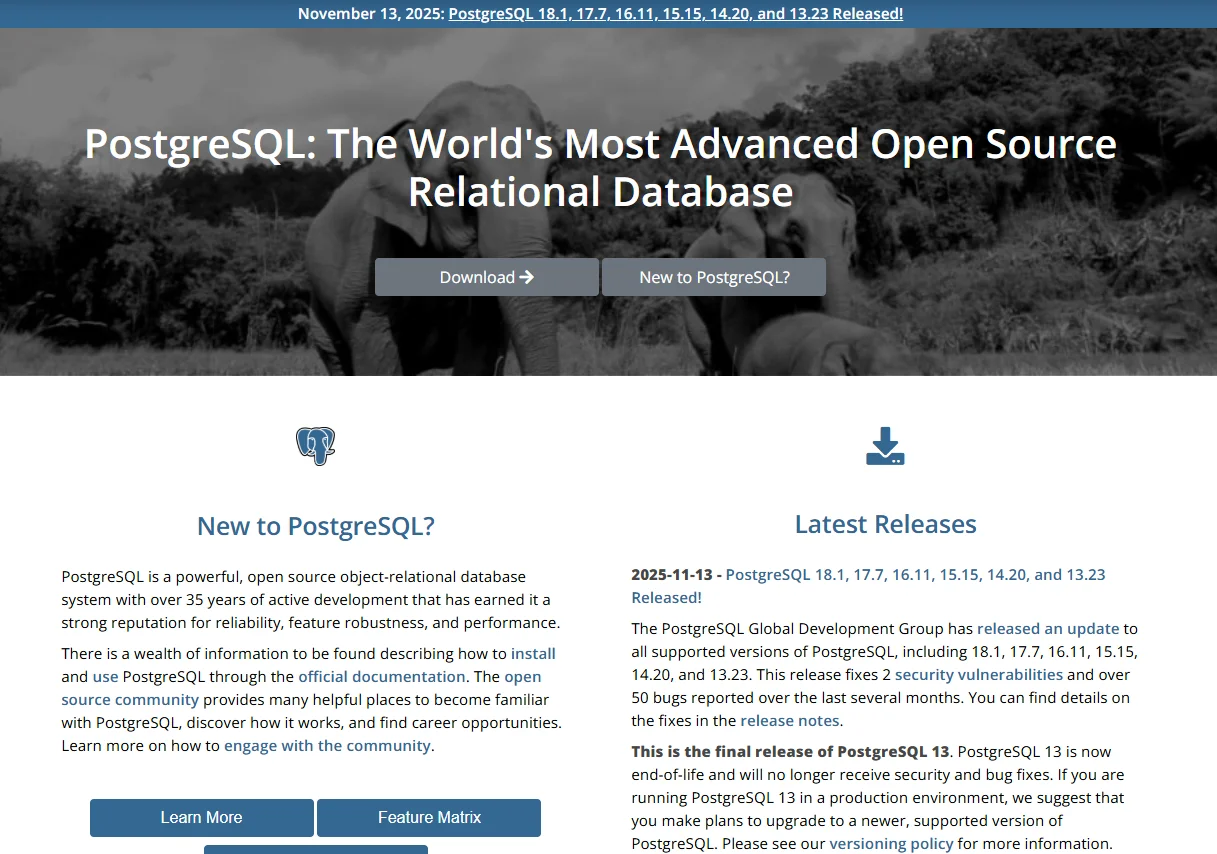
Example: Companies like Instagram rely on PostgreSQL to manage massive user-generated content efficiently, while Apple uses it for critical internal systems, enabling consistent performance and streamlined data management. These implementations showcase PostgreSQL’s impact in driving both scalability and operational excellence.
Key Features of PostgreSQL
- ACID Compliance: PostgreSQL ensures data integrity by adhering to Atomicity, Consistency, Isolation, and Durability, which are essential for mission-critical applications.
- Extensibility: Developers can create custom data types, operators, and functions, making PostgreSQL adaptable to unique business requirements.
- Advanced Security: Built-in features such as SSL connections, authentication methods, and row-level security help organizations meet compliance standards like GDPR or HIPAA.
- Multi-Version Concurrency Control (MVCC): This allows multiple users to access the database simultaneously without conflicts, ensuring smooth transaction processing.
- Powerful Indexing Options: With support for B-tree, hash, GiST, GIN, and BRIN indexes, PostgreSQL accelerates query performance even in large datasets.
- Table Partitioning: By dividing large datasets into smaller, manageable parts, PostgreSQL enhances query efficiency and simplifies data management at scale.
- JSON and XML Support: In addition to relational data, PostgreSQL natively handles semi-structured data, making it a strong choice for modern applications.
Pros & Cons of PostgreSQL
When exploring what is PostgreSQL, it is important to recognize that, like any database management system, this tool comes with its own advantages and limitations. To determine whether PostgreSQL is the right fit for your business, please review the table below.
|
Pros |
Cons |
| Open-Source Cost Savings: PostgreSQL is free to use, which eliminates expensive licensing fees and provides flexibility for enterprises to allocate IT budgets elsewhere. | Steeper Learning Curve: Its advanced capabilities and complex configurations may require more training and skilled staff compared to simpler databases. |
| Cross-Platform Compatibility: It works across major operating systems (Linux, Windows, macOS), making it versatile for diverse IT infrastructures. | Performance Tuning Needs: For extremely large-scale workloads, PostgreSQL may require continuous optimization and monitoring to reach peak performance. |
| Strong Community & Ecosystem: Backed by a global developer community, PostgreSQL benefits from constant updates, plugins, and third-party integrations. | Limited Out-of-the-Box Tools: Compared to commercial databases, enterprises may need to rely on external tools for advanced analytics, reporting, or administration. |
| High Reliability for Complex Applications: Enterprises use PostgreSQL for mission-critical systems that demand stability and long-term support. | Migration Challenges: Transitioning from other database systems to PostgreSQL can be resource-intensive if not guided by experienced experts. |
Common Use Cases of PostgreSQL
PostgreSQL is a flexible platform that can be applied across multiple industries and business cases. Below are some of the most common scenarios where enterprises and organizations rely on this technology.
1. Financial Services
PostgreSQL supports the financial and fintech software development service sector by enabling real-time risk management, fraud detection, and large-scale payment processing with high levels of accuracy. Its advanced transaction handling ensures that sensitive financial data is always consistent and secure.
A prime example is Goldman Sachs, which has utilized PostgreSQL in specific systems to enhance transaction processing and reduce dependency on costly commercial databases. This adoption helps improve performance while maintaining compliance with strict financial regulations.
2. Healthcare
Healthcare organizations use PostgreSQL to securely store, process, and analyze sensitive patient data, ensuring compliance with regulations such as HIPAA and GDPR. Its ability to handle structured and semi-structured data makes it suitable for modern electronic health record (EHR) systems and healthcare software development services.
The U.S. National Institutes of Health (NIH) leverages PostgreSQL in research databases to manage large-scale genomic data, supporting discoveries in precision medicine and advanced healthcare studies. This demonstrates its role in both security and scientific innovation.
3. E-commerce & Retail
Retailers benefit from PostgreSQL’s ability to manage high-volume product catalogs, power real-time recommendations, and process thousands of concurrent orders seamlessly. The database’s scalability ensures fast performance even during seasonal peaks like Black Friday or Cyber Monday.
IKEA, for example, has adopted PostgreSQL in parts of its online systems to better manage its global e-commerce operations. The result has been more reliable order handling and improved user experience for millions of customers worldwide.
4. Technology Startups
Startups often choose PostgreSQL because it offers a cost-effective foundation for building scalable MVPs (Minimum Viable Products) and SaaS platforms. Its flexibility allows young companies to experiment, adapt quickly, and grow without heavy upfront licensing costs.
For instance, Reddit relied on PostgreSQL in its early years to manage community posts and comments, allowing the platform to scale effectively while keeping infrastructure expenses low. This decision supported growth into one of the world’s largest social platforms.
How to use PostgreSQL from scratch
Many businesses and individual users encounter difficulties when starting with PostgreSQL, as its setup and configuration may seem complex at first glance. From our years of experience with this database system, we have prepared a simple guide on how to use PostgreSQL and how to setup PostgreSQL, helping beginners get familiar with the tool more quickly.
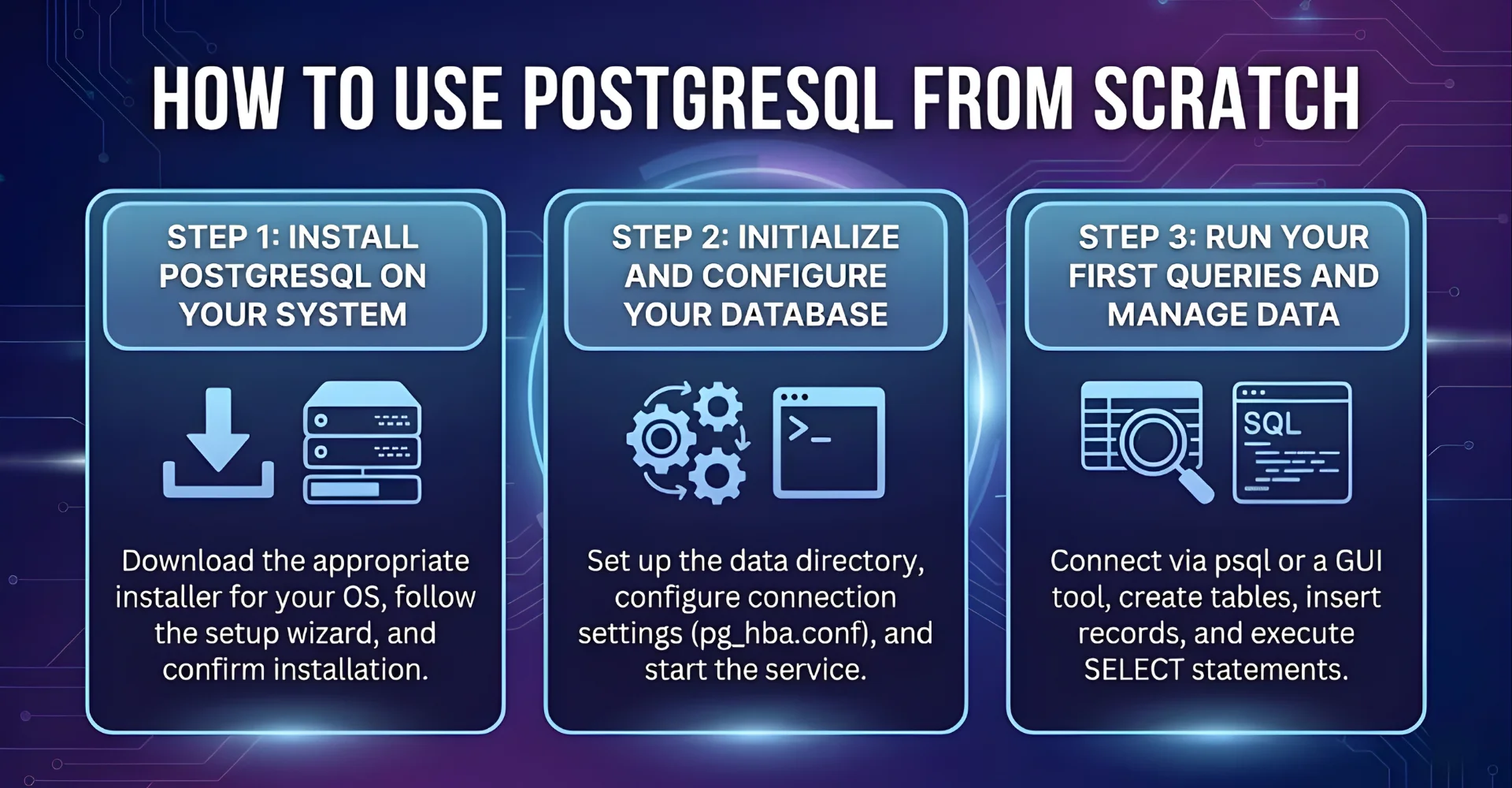
Step 1: Install PostgreSQL on Your System
Download the installer package from the official PostgreSQL website and follow the setup wizard for your operating system (Windows, macOS, or Linux). During installation, you will be asked to define the database superuser password, which is critical for managing your database later.
Step 2: Initialize and Configure Your Database
After installation, open pgAdmin (the graphical interface for PostgreSQL) or connect via the command line to create your first database instance. Configure basic settings such as database name, encoding (UTF-8 is recommended), and user roles to ensure your system is ready for storing data.
Step 3: Run Your First Queries and Manage Data
Once your database is set up, create sample tables using SQL commands or pgAdmin’s GUI, and insert data records to test functionality. You can then run queries such as SELECT * FROM table_name; to retrieve data, helping you understand how PostgreSQL processes and manages information effectively.
PostgreSQL vs Other Databases
In the enterprise database landscape, PostgreSQL competes with several established systems such as MySQL and Oracle. To better understand its strengths and limitations, we will compare it with these two leading competitors across critical criteria and identify the optimal choice for businesses.
|
Criteria |
PostgreSQL | MySQL |
Oracle |
| Performance | Strong with complex queries | Fast with simple read-heavy apps | High-end optimization for enterprises |
| Scalability | Vertical & horizontal scaling | Moderate scalability | Enterprise-grade with clustering |
| Extensibility | Highly customizable (plugins, data types) | Limited customization | Proprietary extensions are less flexible |
| Security | Advanced (row-level, SSL, auditing) | Basic security features | Enterprise-class, full compliance |
| Cost | Free, open-source | Free (community edition) | High licensing and maintenance costs |
Besides PostgreSQL and its competitors above, you can explore our latest article on the top 10 Software Development Languages to find out the system that most fit with your project.
Who is best suited to use PostgreSQL
After the full analysis above, if you are still unsure whether your business should adopt PostgreSQL, we have summarized below the main audiences and situations where the tool delivers the greatest value.
- Large Enterprises with Complex Data Needs: Corporations managing massive datasets and requiring advanced analytics benefit from PostgreSQL’s scalability and performance.
- Financial Institutions: Banks and fintech companies rely on PostgreSQL for secure, real-time transaction processing and compliance with strict regulations.
- Healthcare Organizations: Hospitals and medical providers use PostgreSQL to store sensitive patient data while meeting data protection standards such as HIPAA and GDPR.
- E-commerce & Retail Businesses: Online retailers handling high product volumes and peak seasonal traffic gain stability and fast query response with PostgreSQL.
- Technology Startups: Startups building MVPs or SaaS platforms choose PostgreSQL for its flexibility, open-source cost savings, and ability to scale as the business grows.
- Government & Public Sector Agencies: PostgreSQL provides transparency, reliability, and compliance-ready features for managing large citizen or research databases.
- Cloud-First Companies: Businesses adopting cloud-native strategies benefit from PostgreSQL’s seamless integration with AWS, Azure, and Google Cloud for flexible deployments.
FAQs
1. Is PostgreSQL free?
Yes, PostgreSQL is completely free and open-source. You do not need to pay for licenses, which makes it a cost-effective choice for businesses of all sizes.
2. How to back up a PostgreSQL database?
You can back up a PostgreSQL database using built-in tools like pg_dump (for single databases) or pg_dumpall (for all databases). These tools create a copy of your data that can be restored later if needed.
3. How to install PostgreSQL?
You can install PostgreSQL by downloading the installer from the official PostgreSQL website and following the setup wizard for your operating system. Once installed, you can manage it with pgAdmin (graphical interface) or through the command line.
4. Can PostgreSQL handle enterprise-level workloads?
Yes, PostgreSQL can support enterprise workloads such as high-volume transactions, complex analytics, and large-scale data processing. Many global companies, including Apple and Instagram, use PostgreSQL to power mission-critical systems.
5. How does PostgreSQL ensure data security?
PostgreSQL has advanced security features like SSL connections, role-based access control, and row-level security. It also supports data encryption and audit logging to help meet compliance standards like GDPR and HIPAA.
6. Can PostgreSQL integrate with BI tools and cloud-native applications?
Yes, PostgreSQL integrates seamlessly with business intelligence tools such as Tableau and Power BI, as well as cloud platforms like AWS, Azure, and Google Cloud. This makes it suitable for modern analytics, reporting, and cloud-native applications.
Conclusion
In summary, knowing what is PostgreSQL helps businesses recognize its value as a secure, cost-effective, and highly scalable database solution. From supporting complex enterprise workloads to enabling startups with flexible growth, PostgreSQL has proven its strength across industries.
Contact Newwave Solutions in case you need quality assistance with applying systems like PostgreSQL to your database management system.
To Quang Duy is the CEO of Newwave Solutions, a leading Vietnamese software company. He is recognized as a standout technology consultant. Connect with him on LinkedIn and Twitter.



Read More Guides
Get stories in your inbox twice a month.
Let’s Build Something Extraordinary
Sign up for a 30 min no-obligation strategic session with us. Transform your Ideas into scalable reality.
Leave a Reply