


Solana vs Ethereum: Which Is Better? (Detailed Comparison)
The debate around Solana vs Ethereum is one of the most important discussions in the blockchain space today. These two platforms represent fundamentally different design philosophies and long-term visions for how blockchain infrastructure should scale, secure value, and support real-world applications.
This guide breaks down Ethereum and Solana from a practical, business and development perspective. The goal is to help founders, product owners, and technology leaders understand which platform fits their use case, investment strategy, or application roadmap.
Key Takeaways
|
A Brief History of Ethereum and Solana
Ethereum was launched in 2015 as a programmable blockchain enabling smart contracts and decentralized applications. It powered major ecosystems like DeFi, ERC-20 tokens, and NFTs through its flexible architecture.
Over time, Ethereum introduced network upgrades to improve security, scalability, and transaction efficiency. In September 2022, the network completed The Merge, replacing proof of work with proof of stake and reducing its energy consumption by more than 99%.
2 years later, Solana’s birth was marked by Anatoly Yakovenko’s introduction of Proof of History, a cryptographic system for efficient transaction ordering. It reduces latency by allowing validators to process data without constant coordination.
Combined with proof of stake and parallel processing, it forms a high-performance blockchain architecture. This design enables Solana to handle thousands of transactions per second for DeFi, NFTs, and blockchain applications.
What Are Solana and Ethereum?
Ethereum overview
Ethereum is a decentralized computing platform that’s known as Layer 1 network providing the infrastructure for smart contracts and decentralized applications. It uses ETH as its native token for transaction fees, payments, and network validation. Ethereum is the largest smart contract ecosystem and prioritizes security, decentralization, and scalability through its expanding Layer 2 network.
Solana overview
Solana is a Layer 1 blockchain network built for decentralized applications, with an emphasis on high throughput, low transaction costs, and LLVM-compatible smart contracts. Its architecture is designed to reduce common performance constraints through base-layer scaling, parallel transaction execution, and rapid processing. SOL is the network’s native token, used for transaction fees, staking, and participation in the ecosystem.
Solana vs Ethereum: What are the Key Differences?
Ethereum and Solana are both programmable blockchains, but they take different approaches to performance and scalability. Ethereum prioritizes security, decentralization, and a layered ecosystem, while Solana focuses on high-speed execution, low fees, and base-layer scalability.
Transaction speed
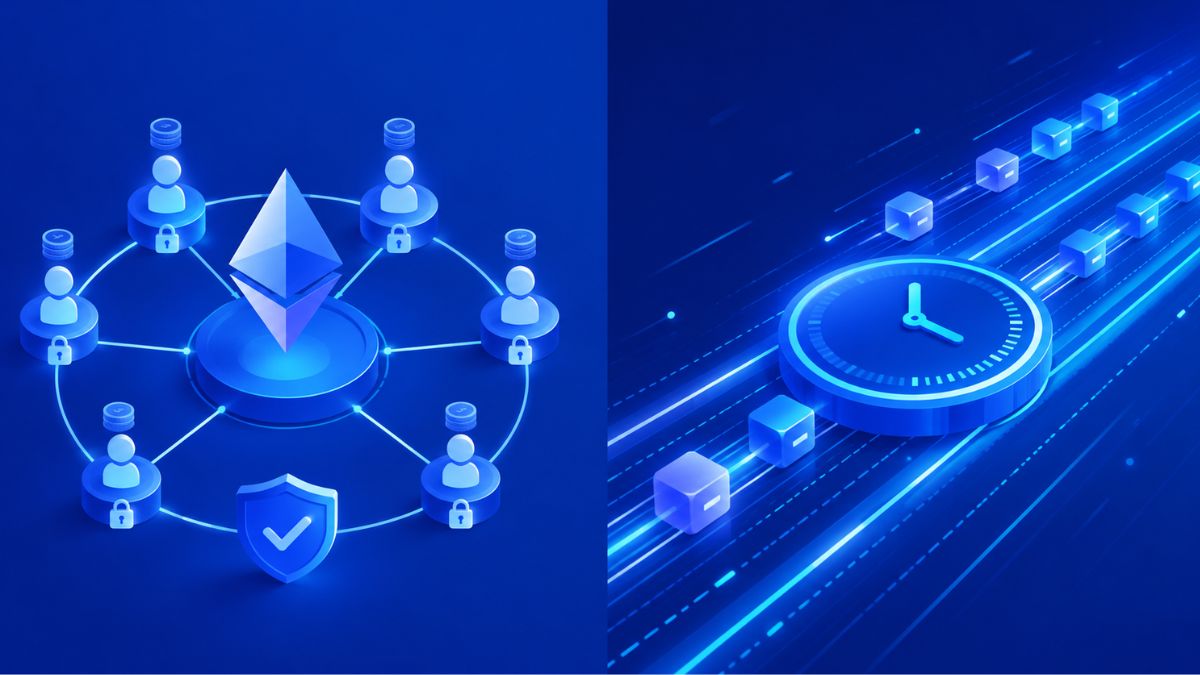
Ethereum processes approximately 15 to 30 transactions per second (TPS) on its mainnet. To overcome this limitation, it relies on Layer 2 networks such as Arbitrum, Base, and Optimism, which execute transactions faster and submit the results to Ethereum for final settlement. Together, these networks add thousands of transactions per second to Ethereum’s overall capacity.
Solana is much faster than Ethereum, with around 600 to 700 TPS under typical real-world conditions, with a theoretical maximum of approximately 65,000 TPS. Unlike Ethereum, Solana delivers most of its transaction speed directly at the base layer without depending on a separate Layer 2 ecosystem. This makes Solana better suited to applications requiring fast confirmations and frequent transactions.
Consensus mechanisms
Ethereum uses proof of stake, where validators lock ETH as collateral to participate in transaction validation and network security. This mechanism replaced Ethereum’s previous proof-of-work system and allows the network to operate with significantly lower energy consumption.
Solana combines proof of stake with Proof of History, a cryptographic timing mechanism that creates a verifiable sequence of network events. This built-in clock allows validators to order and process transactions without constantly waiting for the entire network to synchronize. As a result, Solana achieves lower latency and higher throughput than blockchains using standard proof-of-stake designs.
Transaction fees
Ethereum mainnet fees commonly range from $0.50 to $3 for simple transfers, while complex DeFi transactions can cost between $15 and $30 during periods of congestion. Fees fluctuate because users compete for limited block space through Ethereum’s gas system. Its Layer 2 networks reduce these costs considerably, often bringing transactions down to approximately $0.10 to $0.50.
Solana transactions cost approximately $0.00025 on average and generally remain below one cent even during periods of high network activity. Because the network processes more transactions directly at the base layer, users face less competition for block space. Solana therefore offers substantially lower fees than both Ethereum mainnet and most Ethereum Layer 2 networks.
Ecosystem maturity
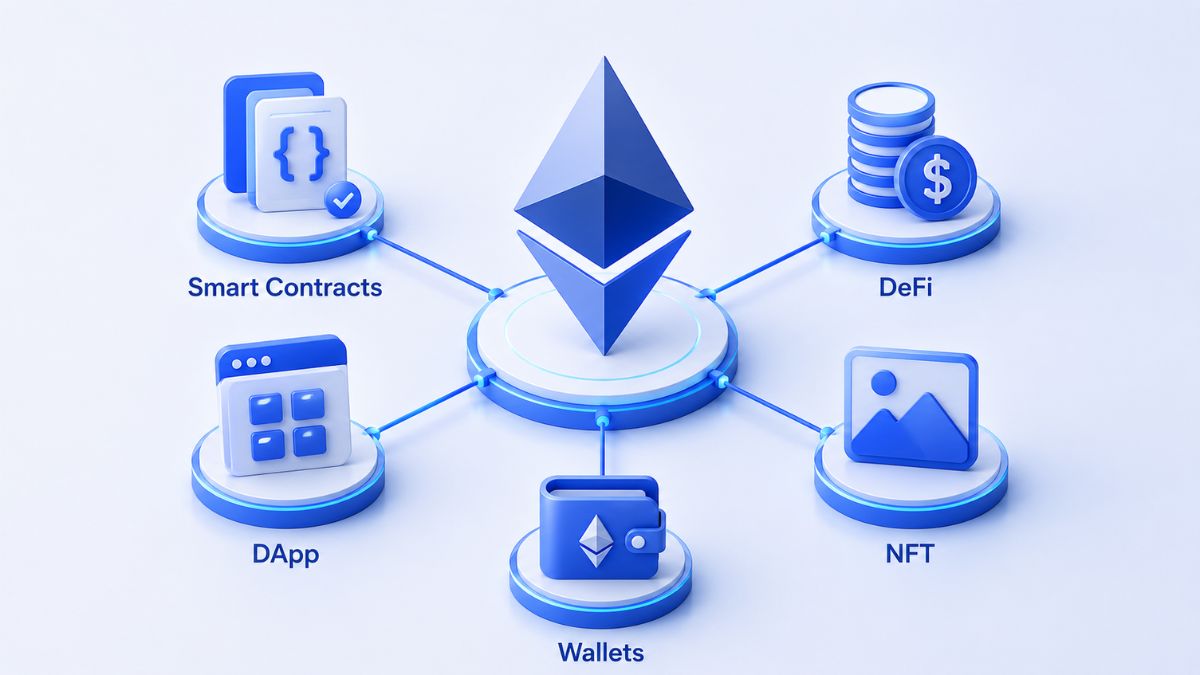
Ethereum has a more mature blockchain ecosystem. It has a roughly 10-year advantage in ecosystem development, supporting more than 4,000 dApps and the largest developer community in blockchain. It holds about $55 billion in DeFi total value locked, accounting for roughly 68% of the global DeFi market. Ethereum also hosts most on-chain stablecoin liquidity, while its ERC-20 standard remains the dominant framework for fungible tokens.
Solana’s ecosystem is smaller but expanding quickly, with approximately $8 billion in DeFi TVL and around 500 active dApps. Its strongest growth has come from decentralized trading, NFTs, high-frequency applications, and consumer platforms. Solana surpassed Ethereum in weekly DEX trading volume in 2024 and maintained that lead through 2026, supported by its high throughput and low transaction costs.
Scalability
Ethereum scales primarily through Layer 2 networks that execute transactions outside the main chain and post compressed data back to Ethereum. This model allows applications to benefit from higher throughput while continuing to use Ethereum as the security and settlement layer. However, operating across multiple Layer 2 networks can fragment liquidity and create a more complex experience for users.
Solana scales directly at the base layer by optimizing transaction execution, validator coordination, and network hardware performance. Independent validator clients such as Firedancer are intended to improve both throughput and network resilience. Because applications and assets remain on one primary chain, Solana offers a simpler user experience than Ethereum’s multi-network scaling model.
Solana vs Ethereum: Side-by-side Comparison
The overview below highlights the key differences of Solana vs Ethereum to support a clearer evaluation of which blockchain better fits specific application, scalability, and business requirements.
| Category | Ethereum | Solana |
| TPS | Approximately 15-30 TPS on the mainnet, with more than 5,000 aggregate TPS available through Layer 2 networks | Approximately 600-700 TPS under real-world conditions, with a theoretical maximum of 65,000 TPS |
| Transaction fees | Around $0.50–$3 on the mainnet and $0.10–$0.50 on Layer 2 networks | Approximately $0.00025 per transaction |
| Finality | Around 12 minutes on Layer 1, with faster confirmation available through Layer 2 networks | Approximately 6–13 seconds |
| Consensus | Proof of stake | Proof of stake combined with Proof of History |
| DeFi TVL | Approximately $55 billion | Approximately $8 billion |
| Active developers | Approximately 31,800 | Approximately 17,700 |
| Network uptime | No unplanned downtime on Ethereum Layer 1 | More than 99.9% uptime since mid-2024, following several outages between 2021 and 2023 |
| Scaling approach | Uses Layer 2 rollups such as Arbitrum, Base, and Optimism | Improves performance directly at the base layer, supported by validator clients such as Firedancer |
| Best suited for | Institutional DeFi, large-capital applications, regulated financial products, and security-focused platforms | High-frequency trading, NFTs, consumer applications, gaming, and micropayments |
Best Use Cases of Solana vs Ethereum
Ethereum and Solana support many of the same blockchain applications, including dApps, DeFi, NFTs, and DAOs. However, Ethereum is generally better suited to security-intensive and high-value applications, while Solana is optimized for fast, low-cost, and high-volume use cases.
Popular use cases of Ethereum inlcude:
- Complex smart contracts: Ethereum’s mature development tools, established standards, and extensive auditing experience support applications with sophisticated contract logic and advanced cryptographic requirements.
- Institutional applications: Organizations that prioritize security, compliance, liquidity, and established infrastructure often choose Ethereum for regulated financial products and enterprise blockchain solutions.
- High-value DeFi protocols: Ethereum is well suited to lending, borrowing, trading, and liquidity protocols that manage substantial capital and depend on deep liquidity across interconnected platforms.
Meanwhile, Solana is well-suited for:
- High-frequency applications: Solana’s throughput and low fees support decentralized exchanges, trading platforms, and blockchain games that require frequent transactions and near-instant execution.
- Real-time applications: Applications that depend on immediate interactions or rapid settlement can benefit from Solana’s performance-focused base-layer architecture.
- Microtransactions and tokenization: Solana makes frequent low-value transactions and large-scale token issuance economically practical by keeping transaction costs minimal.
- Consumer-scale applications: Gaming, social platforms, NFT products, and other user-facing dApps can use Solana to deliver faster onboarding and smoother high-volume experiences.
Solana and Ethereum: Which One Should You Choose?
The right choice between Ethereum and Solana depends on your experience, transaction needs, application type, and long-term priorities. Ethereum generally offers greater ecosystem maturity, while Solana emphasizes speed, affordability, and high-volume usability.
For beginners
Ethereum is usually the easier starting point because its ecosystem has grown since 2015 and includes extensive documentation, tutorials, developer communities, and widely supported tools. Most major wallets, exchanges, NFT platforms, and DeFi protocols support Ethereum or Layer 2 networks such as Arbitrum and Optimism.
Solana has a steeper technical learning curve because its architecture combines proof of stake with Proof of History, while many applications are developed using Rust. However, onboarding has become more accessible through community resources, user-friendly dApps, and wallets such as Phantom.
For traders
Ethereum is suitable for traders who prioritize deep liquidity and access to established decentralized exchanges such as Uniswap and Curve. Layer 2 networks have improved execution speed and reduced fees, although trading costs generally remain higher than on Solana.
Solana is better suited to high-frequency trading, arbitrage, and other strategies that require rapid execution and minimal transaction costs. Its high throughput allows orders to settle quickly without the fee burden associated with frequent mainnet activity on Ethereum.
For NFT users
Ethereum remains the more established NFT ecosystem, with major collections such as CryptoPunks and Bored Ape Yacht Club originating on the network. It offers broad marketplace support, mature token standards, and stronger interoperability across wallets and platforms.
Meanwhile, Solana makes minting, buying, and trading NFTs more affordable through low fees and fast confirmations. This cost advantage is particularly useful for gaming assets, emerging creators, and high-volume collections, supported by marketplaces such as Magic Eden.
For DeFi users
Ethereum is the stronger option for users seeking mature DeFi protocols, deep liquidity, and composable financial products. Platforms such as Aave, Compound, and Lido benefit from the EVM ecosystem, which allows developers to integrate applications and reuse established infrastructure.
Solana offers a smaller but fast-growing DeFi ecosystem built around low-cost and near-instant transactions. Platforms such as Raydium and MarginFi support trading, lending, and yield strategies that involve frequent interactions without substantial transaction fees.
For long-term holders
Ethereum may appeal to holders who value its established network effects, large developer base, and long-term scaling roadmap. Ongoing work around Layer 2 integration and danksharding aims to increase capacity while maintaining Ethereum as a secure settlement layer.
Solana may suit holders who prioritize performance growth, consumer adoption, and continued improvements in validator resilience. Its long-term outlook depends on stronger network stability, ecosystem expansion, and sustained demand for fast, low-cost applications.
Solana vs Ethereum: Long-Term Outlooks
Ethereum’s long-term roadmap focuses on becoming a more scalable and sustainable platform through Layer 2 expansion, proto-danksharding, account abstraction, and future sharding improvements. Its research-driven development model prioritizes extensive testing, peer review, and community discussion before major upgrades are deployed.
Solana’s long-term development focuses on increasing throughput, reducing latency, and strengthening network reliability through protocol and hardware optimization. Upgrades are introduced through the Solana Improvement Document process, with innovations such as Token Extensions enabling more programmable digital assets.
FAQs
Is Solana better than Ethereum?
Solana is not necessarily better than Ethereum; each blockchain is designed with different priorities. Solana focuses on high speed and low transaction costs, while Ethereum prioritizes decentralization, security, and a mature ecosystem with widespread adoption.
Why are Solana fees lower than Ethereum?
Solana fees are lower because its network architecture is designed to process a much higher number of transactions with greater efficiency. Ethereum transaction costs can increase during periods of network congestion due to limited base-layer capacity and high demand.
Is Ethereum more secure than Solana?
Ethereum is generally considered more mature and decentralized, with a longer track record, larger validator ecosystem, and extensive security testing. Solana has improved significantly but uses a different architecture that has experienced network reliability challenges in the past.
Is Solana faster than Ethereum?
Yes, Solana is generally faster than Ethereum in terms of transaction throughput and confirmation speed. However, Ethereum’s strength lies in its security, decentralization, and extensive infrastructure, making the choice dependent on the project’s specific needs.
Is Ethereum or Solana better for investing?
Ethereum may suit investors who prioritize a mature ecosystem, established network effects, and a roadmap centered on secure Layer 2 scaling. Solana may offer greater growth potential through its high-performance architecture and consumer-focused applications, but it may also carry higher execution and network risks.
Can Solana rival Ethereum?
Yes, Solana can rival Ethereum in areas such as high-frequency trading, payments, gaming, and consumer applications because it prioritizes fast, low-cost base-layer execution. However, Ethereum still leads in ecosystem maturity, liquidity, and institutional adoption, so Solana is more likely to rival it in specific use cases than replace it.
Wrap up
The comparison of Solana vs Ethereum shows that both blockchain platforms offer unique advantages based on different priorities. Ethereum remains a leading choice for applications requiring strong decentralization, security, ecosystem maturity, and deep liquidity, while Solana stands out with high throughput, low transaction fees, and fast execution for scalable consumer applications.
Choosing the right blockchain platform depends on your business goals, technical requirements, and long-term growth strategy. With hands-on experience developing Web3 solutions on both Solana and Ethereum, Newwave Solutions helps businesses select the most suitable blockchain infrastructure and build scalable applications, including dApps, DeFi platforms, NFT marketplaces, and crypto wallets.
Discuss your project with our experts to accelerate development, optimize performance, and bring your Web3 vision to life.
To Quang Duy is the CEO of Newwave Solutions, a leading Vietnamese software company. He is recognized as a standout technology consultant. Connect with him on LinkedIn and Twitter.



Read More Guides



Get stories in your inbox twice a month.
Let’s Build Something Extraordinary
Sign up for a 30 min no-obligation strategic session with us. Transform your Ideas into scalable reality.
Leave a Reply