


Building an MVP for Startup: A Practical Guide
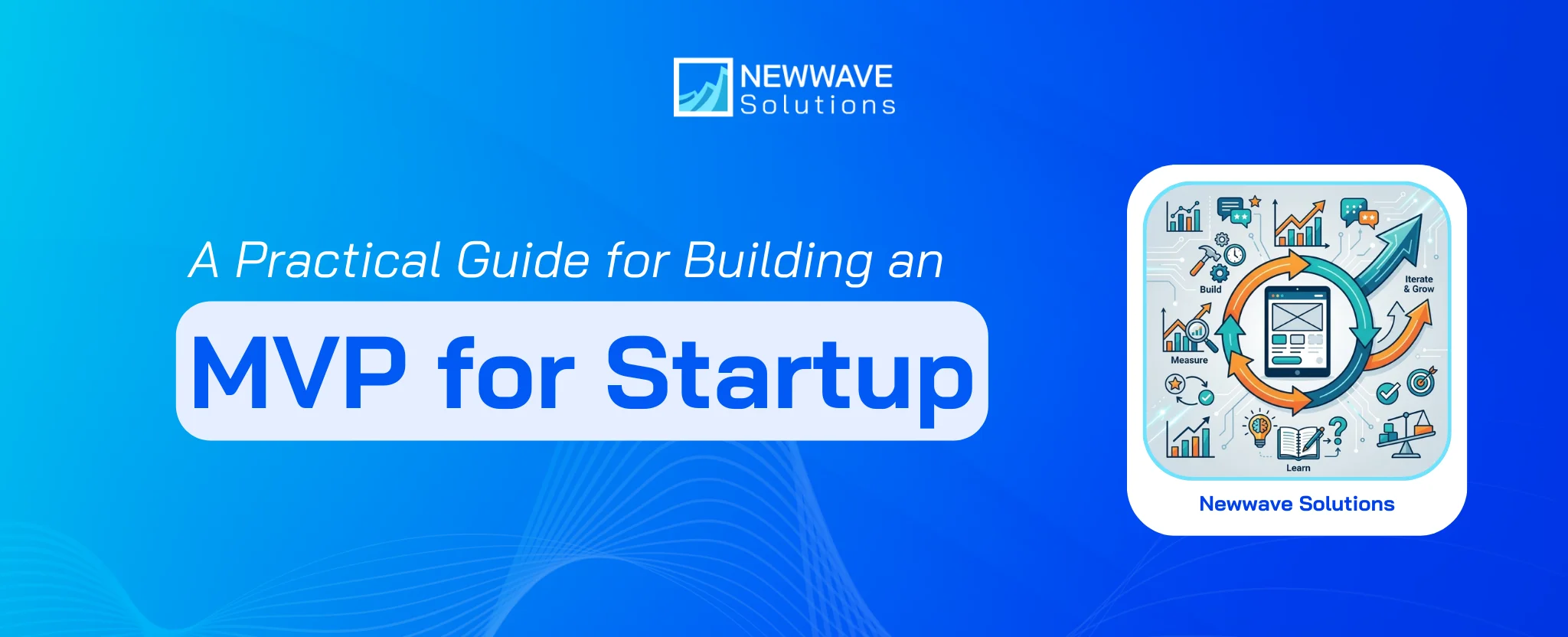
An MVP for startup (Minimum Viable Product) is the simplest version of a product that includes only the core features needed to solve a problem and attract early users. It is a critical step for startups because it allows them to test their ideas with minimal resources, reducing the risk of wasted time and investment. This article provides a clear roadmap to help you understand, build, and leverage an MVP for startup success.
What is an MVP in a Startup Context?
If you are unfamiliar with what is MVP (Minimum Viable Product) is, it is the simplest version of a product built with just enough features to solve a core problem for early users. The goal of MVP development for startups is to validate an idea quickly and cost-effectively, helping founders test assumptions before investing in full-scale development.
Unlike a prototype that only shows design, or a proof of concept that tests feasibility, an MVP is functional and ready for real users, though not yet a final product. A well-known example is Dropbox, which used a short demo video as its MVP, gaining thousands of sign-ups and proving demand before building the complete solution.
Explore the key differences of POC vs MVP to make sure you clearly define and distinguish these two concepts, in order to pick the appropriate approach for your project.
Key Principles of a Successful MVP
- Focus on solving one main problem clearly.
- Build with simplicity to ensure usability.
- Collect measurable feedback from early users.
- Iterate quickly based on data and insights.
- Balance speed with quality to maintain trust.
Why Startups Need an MVP?
For startups, building an MVP is a practical way to validate ideas, save money, and reduce risks before committing to a full product launch. It helps founders learn what users truly want while demonstrating early traction to potential investors.
Key Benefits of Building an MVP for Startup Growth:
- Cost efficiency: By focusing only on core features, startups avoid overspending on unnecessary functions and reduce overall development expenses.
- Market validation: An MVP tests real demand, showing whether customers are interested in the idea before scaling further.
- Faster time-to-market: Startups can launch quickly, giving them a competitive edge and faster feedback loops.
- Risk reduction: Early testing uncovers flaws or weak points, preventing costly mistakes in later development stages.
- Investor confidence: Showing user traction through an MVP helps startups gain credibility and attract funding more easily.
How to Build an MVP for Startup: A Step-by-Step Guide
From my own experience of building an MVP for startups, I know how overwhelming it can feel when you don’t know where to begin or how to prioritize. I have tested different approaches, made mistakes, and refined the process into a clear and practical guide. By following the steps below, you can avoid common pitfalls and create an MVP that saves time, reduces costs, and validates your idea with real users.

Stage 1 – Preparation: Cost, Time & Resources
- Define the budget envelope: Every startup team should set a realistic cost range (for example, $10,000–$80,000) based on the project scope, the number of platforms such as web, iOS, or Android, and the chosen approach (no-code, low-code, or full-code). The main cost drivers usually include integrations, payment gateways, and security features.
- Set a clear timeline: A startup needs to establish milestones for discovery, prototyping, development, testing, and launch, often fitting into an 8-12 week schedule. Weekly demo sessions or decision points help to keep the process on track.
- Plan the team and responsibilities: A product owner should be assigned, and decisions must be made about what will be handled in-house versus outsourced. Core roles such as design, engineering, and quality assurance should be secured, even if only part-time.
- Prioritize the scope to fit the budget and time: The MVP should only cover one central problem with three to five must-have features. Any “nice-to-have” features should be postponed to later iterations.
- Choose a pragmatic tech approach: Founders should select fast, proven technology paths such as no-code/low-code platforms or a reliable tech stack. It is important to ensure that critical functions like analytics, authentication, and payments can be added without costly rework.
Stage 2 – Execution Steps
Step 1: Define the problem, the users, and the success metrics
The team should begin by interviewing five to ten potential users and writing a one-sentence problem statement that summarizes the challenge. They should also define hypotheses and select one primary success metric, such as signup rates or first purchases. Tools like Lean Canvas, Google Forms, and Notion can support this process. The expected result is a short validation brief that aligns the team on the target user, the problem, and the measurable goal.
Step 2: Prioritize the features and map the user journey
The startup should list all possible features and then rank them using methods such as MoSCoW or RICE. A user journey map should outline the shortest path from the first visit to the main success action. Tools such as Miro for journey mapping and Figma for wireframes are useful here. The outcome is a prioritized backlog and simple screens that represent the full user story.
Step 3: Build a prototype and test it with real users
The team should create a clickable prototype in Figma and run usability tests with five to eight people from the target group. Platforms like Maze or Lookback can help gather both task completion rates and user feedback. The result is a refined flow supported by evidence that users understand and can complete the key task.
Step 4: Develop the MVP with a fast and reliable tech stack
Startups should select a technology path that balances speed and flexibility, such as Next.js on Vercel for web or React Native and Flutter for mobile, with managed backends like Firebase or AWS Amplify. They should implement essentials like authentication, payments with Stripe, storage, error tracking with Sentry, and analytics with GA4 or Mixpanel. Automated deployment through GitHub Actions or similar tools keeps development efficient. The outcome is a working MVP that delivers the end-to-end core flow.
Step 5: Test the MVP, harden the system, and launch a pilot
The startup should run functional tests and smoke tests to ensure that critical paths work correctly, while also checking performance. Limited pilot launches can be rolled out using TestFlight, Google Play internal testing, or staged web releases. Tools like Postman for API testing and Jest or Playwright for automation improve quality, while monitoring solutions such as Sentry provide real-time error reporting. The result is a stable MVP released to a first batch of 50–200 users.
Step 6: Measure the results, learn from feedback, and iterate
The team should analyze funnel metrics, crash reports, and feedback gathered through in-app surveys or communication tools like Intercom. They should ship weekly improvements that directly impact the main success metric. Based on the results, the startup can decide whether to persevere, pivot, or expand features. The final outcome is a decision memo that summarizes learnings, outlines the next steps, and sets a timeline for a full version 1.0.
Common Mistakes to Avoid When Doing MVP
Even though an MVP is meant to simplify the product journey, many startups still make critical errors that waste both time and money. By being aware of these common mistakes, you can avoid setbacks and move closer to validating your idea successfully.
5 Common Mistakes and How to Avoid Them:
- Adding too many features at the beginning often distracts from the main problem you want to solve and increases development costs. Startups should focus only on the core value, as I once learned firsthand when my team wasted weeks on “nice-to-have” features that early users never touched.
- Ignoring user feedback and relying only on founder vision can result in building something no one wants. To avoid this, founders should conduct user interviews and track metrics before adding new features.
- Underestimating design and user experience leads to apps that technically work but frustrate users, causing them to drop off quickly. A good practice is to invest in clear navigation and simple layouts, even at the MVP stage.
- Not defining clear success metrics makes it impossible to know whether the MVP has validated the business idea. Startups should decide early on what success looks like, such as sign-up numbers, engagement rates, or revenue goals.
- Treating the MVP as a final product causes teams to polish endlessly instead of launching and learning. An experienced founder I once worked with said, “Your MVP is just the entry ticket to feedback, not the final show,” which is a perspective worth remembering.
3 Real-World Examples of successful MVP for inspiration
Sometimes the best way to learn is by looking at those who have already succeeded. Here are three powerful stories of companies that started small, validated their ideas quickly, and then grew into global businesses. These cases show how effective building MVP for startups can be, and why creating an MVP for startup is often the smartest first step.

1. Dropbox– Tech Industry (Cloud Storage)
Dropbox, now one of the most widely used file-sharing platforms, began with nothing more than an explainer video. Instead of spending months coding, the founders demonstrated how the product would work through a short video that was shared with potential users. The result was thousands of sign-ups overnight, proving strong demand and validating the idea before any full-scale development began.
2. Airbnb– Hospitality Industry (Travel & Accommodation)
Airbnb, which now leads the short-term rental market worldwide, started by testing its idea with a very simple website. The founders listed air mattresses in their own apartment during a conference to see if travelers would pay for affordable and homely accommodation. The MVP worked—guests booked the stays, and this small experiment became the foundation of a global business valued in the billions.
3. Zappos– E-commerce Industry (Online Retail)
Zappos, one of the largest online shoe retailers today, started as a manual MVP experiment. The founder took photos of shoes from local stores and posted them online to check if people would buy. When customers placed orders, he personally bought the shoes and shipped them, which confirmed the demand. This simple test validated the business model and attracted investors, turning Zappos into a successful online giant later acquired by Amazon.
Build your MVP from scratch with Newwave Solutions
Creating an MVP for startup requires more than just coding—it demands strategy, design, technology, and continuous support. Newwave Solutions offers end-to-end MVP development services that help businesses turn ideas into market-ready products. From initial concept discovery to post-launch support, their team ensures your MVP is cost-efficient, scalable, and aligned with your business goals.
With Newwave Solutions, companies gain access to a wide range of MVP development services tailored for different industries and needs. The main features of such services include:
- MVP Development Consulting: Providing expert guidance to define, strategize, and validate the product’s core features.
- Intuitive UI/UX Design for MVP: Crafting engaging and user-friendly interfaces specifically for the MVP product.
- Agile MVP Engineering: Executing a rapid, iterative development process utilizing Agile methodologies to build the MVP.
- Quality Assurance & User Testing: Applying rigorous QA processes, including functional, performance, and security testing.
- Strategic MVP Launch & Market Validation: Guiding the MVP through a strategic launch process to validate core assumptions.
- Future Roadmap Planning: Analyzing collected user feedback and performance data to plan for the product’s future roadmap.
By partnering with Newwave Solutions, startups and enterprises can save time, reduce risks, and validate their business ideas effectively. Their proven approach to building MVP for startups ensures that your first version is not only functional but also a strong foundation for long-term success.
Conclusion
Building an MVP for startup is about creating a lean version of your product, testing it with real users, gathering feedback, and using those insights to grow in the right direction. By focusing on validation, speed, and resource efficiency, startups can reduce risks, win investor confidence, and move closer to achieving product-market fit.
As a professional partner in the tech and IT Outsourcing service industry, Newwave Solutions empowers startups to transform their visions into reality with robust MVP development that prioritizes both technical excellence and strategic business objectives. Reach out to Newwave Solutions today to share your requirements, and our team of experts will work closely with you to deliver a tailor-made MVP that fits your specific needs and market direction.
FAQs
1. How long does it take to build an MVP for a startup?
Most MVPs take between 8 and 16 weeks to build, depending on complexity, team size, and chosen technology. A simple MVP can be done faster, especially if using no-code tools, while more advanced ones may need extra time.
2. How much does an MVP cost on average?
The cost usually ranges from $10,000 to $80,000, depending on scope, platform (web, iOS, Android), and whether you use in-house, freelance, or outsourcing teams. Using cross-platform frameworks like React Native can help reduce expenses.
3. Do investors fund startups with just an MVP?
Yes, many investors fund startups at the MVP stage if the product shows real user traction and market potential. Having an MVP proves you can execute and gives evidence of customer interest.
4. What’s the difference between MVP and prototype?
A prototype is a basic visual or clickable model used to test design ideas, while an MVP for startup is a functional version of the product with only core features. The MVP is launched to real users to validate demand, while the prototype is mainly for internal testing.
5. Can non-technical founders build an MVP?
Yes, non-technical founders can build an MVP by using no-code platforms or partnering with outsourcing companies. Many successful founders without coding skills relied on expert teams to turn their ideas into working products.
To Quang Duy is the CEO of Newwave Solutions, a leading Vietnamese software company. He is recognized as a standout technology consultant. Connect with him on LinkedIn and Twitter.



Read More Guides
Get stories in your inbox twice a month.
Let’s Build Something Extraordinary
Sign up for a 30 min no-obligation strategic session with us. Transform your Ideas into scalable reality.
Leave a Reply