


Cloud Native Applications: A Complete Guide for Modern Enterprises
With the pace of digital transformation increasing, organizations are adopting cloud native applications rooted in microservices and container technologies to modernize infrastructure and adapt rapidly to evolving business needs. This strategy not only enhances flexibility and performance but also creates an optimized collaboration platform for offshore software teams by minimizing friction and maximizing transparency. Explore key insights into cloud native technologies in this article to discover how you can optimize costs and elevate the quality of your offshore projects starting today.
What Are Cloud Native Applications?
Cloud native applications refer to software designed, deployed, and managed specifically for cloud environments to leverage scalability, resilience, and agility in ways that traditional monolithic systems cannot. These applications are composed of discrete, loosely coupled services — typically referred to as microservices — that can be independently updated and scaled across public, private, or hybrid cloud infrastructures, enabling faster delivery and continuous improvements.
Example: Netflix uses cloud native applications to support its on-demand video streaming platform, dynamically scaling content delivery services across regions to handle peak traffic smoothly while deploying updates without downtime, which enhances user experience and operational efficiency. This real-world application of cloud native design demonstrates how distributed systems can support massive traffic loads and continuous delivery at scale.
Key Characteristics of Cloud Native Applications:
- Microservices Architecture – Modular service components allow each function to be developed, deployed, and scaled independently, reducing dependencies and accelerating release cycles.
- Containerization – Packaging services into lightweight, portable containers ensures consistent execution across environments and minimizes compatibility issues.
- Continuous Integration / Continuous Delivery (CI/CD) – Automated pipelines streamline testing and deployment so that new features and updates can be rolled out frequently and reliably.
- Infrastructure as Code (IaC) – Managing cloud infrastructure through code ensures repeatability, version control, and faster provisioning of cloud resources.
- Dynamic Orchestration – Orchestration tools like Kubernetes automate scaling, load balancing, and fault recovery, enabling applications to remain responsive under changing demand.
Why Enterprises Use Cloud Native Applications?
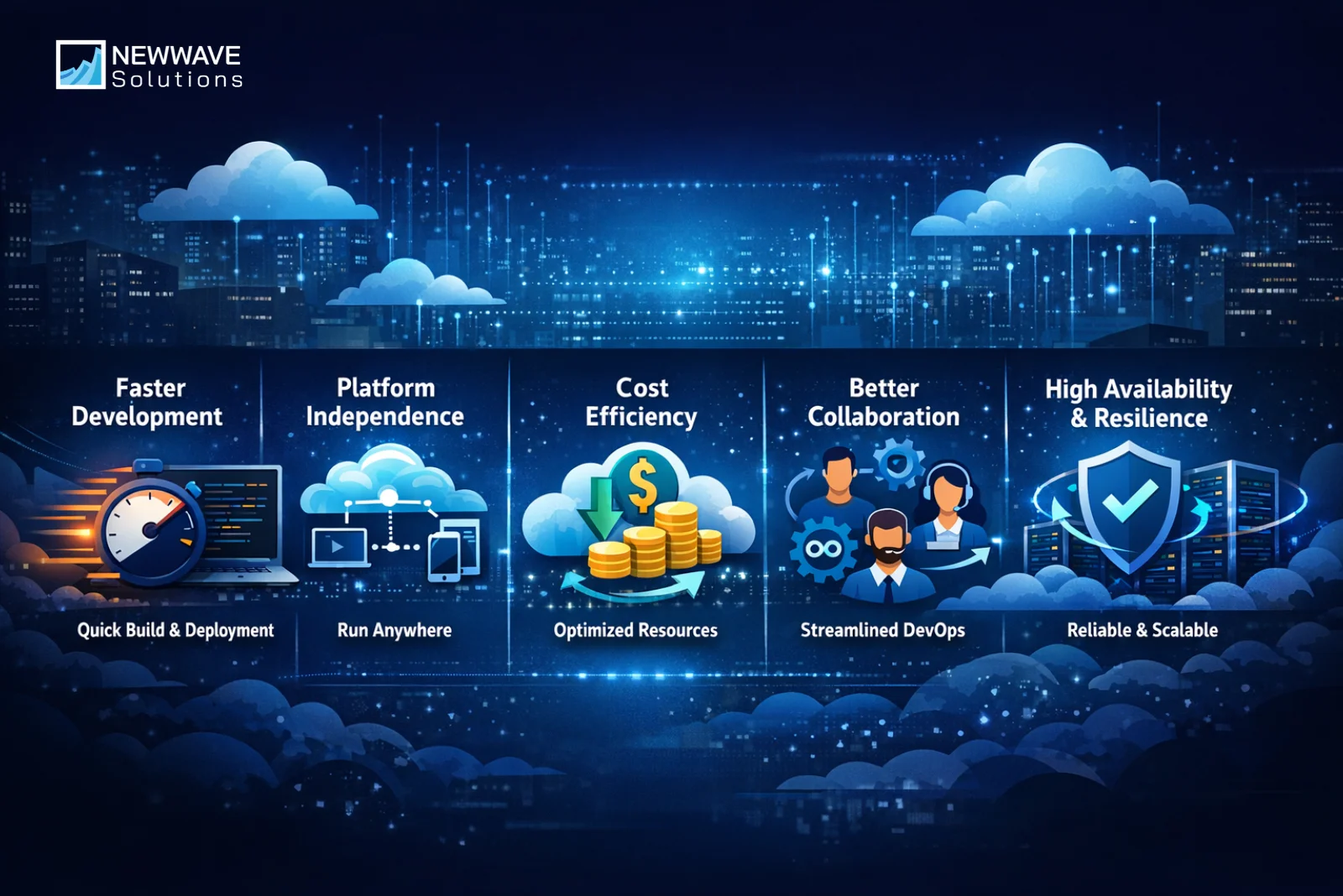
- Faster Development Process – By breaking applications into independent components, teams can build, test, and deploy features more rapidly, which leads to shorter time-to-market.
- Platform Independence – Cloud native applications are designed to run across various cloud environments, eliminating hardware or operating system barriers.
- Operating at a Reasonable Cost – Cloud resource usage can be optimized dynamically based on demand, reducing unnecessary infrastructure costs.
- Better Cross-Team Collaboration – Standardized tools and modular architectures streamline development and operations, supporting DevOps culture and reducing silos.
- High Availability & Resilience – Built-in redundancy and automated recovery mechanisms ensure applications stay operational even during failures.
How Cloud Native Apps Improve Software Delivery
Cloud native apps have a transformative impact on how software is produced, deployed, and maintained, particularly in modern enterprise contexts where rapid innovation and scalability are critical. By adopting cloud native application development practices, organizations can integrate automation and DevOps principles more effectively, enabling teams to deliver value continuously while reducing manual intervention and operational risk.
- Automation through CI/CD Pipelines – Automating testing, integration, and deployment accelerates delivery cycles and reduces human errors.
- Scalable Infrastructure – Cloud environments dynamically allocate resources to meet fluctuating demand seamlessly.
- Improved Observability – Monitoring and logging tools provide insights into performance, helping teams catch issues faster.
- Resilient Architecture – Self-healing systems maintain availability even when individual components fail.
The shift to cloud native development fundamentally changes how engineering teams ship and maintain software at scale. How that plays out in a real enterprise context is best understood through execution — and this cloud-powered event management case study is a concrete example of what modern cloud native delivery looks like end to end.
Real Enterprise Use Cases of Cloud Native Apps
Cloud-native applications have demonstrated exceptional versatility, offering high applicability across a vast array of industries and operational sectors. Below is a comprehensive summary of common cloud-native use cases that are currently transforming the global enterprise environment.
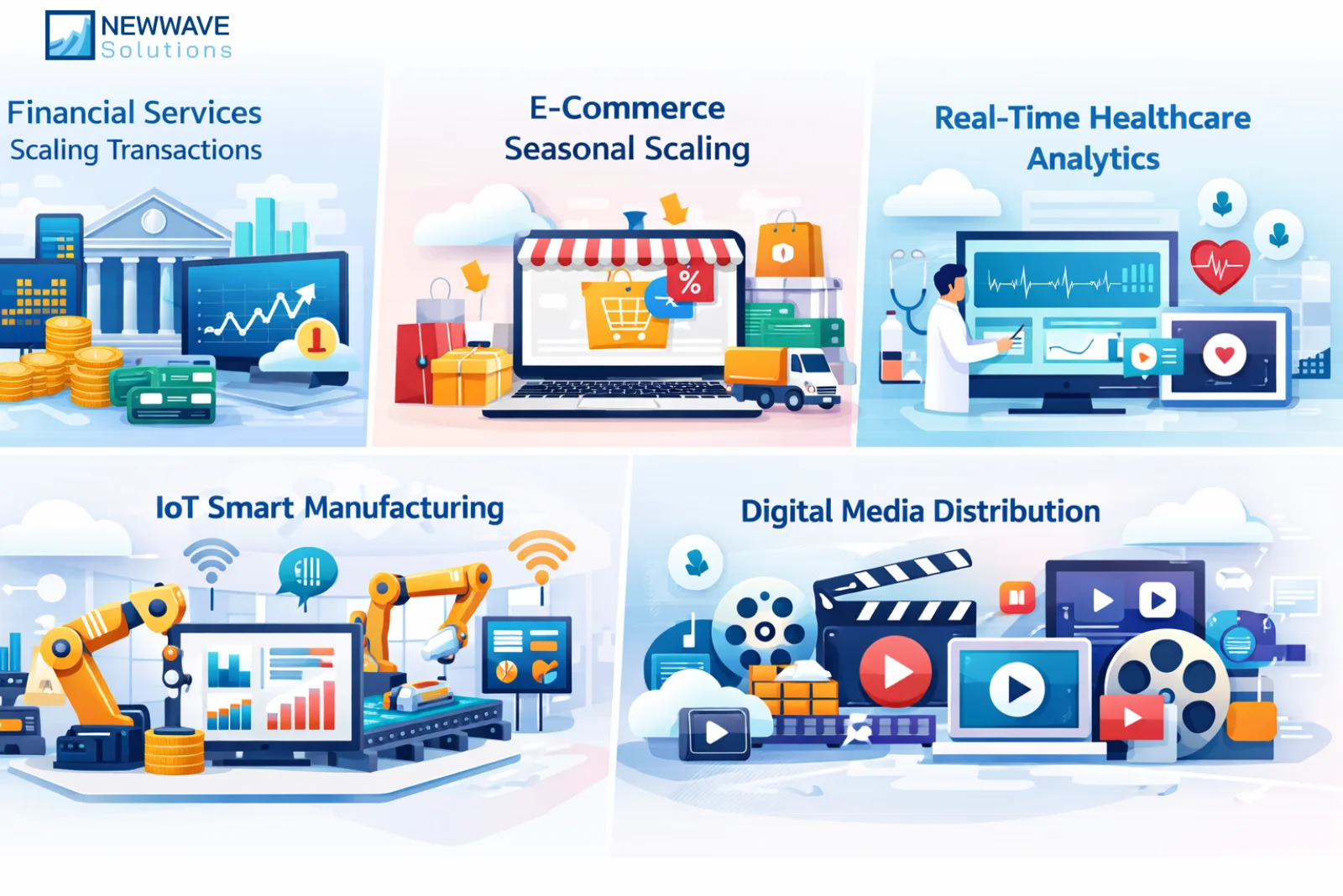
1. Financial Services Scaling Transaction Systems
Financial institutions use cloud native applications to process millions of transactions securely, dynamically scaling compute and storage resources as demand fluctuates during peak trading hours or customer usage surges. By adopting cloud native application security practices and microservices, banks can deploy updates and new features without disrupting critical operations. This approach enhances both risk management and customer satisfaction through reliable performance.
2. E-Commerce Seasonal Scaling
Leading online retailers rely on cloud native infrastructures to automatically scale services up or down around seasonal events like holidays or flash sales, which dramatically increases traffic. Using container orchestration and dynamic provisioning, these platforms ensure consistent shopping experiences even under sudden spikes. The elasticity of cloud native applications supports peak performance without overspending on idle resources.
3. Real-Time Analytics in Healthcare
Healthcare providers deploy cloud native applications to aggregate and analyze patient data in real time, enabling faster diagnostics and personalized care plans. These solutions promote secure data access across devices and locations while complying with regulatory requirements. With cloud native application architecture, providers reduce latency, improve insights, and enhance operational efficiency in mission-critical systems.
Cloud native architectures have found some of their most compelling real-world applications in healthcare, where the stakes of latency and data accuracy are uniquely high. Organizations looking to go deeper on what purpose-built healthcare software development looks like in practice will find the full picture extends well beyond the cloud layer alone.
4. IoT-Enabled Smart Manufacturing
Manufacturers implement cloud native apps to manage IoT sensor data from production lines and supply chains, allowing predictive maintenance and adaptive automation. This real-time visibility into equipment performance reduces downtime and fosters more efficient operations. Cloud native architectures also support seamless integration with existing ERP and analytics systems.
5. Digital Media Distribution Platforms
Media and entertainment companies leverage microservices and containerization to deliver content to global audiences with minimal delay and high availability. Using cloud native application development services, these businesses can roll out personalized features and streaming enhancements rapidly. The distributed nature of cloud native design ensures consistent delivery even with diverse regional traffic patterns.
Cloud Native Application Challenges and Solutions
- Managing Distributed Complexity: Navigating the intricate web of interconnected services in a cloud-native environment often leads to significant operational bottlenecks and oversight difficulties. To streamline this complexity, enterprises should adopt robust platform engineering and advanced observability tooling to achieve comprehensive end-to-end visibility and control.
- Balancing Cost vs. Performance: While dynamic scaling offers immense flexibility, it can inadvertently cause cloud expenses to spiral out of control if not monitored with precision. To resolve this challenge, businesses must integrate FinOps practices into their workflow, ensuring that resource allocation is constantly optimized to balance high performance with budget efficiency.
- Security & Compliance Gaps: Protecting distributed microservices while maintaining strict regulatory compliance presents a multifaceted security risk for modern organizations. To bridge these gaps, companies should embed security protocols directly into every stage of the development lifecycle and utilize automated scanning tools to detect vulnerabilities in real-time.
- Skill Gaps in Modern Cloud Paradigms: Transitioning to cloud-native technologies often reveals a critical shortage of specialized expertise within internal teams, stalling the adoption of modern architectures. To overcome this hurdle, organizations can either invest in intensive internal training programs or strategically partner with expert offshore providers to gain immediate access to high-level technical talent.
- Toolchain Fragmentation: The proliferation of diverse platforms and disparate tools frequently results in inconsistent development environments that hinder productivity and cross-team collaboration. To solve this, enterprises should standardize their tech stack and enforce uniform best practices through the implementation of automated, unified delivery pipelines.
- Observability Challenges: Monitoring performance and tracing data flow across dozens of independent microservices is notoriously difficult without a structured architectural approach. Teams can effectively tackle this issue by implementing centralized monitoring and analytics platforms that provide a “single source of truth” for all system metrics and logs.
Emerging Cloud Native Application Trends in 2026
The landscape of cloud native applications continues to evolve rapidly as enterprises seek greater performance, resilience, and strategic advantage. To stay competitive, organizations must monitor and adopt the latest trends shaping how cloud native systems are built and operated.
- AI-Driven Autoscaling: Intelligent scaling mechanisms now leverage sophisticated machine learning algorithms to predict traffic patterns dynamically, which significantly reduces resource waste while maintaining peak application performance.
- Serverless Architecture Growth: The adoption of serverless functions continues to rise as a dominant trend, enabling modern enterprises to execute event-driven workloads with extreme cost-effectiveness and zero server management overhead.
- Hybrid & Multi-Cloud Orchestration: Enterprises are increasingly deploying applications across multiple cloud environments to avoid the risks of vendor lock-in and to strategically optimize workload distribution for global availability.
- Integrated Security Automation: Security tools are now being deeply embedded into automated development pipelines to perform continuous compliance checks and real-time threat detection without slowing down the release cycle.
- Cloud Native Observability Platforms: Advanced observability tools have evolved to unify metrics, logs, and traces into a single cohesive interface, delivering deeper and more actionable insights into complex application behavior at scale.
Cloud-Native Application is a Game Changer for Offshore Projects
In today’s digital era, the development of cloud-native applications has become a pivotal turning point in eliminating geographical barriers between enterprises and international development teams. By leveraging flexible architectures based on Microservices and Containerization, offshore software development projects can now operate within a unified environment, ensuring that code handovers and system deployments are executed with absolute speed and precision.
Furthermore, adopting a cloud-native approach not only optimizes performance but also serves as the “key” for businesses to modernize legacy systems sustainably. For organizations seeking a breakthrough, this is the ideal solution for collaborating with offshore partners to significantly reduce infrastructure costs while guaranteeing limitless scalability for their applications.
Recognizing this critical importance, Newwave Solutions proudly offers high-quality offshore software development services, empowering you to master cloud-native technology with the following competitive advantages:
- Experienced Cloud-Native Experts: Our engineering team at Newwave Solutions possesses deep-seated expertise in Docker, Kubernetes, and Serverless architectures, standing ready to consult on and build even the most complex enterprise systems.
- Professional CI/CD Pipelines: We implement rigorous Continuous Integration and Continuous Deployment (CI/CD) workflows, ensuring that every line of code from the offshore team is tested and operates smoothly in the client’s environment immediately.
- Optimized Operational Costs (FinOps): Beyond just writing code, Newwave Solutions helps businesses design intelligent cloud-native architectures that maximize cloud resources, preventing budget wastage on unnecessary assets.
- Robust Security and Scalability: Our services focus on building applications with multi-layered security and auto-scaling capabilities, preparing your business to handle any surge in traffic volume seamlessly.
- A Trusted Strategic Partner: With years of hands-on experience serving global clients, Newwave Solutions is committed to providing transparency, professionalism, and the highest level of efficiency for your digital transformation journey.
Conclusion
In summary, cloud native applications represent a foundational shift in how modern enterprises design, deploy, and operate software, delivering unmatched scalability, resilience, and delivery velocity. By embracing cloud native architectures and development practices, businesses can respond rapidly to market changes, support continuous innovation, and optimize long-term operational efficiency.
If your enterprise is seeking a reputable partner to implement cutting-edge cloud-native systems or adapt to the latest industry trends, Newwave Solutions should be the top priority on your shortlist. Contact us today to discuss how our experts can help your business deploy efficient, cost-optimized cloud-native applications tailored to your strategic goals.
To Quang Duy is the CEO of Newwave Solutions, a leading Vietnamese software company. He is recognized as a standout technology consultant. Connect with him on LinkedIn and Twitter.



Read More Guides
Get stories in your inbox twice a month.
Let’s Build Something Extraordinary
Sign up for a 30 min no-obligation strategic session with us. Transform your Ideas into scalable reality.
Leave a Reply