


Software Outsourcing Companies: Top 5 Options & How To Choose
The global demand for digital transformation has pushed enterprises to evaluate how they build and scale software systems in an increasingly competitive market. Many organizations have realized that in-house teams alone cannot keep up with rising requirements, specialized skills, and rapid release expectations.
This article explores why businesses rely on software outsourcing companies, highlights the top providers in 2025, and explains how to choose the right partner while avoiding the common challenges of vendor selection.
Why Enterprises Turn to Software Outsourcing Companies?
The decision to work with software outsourcing companies has become a sustainable trend during the past decade. A number of core advantages drive this shift, including access to global talent, improved scalability, and optimized development costs. Let’s explore those reasons in detail:
- Enterprises gain access to specialized skills that are difficult or expensive to build internally, especially in advanced fields such as AI, cloud engineering, data analytics, and cybersecurity.
- Large organizations improve their scalability because outsourcing companies allow teams to expand or contract based on project needs without long-term hiring commitments.
- Businesses optimize costs more effectively since outsourcing eliminates recruitment overhead, infrastructure expenses, and long onboarding cycles that slow delivery.
- Companies reduce operational and project risks because outsourcing partners provide structured governance, QA processes, and predictable delivery frameworks.
- Global organizations accelerate time to market because outsourcing teams work in parallel with internal departments to shorten development cycles.
- Enterprise leaders strengthen their innovation capacity because outsourcing companies bring new technical perspectives and updated industry best practices.
Top 5 Software Development Outsourcing Companies
1. Newwave Solutions (Vietnam)
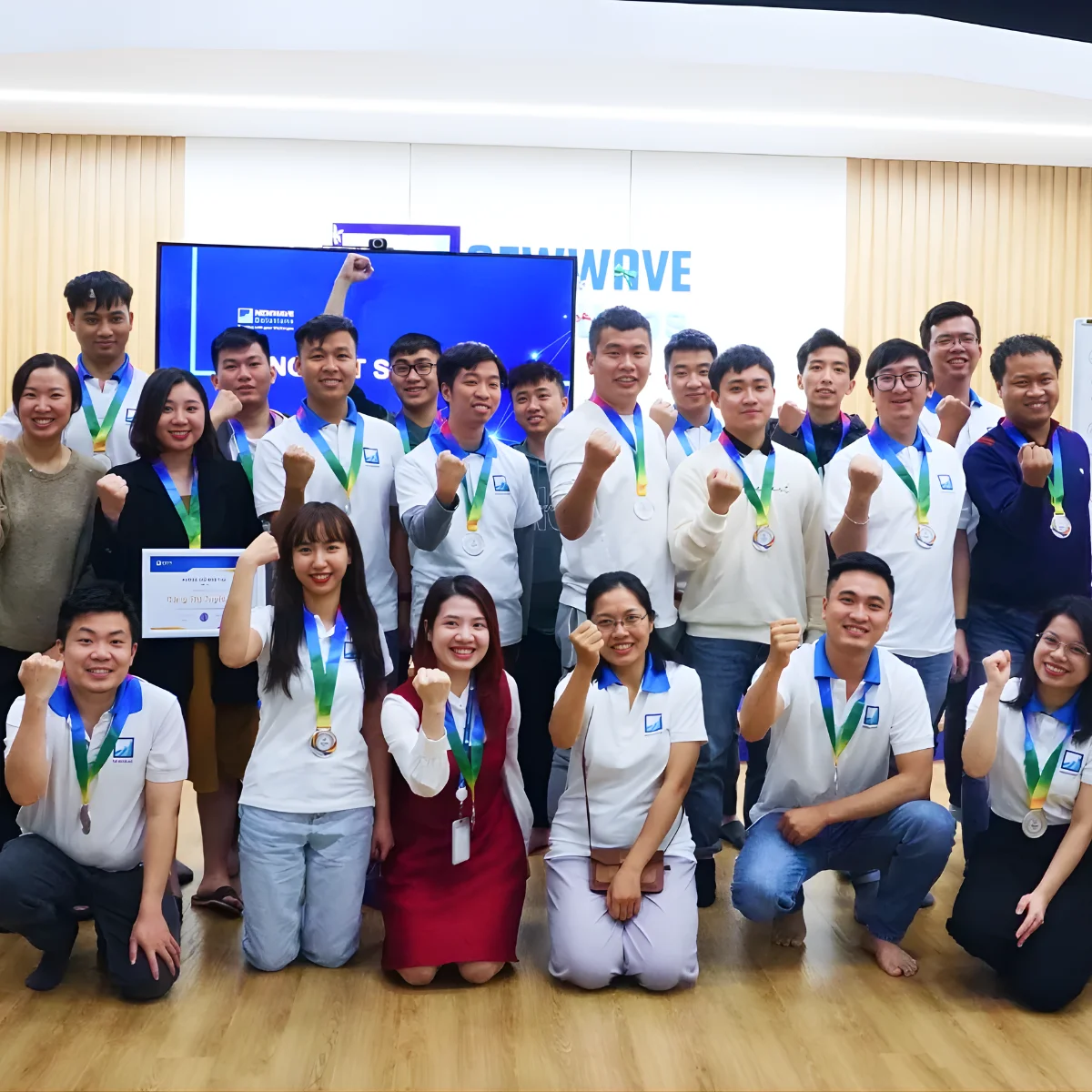
Newwave Solutions is a leading Vietnamese software outsourcing development company that specializes in custom software development, digital transformation, mobile app development, and enterprise solutions. The company has delivered projects across finance, healthcare, real estate, e-commerce, and emerging technologies for more than fourteen years. Newwave Solutions stands out because it combines high-quality engineering with competitive pricing, strong communication standards, and enterprise-grade security certifications.
Key Services
- Custom Software Development
- Mobile and Web Application Development
- Digital Transformation Consulting
- QA and Software Testing
- Maintenance and Managed Services
Why Choose Newwave Solutions for Software Outsourcing?
- 14+ Years of Experience
- Comprehensive Service Offering (Consulting, Development, Maintenance)
- ISO 9001 Certified Quality Management
- Experienced Multidisciplinary Teams
- Innovative Technologies Used (AI/ML, Blockchain, IoT)
2. Accenture
Accenture is a global technology and consulting powerhouse known for delivering enterprise-grade digital transformation, cloud modernization, and managed services. The company serves Fortune 500 clients across various industries and maintains a strong presence in more than 50 countries. Accenture is recognized for its advanced research capabilities, industry-specific frameworks, and high-compliance delivery standards.
Key Services
- Enterprise Software Development
- Cloud Migration and Modernization
- Data Analytics and AI Integration
- Cybersecurity Solutions
- IT Consulting and Managed Services
3. Capgemini
Capgemini is a multinational IT outsourcing company that provides full-cycle development, consulting, and systems integration services for global enterprises. The company has a mature delivery model supported by strong engineering talent in Europe, India, and North America. Capgemini is known for its digital transformation leadership and extensive experience across the public sector, finance, and manufacturing.

Key Services
- Custom Software Engineering
- Cloud and Infrastructure Services
- Application Modernization
- ERP and Enterprise Integration
- Cybersecurity and Digital Assurance
4. Cognizant
Cognizant is a top software outsourcing provider headquartered in the United States with delivery centers worldwide. The company focuses on modern digital platforms, enterprise automation, and cloud-native software development. Cognizant remains a preferred choice for organizations that require large-scale engineering resources combined with domain-specific knowledge.
Key Services
- Full-Cycle Software Development
- Cloud-Native Engineering
- Business Process Outsourcing
- Data, Analytics, and AI
- Digital Product Engineering
5. Tata Consultancy Services (TCS)
TCS is one of the world’s largest software outsourcing companies and serves global banks, retailers, healthcare systems, and manufacturers. The company provides deep technical experience supported by vast delivery centers in India and multiple regions. TCS is widely recognized for its process maturity, large talent pool, and strong capability in enterprise modernization.
Key Services
- Software Development and Maintenance
- Cloud Transformation
- AI and Automation Services
- Enterprise Platform Implementation
- Cybersecurity and IT Infrastructure Services
>>>Read more: Top 10 Software Outsourcing Vietnam Companies for the Best Pricing and Value
How to Choose the Right Software Outsourcing Partner
Since there are numerous software outsourcing companies to choose from, you are going to need several evaluation criteria:
- Reputation and track record: A partner’s history of successful projects and client testimonials indicates reliability. You should review case studies, client satisfaction scores, and references from past enterprise engagements.
- Technical expertise and industry knowledge: The outsourcing company must possess deep skills in the relevant technology stack and domain (e.g., fintech, healthcare). You can evaluate this by checking certifications, the number of relevant projects delivered, and team composition (percentage of senior engineers).
- Cost and value alignment: The financial model must align with your enterprise’s budget and expected outcomes rather than simply the lowest cost. Consider cost per feature, hourly rates, and how value is delivered (e.g., time to market, quality).
- Cultural compatibility and communication: A partner must share communication styles, time-zone overlap, language proficiency, and collaboration methods. You can evaluate via trial conversations, sampling their communication responsiveness, and reviewing the project management tools they use.
- Flexibility and scalability: Your outsourcing partner should be able to scale up/down resources, adapt to change requests, and support changes in scope. You can assess this by asking about their team ramp-up speed, number of bench resources, and case studies showing scaling capability.
- Security, IP protection, and compliance: Especially for enterprises and regulated industries, the partner must ensure data security, intellectual property protection, and regulatory compliance (e.g., ISO, GDPR). You can measure by asking for certifications, audit reports, and contractual protections.
- Post-development support and service model: After delivery, the partner should provide maintenance, updates, and long-term support rather than just handing over code. You can evaluate by reviewing their SLA terms, support team size, and retention rates.
Challenges When Working With Software Outsourcing Companies
- Communication barriers: Language differences, time zone mismatches, or unclear project documentation can cause misunderstandings. The solution involves setting up regular synchronous communication, choosing a partner with proven English proficiency, and using transparent project-management tools.
- Scope creep and uncontrolled changes: Without a clear scope, projects expand beyond planned boundaries, causing delays and cost overruns. To deal with this, you can establish a detailed scope of work up front, implement change-control procedures, and maintain versioning of requirements.
- Hidden costs and insufficient budgeting: Low quoted rates may hide extra charges for change requests, maintenance, or support. The encounter method is to use transparent pricing models, set clear SLAs, and include contingencies for post-launch support.
- Cultural mismatch and team integration issues: Differences in culture, work ethic, or management style can hinder collaboration. The solution involves vetting the partner’s culture fit, organising joint workshops, and establishing a governance model that aligns both sides.
- Quality control and delivery reliability: Outsourced teams may deliver poor-quality code or miss deadlines if standards are not enforced. The solution is to require evidence of QA processes, use metrics (defect rate, delivery velocity), and perform periodic code reviews and audits.
- Security and IP risk: Outsourcing raises concerns about data breaches, IP protection, or compliance failures. In this case, you need to enforce contractual protections, request certifications, and conduct security audits or penetration tests.

How to work with the Software Outsourcing Companies
As you know, having a clearer vision of the types and benefits of software development outsourcing, let’s dig a little deeper into the process itself.
Step 1 – Decision to Outsource
At this step, the company thoroughly examines the needs as well as available resources and skills to determine whether outsourcing is the right choice. It would help if the company could create a checklist to evaluate the skill sets of the in-house team and the outsourcing team to identify the gaps in capabilities. Once the needed skills are determined, the company can create a project specification, outlining how it would perform and how the development process should be executed.
Step 2 – Choosing a Partner
The company must invest a substantial amount of time and effort to choose a trusted partner who will be the central hub for a software development project. The decision centers around the types of outsourcing – onshore, nearshore, or offshore; a shortlist of potential partners; gathering recommendations to filter the suitable partner before publishing a Request for Proposal, which outlines the parameters of a successful software project and invites the shortlisted candidate to send you proposal and price quote.
The next stage would involve a comprehensive candidate’s capability based on past projects, detailed proposals, and ability in terms of communication, reliability, and time management to choose the one that stands out.
Step 3 – Contract Signing
A proper, legally binding contract is a must to reinforce the agreed details of the project and protect both parties in the event of conflicts and disagreements. The common contracts are fixed-price – one-time price for the whole outsourced software development project; and target cost – suitable for a large-scale, ongoing project with uncertain scope to increase the flexibility of both parties.
Step 4 – Implementation
Upon the implementation of the project, the company and development should agree on members of the Project Team, especially the Engineering Manager and Team Leaders, to ensure that milestones and responsibilities are met. Also, choosing project management tools to track progress is no less important. There are many available platforms, such as Basecamp, Trello, and Jira, to support communication between the client and developers through calendars and messaging threads.
In addition to that, while the outsourcing partner gets on with the project, the company should carefully monitor the following aspects:
- Risk Management, which is the things that might go wrong in a project, such as employee absenteeism, changes in the market, and customer preference, based on which the company develops a strategy for any bumps along the way.
- Software Development Cycle comprises gathering, system design, analysis, coding, quality control, and testing, which would be helpful to understand the process, how it moves from one stage to another, and know what to expect after each iteration.
- Testing is important to make sure the project aligns with the predetermined vision. The outsourcing partner should document each testing stage and list all the issues for further improvement. Most important of all, the project team should consult with the in-house team to make sure the project meets their expectations.
Step 5 – Monitoring and Maintenance
Although a software development outsourcing partner is the key to the success of the project upon deployment, the ownership still belongs to the company initiating the project, which means a great business should put in place a proper monitoring system to make sure the project progresses as planned in terms of time, cost, productivity, reporting, and so on.

Step 6 – End of Contract or Renewal
Commonly, the software development contract is extended or renewed to upgrade the ongoing project (e.g., support and maintenance) or to develop other projects/ services if the IT outsourcing companies deliver good quality. In case the contract is not extended or renewed, the company should develop exit strategies to ensure a smooth transition. It is good practice to build lesson-learned documentation to refer to in the future.
Final thoughts
As a whole, enterprises increasingly rely on software outsourcing companies to access specialized talent, accelerate time-to-market, and optimize costs.
However, selecting the right partner requires a clear evaluation of capabilities, cultural fit, delivery methodology, and governance frameworks. By focusing on proven track record, domain expertise, transparent communication, and robust security, businesses can turn outsourcing into a strategic asset rather than a risk.
If your enterprise is seeking a trusted partner to deliver high-quality software development services with global standards and strategic value, contact Newwave Solutions today.
Contact Information:
- Head Office (Hanoi): 1F, 4F, 10F, Mitec Building, Cau Giay Ward, Hanoi City, Vietnam
- Branch Office (Tokyo): 1chōme118 Yushima, Bunkyo City, Tokyo 1130034, Japan
- Hotline: +84 985310203
- Website: https://newwavesolution.com
- Email: [email protected]
To Quang Duy is the CEO of Newwave Solutions, a leading Vietnamese software company. He is recognized as a standout technology consultant. Connect with him on LinkedIn and Twitter.



Read More Guides
Get stories in your inbox twice a month.
Let’s Build Something Extraordinary
Sign up for a 30 min no-obligation strategic session with us. Transform your Ideas into scalable reality.
Leave a Reply