


Custodial vs Non-Custodial Wallet: A Complete Guide to Choosing the Right Crypto Wallet
Choosing between a custodial vs non-custodial wallet is one of the most important decisions in crypto adoption. It determines who controls your assets, how secure your funds are, and what you can actually do with blockchain technology. This guide breaks down custodial wallet vs non custodial wallet from a practical, architectural, and risk perspective. Whether you are a beginner entering crypto or a business building a Web3 product, understanding this distinction is essential.
Custodial Wallet
A custodial wallet is a crypto wallet model where a third-party service provider holds and manages the private keys on behalf of users. This approach is most commonly used by centralized exchanges and fintech platforms that aim to make blockchain technology accessible to the mass market.
From a user perspective, custodial wallets resemble traditional online banking systems. You sign in with an email and password, and the platform abstracts away most blockchain complexity, including key management, transaction signing, and network interactions.
This design prioritizes convenience and speed, often at the cost of full asset sovereignty.
How Does It Work?
In a custodial wallet setup, ownership and control are separated. The wallet provider acts as the legal and technical custodian of user assets, while users receive usage rights rather than direct blockchain ownership.
Key mechanics include:
- Private keys are generated, stored, and secured within the provider’s internal infrastructure
- Users authenticate using email, password, two-factor authentication, and often KYC
- Many transfers occur off-chain internally, with only net settlements recorded on-chain
- Asset balances are tracked as database records, not as wallets controlled by users
Because the provider controls custody, it can enforce compliance, freeze assets, reverse internal transactions, or recover accounts when credentials are lost.
Custodial Wallet Highlight Features
Custodial wallets are designed to minimize friction for users who are new to crypto or who prioritize trading efficiency over decentralization.
Typical highlight features include:
- Account recovery via email, phone number, or identity verification
- Integrated fiat on-ramps and off-ramps
- Centralized customer support and dispute resolution
- Built-in trading, staking, lending, and yield products
- Simplified interfaces that hide gas fees and blockchain mechanics
These features significantly reduce onboarding friction for users unfamiliar with private keys, seed phrases, or blockchain transactions.
Advantage
Custodial wallets excel in usability, liquidity access, and operational simplicity.
Key advantages include:
- Extremely easy onboarding for beginners with no blockchain knowledge
- No responsibility for managing private keys or backups
- Fast internal transfers between users on the same platform
- Seamless integration with fiat payments and banking rails
- Potential insurance or reimbursement programs at the platform level
This makes custodial wallets particularly attractive for traders, first-time crypto users, and users who prioritize speed and convenience.
Disadvantage
Despite their usability, custodial wallets introduce counterparty risk and reduced ownership.
Key disadvantages include:
- Users do not have true ownership of their crypto assets
- Funds can be frozen, restricted, or seized by the provider
- Exposure to platform hacks, insolvency, or governance failure
- Mandatory KYC significantly reduces privacy
- Limited or no access to external DeFi and DApp ecosystems
These risks became highly visible during centralized exchange collapses such as FTX, reinforcing the principle of “not your keys, not your coins.”
Suitable for Who?
Custodial wallets are best suited for:
- Crypto beginners who want a gentle learning curve: Users who are new to blockchain technology and prefer an experience similar to online banking, without needing to understand private keys, gas fees, or on-chain confirmations.
- Short-term traders requiring liquidity and fast execution: Active traders who need instant order execution, deep liquidity, and rapid transfers between trading pairs without waiting for blockchain confirmations.
- Users who value simplicity over decentralization: Individuals who prioritize ease of use, account recovery, and customer support over full asset sovereignty and censorship resistance.
- Individuals primarily interacting with centralized platforms: Users whose main activities include spot trading, derivatives, staking, or fiat on-ramps within centralized exchanges rather than DeFi or DApp ecosystems.
Custodial wallets are generally not ideal for long-term asset storage, large holdings, or Web3-native use cases, where self-custody and permissionless access are critical.
Common Example
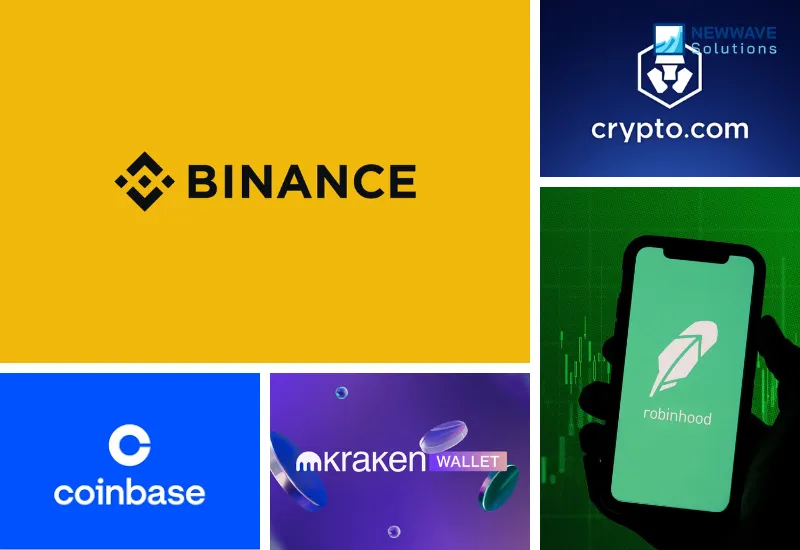
Popular custodial wallet providers include:
- Binance: A full-service exchange offering custodial wallets integrated with spot trading, derivatives, staking, and fiat gateways.
- Coinbase: A regulated exchange widely used by beginners, providing custodial wallets with strong compliance and fiat integration.
- Kraken: A security-focused centralized exchange offering custodial storage for trading and institutional clients.
- Crypto.com: A platform combining custodial wallets with trading, payments, and crypto-linked financial products.
- PayPal and Robinhood: Fintech platforms offering simplified custodial crypto exposure for users entering crypto from traditional finance.
This leads to a common question: Is Coinbase a custodial or non-custodial wallet? Coinbase’s exchange wallet is custodial, meaning Coinbase controls the private keys. However, Coinbase Wallet is a separate product that operates as a non-custodial wallet, where users fully control their private keys.
Non-Custodial Wallet
A non-custodial wallet is a crypto wallet where only the user controls the private keys. No third party can access, freeze, or recover the wallet. This model reflects the original philosophy behind Bitcoin and Ethereum: minimizing trust, maximizing ownership, and enabling permissionless interaction with blockchain networks.
Non-custodial wallets are the foundation of decentralized finance and Web3 applications.
Non-custodial wallet means the wallet provider never has access to your private keys. The wallet functions purely as a client-side tool for key management, transaction signing, and interaction with blockchain nodes. Ownership is enforced by cryptography, not by platform policy.
How Does It Work?
Non-custodial wallets operate as client-side applications running directly on the user’s device, such as a browser extension, mobile app, or hardware wallet. The wallet acts as a signing tool rather than an asset holder.
Core mechanics include:
- Private keys are generated and stored locally on the user’s device: Keys are created during wallet setup and never leave the device. The wallet provider has no access to them, eliminating third-party custody risk.
- Transactions are signed locally before being broadcast to the network: Every transaction is cryptographically signed by the user, ensuring that no transfer can occur without explicit approval.
- The wallet communicates directly with blockchain nodes or RPC endpoints: Interaction happens at the protocol level, allowing users to transact without intermediaries or centralized servers.
- No account registration, identity verification, or KYC is required: Wallets are permissionless by design, enabling global access regardless of geography or identity.
From the blockchain’s perspective, the user is the sole and final authority over the assets, with ownership enforced purely through cryptography.
Non-Custodial Wallet Highlight Features
Non-custodial wallets are built for autonomy, composability, and full participation in Web3 ecosystems rather than convenience-first onboarding.
Common features include:
- Full private key and seed phrase ownership: Users retain exclusive control over access credentials, ensuring true asset ownership.
- Native connectivity to DApps and DeFi protocols: Wallets connect directly to decentralized applications without intermediaries, enabling permissionless interaction.
- Multi-chain support across major ecosystems: Modern wallets support multiple networks, allowing users to manage assets across chains within a single interface.
- Built-in token swaps, NFT galleries, and portfolio views: Many wallets integrate on-chain swaps and NFT management to reduce reliance on centralized services.
- Hardware wallet integration for enhanced security: Non-custodial wallets can pair with cold storage devices, keeping private keys offline while maintaining usability.
These features make non-custodial wallets a core access layer for decentralized finance.
Advantage
Non-custodial wallets deliver true digital ownership, censorship resistance, and protocol-level security.
Key advantages include:
- Absolute control over crypto assets: Users are not dependent on any third party to access or move funds.
- No account freezes, restrictions, or confiscation: Assets cannot be blocked or seized by a platform, authority, or service provider.
- High privacy with no mandatory KYC: Transactions are linked to wallet addresses rather than personal identities.
- Full access to DeFi, NFTs, and Web3 DApp ecosystems: All decentralized protocols are accessible without permission.
- Strong alignment with decentralized blockchain technology principles: This model reflects the original ethos of Bitcoin and Ethereum.
For this reason, non-custodial wallets are widely considered essential infrastructure for Web3 participation.
Disadvantage
However, full control also means full responsibility.
Key disadvantages include:
- Losing the seed phrase results in permanent asset loss: There is no recovery authority. Lost keys mean lost assets.
- No password reset or account recovery mechanism: Security depends entirely on user practices.
- Steeper learning curve for new users: Concepts like gas fees, transaction signing, and network selection can be intimidating.
- Exposure to phishing, malware, and social engineering attacks: Users must actively verify DApps, URLs, and transaction details.
- No customer support safety net: Errors cannot be reversed once transactions are confirmed on-chain.
If you lose access to your private keys or seed phrase, your assets cannot be recovered. Non-custodial wallets remove intermediaries, which means they also remove recovery mechanisms. Ownership is absolute, but so is responsibility.
Suitable for Who?
Non-custodial wallets are best for:
- Experienced crypto users: Individuals comfortable managing keys and security practices.
- DeFi, NFT, and Web3 participants: Users actively interacting with decentralized protocols and marketplaces.
- Long-term holders prioritizing self-custody: Investors seeking maximum control and independence.
- Builders and developers: Essential tools for testing, deploying, and interacting with smart contracts.
- Users who value ownership, privacy, and censorship resistance: Particularly important in permissionless blockchain environments.
Non-custodial wallets are foundational for interacting with Smart contracts and advanced DApp ecosystems.
Common Example
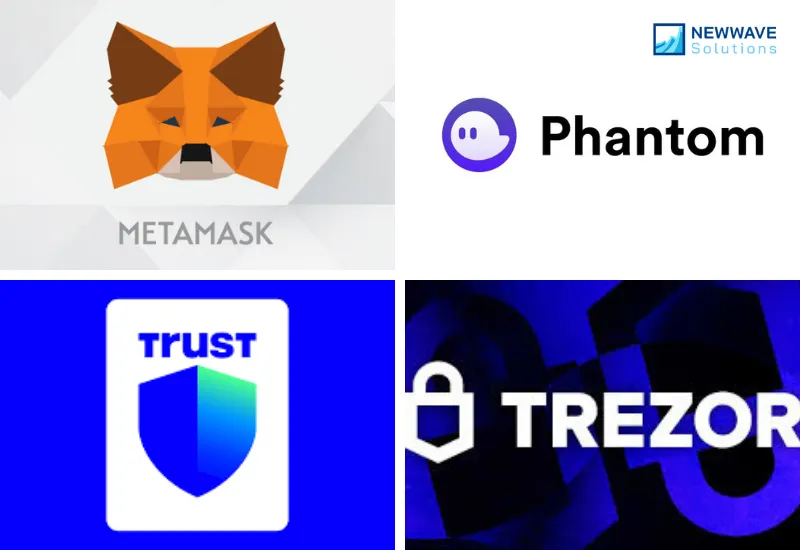
Popular best non-custodial crypto wallets include:
- MetaMask: Industry-standard wallet for Ethereum and EVM-compatible chains.
- Phantom: A leading wallet in the Solana ecosystem with expanding multi-chain support.
- Trust Wallet: Mobile-first wallet supporting a wide range of blockchains.
- Ledger and Trezor hardware wallets: Cold storage solutions offering the highest security for private keys.
These wallets support multiple blockchain ecosystems, including those often discussed in comparisons such as SOL vs ETH.
Custodial vs Non-Custodial Wallet – Which One Is Better?
There is no universally better wallet model. The choice between a custodial vs non custodial wallet depends on how much control you want, how much responsibility you can handle, and what you actually plan to do with your crypto.
Custodial wallets optimize for convenience and accessibility. Non-custodial wallets optimize for ownership and decentralization. Understanding this trade-off is essential before deciding which model fits your use case.
This table summarizes the fundamental trade-offs behind custodial wallet vs non-custodial wallet decisions:
| Aspect | Custodial Wallet | Non-Custodial Wallet |
| Private key ownership | Controlled by a third-party provider | Fully controlled by the user |
| Asset control | Limited and permission-based | Full and absolute |
| Security responsibility | Managed by the platform | Entirely managed by the user |
| Privacy | Low due to KYC and monitoring | High with no identity requirement |
| DApp interaction | Limited or indirect | Full, native interaction |
| Account recovery | Possible via platform support | Not possible if keys are lost |
| Censorship resistance | Low, assets can be frozen | High, permissionless access |
At a practical level, custodial wallets trade ownership for ease of use. They abstract away blockchain complexity, but require trust in the platform’s security, solvency, and policies.
Non-custodial wallets remove intermediaries entirely. They give users full authority over assets, but also remove safety nets. There is no recovery, no reversal, and no customer support if something goes wrong.
This is why the question Which is better, a custodial or non-custodial wallet? has no universal answer.
- If your priority is simplicity, speed, and fiat access, custodial wallets are often the better choice.
- If your priority is ownership, privacy, and Web3 participation, non-custodial wallets are fundamentally superior.
In practice, many experienced users do not choose one over the other. They use both, assigning each wallet type a specific role based on risk and usage.
The “better” wallet is not defined by technology alone, but by how well it matches your goals and risk tolerance.
One Wallet or Two? How Smart Users Combine Both
Instead of asking custodial vs non custodial wallet – which one should I choose?, experienced users ask a more practical question:
How do I combine custodial and non-custodial wallets in a way that balances convenience, security, and control?
In reality, each wallet type solves a different problem. Custodial wallets optimize for speed and liquidity, while non-custodial wallets optimize for ownership and autonomy. Using them together allows users to reduce risk without sacrificing usability.
A common and effective hybrid strategy looks like this:
- Use custodial wallets for active trading and liquidity management: Centralized platforms offer fast execution, deep order books, and easy fiat access. Keeping only your trading capital on custodial wallets limits exposure while maintaining efficiency.
- Store long-term holdings in non-custodial wallets: Assets held for months or years are best kept under self-custody, where third-party risks such as account freezes or platform failures are eliminated.
- Keep all DeFi and NFT activity non-custodial: Interacting with Smart contracts, decentralized exchanges, and NFT marketplaces requires direct wallet ownership. Non-custodial wallets are essential for full Web3 participation.
- Use hardware wallets for high-value storage: For significant holdings, hardware wallets add an additional security layer by keeping private keys offline, reducing exposure to malware and phishing attacks.
This approach reflects how professionals manage digital assets: separate convenience from custody and never place all trust in a single system. The goal is not choosing sides but designing a wallet setup that matches how you actually use crypto.
Conclusion
The debate around custodial vs non-custodial wallet is ultimately about control versus convenience. Custodial wallets lower the entry barrier. Non-custodial wallets unlock the full power of decentralized systems.
For businesses and builders, this distinction becomes even more important when designing Web3 products.
At Newwave Solutions, we help companies design, build, and scale secure blockchain ecosystems:
- Custom wallet development
- Non-custodial and hybrid wallet architectures
- DApp development solutions across major ecosystems
- Token and Layer 0 blockchain creation
- Secure smart contract engineering using modern blockchain programming language stacks
- Full-cycle NFT development services
Our team in Vietnam has delivered production-ready blockchain platforms, including Fruit, a blockchain and crypto project where we built both the wallet layer and L0 infrastructure, earning strong client recognition.
Whether you are building consumer wallets, enterprise blockchain platforms, or Web3 applications that connect Bitcoin and Ethereum, we help translate blockchain complexity into scalable products.
If you are evaluating wallet architecture or planning your next blockchain initiative, choose the right foundation matters.
To Quang Duy is the CEO of Newwave Solutions, a leading Vietnamese software company. He is recognized as a standout technology consultant. Connect with him on LinkedIn and Twitter.



Read More Guides

Get stories in your inbox twice a month.
Let’s Connect
Let us know what you need, and out professionals will collaborate with you to find a solution that enables growth.
Leave a Reply