


What is Smart Contract? Definition, Benefits & Applications
Among the most groundbreaking innovations emerging from blockchain technology, smart contracts stand as a game-changing solution that’s reshaping industries worldwide. But what is smart contract? If you’re an entrepreneur, developer, or simply curious about the future of digital agreements, understanding this technology is crucial for your next business project.
This comprehensive guide will walk you through everything you need to know about smart contracts – from basic definitions to real-world applications that are already transforming industries like finance, healthcare, and supply chain management.
Key Takeaways
|
What is Smart Contract?
A smart contract is a self-executing digital agreement stored on a blockchain. It automatically performs predefined actions when specific terms and conditions are met, allowing participants to complete transactions or workflows without intermediaries, manual approval, or unnecessary delays.
The concept was first proposed in the 1990s by computer scientist and legal scholar Nick Szabo, who famously compared it to a vending machine: you insert money (input), and the machine automatically dispenses your chosen snack (output) without needing a human cashier. This idea has evolved from theory to a world-changing technology with the advent of blockchains like Ethereum, which provide the perfect decentralized environment for these contracts to live and execute.
Why are Smart Contracts Important?
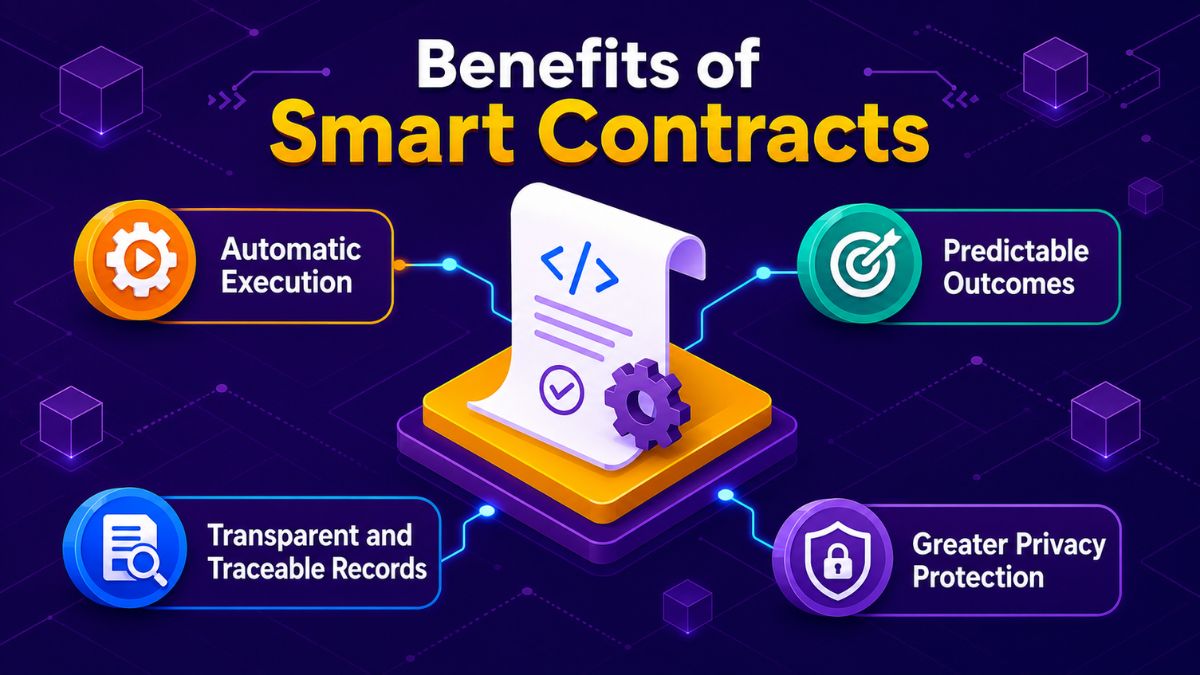
Smart contracts help businesses and users automate agreements, reduce reliance on intermediaries, and make transactions more transparent. Because they run on blockchain technology, they can execute actions accurately and consistently when predefined conditions are met.
Automatic execution
Smart contracts automatically carry out an action once all required conditions are satisfied. This removes the need for manual approval or a third party, helping transactions happen faster and with fewer delays. For example, a smart contract can release funds to a recipient on a specific date or transfer ownership of a digital asset after payment is confirmed. If the conditions are not met, the transaction will not proceed.
Predictable outcomes
Smart contracts follow the exact rules written in their code. When the same conditions are provided, the contract produces the same result every time. This reduces misunderstandings and inconsistent decisions that may occur when traditional agreements are interpreted by different people.
Transparent and traceable records
Transactions and activities performed by smart contracts are recorded on the blockchain. Authorized users, and in some cases the public, can review these records to confirm what happened. This creates a clear history of payments, asset transfers, and contract actions. It can make auditing easier and help participants verify information without relying on a single organization.
Greater privacy protection
Smart contracts can allow users to interact through blockchain wallet addresses instead of publicly displaying their real names. This provides a degree of privacy while still keeping transaction records verifiable.
How do smart contracts work?
Smart contracts work by following simple “if-then” rules written into code and stored on a blockchain. When a specific condition is met, the contract automatically performs the action linked to that condition.
For example, a smart contract may be programmed to transfer a digital asset to a buyer if payment is received. Until the payment is confirmed, the contract remains inactive. Once the blockchain verifies the transaction, the smart contract executes the transfer automatically.
The process usually works in 4 steps:
- Define the agreement: The parties agree on the terms, which are then converted into code using rules such as “if this condition occurs, then perform this action.”
- Deploy the contract: The completed smart contract is uploaded to a blockchain, where it remains active and waits for the required trigger event.
- Verify the conditions: When an event such as a payment or delivery occurs, the blockchain network checks whether the predefined conditions have been satisfied.
- Execute and record the result: Once verified, the smart contract automatically performs the programmed action, such as releasing funds or transferring ownership, and records the result on the blockchain.
Smart Contracts vs Traditional Contracts: What are the Differences
Smart contracts use blockchain-based code to automate agreements, while traditional contracts depend more heavily on written terms, human interpretation, and legal enforcement. The table below highlights the main differences between them.
|
Factor |
Smart Contracts |
Traditional Contracts |
| Legality | May be legally binding if they meet the requirements of applicable laws and regulations. | Generally recognized as legally binding when the agreement meets legal requirements and is accepted by all parties. |
| Execution | Execute automatically when predefined conditions are met. | Usually require people or organizations to carry out the agreed actions manually. |
| Enforcement | Enforced through programmed code and blockchain rules. Legal disputes may still require court involvement. | Enforced through legal processes, including negotiation, arbitration, or court proceedings. |
| Validity | Transactions and contract activity can be verified by participants on the blockchain network. | Validity usually depends on mutual agreement, signatures, and compliance with relevant laws. |
| Record Keeping | Contract data and transactions are stored on the blockchain, creating a permanent digital record. | Records are commonly stored in paper documents, databases, or private digital systems. |
| Security | Protected by blockchain cryptography and distributed network validation, making unauthorized changes difficult. | Security depends on how documents and digital records are stored, managed, and protected. |
| Transparency | Contract activity can be visible and independently verified, depending on whether the blockchain is public or private. | Access is usually limited to the contracting parties and authorized third parties. |
| Traceability | Actions and transactions are recorded on the blockchain, making them easier to track. | Tracking may require reviewing documents, emails, databases, or other separate records. |
| Accuracy | Automatically follows the coded instructions, reducing manual processing errors. | More dependent on human interpretation and manual execution, which may increase the risk of errors. |
What are Popular Applications of Smart Contracts?
Smart contracts can support many blockchain applications by automating ownership, financial transactions, risk controls, and digital asset management. Their ability to execute predefined rules makes them especially useful in token systems, decentralized finance, risk management, gaming, and NFTs.
Decentralized finance (DeFi)
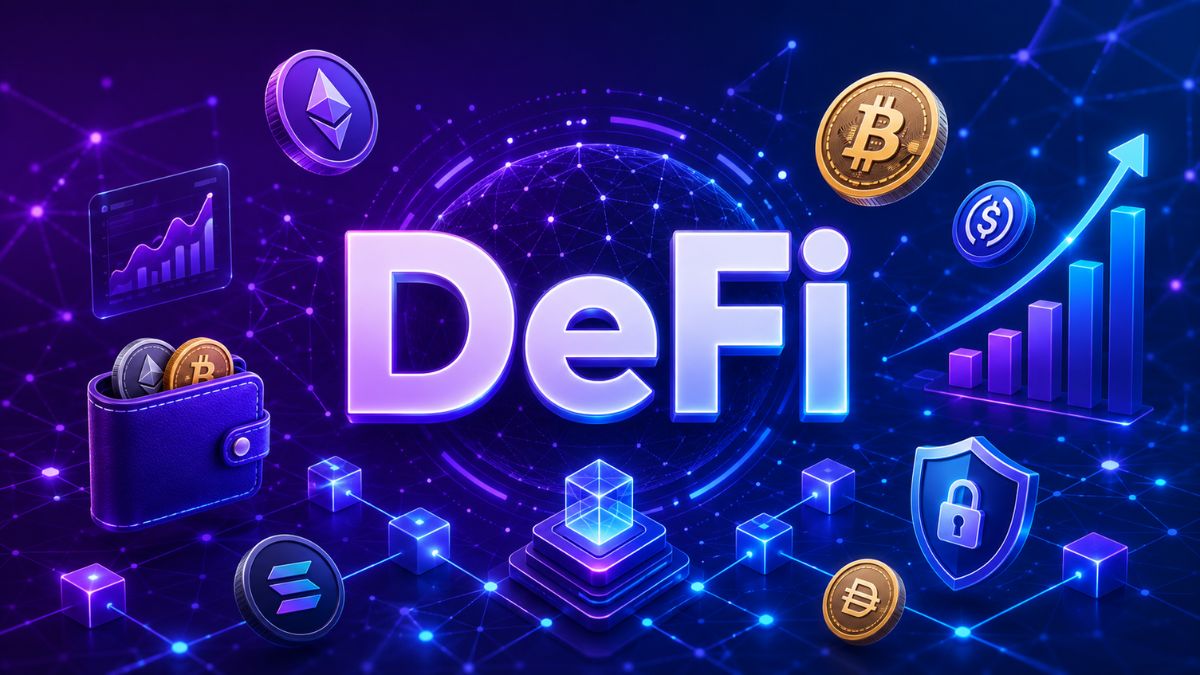
DeFi platforms use smart contracts to provide financial services without relying on traditional banks or brokers. They can automate lending, borrowing, trading, asset management, and the distribution of funds.
For example, a lending platform can hold a borrower’s collateral, calculate interest, and release funds automatically. When the loan is repaid, the smart contract returns the collateral without requiring manual processing.
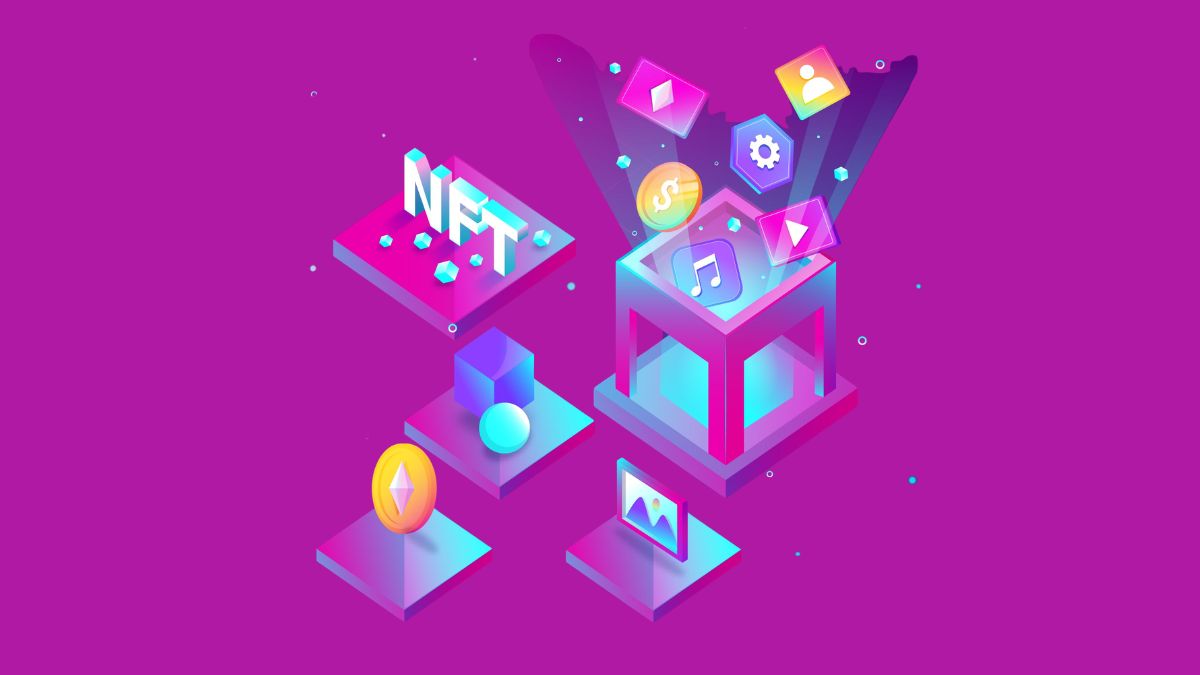
Gaming and NFTs
Blockchain games use smart contracts to manage in-game assets, rewards, competitions, and player transactions. The contract ensures that game rules are executed consistently and that results cannot be easily changed by a developer or player.
Smart contracts can also control how NFTs are created, distributed, sold, or transferred. For example, they may distribute limited-edition digital items, reward players after completing a task, or randomly assign rare in-game assets.
Rights management and tokens
Smart contracts are used to create digital tokens and define how ownership rights are issued, transferred, and managed on a blockchain. Instead of relying on a central organization to update ownership records, the contract automatically applies the rules written into its code.
This makes smart contracts useful for managing utility tokens, governance tokens, security tokens, and NFTs. Every transfer is recorded on the blockchain, helping participants verify who owns an asset and how that ownership has changed over time.

Limitations and Common Risks of Smart Contracts
Smart contracts can automate transactions and enforce predefined rules without constant manual oversight. However, their immutability, technical complexity, and reliance on code and external data also create practical limitations and serious operational risks.
Key limitations of smart contracts include:
- Difficult to modify: Once deployed, smart contracts are often hard to change. Fixing errors may require costly upgrades, contract migration, or governance approval.
- Limited flexibility and judgment: Smart contracts follow coded rules exactly and cannot consider context, intent, or commercial relationships. They may therefore produce outcomes that are technically correct but impractical or unfair.
- Dependence on technical specialists: Most users cannot read or evaluate smart contract code independently. Developers, auditors, and legal experts are still needed to translate business terms into reliable logic.
- Incomplete removal of third parties: Smart contracts reduce some intermediaries but do not eliminate them entirely. Projects still depend on developers, auditors, oracle providers, wallet services, and governance participants.
Major risks of smart contracts are:
- Logic and coding errors: A contract may execute exactly as programmed while producing unintended results, such as locking funds or granting unauthorized access. These defects can be difficult to reverse after deployment.
- Security exploits: Attackers may identify vulnerabilities in contract logic and use them to drain assets or manipulate protocol functions. The financial impact can be immediate because blockchain transactions are generally irreversible.
- Unreliable oracle data: Many smart contracts depend on external price feeds or other off-chain information. If an oracle is inaccurate, manipulated, or unavailable, the contract may execute incorrect transactions.
- Legal and liability uncertainty: Responsibility may be unclear when a smart contract fails or causes financial loss. Jurisdiction, enforceability, consumer protection, and accountability remain unresolved in many markets.
Real-World Examples of Smart Contracts
Smart contracts are no longer limited to cryptocurrency transactions. Today, they are used across multiple industries to automate agreements, improve transparency, and reduce manual processes without relying on centralized intermediaries.
Supply chain management
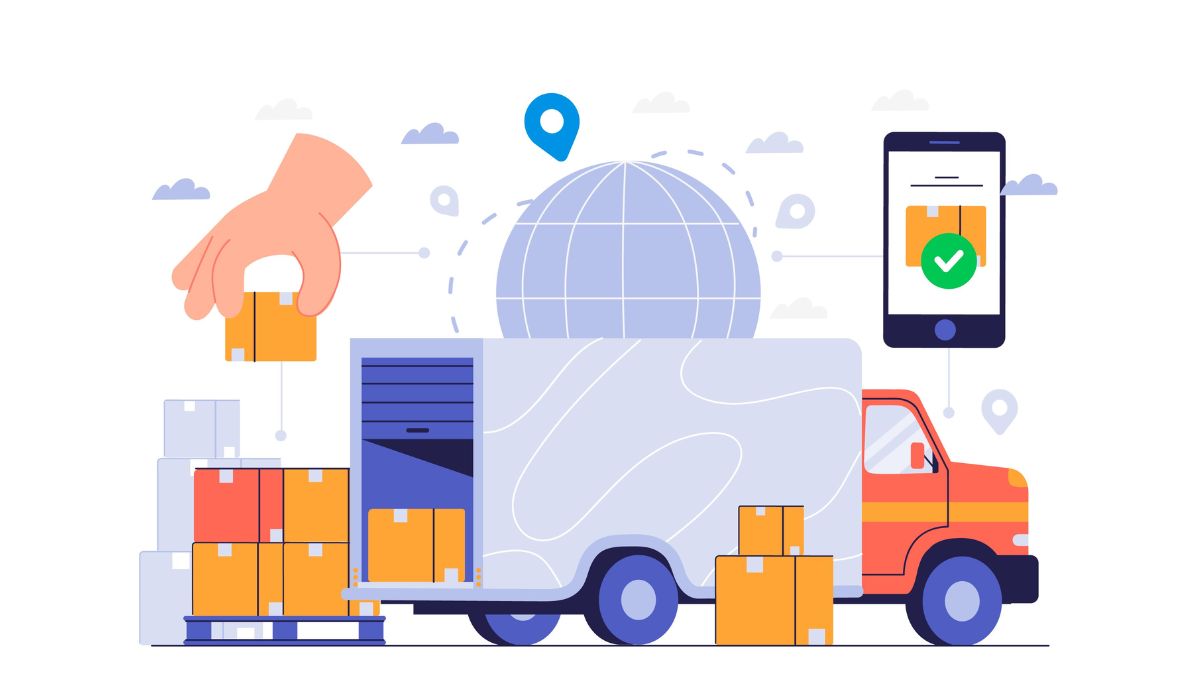
Businesses use smart contracts to automate logistics, verify deliveries, and improve product traceability throughout the supply chain. Contract conditions can automatically trigger payments, notifications, or compliance checks when shipments reach specific milestones. For example, Datahash, an Australian supply chain platform, leverages blockchain technology to authenticate agricultural products and combat counterfeit goods.
Retail and digital payments
Retailers use smart contracts to simplify payments, payroll, inventory tracking, and supplier settlements. Automated execution reduces administrative work while improving transaction speed and transparency. Dropp, for example, enables low-cost micropayments in both cryptocurrency and fiat currency, allowing merchants to process small-value transactions more efficiently.
Digital identity management
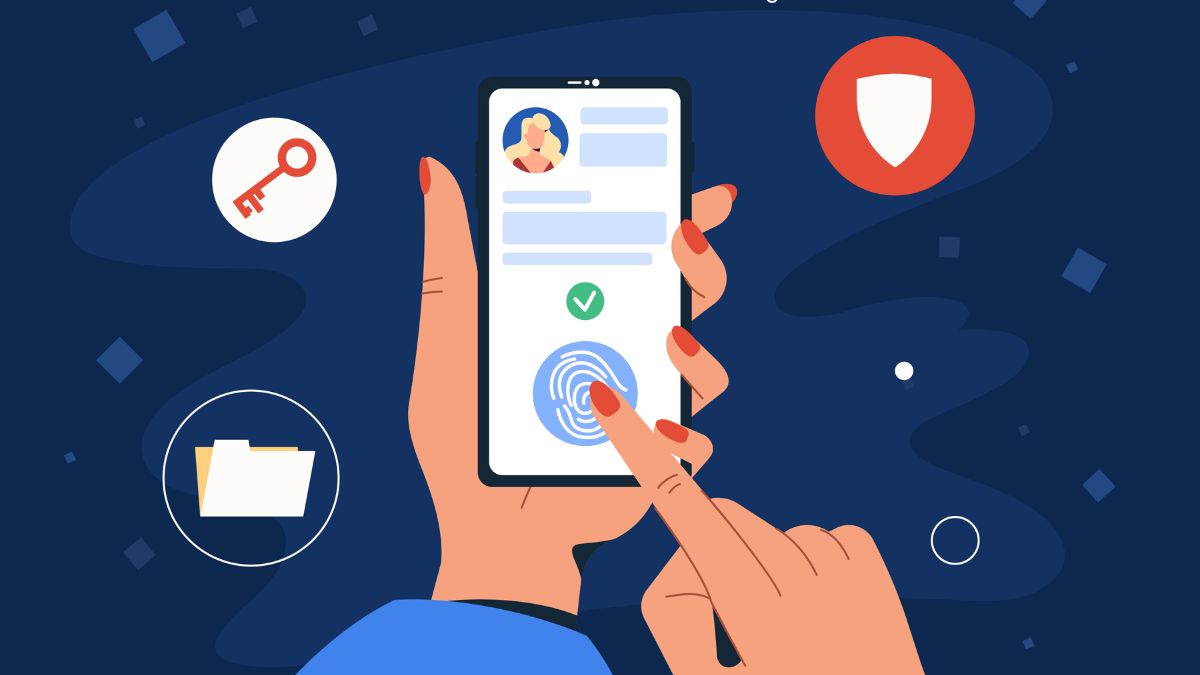
Smart contracts can securely store and verify digital identity information without exposing sensitive personal data. Users maintain control over their credentials while selectively sharing verified information with banks, employers, or service providers. MyEarth ID is one example of a decentralized identity platform that enables secure identity verification through blockchain technology.
Wondering how to apply smart contracts in your industry? Explore leading smart contract development companies that can help you turn complex workflows into secure, automated blockchain solutions.
Future Trends and Innovations in Smart Contracts
The future of smart contracts is moving beyond basic rule-based automation. Emerging technologies are making them more intelligent, capable of representing real-world assets, and suitable for business use cases that require stronger privacy.
AI-Driven smart contracts
Artificial intelligence can help smart contracts respond more intelligently to changing conditions instead of relying only on fixed rules. AI models may analyze market data, weather information, IoT signals, or user behavior before recommending or triggering an action. This could support dynamic risk assessment, predictive payments, and automated contract adjustments.
Privacy-preserving technologies
Privacy technologies enable smart contracts to verify data without exposing sensitive information. Zero-knowledge proofs can confirm requirements without revealing underlying details. For example, a lending contract can check collateral without showing exact balances. Trusted execution environments also support secure, confidential computations before results are recorded on the blockchain.
Tokenization of real-world assets
Smart contracts are increasingly being used to represent real-world assets such as property, bonds, commodities, and artwork as blockchain-based tokens. The smart contract is applied to manage ownership, transfers, payments, compliance checks, and revenue distribution automatically.
Low-code and no-code smart contract
Low-code and no-code platforms simplify smart contract development for users with limited programming skills. They offer visual tools, templates, and reusable components to define contract logic. This allows faster prototyping and deployment of blockchain applications. However, proper review and security audits are still essential before production use.
FAQs
1. What are examples of smart contracts?
Common examples include contracts that release payments after delivery, issue tokens, transfer NFT ownership, process insurance claims, or manage decentralized loans. They are also used in supply chain tracking, blockchain games, voting systems, and digital identity management.
2. Can smart contracts be trusted
Smart contracts can provide reliable execution because they follow predefined code and record transactions on a blockchain. However, their reliability depends on the quality of the code, the security of external data sources, and whether the contract has undergone proper testing and auditing.
3. What happens if a smart contract fails?
A failed transaction is usually reversed before its changes are added to the blockchain, although the user may still pay a transaction fee. If the failure comes from a coding vulnerability or incorrect contract logic, funds may become locked or lost, and fixing the problem can be difficult after deployment.
4. Which crypto is best for smart contracts?
There is no single best cryptocurrency or blockchain for every smart contract project. Ethereum offers an established smart contract ecosystem, while platforms such as Solana and Cardano use different programming models and may suit projects with other requirements.
5. Who needs smart contracts?
Businesses and organizations that manage rule-based transactions, digital assets, payments, or multi-party workflows may benefit from smart contracts. They are particularly useful in finance, insurance, gaming, real estate, supply chains, and any process where automation and verifiable records can reduce manual work.
Conclusion
Knowing what is smart contract is the first step toward understanding how businesses can automate agreements and execute transactions more efficiently. These blockchain-based programs can solve common challenges such as costly intermediaries, lengthy processing times, inconsistent execution, and poor visibility across multi-party workflows.
Newwave Solutions helps organizations turn smart contract opportunities into secure and scalable solutions. Our blockchain development team leverages blockchain expertise to provide end-to-end services, covering strategy, custom development, system integration, security testing, and post-launch optimization. Talk to our experts to build a smart contract solution that reduces friction and supports sustainable business growth.
To Quang Duy is the CEO of Newwave Solutions, a leading Vietnamese software company. He is recognized as a standout technology consultant. Connect with him on LinkedIn and Twitter.



Read More Guides
Get stories in your inbox twice a month.
Let’s Build Something Extraordinary
Sign up for a 30 min no-obligation strategic session with us. Transform your Ideas into scalable reality.
Leave a Reply