


Native vs Cross Platform: Which is Best for Your App Development?
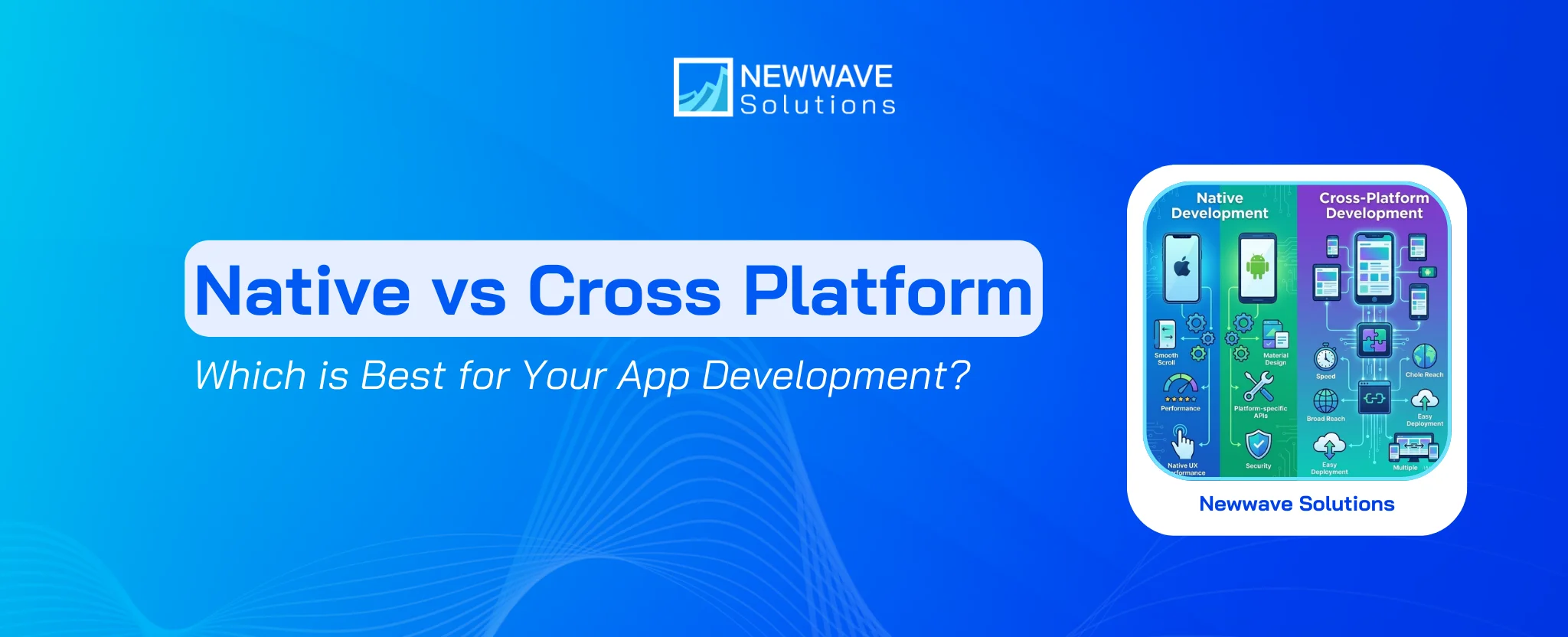
Many businesses struggle with the choice of native vs cross platform development, often unsure which option truly aligns with their goals. Selecting the wrong approach can lead to wasted budgets, poor performance, or unsatisfied users. This article uncovers the key differences, backed by pros, cons, and real-world insights, giving you the evidence you need to make the right decision.
What Is Native App Development?
Native app development refers to the process of building mobile applications specifically for one operating system, such as iOS or Android. Developers use programming languages and tools that are officially supported by the platform, like Swift for iOS or Kotlin for Android. Because these apps are designed to work within a single environment, they often deliver smooth performance, reliable security, and a consistent user experience that feels natural to the device.
This approach is often discussed in the native app vs cross platform debate because while native apps can offer unmatched performance, they usually require more time and investment to build and maintain separate versions for different platforms.
Example of Native Apps: Spotify
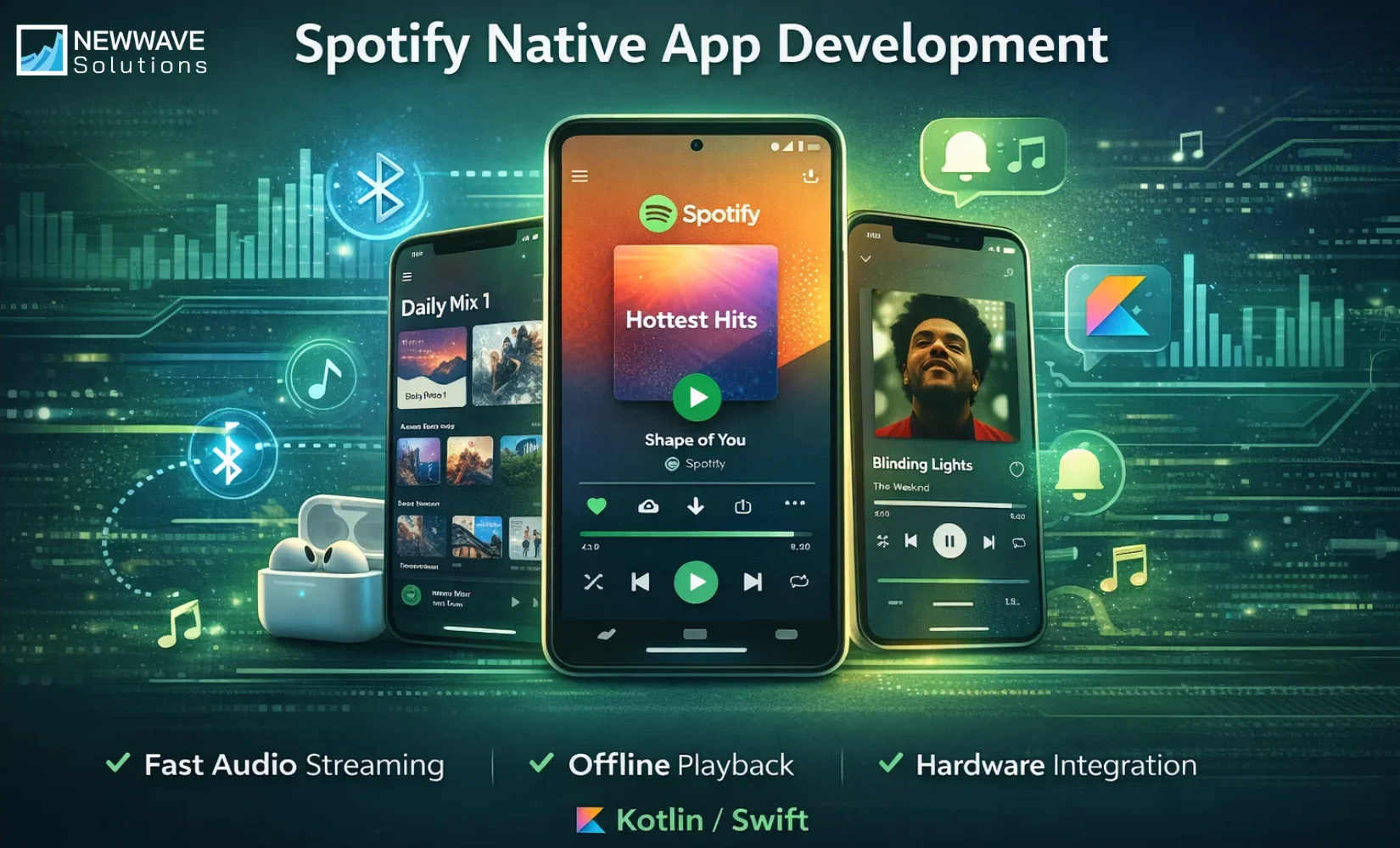
Spotify is one of the most widely recognized music streaming platforms and has long relied on native app development to ensure superior performance and user experience. By building its Android and iOS apps using platform-specific languages (e.g., Kotlin for Android and Swift/Objective-C for iOS), Spotify achieves fast audio streaming, seamless offline playback, and smooth integration with hardware features like Bluetooth and the client’s notification system.
The result of Spotify’s native approach is a highly responsive and reliable app that delivers real-time audio quality and minimal latency—even when users have poor network conditions. This robust native performance contributes significantly to user engagement and retention, helping Spotify retain a vast global user base.
Pros and Cons of Native Apps
| Pros of Native Apps |
Cons of Native Apps |
| High performance – optimized for a specific platform, making apps faster and more responsive. | Higher development cost – separate apps are needed for iOS and Android, which increases expenses. |
| Better user experience – follows platform-specific design rules, creating a familiar and smooth interface. | Longer time to market – building two versions slows down release schedules. |
| Full access to device features – use hardware like GPS, camera, and notifications without restrictions. | Maintenance effort – updates and bug fixes must be done separately for each platform. |
| Stronger security – benefits from the built-in security tools of the operating system. |
What Is Cross-Platform App Development?
Cross-platform app development allows businesses to create applications that run on multiple operating systems using a single codebase. Instead of writing separate apps for iOS and Android, developers use frameworks like Flutter or React Native to build once and deploy everywhere. This makes the process faster and often more cost-efficient, although it may not always match the speed and seamless integration of native apps.
In the context of native vs cross platform mobile app development, this approach is popular among startups and enterprises that want to reach wider audiences quickly without investing in two completely separate applications.
Example of Cross-Platform Apps: Forbes (Kotlin Multiplatform)
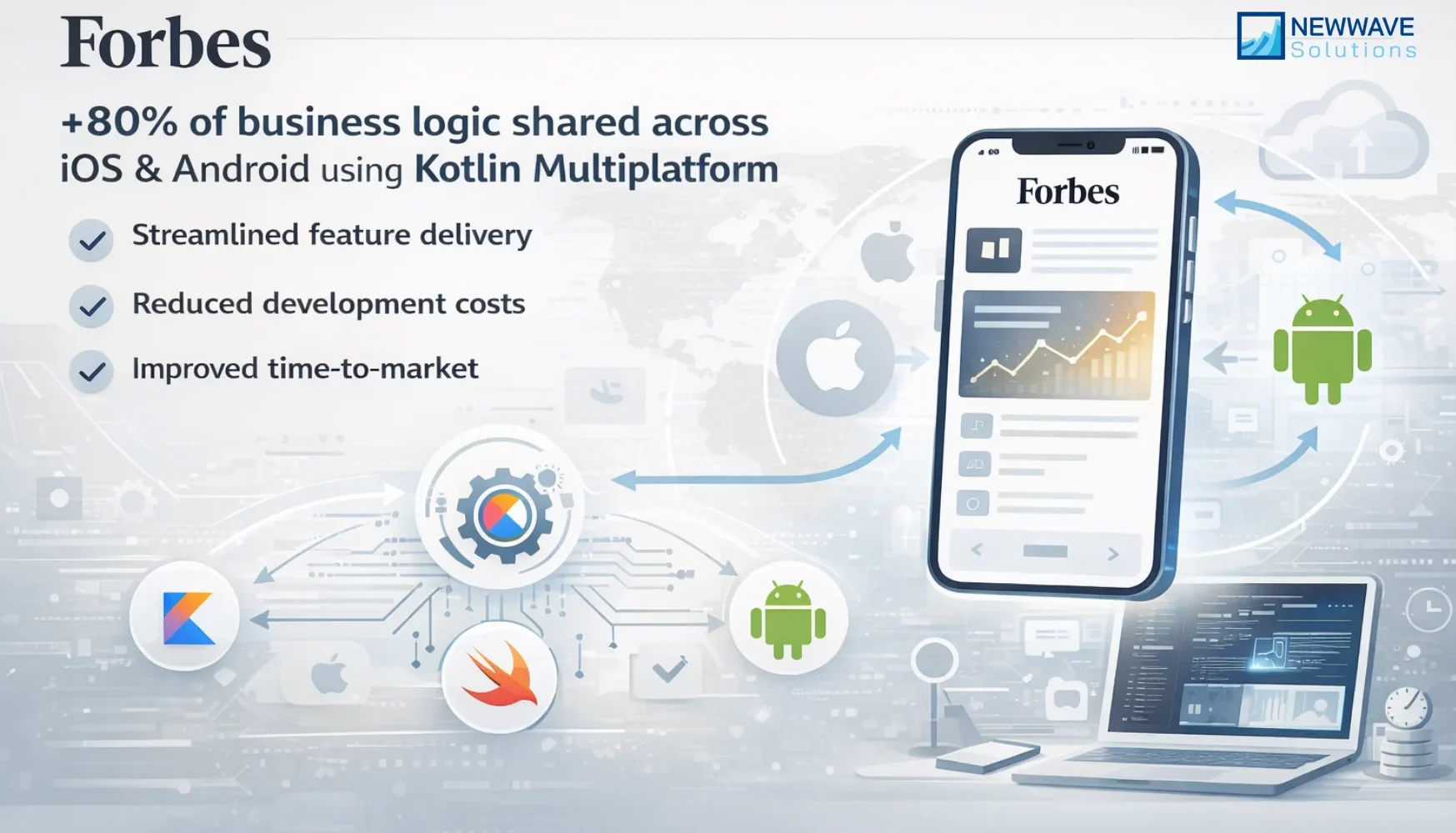
Forbes recently embraced a cross-platform approach by shifting its mobile app development to Kotlin Multiplatform, sharing over 80% of its business logic across iOS and Android. This decision allowed Forbes to streamline feature delivery and dramatically reduce development costs, while still maintaining high-quality native experiences.
By reusing core logic and deploying updates simultaneously across both platforms, Forbes was able to launch new features faster and with less engineering effort. This real-world case demonstrates that native vs cross platform mobile app development can deliver a balanced solution: efficient development with a consistent native-like experience and improved time-to-market.
Pros and Cons of Cross-Platform Apps
| Pros of Cross-Platform Apps |
Cons of Cross-Platform Apps |
| Faster development – one codebase reduces build time across platforms. | Performance limitations – apps may run slower compared to native versions. |
| Lower costs – no need for separate development teams for iOS and Android. | Limited access to device features – some hardware functions are harder to implement. |
| Wider reach – one app can target both iOS and Android users at once. | Possible design compromises – may not fully match the unique look of each platform. |
| Easier maintenance – fixes and updates are applied once and reflected everywhere. | Dependency on frameworks – heavy reliance on third-party tools can create risks if support changes. |
Native vs Cross-Platform: Key Differences
In my years of working with mobile development projects, I’ve seen businesses face the same dilemma: should they build native apps for each platform, or rely on cross-platform frameworks to reach both audiences faster?
Having experienced both approaches, I can tell you that while native apps often deliver unmatched performance and reliability, cross-platform development shines when time-to-market and budget are limited. To make the right decision, it’s essential to break down the key differences between native vs cross-platform mobile app development and evaluate them against your business goals.
|
Criteria |
Native Apps |
Cross-Platform Apps |
|
Performance |
High speed, smooth animations, optimized for each platform. | Slightly slower, may face lag in heavy or complex apps. |
|
User Experience |
Seamless, platform-consistent look and feel. | May compromise UI/UX to work across platforms. |
|
Development Cost |
Higher, as separate apps must be built for iOS and Android. | Lower, since one codebase serves multiple platforms. |
|
Time to Market |
Slower due to building and testing two apps separately. | Faster, as most of the code is shared across platforms. |
|
Maintenance |
Requires updates and fixes separately for each app. | Easier, updates are applied once and reflected everywhere. |
|
Access to Features |
Full access to device hardware (camera, GPS, biometrics). | Limited or requires complex workarounds for advanced features. |
|
Scalability |
Easier to scale for performance-heavy apps (games, fintech). | Good for scaling simple to mid-level apps, but may struggle with high complexity. |
1. Performance
Performance is where native apps generally excel. Because they are built specifically for one platform, the code is optimized to work seamlessly with the device’s operating system. This results in faster load times, smoother animations, and the ability to handle complex tasks without lag. In contrast, cross-platform apps rely on shared code that is translated across platforms, which can introduce small delays or inconsistencies, especially in high-demand applications such as mobile gaming or fintech apps.
>>> Winner: Native – Native development wins because it delivers consistent speed and reliability that businesses cannot afford to compromise on when user satisfaction depends on real-time responsiveness.
2. User Experience
User experience is another critical differentiator. Native apps follow the design and interaction guidelines of each platform, meaning the app feels like an organic part of the device. This creates a more intuitive and familiar experience for users. Cross-platform apps, while capable of delivering a functional interface, often cannot match the precision of platform-specific design elements. This sometimes results in a less polished look and feel, which can affect customer perception and engagement.
>>> Winner: Native – Native development provides a superior user experience because it integrates seamlessly with each platform’s standards, ensuring consistency and familiarity for end-users.
3. Development Cost
Cross-platform apps typically require lower upfront investment since a single codebase can serve both iOS and Android. This reduces the need for two separate teams and can cut overall expenses significantly. Native apps, on the other hand, require more resources because development must be duplicated across platforms, making the costs higher. For businesses with limited budgets or those launching MVPs, this can be a decisive factor.
>>> Winner: Cross-Platform – Cross-platform development is more cost-effective because it allows companies to maximize reach while minimizing development expenses.
4. Time to Market
When speed is a priority, cross-platform solutions often come out ahead. Using a shared codebase allows developers to roll out apps faster and simultaneously across platforms. Native apps require building and testing each version separately, which naturally takes longer. I once worked on a cross-platform MVP where we cut the launch time by nearly half compared to a native build, allowing the client to capture early market share before competitors.
>>> Winner: Cross-Platform – Cross-platform development is the better option for businesses that want to launch quickly and gain a competitive edge in fast-moving markets.
5. Maintenance
Maintenance is more straightforward with cross-platform apps because updates and bug fixes are applied once and reflected across all platforms. With native apps, the same fixes must be implemented separately for iOS and Android, which takes more time and resources. This difference becomes more pronounced as apps scale and require frequent updates to remain competitive.
>>> Winner: Cross-Platform – Cross-platform development is more efficient in terms of maintenance, reducing long-term workload and ensuring consistent updates for all users.
6. Access to Features
Native apps have full access to a device’s hardware and operating system features, making them the better option for applications that rely heavily on advanced functions like GPS, biometrics, augmented reality, or push notifications. Cross-platform frameworks are improving in this area, but they still require workarounds or third-party integrations to achieve the same depth of functionality, which can affect reliability. I recall facing limitations when implementing advanced camera features in a cross-platform build, while the native version handled it effortlessly.
>>> Winner: Native – Native development is the clear choice for businesses that need deep integration with device-specific features, ensuring apps function without restrictions.
7. Scalability
Scalability is often easier with native apps, especially for projects expected to grow in complexity or handle large amounts of data. Native code is better suited for optimizing performance at scale, making it ideal for industries like gaming, finance, or enterprise applications. Cross-platform solutions can scale, too, but complex architectures often lead to performance bottlenecks or require additional optimization work.
>>> Winner: Native – Native development is better for scalability because it delivers consistent performance as user demand grows, making it the safer choice for long-term enterprise applications.
>>> Read more: Progressive Web App vs Native: Which Fits Your Business?
When to Choose Native vs Cross-Platform Development
Deciding between native vs cross platform development is not just a technical choice—it’s a strategic business decision. Knowing when to pick the right option is crucial because it directly affects cost, performance, scalability, and the overall success of your app. Below, we outline the circumstances where each approach is most effective, helping you align your decision with your business goals.
When to Choose Native Development
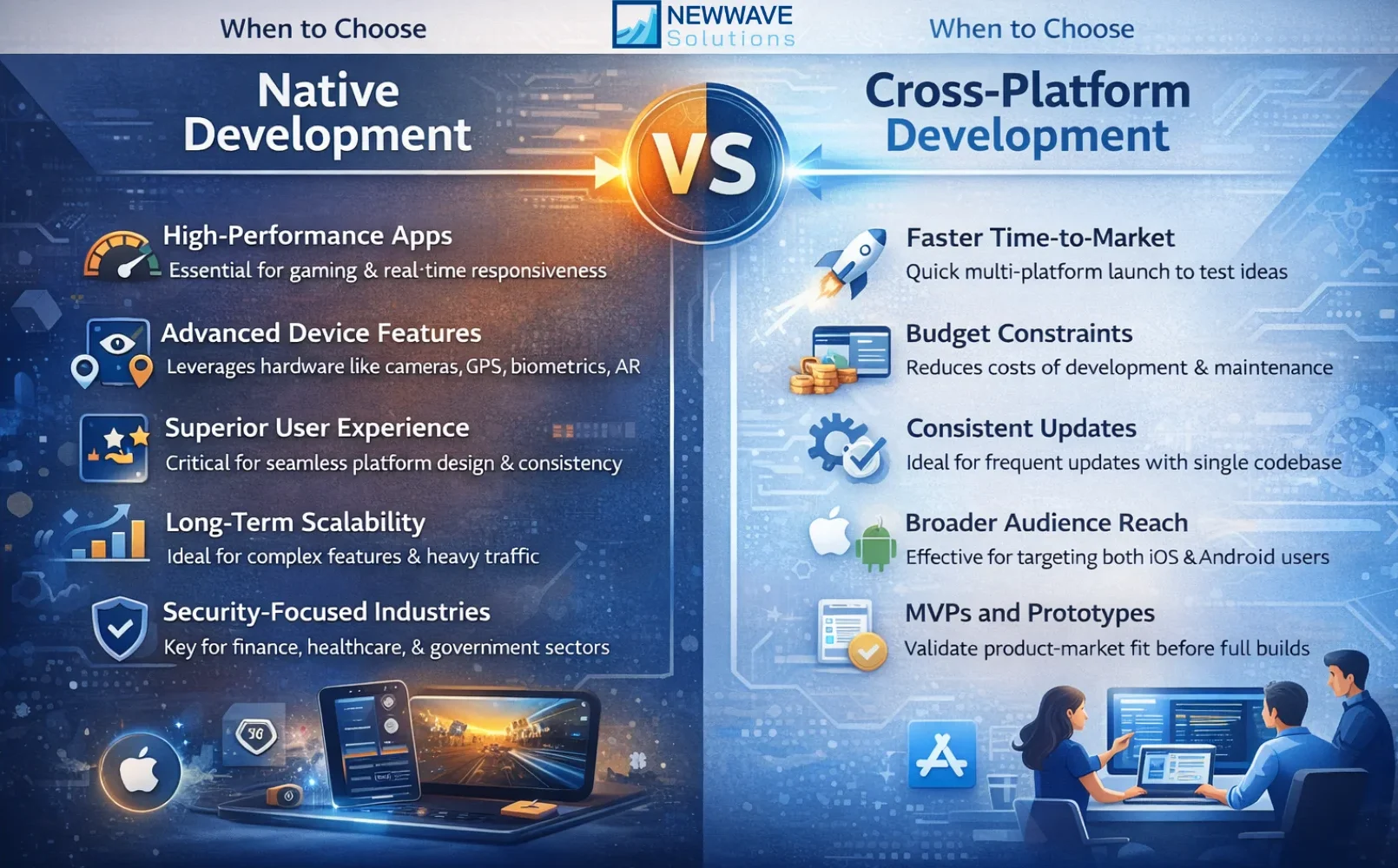
- High-performance apps – Ideal for gaming, fintech, or apps requiring real-time responsiveness, where speed and reliability cannot be compromised.
- Advanced device features – Best for apps that need deep integration with hardware like cameras, GPS, biometric sensors, or AR capabilities.
- Superior user experience – Recommended when user interface consistency and seamless platform design are critical to customer satisfaction.
- Long-term scalability – Suitable for enterprises planning to expand their apps with complex features or expect heavy user traffic.
- Security-focused industries – Essential for sectors like finance, healthcare, or government, where robust built-in security is a priority.
When to Choose Cross-Platform Development
- Faster time-to-market – Best for startups or businesses that need to launch quickly across multiple platforms to test ideas or capture market share.
- Budget constraints – Effective for organizations looking to minimize development costs by using a single codebase for iOS and Android.
- Consistent updates – Ideal for apps that require frequent updates or maintenance, as changes can be rolled out across platforms simultaneously.
- Broader audience reach – Useful for businesses aiming to target both Android and iOS users without building separate native apps.
- MVPs and prototypes – Perfect for validating product-market fit before investing in full native builds, reducing risk while still reaching users.
Outsource Newwave Solutions for either Native or Cross-Platform app development
We – Newwave Solutions offers two distinct mobile app development services: Native App Development services and Cross-Platform App Development. Native app development involves crafting applications specifically for a single operating system, such as iOS using Swift or Android using Kotlin.
In contrast, a Cross-Platform app development service focuses on building applications that run consistently across multiple devices and operating systems from a single, unified codebase, primarily utilizing cutting-edge frameworks like Flutter and React Native.
When outsourcing app development services from Newwave Solutions, you can benefit from several key strengths, resources, and advantages, including:
- Specialized Expertise and Advanced Technologies: We bring a team of skilled professionals with deep expertise in both native and cross-platform development. Using Swift and Kotlin for native apps and frameworks like Flutter and React Native for cross-platform, we ensure your project leverages the latest advancements in mobile technology.
- Optimized Performance and Authentic User Experiences: We focus on delivering applications that offer superior performance and a seamless user experience. Our UI/UX specialists design intuitive and consistent interfaces, making every interaction smooth and enjoyable for users.
- Flexible Engagement Models and Cost Efficiency: We provide flexible engagement models such as staff augmentation, extended teams, fixed price, and time-and-materials, along with hourly to annual hiring options. This flexibility allows you to align project costs and resources with your specific business needs.
- Comprehensive Development Lifecycle and Ongoing Support: We manage the full app development lifecycle, from concept and planning to design, coding, testing, and launch. After deployment, we continue with ongoing maintenance, bug fixes, and feature updates to keep your app secure and competitive.
- Robust Security and Quality Assurance Standards: We prioritize strong security and quality throughout every project. By applying encrypted data handling, strict security protocols, and ISO 9001 quality standards, we ensure your app is reliable and high-performing.
- Client-Centric Collaboration and Transparent Communication: We work closely with clients to fully understand their goals and market requirements. Using Agile methods and clear communication, including 24/7 support and time-zone overlap, we build trusted partnerships focused on real business outcomes.
Conclusion
The comparison of Native vs cross platform is not about one being universally better, but about choosing what fits your business needs. Native development is ideal for enterprises prioritizing high performance, security, and seamless user experiences, while cross-platform is best suited for businesses seeking faster time-to-market and cost efficiency. By aligning the approach with your goals, you can ensure successful app development that delivers real value.
Regardless of whether you choose a Native or a Cross-platform approach, our professional mobile app development services provide comprehensive support from initial ideation and MVP development to successful launching and long-term nurturing. Contact us today to schedule a meeting, and let’s collaborate to build your ideal application as soon as possible, whether you prefer Native or Cross-platform app development.
FAQs
1. Which is more cost-effectivein the long run?
Cross-platform apps are usually cheaper at the start since you only build one codebase for both iOS and Android. However, if your app grows very complex and needs deep customization, native apps can become more cost-effective in the long run because they are easier to optimize for performance and scaling. In my experience, startups save money with cross-platform for the first few years, while large enterprises often find native a better long-term investment.
2. Can cross-platform apps match native performance?
For simple or medium-sized apps, yes—modern frameworks like Flutter and React Native are quite close to native. But for high-performance needs such as 3D gaming or real-time financial apps, native still has the edge. I’ve tested both, and while cross-platform worked well for e-commerce projects, it couldn’t quite match native speed in a real-time trading app.
3. What role does UI/UX design play in the decision?
UI/UX is very important because it shapes how users feel about your app. Native apps usually look and feel smoother since they follow the rules of each platform, while cross-platform apps may look a bit more generic. If your business depends on user experience—like in retail or lifestyle apps—I’d recommend native to make every detail feel “just right.”
4. Are hybrid apps the same as cross-platform apps?
Not exactly. Hybrid apps usually run inside a web browser shell on your phone, while cross-platform apps use shared code but still behave more like real native apps. In simple terms, a hybrid is like putting a website inside an app, while cross-platform is closer to building one real app for two platforms at the same time.
5. How doestheteam’s skill set affect the choice?
Your team’s expertise plays a big role. If your developers are strong in native languages like Swift or Kotlin, you’ll get better results building native. But if they’re more comfortable with JavaScript or Dart, cross-platform frameworks might be the smarter option. I’ve seen teams struggle when they pick a technology they don’t fully understand, so matching skills to the approach is critical.
To Quang Duy is the CEO of Newwave Solutions, a leading Vietnamese software company. He is recognized as a standout technology consultant. Connect with him on LinkedIn and Twitter.



Read More Guides

Get stories in your inbox twice a month.
Let’s Connect
Let us know what you need, and out professionals will collaborate with you to find a solution that enables growth.
Leave a Reply