


What is System Development & Its Life Cycle: A Detailed Guide
Whether it’s upgrading to new hardware, designing software, or expanding your market, system development plays a crucial role in every business. However, through iterative processes and changing business demands, it can be different depending on the nature of each project. Read on to know more about system development, its methodologies, system development life cycle (SDLC), and how it can benefit your business.
What is System Development?
System development is a structured process in which a business designs, builds, tests, deploys, and maintains software systems that support its operational and strategic goals. The process enables organizations to translate business requirements into scalable digital solutions that improve efficiency and decision-making. In modern enterprises, the system development process forms the foundation for long-term digital transformation initiatives.
So, in simple words, system development is the process of creating a program from scratch. However, even though writing code is the core activity of system development, it’s much more than that.
Example of System Development: A practical example can be seen at Walmart, where the company implemented a large-scale inventory management system using a customized system development life cycle. The solution automated stock tracking across thousands of stores, reduced operational delays, and enabled real-time replenishment decisions that significantly improved supply chain performance.
8. Types of System Development Models and Methodologies
Let’s explore the main types of software development outsourcing models and methodologies below:
1. Spiral Model
The Spiral model combines iterative development with continuous risk assessment, making it suitable for complex or high-risk system development projects. Each cycle includes planning, risk analysis, engineering, and evaluation so that teams can refine deliverables with greater certainty. Enterprises adopt this model for mission-critical systems such as healthcare platforms, where early risk identification contributes to safer and more reliable outcomes.2. Agile Model
The Agile model introduces an iterative structure where development occurs in short cycles, allowing teams to adapt quickly to new insights and evolving requirements. This approach improves collaboration between developers and stakeholders, which ensures that the final system delivers measurable business value. Global companies such as Spotify often rely on Agile squads to accelerate innovation and deliver customer-centric features continuously.3. Waterfall Model
The Waterfall model is a linear approach that organizes the system development process into sequential stages such as requirements, design, development, testing, and deployment. The model works best for projects with stable requirements because each phase must be completed before the next begins. In practice, enterprises often apply the Waterfall model for compliance-heavy systems, such as banking transaction modules, where clear documentation and predictable progress are essential.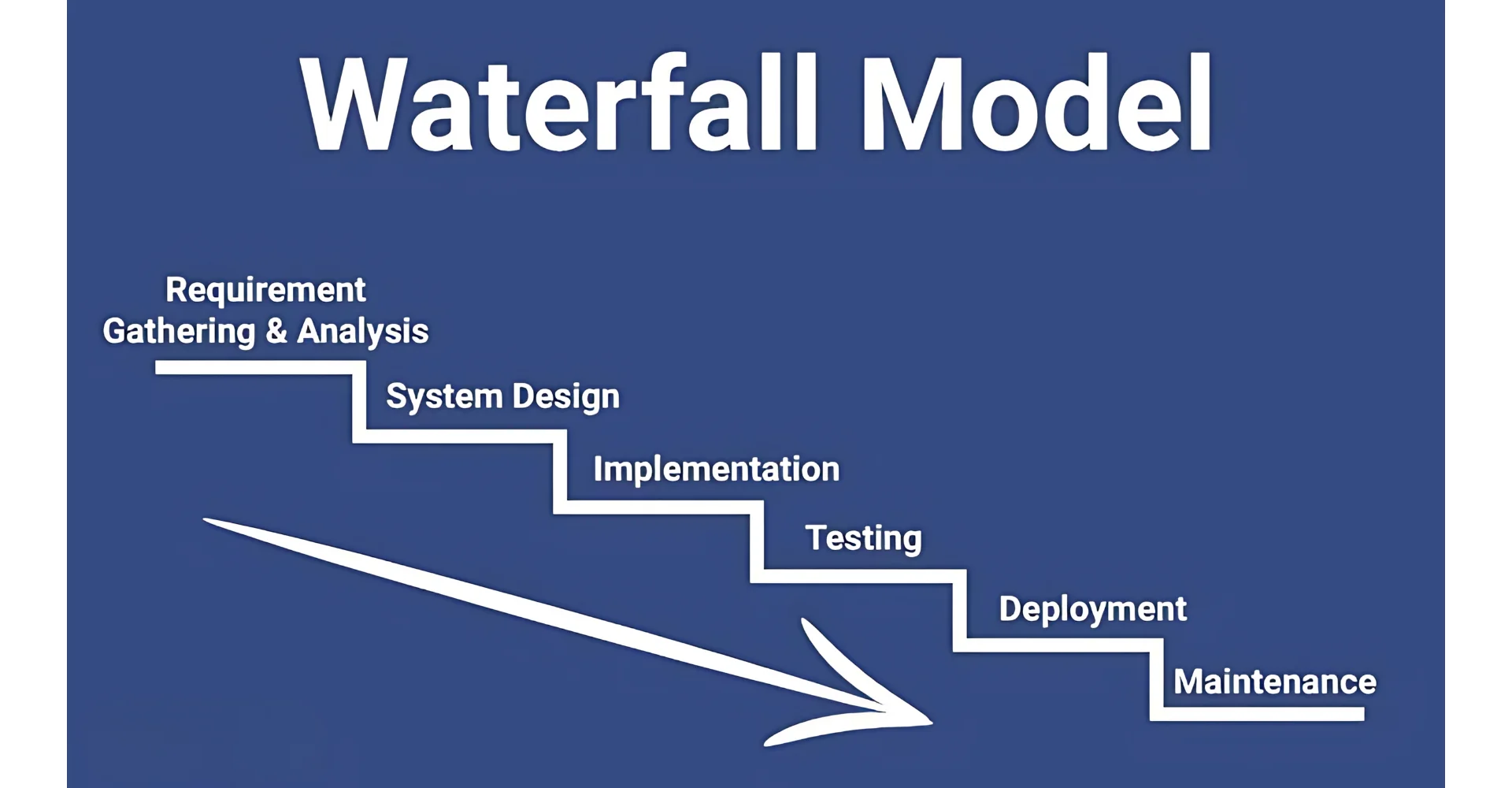
4. V-Model (Verification and Validation Model)
The V-Model structures the system development life cycle around parallel testing and development activities to strengthen quality assurance. Each development stage has a corresponding testing phase, which ensures errors are detected early and requirements are validated continuously. Organizations apply the V-Model in industries like aviation software, where high reliability and traceability are mandatory.5. Iterative Model
The Iterative model enables teams to develop a system in small increments, evaluate each version, and refine it before moving forward. This model reduces technical risk because each iteration provides a functioning component that can be validated by stakeholders. Digital businesses use iterative development for data platforms or analytics tools, as small improvements quickly enhance system accuracy and performance.6. DevOps Methodology
The DevOps methodology integrates development and operations teams to automate the system development process and accelerate software delivery. Continuous integration and continuous deployment practices reduce manual work and improve release stability. Modern enterprises adopt DevOps to shorten release cycles and ensure that new system features reach users with minimal downtime and higher reliability.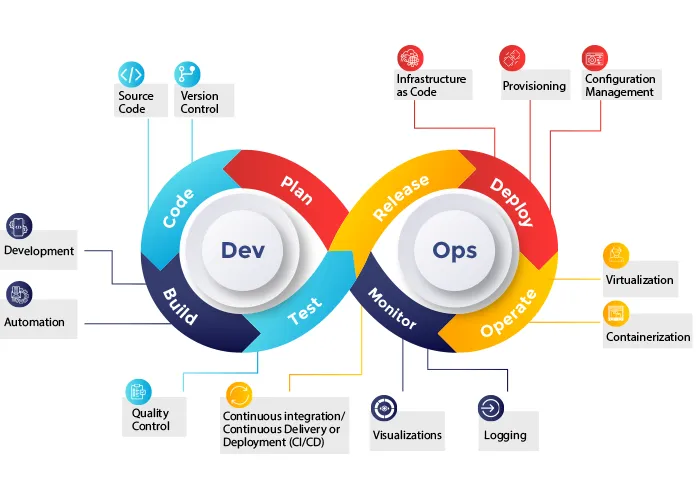
7. Rapid Application Development (RAD)
The RAD methodology prioritizes fast prototyping and user feedback, enabling teams to validate ideas early and reduce development time. This approach is effective when businesses require quick system delivery without compromising core functionality. Companies in the e-commerce sector use RAD to experiment with new digital features rapidly and adapt to customer needs more efficiently.8. Prototyping Model
The Prototyping model focuses on building early system versions that help stakeholders visualize requirements before development begins. This approach improves communication and reduces misalignment by allowing users to interact with the system early. Enterprises apply prototyping for customer-facing systems such as mobile apps, where usability testing significantly influences the final design.System Development Life Cycle (SDLC): The Detailed Process
Whether you want to apply this system development life cycle to your entire project or just for one feature, SDLC helps reduce risk by shortening the length of each step in system development. In most cases, most system developers will stick with these 5 basic phases:
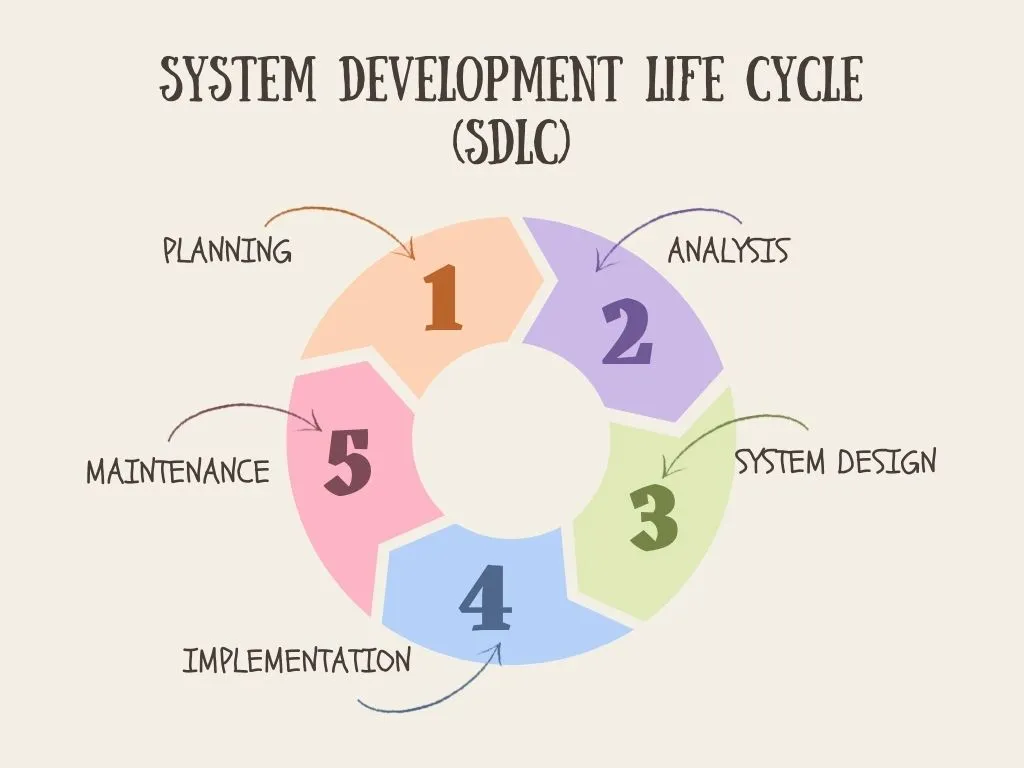
1. Planning
- Confirm project feasibility and schedule.
- Define the problem/scope if it’s an existing system.
- Review the plan for your new system and determine its objectives.
- Consider features like constraints, threats, integration, and security.
2. Analysis
- Gather, analyze, and validate the information/consultations from experts.
- Evaluate the alternatives and prioritize the requirements.
- Examine the information needs of your end-user to enhance the system goal.
- Prepare a software requirement specification (SRS) document.
3. System Design
- Design your application, network, databases, user interfaces (UI/UX), and system interfaces.
- Transform the SRS document into a logical structure that contains a detailed and complete set of specifications.
- Create a contingency, training, maintenance, and operation plan.
- Review to ensure that the final design meets the requirements stated in the SRS document.
4. Implementation
- Implement the design into your source code and combine all the modules together.
- Prepare a test report that contains all errors through test case generation, testing criteria, and resource allocation for testing.
- Integrate the information system into its environment and install the new system.
5. Maintenance
- Mobile support or on-site support for users is required once the system is installed.
- Implant changes or new updates that your system might undergo over time.
- Handle the residual errors and resolve any issues that may exist in the system, even after the testing phase.
- Maintenance and support are needed in the future, especially for large systems.
Why Do Your Businesses Need System Development?
From sales, payroll, to any operational activities, you can implement systems across multiple areas in your business to bring great benefits. Below are some reasons why your business needs system development:
- Improve Top-Line Performance: Fundamental elements like strategy creation and business processes lead to a much more insightful way to investigate and grow top-line revenue. In short, system development ensures you meet your customers’ expectations and improve your branding, which is key to growing a healthy business.
- Meet Customer’s Expectations: You can easily get critical information on business areas that need to be improved. Plus, some unmet needs can be discovered if you apply the right method with system development.
- Consistent Results: Whether you’re considering safety, quality, or development cost, a business system is designed to give you effective and repeatable results. In short, it is a process to fix your processes!
- Employee Engagement: The system’s goal is to provide opportunities for all employees so they can complete their work more in the most efficiently. Additionally, having a system in place allows your company to quickly integrate new employees and makes it easy for them to see their role within the organization.
- Reduce Cost and Increase Profits: It has been proven that system development helps reduce costs forever! Developing a business system is actually a way to cut costs without taking the shortcut that often leads to lower quality products or service levels.
6 Common Challenges of System Development
- Changing requirements: Many businesses struggle because requirements evolve during development, which leads to delays and additional costs. However, this challenge can be mitigated through iterative planning and continuous stakeholder engagement.
- Integration complexity: Modern systems must connect with diverse applications and legacy platforms, and this complexity increases technical risk. Nonetheless, an early integration strategy and robust API architecture help reduce failures.
- Security vulnerabilities: Every system development process introduces potential security gaps, and attackers often target these weak points. Even so, applying secure coding standards and continuous threat monitoring significantly strengthens system protection.
- Data management issues: Enterprises often face difficulties in ensuring data accuracy, consistency, and compliance across distributed environments. Fortunately, a strong data governance framework helps maintain reliability throughout the system lifecycle.
- Resource limitations: Development teams frequently deal with limited budgets or talent shortages, and this constraint slows down delivery. Yet, businesses can optimize resources through outsourcing or hybrid team models that scale efficiently.
- User adoption obstacles: New systems sometimes fail to gain user trust due to unfamiliar interfaces or inadequate training. Still, structured onboarding and feedback loops help organizations drive better acceptance and long-term usage.
Best Practices for Systems Development Nowadays
- Establish well-defined requirements: Clear functional and non-functional requirements provide a stable foundation for every system development process. Teams should validate requirements with stakeholders to minimize misunderstandings.
- Adopt structured project governance: Effective governance ensures alignment between business goals, technical decisions, and risk controls. Managers should define KPIs, reporting structures, and communication protocols early.
- Implement strong security practices: Security must remain embedded across all stages of the system development life cycle, from design to deployment. Practices such as encryption, access control, and vulnerability scanning reduce risks.
- Prioritize continuous testing: Frequent testing helps teams identify defects early, improve system quality, and reduce rework. The combination of automated and manual testing accelerates delivery without sacrificing reliability.
- Apply modular architecture principles: Modular components allow teams to update or replace parts of the system with minimal disruption. This approach enables scalability and makes long-term maintenance more manageable.
- Enhance documentation quality: Comprehensive documentation improves system understanding, reduces onboarding time, and ensures proper knowledge transfer. Teams should maintain clear records of design decisions, APIs, and workflows.
- Invest in user training and support: User adoption increases when businesses provide structured training and accessible support channels. This investment enhances the overall system value and leads to more successful outcomes.
Final Thoughts
Overall, system development is a process of defining, designing, testing, and implementing new software or a program. You can either choose to develop your system software with an in-house team, which can be quite time-consuming if your IT developers are new, or hire an outsourcing system development company for a more cost-effective and efficient approach.
If you’re looking for a professional system or software development service company, Newwave Solutions can produce high-quality systems that meet every one of our customers’ requirements. By delivering a robust system within scheduled time frames and cost estimates, we ensure that your business will benefit a lot from this new system software.
At Newwave Solutions, we apply the latest technology, like Agile methodologies, which focus on lightweight processes and allow rapid changes throughout the development. Our approach is designed to ensure end-state solutions that meet our client’s needs to support every one of their business goals and objectives.
Contact us today to discuss your system development project and get free consultations from us! Contact Information:- Head Office (Hanoi): 1F, 4F, 10F, Mitec Building, Cau Giay Ward, Hanoi City, Vietnam
- Branch Office (Tokyo): 1chōme118 Yushima, Bunkyo City, Tokyo 1130034, Japan
- Hotline: +84 985310203
- Website: https://newwavesolution.com
- Email: [email protected]
To Quang Duy is the CEO of Newwave Solutions, a leading Vietnamese software company. He is recognized as a standout technology consultant. Connect with him on LinkedIn and Twitter.



Read More Guides

Get stories in your inbox twice a month.
Let’s Connect
Let us know what you need, and out professionals will collaborate with you to find a solution that enables growth.
Leave a Reply