


What is Smart Contract? Definition, Benefits & Applications
Among the most groundbreaking innovations emerging from blockchain technology, smart contracts stand as a game-changing solution that’s reshaping industries worldwide. But what is smart contract? If you’re an entrepreneur, developer, or simply curious about the future of digital agreements, understanding this technology is crucial for your next business project. This comprehensive guide will walk you through everything you need to know about smart contracts – from basic definitions to real-world applications that are already transforming industries like finance, healthcare, and supply chain management.
What is Smart Contract?
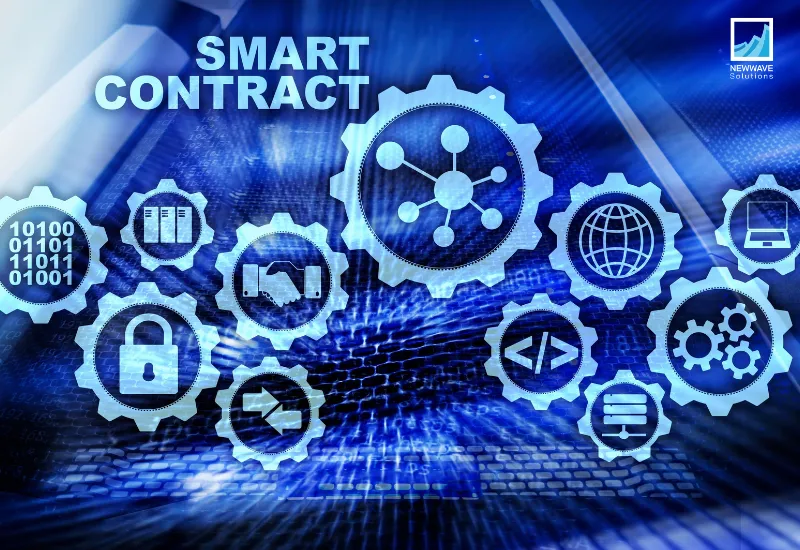
A smart contract (or smart contract in blockchain) is a self-executing digital agreement where the terms of the contract are written directly into code and automatically enforced on a blockchain. Blockchain is the foundational technology that makes smart contracts possible and powerful. While a blockchain like Bitcoin is designed to track ownership of a currency, a blockchain like Ethereum is designed to run these smart contract programs. The blockchain acts as an immutable, decentralized ledger that every computer (or “node”) in the network agrees upon. This ensures that once a smart contract is deployed, its code cannot be altered and its execution is verified by everyone.
Think of it not as a traditional legal document, but as a digital “if-this-then-that” machine. For example, if Party A sends the required amount of cryptocurrency, then the digital ownership rights of an asset are automatically transferred to them. This simple concept is automating complex processes across the globe, removing intermediaries, and building a new layer of trust on the internet.
The concept was first proposed in the 1990s by computer scientist and legal scholar Nick Szabo, who famously compared it to a vending machine: you insert money (input), and the machine automatically dispenses your chosen snack (output) without needing a human cashier. This idea has evolved from theory to a world-changing technology with the advent of blockchains like Ethereum, which provide the perfect decentralized environment for these contracts to live and execute.
Why is it important?
Smart contracts are important because they create trustless environments, meaning two parties can make agreements without needing to trust each other or a third-party intermediary like a bank, lawyer, or notary. The trust is placed in the immutable, transparent code.
This technology is not just for programmers, for understand and using applications which have smart contracts, a wide range of people and industries need to understand exactly is it:
- Business Leaders & Entrepreneurs: To streamline operations, reduce costs, and create new, disruptive business models.
- Developers & Technologists: To build the next generation of decentralized applications (dApps).
- Finance Professionals: To engage with DeFi (Decentralized Finance) platforms for lending, borrowing, and trading.
- Logistics Managers: To create transparent and automated supply chains.
- Anyone involved in agreements, contracts, or transactions that could benefit from automation, security, and transparency.
If your business involves multi-party agreements, our team at Newwave Solutions can help you explore how this technology integrates into your strategy.
What is Smart Contract in Crypto?

In the crypto industry, smart contracts are the engine powering almost everything beyond simple transactions. They are the building blocks for decentralized applications (dApps) and are fundamental to the explosive growth of Decentralized Finance (DeFi).
They affect the crypto industry by enabling:
- DeFi Platforms: Apps like Compound use smart contracts to allow users to lend their crypto assets and earn interest or borrow directly from the pool without a bank.
- Decentralized Exchanges (DEXs): Platforms like Uniswap use smart contracts to allow users to trade cryptocurrencies directly from their wallets, with the smart contract automatically finding the best price and executing the trade.
- Stablecoins: Cryptocurrencies like USDC are pegged to a stable asset (e.g., the US dollar) through smart contracts that manage the collateral and issuance.
- NFTs (Non-Fungible Tokens): The ownership and transfer rules for unique digital assets are governed by smart contracts.
Without smart contracts, the crypto ecosystem would be limited to simple payments. With them, it’s evolving into a new, decentralized global financial and digital system.
>> View more what our team can offer in Crypto Wallet Development Services
What the Different Between Smart Contracts vs Traditional Contracts?
While both smart contracts and traditional contracts define the rules and penalties of an agreement, they differ fundamentally in execution, enforcement, and form. A traditional contract is a legal document written in language, enforced by the court system, and facilitated by intermediaries like lawyers and notaries. Its execution is manual and can be slow, expensive, and prone to human interpretation and error.
A smart contract, by contrast, is code that is itself the execution. It is not a promise of action; it is the action itself. The terms are written as “if/when…then…” statements in programming code and deployed onto a blockchain. Its enforcement is automated and handled by the decentralized blockchain network, not a court system.
Understanding this distinction is key to grasping why smart contracts are considered revolutionary:
| Feature | Traditional Contracts | Smart Contracts |
| Form | Written language (paper/digital) | Code (software) |
| Enforcement | Legal system, courts | Automated, via blockchain code |
| Speed | Slow (manual processing) | Instant (automatic execution) |
| Cost | High (lawyer/notary fees) | Low (only network transaction fees) |
| Transparency | Usually private between parties | Transparent and auditable by all (on public blockchains) |
| Modifiability | Can be amended with agreements | Immutable; cannot be changed once deployed |
| Intermediaries | Required (lawyers, banks, notaries) | Eliminated |
| Trust Model | Trust in people and institutions | Trust in code and mathematics |
In essence, a traditional contract describes what will happen if terms are broken, while a smart contract prevents the terms from being broken in the first place by designing the transaction so that fulfillment is the only possible outcome.
How Does It Work?
Smart contracts work by following simple “if/when…then…” logic statements that are programmed into blockchain code and automatically executed by a network of computers when predetermined conditions are verified. It’s a process that combines code, cryptography, and consensus to create unstoppable, self-enforcing agreements.
The way smart contracts operate is straightforward but powerful. When people want to make an agreement, they first decide on the rules and conditions that can be written as computer instructions. These instructions are created using special computer languages (like Solidity for Ethereum) that tell the contract exactly what to do in different situations. Once the contract is ready, it gets stored on the blockchain network where thousands of computers around the world keep copies of it, making it nearly impossible to hack or change without permission.
Here’s how the smart contract process works step by step:
- Step 1: People agree on the rules and terms that can be turned into computer instructions
- Step 2: Computer programmers write and test the smart contract using blockchain computer languages
- Step 3: The finished contract gets uploaded to the blockchain network and gets its own unique address
- Step 4: Users send transactions to the contract when they meet the required conditions
- Step 5: Computers across the network automatically run the contract code at the same time
- Step 6: All computers check each other’s work to make sure the results are correct and update the records
This system works automatically and prevents cheating because thousands of computers are watching and verifying every action, eliminating the need for middlemen like banks or lawyers in most cases.
How Smart Contract Works in Crypto?
In crypto networks, smart contracts act like the “brain” that enables complex interactions beyond just sending and receiving digital money. Think of it like upgrading from a simple calculator to a smartphone – while both can do math, the smartphone can run apps, connect to the internet, and perform countless automated tasks.
When a smart contract receives cryptocurrency or information, it automatically triggers specific actions written in its code. For example, in a crypto exchange, when you want to trade Ethereum for USDC coins, the smart contract automatically calculates the best exchange rate, makes the trade, and sends the new coins to your wallet – all without any person or company controlling the process. This happens through a sophisticated process:
- Input Processing: The contract receives your cryptocurrency and trade request
- Automatic Calculation: It checks current market rates and calculates the best exchange
- Execution: The trade happens instantly according to programmed rules
- Delivery: Your new cryptocurrency appears in your wallet within seconds
The blockchain network acts like thousands of security guards all watching the same transaction at once. When someone wants to use a smart contract, all these computers in the network check that everything is done correctly according to the contract’s rules. This group checking process involves multiple layers of verification to ensure accuracy and prevent fraud.
How do smart contracts work in practice also involves small fees called “gas” – think of these like tiny tips you pay to the network computers that process and check your transactions. These fees serve several important purposes:
- Network Security: They pay computers to verify transactions honestly
- Spam Prevention: Small costs prevent fake or wasteful transactions
- Resource Management: They ensure the network runs smoothly during busy periods
- Reliability: They guarantee your contract will execute even during high demand
What makes this system special is its complete predictability and reliability. Unlike traditional systems where banks might be closed, servers might crash, or people might change their minds, blockchain-based smart contracts do exactly what they’re programmed to do, every single time, regardless of external circumstances. Once you understand the contract’s rules, you know exactly what will happen when you use it – making it possible to build complex financial systems that work automatically without human oversight.
Benefits of Smart Contracts
Smart contracts offer game-changing advantages that solve real problems businesses face every day. These benefits of smart contracts go far beyond simple automation – they create new possibilities for how companies operate, interact, and create value in our digital world. Think of smart contracts as upgrading from handwritten letters to instant messaging, but for business agreements.
The magic happens when you combine blockchain’s security and transparency with automated execution that never sleeps, never makes mistakes, and never plays favorites. This combination eliminates the friction, delays, and trust issues that have plagued business relationships for centuries. Enterprise blockchain development solutions often center around these smart contract capabilities that can transform how efficiently businesses operate and how much they spend on routine processes.
Speed & Automation
Smart contracts turn week-long processes into minute-long solutions by eliminating human bottlenecks that slow down traditional agreements. Where old-fashioned contracts might require days of back-and-forth emails, document signing, and approval chains, smart contracts complete the same work instantly when conditions are met.
The automation goes deeper than just speed improvements – these contracts can handle complex, multi-step workflows that would normally require armies of coordinators, managers, and approval committees. Here’s what automation delivers:
- Instant Processing: Transactions complete in minutes instead of days or weeks
- 24/7 Operations: Contracts work around the clock, never taking breaks or holidays
- Multi-Step Workflows: Handle complex processes automatically without human coordination
- Error Elimination: Remove mistakes that happen when people manually process paperwork
This speed advantage is crucial in fast-moving industries like trading, where opportunities disappear quickly. DeFi application development uses this capability to create financial products that respond instantly to market changes, enabling new forms of automated trading and investment management that were impossible before.
High Security
Smart contracts inherit military-grade security from blockchain networks, making them far safer than traditional digital agreements. Each contract is protected by the same mathematical principles that secure cryptocurrency transactions – think of it like having thousands of security cameras all recording the same event simultaneously.
The security comes from multiple layers of protection working together. Every smart contract action gets verified by thousands of computers worldwide, making it virtually impossible for hackers to manipulate outcomes or steal funds without being caught immediately. Here’s how the security works:
- Cryptographic Protection: Mathematical security that’s nearly impossible to break
- Distributed Verification: Thousands of computers check every transaction
- Immutable Records: Once recorded, contract history can never be secretly changed
- No Single Failure Point: System keeps working even if some computers go offline
Unlike traditional systems where one hacked server or corrupt employee can compromise everything, smart contracts continue operating safely as long as the blockchain network runs – which for major networks means 99.9% uptime with round-the-clock availability.
Transparent
Smart contracts operate with complete openness, allowing anyone to see exactly how they work and verify their execution history. Unlike traditional contracts hidden in filing cabinets or private databases, smart contracts live in the open where all parties can inspect the code and confirm it will behave exactly as promised.
This transparency builds trust between strangers who have never met, as they can rely on mathematical certainty rather than hoping the other party will keep their word. The transparency benefits include:
- Public Code Inspection: Anyone can examine how the contract works
- Complete Audit Trail: Every interaction is permanently recorded and verifiable
- Real-time Monitoring: Track contract performance and compliance instantly
- Dispute Prevention: Clear records reduce arguments about what happened
Blockchain consulting services often highlight transparency as a key benefit for businesses looking to improve stakeholder confidence and streamline regulatory compliance. This openness makes smart contracts particularly valuable where accountability and verification are critical.
Cost & Time Saving
Smart contracts dramatically reduce expenses by eliminating middlemen and automating expensive manual processes. Traditional contracts often involve lawyers, banks, brokers, and other intermediaries who each charge fees for their services – smart contracts can replace many of these roles with automated code that works for tiny transaction fees.
The savings go beyond just cutting out middleman fees. Smart contracts reduce indirect costs from delayed payments, dispute resolution, and compliance monitoring. When contracts execute automatically, payments flow immediately when conditions are met, improving cash flow and eliminating expensive financing needs. The financial benefits break down as follows:
- Eliminated Middleman Fees: Cut out lawyers, banks, and broker commissions
- Reduced Processing Costs: Automate expensive manual verification and approval workflows
- Faster Payment Cycles: Immediate payments improve cash flow and reduce financing needs
- Lower Compliance Costs: Automated record-keeping simplifies auditing and reporting
For businesses exploring blockchain technology consulting, these cost and time savings often provide the strongest business case for adoption, especially in industries with complex agreements and high transaction volumes. The efficiency gains allow companies to operate with smaller teams while handling more business volume.
What are Applications of Smart Contracts?
What are smart contracts used for spans across virtually every industry where agreements, payments, or automated processes play a role. From banking to gaming, healthcare to real estate, smart contracts are revolutionizing how businesses operate by doing what they do best: reducing middlemen, increasing transparency, automating tedious processes, and saving money:
In Financial & Banking (DeFi)
The financial world has been completely transformed by smart contracts, creating an entirely new ecosystem called decentralized finance (DeFi) that operates without traditional banks. Smart contracts have essentially rebuilt the entire financial system in code, allowing anyone with internet access to borrow, lend, trade, and invest without filling out applications or waiting for approval.
DeFi protocols use smart contracts to automate everything banks normally do – but faster, cheaper, and available 24/7 to anyone worldwide. Instead of waiting days for loan approval, you can deposit cryptocurrency and borrow against it instantly. Instead of paying high exchange fees, you can trade directly with other users through automated market makers.
Real-world success stories include:
- Uniswap: Automated cryptocurrency exchange that processes billions in trades without traditional order books
- Compound: Lending protocol where users earn interest automatically based on supply and demand
- MakerDAO: Creates stable digital dollars backed by cryptocurrency collateral
- Aave: Flash loans that let users borrow and repay millions within single transactions
The insurance side of DeFi also leverages smart contracts for instant payouts. Flight delay insurance automatically pays travelers when tracking data confirms delays, while crop insurance pays farmers immediately when satellite data shows drought conditions. Fintech software development increasingly incorporates these automated insurance solutions that work seamlessly with existing financial products.
In Insurance
Smart contracts are revolutionizing insurance by eliminating the nightmare of claims processing – no more phone calls, paperwork, or months of waiting. Instead, smart contracts create “parametric insurance” that automatically pays out when specific, measurable events occur, removing human judgment and delays from the equation.
The magic happens through direct data feeds from reliable sources. When weather stations report hurricane-force winds in your area, your storm insurance pays out automatically. When flight tracking systems show your plane is delayed over two hours, your travel insurance money appears in your account instantly.
This automation benefits everyone involved:
- Instant Payouts: Claims process in minutes instead of months
- Reduced Fraud: Automated verification eliminates false claims
- Lower Costs: No armies of claims adjusters means cheaper premiums
- Global Coverage: Works anywhere with internet and data feeds
Major insurance companies are already implementing smart contract solutions for crop insurance, travel protection, and natural disaster coverage. The transparency and automation eliminate the adversarial relationship between insurers and customers, creating win-win scenarios where everyone knows exactly when and how payouts occur.
>> View more our Insurance Software Development Services
In Supply Chain & Logistics
Supply chains involve countless moving parts, multiple companies, and complex payment arrangements – perfect territory for smart contract automation. These contracts can track packages across continents, verify product authenticity, and automatically release payments when goods reach their destinations, all while creating permanent records that prevent disputes.
Smart contracts shine in supply chain management by connecting the physical and digital worlds through sensors, GPS tracking, and quality verification systems. When a shipment of temperature-sensitive medicine stays within the required temperature range throughout transport, the smart contract automatically pays the shipping company and updates inventory systems.
Real-world implementations demonstrate the power:
- Walmart: Tracks food from farm to store, enabling rapid contamination source identification during recalls
- De Beers: Verifies diamond authenticity and prevents conflict diamonds from entering supply chains
- Maersk: Automates shipping documentation and payments across international trade routes
- Nestlé: Ensures coffee bean quality and fair trade compliance through blockchain verification
The transparency provided by smart contracts helps combat counterfeiting by creating immutable records of product journeys. Luxury goods, pharmaceuticals, and electronics increasingly use these systems to prove authenticity and build consumer trust.
In Real Estate
Real estate transactions traditionally involve mountains of paperwork, multiple intermediaries, and weeks of waiting – smart contracts streamline this into automated, efficient processes that can complete in days instead of months. They handle everything from escrow management to property transfers while reducing costs and eliminating many potential failure points.
Property purchases become straightforward when smart contracts automatically hold buyer deposits, verify inspection results, confirm financing, and transfer ownership once all conditions are met. Rental agreements benefit even more from automation, with smart contracts handling rent collection, deposit management, and even door access through connected smart locks.
Emerging applications are creating entirely new possibilities:
- Fractional Ownership: Multiple investors can own property shares through tokenization
- Automated Rent Collection: Payments flow automatically with late fees and notices
- Property Management: Maintenance requests, contractor payments, and tenant communications automated
- Investment Pools: Groups can jointly invest in properties with automated profit distribution
Real estate software solutions with blockchain enable innovative investment structures where people can own fractions of expensive properties, receiving rental income proportional to their ownership stake. This democratizes real estate investment and creates liquid markets for traditionally illiquid assets.
In Healthcare
Healthcare applications focus on solving data sharing problems, research coordination challenges, and insurance processing bottlenecks while maintaining strict patient privacy. Smart contracts can manage patient consent for data sharing, automatically pay research participants, and process insurance claims without compromising sensitive medical information.
Clinical trials benefit enormously from smart contract automation. Researchers can automatically enroll eligible patients, track compliance with study protocols, and distribute payments to participants and research sites based on achieved milestones. This reduces administrative costs while improving data quality and study completion rates.
Practical healthcare applications include:
- Patient Data Consent: Automated management of who can access medical records and when
- Insurance Claims: Instant processing of routine claims without human review
- Research Payments: Automatic compensation for study participants based on completion
- Drug Supply Chain: Verification of pharmaceutical authenticity and proper storage conditions
Healthcare software development increasingly incorporates blockchain solutions for managing data sharing agreements, ensuring drug authenticity, and automating regulatory compliance reporting. The transparency and automation help healthcare providers focus on patient care rather than administrative tasks.
InGame & Entertainment
Gaming and entertainment industries use smart contracts to create true digital ownership, player-driven economies, and fair revenue sharing that was impossible with traditional gaming infrastructure. Players can actually own their in-game items, trade them across different games, and even earn real money through play-to-earn mechanisms.
Smart contracts enable entirely new gaming economic models. Instead of game companies owning all virtual items, players can buy, sell, and trade digital assets they truly control. Non-fungible tokens (NFTs) powered by smart contracts create verifiable scarcity and ownership of digital collectibles, artwork, and game items.
Revolutionary in game development with smart contracts include:
- True Item Ownership: Players own and can trade game items across platforms
- Play-to-Earn: Gamers earn cryptocurrency rewards for achievements and participation
- Automated Tournaments: Prize pools and payouts managed automatically without organizers
- Content Creator Revenue: Automatic royalty distribution for artists and developers
The entertainment industry benefits from smart contracts that automatically split streaming revenues, manage licensing agreements, and enable fractional ownership of intellectual property. Musicians can use smart contracts to automatically distribute royalties among collaborators, while content creators can monetize their work through programmable ownership rights.
Event ticketing also leverages smart contracts to prevent fraud and scalping while enabling automatic refunds when events are canceled. These systems provide transparency and security for both event organizers and attendees, eliminating many common ticketing problems.
Potential and Conclusion
The future of smart contracts extends far beyond today’s applications, with emerging technologies creating a perfect storm for mainstream adoption. As blockchain networks become faster, cheaper, and more energy-efficient, smart contracts are evolving from niche cryptocurrency tools into essential business infrastructure that will reshape entire industries.
Three game-changing developments are accelerating smart contract adoption:
- AI Integration: Smart contracts powered by artificial intelligence will make sophisticated decisions automatically, adapting to changing conditions without human programming
- IoT Connectivity: Internet of Things devices will feed real-world data directly into contracts, enabling automation based on physical events like temperature, location, or equipment status
- Cross-Chain Compatibility: Smart contracts will operate seamlessly across multiple blockchain networks, eliminating technical barriers and expanding their reach
The rules around smart contracts are becoming clearer as governments worldwide start to legally recognize them. This is giving businesses the confidence to adopt them. Major companies like JPMorgan and Walmart are already using them at a large scale, proving they work for real-world needs.
This technology is also becoming more accessible. Soon, a small local business will be able to automate its payments and contracts just as easily as a large corporation, leveling the playing field.
The numbers tell the story: the global smart contracts market is projected to grow from $320 million in 2021 to over $300 billion by 2030. This isn’t just growth – it’s the foundation of a new digital economy where agreements execute themselves, trust is built into code, and business moves at the speed of software.
Smart contracts represent more than just technological innovation – they’re the building blocks of a more efficient, transparent, and accessible business world. The question is no longer if this technology will change your industry, but when. Companies that start using smart contracts now will have a significant advantage over those who wait.
At Newwave Solutions, we specialize in transforming complex business processes into automated smart contract systems that deliver measurable results. Our experienced blockchain development services in specific and emerging technologies development solutions in general, has successfully deployed enterprise smart contract solutions across finance, supply chain, healthcare, and real estate industries, helping companies reduce costs, eliminate delays, and create new revenue opportunities.
Whether you’re exploring blockchain consulting services to understand your options, need custom smart contract development for specific business requirements, or want to implement comprehensive blockchain technology solutions across your organization, our team provides end-to-end support from initial strategy through deployment and optimization. Contact us today to discover how our blockchain development expertise can transform your business processes and unlock new possibilities for growth and innovation in the digital economy.
To Quang Duy is the CEO of Newwave Solutions, a leading Vietnamese software company. He is recognized as a standout technology consultant. Connect with him on LinkedIn and Twitter.



Read More Guides

Get stories in your inbox twice a month.
Let’s Connect
Let us know what you need, and out professionals will collaborate with you to find a solution that enables growth.
Leave a Reply