


Top 10 AI Agents for Healthcare: Leading Solutions to Watch in 2026
Healthcare faces mounting pressure from staffing shortages, administrative demands, and access challenges. Call center turnover can reach 47–56%, two-thirds of patients will not wait on hold longer than two minutes, and patient no-shows cost the healthcare system an estimated $150 billion annually.
AI agents for healthcare offer a different model by taking on repeatable tasks across scheduling, benefits verification, prior authorizations, claims follow-up, and payments. Before adapting agents for your organization, let’s explore how these agents work, where they are being used, the benefits they can deliver, and how to evaluate whether to build, buy, or adapt one.
Key Takeaways
|
What are AI Agents for Healthcare?
AI agents for healthcare are autonomous software systems that use artificial intelligence to interpret information, reason across data, and carry out tasks with minimal human prompting. They can support activities across clinical care, healthcare operations, and patient engagement while operating within boundaries defined by the organization.
Compared with traditional AI tools or rule-based automation, AI agents can work with a greater degree of independence. Many healthcare AI systems already analyze data and help optimize how staff, facilities, and other resources are allocated. Generative AI technologies, including large language models, also allow users to interact with data and systems through natural language.
Agentic AI extends these capabilities by enabling software to respond to changing information and take actions with less direct instruction. Gartner predicts that 33% of enterprise software applications will include agentic AI by 2028, compared with less than 1% in 2024.
How AI Agents Work in Healthcare Workflows
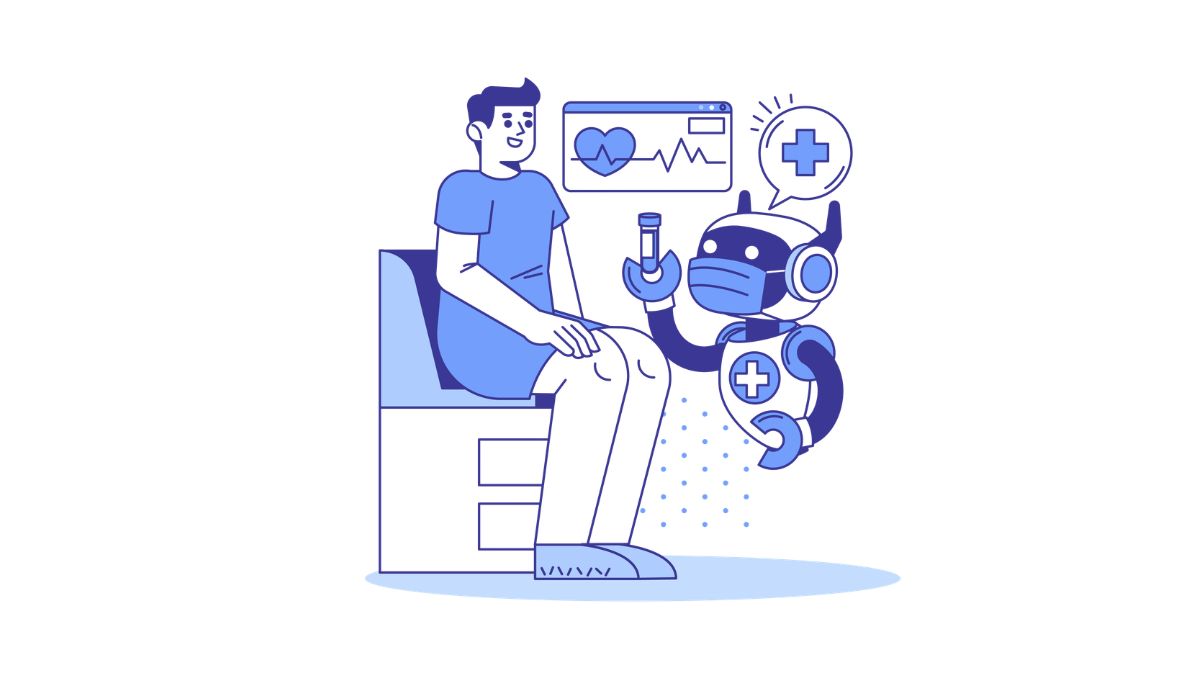
AI agent workflows typically move from receiving a goal or request to interpreting context, selecting actions, using connected tools or data, and evaluating the outcome. In healthcare, this can involve several specialized agents working together across clinical and administrative tasks.
How AI agent works
This examplehows how AI agents can work through a specific healthcare task such as insurance eligibility verification.
First, the system is given a clear objective, such as confirming a patient’s insurance status before an appointment and prioritizing cases that could affect care or billing. The agent then gathers the required information, including patient details, insurance data, payer requirements, and relevant records, and converts it into a usable format.
One or more agents carry out the verification, track each step, review the returned information, and adjust when payer responses or workflow conditions change.
Finally, the system compares the outcome with the original objective, reviews errors or staff feedback, and uses that information to improve future verification workflows.
Key components of a healthcare AI agent
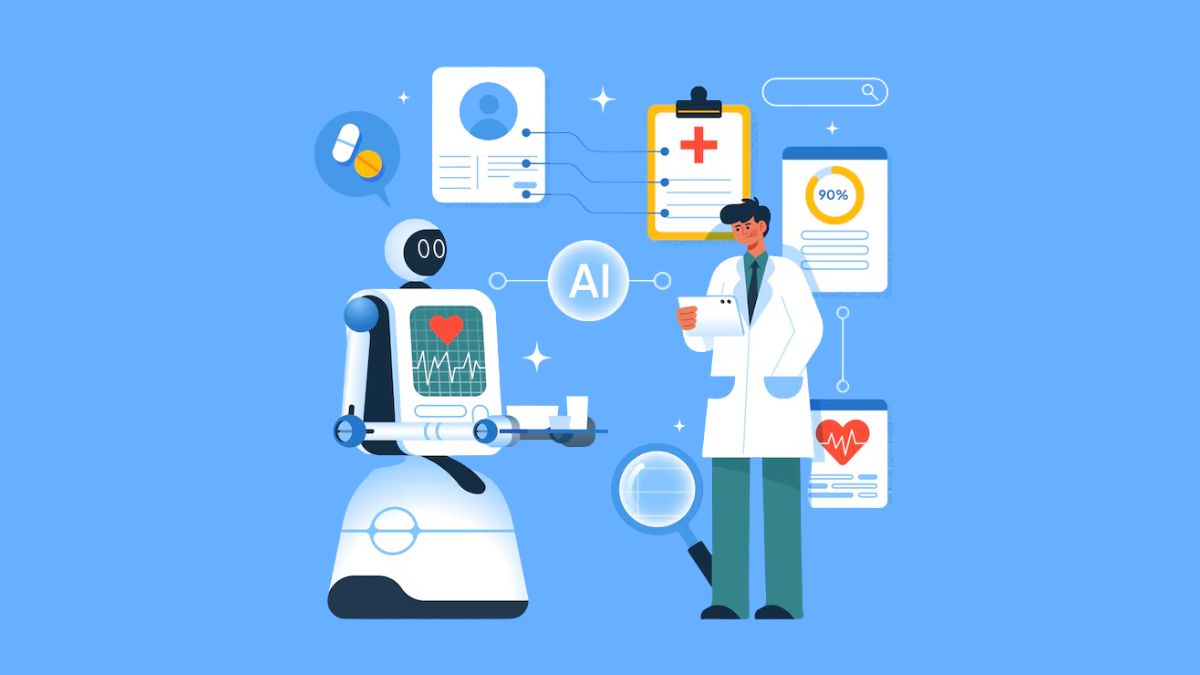
Healthcare AI agents rely on several components that work together to capture information, interpret it, act on it, and improve over time. The mix can vary by role, whether the agent is interacting with patients, updating records, or coordinating with other agents.
- Perception: Healthcare AI agents collect information from their environment through inputs such as audio and video, then convert that information into formats that can be used in clinical systems. For example, an agent may capture details from a physician-patient interaction and prepare relevant information for the EHR.
- Reasoning: Agents use both newly acquired and stored data to interpret information, estimate possible outcomes, and generate options that clinicians can review when making care decisions.
- Memory: The memory component stores patient information, medical research, and prior feedback. It also helps the agent retain context and use past interactions to refine future outputs.
- Action: Based on its analysis and instructions, the agent can produce outputs or interact with its environment. This may include generating visit summaries, suggesting diagnostic or treatment options, or communicating medication reminders and lifestyle guidance to patients.
- Learning: AI agents can improve through human feedback and additional training data. When clinicians validate or correct an agent’s analysis, that feedback can be used to guide future actions and improve performance on similar tasks.
- Utility: This component measures how well the agent achieves its intended goals. Evaluation criteria may include patient outcomes, user satisfaction, and the accuracy of clinical recommendations.
Key Use Cases of AI Agents in Healthcare
AI agents for healthcare are being applied across both clinical and administrative functions. The use cases vary by task, but they generally show where autonomous or semi-autonomous systems can take on defined parts of a healthcare workflow while still working alongside human teams.
1. Care coordination
AI agents can coordinate care across multiple teams by dividing responsibilities across specialized agents. For example, one agent may confirm that a patient has completed pre-visit requirements, another may check whether imaging results have been uploaded, and a third may alert the care team if a required step is still missing before the consultation.
Working together, these agents help keep each step of the care pathway connected and reduce the need for staff to manually track every handoff.
2. Clinical documentation and workflow support
An AI agent in healthcare can assist with routine documentation and follow-up work. For example, during a specialist consultation, the agent may capture key points from the conversation, prepare a draft note, update relevant EHR fields, and route the documentation for clinician review before any next-step actions are taken.
This can reduce repetitive data entry and help clinicians spend less time on administrative documentation.
3. Clinical decision support
Some AI agents in healthcare help clinicians review large volumes of patient information. For example, an agent may combine a patient’s recent lab results, treatment history, and imaging findings, then surface patterns or risk signals that a clinician can consider when reviewing the case.
The agent supports human judgment by organizing relevant information rather than making the final clinical decision independently.
4. Drug discovery and development
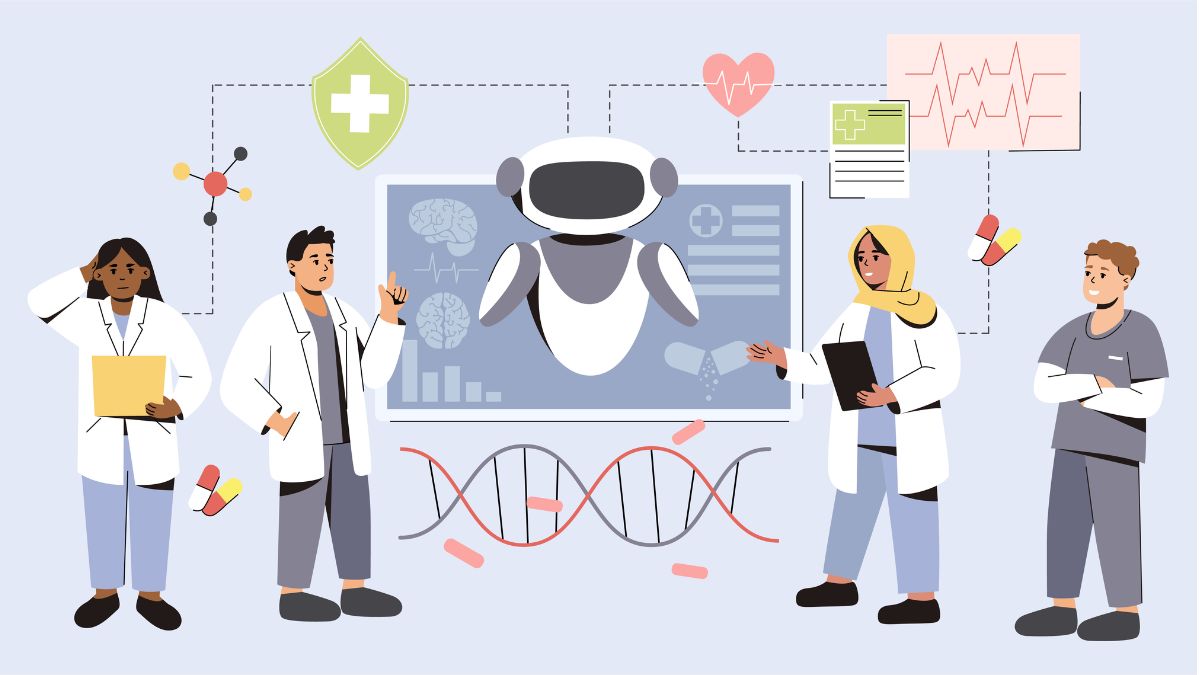
AI agents can support drug research by handling different parts of the process, from reviewing complex datasets to running simulations and coordinating study-related tasks. As new results emerge, they can help teams update priorities, reassess candidate compounds, and adjust research activities.
This makes it easier to keep data analysis, experimentation, and clinical trial work aligned throughout the drug development cycle.
5. Healthcare operations and resource allocation
Healthcare organizations can use AI agents to assist with scheduling, staffing, and capacity planning. For example, an agent may adjust staffing plans based on predicted patient volume or detect bottlenecks in operating room schedules. An IBM study also reported that 69% of healthcare executives expect AI to improve their ability to adapt to changing clinical demand.
6. Patient engagement
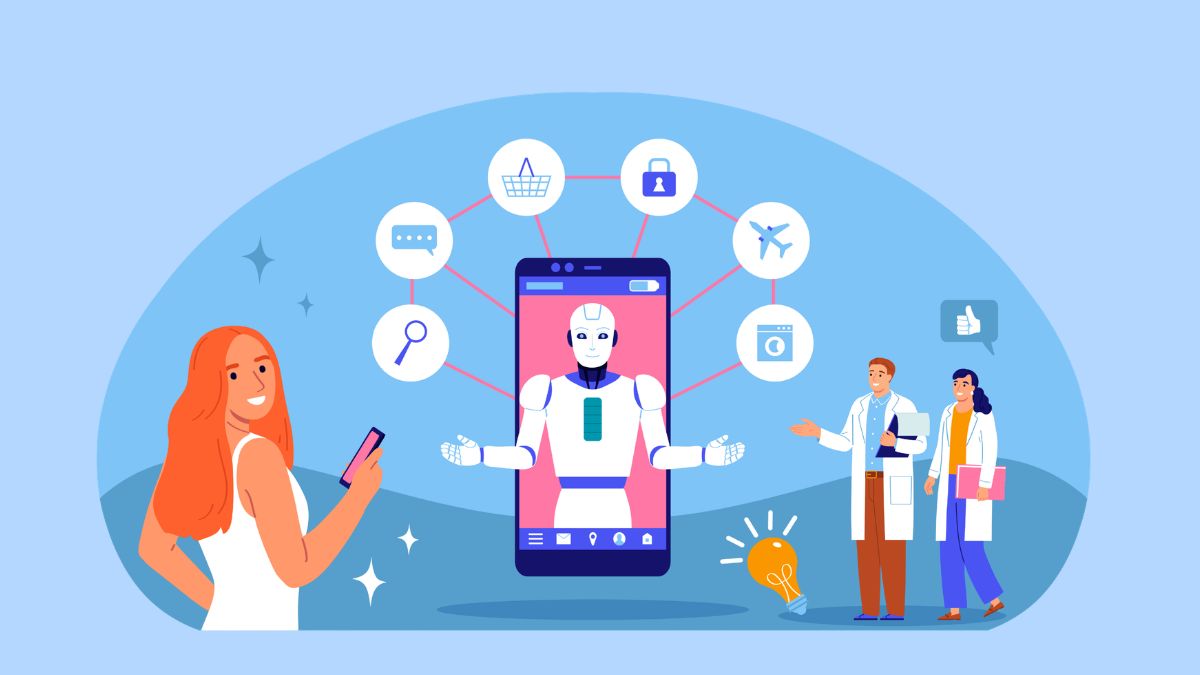
AI agents can power virtual assistants, chatbots, and other patient-facing tools. Using conversational AI, they can support appointment scheduling, intake, basic communication, symptom collection, question handling, and follow-up activities. These systems allow patients to interact with healthcare services through ongoing, natural-language conversations.
For example, AtlantiCare uses AI agents to generate notes in multiple languages, helping the organization better serve patients who do not speak English.
7. Population risk monitoring
IBM reports that 4 in 10 healthcare executives already use AI for inpatient monitoring and early health warnings.
AI agents can analyze patient records, lab results, and care histories to identify individuals who may need timely intervention. For example, an agent could recognize that a patient with repeated emergency visits and missed follow-up appointments is at high risk of worsening heart failure, then notify the care team and recommend a coordinated outreach plan.
8. Financial operations and administrative support
AI agents can also handle multi-step administrative workflows, including billing, coding, and prior authorization. An agent may collect required documentation, submit an authorization request, and follow up with payers. According to IBM, 34% of healthcare executives report using AI in revenue and budget cycle management, while 67% see strong opportunity in payer-provider coordination and claims integrity.
Benefits of AI Agents in Healthcare
AI agents for healthcare can create value in two broad areas: supporting clinical work and reducing the administrative burden around care delivery. Their impact depends on how well they can use patient data, connect with existing workflows, and assist people at the right point in the process.
1. Better support for healthcare providers
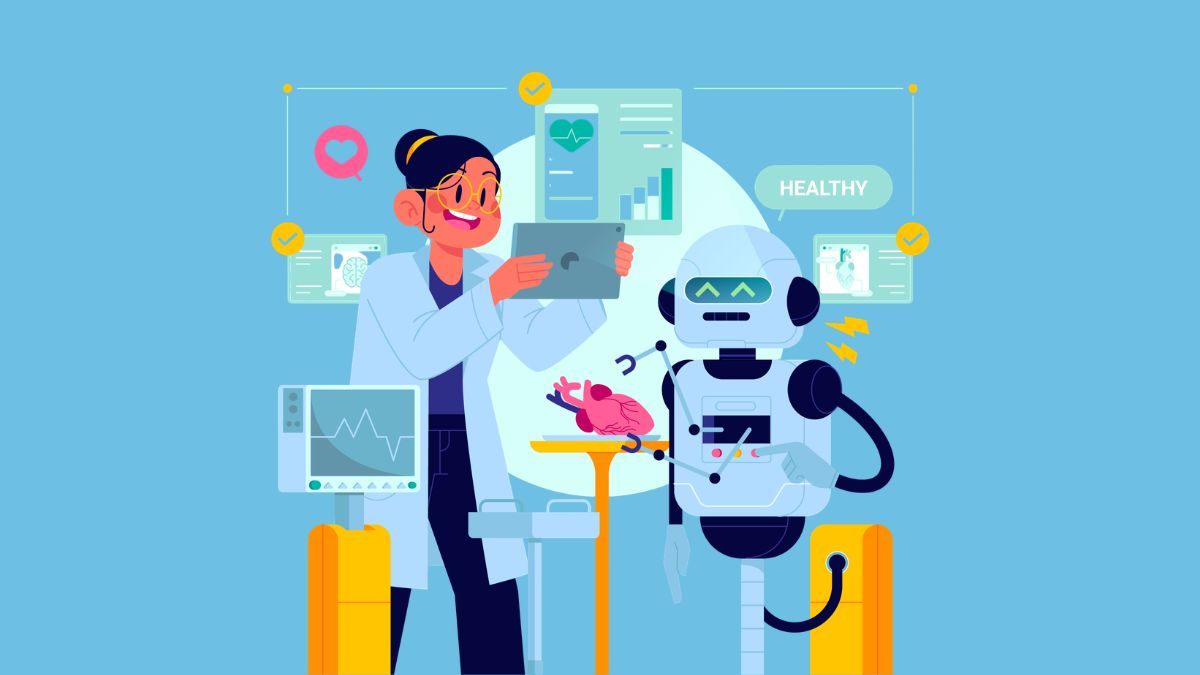
AI agents can help clinicians prepare for decisions by bringing together information that would otherwise sit across different sources. Before an appointment, for example, an agent could assemble a patient’s medical history, recent lab results, imaging data, and relevant research into a concise view for review.
They can also reduce routine documentation work. St. John’s Health uses ambient listening with patient permission to capture important details from physician-patient conversations and convert them into structured summaries for continuity of care and billing.
2. Lower administrative costs
With operating margins sometimes falling below 5%, healthcare organizations need to keep a close watch on costs. AI agents can help by automating billing, coding, and payer reimbursement tasks, reducing administrative expenses while maintaining care quality.
3. Stronger diagnostic support
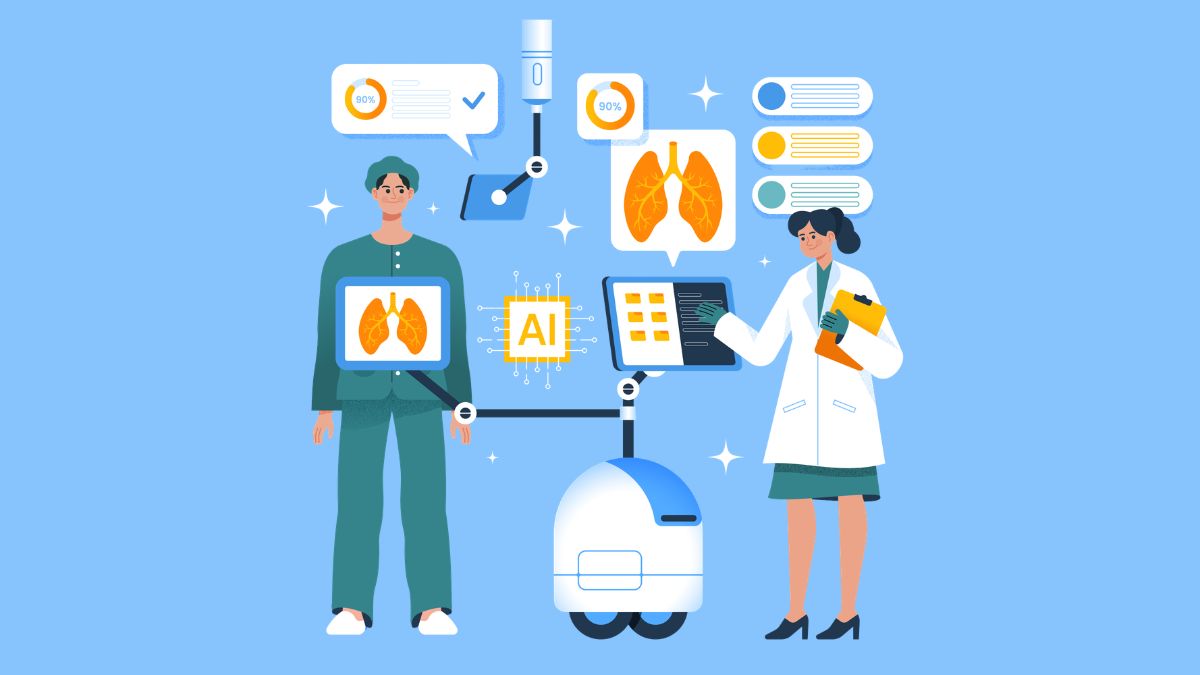
AI agents can combine medical history, genomic information, research, device data, and imaging results such as X-rays, CT scans, and MRIs. Presenting these inputs together can give clinicians a more complete basis for diagnosis and help them review relevant evidence more efficiently.
4. More personalized treatment planning
When several agents work together, they can combine patient information from different sources and help prepare treatment options for clinician review and approval. They can also process readings from connected medical devices and alert care teams when measurements fall outside expected ranges.
5. Greater clinical efficiency
Documentation can take a substantial amount of a physician’s time after each patient interaction. AI agents can automate EHR updates and treatment coding, giving clinicians more time for patient care and coordination with extended care teams.
One of the AI agents in healthcare examples is Billings Clinic, which reported a 37.59% reduction in average adjusted documentation time and a 16.69% reduction in average adjusted EHR time per patient after introducing AI-assisted note workflows.
6. Predictive insights and research support
AI agents that use predictive analytics may help clinicians identify possible health risks earlier and adjust treatment plans accordingly. They may also track clinical trials and alert physicians when a study appears relevant to a patient’s condition and medical history.
This ability to continuously process research and patient data could also support faster iteration in drug research and the discovery of new treatment options.
7. Continuous patient monitoring
By connecting with remote monitoring devices such as smartwatches, heart monitors, and glucometers, AI agents can process a steady stream of patient health data between visits. Instead of requiring clinicians to review every reading, the system can surface alerts that need intervention.
Agents can also communicate monitoring information to patients through natural language, helping them stay informed about their own health status.

Can AI Agents Work with Your EHR and Stay HIPAA Compliant?
Yes, AI agents can work with EHR systems and process protected health information, but HIPAA compliance depends on the controls around the AI system rather than the model alone. The core requirements center on five areas: data encryption, access controls, audit logging, a Business Associate Agreement, and data minimization.
Data encryption
Patient data should be encrypted both in transit and at rest. TLS 1.2+ can protect data while it moves between systems, while AES-256 can protect stored data. Covering only one stage still leaves patient information exposed at the other.
Strict controls and authentication
HIPAA’s minimum necessary standard requires users and systems to access only the information needed for a specific task. In practice, this means using Role-Based Access Control, unique user IDs, and Multi-Factor Authentication. For AI agents, the same principle applies to runtime access, so secure EHR integration should limit what data the agent can retrieve.
Audit jogging and traceability
A HIPAA-compliant AI environment should maintain logs showing who accessed patient records, when the access occurred, and what action followed. For AI agents, audit trails should also capture which records were retrieved, which tools were called, and what the agent did with the result.
Business associate agreement
A vendor that handles PHI should sign a Business Associate Agreement that defines its responsibility for protecting that data. The agreement should also address breach reporting, subcontractor obligations, and restrictions on using PHI to train general-purpose models.
Data minimization and de-identification
AI agents should process only the PHI required for the task. Where possible, data can be de-identified or redacted before it reaches the model, reducing both exposure and the amount of sensitive information the system handles.
Quick checklist for HIPAA-Compliant AI
Before connecting an AI agent to an EHR or any system containing PHI, check that:
- The vendor has signed a BAA covering the exact AI services in use.
- The hosting setup is HIPAA-eligible and meets any required data residency rules.
- PHI is encrypted during transmission and while stored.
- Access is limited through role-based permissions, unique accounts, and MFA.
- Audit logs record PHI access, agent activity, and follow-up actions.
- Contracts prevent PHI from being used to train general-purpose AI models.
- Human oversight is defined for decisions with higher clinical or operational risk.
- EHR connections keep patient data access tightly controlled and clearly separated.
What to Look for When Choosing an AI Agent in Healthcare
Choosing an AI agent in healthcare requires more than checking whether the platform can automate a task. The stronger fit is one that reflects healthcare workflows, connects with existing systems, produces reliable outputs, and can be deployed without creating unnecessary operational friction.
Healthcare specialization
Start by checking whether the platform was built around healthcare-specific workflows rather than generic automation. Relevant capabilities may include scheduling, payer IVR navigation, benefits verification, and prior authorization.
Look for:
- Training on healthcare workflows
- Prebuilt workflows for common use cases
- Documented payer IVR performance
- Experience working with healthcare data and EHR-connected processes
Integration and interoperability
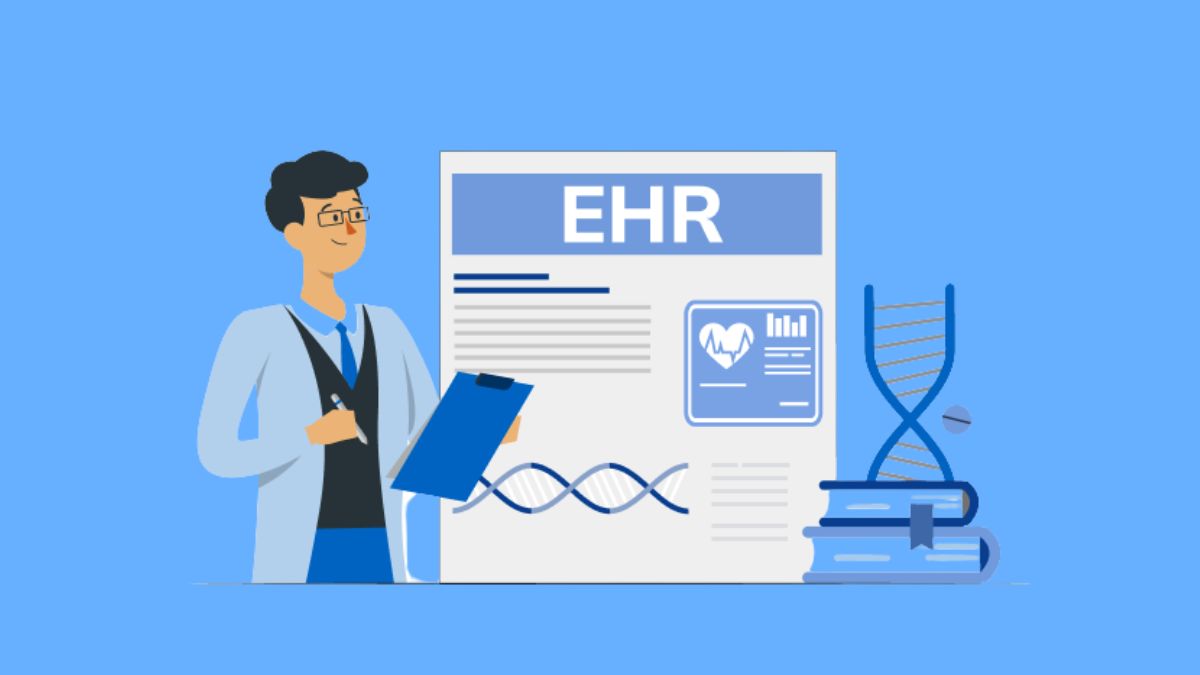
An AI agent should be able to exchange data with the systems already used across the organization. Bidirectional integration is especially important because the agent needs to both read information and write results back into the EHR.
Check whether the platform supports:
- Native EHR integrations
- Bidirectional data exchange
- SFTP connections
- Custom REST APIs
- FHIR and HL7 standards
- Non-standard integration requirements
For example, an agent handling appointment scheduling should be able to read current availability and then write the confirmed booking back into the EHR instead of leaving staff to update the system manually.
Accuracy and quality assurance
Automation is only useful when the agent handles requests consistently. Ask vendors to provide evidence of how the system performs in real workflows and how errors are reviewed.
Useful evaluation questions include:
- How often are calls missed or handled incorrectly?
- What percentage of interactions require staff handoff?
- How is accuracy verified for tasks such as benefits checks?
- How often are performance reviews and refinement cycles conducted?
Implementation timeline
Deployment speed can vary depending on the level of integration required. Platforms using prebuilt blueprints may launch pilot workflows with batch data in 1-2 days, while full EHR integration may take 3-4 weeks.
Rather than relying on a broad implementation estimate, ask what each stage includes and what dependencies could affect the timeline.
Enterprise readiness
For wider deployment, evaluate whether the platform can meet operational, security, and management requirements beyond the initial use case.
Relevant capabilities include:
- HIPAA compliance with a BAA
- SOC 2 Type II
- Cloud or on-premises deployment options
- Dedicated AI agent management
- No-code workflow customization
- Real-time analytics and ROI dashboards
Top 10 AI Agents for Healthcare That Improve Patient and Staff Operations
AI agents for healthcare support diverse clinical and operational workflows, including documentation, decision support, patient access, administration, revenue-cycle management, and communication. The table below summarizes 10 options based on their main capabilities, available integration information, pricing visibility, and strongest use case.
| AI Agent | Main Capabilities | Integration | Pricing | Best For |
|---|---|---|---|---|
| Prosper AI | Patient scheduling, reminders, benefits verification, prior auth, claims follow-up, payer calls | 80+ EHR, PM, and clearinghouse connectors; EHR write-back; APIs, FHIR/HL7 | Custom, usage-based | High-volume patient-facing and payer-facing phone automation |
| Microsoft Dragon Copilot | Ambient documentation, structured notes, orders, referral letters, after-visit summaries | Epic, Cerner, athenahealth, MEDITECH, and 200+ EHRs | Quote-based | Large health systems needing ambient clinical documentation |
| Hippocratic AI | Post-discharge outreach, chronic care management, medication adherence, multilingual engagement | Works with health systems, payers, and pharma partners; specific EHR integrations not stated | Custom quote | Large organizations scaling patient outreach and follow-up |
| Kore.ai HealthAssist | Scheduling, triage, eligibility, claims, payments, referrals, omnichannel self-service | Epic, Cerner, NextGen; voice, SMS, chat; cloud or on-prem deployment | Enterprise contract | Large health systems and payers needing multi-channel automation |
| Abridge | Ambient documentation, multilingual notes, linked evidence, nursing, prior auth, coding support | EHR-embedded workflows, including Epic | Enterprise contract | Health systems focused on clinical documentation and verification |
| Ambience Healthcare | Ambient documentation, pre-/during-/post-visit support, coding integrity, CDI validation | Epic, Oracle Cerner, athenahealth | Enterprise contract | Large US health systems seeking end-to-end documentation support |
| HealthForce AI | Compound screening, biological interaction prediction, candidate prioritization | Drug discovery workflows; specific APIs or platforms not stated | Custom quote | AI-assisted drug discovery and early-stage research |
| Notable Health | Registration, scheduling, referrals, authorizations, coding, care-gap identification | EHR and healthcare system integrations | Custom quote | Administrative and patient-access workflow automation |
| Amelia AI Agents | Patient self-service, appointment scheduling, conversational support, health monitoring | Appointment and patient-service workflows; specific EHR integrations not stated | Custom quote | Conversational patient engagement and care-journey support |
| OmniMD AI Suite | Ambient scribing, front-desk automation, RCM, billing RPA, eligibility, prior auth | Native EHR, PM, RCM, telehealth, RPM; FHIR, HL7, SMART on FHIR | Custom practice-based pricing | Small-to-midsize US practices seeking an all-in-one AI platform |
Prosper AI
Best for: Patient-facing and payer-facing phone automation with EHR write-backs
Prosper AI is a healthcare-focused voice AI platform designed to automate phone workflows across patient access and revenue cycle management. Its agents can handle both patient-facing tasks, such as scheduling and billing inquiries, and payer-facing work, including eligibility checks, prior authorization follow-up, and claims status calls.

Key capabilities:
- Patient access automation: Handles appointment scheduling, rescheduling, cancellations, reminders, intake, referral coordination, and billing questions.
- Payer call automation: Navigates payer IVRs, waits on hold, and can speak with representatives for workflows such as benefits verification, claims status, and prior authorization follow-up.
- RCM workflow automation: Supports eligibility checks, EOB retrieval, denial follow-up, collections, and patient payment workflows.
- EHR write-back: Writes confirmed bookings, insurance results, payment records, call notes, and other structured outputs back into connected systems.
- Healthcare-specific workflow blueprints: Provides predefined automation patterns for workflows such as scheduling and benefits verification, reducing the setup needed for common healthcare use cases.
- Automated quality assurance: Every call can be reviewed with automated accuracy and compliance scoring.
Limitations
- Focuses mainly on voice and phone automation for patient access, payer calls, and RCM workflows.
- Works with existing EHR and practice-management systems rather than replacing them.
- Best suited to organizations with high patient or payer call volumes and complex phone workflows.
Integration: 80+ native EHR, PM, and clearinghouse integrations, including Epic, athenahealth, Cerner, MEDITECH, NextGen, eClinicalWorks, ModMed, Greenway, Nextech, and ImagineSoftware.
Compliance & security
- HIPAA compliant with Business Associate Agreements (BAAs) for handling protected health information.
- SOC 2 Type II compliant, with independently audited security controls.
- Encryption for data transfers and API communication, with Prosper citing AES-256 encryption at rest and TLS protection in transit in its healthcare materials.
Pricing: Quote-based and typically structured around usage volume and the workflows being automated.
Microsoft Dragon Copilot
Best for: Ambient clinical documentation in large health systems and high-volume specialty practices.
Microsoft Dragon Copilot, formerly Nuance DAX Copilot, is an enterprise ambient documentation platform. It captures clinician-patient conversations and turns them into structured clinical notes, with newer workflows extending into orders, referrals, after-visit summaries, and nursing documentation.

Key capabilities
- Ambient clinical documentation: Captures physician and nursing encounters and generates specialty-aware notes from the conversation.
- Structured SOAP notes: Produces structured documentation that can flow into Epic and Oracle Cerner workflows.
- Clinical workflow support: Generates order suggestions, referral letters, after-visit summaries, and configurable note formats.
- Unified AI workflows: Extends ambient documentation into broader clinical intelligence and partner-connected applications.
- Documentation time reduction: Reported to cut documentation time by about 50%, saving roughly seven minutes per encounter.
Limitations
- Revenue-cycle management, prior authorization, and clinical decision support depend on separate partner products and additional setup.
- Does not provide a native EHR, scheduling system, or eligibility-verification platform.
- Requires enterprise contracts rather than self-service or month-to-month access.
Integration: Works with Epic, Oracle Cerner, athenahealth, MEDITECH, and more than 200 other EHRs.
Compliance & security: Runs within Microsoft’s enterprise Azure environment with healthcare-focused security and compliance controls.
Pricing: Custom quote; Pricing varies by segment.
Hippocratic AI
Best for: Patient-facing outreach, chronic care management, and nursing-related follow-up at scale.
Hippocratic AI develops safety-focused healthcare AI agents for non-diagnostic, patient-facing workflows such as outreach, follow-up, and care management. The platform has completed more than 180 million clinical patient interactions and works with over 50 health systems, payers, and pharmaceutical organizations.
Key capabilities
- Post-discharge outreach: Automates follow-up calls after discharge to support ongoing patient communication.
- Chronic care management: Handles recurring outreach for patients who need continued monitoring and engagement.
- Medication adherence: Contacts patients with reminders and follow-up conversations related to medication routines.
- Patient intake: Supports pre-charting and intake workflows.
- Multilingual engagement: Supports outreach across languages, including reported 2.6x higher engagement with Spanish-speaking populations.
Limitations
- Focused mainly on patient-facing voice interactions rather than back-office workflows.
- Does not cover billing, scheduling, clinical documentation, prior authorization, claims, or broader RCM functions.
- Better suited to large health systems and payers than smaller independent practices seeking an all-in-one platform.
Integration: Major healthcare systems of record, including Epic, Cerner, and Salesforce
Compliance & security: Achieving SOC 2 Type II compliance and building on HITRUST CSF certifications
Pricing: Custom quote
Kore.ai HealthAssist
Best for: Enterprise-scale patient and payer automation across voice, SMS, and chat.
Kore.ai HealthAssist is an omnichannel healthcare AI platform built for high-volume patient and payer interactions. It supports enterprise workflows across patient access, claims, payments, referrals, and self-service while coordinating conversations across multiple channels.
Key capabilities
- Patient access automation: Handles scheduling, multilingual reminders, prescription information, and patient self-service.
- Symptom-based triage: Guides patient interactions based on reported symptoms and configured workflows.
- Payer workflow automation: Supports eligibility checks, claims status, payment processing, and prior authorization inquiries.
- Referral management: Automates referral-related communication and follow-up activities.
- Intelligent call routing: Uses automated switchboard routing and visual IVR to direct or deflect incoming requests.
- Multi-agent orchestration: Coordinates AI agents across voice, SMS, and chat for broader enterprise workflows.
Limitations
- Setup and orchestration can be too complex for independent or smaller practices.
- It does not provide its own EHR, clinical documentation system, or ambient scribing capability.
Integration
- EHR connectivity: Works with enterprise healthcare systems including Epic, Cerner, and NextGen.
- Omnichannel integration: Coordinates workflows across voice, SMS, and chat channels.
Compliance & security: HIPAA Compliance, SOC 2 Type II, and PHI Controls
Pricing: Enterprise contract pricing
Abridge
Best for: Ambient clinical documentation with expanding support for nursing, prior authorization, coding, and clinical decision support.
Abridge is an ambient AI platform that records provider-patient conversations and generates structured clinical notes in real time across more than 28 languages. Its linked-evidence feature connects statements in the generated note back to the relevant transcript segment, helping clinicians verify the output more quickly.

Key capabilities
- Ambient documentation: Captures clinical conversations and converts them into structured notes in real time.
- Multilingual support: Supports documentation across 28+ languages.
- Linked evidence: Traces generated note content back to the corresponding transcript segment for easier verification.
- Nursing workflow support: Expands ambient AI beyond physician documentation into nursing workflows.
- Prior authorization support: Extends documentation capabilities into prior authorization processes.
- Coding and RCM support: Supports coding-related workflows connected to clinical documentation.
- Clinical decision support: Expands into tools that assist clinicians with decision-related workflows.
Limitations
- Requires a health system contract rather than direct self-service signup.
- Does not provide its own EHR, scheduling platform, or eligibility system.
- Individual physicians and smaller independent practices are not the primary deployment model.
Integration: Designed to operate inside existing health system and EHR environments.
Compliance & security: It’s HIPAA-compliant and signs a Business Associate Agreement (BAA) with healthcare organizations.
Pricing: Enterprise health system contracts
Ambience Healthcare
Best for: AI-native clinical documentation across large US health systems.
Ambience Healthcare is an AI-native clinical documentation platform designed to support the full patient encounter, from pre-visit preparation through in-visit documentation and post-visit follow-up.
It has been deployed by organizations including Cleveland Clinic, UCSF Health, Houston Methodist, and Memorial Hermann, while Ardent Health reported 90% clinician utilization across 17 specialties and 7 languages after its enterprise ambulatory rollout.
Key capabilities
- Ambient documentation: Captures clinical conversations and generates documentation during the patient encounter.
- End-to-end visit support: Extends across pre-visit, during-visit, and post-visit workflows.
- Coding integrity: Supports point-of-care ICD-10 and CPT coding workflows and CDI validation.
- Multi-specialty coverage: Supports documentation across more than 100 specialties.
- Documentation time reduction: Reported to reduce clinician note-taking time by an average of 39%.
- Enterprise adoption: Designed for broad health system deployment across multiple specialties and languages.
Limitations
- Billing and revenue-cycle capabilities are less extensive than platforms focused on payer calling, denials, or eligibility automation.
- Organizations needing full RCM, payer outreach, or denial management may still need separate platforms.
- Primarily suited to larger health systems rather than solo clinicians or small practices seeking an all-in-one platform.
Integration: Epic, Oracle Cerner, athenahealth integration
Compliance & security: Fully HIPAA compliant and maintains enterprise-grade security certifications including SOC 2 Type II and HITRUST r2.
Pricing: Custom quote
HealthForce AI
Best for: AI-assisted drug discovery and compound screening.
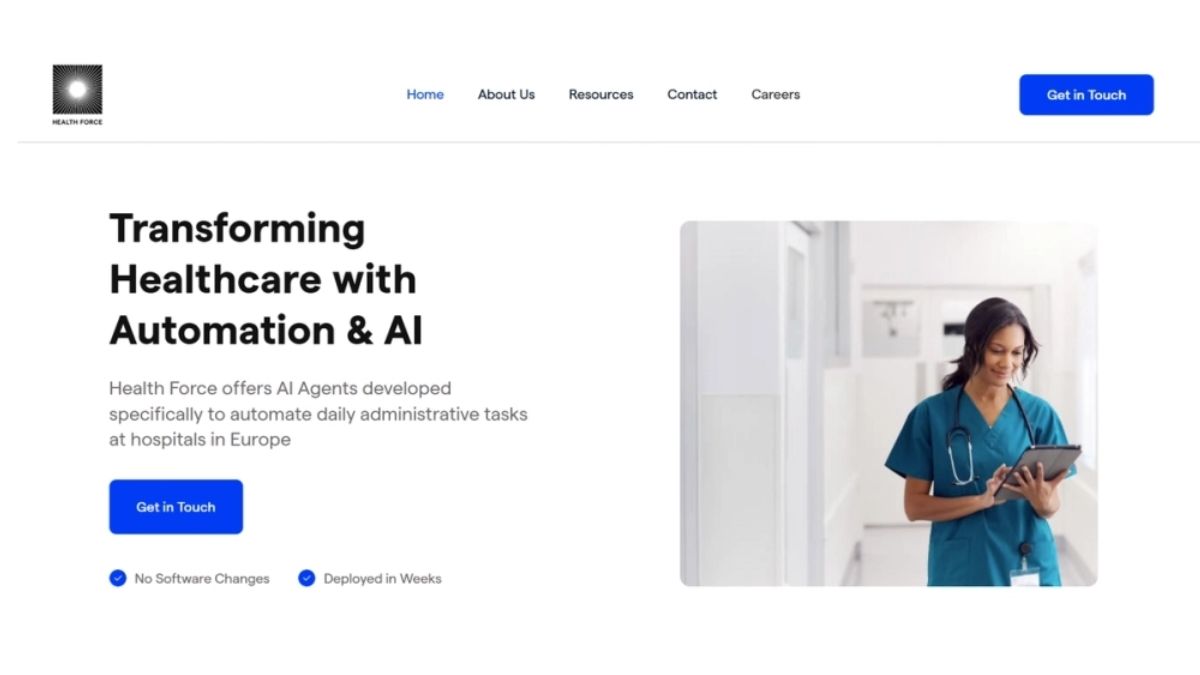
HealthForce AI uses AI agents to analyze very large libraries of compounds and identify candidates with the strongest potential for treating specific diseases. Its platform also predicts how selected compounds may interact with human biology, helping research teams filter candidates earlier in the drug development process.
Key capabilities
- Compound Screening: Reviews millions of compounds to identify promising drug candidates.
- Biological Interaction Prediction: Estimates how selected compounds may behave in relation to human biology.
- Candidate Prioritization: Helps research teams narrow large candidate pools to options with stronger potential.
- Drug Development Support: Uses AI analysis to inform early-stage research and reduce reliance on purely manual screening.
Limitations: It focuses on pharmaceutical research rather than patient access, documentation, scheduling, or RCM workflows.
Integration: It integrates with existing legacy software systems, patient-facing software, payment tools, and administrative communication solutions.
Compliance & security: It implements standard commercial privacy policies and data protection measures,
Pricing: Custom quote
Notable Health
Best for: Automating administrative workflows across patient access, authorizations, and care coordination.
Notable Health develops AI agents for healthcare administrative workflows, helping automate routine tasks across patient access, authorizations, coding, and care coordination. By integrating with EHRs and other healthcare systems, the platform can reduce manual processing and help staff focus on more complex cases.
Key capabilities
- Patient registration: Automates intake and registration workflows.
- Appointment scheduling: Handles scheduling tasks within connected healthcare systems.
- Referral management: Supports referral processing and coordination.
- Authorization automation: Processes large volumes of care authorization tasks.
- Coding support: Assists with assigning codes as part of administrative workflows.
- Care gap identification: Detects gaps in care that may require follow-up.
- Continuous processing: Can run administrative workflows around the clock, reducing reliance on manual handling.
Limitations: Connecting multiple EHRs, payer portals, and legacy systems can still increase implementation effort.
Integration: Integrates directly into electronic health records (EHRs) and payer systems.
Compliance & security: It implements standard commercial privacy policies and data protection measures,
Pricing: Custom enterprise pricing
Amelia AI Agents
Best for: Conversational patient engagement and care-journey support.
Amelia AI Agents are conversational AI agents designed to interact with patients across different stages of the care journey. They can answer patient questions, assist with appointment scheduling, provide conversational support, and work with health-monitoring data to help identify situations that may need attention from healthcare professionals.
Key capabilities
- Patient self-service: Answers common patient questions through conversational AI.
- Appointment scheduling: Assists patients with booking and managing appointments.
- Patient engagement: Maintains conversational interactions throughout the care journey.
- Emotional support: Can provide conversational support during patient interactions.
- Real-time health monitoring: Processes ongoing patient health data and can alert healthcare professionals when readings indicate an issue.
Limitations: Connecting conversational agents with healthcare workflows and data sources may require enterprise integration work.
Integration: Integrate directly with enterprise tools, healthcare CRM systems, ERP platforms, and communication channels.
Compliance & security: ISO/IEC 27001, SOC 2 Type II, and HIPAA.
Pricing: Custom quote
OmniMD AI Suite
Best for: Multi-specialty practices seeking an all-in-one agentic AI platform across clinical, front-desk, and revenue-cycle workflows.
OmniMD brings AI Clinician, AI Front Desk, AI RCM, and RPA for Biller into one healthcare platform, supporting connected clinical, patient access, and revenue-cycle workflows. The platform serves 12,000+ healthcare professionals across 600+ US facilities and is designed for practices that want fewer disconnected tools.
Key capabilities
- AI clinician: Generates structured SOAP notes from provider-patient conversations, supports coding suggestions, and surfaces clinical insights and risk information within the EHR.
- AI front desk: Automates scheduling, intake, reminders, eligibility checks, call handling, multilingual communication, and pre-visit data collection.
- AI RCM: Supports denial prediction, claim scrubbing, coding verification, prior authorization, claims follow-up, payment posting, and payer-facing voice workflows.
- RPA for biller: Automates claim-status retrieval, EOB collection, and aging follow-up to reduce repetitive billing work.
- Specialty-specific workflows: Supports 20+ US specialties with templates for areas such as cardiology, orthopedics, primary care, behavioral health, pediatrics, GI, and endocrinology.
Limitations: Practices inside large Epic environments may need to move away from their existing EHR to use OmniMD as the primary platform.
Integration: EHR, practice management, RCM, telehealth, and RPM operate within the same environment.
Compliance & security: HIPAA-compliant, HITRUST/SOC 2 Type II certified
Pricing: Custom practice-based pricing
Build, Buy, or Adapt an AI Agent: Which Route You Should Choose
For AI agents for healthcare, buying can work well when the task is common and clearly defined, while building or adapting becomes more relevant as workflow and integration complexity increase.
Buy when the workflow is standardized
An off-the-shelf AI agent is a good fit when the workflow is clearly defined and needs little customization. It works best for standard use cases with simpler integrations where faster implementation is a priority.
Buying may fit when:
- The workflow follows a common, repeatable process.
- Requirements are already clearly defined.
- Existing integrations can support the intended workflow.
- The control model is relatively straightforward.
- Speed matters more than deep customization.
Build or adapt when complexity starts to matter
A customized approach makes more sense when the workflow spans several systems and requires them to work together. Once AI agents need to connect with legacy tools for scheduling, billing, or EHRs, it becomes harder to manage task flow, system dependencies, and decision logic.
In these cases, organizations may need to adapt an existing solution or use AI outsourcing to build a custom agent setup that can coordinate those systems more smoothly.
Future Trends and Innovations of AI Agents in Healthcare
The next phase of AI agents for healthcare is expected to center on greater autonomy, stronger IoT connectivity, and more natural patient interactions. These trends point toward agents that can work with continuous health data and communicate with patients in more accessible ways.
Greater autonomy
Healthcare AI agents are expected to become more capable of operating independently within defined workflows. As their autonomy increases, they may take on a broader part of health management processes with less direct intervention.
AI agents connected to IoT devices
Integration with Internet of Things devices could give AI agents access to continuous health information rather than relying only on data collected during appointments. Wearables and smart implants, for instance, can transmit measurements such as heart rate, blood pressure, and glucose levels to an AI agent.
The agent can then process these readings as they arrive, giving healthcare providers access to more current information that may support earlier intervention and ongoing care.
More advanced conversational AI
Advances in natural language processing are also expected to make patient-facing AI agents easier to interact with. Healthcare chatbots and conversational agents are becoming better at interpreting patient questions and generating relevant responses. As conversational capabilities advance, AI agents may provide a more natural interface between patients and healthcare services.
How Newwave Solutions Can Help You Develop a Custom AI Agent for Healthcare
With more than 15 years of software engineering experience, Newwave Solutions brings a strong technical foundation to AI development services, combining AI capabilities with the system architecture, data, integration, and delivery expertise needed for real-world deployment.
For healthcare organizations, this matters because an AI agent must do more than generate responses. It needs to fit existing workflows, connect with operational systems, work with trusted data, and support clearly defined tasks.
We can help design and develop custom AI agents around those requirements, from early workflow assessment and architecture planning through integration, deployment, and ongoing refinement.
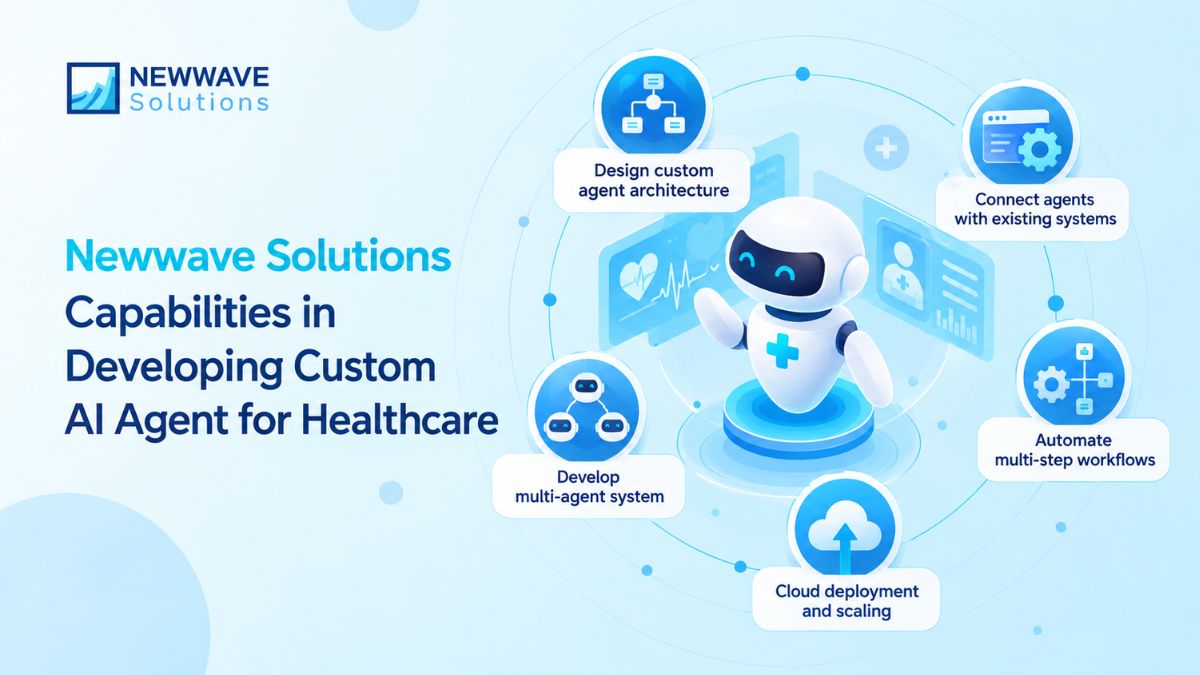
Healthcare organizations trust Newwave Solutions to design and implement custom AI agents that support their specific operational needs:
- Design custom agent architecture: Define the solution architecture, data requirements, integrations, project scope, and technology choices around the intended healthcare workflow.
- Connect agents with existing systems: Develop API or middleware integrations so AI agents can work with the organization’s current software and data environment instead of operating as a separate tool.
- Automate multi-step workflows: Develop AI agents that coordinate actions, interact with business tools, and execute more complicated workflows with less manual intervention.
- Develop multi-agent system: Build coordinated agent setups where specialized agents handle different tasks while sharing context across the process.
- Cloud deployment and scaling: Deploy AI agent systems on scalable cloud infrastructure and prepare them for higher workload volumes.
If you want to see how our integration-first engineering approach works in practice, explore A Spec-Built Mobile Solution for RFID Inventory & Asset Control, where we connected mobile workflows, RFID data, and backend systems for day-to-day asset management.
Conclusion
AI agents for healthcare can create the most value when they are matched to the right workflow, integrated with existing systems, and given the right level of autonomy. The main decision is not simply which platform has the most features, but which option fits the organization’s use case, data environment, and operational complexity.
For common workflows, an off-the-shelf solution may be enough. More complex processes may require adaptation or a custom build. Newwave Solutions can support that next step with AI development and software engineering expertise across architecture, integration, deployment, and refinement. If you are evaluating a custom healthcare AI agent, book a consultation with our team to discuss the right approach.
FAQs
1. Which AI agent is best for healthcare?
There is no single best option for every healthcare organization. The right AI agent depends on the workflow you want to improve, the systems it must connect with, the level of customization required, and how much autonomy you are comfortable giving it.
2. What is the difference between a chatbot and an AI agent?
A chatbot mainly responds to user questions, while an AI agent can take actions across a workflow with a degree of independence. In healthcare, that can mean moving beyond conversation to tasks such as scheduling, updating systems, coordinating follow-ups, or handling multi-step administrative processes.
3. How are AI agents being used in healthcare?
AI agents are being used across care coordination, clinical documentation, decision support, patient engagement, resource planning, revenue-cycle tasks, population monitoring, and drug research. They can work alone or as part of multi-agent systems that divide work across several specialized agents.
4. Are AI agents secure for handling patient data?
They can be used with patient data when the platform and deployment model meet the organization’s security and compliance requirements. Healthcare organizations should assess factors such as HIPAA compliance, BAAs, access controls, data handling, and the security standards of the systems the agent connects with.
5. Can AI agents integrate with our existing EHR system?
Yes, many AI agents can connect with EHR platforms through native integrations, APIs, FHIR, HL7, or other data-exchange methods. The exact level of integration depends on the agent, the EHR, and whether bidirectional data flow is required for tasks such as reading patient information and writing updates back into the system.
Source
- Medical Transportation Access Coalition. Missed Appointments Cost the U.S. Healthcare System $150B Each Year. April 2017. https://mtaccoalition.org/nemt_data_point/missed-appointments-cost-the-u-s-healthcare-system-150b-each-year-data-point-1/
- U.S. Department of Health and Human Services. Summary of the HIPAA Security Rule. https://www.hhs.gov/hipaa/for-professionals/security/laws-regulations/index.html
- HIPAA Journal. What is Considered PHI under HIPAA? Updated 2026. https://www.hipaajournal.com/considered-phi-hipaa/
To Quang Duy is the CEO of Newwave Solutions, a leading Vietnamese software company. He is recognized as a standout technology consultant. Connect with him on LinkedIn and Twitter.



Read More Guides
Get stories in your inbox twice a month.
Let’s Build Something Extraordinary
Sign up for a 30 min no-obligation strategic session with us. Transform your Ideas into scalable reality.
Leave a Reply