


Machine Learning in Healthcare: Key Use Cases and Real-World Impact
Healthcare teams often sit on large volumes of clinical and operational data but still struggle to turn it into faster decisions, earlier risk detection, or more efficient workflows. Machine learning in healthcare can help close that gap, but poor data quality, weak integration, and limited clinical trust can quickly undermine the expected benefits.
That makes adoption less about choosing the most advanced model and more about selecting the right use case, validating the data, and fitting ML into existing care processes. This guide examines how machine learning works in healthcare, where it creates the most value, the main barriers to adoption, and what organizations should assess before implementation.
Key Takeaways
|
What Is Machine Learning in Healthcare?
Machine learning in healthcare is the use of algorithms that learn patterns from medical data and use those patterns to make predictions or classify new information. Rather than programming a separate rule for every possible situation, the model learns from examples found in data such as medical images, laboratory results, patient records, and genomic information.
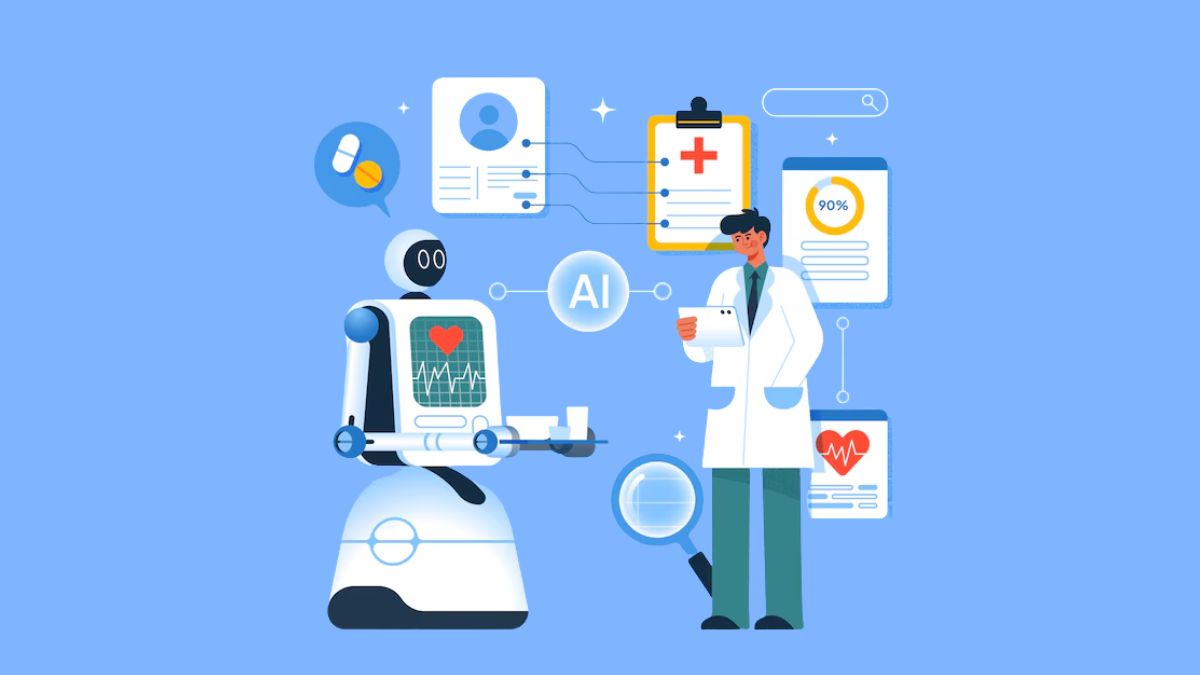
Machine learning approaches differ mainly in how they learn from data and feedback:
- Supervised learning: This method is trained using medical data that already includes verified answers or classifications. The model learns the relationship between input data and those known results, then applies that pattern to new cases. A healthcare example is using previously reviewed mammograms to train a system to distinguish suspicious findings from normal scans.
- Unsupervised learning: Here, the algorithm receives healthcare data without predefined categories and identifies similarities or recurring structures within it. It can, for instance, segment patient records into groups based on shared clinical characteristics or responses to care.
- Semi-supervised learning: This approach uses a limited set of reviewed medical examples alongside a much larger collection of data that has not been manually classified. It is particularly relevant when specialist annotation is difficult to obtain, while substantial amounts of raw clinical information are still available for model training.
- Reinforcement learning: This method improves by evaluating the consequences of different actions and adjusting its strategy over repeated attempts. In healthcare research, it may be applied in simulated environments to test and refine changing treatment decisions, including medication dosing or care protocols.
AI vs Machine Learning: What Are the Differences
Artificial intelligence and machine learning are closely related, but they are not the same.
Artificial intelligence (AI) refers to systems designed to carry out tasks that normally depend on human cognitive abilities. Depending on the use case, they can be built with anything from fixed rules to neural-network-based methods, allowing them to handle activities such as recognizing patterns, classifying information, or generating responses from input data..
Machine learning (ML) sits within AI. It focuses specifically on algorithms that improve by learning from data rather than following a fixed set of instructions for every possible case. In healthcare, this distinction matters because an AI system may combine several technologies to support a clinical or operational task, while the ML component may be responsible for finding patterns in patient data or estimating likely outcomes.
For healthcare organizations exploring more advanced applications, machine learning can also work as one component within broader AI systems. This is especially relevant in AI agents for healthcare, where multiple AI capabilities can be combined to interpret information, support decisions, and carry out workflow tasks.
Benefits of Machine Learning in Healthcare
Machine learning can help healthcare organizations make better use of the data they already collect across clinical and operational systems. By finding patterns, supporting prediction, and automating selected tasks, ML can contribute to more accurate diagnoses, more informed care decisions, more efficient workflows, and faster research without replacing professional judgment.
1. Improve diagnostic accuracy and early detection
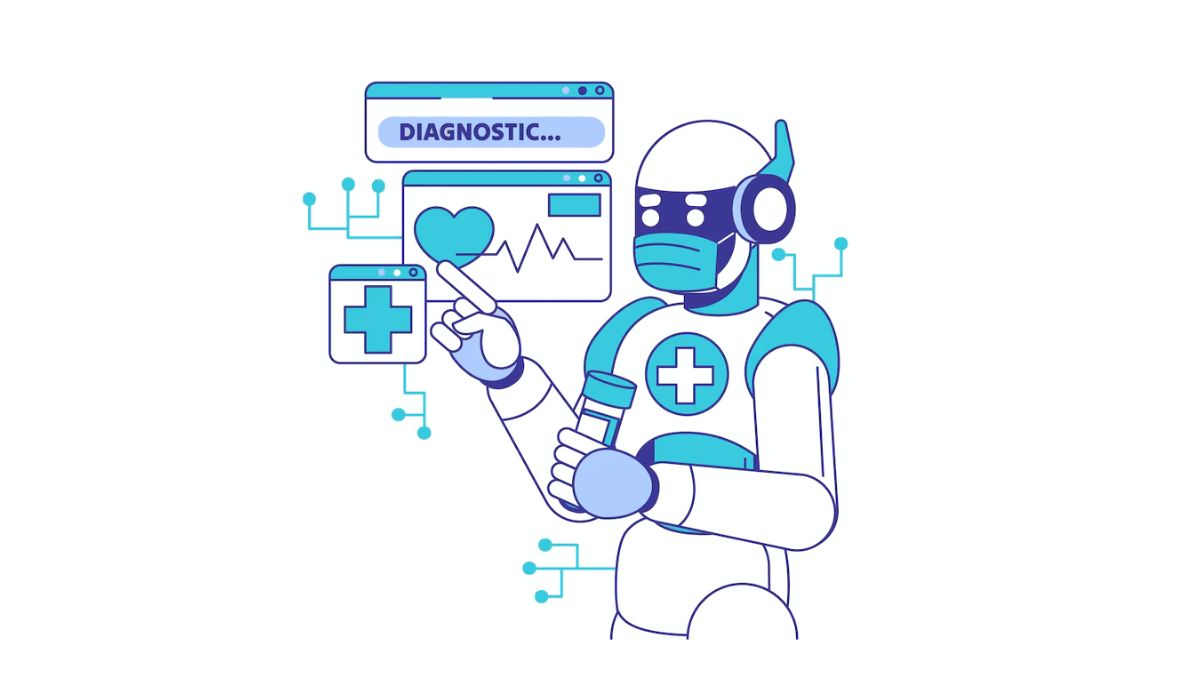
Machine learning can analyze clinical data such as lab results, vital signs, and treatment histories to uncover patterns that may be difficult to spot through manual review alone. By identifying both broad trends and small irregularities, ML can assist clinicians in spotting potential problems earlier and making more informed diagnostic assessments.
2. Support better clinical decision-making
Healthcare decisions often depend on multiple data points rather than a single test result. ML can bring these inputs together and surface patterns that may inform treatment planning, medication selection, or patient outcome forecasting.
This gives clinical teams an additional data-driven input when assessing possible options. The final decision still depends on professional judgment and the patient’s wider clinical context.
3. Streamline healthcare workflows
Many healthcare processes include repetitive administrative work that takes time away from patient-facing activities. Machine learning can automate repetitive operational tasks such as claims processing, patient data entry, and routine follow-up communications.
Reducing this workload can help clinical and administrative teams spend less time on routine processing and more time on activities that require direct human involvement.

4. Reduce operational and treatment costs
Machine learning can reduce costs by processing large volumes of healthcare data more efficiently and helping teams identify patterns that would otherwise require more manual review. It can also support earlier detection of potential health issues, which may enable intervention before care becomes more resource-intensive.
5. Enable more personalized patient care
Machine learning can help healthcare teams tailor care by analyzing how different patient-specific factors relate to treatment needs and responses. For example, a model could combine a patient’s medical history, previous treatment data, genetic information, and lifestyle factors to help clinicians evaluate which care approach may be more appropriate for that individual.
6. Accelerate healthcare research and drug development
Machine learning can help research teams work through large volumes of scientific data more efficiently and identify promising directions earlier. This can shorten the time spent screening less relevant information and allow researchers to focus resources on areas with stronger potential for further study.
Key Applications of Machine Learning in Healthcare
ML is being used across clinical care, patient management, medical research, and healthcare operations. Its main role is to turn large volumes of medical and operational data into patterns, predictions, and signals that can help teams make faster, more informed decisions.
Clinical diagnosis & risk prediction
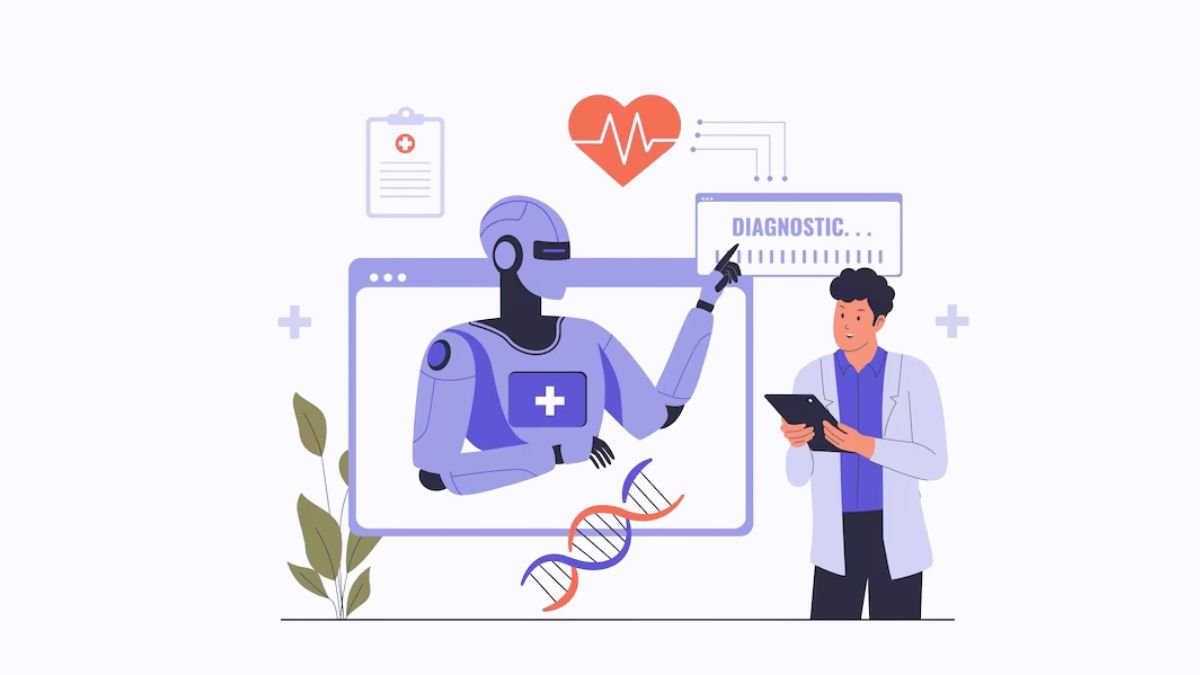
Machine learning can assist with both individual diagnosis and broader health risk forecasting. In medical imaging, models can examine X-rays, CT scans, and MRI images for subtle changes that may indicate lesions, tumors, or other abnormalities. ML can also combine information from lab results, clinical notes, and medical images to help identify patients who may require closer attention.
The same predictive approach can be applied at the population level. By combining historical outbreak records with environmental data collected over time, ML models can identify patterns associated with disease spread and help public health authorities anticipate where preventive action may be needed.
Patient care & treatment support
ML can extend patient support between clinical visits by continuously analyzing information from connected devices, sensors, and other patient inputs. These patterns can help inform reminders and follow-up guidance for people managing chronic conditions or working toward behavioral changes.
This same ability to process patient information can support more active forms of care. Virtual nursing systems can assist with medication management, post-discharge follow-up, health alerts, and routine questions, while ML-enabled robotic systems can aid surgeons during procedures that require precise, controlled movements.
Drug research & development
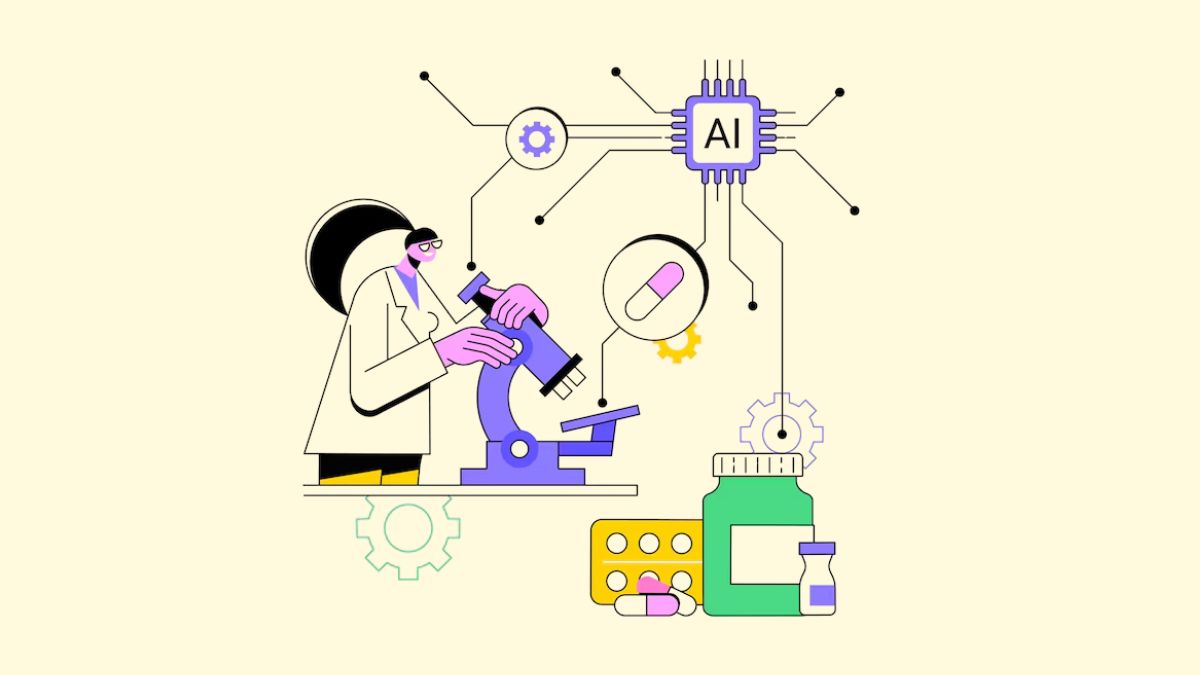
Drug discovery involves assessing many compounds, biological targets, and possible interactions before selecting candidates for further testing. Machine learning can analyze these datasets to rank promising options and uncover relationships that may warrant closer investigation.
For example, a model might compare compound properties with known target interactions and flag a smaller set of candidates for lab testing. This gives research teams a more focused starting point, while experimental validation still determines which options are worth pursuing.
Healthcare operations & insurance
Machine learning can also support the operational side of healthcare. By working with administrative data, hospitals can use ML to improve how they anticipate workload, coordinate day-to-day operations, keep information moving between teams, and spot process bottlenecks.
Insurance is another area where ML can reduce manual review. For example, a model can learn from past claims and flag combinations of billing behavior that deserve investigation, instead of relying only on fixed rules. The same approach can help insurers prioritize cases for review, estimate exposure, and handle policyholder requests with less manual effort.
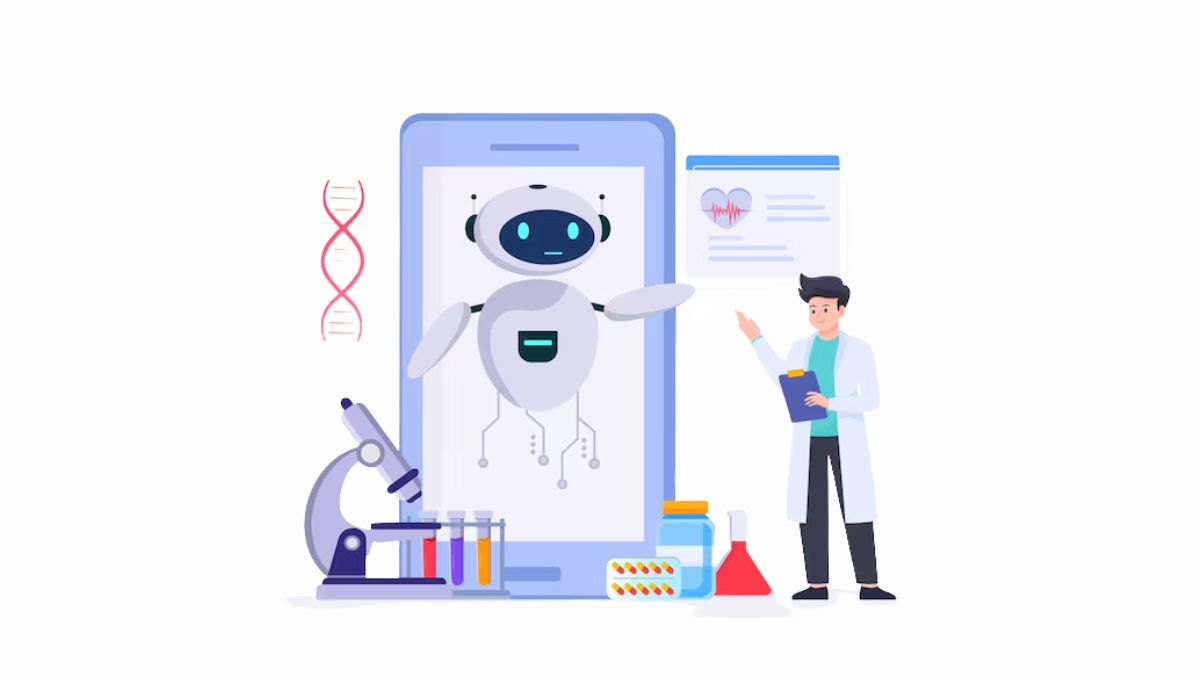
Many of these use cases depend on having patient and operational information available across connected systems. For organizations working to centralize interactions and patient data, a healthcare CRM software solution can provide another layer for managing those relationships and workflows.
Challenges of Adopting Machine Learning in Healthcare
Putting machine learning into healthcare workflows requires more than a well-performing model. Clinical data can be incomplete, patient populations may not be represented evenly, and technical outputs must fit into systems that clinicians already use. These issues can affect prediction quality, trust, and whether an ML tool can be used safely in practice.
Poor data quality and inconsistent healthcare data
ML performance depends heavily on the information used to train and operate the model. In healthcare, records may contain missing fields, inconsistent documentation, inaccurate labels, or data stored in different formats across systems. These gaps can weaken predictions and make results less dependable.
Healthcare organizations can reduce this risk by improving data quality before model training, standardizing how information is recorded, and checking whether datasets adequately represent the intended patient population. Models may also need periodic retraining as new data becomes available.
Algorithmic bias and health equity risks
A machine learning model can inherit gaps or imbalances from the data used to train it. If some patient populations are underrepresented, the model may produce less reliable results for those groups, which can create uneven performance across clinical settings.
Reducing this risk requires evaluating training data for representation and validating model performance across different patient groups. Clinicians also need to understand known limitations rather than treating every model output as equally reliable across populations.
Integration and interoperability barriers
Even an accurate model provides limited practical value if its output sits outside the systems clinicians use every day. ML tools may need to exchange data with EHRs, PACS platforms, and other clinical applications without adding extra steps or disrupting established workflows.
Integration therefore needs to be considered early in implementation. Standards such as FHIR can help systems exchange healthcare information, while workflow testing can show whether model outputs appear at the right point in the clinical process.
For organizations reviewing this part of the technology stack, EHR software development is closely connected to how ML capabilities can be incorporated into existing healthcare workflows.
Lack of explainability and clinical trust
Some advanced models, especially deep learning systems, can make a prediction without showing clinicians exactly how they reached it. This is often described as the “black box” problem.
Tools such as SHAP and LIME can help by indicating which factors had the strongest influence on an output. For example, they may show that age or a recent procedure contributed heavily to a prediction. Even so, these tools only estimate the model’s reasoning.
That is why clinical oversight is still needed after deployment. Healthcare organizations should continue monitoring performance and collecting clinician feedback to check whether the system is behaving as expected.
Regulatory and liability uncertainty
Regulatory oversight becomes more difficult when machine learning systems are updated or retrained after deployment. According to FDA , there are more than 1600 AI- and ML-enabled medical devices, many of them in radiology. At the same time, regulators were still refining how to oversee models that continue to change after deployment.
Liability is another open question. If an ML-supported recommendation contributes to a diagnostic mistake, responsibility may involve multiple parties. Healthcare organizations therefore need clear policies around how model outputs are reviewed, when clinicians can override them, and who remains accountable for decisions.

What Healthcare Organizations Should Consider Before Adopting Machine Learning
Before adopting machine learning in the healthcare industry, organizations need to determine whether the technology is clinically appropriate, reliable in practice, and governed with sufficient professional oversight.
Evaluate ML tools for clinical fit and reliability
A model that performs well in testing may still be unsuitable for a specific healthcare setting. Evaluation should therefore consider regulatory clearance where applicable, validation across different patient populations, how clearly outputs can be interpreted, and whether the tool fits existing clinical processes.
Assessment should also continue after deployment. Feedback from real-world use and ongoing performance monitoring can help identify whether model accuracy changes over time.
Build machine learning literacy among healthcare professionals
Clinicians do not need to become machine learning engineers, but they should understand enough to question how a model was developed and tested. That includes knowing where the training data came from, how the model was validated, and which limitations could affect its output.
This knowledge helps healthcare professionals judge ML recommendations more critically rather than treating them as automatically correct.
Keep physicians involved in ML governance
Physicians should have a direct role in decisions about which ML tools are adopted, how they are used, and how performance is reviewed. Their input helps connect technical metrics with the clinical outcomes the system is intended to serve.
Without this involvement, an ML system may optimize for operational targets while failing to reflect what matters most in patient care. Clinical oversight should therefore remain part of both deployment policies and ongoing quality monitoring.
Will Machine Learning Replace Healthcare Professionals?
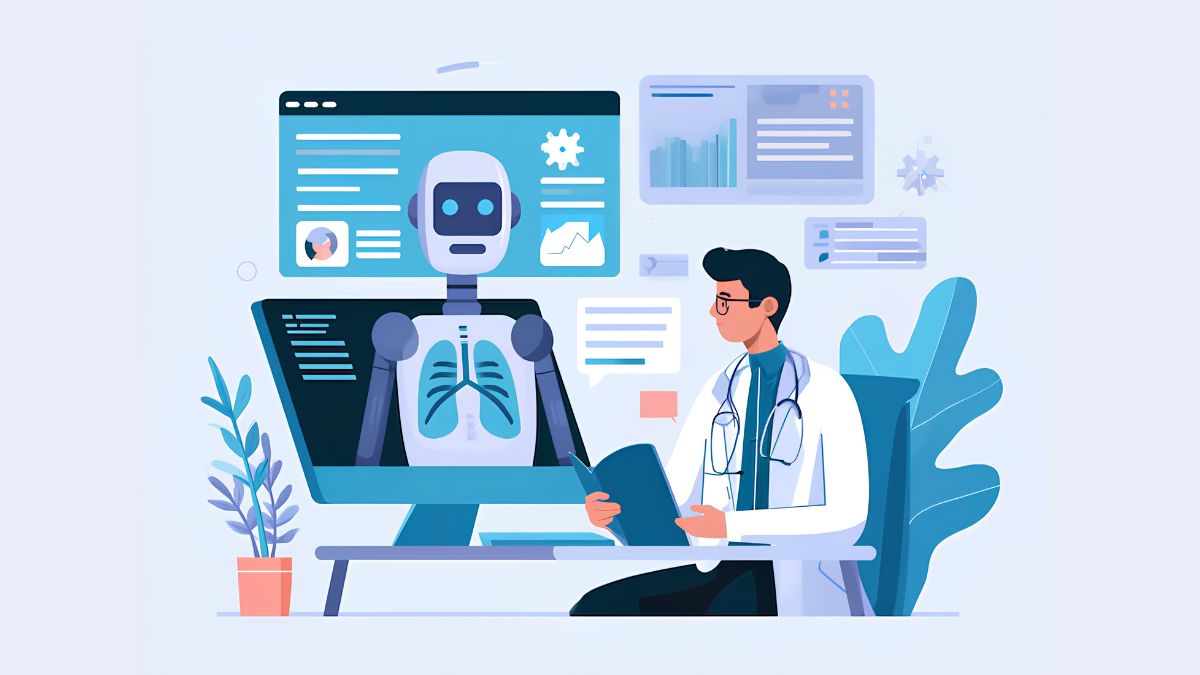
Machine learning is unlikely to replace healthcare professionals because its strongest role is in processing large volumes of data, identifying patterns, and supporting prediction. These capabilities can help clinicians review complex information faster and bring additional evidence into diagnosis or treatment planning.
What ML cannot replace is the broader clinical judgment needed to interpret symptoms, patient history, context, and individual circumstances. Decisions in healthcare often depend on factors that extend beyond what a model can infer from available data, especially when communication, empathy, and professional responsibility are involved.
The more realistic future is one where machine learning works alongside clinicians. By taking on data-intensive analysis and decision support, ML can help healthcare professionals focus more of their time on patient care and on decisions that require human interpretation.
Conclusion
For machine learning in healthcare to deliver practical results, the starting point should be the healthcare problem, not the model. A suitable use case needs dependable data, a clear place in the clinical workflow, and enough oversight to keep predictions useful and accountable. These factors matter more than simply adding ML to an existing system.
Newwave Solutions can help turn that starting point into a working solution through use-case planning, design, development, integration, testing, and improvement. Our RFID Inventory Asset Control project demonstrates the same workflow-first approach: after validation on the client’s actual RFID hardware, garment verification was reduced from an entire day to just minutes.
Explore the case study and assess where a similar approach could improve operations: Reducing Manual Garment Verification in Healthcare Facilities from a Full Day to Minutes
FAQs
1. What is the difference between AI and machine learning in healthcare?
Artificial intelligence is the broader field of technologies designed to perform tasks that typically require human intelligence, such as reasoning or language processing. Machine learning is a subset of AI that learns patterns from healthcare data and uses them to make predictions or classifications without being programmed for every individual case.
2. How is machine learning used in healthcare?
Machine learning is used across clinical care and healthcare operations. Common applications include medical image analysis, disease and patient risk prediction, treatment support, remote patient monitoring, and drug research.
3. How does machine learning improve patient outcomes?
Machine learning can help clinicians detect patterns earlier, identify high-risk patients, and use patient-specific data to inform treatment decisions. It can also process large volumes of clinical information quickly, giving healthcare professionals additional evidence when deciding how to monitor or manage patient care.
4. What are the biggest challenges of using machine learning in medicine?
The main challenges include poor or inconsistent healthcare data, algorithmic bias, limited model explainability, integration with existing clinical systems, and regulatory or liability concerns. These issues can affect model accuracy, clinician trust, and whether an ML system performs reliably in real healthcare settings.
5. Can machine learning replace doctors?
Machine learning is more likely to assist healthcare professionals than replace them. It can handle data-intensive analysis, pattern recognition, and prediction, while clinicians remain responsible for interpreting results alongside patient history, symptoms, clinical context, and other factors that require professional judgment.
Source
U.S. Food and Drug Administration. Artificial Intelligence-Enabled Medical Devices. https://www.fda.gov/medical-devices/software-medical-device-samd/artificial-intelligence-enabled-medical-devices
To Quang Duy is the CEO of Newwave Solutions, a leading Vietnamese software company. He is recognized as a standout technology consultant. Connect with him on LinkedIn and Twitter.



Read More Guides

Get stories in your inbox twice a month.
Let’s Build Something Extraordinary
Sign up for a 30 min no-obligation strategic session with us. Transform your Ideas into scalable reality.
Leave a Reply