


Machine Learning in Retail: From Use Cases to Real-World Implementation
What should a retailer build with machine learning, and what is better handled by existing analytics or packaged tools? That question sits behind many searches for machine learning in retail. A recommendation engine, demand forecast, fraud model, or pricing system may all use ML, but each depends on different data, operating constraints, and levels of technical ownership.
This article looks at where ML is already useful, what business benefits it can support, what commonly makes implementation difficult, and how retailers can choose a delivery model that fits their systems and internal capabilities.
Key Takeaways
|
What Is Machine Learning in Retail?
Machine learning in retail refers to the use of models that learn from retail data and use those patterns to generate predictions, recommendations, or other decision inputs. Instead of programming a separate rule for every possible situation, retailers can train models on information such as customer behavior, sales activity, inventory movement, and market conditions.
The process starts with training. Historical retail data is used to show the model how inputs such as product attributes, prices, promotions, and sales outcomes relate to one another. During training, the model compares its estimates with what actually happened and adjusts its parameters to reduce error.
Once trained, it applies those learned patterns to new data to produce outputs such as forecasts, rankings, or alerts. For example, a retailer could use past promotion performance, current sales trends, and seasonal demand patterns to decide when to launch a promotion or reorder seasonal products. The model provides the prediction, while the retail team uses that output as an input to the final business decision.
As fresh data becomes available, the model can be updated so that its predictions reflect newer purchasing patterns or operating conditions. This makes machine learning useful for retail decisions where fixed rules may struggle to account for many changing variables at once.
Machine learning is part of the broader field of artificial intelligence. AI covers systems designed to perform tasks that involve forms of judgment or decision-making, while machine learning is one way of building those capabilities from data. Deep learning sits within machine learning and uses neural networks, including the models behind many generative AI applications.
Machine Learning vs Traditional Retail Approaches
Retail decisions can be supported in different ways depending on how predictable the task is and how much variation the system needs to handle. Rule-based systems work from predefined conditions, while machine learning uses historical outcomes to identify patterns and produce predictions.
| Comparison Area | Rule-Based Systems | Traditional Analytics | Machine Learning |
|---|---|---|---|
| How decisions are made | Applies predefined conditions, thresholds, or business rules to known inputs. | Organizes and analyzes historical or current data through reports, dashboards, and predefined metrics. | Learns relationships from historical data and uses them to estimate outcomes for new inputs. |
| Main question answered | What should happen when a known condition occurs? | What happened or what is happening now? | What is likely to happen next, or which option is most relevant? |
| Ability to handle changing patterns | Rules remain the same until someone changes them. | Reports can reveal new trends, but people generally interpret the findings and decide how to respond. | Models can be retrained with newer data so predictions reflect changes in demand, behavior, or other inputs. |
| Personalization level | Best suited to predefined groups or conditions, such as applying an offer when specified criteria are met. | Can compare customer segments and behavioral patterns using available metrics. | Can produce recommendations for individual users based on signals such as views, clicks, purchases, and other interactions. |
| Typical retail use | Reorder thresholds, eligibility rules, fixed promotion conditions, and policy-based decisions. | Sales reporting, inventory dashboards, category performance analysis, and trend monitoring. | Personalized recommendations, demand forecasting, dynamic pricing, inventory optimization, and fraud detection. |
| Best fit | Decisions with stable conditions that can be stated clearly in advance. | Situations where teams need visibility into performance and historical trends before making a decision. | Problems affected by many variables or changing patterns, especially when prediction or individualized recommendations are required. |
7 Real-world Applications of Machine Learning in Retail
The most common retail machine learning use cases appear wherever retailers need to make repeated decisions from customer, product, transaction, or operational data. The examples below show what information ML processes and how its output fits into actual retail workflows.
Personalized recommendations and customer segmentation
Machine learning can use browsing activity, purchase history, product interactions, and customer data to identify patterns in what different shoppers are likely to prefer. Recommendation models then use these signals to rank or suggest products. Meanwhile, segmentation models group customers with similar behaviors so retailers can adjust offers, communications, or product discovery for each group.
A retail example comes from Amazon Style. When Amazon introduced the store concept, it described using machine learning algorithms to generate real-time recommendations as customers browsed and scanned items, with information such as style, fit, and other preferences used to refine those suggestions.
Intelligent product search and discovery
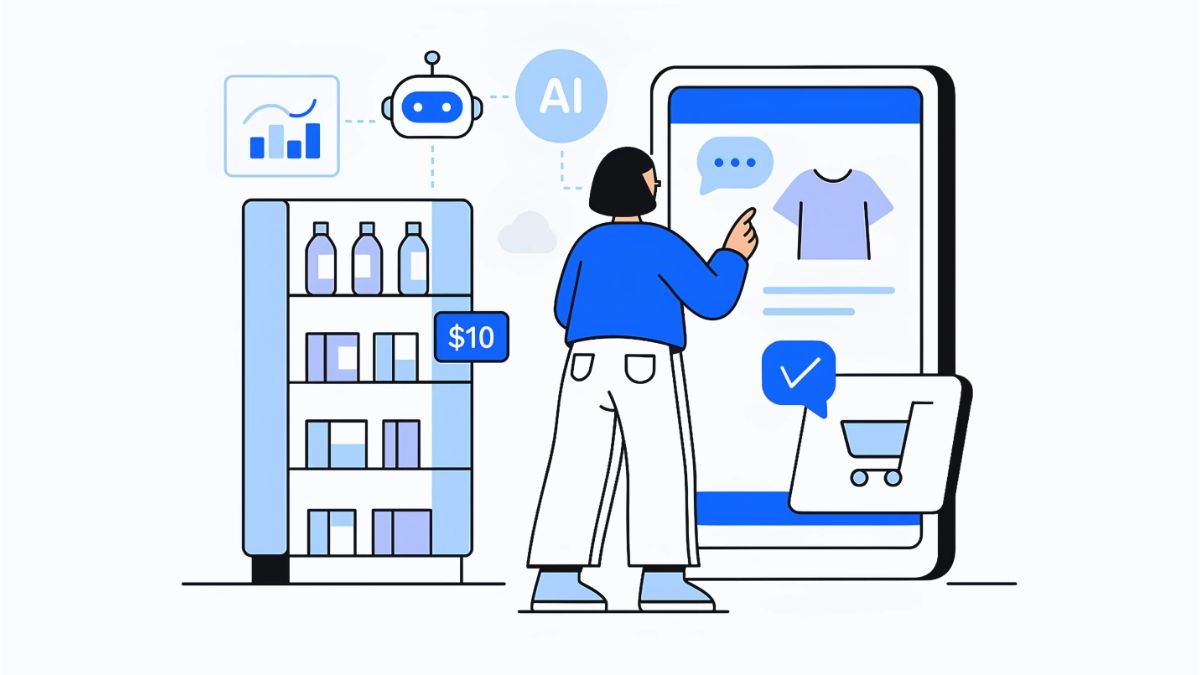
Standard product search often depends heavily on matching the words entered by a shopper with terms in a product catalog. Machine learning adds another layer by examining context and relationships between terms, allowing a search system to interpret queries that do not exactly match product descriptions.
Visual search extends the same idea to images. A shopper can submit a photo rather than a text query, and a computer vision model can compare visual features against the retailer’s catalog to retrieve similar products. This is particularly relevant when product discovery depends more on appearance than on knowing the correct product name.
AI shopping assistants and customer service
Machine learning also sits behind conversational retail tools. A shopping assistant can interpret customer requests, combine them with catalog or customer information, and use recommendation outputs to narrow the available products. The same interface may handle operational questions such as order status or returns.
Newer assistants increasingly combine these ML capabilities with generative models so customers can interact through natural-language requests instead of fixed commands. For a broader look at how this layer is being used across commerce workflows, see generative AI in retail.

Dynamic pricing and promotion optimization
Pricing is rarely influenced by a single variable. A machine learning model evaluates historical prices, demand, competitor rates, promotions, and inventory to predict how price changes affect demand.
The same pricing logic also applies to markdowns. A model can use product-level signals such as current demand, inventory position, and promotion history to recommend different markdown actions for different items. Business rules can still define limits on which price changes are allowed.
Demand forecasting and inventory optimization
For demand forecasting, machine learning combines past sales with variables that may explain why demand changes, including seasonality, promotions, pricing, holidays, and other relevant signals. Models can produce forecasts at different levels, such as by product, location, or sales channel.
Those forecasts then become one input to replenishment planning. Their usefulness depends partly on timing: if a seasonal product has a long supplier lead time, the forecast needs to surface expected demand early enough for the retailer to place or adjust orders before that window closes. The distinction matters: the ML model predicts demand, while inventory processes use that prediction to decide what action to take.
Delivery and supply chain optimization
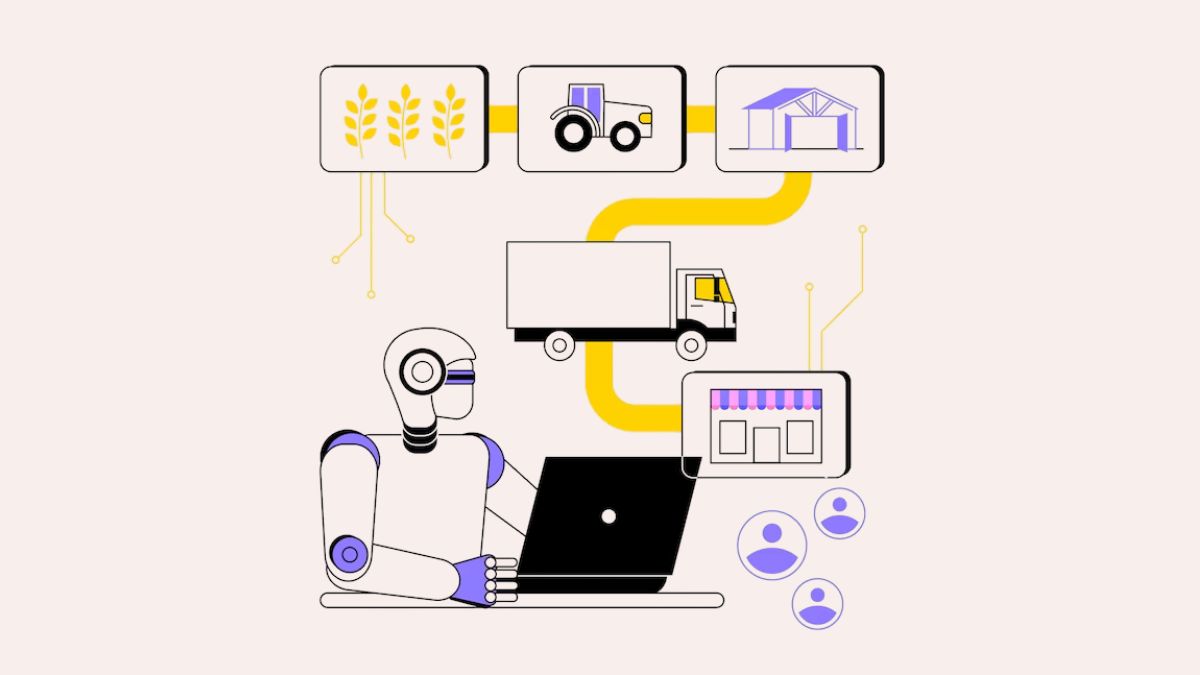
When demand is expected to rise in a particular region, the problem shifts from forecasting to logistics: how much inventory should be positioned near those customers, and how should orders be fulfilled when local stock is insufficient. Machine learning combines regional demand signals with inventory and transportation constraints to support allocation and routing decisions.
Walmart provides a practical example in severe-weather planning. Its supply chain systems use machine learning and predictive modeling to process historical weather patterns and real-time weather data alongside logistics information. Teams then simulate possible disruptions and use the results to reposition inventory, adjust transit plans, or reroute shipments before conditions affect operations.
Fraud detection and loss prevention
Fraud detection models evaluate transaction and account signals together to identify activity that differs from established patterns. Information such as payment behavior, purchase history, login activity, and transaction context contributes to a risk assessment, with unusual cases routed for further review.
Machine learning can also be applied to physical-store monitoring. Computer vision systems can process video and identify movement patterns that warrant attention, adding another source of information for loss-prevention teams. These systems identify anomalies rather than proving that fraud or theft has occurred, so flagged cases still need appropriate handling.
Top Benefits of Machine Learning for Retail Businesses
The value of machine learning in retail comes from using data to make recurring decisions more relevant, timely, and consistent. Its impact can appear across both customer-facing experiences and operational processes.
More personalized customer experiences
More personalized customer experiences reduce the amount of irrelevant content shoppers need to filter through and make product discovery more focused on their needs. The value is not simply showing different products to different people, but making the path from browsing to consideration more relevant at each step.
For example, a shopper looking for a laptop for graphic design could be guided toward a smaller set of suitable models, compatible accessories, and more relevant offers.
Retailers exploring more conversational forms of personalization can also see how generative AI in ecommerce supports product discovery and customer interactions through natural-language experiences.

Better demand and business decisions
Better demand and business decisions give retail teams a clearer basis for deciding how much stock to hold, when to adjust pricing, and where to focus marketing resources. This reduces reliance on intuition alone and makes planning more consistent when several business factors need to be weighed at the same time.
The main benefit is not replacing business judgment. It is giving decision-makers a data-based view of likely outcomes, particularly when several variables need to be considered together.
Higher sales and customer value
Machine learning can influence revenue at several points in the buying journey. Recommendations can surface products that are more relevant to a shopper, targeting can narrow which offers are presented, and dynamic pricing can adjust decisions according to changing conditions.
When these systems improve product relevance and purchasing decisions, they can support conversion, retention, and customer lifetime value. McKinsey shows that personalization most often generates a 10% to 15% revenue lift, while personalization leaders also report stronger retention and loyalty outcomes.
Retailers exploring more autonomous customer-facing workflows can also look at how AI agents for ecommerce extend beyond prediction to assist with shopping interactions and related tasks.
More efficient retail operations
The same predictive capability can be applied behind the storefront. Demand forecasts can inform inventory and replenishment decisions, while routing models can support product delivery planning.
Machine learning can also reduce repetitive customer-service and administrative work when combined with virtual assistants. By feeding model outputs into operational workflows, teams can act on routine signals faster and focus more attention on exceptions or higher-value decisions.
Stronger fraud and risk detection
Machine learning gives fraud and loss-prevention teams a way to prioritize where attention is needed most. By surfacing higher-risk transactions or unusual in-store activity earlier, it can shorten investigation time and help teams focus manual review on cases with stronger warning signals.
Flagged cases can then be routed into the appropriate investigation or escalation workflow, allowing teams to apply their existing controls more selectively.
This approach can support digital transaction monitoring, while computer vision-based systems can apply similar pattern recognition to video data in physical stores. In both cases, the model acts as an additional detection layer, helping teams identify suspicious activity without assuming that every anomaly represents fraud.
Challenges of Implementing Machine Learning in Retail
A machine learning model may perform well during development but still struggle once it enters a live retail environment. Moving from experiment to production introduces technical and operational requirements that can affect reliability, scalability, and long-term performance.
Integration with existing retail systems
Retail integration becomes difficult when the same product, inventory, or customer record is represented differently across POS, ecommerce, warehouse, and CRM systems. If a SKU uses different IDs, formats, or update timing across channels, the ML model may receive inconsistent inputs or produce outputs that cannot be used reliably in downstream workflows.
Before deployment, retailers need to assess how existing systems exchange data and where the model will connect to current workflows. APIs or additional integration layers may be required to bridge older systems with newer ML components.
Data privacy and security
Retail ML can rely on customer, transaction, logistics, and supply chain data, which makes data protection part of the implementation itself. Weak access controls or insecure data movement can expose sensitive information as data moves between storage, processing, and model environments.
For retail data, protection should follow how customer and transaction information moves across POS, ecommerce, loyalty, payment, and CRM systems. Access should be restricted based on each user’s role and business need. Sensitive fields, such as personally identifiable or payment-related information, should be masked or encrypted where appropriate, with clear access rules for teams and models..
Data quality and fragmentation
ML models depend on the data used to train and operate them. In retail, that information is spread across POS systems, ecommerce platforms, inventory tools, CRM databases, and other operational systems.
Missing records, inconsistent formats, duplicate information, or inaccurate inputs can reduce the reliability of model outputs. For example, if the same SKU is recorded differently in ecommerce and store inventory systems, the model may misread stock availability or sales history. Retailers should standardize product identifiers and reconcile records across systems before using that data for model training or inference.
MLOps and model maintenance
Deployment is not the end of the ML lifecycle. Models need ongoing monitoring as new data enters the system and operating conditions change.
MLOps practices can support model deployment, performance monitoring, updates, and lifecycle management. Automation and CI/CD processes designed for ML workflows can also make it easier to manage model changes without relying entirely on manual operations.
Scalability and production infrastructure
A model that performs adequately during development may face different requirements once it enters production. Retail environments can generate growing volumes of data across products, stores, customers, and operational systems.
Infrastructure therefore needs enough capacity and flexibility to process larger workloads as usage expands. Cloud-based infrastructure is one option for providing additional computing and storage resources as those requirements change.
How to Implement Machine Learning in Retail
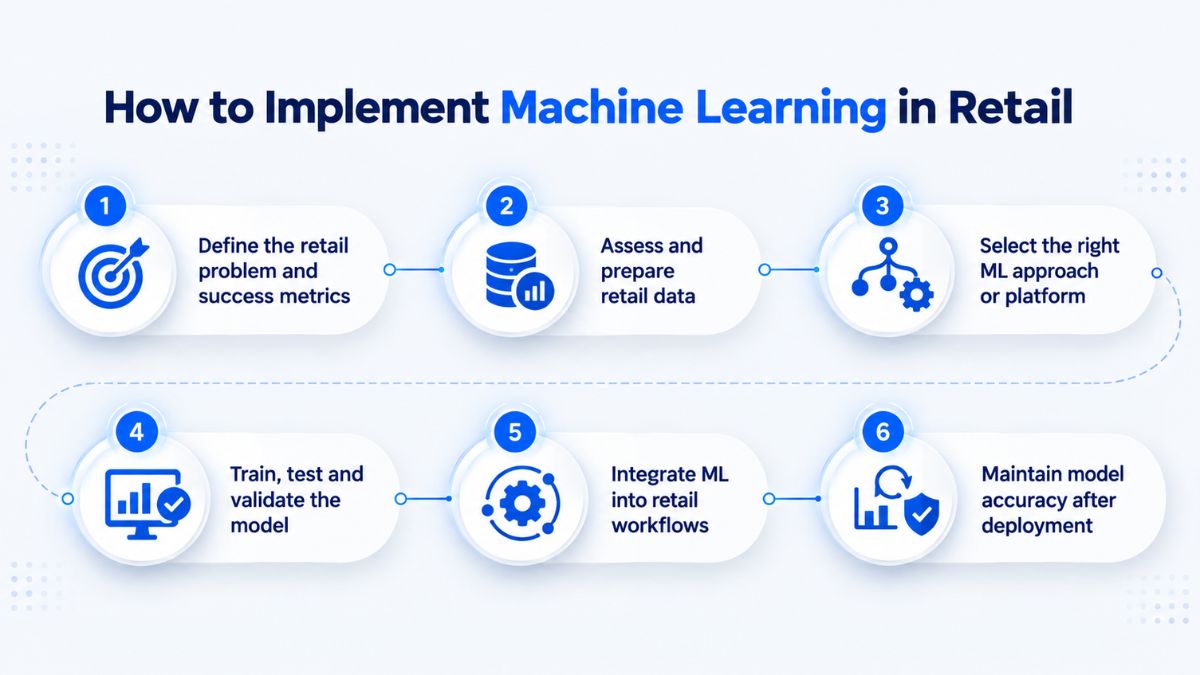
Turning machine learning in retail into a working business capability requires a clear sequence from defining the use case to deploying the model in daily operations. Each stage should reduce uncertainty before the project moves further into production.
1. Define the retail problem and success metrics
Start with the decision or process the model is expected to improve. This could involve forecasting demand, refining inventory decisions, personalizing customer interactions, or adjusting pricing.
The objective should also be tied to measurable criteria. For a demand forecasting project, measurable criteria could include forecast error, stockout rate, and excess inventory. Tracking these metrics shows whether improved predictions are translating into better replenishment outcomes.
2. Assess and prepare retail data
Before training begins, review whether the required data is available, accurate, and consistent enough for the intended use case. Relevant information comes from POS systems, ecommerce platforms, CRM databases, inventory tools, or other operational sources.
Data preparation should also clarify lineage and ownership. For example, a retailer should define which system is the source of truth for product IDs, then map records from other platforms back to that identifier before combining them for model training.
3. Select the right ML approach or platform
Choose the technical approach based on what the use case actually requires in terms of prediction, data handling, response time, and control.
The selected approach should also fit the retailer’s existing architecture and operating model. Consider how it will connect with current systems, what infrastructure it needs, and whether the internal team can support it after deployment.
4. Train, test and validate the model
Once the data and approach are defined, the model can be trained and evaluated against historical data that was not used during training. Testing should determine whether the model performs consistently enough for the intended retail task.
Validation should consider both technical performance and the business requirement behind the project. A model can be statistically accurate yet still be unsuitable if its output does not support the decision or workflow it was designed for.
5. Integrate ML into retail workflows
A validated model only becomes operational when its predictions or recommendations reach the systems where decisions are made. Depending on the use case, that could mean connecting it with ecommerce platforms, POS systems, CRM tools, or inventory applications.
Integration should define how data reaches the model, how outputs return to the business system, and where people or automated processes act on those outputs.
6. Maintain model accuracy after deployment
Model performance can change as new data enters the system and customer or market patterns shift. Retailers therefore need to monitor how the model behaves after deployment and determine when updates or retraining are required.
Choosing the Right Machine Learning Delivery Model for Retail
The right delivery model depends on how much of the use case comes from retailer-specific logic and how much technical ownership the business wants to retain after deployment. The goal is to avoid building custom technology where an existing capability is sufficient, while also avoiding tools that restrict a use case that genuinely requires customization.
Build custom models for retail-specific decisions
Custom models are suited to problems that rely heavily on a retailer’s own data, merchandising logic, or internal decision processes. They offer greater flexibility but require more technical ownership throughout the model lifecycle.
Best for: Retail-specific use cases where proprietary data or business logic plays an important role.
Pros:
- Greater control over model behavior, data flow, and integration
- Easier to adapt to business-specific requirements
- Can support use cases that packaged tools may not cover well
Cons:
- More effort to adapt the model when business rules, data sources, or connected retail systems change.
- Longer development and deployment effort
- Higher responsibility for monitoring and maintenance
Buy packaged solutions for standard retail problems
Packaged solutions provide an existing ML capability for a defined problem. They are more suitable when the requirement is relatively standardized and faster deployment is a priority.
Best for: Common retail needs such as fraud screening, search, or other standardized capabilities.
Pros:
- Shorter implementation time than building from scratch
- Core ML capability is already developed by the vendor
- Requires less internal model-development effort
Cons:
- Less flexibility for retailer-specific requirements
- Possible integration constraints
- Greater dependency on the vendor and its data architecture
Use a data and AI platform
A data and AI platform provides a shared environment for running multiple ML initiatives rather than supporting only one model. It can bring data, model development, deployment, monitoring, and governance into a common operating layer.
Best for: Retailers managing multiple ML models on shared data infrastructure.
Pros:
- Centralizes data and model operations
- Supports more consistent monitoring and governance
- Cons:
- Requires a sufficiently mature data foundation
- Adds platform and operational complexity
- May be difficult to justify for only a few simple ML use cases
How Newwave Solutions Can Help Retailers Apply Machine Learning
At Newwave Solutions, we combine AI development capabilities with experience building ecommerce and retail-oriented digital solutions. Our work focuses on turning AI and machine learning concepts into systems that can connect with real business data, applications, and customer workflows.
Depending on the retail problem, we can support machine learning initiatives across areas such as:
- Improve demand and inventory planning: We develop predictive models that use historical and operational data to support demand forecasting and inventory decisions.
- Personalize product discovery: We apply ML-related capabilities to product recommendations, search, and customer segmentation so discovery can reflect customer behavior and product data.
- Support pricing and operational decisions: We build data-driven models that can provide additional input for pricing, merchandising, and planning workflows.
- Detect unusual patterns and risks: We develop models that identify anomalies in transaction or operational data and surface cases that may require further review.
Our ShopMate AI solution shows how AI-driven personalization can work inside an ecommerce buying journey. It interprets natural-language shopping requests, uses product catalog data to provide contextual recommendations, and supports customers from product discovery and comparison through add-to-cart and checkout.
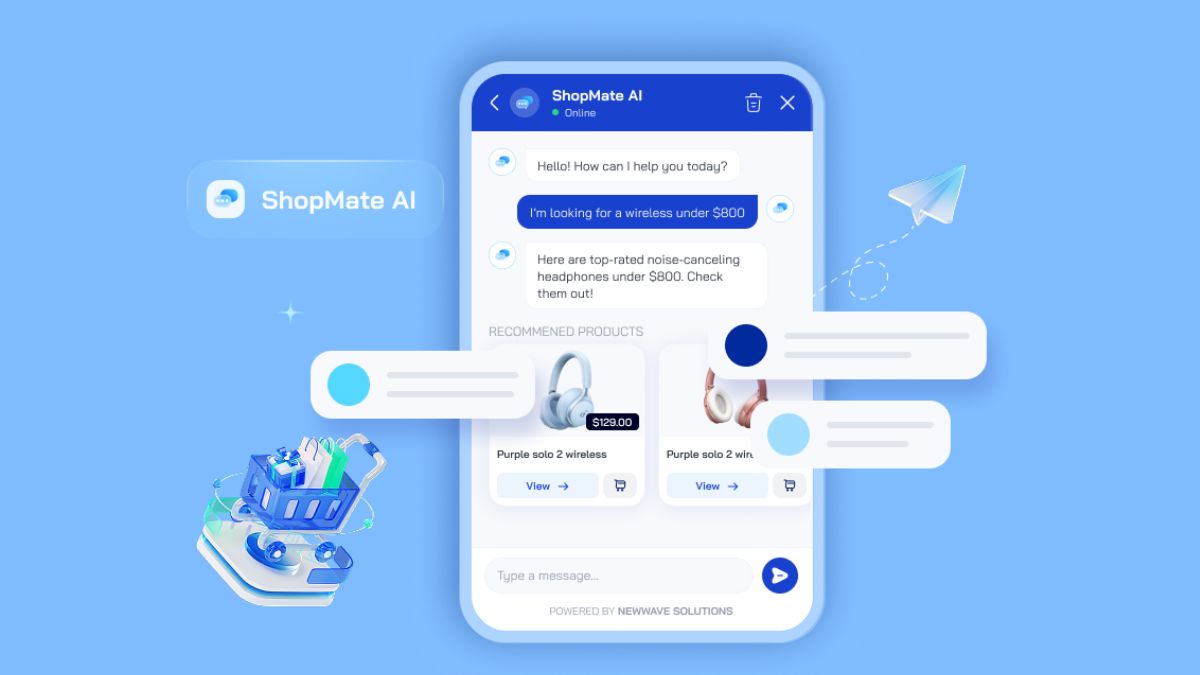
Explore ShopMate AI to see how AI can support a more guided ecommerce experience from product discovery through purchase.
Conclusion
For retailers, the key question is not whether machine learning can be used, but where it can create enough operational or customer value to justify implementation. The strongest opportunities for machine learning in retail are those tied to clear business decisions and supported by data that can be integrated into existing workflows.
A practical next step is to evaluate where ML can fit into existing retail workflows and what data is available to support it. Share your target retail use case and current data environment with Newwave Solutions to assess the most suitable ML approach and integration path.
FAQs
1. How is AI used in retail stores?
AI can support store operations through applications such as demand forecasting, product recommendations, customer service, fraud detection, and computer vision. In physical stores, it may also be used to monitor shelves, analyze in-store activity, or support checkout and loss-prevention workflows.
2. What are the main 3 types of ML models?
The three main types are supervised learning, unsupervised learning, and reinforcement learning. In retail, supervised learning can be used to forecast demand from historical sales. Unsupervised learning can group customers with similar purchasing behavior. Reinforcement learning can optimize decisions such as pricing or promotions by learning from the results of previous actions.
3. What data does a retailer need for machine learning?
Retailers need data that is relevant to the specific decision the ML model is designed to support. For example, demand planning may use sales and inventory history, while personalization may rely on customer interactions and product data.
4. What are the main challenges of implementing machine learning in retail?
Common challenges include fragmented or low-quality data, integration with existing systems, privacy and security requirements, production scalability, and ongoing model maintenance. These issues can affect how reliably a model performs once it moves from development into real retail operations.
5. How can a retailer get started with machine learning?
Start with a clearly defined retail problem and determine how success will be measured. From there, assess the available data, choose an appropriate ML approach, test the model, integrate it into the relevant workflow, and monitor its performance after deployment.
To Quang Duy is the CEO of Newwave Solutions, a leading Vietnamese software company. He is recognized as a standout technology consultant. Connect with him on LinkedIn and Twitter.



Read More Guides
Get stories in your inbox twice a month.
Let’s Build Something Extraordinary
Sign up for a 30 min no-obligation strategic session with us. Transform your Ideas into scalable reality.
Leave a Reply