


10 Best AI Agents for Ecommerce in 2026: Features, Pricing & Best For
AI is starting to shape more of the ecommerce buying journey, from product discovery to customer service. Salesforce reported that AI and agents influenced 20% of global online orders during Cyber Week 2025. But the real question is not whether these tools can help. It is which agent fits your store, workflows, and existing systems without adding unnecessary cost or complexity.
The right choice depends on what you want the agent to do, how well it integrates with your commerce stack, and how much control your team needs. This guide covers the top 10 leading AI agents for ecommerce, what to check before choosing one, and when building a custom solution may make more sense.
10 best AI agents for ecommerce shortlist:
|
What are AI agents for Ecommerce?
AI agents for ecommerce are autonomous software systems that can handle ecommerce tasks without requiring constant human input. Unlike simple chatbots or recommendation tools that rely on fixed rules, an AI agent can interpret context, make decisions, learn from customer behavior, and take actions across connected systems.
For example, when a customer asks, “Where’s my order?”, a basic chatbot may return a predefined response. An AI agent can go further by checking the order management system, retrieving the relevant tracking information, identifying a possible shipping delay, and offering an appropriate response in real time.
This ability to move from understanding a request to taking action is what separates ecommerce AI agents from more basic automated tools.
Where AI Agents Actually Work in Ecommerce?
AI agents for ecommerce are most useful where stores face a high volume of repeated decisions across customer service, merchandising, inventory, pricing, and checkout. Instead of handling only one scripted task, they can use data from connected systems to interpret context and take action.
1. Personalized product discovery and recommendations
AI agents can combine browsing behavior, purchase history, real-time context, seasonality, local trends, and individual preferences to refine product recommendations.
For example, if a shopper repeatedly views running shoes, compares several models, and then checks related accessories, the agent can shift recommendations toward products that better match that current buying intent instead of showing the same generic suggestions to every visitor.
2. Customer service and support
For common questions about shipping, returns, and product details, ecommerce AI agents can retrieve information from systems such as an order management system, policy database, or product information management system. When a case requires human involvement, the agent can pass the conversation context to the support team.
3. Inventory management and demand forecasting
AI agents can process sales velocity, seasonal patterns, supplier lead times, weather, and local events to forecast demand at SKU level. Based on those signals, they can also trigger purchase orders when reorder thresholds are reached or suggest markdowns for slow-moving stock.
4. Dynamic pricing and promotions
Pricing agents can monitor competitor prices, inventory levels, conversion rates, and customer segments, then adjust prices toward goals such as revenue growth, margin protection, or inventory clearance.
For example, if a retailer sees strong demand for a limited-stock product but slower sales for related accessories, the agent can keep the core product price stable while testing targeted discounts on the accessories to encourage add-on purchases.
5. Support end-to-end shopping experience
AI agents can also work together across the full shopping journey rather than handling one task at a time. A discovery agent can surface relevant products, a consultation agent can answer questions or provide guidance, and a transaction agent can manage checkout, discounts, and delivery preferences.
For example, a shopper looking for a watch could receive product suggestions, ask follow-up questions, confirm availability, apply an eligible discount, and complete checkout within one continuous interaction.
Benefits of AI Agents in E-commerce
AI agents for ecommerce deliver value across key areas of online retail, from improving operational efficiency to enhancing customer experiences and supporting business growth. When implemented effectively, they can help businesses streamline processes, personalize interactions, and make faster, data-informed decisions.
1. Personalization at scale
AI agents enable ecommerce businesses to create more tailored shopping experiences for individual customers. Instead of relying on the same product displays or messages for every visitor, ecommerce AI agents can adapt recommendations, offers, and content based on customer context. This allows businesses to provide more relevant experiences across large customer volumes while maintaining efficiency.
2. Reduced operational costs
AI agents can reduce the workload associated with routine ecommerce operations, particularly customer support activities. They can assist customers with common inquiries, provide support outside regular working hours, and help businesses handle periods of increased demand without requiring the same level of manual intervention.
As a result, human teams can spend more time on complex customer issues and higher-value business activities.

3. Higher conversion rates
AI agents can help reduce friction throughout the buying journey by providing customers with relevant information at the right time. They can assist shoppers by answering questions, addressing potential concerns, and suggesting relevant products based on customer needs. These capabilities help create a smoother purchasing experience and support ecommerce businesses in improving customer engagement.
4. 24/7 customer availability
Unlike human teams that operate within defined schedules, ecommerce AI agents can provide continuous assistance across different time zones and periods of high traffic. They can maintain consistent responses during peak shopping events or outside normal business hours, helping businesses offer uninterrupted customer support.
5. Faster decision-making
AI agents can process and analyze information more quickly than traditional manual approaches, helping ecommerce teams respond to changes more efficiently. They can support activities such as monitoring pricing information, identifying product trends, and providing insights that help merchandising and planning teams make better-informed decisions.
6. Improved customer satisfaction
Fast and consistent responses are an important part of customer experience. AI agents can respond to customer requests within seconds, assist with issue resolution, and use previous conversation information to provide more relevant interactions. By improving response speed and consistency, AI-assisted support can contribute to higher levels of customer satisfaction.
How We Evaluated Top AI Agents for Ecommerce
Evaluating AI agents for ecommerce requires looking beyond basic automation features. The assessment focuses on how effectively each platform supports product visibility, shopping experiences, operational workflows, and the controls needed for reliable business use.
The key evaluation criteria include:
- AI discovery and visibility: We assessed whether the platform helps products appear accurately in external AI-generated answers and provides insights into areas where brand visibility can be improved.
- Shopping conversion capabilities: The evaluation considers how well the AI agent supports the customer journey, including product discovery, product comparisons, recommendations, cart-related actions, and progress toward checkout.
- Post-purchase action depth: We examined whether the system can support and execute customer service workflows after purchase, including order management, returns, cancellations, refunds, and subscription-related actions in a controlled way.
- Channel breadth and continuity: We evaluated the range of channels supported by each AI agent and whether customer context can be maintained as shoppers move between different interaction points.
- Architecture, controls, and verification: The assessment considers how the system manages tasks, controls access to tools, applies brand-specific rules, and verifies whether actions and outcomes are completed correctly.
- Published evidence: We reviewed the availability and relevance of documented customer results and product evidence to understand how platforms demonstrate their capabilities in real-world ecommerce environments.
10 Best AI Agents for Ecommerce in 2026
The best AI agents for ecommerce in 2026 help businesses enhance customer interactions, automate key workflows, and improve shopping experiences across multiple touchpoints. This section reviews 10 notable solutions based on their capabilities in areas such as product discovery, conversion support, operational workflows, and scalability.
| Tool | AI Type | Integration | Key Strength | Pricing | Best For |
|---|---|---|---|---|---|
| Gorgias AI Agent | Ecommerce customer service & shopping agent | Shopify, Gorgias helpdesk, email, chat, social, SMS | Deep Shopify integration with support, product discovery, order workflows, and revenue visibility | Starter plans from $1 | Shopify brands already using Gorgias that want AI-powered sales and support inside their helpdesk |
| Alhena AI | Multi-agent ecommerce AI platform | Commerce systems, catalogs, subscriptions, order systems, support tools, web chat, email, voice, Instagram, WhatsApp, Facebook Messenger | Covers discovery, shopping assistance, post-purchase workflows, and AI shopping visibility in one platform | Free plan; paid from $199/month. Growth $499, Scale $999, Enterprise custom | Businesses with complex catalogs, multiple channels, and advanced commerce workflows |
| Shopify Inbox | Customer messaging / basic conversational AI | Native Shopify | Simple setup, native customer context, and product recommendations in chat | Free for Shopify merchants | Early-stage Shopify brands needing a simple customer messaging solution |
| HubSpot Chatflows | CRM-based conversational automation | HubSpot CRM, marketing, sales, and service workflows | CRM-powered personalization, lead qualification, lifecycle automation, and analytics | Free chatbot tools; paid Service Hub from $7/seat/month | Ecommerce teams focused on lead generation, engagement, and CRM-driven lifecycle automation |
| Agentforce 360 | Enterprise AI agent platform | Salesforce Commerce, Service Cloud, Data 360, CRM, Flow, Apex, web, mobile, messaging, email, voice | Deep Salesforce integration across B2C/B2B commerce, service, and workflow automation | From $2 per conversation, with consumption-based and enterprise options | Enterprises already invested in Salesforce commerce, CRM, and service systems |
| Rep AI | Ecommerce sales & customer service AI agent | Live product catalogs, ecommerce workflows, unified helpdesk | Strong product discovery, recommendations, checkout assistance, order management, and revenue-focused selling | From $49/month; broader plans around $99–$350+ | DTC brands wanting a sales-focused AI platform across shopping and support |
| Zendesk AI Agents | Customer service AI agent | Zendesk Resolution Platform, external knowledge sources, APIs, MCP connectors, Action Builder | Strong support resolution, adaptive workflows, connected actions, and human escalation | Zendesk Suite from $55/agent/month; AI usage tied to automated resolutions | Businesses using Zendesk that want AI-powered service automation with human handoff |
| Chatfuel | No-code chatbot and messaging automation | Facebook, Instagram, WhatsApp, basic ecommerce integrations | Easy no-code setup for messaging automation, lead capture, and lightweight ecommerce interactions | From $23.99/month for Facebook & Instagram; WhatsApp and Enterprise priced separately | SMBs and marketing teams needing simple chatbot-based automation |
| Intercom Fin | Ecommerce sales & customer service AI agent | Intercom, Shopify | Combines product discovery, shopping assistance, checkout guidance, and post-purchase support | Fin from $0.99 per resolution; Intercom plans from $29/seat/month | Shopify teams already using Intercom that want AI-powered sales and support in one platform |
| Ada ACX Platform | Enterprise AI customer experience platform | APIs, external systems, voice, email, chat, messaging, social, SMS, custom channels | Omnichannel customer service, complex workflow automation, system actions, and enterprise governance | Custom quote | High-volume or regulated enterprises needing governed AI customer service across multiple channels |
Gorgias AI Agent
Gorgias AI Agent is a commerce-focused AI solution built on the Gorgias helpdesk platform, designed to support Shopify brands with customer service and shopping interactions.
It combines AI-powered shopping assistance with automated customer service workflows, allowing businesses to handle product discovery, recommendations, order-related requests, and customer conversations across multiple channels within the Gorgias ecosystem.
Best for: Shopify brands already using Gorgias that want to improve support efficiency and add AI-powered sales and service capabilities within their existing helpdesk workflow.
Key strengths
- Deep Shopify integration: Connects customer conversations with ecommerce data such as orders, refunds, and customer information in a unified interface.
- Product discovery and recommendations: Uses live catalog and inventory data to help shoppers find relevant products.
- Post-purchase automation: Supports workflows such as order tracking, shipping updates, returns, refunds, and subscription edits.
- Omnichannel customer conversations: Brings together email, chat, social media, and SMS interactions in one platform.
- Automation and workflow support: Helps teams manage repetitive tasks through AI-assisted responses, macros, and automation rules.
- Revenue visibility: Provides reporting capabilities to track conversions connected to customer support interactions.
Limitation
- The AI layer is more focused on assisting customer service teams rather than providing fully autonomous end-to-end resolution.
- Complex customer issues may still require intervention from human agents.
- Its strongest capabilities are tied to brands already operating within the Gorgias helpdesk ecosystem.
Pricing: Starter plans begin at $1
Rating: 4.6 / 5 (G2)
Alhena AI
Alhena AI Agent is an ecommerce-native AI platform designed to support the full customer journey, from helping products appear in external AI shopping experiences to assisting shoppers during purchase and managing post-purchase workflows.
The platform uses a multi-agent architecture where specialized AI agents handle different ecommerce tasks, with controlled access to data, tools, and workflows. This approach allows businesses to configure dedicated agents for product expertise, order management, returns, subscriptions, or other ecommerce-specific functions while maintaining brand rules and verification processes.

Best for: Businesses with complex catalogs, multiple customer channels, or workflows requiring connections to commerce, subscription, order, and support systems
Key strengths
- Full customer journey coverage: Combines AI visibility, shopping assistance, and customer support capabilities within one ecommerce-focused platform.
- SKU-level AI visibility optimization: Monitors how products appear across AI search and shopping surfaces, identifying content gaps, inaccurate product representation, and optimization opportunities.
- AI-powered shopping assistance: Supports product discovery, comparisons, recommendations, product cards, cart actions, and checkout progression.
- Advanced post-purchase workflows: Can assist with order tracking, returns, exchanges, cancellations, refunds, and subscription management through approved workflows.
- Multi-agent architecture: Uses specialized agents with separate identities, permissions, knowledge sources, and tool access instead of relying on a single general-purpose chatbot.
- Omnichannel support: Connects web chat, email, voice, Instagram, WhatsApp, and Facebook Messenger while maintaining customer context across channels.
- Workflow verification and controls: Designed to check live commerce data, apply business rules, execute permitted actions, and verify outcomes before completing workflows.
Limitation
- The platform delivers the most value when connected with a brand’s catalog, commerce systems, policies, and support infrastructure.
- High-impact actions require appropriate authentication, permissions, confirmation rules, and escalation paths to ensure safe execution.
- Pricing scales based on conversation volume and selected capabilities, which may require larger investments for higher-volume ecommerce operations.
Pricing: Alhena AI offers tiered pricing from a free plan with 25 conversations/month to paid plans starting at $199/month, with Growth and Scale plans at $499/month and $999/month respectively, while Enterprise pricing is customized based on business needs.
Rating: 4.9 / 5 (G2)
Shopify Inbox
Shopify Inbox is a customer messaging tool built directly into the Shopify platform, allowing merchants to manage shopper conversations and provide support through a native Shopify experience. It helps businesses handle customer questions, share product recommendations, and access customer context within the Shopify ecosystem.
While it provides essential communication features, its capabilities are more focused on basic customer interactions rather than advanced AI-driven automation or complex support workflows.

Best for: Early-stage Shopify brands looking for a simple, free customer messaging solution with native platform integration.
Key strengths
- Native Shopify integration: Works directly within the Shopify ecosystem without requiring additional setup.
- Product recommendations in chat: Allows merchants to suggest products during customer conversations.
- Unified messaging dashboard: Centralizes customer conversations in one place.
- Customer context visibility: Provides relevant shopper information to support interactions.
- Low setup requirements: Enables merchants to start managing customer chats quickly.
Limitation
- Limited automation capabilities compared with more advanced AI agent platforms.
- May not support complex workflows required by high-volume ecommerce support teams.
- Primarily designed for basic customer conversations rather than autonomous task execution.
Pricing: Free to use for Shopify merchants.
Rating: 4.4 / 5 (G2)
HubSpot Chatflows
HubSpot Chatflows extends HubSpot’s CRM capabilities into customer chat experiences, helping ecommerce teams connect conversations with marketing, sales, and customer lifecycle workflows. It supports personalized interactions, lead qualification, automation, and analytics by using customer data from the HubSpot ecosystem.
While it is valuable for marketing-driven teams, its capabilities are less focused on ecommerce-specific support operations and complex post-purchase workflows.
Best for: Ecommerce teams that prioritize lead generation, customer engagement, and lifecycle automation through CRM-powered conversations.
Key strengths
- CRM-powered personalization: Uses customer data to create more relevant chat interactions.
- Lead qualification automation: Helps businesses capture and qualify prospects through conversational workflows.
- Workflow automation: Supports automated processes across marketing, sales, and customer service activities.
- Marketing and support alignment: Connects customer conversations with broader lifecycle management strategies.
- Analytics and attribution: Provides insights into customer interactions and campaign performance.
Limitation
- Not primarily designed for ecommerce-specific support resolution workflows.
- Limited capabilities for handling complex shopping operations such as orders, returns, refunds, or subscriptions.
- Best suited for teams already using HubSpot’s CRM ecosystem.
Pricing: HubSpot Chatflows is available through HubSpot’s free chatbot tools, while advanced capabilities are included in paid Service Hub plans starting at $7/seat/month for Starter, $90/seat/month for Professional, and $150/seat/month for Enterprise (annual billing)
Rating: 4.4 / 5 (G2)
Agentforce 360
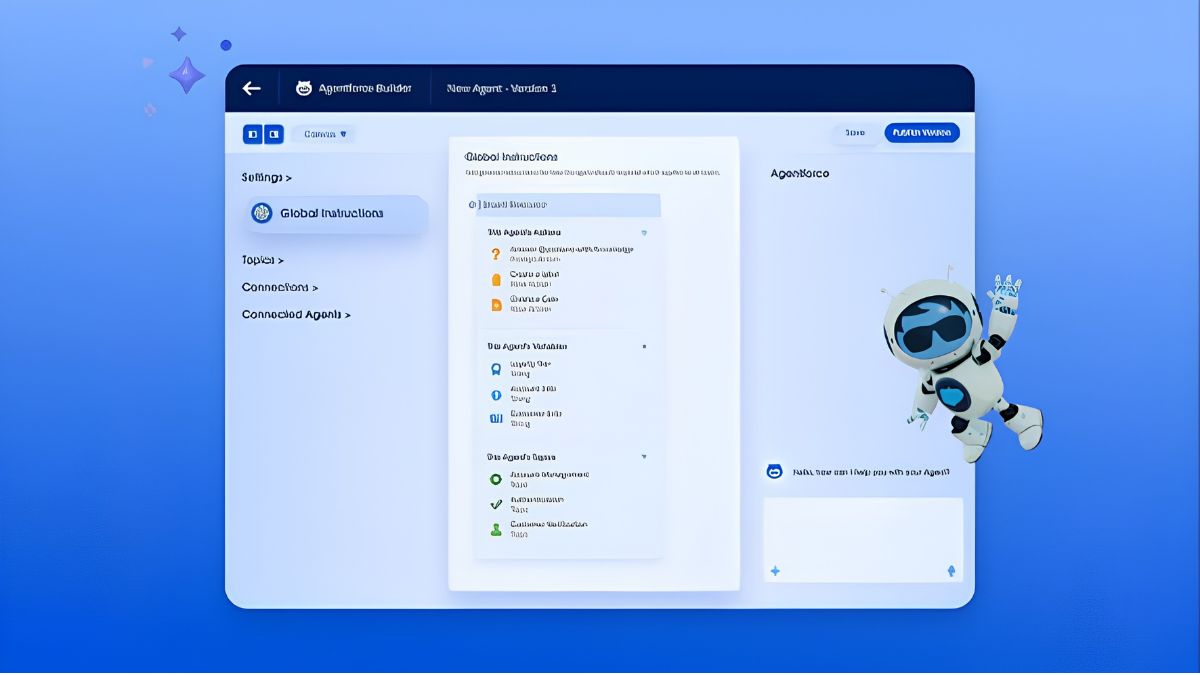
Agentforce 360 is Salesforce’s enterprise AI agent platform designed to support commerce, customer service, CRM workflows, and internal business processes. Built on Salesforce’s ecosystem, it enables AI-powered guided shopping, customer self-service, and workflow automation by grounding agent actions in Salesforce data, metadata, workflows, and business rules.
The platform supports both B2C and B2B commerce scenarios, including product discovery, recommendations, order-related actions, buyer assistance, and service interactions across multiple channels.
Best for: Enterprises already using Salesforce Commerce, Service Cloud, and Data 360 that need an AI agent platform integrated across commerce, CRM, customer service, and business workflows.
Key strengths
- Salesforce ecosystem integration: Uses Salesforce Data 360, CRM data, metadata, workflows, Flow, Apex, and prebuilt actions to support agent-driven processes.
- B2C guided shopping: Supports product search, FAQs, filtering, rich product information, recommendations, cart actions, and order confirmation.
- B2B commerce workflows: Helps buyers with technical discovery, negotiated catalogs and pricing, reorders, checkout, and service interactions.
- Omnichannel service capabilities: Supports web, mobile apps, messaging, email, voice, and escalation to human teams.
- Workflow-based automation: Combines retrieval, reasoning, and Salesforce actions to support customer and business processes.
Limitation
- The strongest capabilities are designed around businesses already invested in the Salesforce ecosystem.
- Commerce workflows are closely tied to Salesforce Commerce and Data 360 configurations.
- Organizations using other commerce platforms may require additional integration work to achieve similar functionality.
Pricing: Agentforce pricing starts at $2 per conversation for the Flex Credits model, while Salesforce also offers consumption-based pricing options and enterprise packages depending on usage, products, and deployment requirements.
Rating: 4.3 / 5 (G2)
Rep AI
Rep AI is an ecommerce-focused AI agent platform designed to support both sales and customer service interactions throughout the shopping journey. Unlike solutions limited to cart recovery, Rep AI provides AI-powered shopping guidance, product discovery, recommendations, checkout assistance, order management, and customer support through a unified helpdesk experience.
The platform connects with live product catalogs to help shoppers find products, compare options, and complete purchase-related actions.
Best for: DTC brands looking for a sales-focused AI platform that combines shopping assistance, order management, and customer support capabilities.
Key strengths
- Product discovery and recommendations: Uses live catalog data to guide shoppers through product searches, comparisons, and recommendations.
- Checkout assistance: Provides product cards and add-to-cart controls to help move customers toward purchase.
- Revenue-focused selling tools: Supports proactive selling, merchandising controls, and revenue analytics.
- Order management workflows: Handles customer requests related to orders through automated workflows.
- Unified customer conversations: Combines sales and support interactions in a single helpdesk environment.
Limitation
- The platform’s primary focus is storefront sales, customer service, and order management rather than external AI visibility optimization.
- Advanced capabilities may depend on integration with ecommerce catalogs and existing business workflows.
Pricing: Starts at $49 per month for basic support agents, with comprehensive plans ranging from $99 to over $350 per month depending on traffic and features.
Rating: 4.9 / 5 (G2)
Zendesk AI Agents
Zendesk AI Agents are AI-powered customer service agents within the Zendesk Resolution Platform, built to automate support interactions while allowing seamless escalation to human teams when needed.
The platform combines business knowledge, automated workflows, and connected actions to handle customer requests, support complex conversations, and improve service operations through the Zendesk ecosystem.
Best for: Organizations already using Zendesk or businesses standardizing on its customer service, ticketing, and knowledge management ecosystem that want AI-powered resolution with human escalation options.
Key strengths
- Knowledge-based resolution: Uses information from Zendesk and connected external sources to provide grounded responses.
- Adaptive workflows: Generative procedures help handle multi-intent requests, clarification steps, and changing conversation paths.
- Connected actions and integrations: Supports Action Builder, external actions, MCP connectors, and API integrations for workflow execution.
- Native Zendesk service operations: Works with ticketing, human handoff, quality assurance, analytics, and resolution improvement processes.
- Human escalation support: Transfers complex cases to human agents while maintaining relevant conversation context.
Limitation
- The platform is primarily focused on customer service resolution, ticket management, and support operations.
- Ecommerce-specific capabilities such as external AI product visibility and shopping conversion optimization are not the main focus.
- Organizations outside the Zendesk ecosystem may require additional integrations to connect existing systems and workflows.
Pricing: Zendesk AI Agents are included in Zendesk Suite and Support plans, with usage-based pricing tied to successful automated resolutions; plans start from $55/agent/month for Suite Team, while additional AI usage is managed through resolution allowances or automated resolution tiers.
Rating: 4.3 / 5 (G2)
Chatfuel
Chatfuel is a no-code chatbot platform designed to help businesses automate conversations across messaging channels such as Facebook and Instagram. It focuses on simple chatbot deployment, marketing automation, lead capture, and basic ecommerce interactions, making it suitable for teams that need lightweight conversational tools rather than complex AI-driven customer support workflows.
Best for: SMBs and marketing teams looking for a simple way to launch chatbot-based messaging automation.
Key strengths
- Easy chatbot creation: Provides a no-code builder that allows teams to create and manage chatbot flows without technical expertise.
- Messaging automation: Supports automated conversations, broadcasts, and customer engagement through social platforms.
- Lead generation support: Helps businesses capture customer information through conversational flows.
- Ecommerce integrations: Enables basic ecommerce-related chatbot interactions.
- Low implementation effort: Suitable for teams that need a quick and accessible chatbot solution.
Limitation
- Limited AI capabilities compared with more advanced ecommerce AI agent platforms.
- Not designed for complex customer support workflows or advanced post-purchase automation.
- Best suited for simpler messaging use cases rather than large-scale service operations.
Pricing: Chatfuel offers paid plans starting from $23.99/month for Facebook & Instagram automation, while WhatsApp plans use separate pricing based on features and message usage. Enterprise pricing is available for larger businesses with custom requirements.
Rating: 4.5 / 5 (G2)
Intercom Fin
Intercom Fin is an AI agent platform that extends Intercom’s customer service capabilities into ecommerce use cases through its Shopify-focused offering, Fin for Ecommerce. It supports both sales and support interactions by helping shoppers discover products, compare options, receive checkout guidance, and handle post-purchase requests within the Intercom ecosystem.

Best for: Shopify teams already using Intercom that want to add AI-powered ecommerce sales and customer service capabilities within the same platform.
Key strengths
- Ecommerce product assistance: Uses Shopify catalog context to support product discovery and comparisons.
- Shopping journey support: Helps guide customers through cart updates and checkout-related interactions.
- Post-purchase support: Extends AI assistance to customer service workflows after purchase.
- Intercom ecosystem integration: Provides a strong fit for businesses already managing customer conversations through Intercom.
Limitation
- Best suited for teams already operating within the Intercom and Shopify ecosystems.
- Ecommerce capabilities are focused on sales and service interactions rather than external AI product visibility optimization.
- Advanced workflows may depend on existing platform integrations and configuration.
Pricing: Intercom Fin pricing is usage-based, with AI agent resolutions charged separately from Intercom subscription plans. Fin AI Agent starts at $0.99 per outcome-based resolution, while Intercom plans start from $29 per seat/month for essential customer service features.
Rating: 4.5 / 5 (G2)
Ada ACX Platform
Ada ACX Platform is an enterprise AI customer experience platform designed to help businesses deploy and manage AI agents across digital and voice channels. It supports automated customer service through a centralized AI system that can handle complex workflows, connect with external systems, and escalate conversations to human teams when required.
Best for: High-volume or regulated enterprises that need a governed AI customer service platform capable of managing complex procedures across multiple communication channels.
Key strengths
- Omnichannel AI support: Provides a unified AI experience across voice, email, chat, messaging, social, SMS, and custom channels.
- Complex workflow automation: Supports multi-step processes such as identity verification, order lookups, returns, exchanges, and refunds.
- System integrations: Uses APIs and connected actions to access inventory data, order information, and external business systems.
- Enterprise governance: Includes tools for performance management, testing, simulation, analytics, and platform extensibility.
Limitation
- Primarily focused on enterprise customer service and issue resolution rather than ecommerce-specific product discovery or shopping conversion.
- Businesses seeking commerce-native AI capabilities may require additional solutions for product visibility and sales optimization.
- The platform may require significant configuration for complex enterprise workflows.
Pricing: Custom quote
Rating: 4.5 / 5 (G2)
Questions to Ask Before Choosing an AI Agent for Your Store
Not every ecommerce store needs several AI agents from the start. To choose the right AI agent, focus first on the problems you need to solve, the systems it must connect with, the technical resources available, and the results you expect to measure. The questions below can help narrow down which type of agent is the best fit for your store.
1. What is taking up the most time?
Look first at repetitive, high-volume work. A customer support agent may be useful if your team handles large numbers of shipping or return questions, while a content generation agent may fit better if product description creation consumes significant time.
2. What is costing you the most money?
Different problems point to different agent use cases. High return rates may indicate a need for better product recommendations or descriptions. Frequent stockouts or excess inventory may call for inventory management, while high cart abandonment may make recovery agents more relevant.
3. What systems does the agent need to connect with?
Check whether the solution integrates with your existing ecommerce platform, CRM, email marketing tools, and inventory management systems. Platforms mentioned in the source include Shopify, WooCommerce, and Magento.
4. How much technical work can your team handle?
Some AI agents require more setup and ongoing maintenance than others. If technical resources are limited, no-code configuration or managed services may be more practical than tools that require extensive implementation.
5. How will you measure whether it works?
Define the expected outcome before implementation. For example, support agents can be measured by ticket volume and satisfaction scores, pricing agents by margin changes, and cart recovery agents by conversion rates. These metrics provide a basis for assessing ROI.
AI Agents for Ecommerce: When to Build vs Buy
The build-versus-buy decision for AI agents comes down to how unique your use case is, how quickly you need results, and whether you already have the technical resources to support AI development.
Build when: you need an AI agent for a use case that existing ecommerce platforms cannot cover and you have the resources to own the system long term. That usually means an in-house AI engineering team with spare capacity, a 12+ month timeline, and at least $500,000 per year available for AI engineering.
For example, a large retailer with a highly customized commerce stack may choose to build if its agent must follow proprietary workflows that off-the-shelf tools cannot support.
Buy when: your needs are already covered by common ecommerce use cases and speed matters more than full customization. If you need shopping assistance, support automation, or conversion optimization within weeks rather than months, buying is usually the more practical route.
It also fits businesses without dedicated machine learning engineers that want internal teams focused on merchandising, marketing, growth, and innovation instead of maintaining AI infrastructure.
From Strategy to Deployment: Ecommerce AI Agents by Newwave Solutions
For ecommerce businesses with needs that off-the-shelf tools cannot fully cover, a custom AI agent offers more control over workflows, data, integrations, and customer interactions.
Newwave Solutions provides AI development services that support the full development cycle of custom ecommerce agents, from use case assessment and architecture planning to development, system integration, deployment, and ongoing refinement.
These agents can be built around needs such as guided shopping, product discovery, support automation, and connected actions across existing systems, helping businesses create agent experiences that fit their operations rather than adapting processes around a fixed platform.
Our AI capabilities are reflected in one project developing AI chatbot for a Japanese ecommerce client with more than 10,000 daily website visits. The project combined AI-driven consultation with system integration and human handoff to support customer interactions at scale.
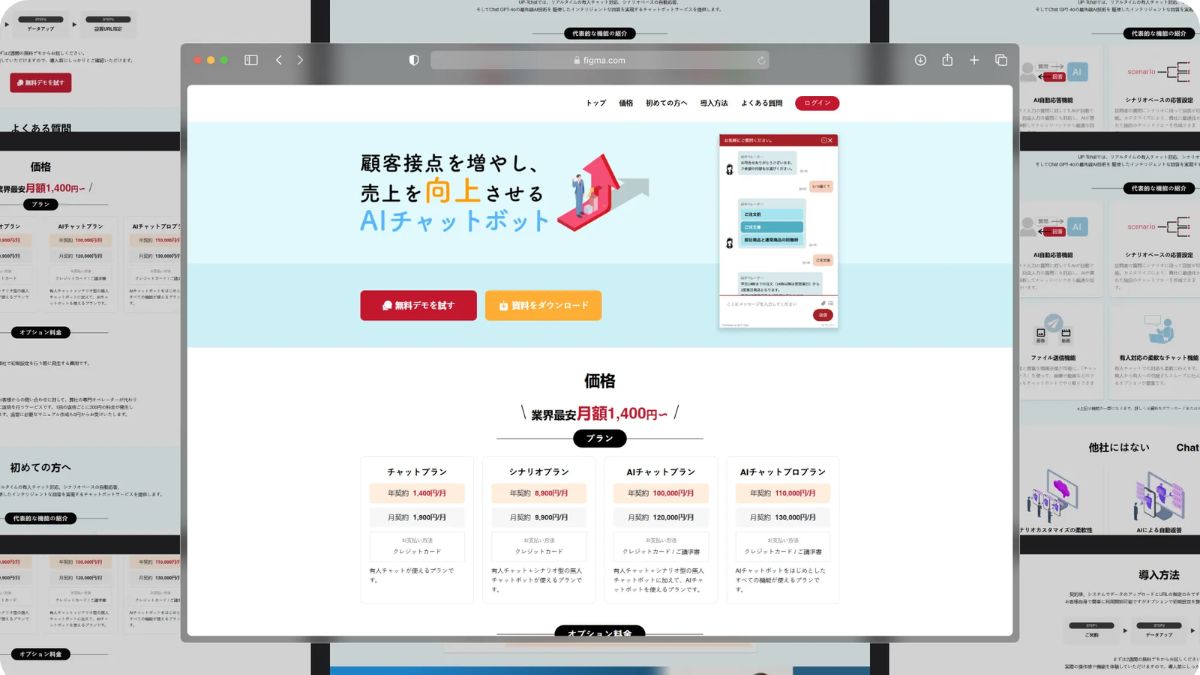
Read the full AI Chatbot for 10K+ Daily Website Consultation case study to see how Newwave Solutions designed and deployed the solution for a high-traffic ecommerce environment.
Conclusion
The right approach to ai agents for ecommerce depends on the problems you need to solve, the systems already in place, and the level of control your business requires. Focus first on high-impact use cases, check integration and technical requirements carefully, and decide whether buying a ready-made solution or building a custom agent better fits your timeline and resources.
If standard tools cannot support your workflows, custom development may offer a better fit. Newwave Solutions can help assess your ecommerce use case, define the right agent architecture, and build a solution around your existing systems. Get in touch to discuss where an AI agent could create the most practical value for your store.
FAQs
1. Which AI agents are best for e-commerce?
The best AI agent depends on the problem you want to solve. Stores should compare agents based on use case fit, integrations, technical requirements, and how clearly success can be measured.
2. How much do AI agents for ecommerce cost?
AI agent development cost can vary based on the platform, level of customization, required integrations, and implementation scope. For an accurate estimate, businesses should compare vendor pricing or request a custom quote based on their specific use case and technical requirements.
3. Can AI agents work with my current e-commerce platform?
Yes, if the agent supports the integrations your store relies on. Before choosing one, check compatibility with your ecommerce platform, CRM, email tools, inventory systems, and other connected software.
4. Can AI agents help with recommendations and upselling?
Yes. AI agents can use browsing behavior, purchase history, real-time context, and customer preferences to surface more relevant products and adjust recommendations during the shopping journey.
5. Can AI agents replace my customer support team?
AI agents can handle many repetitive tier-1 requests, such as shipping, returns, order status, and product questions. When a case needs human involvement, the agent can transfer the conversation with the relevant context, so human support still remains important.
To Quang Duy is the CEO of Newwave Solutions, a leading Vietnamese software company. He is recognized as a standout technology consultant. Connect with him on LinkedIn and Twitter.



Read More Guides
Get stories in your inbox twice a month.
Let’s Build Something Extraordinary
Sign up for a 30 min no-obligation strategic session with us. Transform your Ideas into scalable reality.
Leave a Reply