


Generative AI in Finance: Use Cases and Implementation Guide
The use of generative AI in finance is moving beyond basic task automation. Finance teams can now use AI to summarize large datasets, explain variances, generate reports, and assist with research that once required hours of manual work. The bigger opportunity is not simply doing the same work faster, but giving teams more time to review findings, assess risk, and make better-informed decisions.
This article looks at where generative AI is delivering practical value across financial operations, analysis, compliance, and customer service. It also examines real-world applications, implementation steps, and the controls needed to manage accuracy, privacy, and regulatory risk.
Key Takeaways
|
What is Generative AI in Finance and How Does It Work?
Generative AI in finance is the application of generative models to financial data and workflows to create outputs such as analyses, reports, explanations, and recommendations. It typically combines large language models (LLMs) with other machine learning methods to process financial records, regulatory content, and market information in context.
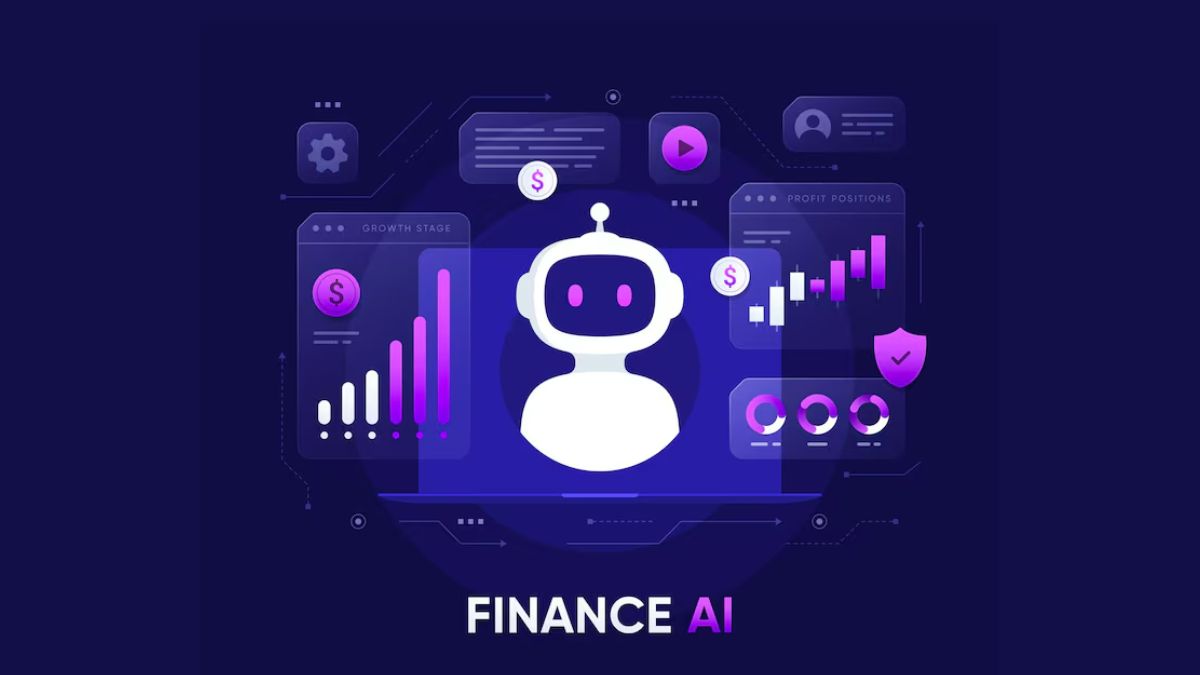
Its performance, however, depends heavily on the data provided to the model. Financial institutions may pull information from several internal or external sources before preparing it for AI use. Raw datasets need to be checked for issues such as inconsistent formats, duplicate records, or other quality problems, then cleaned and standardized into a form the model can process reliably.
Once the data is prepared, the model interprets the available context and generates an output suited to the task. For example, it may turn financial records into a written summary, answer questions based on financial documents, or produce an initial analysis for further review. Because finance processes leave little room for error, these outputs still need appropriate controls and validation before they are used in important financial decisions.
Key Benefits of Generative AI in Finance
The main value of generative AI for finance comes from reducing the time spent turning raw financial information into analysis, explanations, reports, and decisions. Its impact is strongest when GenAI works alongside predictive models, automation tools, and existing finance systems rather than replacing them.
Faster financial decision-making
GenAI can bring together historical financial data, current business signals, and outputs from predictive models to make decision support easier to use. Instead of reviewing several reports separately, teams can receive a consolidated explanation of what changed, what may be driving it, and which scenarios deserve closer attention.
For example, a finance team could combine revenue history, customer transaction patterns, and market indicators to assess different growth scenarios. GenAI can then turn those model outputs into a clearer narrative for review before a decision is made.

More efficient financial analysis
Financial analysis often involves significant time spent preparing data, spotting changes, and writing the first version of an explanation. Generative AI can shorten this work by processing large datasets and producing initial summaries of trends, anomalies, or variances.
An FP&A team, for instance, could use GenAI to draft a first-pass explanation of why operating expenses moved above budget in certain regions. Analysts can then verify the underlying numbers, investigate the causes, and refine the conclusion instead of starting the narrative from scratch.
Clearer stakeholder communication
The same financial result often needs to be explained differently depending on who receives it. GenAI can help turn detailed financial information into reports and summaries that match the level of detail required by different stakeholders.
For example, a finance team preparing for a board meeting could use GenAI to turn detailed financial results into a concise explanation of revenue movements, major variances, and areas that need attention. This reduces the manual effort required to turn raw figures into a clear, decision-ready narrative.

Higher operational efficiency
Many finance processes contain repetitive work before any analysis begins. Data importing, cleaning, reconciliation, document preparation, approvals, and routine reporting can consume substantial staff time.
Automation tools can already handle parts of these workflows, while GenAI can add another layer by interpreting information or generating the required output. A typical workflow might automate invoice data preparation first, then use GenAI to summarize exceptions that need human review. This allows finance teams to spend less time on routine processing and more time on cases that require judgment.
Better risk assessment
Risk teams often need to review information from several sources before they can assess a credit, market, or operational issue. GenAI can help organize this information, summarize relevant patterns, and present model outputs in a form that is easier to review.
For example, a risk workflow might combine transaction history, spending patterns, and economic indicators with predictive models used for credit or stress analysis. GenAI can then help explain the results or summarize the factors behind a flagged case. The final assessment still depends on the underlying models, data quality, and appropriate human review rather than GenAI alone.

Top Use Cases of Generative AI in Finance
The most practical generative AI finance use cases center on work that involves large amounts of documents, data, or repeated interpretation. Rather than replacing existing finance systems, generative AI can sit on top of current workflows to summarize information, generate first drafts, answer questions, and help teams review outputs more quickly.
Automating financial operations and reporting
Finance teams process large volumes of records, statements, invoices, and other documents. Generative AI can extract relevant information from these sources, summarize it, and turn unstructured content into standardized outputs.
In practice, this may include preparing draft financial reports, assisting with transaction categorization, supporting reconciliation, or organizing information required for tax and accounting workflows. The main benefit is less manual preparation before review. As a result, teams can spend more time checking exceptions, interpreting results, and resolving issues that require judgment.

Supporting regulatory and compliance work
Financial institutions must continually interpret rules, maintain documentation, and prepare reports for internal or regulatory purposes. Generative AI can help teams search regulatory material, summarize changes, and identify information that may require further review.
It can also assist with producing compliance documentation from existing records or keeping reporting content aligned with updated requirements. For example, when a regulatory code changes, GenAI can help compare new requirements with existing policies and surface areas that compliance teams may need to examine.
Human review remains necessary because regulatory interpretation and accountability cannot be delegated to generated output alone.
Personalizing customer service and financial guidance
Generative AI can power chatbots and virtual assistants that respond to financial questions, and retain conversational context. Additionally, it can also guide users through processes such as loan applications or account-related requests.
When connected to appropriate customer information, these systems can also tailor explanations or recommendations to the individual rather than returning the same response to every user. A customer asking about a savings option, for instance, could receive information framed around their profile and previous interaction history.
The same technology can analyze customer feedback from surveys, support conversations, or other text sources to summarize recurring concerns. This gives financial institutions another way to understand customer needs while reducing the volume of routine inquiries handled manually.

Supporting risk, fraud, and credit analysis
Risk-related workflows often require teams to review data from several sources before deciding whether further investigation is needed. Generative AI can help organize that information, summarize unusual activity, and generate scenarios that analysts can examine more closely.
For fraud detection, GenAI may work alongside anomaly detection or other analytical models by interpreting transaction patterns and producing context around suspicious activity. In credit analysis, it can helpsummarize borrower documents, surface relevant financial details, and present them in a clearer format for review.
Enhancing investment research and market analysis
Investment teams often work with a mix of financial statements, earnings calls, market data, and other research material. Generative AI can bring these sources together and produce initial summaries, comparisons, or investment notes.
For example, an analyst could use GenAI to review several company reports, identify recurring themes, and draft a summary of potential risks or areas that deserve further investigation. When combined with forecasting or modeling tools, it can also help explain different market scenarios in a form that is easier to assess.
This can shorten the time spent collecting and organizing information, leaving more room for analysts to validate assumptions, compare alternatives, and apply professional judgment before making investment decisions.

For another industry perspective, explore how generative AI in eCommerce is being applied to customer journeys, product discovery, and digital operations.
Practical Examples of Generative AI in Finance
Financial institutions are applying generative AI across different parts of their operations, from customer-facing services to internal analysis and risk-related workflows. The examples below show how major firms are exploring the technology to improve decision support, portfolio management, trading, and customer interactions.
Morgan Stanley
Morgan Stanley has built several named Generative AI tools around wealth management and institutional research. AI @ Morgan Stanley Assistant, powered by OpenAI technology, gives Financial Advisors faster access to the firm’s internal intellectual capital by analyzing and summarizing information in response to their questions. Morgan Stanley reported that 98% of Financial Advisor teams had adopted the Assistant by June 2024.
Goldman Sachs
Goldman Sachs has rolled out GS AI Assistant – a natural-language Generative AI tool. It gives employees access to advanced AI models within an environment designed for the security and compliance requirements of a regulated financial institution.
The firm also provides a Generative AI-powered developer copilot and is developing additional applications across Global Banking & Markets and Asset & Wealth Management.

JP Morgan
JPMorgan Chase’s flagship Generative AI platform is LLM Suite. This internal system is designed to give employees access to large language models while protecting company and customer data.
Launched in 2024, the platform reached more than 200,000 employees and initially supported work such as idea generation and content drafting. JPMorgan Chase is now extending LLM Suite beyond standalone prompting by connecting Generative AI capabilities with internal data and business workflows.
Step-by-Step Guide to Implement Generative AI in Finance
A successful generative AI in finance rollout depends on how well the technology fits the financial process around it. Before scaling, organizations need to connect the use case with the right data, controls, workflow, and measurement approach so the system can be tested in real operating conditions and improved over time.
Define business needs and AI objectives
Start with the finance problem, not the model. Identify where teams are losing time, where information is difficult to process, or where a better decision-support layer could improve the workflow.
From there, define what GenAI is expected to change and how success will be judged. This is also the point to assess internal capabilities, infrastructure, and whether the organization should build the solution itself or use an external product or partner. Our guide to build vs buy AI explores that decision in more detail.
Key result: A defined use case with clear scope, ownership, success criteria, and an initial implementation path.

Prepare and govern financial data
Once the use case is clear, review the data it depends on. Financial information may come from several systems and may contain duplicate records, inconsistent formats, or quality issues that affect model outputs.
Preparation should therefore cover data cleaning, standardization, and documentation, while governance defines who owns the data, how it is handled, and what controls apply to sensitive information.
Key result: A reliable, governed data foundation that is ready to support the selected GenAI use case.
Test and validate model performance
The model should be tested against the situations it will face in practice, not only against generic technical benchmarks. Teams need to check whether outputs are accurate enough for the intended workflow, where inconsistencies appear, and which cases still require manual review.
For example, a GenAI system used for financial document summarization should be tested on whether it captures the information users actually need, not simply whether it produces fluent text.
At this stage, testing helps expose gaps early and gives teams a clearer picture of where the model can be trusted and where additional controls are needed.
Integrate AI into existing finance workflows
A model only becomes useful when it fits into the process people already use. Integration should define how data reaches the model, where AI-generated outputs appear, and how users review or act on those outputs.
The focus should be on reducing friction rather than creating a parallel process around the AI system. A reporting workflow, for instance, could display generated commentary alongside the underlying figures so analysts can validate the explanation without switching tools.
Key result: GenAI becomes part of the existing finance workflow, with clear handoffs between automated output and human review.
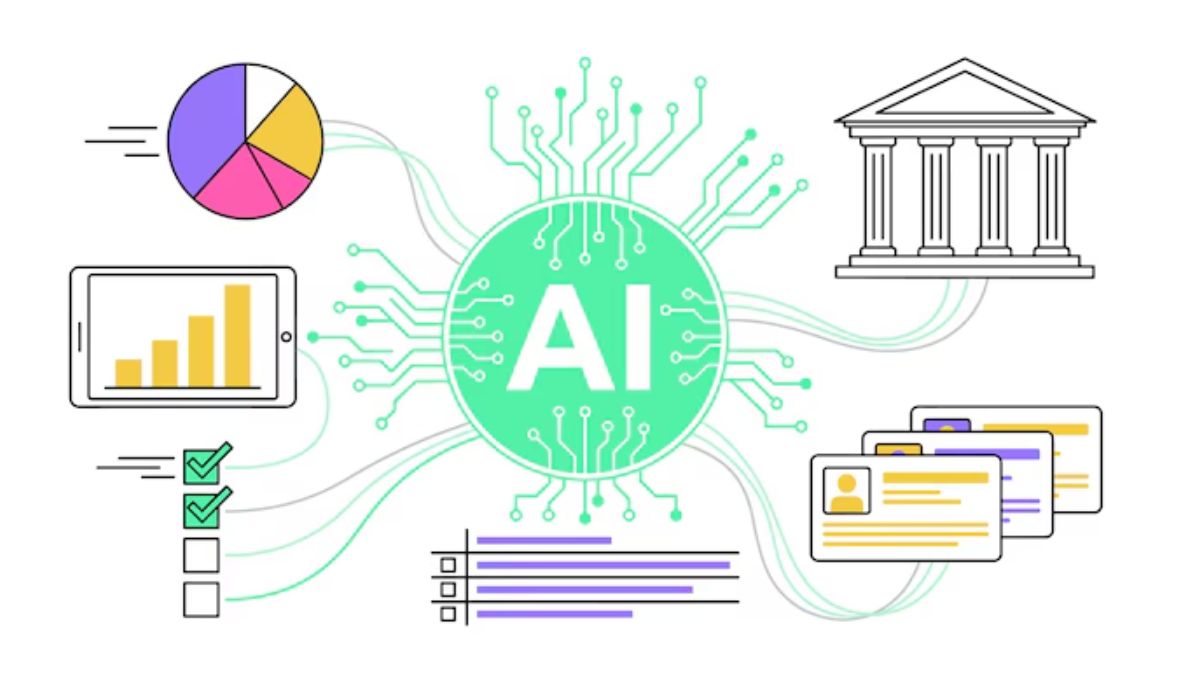
Monitor performance and optimize continuously
After deployment, performance should be reviewed against actual usage rather than treated as fixed. Changes in financial data, business requirements, or user behavior can affect how well the system continues to perform.
Teams can use output quality, recurring errors, user feedback, and usage patterns to decide what needs adjustment. This may involve refining prompts, improving data inputs, changing workflow rules, or narrowing the use case where necessary.
The main goal here is to keep the implementation aligned with the business problem it was designed to solve as conditions change.
Measure business value and ROI
The final question is whether the GenAI initiative creates enough value to justify further investment. Measurement should return to the business objectives defined at the start of the project.
Depending on the use case, teams may track processing time, manual effort, output quality, user adoption, or the resources needed to complete a financial process. These metrics are more useful than measuring AI usage alone because they show whether the workflow itself has improved.
Key result: A clear view of whether the project should be expanded, refined, or reconsidered based on measurable business impact.
Organizations that need external expertise for model selection, data preparation, integration, or deployment can also compare potential partners before committing to a project. Our overview of generative AI development companies outlines the main factors to consider when evaluating providers.
Risks and Challenges of Generative AI in Finance
The use of generative AI in finance can improve analysis and automation, but financial workflows leave little room for incorrect outputs, exposed data, or decisions that cannot be explained. This makes validation, access control, and human review especially important when GenAI is used in risk, lending, investment, or other high-impact processes.
Financial accuracy and hallucination risks
Generative AI can produce answers that sound plausible but are factually wrong or partly fabricated. In finance, this becomes especially problematic when outputs influence reporting, investment analysis, customer guidance, or compliance work.
Poor-quality training or input data can make the problem worse. If the model works from incomplete, inconsistent, or inaccurate information, its output may reflect those flaws.
Organizations should therefore validate important outputs against trusted data sources and keep human review in workflows where mistakes carry material consequences. Testing should also cover the types of queries and documents the system will encounter in practice, not only generic benchmark tasks.

Bias and fairness in financial decisions
Bias can enter an AI system when its training or adaptation data reflects uneven historical patterns, incomplete representation, or past decision-making practices. If the model learns from that data, it can carry the same bias into outputs used for loan reviews, customer risk profiling, or product recommendations.
This risk is not solved simply by adding more data. Teams need to review the composition and quality of datasets, define fairness checks, and monitor outputs for recurring disparities.
For higher-impact decisions, generative AI should assist analysis rather than act as the sole decision-maker. Human review provides another layer of control when an output could affect a customer’s access to financial products or other consequential decisions.
Data privacy and security
Financial institutions work with highly sensitive customer and transaction information. Sending that data into an AI system without clear controls can create exposure through unauthorized access, misuse, or weak handling practices.
Before deployment, organizations need to determine what data the model is allowed to access, how that information is stored or processed, and which users can interact with it. Data governance, access controls, cybersecurity practices, and clear ownership should be built into the implementation rather than added after launch.
Limiting the data provided to the model to what the use case actually requires can also reduce unnecessary exposure.

Regulatory compliance and accountability
Financial services already operate under strict requirements around data use, transparency, and accountability. Generative AI adds another layer of difficulty because regulations and AI-related guidance continue to develop and may differ across markets.
Organizations need to document where AI is used, what data it relies on, and how outputs are reviewed. Maintaining an inventory of AI systems can also make it easier to identify which models affect regulated processes and where additional controls are required.
Accountability should remain clear throughout the workflow. Teams need to know who owns the model, who reviews its outputs, and who is responsible when AI-generated information is used in a financial decision.
Limited performance in specialized financial contexts
General-purpose models are not automatically reliable in highly specialized finance workflows. A model that performs well on broad business questions may struggle with internal financial terminology, niche regulations, proprietary processes, or changing market conditions.
This gap can lead to irrelevant or outdated responses if the model lacks the right domain context. Depending on the use case, organizations may need to adapt the model, provide more relevant data, or fine-tune it for a narrower financial task.
Performance should also be monitored after deployment. Financial data and operating conditions change, so a model that works well at launch may still need updated data, further testing, or configuration changes to remain useful over time.

Future Trends of Generative AI in Finance
The next stage of generative AI in finance is likely to move beyond isolated tasks such as report generation or document summarization toward more autonomous workflows. Instead of assisting with one step at a time, future systems may coordinate analysis, retrieve relevant financial information, generate recommendations, and pass tasks between AI components with less manual intervention.
Further progress will require finance-specific AI models, tighter safeguards for sensitive data, and defined review processes for decisions where mistakes could have serious consequences.
This means the near-term direction is more likely to be supervised automation, where AI handles a larger share of routine analysis while people remain responsible for validation and final decisions.
For businesses, the practical move is to design workflows around this shared model of responsibility rather than plan for full autonomy too early. That means prioritizing use cases where AI can take over repeatable analysis, setting clear review points for higher-risk outputs, and building data and governance foundations that can support broader automation later.
As these workflows become more capable, AI agents may play a larger part in connecting multiple tasks and systems across finance operations. For a closer look at how these systems are structured and how they differ, read our guide to the types of AI agents.
Build Generative AI Solutions for Finance with Newwave Solutions
At Newwave Solutions, we help businesses turn Generative AI opportunities in finance into practical solutions that fit existing operations, data, and system requirements. We focus on connecting the technology with a clear business use case so the solution can improve how financial work is performed and measured.
Through our AI development services, we design and build custom solutions around the workflows that matter most to each organization. This can include improving how teams process financial information, generate analysis, support customer interactions, or handle other information-heavy tasks. The goal is to reduce manual effort, shorten processing time, and make relevant information easier to use in day-to-day decisions.
We also support integration and validation so the solution can operate reliably within the existing environment. We test outputs against the intended use case and refine performance with real data and user feedback. This helps businesses move from experimentation to AI applications that are easier to adopt and better aligned with operational and financial goals.

Conclusion
Generative AI in finance can reduce manual work, make financial information easier to analyze, and assist with customer, risk, and compliance workflows. But these benefits depend on data quality, model validation, governance, and clear boundaries for human oversight.
Rather than expanding AI across finance at once, businesses can begin with a use case that has measurable value and manageable risk. Newwave Solutions can support this process from use-case assessment and solution design through development, integration, and validation.
Reach out to us to discuss how our generative AI solution could fit your current finance systems and deliver results that can be measured over time.
FAQs
1. How is generative AI used in finance?
Generative AI is used across finance to automate reporting, summarize financial documents, support customer service, assist compliance work, and help teams analyze market or portfolio information. It can also support risk and credit workflows by organizing data, explaining model outputs, and generating scenarios for further review.
2. How does generative AI in finance work?
Generative AI models process financial data, documents, regulations, and other relevant information to generate outputs such as summaries, explanations, reports, or responses. Before the model can work reliably, the underlying data usually needs to be cleaned, standardized, and prepared so the system receives consistent and relevant information.
3. How is generative AI different from traditional AI in finance?
Traditional AI is commonly used for tasks such as prediction, classification, anomaly detection, and scoring. Generative AI focuses on creating new outputs from existing information, such as written analysis, document summaries, explanations, or conversational responses.
4. How can financial institutions protect sensitive data when using generative AI?
Financial institutions should control what data AI systems can access, define clear ownership and permissions, and apply strong data governance and security practices. They should also document how information is processed, limit unnecessary exposure of sensitive data, and maintain human oversight where generated outputs affect regulated or high-risk activities.
5. Can generative AI be used for fraud detection and credit risk assessment?
Yes. Generative AI can support fraud and credit analysis by summarizing suspicious activity, organizing borrower information, and explaining model outputs. Traditional ML, anomaly detection, and human review are still important for final risk decisions.
To Quang Duy is the CEO of Newwave Solutions, a leading Vietnamese software company. He is recognized as a standout technology consultant. Connect with him on LinkedIn and Twitter.



Read More Guides


Get stories in your inbox twice a month.
Let’s Build Something Extraordinary
Sign up for a 30 min no-obligation strategic session with us. Transform your Ideas into scalable reality.
Leave a Reply