


Expanding a Finance Enterprise Platform Within a Client-Owned Architecture
Finance - Germany Client - Software Development - Dedicated team - 2 years and on-going - 13 Members
The client needed to expand a German finance and tax platform without disrupting the core architecture managed by its internal team. Newwave Solutions developed marketplace and document management capabilities within the existing technology base, helping the client extend product functionality while keeping maintenance and platform ownership under control.
Client Context
The client is a German software company operating an enterprise platform that supports financial, tax, document, and business workflows for companies, professional service providers, public organizations, and individual users. Because the platform serves multiple user groups and business functions, new capabilities must remain consistent with its existing workflows, permissions, and shared system components.
They were looking for a long-term development partner responsible for extending selected areas of the platform, primarily marketplace and document management capabilities. The client’s internal team in Germany retained ownership of the core architecture, business logic, and foundational components.


Business Stakes
The client needed to add new modules to their existing architecture, workflows, and business logic, all controlled by its internal German team.
The external team needed enough ownership to accelerate development, while the German team retained authority over the core architecture and business logic. An unclear boundary could either create delivery bottlenecks or introduce changes that were difficult for the client to govern.
Building marketplace and document management capabilities as disconnected modules could duplicate logic and create additional integration points. The client’s internal team would then inherit higher maintenance costs and slower future development.
German-language specifications could be translated accurately but still be implemented incorrectly if they were not validated against existing system behavior. Misinterpretation could lead to rework, integration issues, and functionality that did not match the intended business process.
Our Approach
With the client retaining ownership of the core platform, Newwave Solutions approached the engagement as a controlled extension rather than a standalone product build. The marketplace and document management capabilities needed to follow the architecture, business logic, and development patterns already defined by the German team. This reduced the risk of creating isolated modules that would increase integration effort and maintenance costs over time.
Because the project involved an established codebase and German-language requirements, the team prioritized shared product understanding before accelerating delivery. Requirements were clarified against existing system behavior, while implementation decisions were continuously aligned with the client’s predefined standards. This allowed the client to expand development capacity while maintaining control over the core product and avoiding unnecessary architectural change.
Technical Decisions
Because Newwave Solutions was extending selected capabilities within a client-owned platform, the technical priority was not to introduce a new architecture, but to preserve compatibility with the existing product. The team therefore focused on follow existing base and client process, validating German-language requirements against actual system behavior, and keeping implementation consistent across long-term development phases.
Follow the Existing Technology Stack
Angular, Java Spring Boot, and PostgreSQL were used within the existing technology base because they formed the client’s established technology foundation. Using the same stack simplified integration, code review, and long-term maintenance for the German core team.
Extend the Client-Owned Architecture
The marketplace and document management capabilities were developed within the existing platform structure rather than as separate systems. This reduced integration risk and avoided additional maintenance complexity.
Validate German Requirements Against System Behavior
German-language specifications were reviewed alongside existing workflows and interface behavior rather than implemented through literal translation alone. This reduced the risk of incorrect business logic and avoidable rework.
Newwave Solutions worked with the client through a long-term, dedicated team model. English was used as the primary communication language, allowing the Newwave team to coordinate directly with the German product team while clarifying requirements, priorities, and upcoming changes.
Work items, requirements, and delivery status were managed through a shared Jira backlog, giving both sides visibility into task ownership and progress. Weekly meetings were used to review current work, align on near-term priorities, and discuss new requirements or product changes. Additional review meetings were arranged when needed rather than following a fixed schedule, helping the teams respond quickly when clarification or decision-making was required.
Risk Handing
1, Architectural Drift
The main technical risk was that new modules could gradually diverge from the client’s established architecture. To control this, the team treated existing components, implementation patterns, and review standards as development constraints rather than optional references.
This kept new work compatible with the client’s maintenance model and reduced the likelihood that the German team would inherit isolated technical structures.
2, Requirement Misinterpretation
German-language specifications could not always be translated directly into implementation decisions. The team compared requirements with current system behavior and clarified ambiguities with the client before development progressed.
This shifted clarification earlier in the process, where corrections were less costly than changes discovered during integration or acceptance.
Product Outcomes
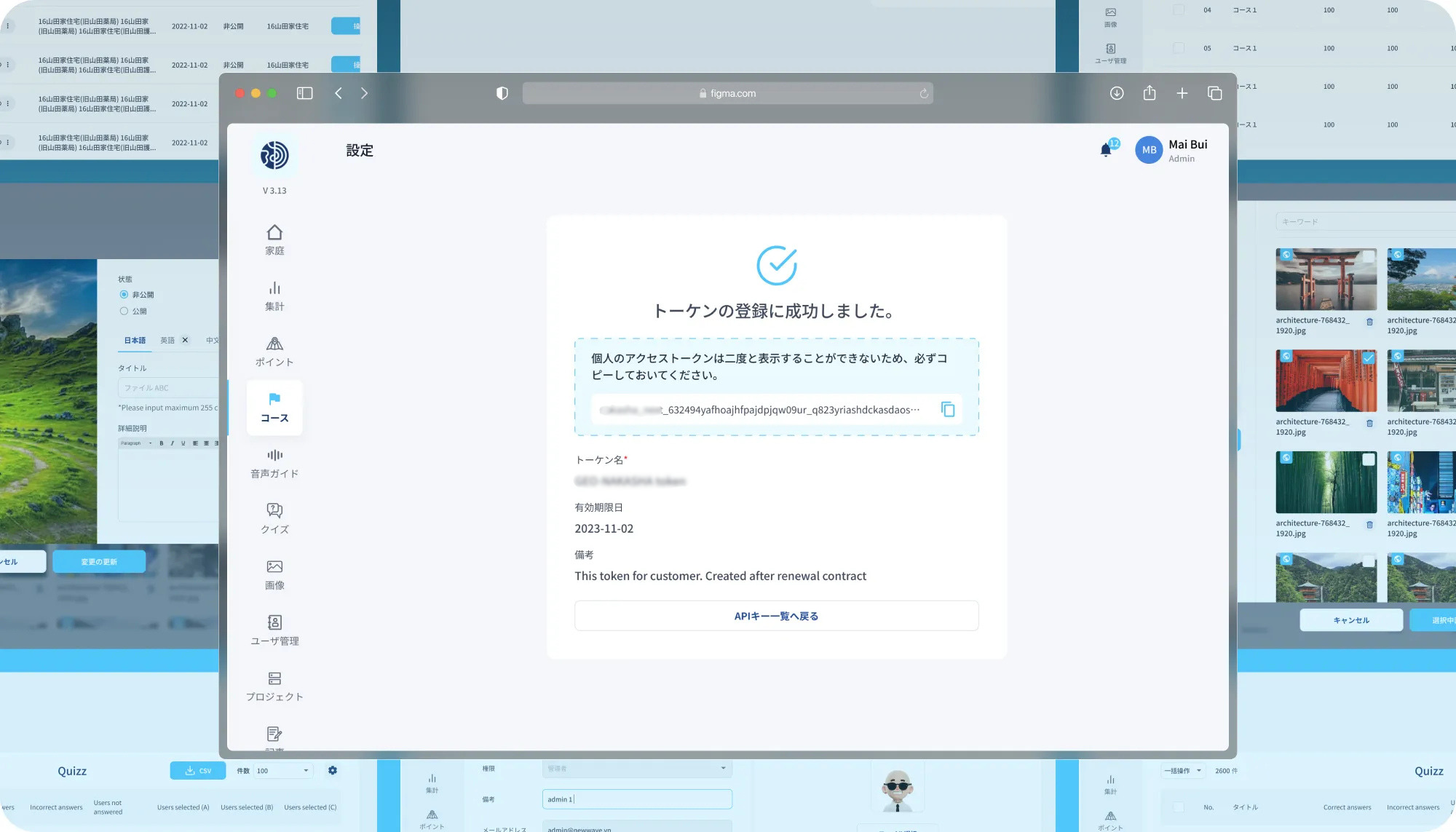
The platform gained a structured environment for storing, searching, sharing, and managing documents with granular access rights, version control, approvals, responsibility assignment, reminders, and document-based workflows. This reduced fragmented document handling and supported more controlled collaboration across users and business processes.
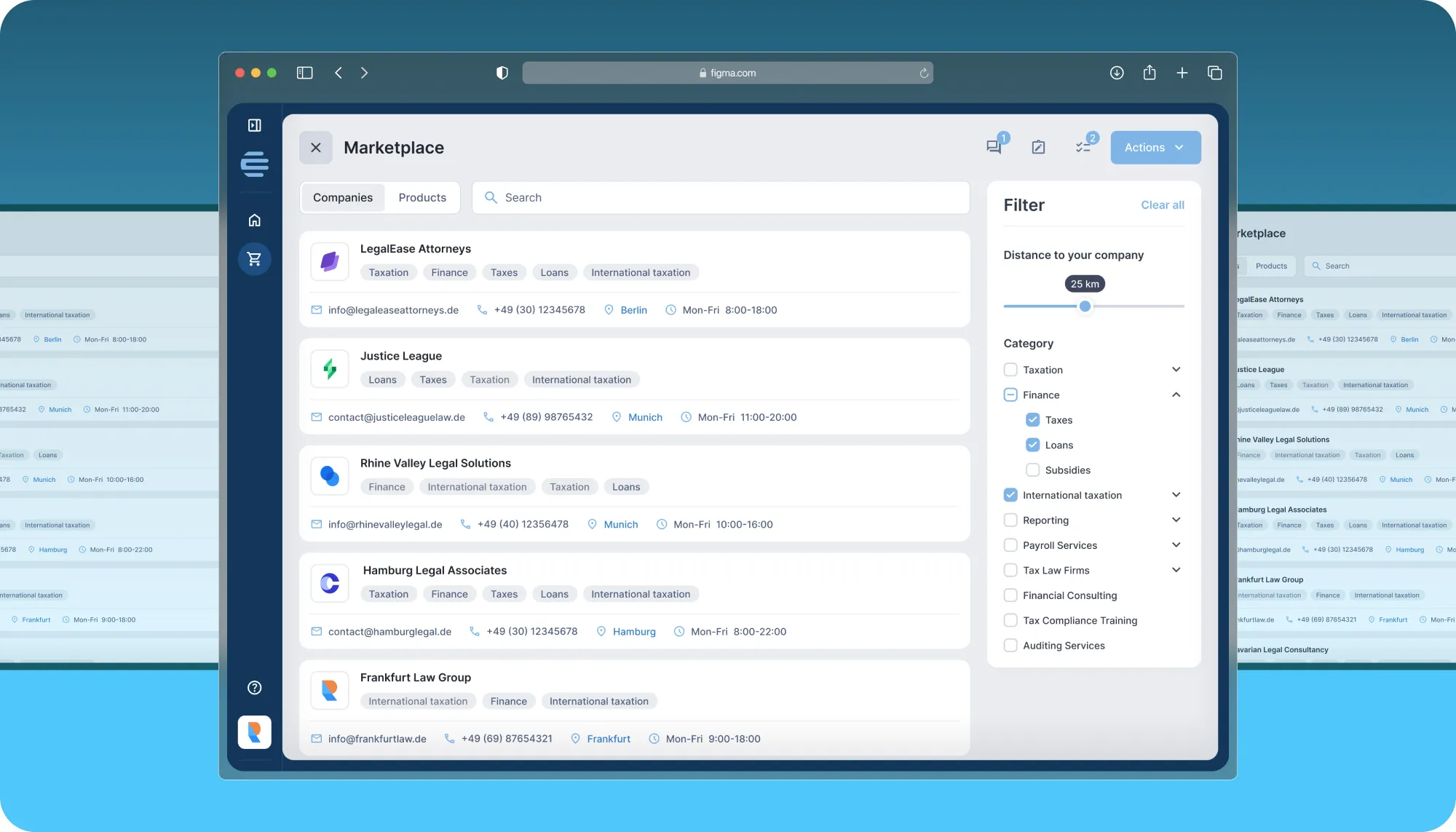
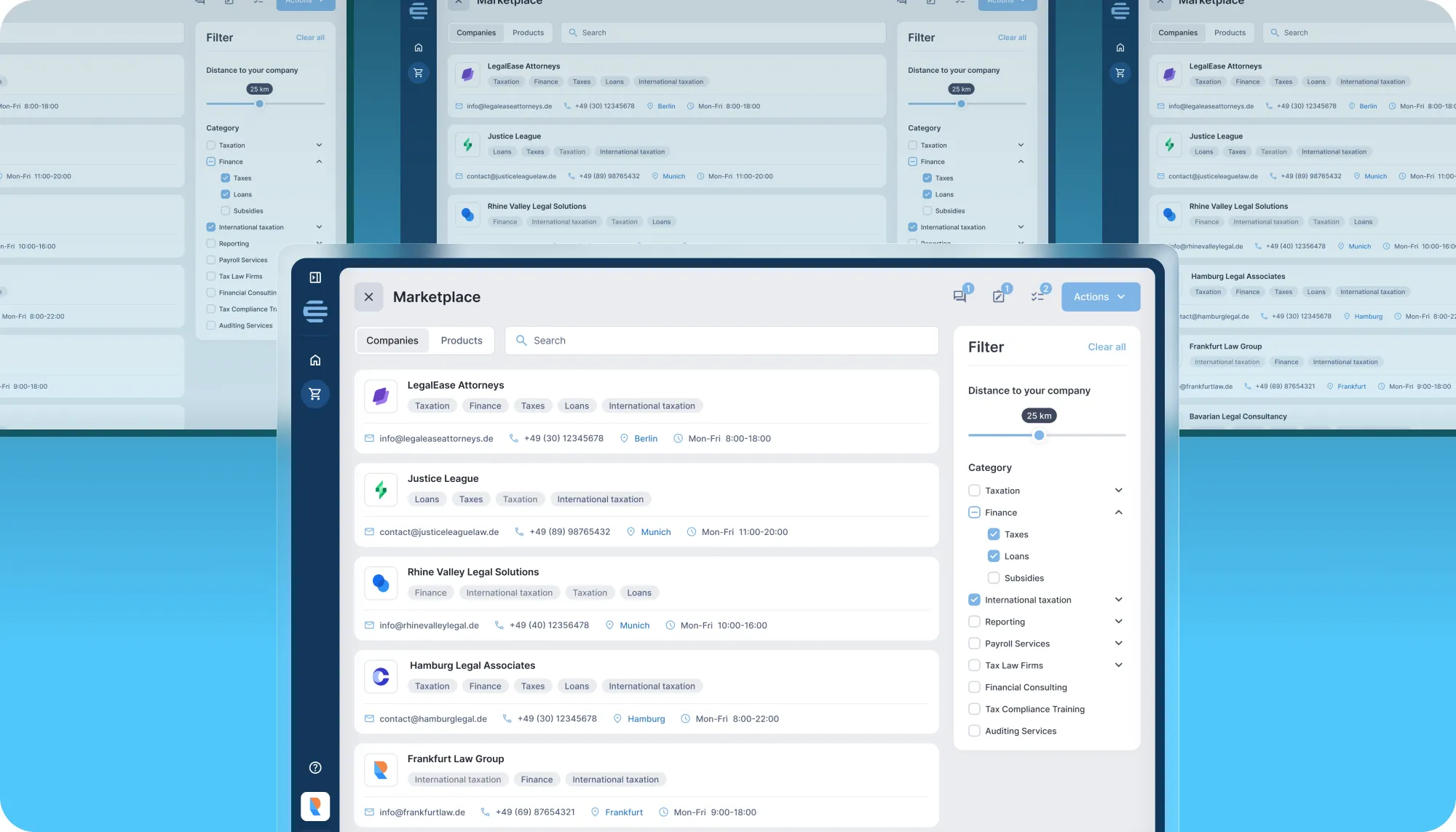
The marketplace module enabled businesses to manage different workflows within one business system.
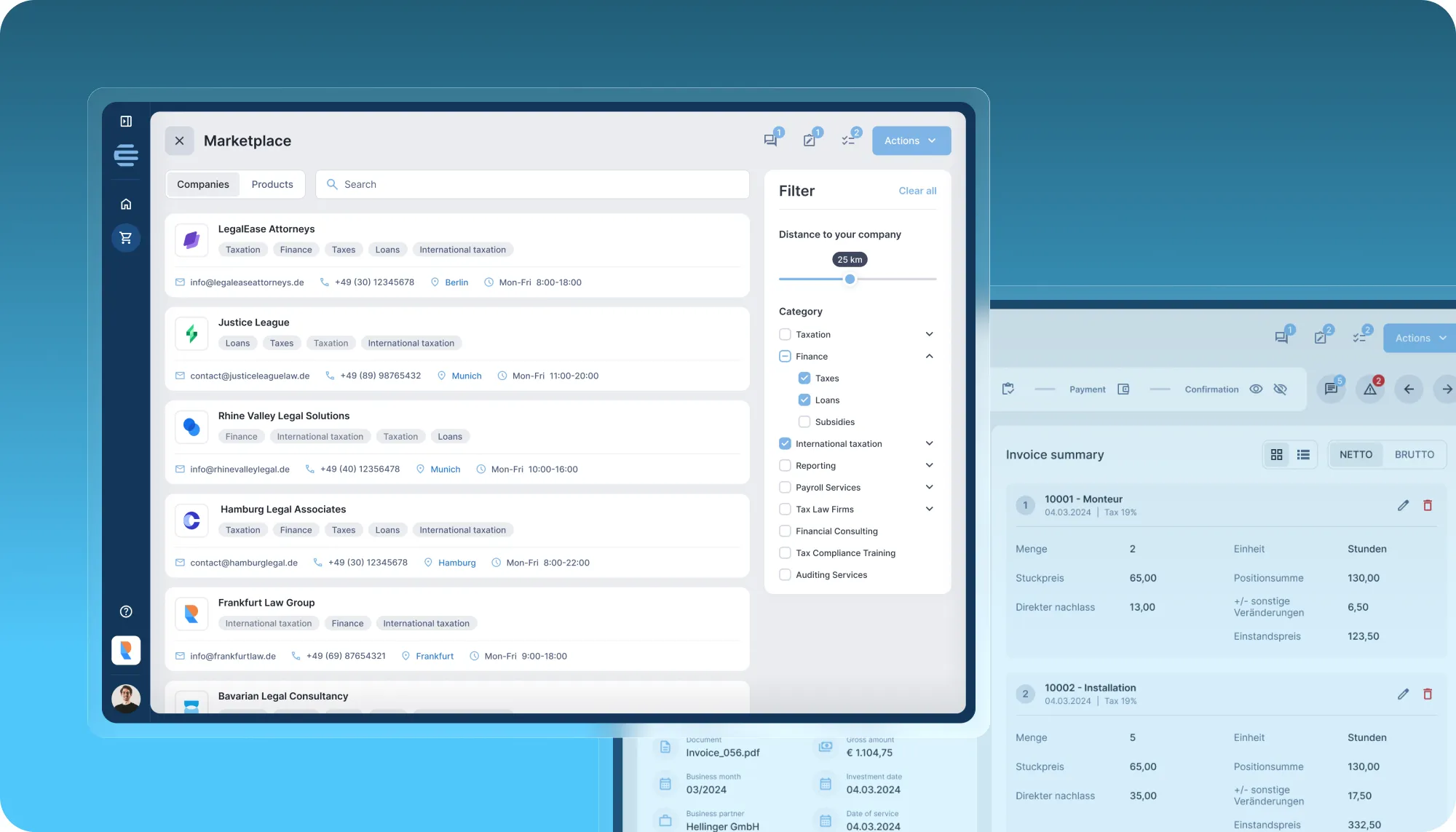
Both modules were developed within the client’s existing architecture and technology base, allowing the internal German team to retain control of the core product while expanding its functional coverage without introducing a disconnected system.
Business Impacts
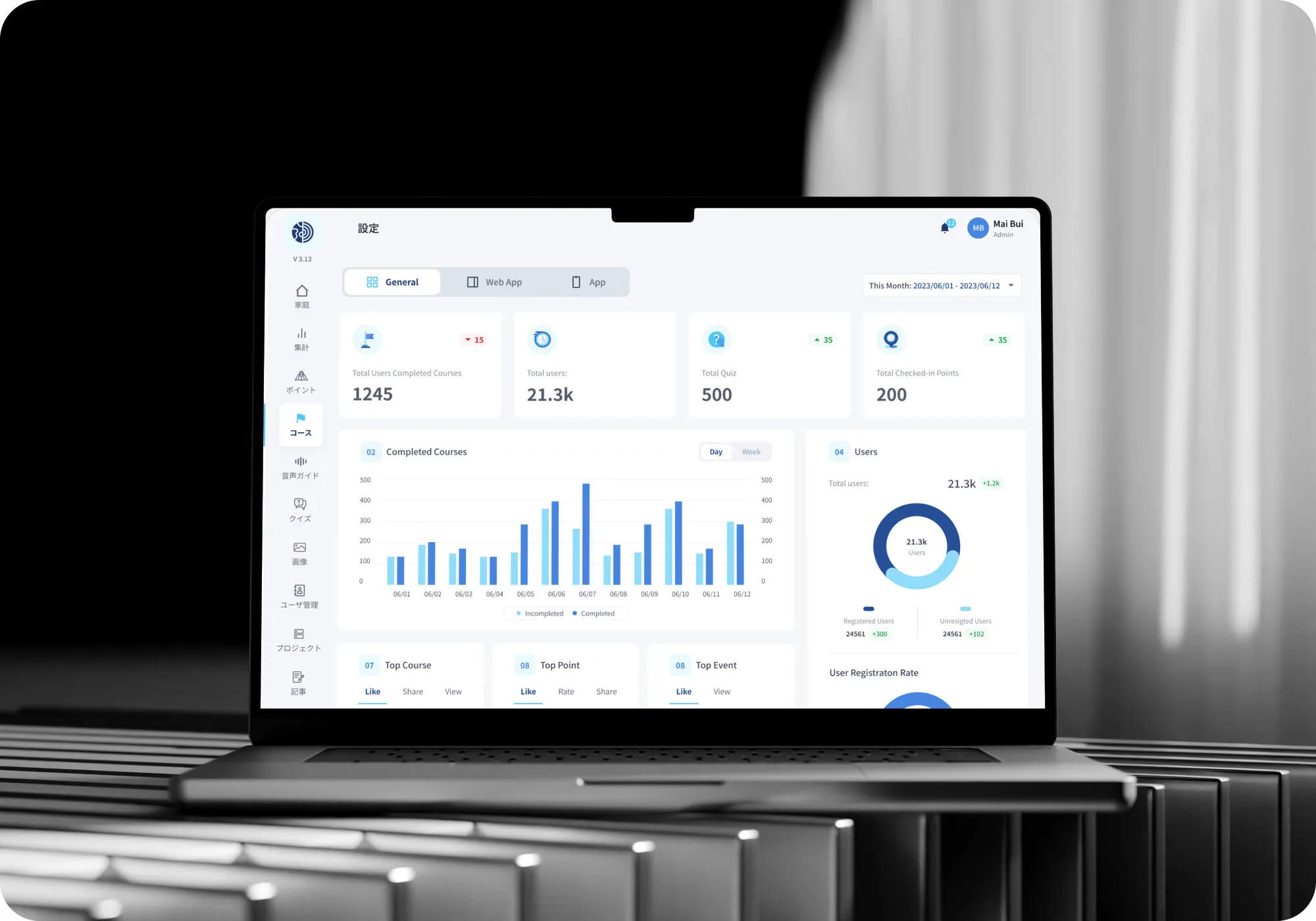
The engagement gave the client additional development capacity while its German team retained ownership of the platform’s core financial logic. Newwave Solutions supported the ongoing development of document management capabilities and delivered the marketplace scope during the project’s initial phase, following the client’s existing codebase and processes.
As additional needs emerged, the team expanded from 10 to 13 members to handle further tasks requested by the client. The continued engagement since August 2024, together with the team expansion, reflects Newwave Solutions’ ability to adapt to evolving development priorities.
Related Case Study

Let’s Build Something Extraordinary
Sign up for a 30 min no-obligation strategic session with us. Transform your Ideas into scalable reality.